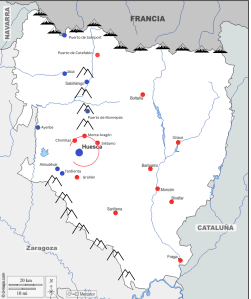
- Huesca, Aragon
Over a critical four-day window between 21 and 24 October, Republican forces launched some of their most aggressive mechanized and artillery-backed offenses to date in the province of Huesca, while Nationalist forces continued to purge civilian populations. By late October, the strategic city of Huesca was completely surrounded by Republican militias, primarily composed of Catalan anarchists and loyalist regulars under the command of Colonel Mariano Villalba. The Republican command believed a decisive, heavy blow could collapse the entrenched Nationalist garrison. The operation began in the early hours of 21 October, with an unprecedented display of Republican firepower. For three consecutive hours, Republican artillery batteries pounded the Nationalist perimeter, firing thousands of shells to shatter the city’s outer fortifications. Following the bombardment, a major infantry assault was launched. However, the Nationalist troops were deeply dug into robust concrete bunkers and trenches. Supported by heavy machine-gun crossfire, the defenders successfully repulsed the Republican wave, leaving the attackers with significant casualties and failing to break the defensive perimeter.
The terrain of the Huesca and Monegros sectors heavily dictated the tactical failures of the Republican assaults. To truly squeeze Huesca, forces had to control the rugged high ground of Tierz, Quicena, Loporzano, and Montearagón. Known as the Estrecho Quinto position, this elevated defensive ring featured jagged hills, natural limestone ridges, and deep ravines. Nationalist forces used the rugged stone structures to build interlocking machine-gun nests and stone-reinforced trenches. Directly outside Huesca’s immediate perimeter, the terrain flattened into parched, wide-open agricultural fields completely devoid of natural cover. To launch an infantry or mechanized charge against the city, Republican soldiers were forced to advance across this entirely exposed open ground, leaving them completely visible to the Nationalist spotters positioned on the city walls and church spires. Further south at Tardienta and the Posición de Santa Quiteria, the dry, rocky earth made deep trench excavation virtually impossible. Soldiers on both sides had to fight behind primitive, hastily stacked parapets of loose limestone, rendering them highly vulnerable to shrapnel from artillery airbursts.
Refusing to retreat, the Republican command ordered a second major assault the following day, Thursday, 22 October. This time, the infantry was heavily reinforced with Soviet-supplied armoured vehicles and intensified heavy artillery support. The battle escalated into fierce, close-quarters combat as tanks attempted to breach the lines. Despite the mechanical advantage, the lack of coordination between the Republican infantry and their new armour allowed the well-entrenched Nationalist forces to isolate the vehicles. Once again, the assault was decisively repulsed, cementing the Siege of Huesca into a long, gruelling war of attrition.
Simultaneously, a ferocious struggle was unfolding just south of Huesca in the rugged Sierra de Alcubierre. Just days earlier, on 19 October, Nationalist forces, including the elite Tercio del Pilar and Falangist units, had successfully captured the highly strategic Ermita de Santa Quiteria, an elevated position at 553 metres that completely overlooked the critical Zaragoza–Huesca supply line. Desperate to reclaim this vital vantage point, Republican forces launched a sustained counter-attack from 22 to 24 October 1936 as the heights of Santa Quiteria controlled the valley floor. For three days, Republican columns repeatedly charged up the steep, rocky slopes, attempting to dislodge the rebel forces from their newly dug, stone-reinforced trenches, but the Nationalists used their elevated positioning and machine-gun nests to devastating effect. By 24 October, the Republican offensive collapsed. The Nationalists successfully held Santa Quiteria, permanently securing the transit corridor necessary to keep the Huesca garrison reinforced and supplied throughout the winter.
On 23 October 1936, the military authorities executed four residents of the agrarian town of Montefrío, located in the western mountains of Granada. At the outbreak of the war, Montefrío had initially remained loyal to the Republic, serving as a haven for left-leaning laborers and families. When Nationalist forces violently took the town, they initiated a brutal campaign of structural retaliation. The town’s mass gravesite has approximately 40 unidentified bodies awaiting exhumation, all buried between 1936 and 1945.
Historians estimate that during the first two weeks of October leading up to the massive October 21–24 pushes, total combat casualties reached roughly 800 to 1,200 men killed, wounded, or missing across both factions. During the specific grinding assaults of 21 and 22 October, the Republican militias incurred an additional 300 to 400 casualties (primarily wounded). Their tactical lack of coordination with heavy equipment meant that charging infantry was systematically decimated by Nationalist crossfire before they could ever reach the barbed wire. Paranoia directly correlated with frontline volatility. Inside the blockaded city of Huesca, the Nationalist garrison launched savage political purges against the 16,000 local civilians to prevent an internal uprising.
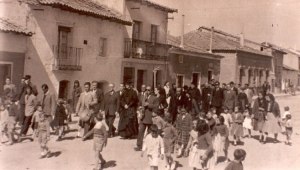
- Valdestillas, Valladolid and Meneses de Campos, Palencia, Old Castile
In the autumn of 1936, the provincial borders of Old Castile became lines of administrative convenience for military death squads. The ancient town of Valdestillas, like many rural towns in Castile, possessed a highly active Casa del Pueblo, the local socialist cultural and trade union headquarters that served as the backbone of support for the Second Spanish Republic. Following the July military uprising, the town was rapidly occupied by Nationalist forces, who systematically began cataloguing its members. Valdestillas had not had any Falangists come tot he town and take leftists away (and neither had Meneses de Campos), but one Sunday in October, a local Falangist was boasting as everyone was leaving Mass, saying there was going to be a round-up in Valdestillas at last. Less than a week later, it came true.
Late on 21 October 1936, a heavily armed detachment arrested 18 members of the Casa del Pueblo. Among the men was Dionisio Cantalapiedra Leonardo. At 63 years old, he was the elder statesman of the local Casa del Pueblo and a well-known butcher, a cattle trader, and a former municipal town councillor who understood exactly how the Nationalist forces operated. While the detainees were being held in the municipal offices, waiting for the transport trucks to arrive, Cantalapiedra noticed a piece of paper left unguarded on the mayor’s desk. It was the master Falangist blacklist, the document containing the names of dozens of other Valdestillas citizens marked for future arrest and execution. In a moment of sheer desperation and defiance, Cantalapiedra grabbed the paper, stuffed it into his mouth, and swallowed it. By destroying the physical record, he chose to carry those names to his grave, successfully blinding the local death squads and saving an untold number of his fellow townspeople from the upcoming purges. But two of his sons-in-law had already been arrested with him, and he begged the Falangists to let them go. One of Cantalapiedra’s daughter had nine children, another had six, and their husbands had been taken with their father. Of course, begging for mercy to a Falangist did not achieve much.
Rather than processing them as a single group, the military authorities immediately split the detainees down the middle into two groups of nine. When the Falangists forced the 18 men onto the truck, they told them openly: ‘Some of you have a round-trip ticket, and others only have a one-way ticket.’ The nine with round-trip tickets were dropped off at the makeshift tram-depot prison in Valladolid, including one of Canatalapiedra’s sons-in-law, Florentino Recio, father of six, alongside eight other men, one being Lucio Gago Rodríguez, a local lumberjack, whose father was in the second group. This first group of nine prisoners was integrated into the formal, expanding network of wartime incarceration. As the provincial prisons overflowed, the Nationalist authorities requisitioned massive industrial spaces like these depots to serve as makeshift, high-capacity detention centres. For these nine men (only two are have been named), entering the Cocheras meant entering a paper trail. While conditions inside were brutal, overcrowded, and highly dangerous, it afforded them a fragile layer of survivals. Because they were in an overflow prison, there were no formal charges and when release came for them these men, whether it was days or years later, they disappeared back into life with only family history recording their fates.
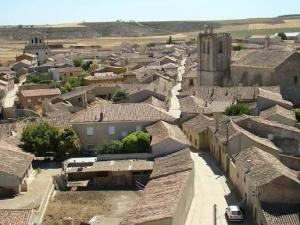
For the remaining nine men in the second group, including Lucio’s 43-year-old father Federico Gago Rodríguez, a woodcutter and sawyer at the Valdestillas lumber mill, 63-year-old Dionisio Cantalapiedra Leonardo and his son-in-law Celedonio Martín Alonso, father of nine, all were placed onto a separate truck for a paseo. The death squad drove the prisoners out of the Valladolid province into the neighbouring province of Palencia. They were taken 60km to the rural municipality of Meneses de Campos, at the intersection of the roads that go from Medina de Rioseco – Campos Góticos and the other that stretches Montes Torozos – Meneses de Campos, just 2km from the town itself. They were pulled from the trucks, tied together and and executed by a firing squad a ditch against poplar trees in the early hours of 22 October.
Early the next morning, the news spread through Meneses de Campos, population 570, as planned, as they too had never suffered a purge but ‘needed’ to be frightened by the Falange. The mayor ordered the local baker to go and collect the bodies with a cart and two mules, and a mass grave was dug near the cemetery for the bodies. But locals Falange members joined the scene, and stomped all over the bodies as they were being buried, terrifying the onlookers. Alongside Federico Gago Rodríguez, Dionisio Cantalapiedra Leonardo, and Celedonio Martín Alonso were Teófilo Fadrique Puras, aged 38, farmer and former mayor of Valdestillas, Hipólito Esteban Fadrique, a well-known member of the Casa del Pueblo, and his best friend, Fermín Martínez Iglesias, aged 45, the head operator of the Valdestillas Hydroelectric Power Plant. Also executed were Carlos Salas Domínguez, father of three, firewood seller and beer delivery man arrested while making a delivery run, plus Mateo Extremo Hernández, a local labourer and member of the local socialist network, and a man only known as Felipe.
Every year after the war, three of the wives of these men travelled to Meneses de Campos on All Saint’s Day to commemorate the men and lay wreaths. In 2002, the town of Valdestillas decided to cover the cost of moving all nine men back to their hometown and be buried properly in Valdestillas cemetery, in time for one of the widows to be able to attend. Lucio Gago Rodríguez, who had gone on the seperate truck than his father that night, went to the crossroads site were his father died and found bullet holes that were still lodged in the polar trees where the murders occurred 66 years earlier. He then purchased the tress and cut them down. At the site where these men now rest, a plaque reads: ‘Because I am like the felled tree, which sprouts anew because I still have life.’
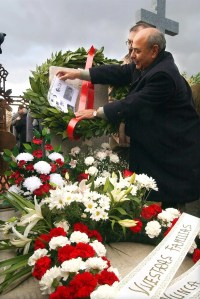
- Madrid
Up until mid-October, the foreign nationals arriving in Spain to fight fascism were a disparate, chaotic mix of idealists, trade unionists, and exiled communists. They fought in loose, independent militia columns without centralized leadership. However, behind the scenes, the Communist International (Comintern) had been quietly mobilizing a massive recruitment network across Europe. On 22 October 1936, the Republican government issued a formal decree that fundamentally altered the nature of this global vanguard. By legalizing the formation of the International Brigades, the state formally incorporated these foreign volunteers into the official Republican military hierarchy. The volunteers who had been pouring into the central training depot in the province of Albacete were no longer considered independent irregulars. They were organized into structured, national battalions categorized largely by language and nationality. This decree allowed the Republic to enforce strict military discipline, standardise lines of command, and integrate these highly motivated international troops directly into the Regular Army. Within weeks, these newly professionalized units, wielding Soviet weaponry, would serve as essential shock troops tasked with the desperate defence of Madrid.
While diplomats and generals in Madrid signed the paperwork to regularise foreign soldiers, an even more secretive, high-stakes operation was unfolding hundreds of kilometers away on the Mediterranean coast.
In September, the government had quietly evacuated the bulk of the Bank of Spain’s massive gold reserves from the capital to the secure naval base of Cartagena to keep it out of Franco’s reach. On the night of 22 October, the next and most critical stage of the operation began. Under the absolute cover of darkness and strict government supervision, teams began removing thousands of heavy wooden cases of bullion from the secure storage facility in the cave of Mount Galeras. The operation was overseen by Republican officials and Soviet agents. Over the course of several consecutive nights, thousands of crates filled with gold coins and bars were loaded onto four Soviet merchant vessels, the Kine, Kursk, Blagoev, and Volgoles, docked at the Cartagena naval wharves. This transfer represented roughly 72% of Spain’s total gold reserves. When the ships finally sailed for the Soviet port of Odessa, the wealth was deposited in Moscow. For the Republic, this was not a surrender of assets, but a financial transaction; the gold served as the collateral necessary to purchase the very Soviet tanks, aircraft, and ammunition that would supply the newly formed International Brigades.
- Ávila / Madrid
By mid-October 1936, the Spanish Civil War was rapidly converging on the nation’s capital. In the northern Ávila sector, Nationalist insurgent forces launched a coordinated eastward offensive designed to puncture the Republican defensive cordons protecting the western approaches to Madrid. This operational push crossed administrative boundaries, originating in the high terrain of Ávila and sweeping through critical border towns. Between 14 and 22 October, the Nationalist advance methodically cleared the towns of Valdemaqueda and Robledo de Chavela, both located just inside Madrid province, before tightening the noose around the strategic republican stronghold of Las Navas del Marqués.
The Nationalist advance continued towards Valdemaqueda, Robledo de Chavela and Las Navas del Marqués. The decisive phase of the operation commenced on the morning of 21 October, as Nationalist columns launched a multi-pronged assault on the primary Republican defensive outposts guarding the immediate approaches to Las Navas del Marqués.
The initial clash centered on Cerro de Santa Catalina, a tactical high point commanding the local landscape. The insurgent assault force demonstrated the highly diverse, combined-arms nature of the Nationalist war effort at this stage of the conflict, deploying concentrated artillery bombardments to soften the ridges, frontline infantry charges to clear entrenched positions, rapid cavalry sweeps to cut off avenues of retreat, and highly motivated Carlist Requeté volunteer militias acting as shock troops.
The Republican forces, primarily composed of regular troops and highly determined popular militias, did not yield easily. Recognizing the imminent threat to the town, they launched a fierce afternoon counterattack around the nearby Cerro de Cartagena. The terrain saw intense, close-quarter combat as Republican fighters attempted to push the insurgents back down the slopes. Despite causing significant friction and slowing the Nationalist momentum, the Republican forces lacked the heavy fire support necessary to hold the ridge line and were ultimately forced to conduct a fighting withdrawal back into the urban perimeter of the town as night fell. At 6am on 22 October, the Nationalist columns resumed their offensive under the cover of early morning light. Bypassing the outer natural obstacles captured the previous day, they pushed directly into the streets of the municipality.
Following a brief but exceptionally bloody urban battle, Nationalist units officially broke the final lines of resistance and entered the town center at approximately 10am. The human cost of the final 24 hours of fighting was severe; local historical reconstructions document at least 51 Republican deaths resulting directly from the final engagements in and around the town.
The fall of Las Navas del Marqués marked the collapse of a key Republican anchor point in the Sierra de Guadarrama region. By securing this sector, the Nationalist command successfully straightened their front lines, eliminated a potential flanking threat from the north, and cleared a direct path for the final logistical buildup aimed at the western gates of Madrid.
- Granada, Andalucía
The autumn of 1936 marked a brutal expansion of the Nationalist campaign in Granada. While the first waves of the coup targeted prominent local figures, October witnessed a highly systematic, bureaucratic liquidation of anyone tied to the Second Spanish Republic. Newly uncovered records and forensic work by the University of Granada have finally shed light on two specific nights, the 21st and 22nd of October, revealing the identities of the ordinary citizens and extraordinary scholars who took their final steps into the Barranco de Víznar.
At approximately 11:00 PM on Wednesday, 21 October 1936, a heavy detachment of the Guardia de Asalto arrived at the Granada Provincial Prison. They carried a logbook ordering the release of 15 prisoners. In the cruel lexicon of the Francoist purges, this release was a saca, heading straight to the execution pits of Víznar. Thanks to painstaking DNA matching and historical documentation, some of the personal lives of several men and women from this specific group have finally been salvaged. Francisco Amigo Plá, aged 21, was born in Argentina but raised in Granada’s historic Albaicín quarter, and a young shop assistant and an active member of the anarcho-syndicalist CNT union. He was just three days shy of his 22nd birthday when he was forced onto the transport truck. His execution shattered his family: his siblings faced systemic persecution, and his mother, Socorro Pla Magán, was arrested and executed by a firing squad shortly after. Francisco José Arturo Muñoz Toral, aged 23, had been swept up in the indiscriminate post-coup dragnet, Francisco worked as a private chauffeur and bus mechanic for a local transit line in Granada. Victoriano Alcantud Cubillas, aged 29, was a local labourer whose life was tied to Granada’s infrastructure. He worked within the Alsina transport network, an essential regional connection that the Nationalist forces sought to rapidly purge of any suspected leftist sympathisers. Juan de Dios Milán Calvo. aged 45, was one of the older prisoners in the group of 15, Juan was an industrial worker employed at the El Fargue Gunpowder Factory (Fábrica de Pólvoras). Because El Fargue was a critical military asset on the outskirts of Granada, its workforce was subjected to ruthless screening, and union alignment meant an automatic death sentence. José Antonio Calero García, aged 41, was a field worker who had transitioned into local politics. José Antonio served as the Socialist (PSOE) Councillor of Finance for the municipality of Fuente Vaqueros, the rural cradle of progressive thought that famously birthed the poet Federico García Lorca. Brígida Pardo López, aged 32, was also a field labourer from the municipality of Güevéjar, born into a large agricultural family known locally as Los Virutas. Brígida represents one of at least 32 women whose bound remains have been exhumed from the Víznar mass graves so far. These 15 individuals were driven into the Sierra de Huétor under the cover of complete darkness, shot at the edge of the ravine, and buried anonymously.
As the sun set the following day, Thursday, 22 October, a separate list was drawn up. This time, the military death squads targeted 29 prisoners, focusing heavily on eliminating the academic and administrative leadership of the province. Chief among them was the university’s highest authority: Salvador Vila Hernández. At just 32 years old, Salvador Vila was an internationally renowned Arabist scholar. Born in Salamanca, he had risen through the academic ranks at a breath-taking pace, becoming the youngest Rector in the history of the University of Granada in April 1936. He was the star disciple and close personal confidant of Miguel de Unamuno, Spain’s towering intellectual figure. Vila held deep progressive, democratic principles but was completely decoupled from militant party politics. His father-in-law later described him simply as a theoretical socialist. He was on a summer holiday in Salamanca when the coup struck. Marked by local Falangists for his intellectual stature, he was arrested and transferred back to Granada under armed guard specifically to face execution.
Vila’s arrest devastated his family. His wife, Gerda Leimdörfer, was the daughter of the editor-in-chief of Berlin’s leading Jewish newspaper and had fled to Spain to escape Nazi persecution. When Vila was seized, Gerda was also detained. Though the legendary Spanish composer Manuel de Falla personally intervened to save Gerda from execution, she was stripped of her inheritance, forced to convert to Catholicism, and left to grieve her husband in absolute isolation. In the early hours of 22 or 23 October, Salvador Vila was marched into the same ravine where the 15 laborers had been killed just 24 hours prior. He was shot alongside 28 others, including fellow university staff, and thrown into a communal pit.
When Vila was killed, the university’s official records were altered to state simply that he ceased his duties in July 1936, leaving his execution unmentioned. Today, the work of the University of Granada’s archaeological teams is undoing that erasure. By recovering the physical evidence, the bullet-shattered skulls and the wire used to bind the hands of shop assistants and university rectors alike, science is finally linking the names on the prison logs to the bones in the dirt, ensuring that neither the nights of the 21 and 22 October are forgotten.
As the military death squads mapped out their executions for 22 October 1936, their reach extended deep into the Lecrín Valley, just south of Granada. In a coordinated sweep, eleven residents from the agrarian town of Dúrcal were also rounded up. The executions of the Dúrcal residents were part of a broader administrative system of regional terror. Throughout August, September, and October, Nationalist forces routinely entered rural municipalities surrounding Granada, arrested local left-leaning figures, and transferred them to centralized locations, either the San José Cemetery in Granada or the Barranco de Víznar. Only several victims who died on 22 Ocotber are known for certain – Miguel Guirado Blanco was alocal campesino (peasant farmer) from Dúrcal. At 50 years old, he was an elder in his agrarian community. He was taken to the Barranco de Víznar on 22 October and executed by firing squad. Antonio García Marín, aged 29, was a day labourer from the area who was swept into the same 22 October operational block. Ignacio Jiménez Agustín was municipal worker from Dúrcal categorized in civil registers as an employee. Unlike those thrown into the wild ravines of Víznar, Jiménez was taken directly to the capital and shot against the walls of the San José Cemetery on 22 October. He was buried there anonymously in Fosa 255. His case is unique because, unlike many victims of the early paseos, he was subjected to a highly fast-tracked, performative wartime military tribunal (Consejo de guerra) to logistically justify his execution. All 11 from the town are known as having disappeared, but the dates of their deaths are much harder to measure.
- Hernani, Gipuzkoa
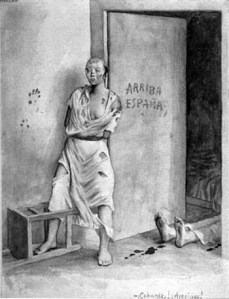
The Nationalist advance through the Basque province of Gipuzkoa demonstrated an equally terrifying fact that no one was too disconnected from politics to escape the firing squads. The execution of Emeteria Aranburuzabala at the Hernani cemetery on the night of 21–22 October 1936 remains a horrifying example of the complete breakdown of wartime justice. Emeteria Casimira Aranburuzabala Beitia was a 58-year-old baserritarra (rural Basque farmer) from the quiet Marín neighbourhood of Eskoriatza, Gipuzkoa, with no political affiliation or activist background. She lived a deeply traditional life, married to Valentín Echave, with whom she raised eight children (local municipal records vary between eight and nine surviving children). On 15 October 1936, Emeteria left her farmhouse to walk to the nearby village of Salinas de Léniz (Leintz Gatzaga) to buy cooking oil. On her walk back home, she was stopped in an indiscriminate sweep (razzia) by a joint patrol of Carlist requetés and the Guardia Civil. The troops were retaliating following heavy Nationalist casualties suffered days earlier on the nearby Mount Isuskitza. She was transferred to the notorious Ondarreta Prison in San Sebastián. After a brief period of detention, she was subjected to a saca against the execution walls outside Hernani. She was shot alongside other local civilians, including a young 16-year-old boy and Marín’s parish priest, Jorge Iturricastillo. Following her execution, Emeteria’s body was thrown into the massive, anonymous mass graves surrounding the Hernani Cemetery. For decades, her family was denied the right to exhume or properly register her death. Today, her burial plot remains absorbed by the historical execution grounds, but her identity has been institutionalised. She is uniquely honoured in the Hernani Crypt in place for the 200+ victims, where she holds the profound distinction of having the only memorial stele (hilarri) explicitly dedicated to a woman executed during the massacres.
Many of the other victims are known, though the full scope of what happened in Hernani remains a profound historical tragedy. Between September and November 1936, the Hernani cemetery and surrounding areas became one of the primary execution grounds in the Basque Country. Nationalist forces executed approximately 200 people there. Most of these victims were prisoners loaded into trucks and brought from the Ondarreta Prison in San Sebastián. Hernani is historically notable as the primary site of Francoist repression against the Basque Catholic clergy. Because many local priests supported Basque nationalism or the preservation of the Basque language (Euskera), they were treated as traitors by the Nationalist rebels. Eight priests were executed at the Hernani cemetery. The most prominent included José Ariztimuño Olaso, known as Aitzol, aged 40, a highly influential priest, journalist, and writer. He was a leading figure in the Basque cultural renaissance. Captured on a boat fleeing Bilbao, he was imprisoned at Ondarreta and shot at Hernani just days later, around mid-October 1936. Fathers Martín Lecuona, Gervasio Albisu, José Adarraga, Alejandro Mendikute, José Otaño, José Ignacio Peñagaricano, and Celestino Onaindia were also killed arounf that time.
Emeteria Aranburuzabala was among many women targeted in these localized purges. Historians have recovered the stories of several others who were executed or disappeared during this window. Felisa Goñi Biurrun was local schoolteacher from Hernani who was murdered shortly after the fascist occupation of the town; her body was disappeared on the road between Tolosa and Berastegi. Dominica Artola Echeverría was executed by Nationalist forces simply because her son was an active communist militant. Nieves Urra Ochoa de Alda was accused of providing medical aid and comfort to wounded Republican soldiers and executed. María Bengoa Elorza was young woman swept up and executed alongside the older targets in the autumn dragnet. Carmen Aramburu Oyarzábal was local resident from Hernani who was executed shortly after this wave, in January 1937.
The vast majority of the 200 victims were ordinary citizens, shopkeepers, labourers, mayors, and trade unionists. Julián Aristegi was a local resident with no active political affiliation who was taken directly from his home, leaving behind a wife and five young children. Like many others, his body was thrown into an unmarked communal pit, and his descendants spent decades searching for his final resting place. In 2003, at the request of the Town Council, the Aranzadi Science Society excavated the burial well at the Hernani cemetery where the bodies were historically known to have been thrown. The well was found completely empty. Forensic experts and historical witnesses indicate that in the late 1950s or 1960s, Francoist authorities secretly exhumed the mass graves of Hernani and moved the remains to covert locations, such as the massive monument at the Valle de los Caídos specifically to hide the evidence of the massacres. Today, their names are preserved on the town’s Argi-Horma (Wall of Light) memorial plaza, even though their exact physical remains are still missing. Some 94 women were murdered by Nationalists in the Basque Country.
- Ciriego and Puerto de Piedrasluengas, Santander (Cantabria)
On 22 October 1936, a new system of revolutionary called for the execution of three men at Santander’s coastal Ciriego Cemetery, following formal death sentences handed down by the province’s newly minted Tribunal Popular. Valerio Gómez Santaolalla and Mauricio Sanz Sanz were two officers of the Guardia Civil. Their journey to the firing squad at Ciriego began with a military betrayal in the rugged mountain passes connecting Cantabria to the Castilian plateau. When the military coup broke out in July, the Civil Guard across Spain was fractured. While some units remained loyal to the Republic, others covertly or overtly aligned with General Franco’s insurgents. Gómez Santaolalla and Sanz Sanz chose the side of the rebellion, taking up arms and fighting directly alongside the Nationalist insurgent forces trying to breach the northern Republican perimeter. They were captured by Republican militia forces during fierce combat at the Puerto de los Tornos, a vital strategic mountain pass at an altitude of 920 metres. Controlling this pass was essential for the Republic to prevent Nationalist columns from flooding into Santander from Burgos. The capture of uniform-wearing Civil Guards fighting for the rebels was viewed by the Republican authorities as an act of high treason.
Following their capture, the two officers were transferred to Santander to face the Tribunal Popular. These tribunals were established by the Republican government in August 1936 to regularise wartime justice, rein in uncontrolled militia violence, and formally prosecute fascists, saboteurs, and military defectors. The tribunal subjected Gómez Santaolalla and Sanz Sanz to a rapid public trial, finding them guilty of military rebellion against the legitimate government of the Second Spanish Republic and sentencing them to death. In the early hours of 22 October, the two Guardia Civil officers were driven to the Ciriego Cemetery, a vast necropolis overlooking the Cantabrian Sea. They were lined up alongside a third prisoner, José María Pereda Helguera, who had been convicted under similar wartime charges by the popular court. All three men were executed by a Republican firing squad.
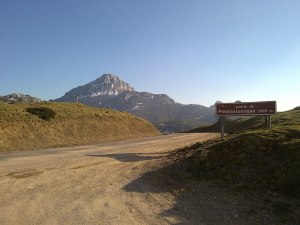
Also on 22 October 1936, the remote mountain communities of Polaciones and Liébana were shaken by a major targeted sweep that culminated in the summary execution of eight local residents near the jagged borders of the Puerto de Piedrasluengas. The central figure was Clemente Morante Alles, a well-known schoolteacher and prominent local organiser for Acción Popular, the major conservative Catholic political party, from the rural hamlet of San Mamés, nestled within the high valley of Polaciones. Because of his explicit right-wing political alignment and influential position as a teacher, Morante Alles was marked as a key ideological opponent by local leftist militia forces operating in the valley. On 22 October, a coordinated armed patrol swept into the valley, detaining Morante Alles along with seven other residents from the surrounding area who shared similar conservative or Catholic affiliations. The prisoners were driven up the winding mountain roads of the valley to the Puerto de Piedrasluengas, a high mountain pass sitting at an altitude of 1,355 metres. This pass marks the natural geographic and administrative border separating the mountains of Cantabria from the northern plains of Palencia. At the isolated summit of the pass, the eight men were pulled from the transport and summarily shot. Their bodies were buried or left in the immediate vicinity of the mountain border, turning this single, brutal episode into the largest recorded execution event of the Civil War for the isolated Polaciones and Liébana districts. Despite being right-wing, the grave has not been recovered.
- Huelva, Andalucia
On 21 October 1936, a major multi-town Nationalist sweep targeted several strategic municipalities across Huelva, including El Cerro de Andévalo, Bollullos par del Condado, Almonaster la Real, and Niebla. The detainees seized on this day were funnelled into centralised burial networks, creating a mix of identified names and completely unrecorded casualties. Bernardo de la Corte Gento, Pedro Juárez Valladares, and Sebastián Luna Díaz were executed and thrown in the Riotinto burial trenches. An illiterate 58-year-old man name José Martín García aka El Pintao, was killed alongside Francisca Rubio Sánchez, who might have been arrested when a man she knew was in hiding, and Benito Márquez Gómez and Matías Moreno Rufo, all killed at the site of the Old Niebla Cemetery mass grave. On the same day, six unnamed people were killed at the notorious Nuestra Señora de la Soledad Cemetery in Huelva city.
On 22 October, Dionisio López Diosdado, Francisco Maestre Ponferrada, and Daniel Trigo Palmar were also killed at Nuestra Señora de la Soledad Cemetery, while at Nerva, Juan Suero Serrano and Pablo Rodríguez García were executed at Nerva cemetery.

