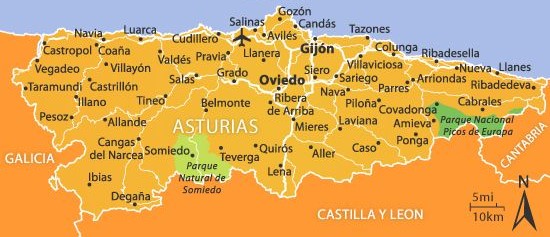
The Siege of Oviedo was one of the first prolonged urban sieges of the Spanish Civil War. From 19 July until 16 October 1936, the Asturian capital remained under Nationalist control despite being almost entirely surrounded by Republican territory. For 87 days, thousands of soldiers and civilians inside the city endured artillery bombardment, air raids, food shortages and repeated assaults, while Republican militias attempted to capture the provincial capital before Nationalist relief forces could reach it.
The siege developed directly from the failed military uprising in Asturias. Although the rebellion succeeded in Oviedo under the leadership of Colonel Antonio Aranda, it collapsed across most of the rest of the province. Republican militias, supported by miners, workers, loyal Assault Guards and many Guardia Civil, secured Gijón, Avilés and the industrial mining valleys within days. By 23 July, Oviedo had become an isolated Nationalist stronghold surrounded by territory that largely supported the Republic.
When Spain descended into civil war in July 1936, Asturias was one of the country’s most politically distinctive provinces. Its mountainous landscape, rich coalfields and heavy industries had created a large and highly organised industrial working class whose political outlook differed markedly from much of rural Spain. Coal mining dominated the economy of central Asturias, while steelworks, foundries, engineering firms and ports linked the province to the wider industrial world. Communities throughout the mining valleys had developed strong traditions of trade unionism, collective action and political organisation long before the Civil War began. The city’s strategic importance far exceeded its size. As the administrative capital of Asturias, Oviedo controlled major road and railway connections between the mining districts, the Cantabrian coast and the interior of northern Spain. For the Republicans, capturing the city would eliminate the Nationalist position in Asturias, free thousands of militia members for operations elsewhere, and secure complete control of one of the Republic’s most valuable industrial regions. For the Nationalists, holding Oviedo denied the Republic that victory and maintained a foothold from which future offensives into Asturias could be launched.
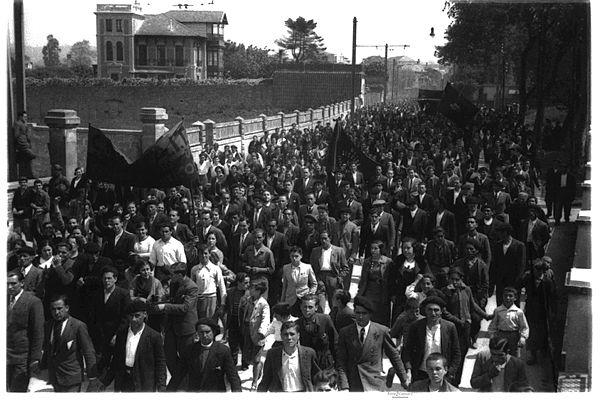
The province’s largest city was Gijón, an important Atlantic port and industrial centre, while Oviedo served as the administrative and provincial capital. Although Oviedo contained government offices, military headquarters, educational institutions and a sizeable middle class, it was surrounded by districts where socialist, anarchist and communist organisations had become deeply rooted. The railways and roads that converged on Oviedo connected the city directly to the mining valleys of Mieres, Langreo and Sama, ensuring that political developments in the coalfields quickly influenced events in the provincial capital.
By 1936, the principal organisations of the Spanish left enjoyed considerable support throughout Asturias. The PSOE and its trade union, the UGT, had built strong memberships among miners and industrial workers, while the CNT added a smaller but still important presence in several districts, particularly among workers attracted to anarcho-syndicalism. The PCE, though smaller before the Civil War than the Socialist movement, was steadily increasing its influence within the mining communities. Cooperation between these organisations was often imperfect, marked by ideological disagreements and competition for influence, yet many shared a determination to resist what they believed was a growing threat from the political right.
Political tensions in Asturias had been intensified by the events of October 1934. Following the entry of the CEDA into the Spanish government, workers across much of Spain launched strikes and protests, but nowhere did events develop as dramatically as in Asturias. Miners, railway workers and other industrial workers seized towns, occupied factories, attacked military positions and briefly established revolutionary committees across much of the province. For approximately two weeks, much of Asturias lay outside government control before the uprising was crushed by troops from the Army of Africa under the overall command of General Francisco Franco and other senior officers.
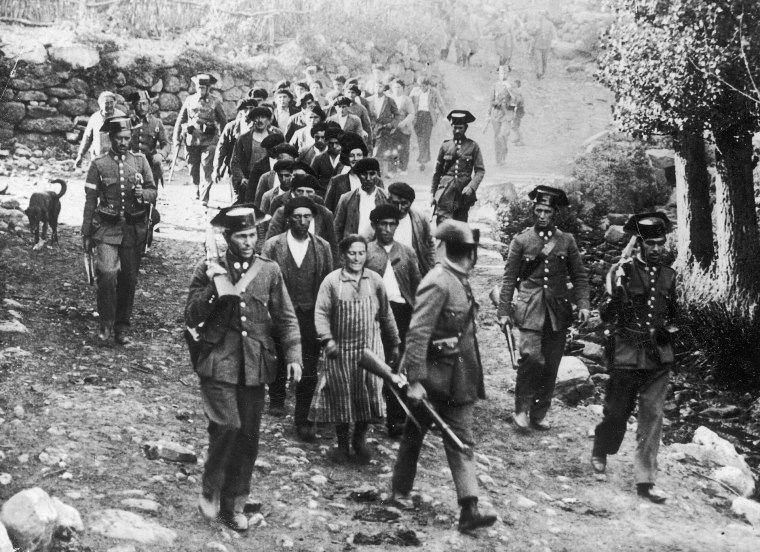
The suppression of the Asturian uprising left a profound legacy. Thousands of people were arrested, hundreds were killed during the fighting or its aftermath, and allegations of executions, torture and ill-treatment became enduring features of local memory. Many miners who would later fight for the Republic in 1936 had participated in the 1934 revolt or had relatives, friends and colleagues who had suffered imprisonment or death. The defeat did not destroy the labour movement; instead, it strengthened a sense of solidarity within many mining communities and deepened distrust of the Army among large sections of the population.
The Popular Front’s victory in the general election of February 1936 transformed the political atmosphere once again. Many imprisoned participants in the 1934 uprising were released under an amnesty, returning to communities that regarded them as heroes rather than criminals. Trade unions recovered much of the influence they had lost during the repression, strikes resumed across parts of the province, and political meetings once again drew large crowds. To conservatives, landowners and many military officers, Asturias appeared increasingly revolutionary. To many workers, however, the election represented the restoration of democratic government and the chance to recover rights they believed had been unjustly taken from them.
Despite the province’s strong Republican sentiment, Oviedo remained an important military centre. It housed army barracks, Civil Guard headquarters and provincial government institutions, making control of the city essential for whichever side hoped to dominate Asturias. The city’s officer corps included Colonel Antonio Aranda, commander of the local military garrison. Publicly, Aranda gave every indication that he remained loyal to the Republican government, and the civil governor Isidro Liarte Lausín and some labour leaders accepted his assurances that no uprising would occur in Oviedo. Those assurances would prove decisive during the critical days of July 1936.
As rumours of a military conspiracy spread across Spain during the summer of 1936, Asturias therefore entered the crisis divided not simply between left and right, but between two profoundly different visions of Spain. Much of the province possessed both the organisation and the determination to resist a military rebellion. At the same time, the existence of a sizeable army garrison in Oviedo ensured that if an uprising did occur, the provincial capital would become the focal point of the struggle. Within days, that is exactly what happened. Among the many officers who joined the military conspiracy against the Spanish Republic, few played their part with greater subtlety than Colonel Antonio Aranda Mata. Commanding the Oviedo garrison in July 1936, Aranda enjoyed the confidence of the provincial authorities, many officers under his command and a significant number of labour leaders. Aranda carefully cultivated the appearance of loyalty, buying valuable time while the situation in Asturias unfolded around him.
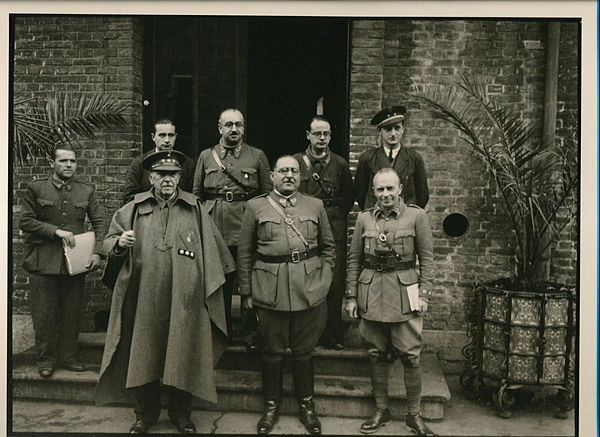
Born in 1888, Aranda was a professional soldier with extensive experience in the Moroccan campaigns and a reputation as an intelligent and capable officer. He had served in a variety of commands and was regarded as an able tactician. Politically, however, he had become increasingly hostile to the Second Republic. Like many officers involved in the conspiracy organised by General Emilio Mola, Aranda believed that military intervention was necessary to prevent what he regarded as the collapse of public order and the advance of revolutionary politics. Although later Nationalist accounts celebrated Aranda’s conduct as a masterpiece of military deception, historians continue to debate precisely how much of his strategy had been planned in advance. There is broad agreement that he maintained contact with the conspirators before July 1936 and intended to support the rebellion. Less certain is whether every step of his conduct during the uprising had been carefully prepared or whether he adapted rapidly to changing circumstances. Whatever his intentions, the effect was the same: by appearing loyal for several crucial days, he prevented the Republican authorities from acting against him before it was too late.
As news of the uprising in Spanish Morocco reached Asturias on 17 and 18 July, the provincial governor and representatives of the Popular Front sought assurances from senior military officers that the army would remain faithful to the Republic. Aranda repeatedly declared his loyalty. He promised to defend constitutional government, met with civilian officials and gave no public indication that he intended to rebel. These assurances were accepted by many of those responsible for organising Asturias’ defence, despite widespread suspicion elsewhere in Spain that sections of the army were preparing to revolt.
One of the most significant consequences of Aranda’s apparent loyalty was the movement of the mining columns. The mining valleys of Asturias contained tens of thousands of experienced industrial workers, many of whom had fought during the Asturian uprising of 1934. When reports arrived that Nationalist forces were threatening neighbouring provinces, particularly León, large numbers of armed miners prepared to leave Asturias to support Republican resistance elsewhere. Aranda did not attempt to prevent their departure. On the contrary, his assurances that Oviedo remained secure encouraged many Republican leaders to believe that the immediate danger lay outside the province rather than within its capital.
The exact number of miners who left remains uncertain, with estimates varying considerably between sources. Contemporary accounts and later historians generally agree that up to 4,000 departed in organised columns during 18 and 19 July, many travelling towards León while others prepared to reinforce different threatened areas, though as Aranda had only authorised the release of 200 rifles, success was no certainty. Their departure temporarily reduced the number of armed Republican supporters available in Oviedo itself at precisely the moment Aranda intended to reveal his allegiance.
Whether Aranda deliberately encouraged this movement has remained one of the most contested questions surrounding the siege. Republican survivors later argued that they had been skilfully deceived into weakening their own position, while Nationalist writers frequently praised Aranda’s actions as an example of exceptional military foresight. Some modern historians have adopted a more cautious interpretation, noting that the confusion of the first days of the Civil War makes it difficult to determine how much resulted from careful planning and how much from the rapidly changing military situation. Nevertheless, few dispute that the departure of approximately 4,000 miners significantly improved the garrison’s chances of securing Oviedo.
The deception extended beyond words. Throughout these critical days, Aranda continued to organise officers sympathetic to the conspiracy, assess the loyalty of units under his command and prepare the city’s principal military positions. Arms, ammunition and communications were quietly secured while outwardly maintaining the appearance of obedience to the Republican government. By the time the true extent of his intentions became clear, the initiative had already passed to the rebels. When Aranda finally declared for the uprising at 5:00pm on 19 July, many Republican leaders in Asturias felt they had been betrayed rather than defeated. The military rising that followed was not simply another provincial revolt but the culmination of several days of calculated misdirection. The consequences were immediate. Oviedo fell into Nationalist hands, thousands of Republican supporters found themselves excluded from the city, and what might have been a brief local confrontation instead became the opening chapter of one of the longest and most important sieges of the Civil War’s first year.
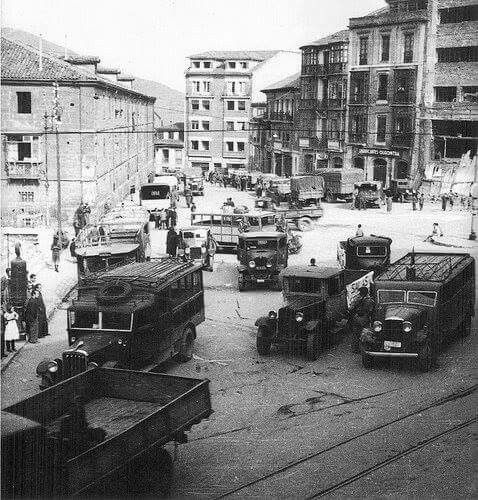
By the morning of 19 July 1936, the uncertainty that had characterised the previous two days had come to an end. Colonel Antonio Aranda openly declared the Oviedo garrison in rebellion against the Republican government, joining the military uprising that had already spread across much of Spain. For many of the city’s Republican officials and labour organisations, the announcement confirmed their worst fears. The assurances of loyalty that Aranda had repeatedly given during the preceding days had been abandoned, and the provincial capital was suddenly at the centre of a struggle that would determine the fate of Asturias.
Aranda moved quickly to secure control of the city before Republican organisations could regroup. Army units loyal to the uprising occupied their barracks and established defensive positions around key buildings, while detachments seized strategic locations including government offices, communications centres and important road junctions. The rebels consisted of several thousand soldiers, Guardia Civil, some Assault Guard personnel concentrated in Oviedo under rebel influence joined the uprising (local Assault Guard commander Alfonso Ros Hernández and others who resisted were later executed), alongside Falangists, Carlists and civilian volunteers organised under Colonel Aranda. Inside the city were also many thousands of civilians, including children and older residents who had been unable or unwilling to leave before the encirclement was complete. As the siege continued, these civilians became as much a part of the story as the soldiers defending the barricades. Their principal value lay in reinforcing security duties, guarding prisoners and supporting the army rather than determining the outcome of the fighting.
The Republican response was immediate but fragmented. Many of the province’s best-organised armed workers had already departed towards León or other threatened areas, believing Oviedo to be secure. Those who remained included local workers, members of the UGT and CNT, Republican volunteers, Assault Guards who had not joined the rebellion, and civilians who obtained weapons wherever they could. They established barricades in parts of the city, exchanged fire with rebel troops and attempted to prevent the military from consolidating its control. Outside the city, Republican forces were initially composed largely of hastily organised militia columns. Experienced miners from the coalfields fought alongside members of the UGT, CNT, PCE and other Republican organisations, reinforced over time by additional volunteers and units from elsewhere in northern Spain. Their numerical superiority was considerable, but they faced shortages of heavy artillery, limited military coordination and the difficulty of attacking a determined enemy in an urban environment.
Fighting broke out across several districts of Oviedo as both sides struggled for control of streets and public buildings. Unlike the prolonged battles that took place in Barcelona or Madrid, however, the engagement in Oviedo was comparatively brief. Aranda’s forces possessed the decisive advantages of organisation, discipline and control of the principal military installations. Republican rebels were courageous but lacked unified command, adequate weapons and reliable communications. The departure of thousands of miners during the previous two days was keenly felt, depriving the city’s rebels of many experienced fighters at the moment they were needed most.
By the evening of 19 July, the military held most of the city’s strategic positions. Isolated exchanges of fire continued into the following day as Republican groups attempted to resist or withdraw, but organised opposition within Oviedo steadily collapsed. Those unable to escape faced arrest, while others slipped out of the city before the surrounding roads were fully closed. Some Republican officials and political leaders succeeded in reaching Gijón or the mining districts, where resistance to the uprising was rapidly taking shape.
The cost of the fighting during these first days was significant, although exact figures remain uncertain. Contemporary reports and later studies differ over the number of military and civilian casualties, reflecting the confusion of the uprising and the political divisions that followed. Dozens were killed and many more wounded as control of the city changed hands. Arrests also began almost immediately. Individuals suspected of supporting the Republic—including trade union leaders, political activists and officials associated with the Popular Front—were detained as the new military authorities sought to eliminate organised opposition within the city.
While Aranda had secured Oviedo, events elsewhere in Asturias were unfolding very differently. Republican organisations rapidly established control over Gijón, Avilés and the mining valleys, where the military uprising either failed outright or was defeated within days. Columns of armed miners began returning towards the provincial capital, joined by militia groups from across the region. Rather than becoming the centre of a wider Nationalist advance, Oviedo soon found itself isolated within an overwhelmingly Republican province.
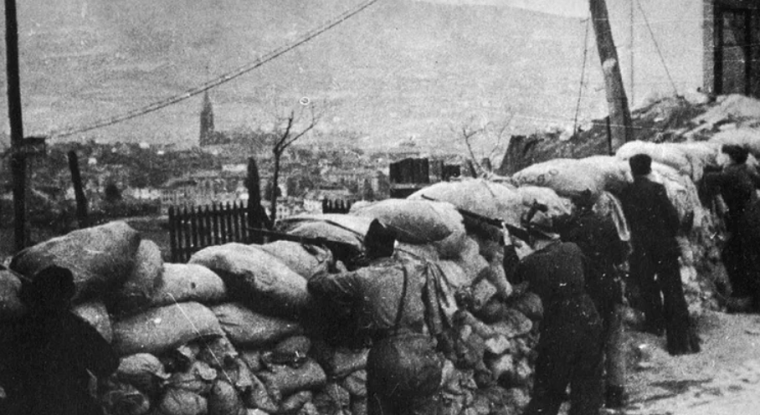
Recognising the changing situation, Aranda abandoned any expectation of expanding beyond the city. Instead, he concentrated on preparing its defence. Barricades were strengthened, strongpoints established, ammunition distributed and food stocks gathered wherever possible. Civilians were organised for essential services, while military engineers assessed the city’s most vulnerable approaches. The rebellion in Oviedo had succeeded, but it had also created a Nationalist enclave that was increasingly surrounded on every side. Within a matter of days, the struggle to seize the city would give way to the much longer and more destructive struggle to hold it.
While Colonel Antonio Aranda consolidated his position inside Oviedo, events elsewhere in Asturias moved decisively in the Republic’s favour. The military uprising that had succeeded in the provincial capital failed across most of the province, leaving the Nationalists in possession of a single city but little else. Within days of the rebellion, Republican organisations, workers’ militias and loyal security forces controlled almost every major industrial centre, mining district and port in Asturias. The key to this outcome lay in the province’s industrial geography. The coalfields stretching through the valleys of Mieres, Langreo, Sama and other mining communities contained tens of thousands of organised workers with long traditions of trade union activity and political mobilisation. Many had fought during the Asturian uprising of 1934 and retained access to explosives, engineering knowledge and informal systems of organisation developed in the mines. Although many of the best-armed miners had initially travelled towards León after Aranda’s assurances of loyalty, news of the rebellion in Oviedo spread rapidly. Mining columns began returning to Asturias, often travelling in requisitioned lorries and buses, bringing with them rifles, dynamite and a determination to retake the provincial capital.
Gijón, the largest city in Asturias and its principal seaport, remained firmly in Republican hands. The uprising there was defeated through the combined efforts of workers’ organisations, loyal Assault Guards, many Guardia Civil and civilian volunteers. Gijón did not fall cleanly at once; Colonel Antonio Pinilla’s Simancas barracks rose there, but the wider city remained Republican and the rebel position was isolated. Control of Gijón ensured that the Republic retained its most important Atlantic port in northern Spain, allowing supplies, volunteers and communications to continue despite the growing isolation of the northern Republican zone. The city’s industries also became increasingly important in supporting the war effort during the months that followed. Nearby Trubia was also Republican as Colonel José Franco Mussió did not join Aranda, leaving the Trubia arms factory in Republican hands.
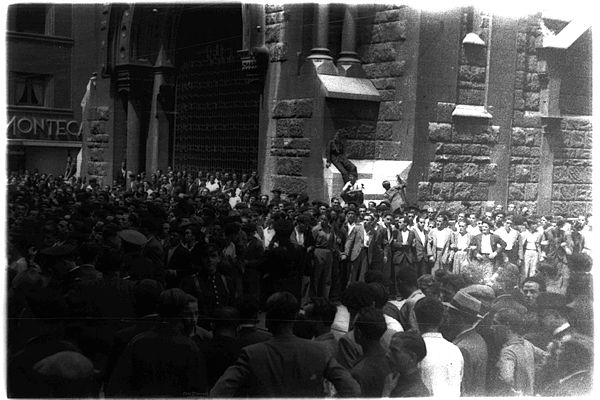
Avilés likewise rejected the military uprising. As Asturias’ second major port and an important industrial centre, its continued loyalty denied the Nationalists another valuable harbour while providing the Republic with additional manufacturing capacity. Local committees assumed increasing authority over public order, transport and food distribution, reflecting a pattern that was emerging across much of Republican Spain during the collapse of central government authority in the first weeks of the war.
Throughout the mining valleys, revolutionary committees were established with remarkable speed. Composed of representatives from trade unions, political parties and local organisations, these committees assumed responsibilities previously carried out by municipal authorities. They organised food supplies, requisitioned vehicles, recruited volunteers, guarded public buildings and coordinated militia movements. Their precise composition varied from town to town depending on local political balances, but throughout much of Asturias they became the practical centres of Republican authority during the opening weeks of the conflict.
The militias gathering around Oviedo reflected this diversity. Columns included members of the UGT, CNT, PSOE, PCE and smaller Republican organisations, alongside individuals with no formal political affiliation who volunteered to defend the Republic. Many miners brought valuable experience in handling explosives, a skill that would later prove significant during attempts to breach the city’s defences. Others possessed only limited military training but were motivated by memories of the repression that had followed the failed revolution of October 1934 and by the belief that the military uprising threatened both democracy and their communities.
Despite their numerical superiority, the Republican forces surrounding Oviedo faced serious challenges. Most militia columns had been organised within a matter of days and lacked unified command. Weapons were unevenly distributed, with some groups carrying military rifles while others relied on hunting guns, pistols or improvised explosives. Heavy artillery was scarce, communications between columns were often unreliable and political differences sometimes complicated military decision-making. The determination to recover Oviedo was almost universal, but agreement on how to achieve that objective proved more difficult.
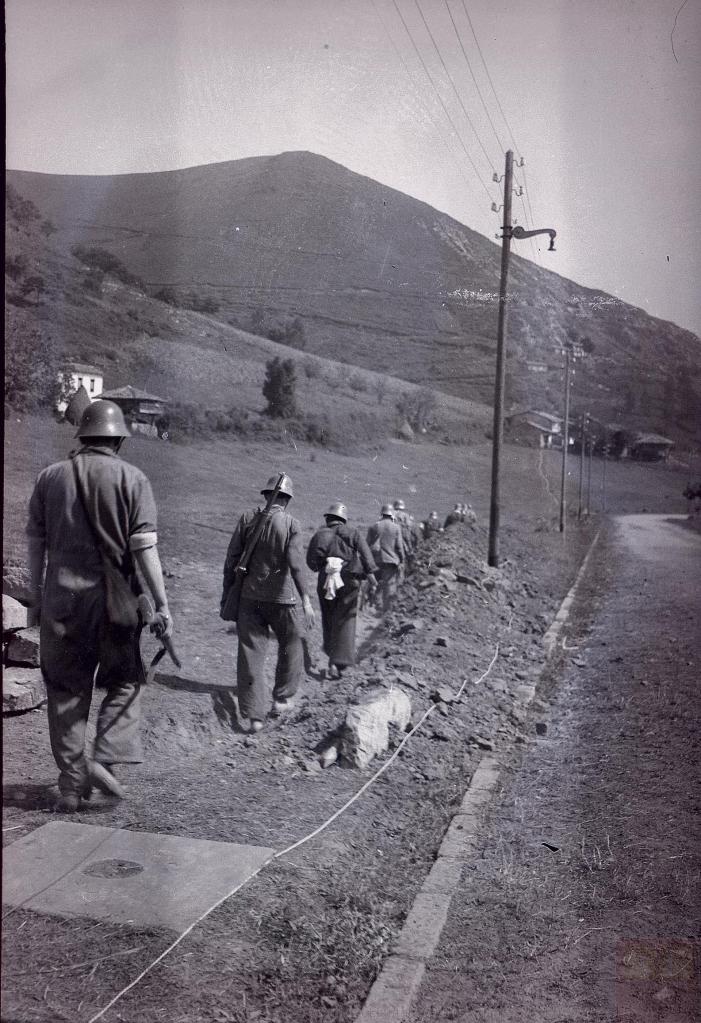
For the Republican leadership in Asturias, the capture of Oviedo now became an urgent priority. Leaving the city in Nationalist hands posed both military and political risks. It remained a potential base for future offensives, tied down thousands of Republican fighters who might otherwise be deployed elsewhere, and served as a visible reminder that the uprising had not been completely defeated within the province. Aranda had roughly 2,500 – 4,200 rebels, depending on whether later accounts include regular troops, Guardia Civil, Assault Guards, Carabineros, Falangists, Carlists, and several hundred civilian volunteers. As the siege developed, many civilians also contributed to the city’s defence by constructing barricades, digging trenches, transporting supplies, serving in hospitals and maintaining essential public services.
Outside the city, Republican forces assembled in steadily increasing numbers. By the end of July, somewhere between 10,000 – 30,000 militia members had participated in operations against Oviedo, although only a proportion were engaged in front-line fighting at any one time. These forces included miners from the coalfields, members of the UGT and CNT militias, Socialist and Communist volunteers, Republican security personnel and local civilian recruits. Reinforcements continued to arrive throughout the summer, but numerical superiority did not automatically translate into military effectiveness. Many columns retained their own commanders, equipment and political identities, making coordinated operations difficult during the early weeks of the siege.
Although the city was now under siege, large-scale assaults did not begin immediately. During the final week of July and throughout much of August, Republican militia columns concentrated on tightening the encirclement, occupying the surrounding high ground, bringing artillery into position and probing the Nationalist defences with patrols and limited attacks. Exchanges of rifle and machine-gun fire were frequent, and intermittent shelling caused increasing damage inside the city, but neither side yet possessed the organisation or resources necessary for a decisive offensive.
One of the besiegers’ greatest advantages was their familiarity with explosives. Many miners possessed years of practical experience handling dynamite underground and had access to supplies removed from collieries across the province. During the first weeks of the siege, explosives were used primarily against barricades and defensive positions, but both sides quickly realised that mining techniques could become an important feature of the struggle. Over the coming months, underground warfare would become one of the siege’s most distinctive characteristics.
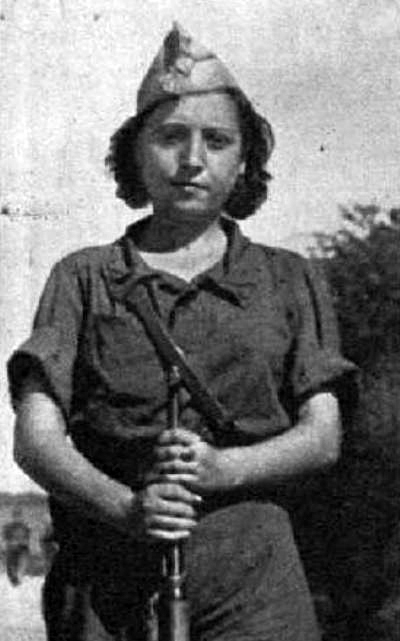
Among those who joined the Republican forces surrounding Oviedo was Pilar de la Fuente Penaos, better known as Pilar Lafuente, who was only 17 years old when the Civil War began. A committed Socialist and the younger sister of Aída de la Fuente Penaos, the 18-year-old ‘Red Rise of Asturias’ the celebrated communist activist killed during the Asturian uprising of 1934, Pilar had already experienced the consequences of political violence before the Civil War, with her mother in prison and later executed, and her brother shot in the opening days of the war in Oviedo. Following the military uprising, she took up arms with the Republican militias operating around Oviedo, serving as a combatant rather than remaining in the rear. Contemporary accounts described her as courageous under fire, while later interviews recalled her determination to fight alongside the men of her unit rather than accept a purely auxiliary role. Pilar’s experience reflected that of a number of women who participated directly in the fighting during the first months of the war in Asturias. Although women also served in hospitals, supply organisations and local committees, others carried rifles, manned front-line positions and endured the same bombardments and dangers as their male comrades. In later decades, Pilar became one of the few surviving militiawomen able to describe those experiences in detail, preserving an important first-hand account of the siege and the wider Republican defence of Asturias.
Inside Oviedo, Aranda introduced increasingly strict controls over civilian life. Food stocks were inventoried, ammunition carefully rationed and military discipline rigorously enforced. Bakeries, warehouses and municipal stores were placed under supervision to prevent panic buying or hoarding. Hospitals prepared for growing numbers of casualties, while churches, schools and other public buildings were adapted to meet military and humanitarian needs. Although shortages were not yet severe, the city’s leaders understood that every sack of flour, every medical dressing and every rifle cartridge might be needed if the siege lasted for weeks rather than days. When the encirclement of Oviedo was completed in the final days of July 1936, it trapped not only Colonel Antonio Aranda’s garrison but also much of the city’s civilian population. Precise figures vary, but historians generally estimate that between 45,000 and 50,000 civilians. Many families had never imagined they would find themselves living in a besieged city. Others had chosen to remain because they had elderly relatives to care for, nowhere safer to go, or simply because the speed of events left them no opportunity to leave before the roads were cut.
The city’s schools, churches and public buildings were transformed by the demands of war. Some schools suspended normal teaching as classrooms became shelters, hospitals or accommodation for displaced families. Cellars beneath larger buildings were reinforced to provide protection during shelling, while churches served both religious and practical purposes. For many residents, religious services continued to provide comfort throughout the siege, although some churches also housed supplies, medical facilities or temporary accommodation for those whose homes had been damaged. The siege would last another two and a half months of increasing violence.

