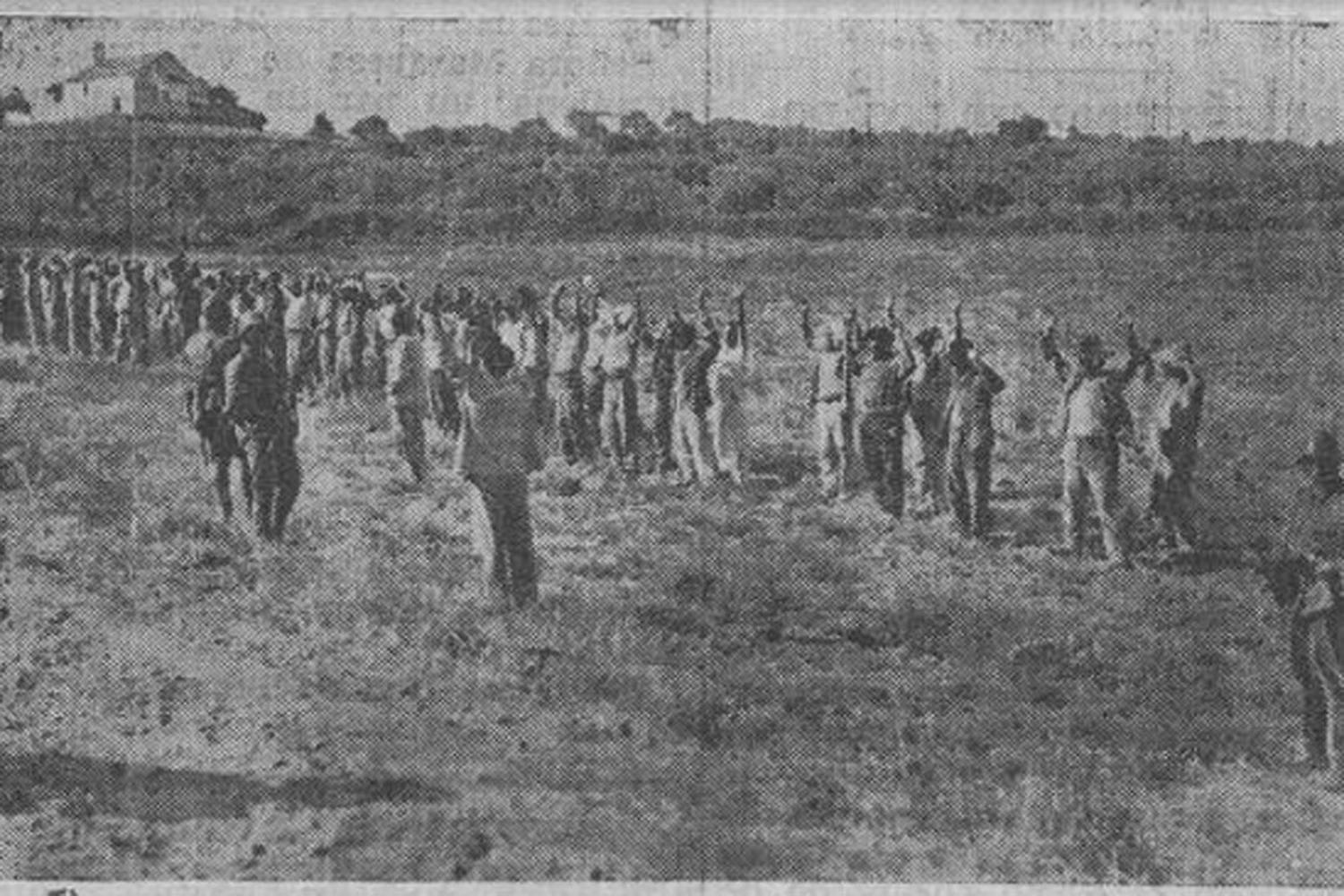
On 25 July 1936, the town of Fernán Núñez, south of Córdoba, was captured by Nationalist forces after several days of fighting. Following the military uprising, local Republican supporters, including members of the CNT and UGT, had surrounded the Guardia Civil barracks, where the rebel garrison remained under siege while awaiting reinforcements from Córdoba.
The deadlock ended when a Nationalist relief column commanded by Commander José Aguilar Galindo reached the town and broke the siege. The Republican defenders, composed largely of local militia and armed civilians, were unable to resist the better-equipped force, and Fernán Núñez quickly came under Nationalist control. The capture was followed almost immediately by arrests and reprisals. Republican officials, trade union members, agricultural labourers and other civilians suspected of supporting the Republic were detained. Many were executed without trial during the following days as Nationalist authorities sought to eliminate organised political opposition. Although the exact number of victims remains uncertain, historians regard Fernán Núñez as the site of one of the first major episodes of Nationalist repression in Córdoba Province, with approximately 50-55 killed on 25 July alone, including pregnant women.
The events at Fernán Núñez established a pattern that would soon be repeated across much of the province. As Nationalist columns advanced from Córdoba, military victories were frequently followed by systematic arrests and extrajudicial executions, transforming local political conflict into a campaign of organised repression that would claim thousands of lives in the months ahead.
Meanwhile, on 25 July 1936, the Spanish Civil War became unmistakably international. What had begun as a military uprising against the Second Spanish Republic was now drawing in the major ideological powers of Europe. On this day, both Nazi Germany and Fascist Italy moved decisively toward direct support for the Nationalist rebellion to become a genocide.
The Nationalists faced a serious military problem in late July 1936. Although General Francisco Franco commanded the Army of Africa, the most experienced and disciplined force available to the Nationalists, those troops remained trapped in Spanish Morocco. Much of the Spanish navy had stayed loyal to the Republic, making large-scale transport across the Strait of Gibraltar extremely difficult. Without the Army of Africa, the rebellion risked becoming isolated and fragmented. Franco and other Nationalist leaders urgently requested foreign assistance to move troops into mainland Spain.
On 25 July, Adolf Hitler approved German aid to the rebels after discussions with Nationalist representatives. Germany agreed to provide transport aircraft, aircrews, and logistical support. This operation later became known as Operation Magic Fire, or Feuerzauber. Around the same time, Benito Mussolini also authorised assistance from Fascist Italy.
The immediate military importance of this decision was enormous. German Junkers Ju 52 aircraft and Italian transport aircraft would soon begin transporting Nationalist troops from Morocco into southern Spain, bypassing the Republican naval blockade. This became one of the first major military airlifts in modern history and helped prevent the collapse of the rebellion during its most vulnerable early phase. The troops being transported were not ordinary conscripts. The Army of Africa included the Spanish Foreign Legion and Moroccan Regulares, colonial units hardened by years of warfare in North Africa during the Rif War. Many Republican supporters feared these forces because of their discipline, combat experience, and reputation for extreme brutality.
The intervention also carried immense political significance. Hitler and Mussolini did not simply sympathise with the Nationalists; they increasingly viewed the Spanish conflict as part of a wider European ideological struggle against socialism, communism, and liberal democracy. Spain was becoming a testing ground for alliances, military technology, propaganda, and political influence that would later shape the wider crises leading toward the Second World War. For Hitler, the decision involved both ideology and opportunity. A Nationalist victory promised the emergence of a friendly government on France’s southern border while reducing the influence of socialist and communist movements in western Europe. German leaders also recognised that involvement in Spain could increase their diplomatic influence at relatively little immediate cost.
The Nationalists also benefited from developments in neighbouring Portugal. Although Portuguese support was less dramatic than the assistance provided by Germany and Italy, the government of António de Oliveira Salazar viewed the Spanish Republic with deep suspicion and increasingly favoured the Nationalist cause. The long Portuguese border offered the rebels valuable access to communications, supplies, diplomatic contacts, and relative security at a time when large parts of Spain remained contested.
Meanwhile, the Republican government also intensified efforts to secure international assistance and rebuild its military forces. Ministers in Madrid sought aircraft, weapons, ammunition, and diplomatic support while attempting to reorganise loyal military units into an effective fighting force. The challenge was immense. The government not only faced the rebellion itself but also the growing influence of independent militias that had emerged during the collapse of the coup. France remained divided over intervention. The Popular Front government of Léon Blum showed sympathy toward the Republic, but French leaders feared provoking a wider European crisis. Britain increasingly favoured a policy of non-intervention, though critics argued this would disadvantage the Republic more than the rebels, who were already receiving aid from fascist powers. In Madrid, the Republican government faced growing difficulty balancing military defence with revolutionary pressures inside the capital. Armed militias controlled many streets and checkpoints while government ministries attempted to restore administrative authority. Fear of additional rebel conspiracies remained widespread, and arrests of suspected right-wing sympathisers continued.
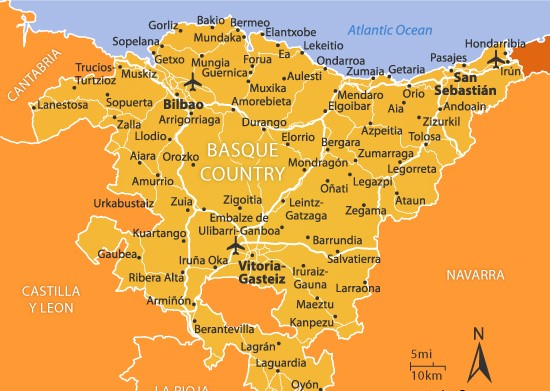
Meanwhile, in the summer of 1936, Bilbao in the Basque Country was one of the most prosperous and strategically important cities in Spain. Situated on the banks of the Nervión Estuary approximately 14 kilometres from the Bay of Biscay, it had grown from a medieval commercial centre into the industrial heart of northern Spain. By 1936, the city’s population had reached approximately 160,000, making it one of Spain’s largest urban centres and the undisputed economic capital of the Basque Country.
Bilbao’s prosperity rested upon a close relationship between heavy industry and maritime trade. The port handled millions of tonnes of cargo each year, exporting iron, steel and manufactured goods while importing coal, machinery and raw materials from across Europe. The city’s banks and commercial houses financed much of this activity, making Bilbao not only an industrial powerhouse but also one of the country’s leading financial centres. This rapid industrialisation had transformed Bilbao’s social composition. Alongside established merchant families and an influential Catholic middle class lived a large industrial workforce employed in factories, mines, railways and docks. Trade unions were well established, particularly the UGT, while the PSOE enjoyed significant electoral support among industrial workers. The CNT also maintained an active, though smaller, presence than in industrial centres such as Barcelona. Communist influence remained comparatively limited before the outbreak of the Civil War but was gradually increasing among younger workers and sections of the unemployed.
The political landscape of Biscay differed markedly from that of many other regions of Spain because of the strength of Basque nationalism. The Basque Nationalist Party (PNV) occupied a unique position within local politics. Deeply rooted in Catholicism and committed to defending Basque language, culture and self-government, it attracted support from many who were socially conservative but politically committed to greater regional autonomy. Although the PNV often disagreed sharply with Socialists, Republicans and anarchists on economic and social questions, it also viewed centralisation with deep suspicion and regarded Basque self-government as its overriding objective. The Popular Front’s victory in the general election of February 1936 strengthened hopes that long-promised Basque autonomy might finally become a reality. Negotiations over a Statute of Autonomy accelerated during the following months, encouraging many Basque nationalists to continue cooperating with the Republican government despite profound ideological differences with some of its supporters. At the same time, political tensions remained high. Labour disputes, demonstrations and occasional political violence reflected the increasingly polarised atmosphere that characterised Spain during the first half of 1936, although Bilbao avoided the levels of street violence experienced in Madrid and some other major cities.
As the military conspiracy gathered momentum during the spring and early summer of 1936, Biscay presented the plotters with both an opportunity and a problem. Capturing Bilbao would give the conspirators control of Spain’s greatest industrial centre in the north, its largest Atlantic port under Republican control and factories capable of producing steel, engineering equipment and, eventually, armaments. Losing the city, however, would leave the Nationalists without the industrial resources needed to sustain operations in the north and would isolate Navarre from the Bay of Biscay. The city’s large industrial workforce, strong trade union movement and substantial support for the Popular Front made it one of the least favourable environments for a military uprising. Any attempt to seize control would almost certainly provoke an immediate response from organised workers, while the proximity of large factories and densely populated working-class districts meant that military units would find it difficult to isolate potential centres of resistance.
The position of the Basque Nationalist Party added another layer of uncertainty. Mola hoped that the PNV’s Catholic identity and conservative social outlook might persuade at least some Basque Nationalists to support or tolerate the uprising. Instead, many leaders within the Biscayan branch of the party concluded that the conspiracy threatened the prospect of Basque self-government far more than continued cooperation with the Republic. Although the PNV had significant political disagreements with Socialists, Republicans and anarchists, the party increasingly viewed the military conspiracy as a danger to the Statute of Autonomy then being debated in Madrid.
Within Bilbao itself, the loyalty of the security forces was uncertain. The Republican authorities were not unaware of the danger. Reports of a possible military conspiracy had circulated for months, while news of political violence elsewhere in Spain heightened concern that the armed forces might intervene. News of the military uprising in Spanish Morocco reached Bilbao on 18 July 1936, bringing an atmosphere of growing uncertainty rather than immediate violence. Throughout the day, political leaders, trade union representatives and military commanders waited to see whether the local garrison would follow the example of other cities where officers had already declared against the Republic. Bilbao’s military garrison was comparatively small and lacked the unity necessary to carry out a decisive coup. Although a number of officers sympathised with General Emilio Mola’s conspiracy, others remained loyal to the Republic or hesitated to commit themselves without a clear prospect of success. This indecision proved crucial. Every hour that passed allowed the civil authorities to strengthen their position and gave workers’ organisations more time to organise resistance.
The Civil Governor of Biscay, together with Republican officials, remained determined to prevent the city from falling into Nationalist hands. Loyal members of the Assault Guard and sections of the Civil Guard were deployed to protect government buildings, communications centres and other strategic locations. Their presence reassured many residents that the Republic still retained effective authority within the city, even as reports arrived of successful military uprisings elsewhere in Spain. Trade unions and political organisations also mobilised quickly. Volunteers assembled at union headquarters and party offices, prepared barricades at key locations and organised patrols alongside loyal security forces. Although relatively few possessed military rifles, many were determined that Bilbao would not suffer the fate of cities where the army had seized control before civilians could respond. Their rapid mobilisation created a powerful deterrent to any officer considering an open declaration for the uprising. The city of Oviedo rose up in arms against the Republic with a defence of 4,200 soldiers, who were surrounded by 10,000 soldiers of the Popular Army. By the end of the siege a few months later, Oviedo being be blown to shreds.
One of the decisive factors in Bilbao was the attitude of the Basque Nationalist Party (PNV). The party did not attempt to launch a revolution or assume control of the city, but neither did it support the military conspiracy. Instead, its leaders increasingly cooperated with the Republican authorities in maintaining order and resisting the coup. This decision deprived the conspirators of the broad political support they had hoped to attract among Biscay’s Catholic population and left them isolated from much of the province’s civilian leadership. The uprising in Bilbao gradually collapsed through a combination of indecision, political isolation and effective action by the Republican authorities. Officers suspected of supporting the conspiracy were placed under surveillance, while several were arrested before they could organise coordinated military action. Those who remained loyal to the Republic retained control of the city’s principal military installations, preventing the conspirators from establishing the secure base they required to challenge the civil government.
With the military uprising defeated, Bilbao entered a new phase. While fighting continued across much of Spain, the city itself remained comparatively calm during the final week of July 1936. The immediate threat of a Nationalist coup had passed, but few believed the danger was over. News arriving from neighbouring provinces made it clear that the conflict was rapidly becoming a civil war, and Bilbao’s leaders recognised that the city would soon play a central role in the Republican defence of northern Spain.
The Republican authorities moved quickly to consolidate control. Public buildings remained under government administration, while loyal members of the Assault Guard, Civil Guard and other security forces continued to patrol the streets alongside civilian volunteers. Officers suspected of supporting the uprising were arrested, removed from their commands or placed under close supervision, reducing the possibility of further attempts to overthrow the Republican government. Although political organisations exercised growing influence over local affairs, the municipal administration continued to function, allowing essential services such as transport, food distribution and public utilities to operate with relatively little interruption.
The cooperation that developed between the Republican government and the Basque Nationalist Party proved particularly important. Ideological differences remained substantial, especially over questions of religion, labour relations and social reform, yet both sides understood that preventing a Nationalist victory in Biscay had become the immediate priority. Throughout the closing days of July, representatives of the PNV worked alongside Republicans, Socialists and other organisations to maintain public order, support the war effort and continue negotiations for Basque autonomy, which many believed could only be achieved if the Republic survived.
Bilbao’s industries immediately acquired new importance. The city’s steelworks, engineering workshops, shipyards and railway facilities represented one of the greatest concentrations of heavy industry still under Republican control. Although full wartime production would require time to organise, factories began adapting their work to military needs. Engineers repaired vehicles, workshops manufactured spare parts and industrial plants prepared to produce equipment essential for the defence of the northern front. The city also became a vital centre for storing weapons, ammunition and supplies arriving through its port before being distributed to Republican forces elsewhere in the Basque Country.
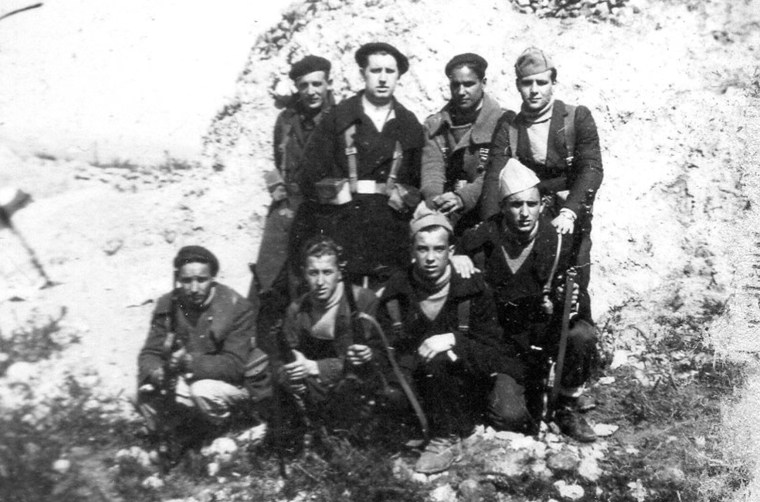
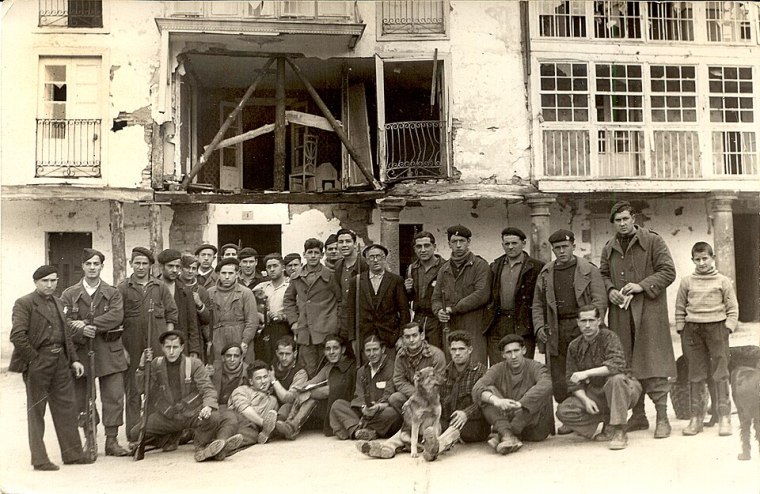
Recruitment accelerated throughout the city. Political parties, trade unions and Basque nationalist organisations all raised volunteer formations during the final week of July. Many recruits had no previous military experience, but enthusiasm remained high as thousands came forward to defend the Republic and the Basque Country. Training was often rudimentary, conducted in parks, open ground or factory yards using whatever weapons were available. Military instructors, retired soldiers and loyal security personnel attempted to introduce basic drill, rifle handling and field discipline before volunteers were sent to the front.
Throughout late July, volunteers and supplies departed Bilbao almost daily for the front in Gipuzkoa. The most urgent fighting was no longer expected within Biscay itself but to the east, where Nationalist forces advancing from Navarre threatened San Sebastián, Irún and the roads leading towards the French border. Lorries carrying militia units, food, ammunition and medical supplies left the city in growing numbers, linking Bilbao’s factories and warehouses directly to the developing campaign. By the final week of July 1936, the immediate crisis in Bilbao had passed, but events elsewhere in the Basque Country made it clear that the city had little reason for optimism. While Biscay remained securely under Republican control, neighbouring Gipuzkoa had become the principal battlefield of northern Spain. Each day brought fresh reports of fighting that steadily drew the front closer to Bilbao.
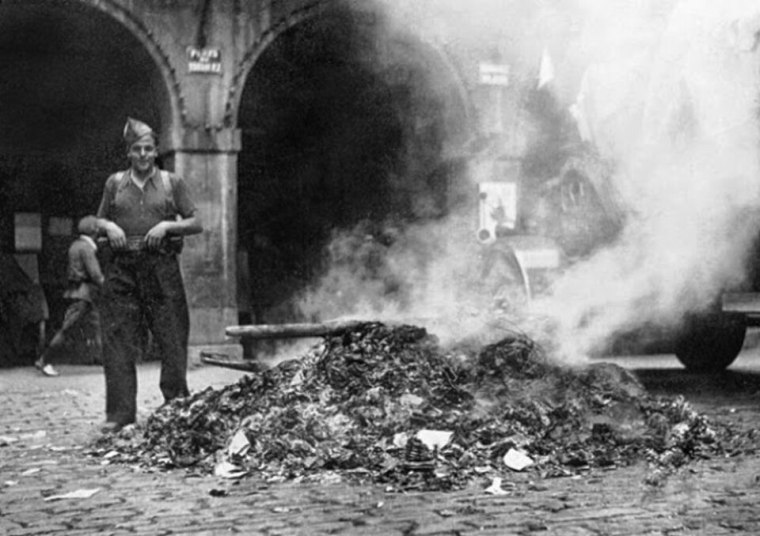
With a population of approximately 26,500, Morón de la Frontera, 65km from Seville remained under Republican control for a week after the military uprising before a Nationalist column of around 1,000 Legionnaires, Moroccan Regulares and supporting troops, commanded by Major Antonio Castejón, advanced on the town. Aircraft bombed Morón before the assault, and Nationalist forces entered on 25 July 1936, quickly overwhelming the remaining resistance. The occupation was followed by widespread arrests, executions and the systematic looting of homes, shops and farms belonging to Republican supporters. Hundreds of residents were killed during the repression that followed, making Morón one of the worst affected towns in Seville Province. Contemporary witnesses recalled that some victims’ bodies remained where they had fallen for days before burial., and that some bodies lay in the streets and fields for days before burial, with pigs and others animals feeding on the dead.
Women also became specific targets of the repression. Historical research records rapes, sexual assaults and public humiliation directed at women associated with Republican families. Many had their heads forcibly shaved, were paraded through the streets and subjected to other degrading punishments such as castor oil poisoning intended to intimidate both the victims and the wider community. These acts formed part of a broader campaign of terror that accompanied the Nationalist occupation of much of Andalucía during the opening weeks of the Civil War.
The occupation of Morón de la Frontera was followed by one of the largest massacres in Seville Province. Although the exact number of people killed during the entry of Castejón’s column on 25 July 1936 cannot be established, historian José María García Márquez concludes that more than 200 people were killed that day alone. His wider research has identified 413 named victims of the repression, with at least 55 additional disappeared people and many others still unidentified. García Márquez therefore estimates that no fewer than 550 residents of Morón de la Frontera were killed during the Civil War and the early years of the Franco dictatorship.

