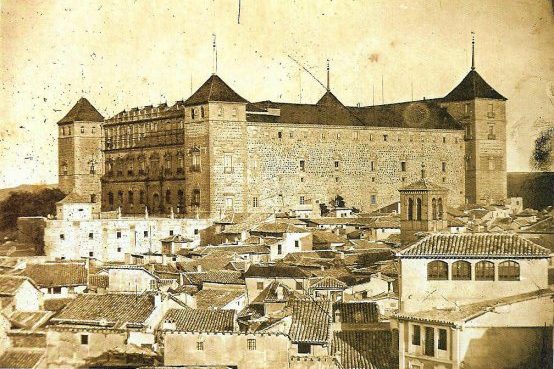
In the summer of 1936, Toledo was a provincial capital of around 30,000 inhabitants situated less than seventy kilometres south of Madrid. For centuries the city had occupied a special place in Spanish history. Formerly the capital of the Visigothic kingdom and later one of the most important cities of Castile, Toledo was often presented as a symbol of Spain’s national past. Dominating the skyline above the Tagus River stood the Alcázar, a massive fortress that had served as a royal residence, military academy and symbol of state authority.
The Popular Front victory in the February 1936 elections had been welcomed by many workers, labourers and small tradesmen across Toledo province. The socialist movement was particularly strong in the surrounding countryside, where landless agricultural labourers had long demanded agrarian reform. The Unión General de Trabajadores (UGT) maintained an active presence in both the city and the province, while socialist organisations held influence in local government. Toledo’s deputy mayor, Domingo Alonso Jimeno, was a prominent socialist journalist and trade union figure whose political career reflected the strength of the labour movement in the city.
The anarchist CNT was less influential in Toledo but possessed an active membership among workers and would play an important role once the war began. Communist influence remained comparatively limited in July 1936, though local communist organisations existed and would expand rapidly during the conflict.
Opposing the Popular Front were conservative Catholics, monarchists, members of the CEDA, and supporters of the Falange. Toledo’s religious heritage made it a significant centre of Catholic life. The city’s churches, convents and ecclesiastical institutions gave the political right a strong social base. Many conservative residents viewed the Popular Front government with deep suspicion, particularly after months of strikes, political violence and anti-clerical incidents elsewhere in Spain.
Military influence was visible throughout the city. Toledo housed the Infantry Academy, one of the most prestigious military institutions in Spain. Although the academy was largely empty during the summer holidays of 1936, its presence ensured that military traditions remained deeply rooted in local society. The city was also home to the Central School of Gymnastics, directed by Colonel José Moscardó Ituarte, a respected officer who had served in Morocco and enjoyed considerable authority among local military personnel. More important was the Toledo Arms Factory. Located outside the historic centre, it was one of Spain’s principal military-industrial facilities and contained substantial stocks of weapons, ammunition and military equipment. In the event of a national crisis, control of the factory would become a matter of immense strategic importance. The Ministry of War repeatedly demanded that ammunition be released from Toledo’s stockpiles. The requests were directed to Colonel José Moscardó, who refused.
On 17 July 1936, Toledo did not immediately erupt into violence. Republican officials attempted to determine which officers could be trusted. Trade union organisations prepared to defend the Republic if necessary. Military officers waited for orders and watched events unfold elsewhere and Civil Governor Manuel María González López still represented the Republican government. Beneath the surface, a struggle was already underway over the resource that would determine Toledo’s fate – ammunition. For Republican officials, Moscardó’s refusal to supply weapons to Madrid was an unmistakable warning. The military officers in Toledo had not openly rebelled, but neither were they obeying orders.
The position of the Guardia Civil was equally worrying. The provincial command was led by Lieutenant Colonel Pedro Romero Basart. In Toledo there were growing indications that much of the Guardia Civil command sympathised with the rebels while the civilian authorities possessed few options. The government could request cooperation, but it lacked the forces needed to seize the arms factory or arrest senior officers without risking open conflict. Workers from the UGT and CNT watched developments closely, aware that if the military rose, they would likely be called upon to defend the Republic.
The rebellion in Toledo did not began until the morning of Tuesday 21 July 1936. At 7:00am, Moscardó formally proclaimed a state of war in the courtyard of the Alcázar, which housed the Infantry, Cavalry and Quartermaster Academy. The declaration transferred authority from the civilian government to the military command. Although later accounts would portray the uprising as centred entirely upon the Alcázar, the fortress was only one part of a much wider operation unfolding across the city. Rebel officers and Guardia Civil units moved quickly to secure key locations. Detachments occupied the Arms Factory, Tavera Hospital, the Provincial Prison, the City Hall, the Telephone Exchange, the Post Office, the Cathedral precinct, Plaza de Zocodover, the Slaughterhouse, the Assault Guard barracks in Plaza de Padilla, and the bridges crossing the Tagus River. Control of these points would allow the rebels to dominate communications, transport routes and access into the old city.
One of the most important tasks that morning was the transfer of ammunition from the Arms Factory to the Alcázar. Guardia Civil loaded trucks with cartridges, weapons and military supplies and began moving them through Toledo’s streets. The operation continued throughout the day. The Republican government understood what was happening and ordered air attacks against the convoys. During the evening, one of the last ammunition trucks was struck while approaching the fortress, but by then substantial quantities of ammunition had already reached the Alcázar.
The uprising initially achieved many of its objectives. Government authority inside Toledo collapsed rapidly. Civil Governor Manuel María González López found himself unable to resist the military takeover. Moscardó appointed the conservative notary Justo del Pozo Iglesias as a replacement civil governor, signalling that the rebels intended to establish their own administration rather than simply hold military positions.
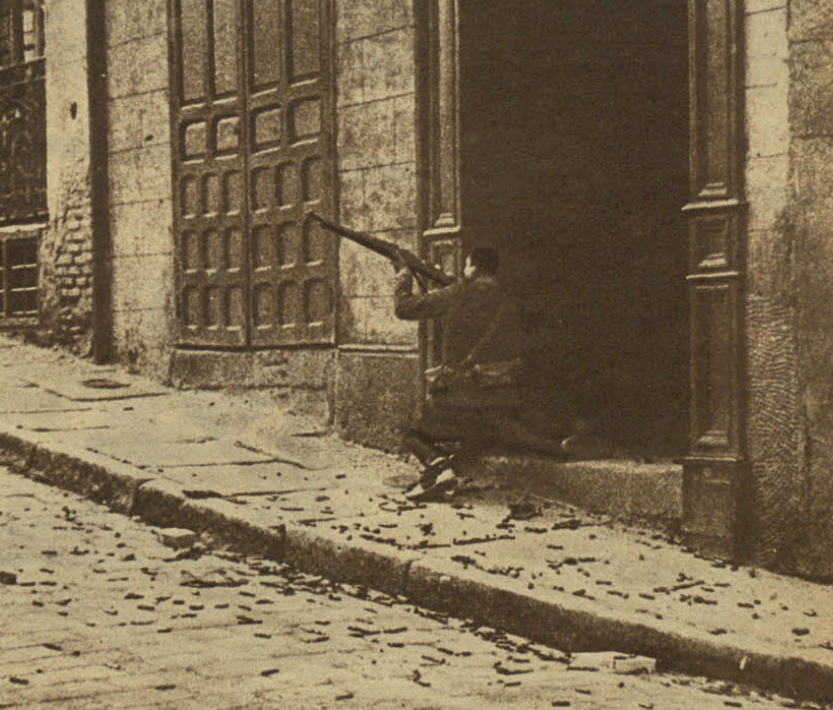
The Republican government had no intention of abandoning Toledo. Throughout 20 and 21 July forces were being assembled in Madrid for a move south. The advance elements belonged to a column under General José Riquelme López-Bago, a veteran officer who had remained loyal to the Republic. His force included regular infantry, Assault Guards, artillery and armed volunteers. The first serious fighting occurred around the Tavera Hospital, situated outside the historic centre. The position was defended by Major Ricardo Villalba Rubio, a professor at the Central School of Gymnastics and nephew of General Riquelme himself. Villalba commanded a small force consisting of three captains, four lieutenants, one second lieutenant, four sergeants, thirty-two enlisted soldiers, and a Guardia Civil detachment of approximately forty men under two officers. Sheltering behind their lines were around sixty non-combatants, including patients, nuns from the Sisters of Charity, hospital staff, children and other civilians.
When Republican troops reached the hospital, they encountered determined resistance. Machine-gun fire halted the initial advance. According to accounts from the rebels, one Republican armoured vehicle pushed forward during the fighting before being disabled by explosive charges thrown by Villalba and Captain Badenas. Despite this local success, the rebels could not hold their exposed positions indefinitely. Republican reinforcements were continuing to arrive from Madrid, while the rebels remained scattered across isolated strongpoints throughout the city. Villalba recognised the danger and ordered a withdrawal towards the Alcázar. The retreat was conducted successfully, allowing his men to join the growing concentration of rebel forces around the fortress.
At the Arms Factory, events followed a similar pattern. Around 200 Guardia Civil held the facility while negotiations took place with approaching Republican forces. During these discussions, ammunition continued to be removed and transported into the Alcázar. Only after these supplies had been evacuated did the rebels abandon the position and destroy what they could not carry away. By the evening of 21 July, the military situation had changed dramatically. The rebels had begun the day attempting to seize and hold the city. They ended it preparing to abandon most of Toledo. Republican forces were now entering the city in strength. The government retained control of the roads to Madrid and could continue sending reinforcements.
Moscardó’s supporters still possessed hundreds of trained Guardia Civil and large stocks of 800,000 rifle and machine-gun cartridges, around 1,200 Mauser rifles and carbines, thirteen Hotchkiss machine guns, thirteen additional machine guns used for military instruction, grenades, mortar ammunition, explosives and artillery pieces. The rebels of the Alcázar would suffer from hunger, thirst and bombardment during the coming siege, but they would never lack ammunition.
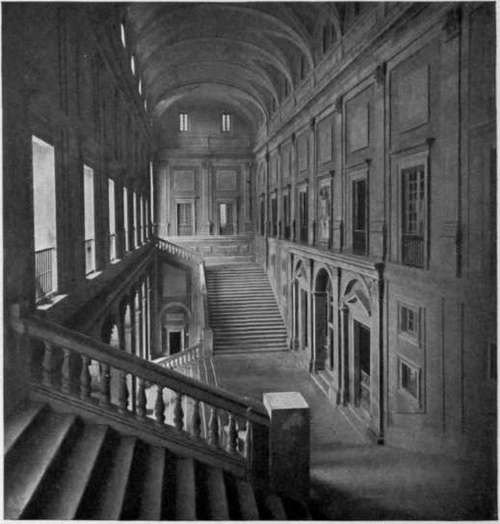
As Republican forces pushed deeper into Toledo, the surviving rebel detachments withdrew to the strongest position, the Alcázar. The fortress dominated the city from its hilltop position above the Tagus River. For centuries it had served as a symbol of royal, military and state authority. Although badly damaged by fire in 1886, parts of the structure had subsequently been reinforced with steel and concrete. The building now became the centre of the rebellion in Toledo.
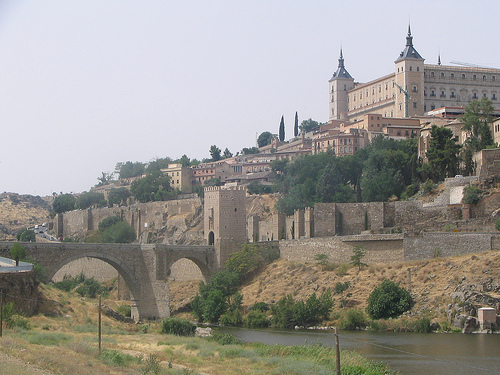
Throughout the night of 21 July and into the following day, soldiers, Guardia Civil, civilians and political supporters streamed through its gates. The largest group consisted of approximately 690 Guardia Civil assembled by Lieutenant Colonel Pedro Romero Basart from units throughout the province. They formed the backbone of the rebellion and provided most of the garrison’s military experience. They were joined by around one hundred officers and senior personnel from the Guardia Civil, Infantry Academy and Central School of Gymnastics. A further 150 soldiers and military employees entered the fortress, together with approximately 200 Falangists, monarchists and right-wing civilians willing to bear arms.
One of the most enduring myths of the siege emerged at this point. Later Francoist accounts frequently described the rebellion as a heroic stand by the cadets of the Infantry Academy. In reality, the academy was largely empty because it was summer and most cadets were on leave. Modern historians generally agree that only seven or eight infantry cadets were actually present inside the Alcázar when the siege began, with perhaps one artillery cadet also in the fortress. Their presence was real, but their numbers were tiny compared to the image later promoted by Nationalist propaganda.
Approximately 670 civilians entered alongside the rebels. Around 500 were women and approximately 50 were children. Most were wives, daughters and relatives of Guardia Civil or military personnel. They would spend the coming months living inside a building that would be subjected to artillery fire, aerial bombardment and mining operations. According to accounts from within the fortress, the women were generally excluded from military duties. They were not expected to participate in the rebellion and were often kept away from dangerous positions whenever possible. But their presence profoundly influenced morale. Many rebels later wrote that the determination to protect their families strengthened their resolve to continue resisting.

As rebel forces abandoned the city and retreated into the fortress, they had also brought prisoners with them. Among these were Republican officials, left-wing activists and political hostages. Estimates vary, but approximately fifty prisoners were held inside the Alcázar during the early stages of the siege. Their presence was largely omitted from early Francoist accounts of the rebellion, which preferred to portray the fortress solely as a refuge for innocent civilians. After the war, Moscardó himself acknowledged that prisoners had been taken into the fortress, writing simply, ‘we took several leftists as hostages.’
One of the most controversial figures inside the fortress was the Republican Civil Governor of Toledo, Manuel María González López. Later Nationalist accounts often described him as a prisoner. Subsequent research has suggested a more complex reality. Evidence emerged indicating that he may have entered the Alcázar voluntarily and maintained a cooperative relationship with the rebels. The circumstances remain debated by historians.
By 22 July approximately 2,500 Republican troops and militiamen were operating in and around the city. They included regular infantry, Assault Guards, a 105mm artillery battery, a machine-gun company from the León Regiment No. 2, anarchist volunteers from the Libertarian Eagles militia, and militia members associated with the Madrid Bar Association.
Around 10:00am on 23 July 1936, a telephone call reached Colonel José Moscardó inside the fortress. The caller informed him that his son, Luis Moscardó, had been arrested by Republican militia, and that they, would have him shot if we did not surrender within ten minutes. To prove it was true, the son came to the phone and calmly told his father that nothing was wrong. Luis Moscardó was able to say goodbye over the phone to his father, as the colonel would not surrender under any circumstances.
News travelled beyond Toledo almost immediately, carried by newspapers, radio broadcasts and word of mouth about the execution. For Nationalist supporters, the story became a powerful symbol of sacrifice and determination. Moscardó was portrayed as a commander who had chosen duty over family, refusing to surrender even when faced with the death of his own son. In the version popularised by Francoist propaganda, Luis Moscardó was led away and shot almost immediately after the conversation ended. The story appeared in newspapers, speeches and books. It became one of the central myths of the Alcázar, repeated throughout the war and for decades afterwards. (The historical reality was different; Luis Moscardó was not even executed that day, living another month. On 23 August 1936, thirty-one days after the telephone call, he was killed during a mass execution of prisoners carried out in Toledo after Nationalist aircraft bombed Republican-held areas.)
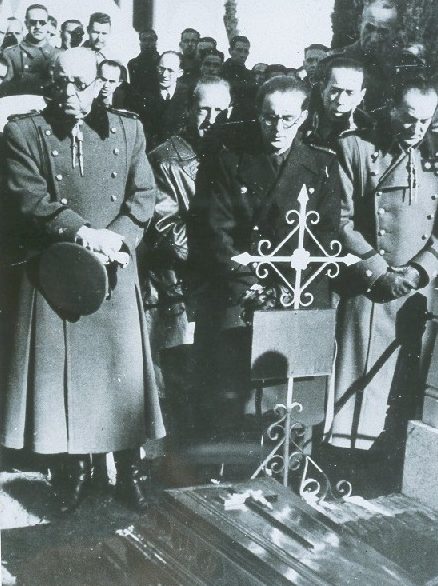
By the end of July’s first week of fighting, around 2000 people were surrounded in the Alcázar. Fewer than half were actually combatants. The remainder consisted of wives, mothers, children, elderly relatives, servants, prisoners and hostages. Their presence ensured that every military decision carried human consequences. Classrooms, offices and corridors became temporary living quarters. Families slept wherever space could be found. Food was carefully rationed. Water remained available during the opening days of the siege, but consumption was monitored closely, since nobody knew how long the fortress would hold out. The presence of civilians also created practical and moral problems. Among those living inside the Alcázar were not only the families of the rebels but also political prisoners taken during the uprising and retreat from Toledo. The fifty Republican hostages also occupied an uncomfortable place within the fortress.
On 24 July, rebels of the Alcázar carried out a sortie to obtain food and supplies from the surrounding city. Such expeditions were becoming necessary because the fortress could not survive indefinitely on existing stocks alone. During the operation two days later, members of the Guardia Civil arrested the family of Domingo Alonso Jimeno. He was deputy mayor of Toledo, a former deputy, a journalist and one of the city’s most prominent socialist and UGT leaders. As the Guardia Civil attempted to take him into custody near his home on Calle Sierpes, he resisted and was shot trying to protect his family, dying of his wounds two weeks later. Accounts indicate that his wife and daughter witnessed the event before being taken towards the Alcázar. His death became one of the earliest and best-documented killings directly connected to the siege. The episode disturbed even some of the rebel leadership, and in a letter to Alonso’s wife, Moscardó expressed anger over the incident. Referring to the arrest of Domingo Alonso’s family, he wrote, ‘I was extremely displeased, as they will believe the sortie was solely to take them as collateral, and I am incapable of doing that; moreover, it disgusts me, and I would gladly release them.’ Whether Moscardó objected primarily to the hostage-taking itself or to the political consequences it created remains open to interpretation. What the letter demonstrates is that disagreements already existed within the fortress over how prisoners and civilians should be treated.
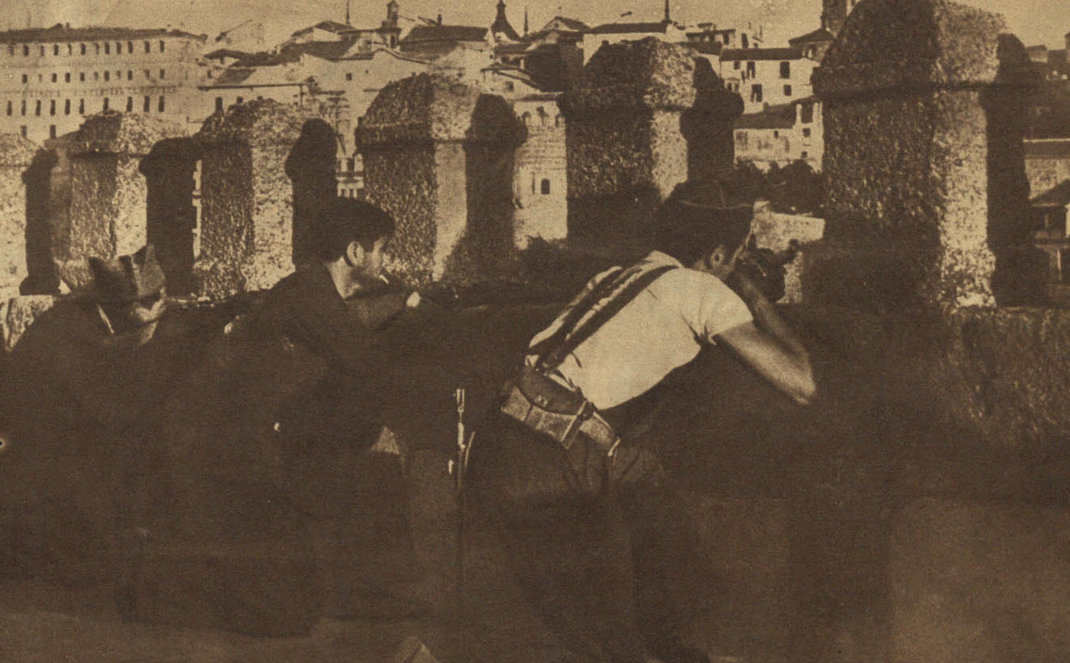
For the people of Toledo outside the Alcázar, daily life continued under increasingly difficult conditions. Republican militia patrols guarded roads, bridges and public buildings. Checkpoints appeared throughout the city. Suspected supporters of the rebellion were questioned and, in some cases, detained. Families searched for missing relatives. Rumours circulated constantly. Every artillery round fired at the fortress echoed through streets still occupied by thousands of civilians. By 25 July, Toledo had become a city of prisoners, hostages, refugees and anxious relatives. The military front line ran through the heart of the city, but the burden of the conflict was increasingly being carried by ordinary people whose names rarely appeared in official reports. Many had not chosen sides in any military sense. They were shopkeepers, labourers, railway workers, domestic servants, craftsmen, clergy, office workers, widows, children and pensioners trying to understand how their city had become a battlefield in less than a week. Artillery positions, militia checkpoints and military patrols had become part of the urban landscape. Residents could hear rifle fire, machine-gun bursts and occasional bombardments. At night the fortress appeared as a dark silhouette above streets patrolled by armed men. During the final days of July, armed patrols operated throughout Toledo. Bridges, road junctions and important public buildings were guarded. Vehicles entering or leaving the city could be stopped and searched. Individuals suspected of assisting the rebellion risked arrest, and no records were kept on how many were arrested for supporting the rebellion. Investigations were underway against known Falangists, conservative activists and individuals suspected of supporting the uprising. Some were held temporarily for questioning, while others disappeared into improvised detention centres and prisons.
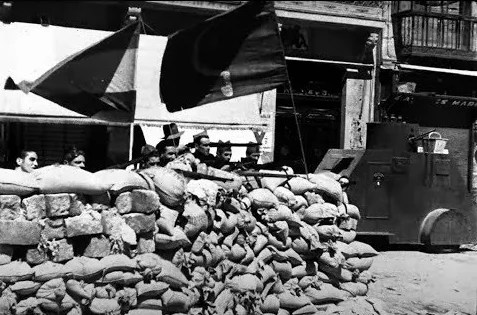
Supporters of the Republic experienced their own anxieties. The uprising had already produced casualties, hostages and disappearances, the numbers unclear to this day. Food remained available during the final week of July, though concerns were growing, as military requirements increasingly took priority. Republican forces needed supplies. Militia columns required feeding. Republican commanders hoped to starve the rebels into surrender. Food deliveries to the fortress ceased. Every successful rebel sortie in search of provisions therefore became a matter of concern to the besiegers. The presence of thousands of armed men placed additional pressure upon local resources, and women, while doing what they could, were increasingly holding the city together.
By 25 July 1936, the siege of the Alcázar had entered a dangerous new phase. The fortress remained surrounded and the rebels also faced isolation. Reliable communication with Nationalist territory was becoming almost impossible. Electricity was limited, radio contact was unreliable, and information about events elsewhere in Spain often arrived as rumour rather than fact. Nobody inside the fortress knew precisely when relief might arrive or even how much of central Spain remained in Nationalist hands. A broadcast by Unión Radio in Madrid reported that the fortress had surrendered or was in the process of surrendering. No complete transcript of the broadcast survives, but contemporary accounts agree on its basic message that the rebellion of the Alcázar was supposedly over. But Moscardó’s garrison remained in place and showed no intention of capitulating. the consequences of the announcement could be serious. If Nationalist commanders elsewhere believed the fortress had fallen, they might abandon any effort to relieve it. Families listening to radio reports would assume their relatives inside had either surrendered or been captured.
The rebels felt they needed a way to prove that the Alcázar was still resisting and Captain Luis Alba Navas volunteered. The exact hour of his departure is unknown, but it was almost certainly during daylight on 25 July, probably during the morning or early afternoon. Travelling by night through unfamiliar territory would have been exceptionally dangerous, and the journey he was attempting required many kilometres of movement through Republican-controlled territory. Alba left the fortress disguised as a Republican militiaman, pass through the siege lines, and attempt to establish contact with Nationalist forces beyond Toledo. To improve his chances, he dressed in a blue militia overall similar to those worn by many Republican volunteers. He also carried documents belonging to one of the hostages being held inside the Alcázar. Toledo was surrounded by Republican troops, Assault Guards and militia patrols. Checkpoints existed on major roads and bridges. Armed patrols moved through nearby villages. Even if Alba avoided immediate detection, he still faced a journey of roughly 25 – 30 kilometres before reaching the area around Burujón, west of Toledo. The fact that he eventually reached Burujón suggests that he was not recognised after leaving the fortress. He almost certainly spent several hours travelling through Republican territory. Whether he moved entirely on foot or obtained occasional assistance along the way remains unclear, but the distance involved makes it likely that much of the journey was completed over the course of a significant part of the day.
Somewhere near Burujón, his luck ran out. Accounts state that he was recognised by a former subordinate or acquaintance despite his disguise. Once identified, he was arrested and taken into custody. Burujón lay approximately ten kilometres from Torrijos, a town already firmly under Republican control. Alba was transported there under guard, almost certainly by vehicle. The surviving sources do not describe lengthy imprisonment or formal interrogation. From Torrijos he was transferred again, this time back in the direction of Toledo. The return journey would have covered roughly another 25 kilometres. Sometime during this movement, near a location known as Venta del Hoyo, those escorting him discovered the true importance of their prisoner. According to the accounts that survive, Popular Front militiamen removed Alba from the vehicle and executed him beside the road.
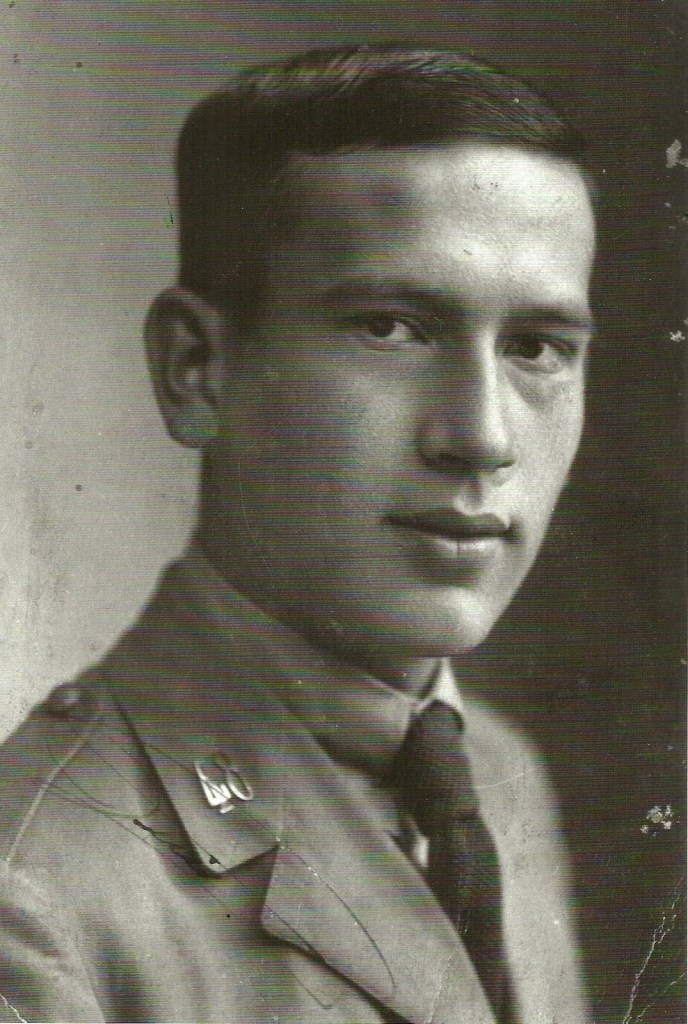
In the final days of July, maintaining morale became almost as important as maintaining supplies in the Alcázar, given that their attempt to overthrown Toledo had been a disaster. Colonel José Moscardó spent much of his time attempting to reassure both soldiers and civilians. The fortress operated according to military routines wherever possible. Guard duties and defensive positions were maintained and religious services were held. Mass was celebrated regularly when conditions allowed. Many rebels viewed their resistance not merely as a military duty but as a religious one. Priests within the fortress ministered to soldiers, civilians and the wounded. Prayer became part of daily life for many of those enduring the siege.
A small number of individuals escaped from the Alcázar during the siege and crossed into Republican-held territory. Most of the better-documented defections occurred later, particularly during August, but the fact that people attempted to leave demonstrates that not everyone shared the same level of commitment to the rebellion.
One of the most unusual developments was the publication of a small fortress newspaper called El Alcázar. Produced under siege conditions, it provided news, announcements and encouragement to those inside the building. In practical terms, the paper could do little to alter the military situation It reminded the rebels that they remained part of a community and that life inside the fortress had not completely surrendered to fear.
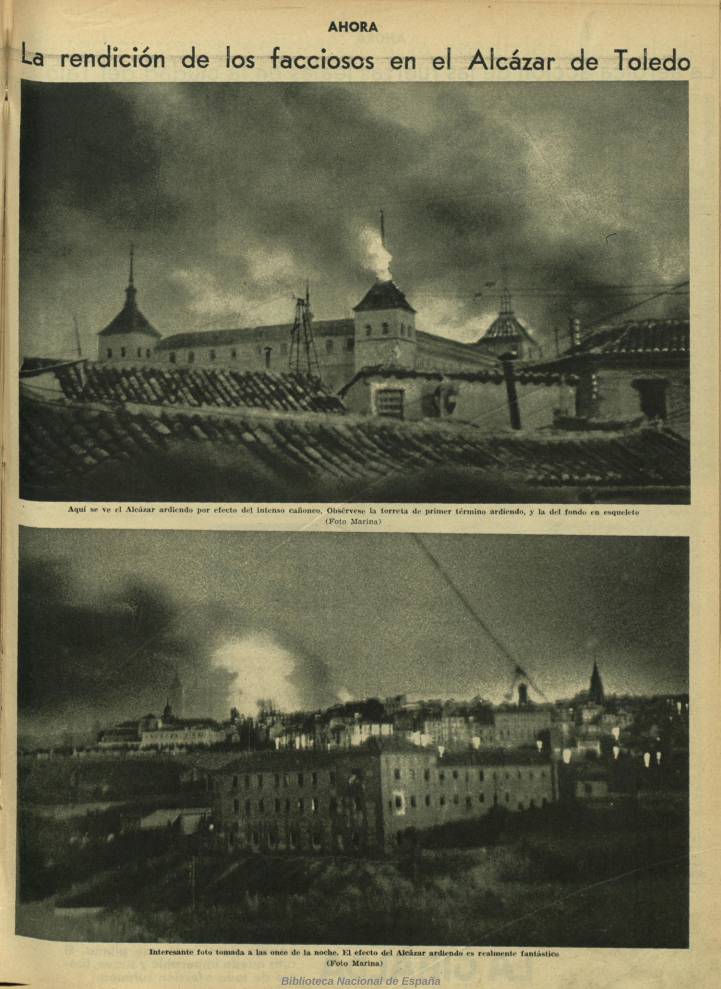
Outside the walls, Republican confidence remained high. Most government commanders still believed victory was only a matter of time. They controlled the city, possessed artillery, and enjoyed access to reinforcements from Madrid, and the physical condition of the Alcázar was beginning to crumble. Artillery bombardment had caused damage, though not enough to make the Alcázar uninhabitable. Broken masonry, shattered windows and shell damage had become familiar sights. Republican artillery intensified its bombardment of the Alcázar during the final week of July. Contemporary photographs showed smoke and flames rising from the fortress, with one tower burning and another already stripped to its skeletal framework. Republican newspapers believed the damage signalled the defenders’ imminent surrender, but despite repeated fires and growing destruction, Colonel José Moscardó’s garrison remained in control of the fortress. What had once been a military academy was gradually becoming a fortified community, and it would be two more months before the siege came to an explosive end.