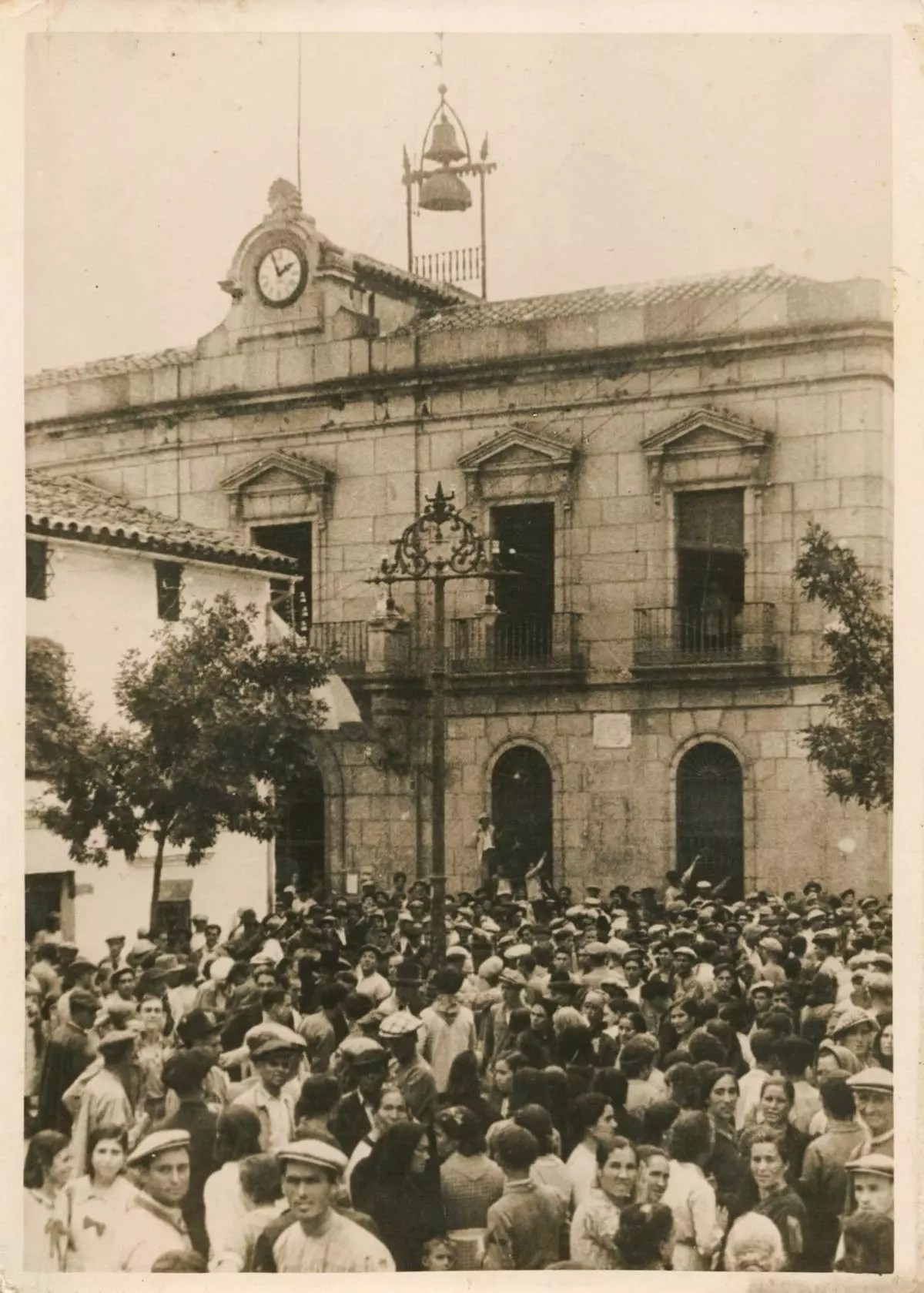
Córdoba had a population of approximately 100,000–105,000 in 1936, making it one of the largest cities in Andalucía. It was an important railway junction linking Seville, Madrid and Málaga, and controlled the main crossing of the Guadalquivir River. Politically, the city did not represent the province. The Province of Córdoba had returned a strong Popular Front vote in the elections of February 1936. Large agricultural estates dominated much of the countryside, and thousands of landless labourers belonged to the Unión General de Trabajadores (UGT) or the Confederación Nacional del Trabajo (CNT). Rural tensions had been building for years over wages, unemployment and land reform. Córdoba city itself contained a more mixed political population, with substantial conservative, Catholic and military communities alongside a large working-class electorate.
The military commander in Córdoba was Ciriaco Cascajo Ruiz, commander of the local infantry regiment. Unlike some commanders, Cascajo had already committed himself to the conspiracy before the coup began. When news arrived from Seville that Gonzalo Queipo de Llano had successfully seized control there on 18 July, Cascajo moved quickly. Army units occupied the principal barracks, communications centres, railway station and government buildings. The Civil Government building became the focal point of resistance, defended by loyal security forces and armed civilians who had answered the government’s appeal. Hundreds of workers gathered expecting weapons, but only a fraction received rifles. Many were left with hunting guns or improvised weapons, while others could do little more than erect barricades or support the defenders.
The Republican civil governor, Antonio Rodríguez de León, attempted to organize resistance with loyal Assault Guards, Guardia Civil men who remained loyal, and workers’ organisations, principally the CNT and UGT, but the government hesitated to distribute sufficient arms to the workers. While hundreds gathered expecting rifles, only a relatively small number received modern weapons, leaving most civilians unable to oppose trained troops effectively.
The rebel force in Córdoba was comparatively small, around 500 – 800 soldiers, supported by elements of the Guardia Civil, Assault Guards that defected, and local right-wing volunteers. Against them stood several thousand workers willing to resist but poorly armed. Fighting centred on key government buildings, barracks and communications rather than prolonged street-by-street combat. Rebel troops possessed artillery, machine guns and trained infantry, while Republican defenders suffered from confusion, poor coordination and a chronic shortage of arms. Exchanges of fire around the Civil Government and nearby streets lasted only a few hours and by the evening of 18 July, the military had secured the city. Modern historians have been unable to establish a precise casualty figure for the battle, but it almost certainly amounted to only dozens of deaths rather than hundreds.
Córdoba city fell within a day, but large areas of the province remained outside Nationalist control. Republican authority survived in much of the Los Pedroches district in the north, around Pozoblanco, Hinojosa del Duque and Peñarroya-Pueblonuevo, while eastern municipalities also resisted. These districts contained mining communities, railway workers, agricultural labourers and strong trade union organisations that remained loyal to the Republic. Geography also favoured the defenders. The mountainous Sierra Morena and the distances separating rural communities made it impossible for the small Nationalist garrison in Córdoba to occupy the entire province immediately. Northern Córdoba was not simply rural territory waiting to be occupied. Around Peñarroya-Pueblonuevo, the mining communities had a long tradition of socialist and UGT organisation, cooperatives, workers’ newspapers and collective action. Only weeks before the coup, hundreds of miners had occupied the Antolín Mine in protest against closures and unemployment. When the uprising began, this existing organisation helped turn the mining basin and Los Pedroches into one of the strongest Republican areas of the province. Córdoba city had fallen, but the north of the province had the political networks, labour organisation and local confidence needed to resist.
As a result, two very different realities emerged within the same province. After Córdoba fell on 18 July, arrests began that same day. Executions followed within 24–48 hours, initially targeting Republican officials, trade union leaders, councillors and known left-wing activists. By the end of July, executions had spread from the city into Nationalist-held towns across the province. Francisco Moreno Gómez and later provincial research show that the repression was systematic from the outset. Across parts of the countryside, however, Republican councils continued to function, militias organised local defence, and the Civil War had only just begun. Rather than becoming a secure Nationalist province, Córdoba developed into a divided landscape where front lines, competing administrations and armed forces coexisted for many months.
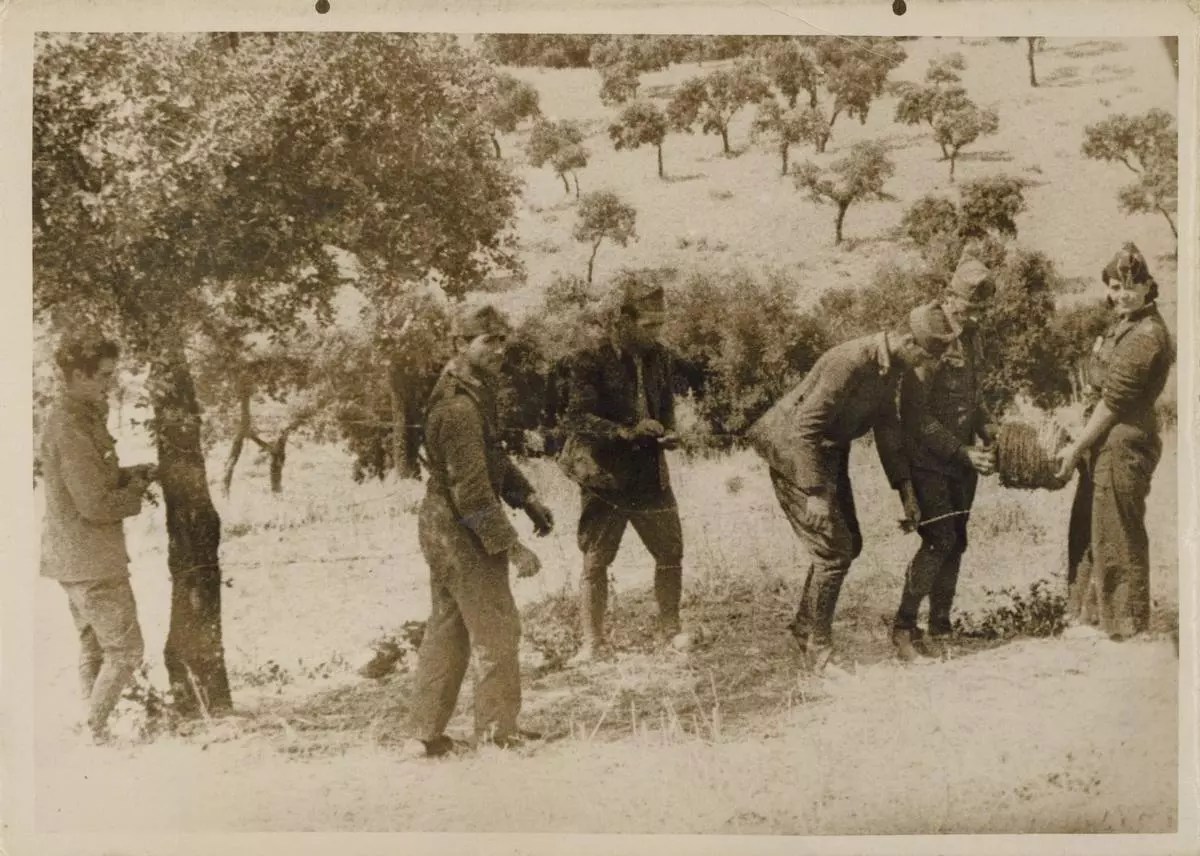
Granada was slightly larger than Córdoba, with a population of approximately 118,000–120,000 in 1936. It was the administrative centre of eastern Andalucía and home to one of Spain’s oldest universities. Like Córdoba, Granada city differed politically from much of its surrounding province. The city contained a strong conservative middle class, influential Catholic institutions and a sizeable military presence, while many rural districts supported the Popular Front. Agricultural labourers, small farmers and workers throughout parts of the province had increasingly aligned themselves with the Republic, and the CNT and UGT maintained active organisations in many towns and villages. Political tensions were already high before the uprising began.
The military commander was Miguel Campins Aura. Campins was not an enthusiastic conspirator. He remained personally loyal to the Republic and initially tried to avoid committing the garrison to rebellion. His hesitation created confusion during the first two days after the coup began. Recent documentary evidence has also challenged the traditional picture of a unified military conspiracy. A contemporary act signed by twenty-one officers of the 4th Light Artillery Regiment suggests that the uprising in Granada was driven by a relatively small group of artillery officers led by Colonel Antonio Muñoz Jiménez. According to the document, they spent valuable time persuading officers of the Lepanto Infantry Regiment to join the rebellion after General Miguel Campins Aura hesitated to commit the garrison. Rather than revealing a perfectly coordinated coup, the document depicts uncertainty, negotiation and disagreement within the officer corps before the rebels finally acted.
Rebel officers led by José Valdés Guzmán, supported by units of the Civil Guard, elements of the Assault Guard that joined the revolt, and armed right-wing civilians, seized control of key military and government buildings. Communications centres, barracks and official offices quickly passed into rebel hands. Republican authorities attempted to organise resistance with loyal security personnel and workers’ organisations, but, as in many provincial capitals, the government had distributed too few weapons to allow effective resistance. Resistance was concentrated in several working-class districts, particularly the Albaicín, where exchanges of fire continued after the city centre had effectively fallen. Rebel troops possessed overwhelming advantages in organisation, heavy weapons and command. Artillery and machine-gun fire quickly overwhelmed isolated Republican positions, while the lack of coordination between civilian defenders and loyal security forces made sustained resistance impossible. Although no reliable casualty figure exists for the fighting itself, modern historians generally regard the military action as comparatively brief, with losses measured in dozens rather than hundreds. But Campins himself was later arrested by the rebels and tried by court-martial and executed on Franco’s orders.
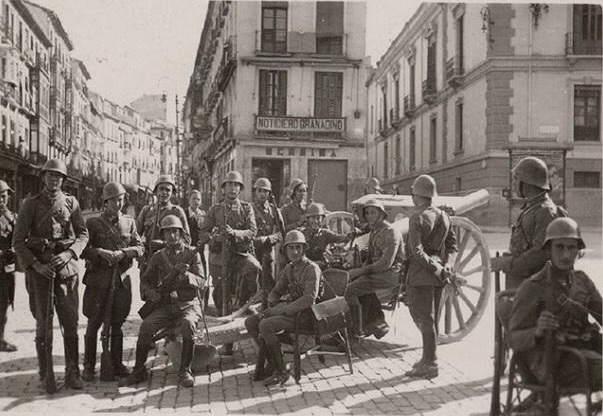
Inside Granada city, the consequences were immediate. Republican officials, trade unionists, teachers, councillors and suspected supporters of the Republic were arrested within days. The city became one of the principal centres of Nationalist repression in eastern Andalucía. Prisoners were removed from detention centres and taken to execution sites around Víznar and Alfacar, where the executions that became synonymous with Granada’s repression began almost immediately after the city’s capture.
While the rebels firmly controlled the provincial capital by the evening of 20 July, they lacked the manpower to occupy the entire province. Large areas of eastern Granada, including districts around Guadix and Baza, together with much of the mountainous Alpujarras, remained loyal to the Republic. Local councils, trade union organisations and Republican militias continued to operate throughout these districts, while the rugged terrain made rapid Nationalist advances extremely difficult. As in Córdoba Province, the Civil War quickly became a struggle between isolated areas of control rather than a simple conquest of an entire province.
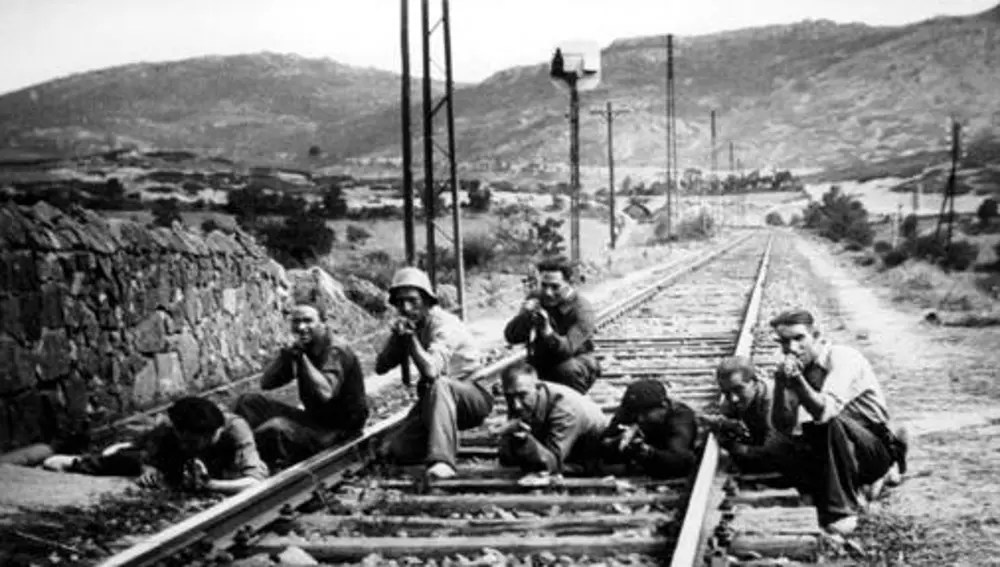
The outlier was the province of Jaén at the outbreak of violence. The 1931 Second Spanish Republic formation meant that much of Jaén became a timebomb of accumulated tension between the oligarchic forces and the peasants, who were increasingly joining trade unions. Although the Nationalist supporters hoped to bring the province into the rebellion, they lacked both the military strength and the local support needed to seize the capital. Jaén’s garrison was relatively small and, crucially, divided in its loyalties. Republican civil authorities acted quickly, ensuring that key positions in the city remained in loyal hands. Members of the Assault Guards and Civil Guards who remained faithful to the Republic, together with workers from the CNT, UGT and other Popular Front organisations, mobilised rapidly. They organised patrols, secured strategic buildings, and established defensive positions before the rebels could coordinate an effective challenge.
The political and social character of Jaén Province also worked strongly against the uprising. As one of Spain’s principal olive-growing regions, it was dominated by large estates worked by thousands of agricultural labourers. These workers had overwhelmingly supported the Popular Front in the February 1936 elections and were deeply committed to defending the Republic. Trade unions and left-wing political organisations were well established throughout both the city and the countryside, providing a ready-made network for mobilisation. This broad base of support made it extremely difficult for the conspirators to gain traction beyond a few isolated pockets, where small groups of sympathisers attempted, unsuccessfully, to organise resistance.
In the days following the failed uprising, Republican authorities consolidated their control. Local committees were formed to coordinate defence, maintain order, and oversee the distribution of food and supplies. Militias were organised and armed, often drawing on workers who had little formal military training but were highly motivated. Roads and communications were secured, and efforts were made to prevent infiltration by Nationalist forces from neighbouring provinces. While tensions and acts of violence did occur—as they did across much of Spain in the chaotic early weeks of the war—the overall structure of authority in Jaén remained intact, allowing the Republic to maintain a functioning administration. Republican authorities and revolutionary organisations arrested military conspirators, Falangists, monarchists, conservative politicians and clergy almost immediately.
This strategic reality gave Jaén valuable time to strengthen its defences and integrate more fully into the Republican war effort. The result was that Jaén became one of the few capitals in Andalucía to remain firmly under Republican control throughout the conflict and developed into an important administrative and military centre for the Republic. It served as a base for organising operations along the nearby front lines and as a refuge for those fleeing repression in neighbouring provinces. Despite its exposed position, alongside Nationalist-held Córdoba and Granada, the province remained loyal to the Republic until the final collapse of March 1939.
All three of these provinces were all about to suffer extreme violence and retaliation i the weeks and months ahead.

