- Galicia
By October 1936, repression in Galicia had shifted away from impromptu roadside murders toward a highly regularized, institutional bureaucracy of execution, operating under the veneer of military tribunals and wartime martial law. On 21 October 1936, a highly visible five-person execution squad carried out sentences inside Lugo city, targeting the highest administrative and intellectual pillars of the provincial Republic. The firing squad executed Ramón García Núñez, the 30-year-old former Civil Governor of Lugo and active member of Izquierda Republicana. Alongside him stood Dr. Rafael de Vega Barrera, a beloved local physician, former member of parliament (Cortes), and the iconic director of the Provincial Hospital. Known for treating impoverished patients free of charge, de Vega Barrera’s execution shocked the local populace. The group was rounded out by three other political detainees – Perfecto Abelairas Castro, José Ramos López, and Ángel Pérez López.
Beyond official execution dockets, this event remains remarkably well-documented through the survival of final letters penned by the prisoners from Lugo prison. These primary sources provide clear evidence of their last hours, documenting their mental state, their final farewells to families, and the administrative coldness of the military courts that condemned them.
In the province of A Coruña, the Nationalist forces deployed violence against distinct groups: the military ranks themselves, urban anarchist networks, and ordinary rural suspects. On 23 October 1936, the rocky, seaside field known as Campo da Rata became the site of a public execution. Instead of high-profile politicians, the rebel authorities lined up eight local army recruits who had refused to comply with the military coup, charging them with military rebellion. The eight recruits were identified as Antonio Barreiro Méndez, Manuel Ferreiro Novo, Juan González Horta, Luis López Gómez, Fernando Negreira Sánchez, Luis Neira Suárez, Manuel Obelleiro Meijide, and Manuel Seoane Díaz. Historical reconstructions indicate that at least four of these young men were associated with the Juventudes Libertarias (Anarchist Youth). The executions at Campo da Rata were deliberately treated as public warnings; authorities even erected an officials’ box, and military bands played over the sound of gunfire, and a blueprint captured the raw reality of the firing squad at the moment of execution.
Pepe Sáez (a young soldier from Ribadeo) was stationed as a sentry guarding the military powder magazine located right next to the seaside cliffs of Campo da Rata. From his guard post, he witnessed the tragic execution of the eight recruits on 23 October 1936. Risking his life, Sáez used his vantage point to take a secret photograph of the firing squad and later sketched a detailed layout map mapping out the exact positioning of the military trucks, the firing squad, and where the prisoners were lined up. For decades, this material was hidden. Today, both the photograph and the hand-drawn operational layout are publicly available. They are prominently featured in exhibitions and archives managed by local historical associations, specifically through the memory platform Memoria do cárcere A Coruña.
The visual layout serves as one of the most explicit pieces of physical evidence documenting the exact stagecraft and logistical setup of early Civil War military executions in Galicia.
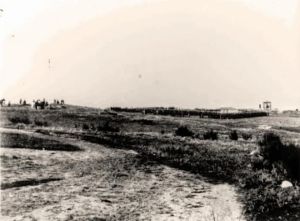
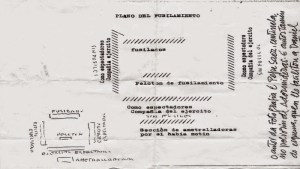
Also on 23 October, the town of Betanzos faced its own purge targeting the influential Confederación Nacional del Trabajo (CNT) anarcho-syndicalist union. Francisco García Coducho, a prominent local CNT member, was shot following a formal military tribunal sentence. José Carro, another CNT affiliate, met a far more irregular end. Local reconstructions record that after being wounded during his arrest, he was taken away by armed guards under the explicit pretext of receiving medical treatment, only to be shot and killed shortly after.
- Madrid
What began as an internal military coup in July had rapidly evolved into a proxy conflict involving Europe’s major ideological powers. The events of 23 and 24 October solidified this transition. Behind closed doors, powerful elites made choices that fractured international diplomacy, institutionalised internal repression, and fundamentally altered the lives of ordinary citizens caught in the crossfire.
In the Kremlin, Joseph Stalin and the Soviet Politburo decided to shatter the fragile consensus of European neutrality. On 23 October, Soviet Chargé d’Affaires Samuel Kagan delivered a formal response to the Non-Intervention Committee in London, heavily backed by Ambassador Ivan Maisky. The note explicitly stated that Moscow could no longer consider itself bound by the Non-Intervention Agreement to any greater extent than Germany, Italy, and Portugal, who were systematically flouting the embargo.
The Soviet government wanted maximum publicity, and international newspapers carried the declaration on their front pages immediately. For ordinary Republicans, this public escalation brought immediate hope as Soviet tanks, aircraft, and food shipments began arriving to help defend their homes. However, it also meant that ordinary Spaniards became the targets of much heavier, more destructive warfare as advanced foreign weaponry poured into their backyards.
Simultaneously in Berlin, Adolf Hitler abandoned all pretense of neutrality. Advised by Air Minister Hermann Göring, who saw Spain as a real-world testing ground for the young Luftwaffe, and intelligence chief Wilhelm Canaris, Hitler signed the executive order authorizing the creation and deployment of the Condor Legion. This specialized expeditionary force of German Luftwaffe and army personnel was tasked with fighting alongside Francisco Franco’s Nationalists. Unlike the Soviet ultimatum, Hitler’s decree was kept strictly classified. The German public had no official knowledge of the decision, and thousands of military personnel were quietly uprooted from their lives and sent to Spain disguised as civilians. While the first substantial contingents did not arrive until November, the decision on 23 October introduced an unprecedented horror to ordinary Spanish civilians: modern carpet bombing and the systematic aerial devastation of civilian centres.
As international battle lines were drawn externally, the Republican government was desperately fighting to maintain internal order as Nationalist forces advanced on the capital. On 23 October, the Ministry of Justice ordered the immediate establishment of seven Jurados de Urgencia (Urgency Tribunals) and three Jurados de Guardia (Guard Tribunals) in Madrid, appointing professional judges and formal judicial personnel. This structural overhaul was immediately published in the official government gazette to serve as a warning. It drastically altered the daily safety and legal rights of ordinary madrileños. Designed to stop lawless militia violence and counter the fifth-column threat, these emergency courts gave ordinary citizens accused of sabotage or fascist sympathies an immediate, single-tier trial with no right of appeal. Everyday people suddenly faced highly politicised emergency courts where the line between regular civil behaviour and treason was razor-thin.
On the western side of the Iberian Peninsula, dictator António de Oliveira Salazar finalized a major geopolitical shift. Over the course of 23–24 October, operating from the São Bento Palace in Lisbon, Portugal officially broke off diplomatic relations with the Spanish Republic. Salazar immediately used the state-controlled Portuguese press to broadcast the break, using it as propaganda to stoke domestic fear of communism and rally public support for his right-wing regime.
For regular people, the border transformed into a death trap overnight. Ordinary Spanish Republicans fleeing Franco’s advancing troops toward Portugal were routinely rounded up by Portuguese border guards and handed straight back to Nationalist firing squads. For ordinary Portuguese citizens, Salazar used the severed relations to crack down heavily on domestic dissent, forcing society into strict wartime alignment, mobilizing paramilitary militias, and drafting thousands of Portuguese volunteers to go and fight in Spain.
Together, these forty-eight hours transformed the Spanish Civil War. Through public diplomatic defiance, a secret German military decree, a desperate judicial overhaul under siege, and a ruptured Iberian alliance, the conflict ceased to be a rebellion and formally became the opening battleground of a looming world war.
- Canary Islands
The history of the Spanish Civil War often positions the Canary Islands as a mere prologue to the conflict. It is widely noted that General Francisco Franco was exiled to the archipelago as military commander before launching the July 1936 military coup. However, the reality of what followed across the islands during the first three months of the war remains one of the most brutal, underreported chapters of rearguard terror. Because the archipelago was rapidly secured by the military rebels within days of the uprising, it experienced no sustained frontline warfare. Instead, between July and October 1936, the Canary Islands became a closed crucible where an asymmetric war of position was fought not with artillery, but through clandestine resistance and systemic state-sponsored terror.
The standard historical narrative suggests that the Canary Islands fell to the Nationalists without a fight. While it is true that the military garrisons in Las Palmas and Santa Cruz de Tenerife seized administrative control almost instantly on 18 July, the civilian population staged fierce, desperate resistance. In Tenerife, where the anarcho-syndicalist National Confederation of Labour (CNT) held significant influence, general strikes were declared immediately. Lacking weapons, as the Civil Governor refused to arm the population, workers engaged in running skirmishes against fascist and military patrols.
The most extraordinary resistance occurred on the island of La Palma. For a full week following the coup (known as La Semana Roja), loyalist Republicans and leftist groups successfully held total control of the island. They maintained public order and strictly prohibited any retaliatory violence against local right-wingers. Their resistance only collapsed when the Nationalist gunboat Canalejas arrived, forcing the loyalist leaders to flee into the rugged mountain interiors. On 25 July 1936, dozens of loyalist defenders were summarily shot on the beaches and in the ravines of Santa Cruz de La Palma, marking the single bloodiest date for the island.
By August, the Nationalist administration, now fully consolidated across all islands, initiated a conscious policy of terror to permanently crush any dissent. Because there was no active military front line, the entire apparatus of the state was directed inward toward its own civilian populace. The repression systematically targeted the intellectual, political, and labour leadership of the Popular Front. Trade unionists, municipal clerks, schoolteachers, and members of the CNT or socialist organizations were aggressively hunted down. Local prisons quickly overflowed. The Nationalists converted merchant ships docked in the harbours of Las Palmas and Tenerife into floating concentration camps. From these vessels and prisons, paramilitary squads conducted nocturnal sacas, driving victims to execution sites under the cover of darkness.
By September, local prisons were so overcrowded that the Nationalists began utilizing floating prison ships (buques-prisión) docked in the port of Santa Cruz de Tenerife, such as the Almirante Chaurucca. On 5 September 1936, a massive saca was executed. Paramilitary death squads boarded the ships at midnight with specific lists of names. Dozens of trade unionists and leftist organizers were pulled from the holds, driven to the secluded Barranco del Hierro, and executed in a single night. Many others from this specific batch were loaded onto trucks, driven to the coast, and thrown alive into the ocean with heavy stones tied to their feet.
By October 1936, the nature of the repression shifted from impulsive street violence into an organized, administrative routine utilizing summary military tribunals designed to set public examples. The apex of this judicial terror occurred on 13 October 1936 at the Barranco del Hierro Battery in Tenerife. Following a highly publicised show trial known as Causa 50/1936, the Nationalist regime executed four of the highest-profile civil figures in Canarian society – Vázquez de Parga, the Civil Governor of the province, who had refused to yield to the military coup, Manuel Vázquez Moro, the Republican Mayor of Santa Cruz de Tenerife, and Isidro Iriarte and Francisco Granados, prominent civil administrators and democratic leaders. The execution of these men was a deliberate tactical statement meant to institutionalize fear and prove that the pre-war democratic framework was completely eradicated.
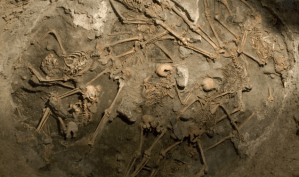
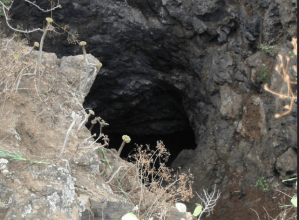
A defining characteristic of the repression in the Canary Islands was how the perpetrators weaponized the unique volcanic landscape to hide the scale of the slaughter and prevent the discovery of bodies. The Sima de Jinámar (Gran Canaria) is a natural volcanic tube, descending over 76 metres into the earth, became the single most notorious extrajudicial execution site in the archipelago. Throughout the autumn of 1936, dozens of union leaders and Republicans were brought to the edge of the crater, shot, and tossed into the volcanic shaft. In the northern agricultural sectors of Gran Canaria, deep industrial water wells, such as the Pozo del Llano de las Brujas, were converted into vertical mass graves. Scores of working-class men disappeared into these deep shafts, effectively erased without any official written record.
The Sima de Jinámar was used for extrajudicial dumpings throughout the autumn, but specific dates saw massive structural spikes. Following a major counter-intelligence sweep by the Falange to root out suspected underground Republican networks in Las Palmas, a massive collective execution was carried out on 23 October 1936. Dozens of municipal workers, dock unionists, and political dissenters were brought to the mouth of the volcanic crater in a caravan of trucks, shot at the edge, and systematically pushed down the deep volcanic shaft to ensure they would never be found.
Historians estimate that the ferocious, blood-stained cleansing campaign during the opening three months of the war cost the Canary Islands upwards of 3,000 dead and disappeared. Because the islands remained behind Nationalist lines for the entirety of the conflict, this trauma was frozen in place for decades. The meticulous forensic exhumations conducted by the Aranzadi Science Society and local historical memory associations continue to recover bodies from these volcanic shafts and industrial wells, demonstrating that the ‘pacification’ of the Canary Islands was achieved through an institutionalized machinery of suffering.
- Ricla, Zaragoza, Aragon
On 23 October 1936, the small municipality of Ricla became the site of one such mass atrocity, a single day of violence that reflects a much larger, buried history of wartime repression. In the early hours, Nationalist execution squads lined up and executed 25 people in Ricla. Following the murders, the bodies were thrown into a vast, elongated trench dug inside the town’s local cemetery. Today, that physical space remains a stark, visible scar in the cemetery grounds, a long strip of land that marks exactly where those 25 lives were abruptly ended. Over the decades, families and memorial groups have placed a handful of plaques across the site to rescue these individuals from anonymity. Among the markers, seven plaques explicitly commemorate victims murdered on that fateful 23 October, preserving their names against the forced amnesia of the Franco dictatorship.
The mass grave at Ricla, served as a composite archive of multiple, staggered massacres carried out at unknown dates throughout the early months of the conflict. Adjacent to the victims of 23 October lie five other individuals, including two women, who were slaughtered in a separate, undated killing spree. Nearby, the remains of six other men rest, each killed under different, equally brutal wartime circumstances. In total, the cemetery formally holds and remembers 38 documented victims of these specific events. Yet, as local historians and memorial researchers frequently emphasise, these 38 names are the tip of a massive iceberg.
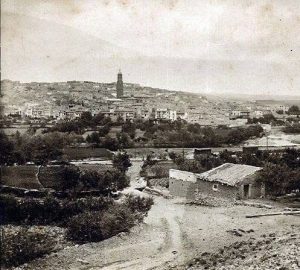
The true magnitude of the slaughter in Ricla extends far beyond its own municipal borders. The town was used by Nationalist forces as a centralized, regional execution site for prisoners trucked in from surrounding villages. The fate of the nearby town of Ateca illustrates this grim reality. Records show that at least 26 residents from Ateca were transported to Ricla to face the firing squads (though conflicting historical accounts sometimes point to the nearby Alto de Grío mountain pass 23km south as an alternative hidden execution spot).
For ordinary people living in Ricla and its neighbouring villages, late October 1936 was a period of suffocating dread. The regular sound of gunfire at the execution walls and the expanding trenches in the cemetery served as a permanent, terrifying warning of the absolute power wielded by the sublevados. Ninety years later, the long strip of earth in the Ricla cemetery stands as a solemn reminder of the countless others whose true numbers remain buried by history. Out of the 25 people executed on 23 October, seven victims have specific individual plaques dedicated to them by their families at the large cemetery trench. These plaques were placed decades later as a symbolic act of resistance and remembrance. The publicly named known victims are Petra Lozano Forcén, Lorenza Morlanes Serrano, Tomás Sanz Lorente, Narciso Crespo Lozano, Bernardo Aladrén, who were brought into Ricla on the day, and two locals, Benigno Artigas, and Calixto Martínez Bueno, the local schoolteacher.
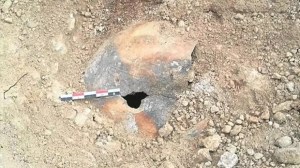
In November 2016, an official scientific exhumation took place inside the old cemetery of Ricla. The excavation was driven by the historical memory group ARICO, collaborating with the Asociación Charata and a dedicated team of professional archaeologists and forensic anthropologists. While they initially set out looking for a specific group of five missing neighbours from the town of Morés, the team uncovered and exhumed 6 skeletal remains. These six individuals had been executed together on 13 August 1936. Thanks to historical accounts, it was known that the town undertaker at the time had secretly given the families detailed descriptions of the clothes and physical traits of the victims so they could track exactly where he laid them together.
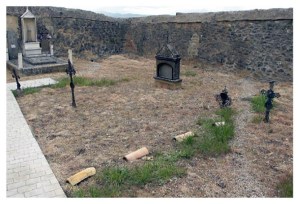
The broader physical layout of the Old Cemetery section of Ricla consists of multiple massive, grandes fosas. The government’s official cultural heritage database (SIPCA) and regional memory networks only note the long strip of earth holds exactly 25 victims. Between the 23 October group, the 2016 exhumation group, and smaller pockets containing pairs of named individuals, there are at least 38 explicitly recorded and memorialised victims in visible areas.
Experts heavily agree that the total count is vastly higher. Because Nationalist units used Ricla as a centralized dumping ground for mass executions of prisoners trucked in from nearby municipalities (like the 26 people missing from Ateca), bodies were repeatedly layered into the earth without any entry in the civil registries.
The mass graves at the nearby La Almunia de Doña Godina cemetery may be quite large, as it is believed to contain the bodies of people from the local area who disappeared during the height of the intense repression that took place in the summer and autumn of 1936, with up to 108 people killed by the Nationalists. Only eight are known at the tsite, and only two are named – Pedro Lasheras and Pablo Correas from nearby Lumpiaque alognside six from Épila murdered on August 15, 1936. Right next to this grave, a plaque commemorates four other men of unknown origin who are also believed to be buried there. It is thought that some of those interred at the site may have come from the nearby town of Calatorao.
Also close to Ricla is the Las Planas mass grave sites at Arándiga, where Cipriano Cabello Royo, Tomás Lafuente Gracia, Raimundo Marín Dominigo, Francisco Martínez Andrés
Antonio Ostáriz Gil, Antonio Roy Jimenez, José Pallarés Trasobares and José Trasobares Royo were found in 2007. Zaragoza rpvoince cutrrently 335 known graves and 2,700 people known as murdered. On 23 October 1936, a single transport truck carrying 26 Republican prisoners departed from a regional detention centre. Rather than executing the entire group at a single location, the captors split the shipment cleanly in half to distribute the violence across neighbouring localities and mask the total scale of the day’s slaughter.
- Esquedas, Plasencia del Monte, La Puebla de Fantova, Huesca, Aragon
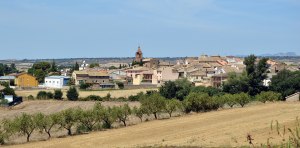
The synchronized massacres in Esquedas and Plasencia del Monte (both located within the municipality of La Sotonera, Huesca) highlight the calculated, logistically planned nature of the rearguard executions carried out by Nationalist forces during the early months of the Spanish Civil War. Uncovering the full list of the 26 names has taken decades of painstaking work by families and regional historical projects.
The single transport truck that left on 23 October 1936 was a regional dragnet. The executioners took the prisoners far enough from their homes that they would be strangers to local witnesses, splitting them exactly into two groups of 13 at Esquedas and Plasencia del Monte.
The burial trench at Esquedas sits at the cemetery’s entrance gate. Research indicates these men came primarily from the western agricultural hubs of Ayerbe and Riglos, as well as smaller villages in the lower Pyrenean foothills. Only Félix Lanuza Ferrer is known among the group, thanks to his daughter’s long fight to find out the truth. The other 12 killed alongside him remain unnamed, and only 12 bodies have been recovered, including Lanuza.
At Plasencia del Monte, the second group of 13 contained individuals specifically targeted for their civic roles or intellectual influence in the local communities. • Valentín Zaborras Santamaría was the schoolteacher at Aniés, affiliated with the Federación de Trabajadores de la Enseñanza (FTE-UGT). Zaborras, alongside Francisca Lorés Gracia, Antonio Barraca Lasierra, Blas Orleáns Cinto, León Marcuello Espada, Ricardo Bretos Ferrer, Benito Morlans Marcuello, María del Carmen Obejero Coiduras, and Alicia Obejero Coiduras, are also named among the 30 buried at Plasencia, though whether they all died on 23 October 1936 or another date is unclear.
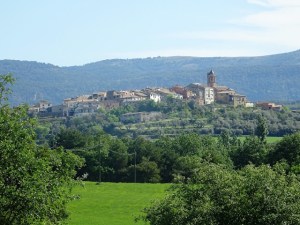
José Enrique Arregui Vicén was a 27-year-old schoolteacher from the rural village of La Puebla de Fantova. He was a member of the Federación Española de Trabajadores de la Enseñanza (FETE-UGT), the progressive left-wing teachers’ union. He was a widowed father raising two young children at the time of his arrest. Like many secular teachers under the Second Republic, his intellectual standing and progressive union alignment made him an immediate target for the Nationalist forces when the province fell. Following his execution by a Falange squad near Murillo, his young children were distributed among heavily right-wing, pro-Nationalist family members in Huesca. They grew up never being told how or why their father had vanished. Decades later, his daughter, María Luz Arregui, launched a personal historical investigation to uncover the truth. Guided by oral accounts preserved by an elderly resident in Ayerbe, she was finally able to pinpoint the rural transit zone where her father had been discarded. Today, his name rests alongside his peers on the Huesca Mass Grave registry, rescuing a local educator from the state-enforced anonymity of the Franco era.
- Alcalá la Real, Jaén, Andalucia
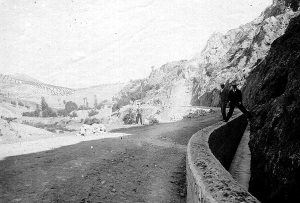
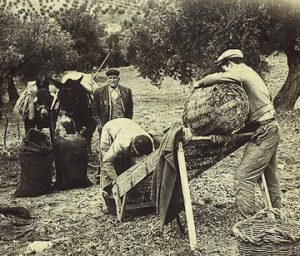
By late October 1936, the olive-growing landscapes of Alcalá la Real had been violently transformed. Following the rapid advance of Francoist forces across Jaén, the rearguard became a canvas of state-sanctioned violence. On 23 October 1936, the execution of local citizens was occurring at rural estates and along transit highways.
Nationalist squads systematically targeted the backbone of the region’s agrarian workforce, ordinary field laborers suspected of leftist or Republican sympathies. Official records from the Ministry of Democratic Memory preserve the names of two such men whose lives were claimed on 23 October, illustrating how executioners decentralized their crimes across the local landscape. Isidro Alcalá Rosales, aged 37, was taken to the Cortijo Dalazos, a rural estate on the outskirts of the municipality, where he was shot. On the very same day, 54-year-old Rafael Arjona Cano was driven out to the carretera de Priego, the winding highway heading toward Córdoba, and executed against the embankment. By dispersing individual victims across private rural properties, the Nationalist forces ensured that the threat of violence felt total, inescapable, and immediate to the surrounding population.
The carretera de Priego was a primary killing zone for coordinated prisoner shipments. Twenty-four hours earlier, thirteen individuals had been extracted from an improvised prison camp in the surrounding region. Transferred under armed guard to Alcalá la Real, the cohort was driven out into the pitch-black highway darkness. The firing squads fired in unison, leaving what they believed were thirteen corpses along the roadside. But one prisoner miraculously survived the volley, lying motionless until the executioners departed before escaping into the safety of the night.
The road from Priego connects that town to Alcalá from the northwest. The town jail was located quite nearby, at the corner of Calle Tejería and Calle Pedro Alba; from there, those condemned to death were taken to the vicinity of the road. The ridge along which the road runs contains a series of common burial sites, corresponding to the number of days on which residents of Alcalá were subjected to political repression. According to all the testimonies collected, the area where most of the bodies likely lie is now partially occupied by a recently built residential development of single-family homes. Construction workers discovered bones while laying the foundations for these houses. Consequently, the small slope adjacent to these homes appears to be the most probable site of the executions and burials. Testimonies also indicate that, about 50 metres further along, in the ditch on the left side of the road, there is a grave containing the remains of four individuals who were executed on the spot. There is no formal evidence of mass graves in these locations, as they now lie, in part, beneath the foundations of recent construction. Based on the unreported discovery of bones during construction work and accounts from the time, that in the years that followed, wheat planted in these areas grew taller, marking the spots where the residents of Alcalá had been buried. In this instance, the site was disturbed by the construction of an olive oil mill and subsidized housing, which were built over part of the land where the grave was located. According to the testimonies gathered, human remains were uncovered, but the local authorities were never notified. At least 48 people, all named, are believed to be in the area that has been built over.
- Parauta, Malaga, Andalucia
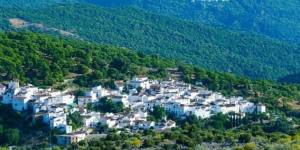
Parauta is a small mountain village located in the Serranía de Ronda region within the province of Málaga, Andalucia. The town of Parauta was captured by the Nationalist forces in September 1936, immediately following the fall of Ronda. General José Enrique Varela’s Nationalist troops seized the regional hub of Ronda on that date, which triggered the rapid, consecutive occupation of the smaller surrounding mountain villages across the Serranía de Ronda over the subsequent days, which led to during this systematic sweeping operation in late September and October to execute locals in these areas. In Parauta, the primary target in was Francisco Vivas Gutiérrez, who was an active local organizer and board member for the CNT and worked as a muleteer in the local mountain trade network, giving him significant regional mobility and influence. He was picked up alongside José Torres Palma, and brothers Antonio Román Pérez and Ricardo Román Pérez.
For the other three men, their lives remain a mystery. They were arreasted and kille din the early hours of 23 october 1936 at an unknown location and have no mass grave. There is no marked trench inside the Parauta cemetery walls or a known roadside location. Other than their names, they were completely erased, and the name were only recorded because they were picked up at the same time and Francisco Vivas Gutiérrez, was was subjected to a slow military trial and killed in April 1937.
When Nationalist columns captured Ronda in September 1936, thousands of people fled into the surrounding valleys and high sierras to escape. Rather than holding prisoners in village jails and executing them inside local village cemeteries, paramilitary squads routinely used the vast, mountainous terrain as an open-air execution site. Victims dragged from smaller hamlets like Parauta were often driven out to isolated mountain curves, shot, and rolled directly into natural deep ravines or roadside highway ditches (cunetas). Because these makeshift graves were outside official cemetery walls, they were completely undocumented. Nature swallowed the terrain over the decades, erasing the physical parameters of the graves entirely.
Even if the two brothers (Antonio and Ricardo Román Pérez) and José Torres Palma were not left on a roadside, the regional mechanics of the death network point to an even larger black hole: The Cemetery of San Lorenzo in Ronda, as the central military hub for the entire mountain sector, prisoners swept up in surrounding villages were routinely funnelled straight to Ronda. Inside the patio sections of the San Lorenzo Cemetery in Ronda, historians have documented massive, communal trenches holding an estimated 1,607 victims. During the dictatorship, the regime poured a thick, heavy layer of industrial concrete directly over these sprawling mass graves to deliberately seal the bones away, permanently blocking access and preventing families from mapping or exhuming individual remains.
The tragic paradox of the Spanish repression is that while the state erased the records, the families kept an invisible map in their minds. Descendants knew which night their brothers vanished, who drove the truck, and which mountain pass they were taken toward. However, under the absolute fear of the post-war dictatorship, speaking about a missing Republican relative meant risking your job, your safety, or your own life. This forced the family memory to go completely underground. By the time Spain transitioned to democracy decades later, many of the original mothers, fathers, and siblings had passed away, leaving behind names on a registry page, like the Román Pérez brothers, but no one left alive who could point a finger at the exact patch of mountain dirt where they were dumped.
The surviving families of Antonio Román Pérez, Ricardo Román Pérez, José Torres Palma, and Francisco Vivas Gutiérrez were in immediate, extreme danger of being swept into one of the worst war crimes of the entire conflict. Because Parauta was captured early in the Nationalist advance, its local Republican infrastructure was crushed immediately. But for the rest of Málaga province, the civilian population fled toward the regional capital. When Málaga city itself finally fell to Francoist and Italian forces a few months later, on 8 February 1937, it triggered the catastrophic event known as La Desbandá, great the Málaga–Almería road massacre that saw some of history’s bravest everyday people take on one of the cruellest acts an enemy could inflict.
Salamanca
The execution of fifteen men at the San Carlos Borromeo cemetery in Salamanca on 23 October 1936 represented the cold, bureaucratic precision of the Nationalist judicial apparatus in the province during the opening months of the war. Unlike the chaotic, unrecorded roadside executions seen in the southern mountain regions, the Salamanca massacres were heavily documented, institutionalised acts of violence managed through formal military tribunals (Consejos de Guerra).
Villavieja de Yeltes was an area that had been heavily into agrarian reforms before the outbreak of war, a substantial number of day labourers working the surrounding estates f the town of 1,200. Manuel Vaquero Rubio was democratically elected Republican mayor, who was arrested alongside Enrique Vicente Baldión and his son Enrique Vicente Iza, who were taken directly from their home, and were accompanied by Juan Manuel Cuadrado Moro and Lucas Sevillano Cid, all for their left-wing activities.
Approximately 13km northeast of Villavieja is Bogajo, José Celso Escanilla Simón was the local mayor of the 450 locals and the schoolteacher when he was arrested, where southwest 20km from Villavieja is Retortilla, where the local leadership was wiped out, after Celso Moro Hernández, President of the Gestora (City Council), Máximo Muriel Blanco, councilman and board member, and Inocencio Sanchón Bernal were arrested. Another 20km southwest, at Cebrillas, Agapito Lorenzo Calvo and Isidoro García García were rounded up for the same reasons. Each town only had around 600 inhabitants, the vast bulk living off the land and easy targets for caciques (wealthy landowners) who did not wish to grant workers’ rights.
Between 1931 and 1934, the FNTT-UGT organized massive general strikes across the province, completely paralysing the harvest in hubs like Villavieja de Yeltes and Cabrillas. Local labourers demanded the implementation of the Republic’s Agrarian Reform laws to expropriate uncultivated estate land. When the left-wing Popular Front coalition won the national elections in February 1936, these villages immediately mobilized. In towns like Retortillo and Bogajo, the newly emboldened socialist majorities overthrew the conservative local councils. Left-wing groups strongly championed the Republic’s secular educational push. Teachers like José Celso Escanilla Simón in Bogajo were highly active in the community, using local schoolhouses to promote literacy alongside socialist, pro-labour ideologies. This unionized the rural population and deeply angered the local conservative elites, landowners, and the clergy. While these areas still needed their labourers to handle the summer harvests, they could immediately remove the leaders of the progressive factions.
Also among the many in the cells in Salamanca city from July onwards was a group of local men named Saturnino Rabazas Zúñiga, Francisco Andrés Ramos, Ángel González Hernández, and Miguel Mellado de Castro, a bricklayer, active member of the local Casa del Pueblo, and UGT member. The connection between the urban men and the rural village victims was the UGT network. The day labourers who unionized the villages of Villavieja de Yeltes or Retortillo took their operational directives straight from the central UGT offices managed by Miguel Mellado de Castro and his peers in Salamanca capital.
The fifteen victims had been held in the Provincial Prison of Salamanca, with several languishing in cells since the immediate aftermath of the July coup. They were subjected to a formal military court-martial in October and in a profound legal paradox used systematically by the Nationalist regime, the defendants were charged with and convicted of auxilio a la rebelión (aiding the rebellion). In reality, these men had been loyal to the democratically elected Republican government; the military court simply inverted the law, treating loyalty to the Republic as an act of treason against the insurgent Nationalist state.
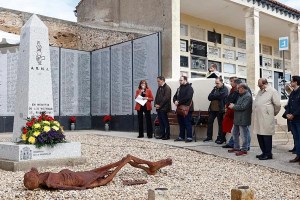
Following the immediate pronouncement of the death sentences, the fifteen men were marched to the exterior wall of the San Carlos Borromeo cemetery in Salamanca and executed by firing squad at 6:30am on 23 October 1936. Because this was a formal military action, the authorities left a paper trail that stands in stark contrast to the undocumented disappeared victims of other regions. The cemetery noted where the bodies were discarded, stacked and buried in free burial section no. 26 (Zanja de Caridad / Fosa Común). Because the Consejos de Guerra required signed paperwork and official execution logs, the names and hometowns of all fifteen men were preserved in military court archives. This formal documentation allowed modern historical memory groups in Castilla y León to easily verify their identities, map their exact resting place within the cemetery boundaries, and eventually constructed memorial to honour them.


You must be logged in to post a comment.