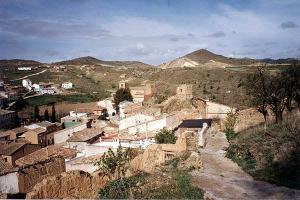
- Salamanca Province, Old Castile (Castilla y León)
On 28 November 1936 in Salamanca, General Franco signed a secret treaty with representatives of Benito Mussolini’s Fascist government. Italy promised continued military, naval, and air support in exchange for political and economic concessions, including preferential trade terms and strategic cooperation in the Mediterranean. In 1936, Salamanca province had undergone a dramatic transformation from a quiet, deeply agrarian backwater into the de facto capital and political nerve centre of Nationalist Spain. Even setting repression aside, daily life in 1936 was defined by extreme social inequality, intense political polarisation before July, and a sudden, surreal wartime boom in the provincial capital once Franco moved his headquarters there in the autumn.
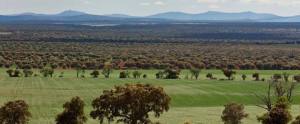
In 1936, Salamanca had roughly 350,000 inhabitants, over 80 percent of whom lived in small villages across vast plains (Campo Charro), river valleys, and southern mountain ranges (Sierra de Francia and Sierra de Béjar). The province’s economy revolved around wheat farming, sheep/cattle herding, and raising fighting bulls on massive private estates (fincas or dehesas). Wealth was concentrated in the hands of a tiny aristocratic and landowning elite, while tens of thousands of landless day labourers lived in severe poverty, earning seasonal starvation wages and residing in humble adobe or stone cottages. Almost the entire province lacked modern industry, with the major exception of Béjar in the southeast, a bustling mountain town renowned across Spain for its wool and textile mills, which supported a dense, politically conscious industrial working class. Outside the capital and Béjar, rural illiteracy remained high (around 30%–40%), and the Catholic Church held immense cultural and social sway over daily village life.
Nationally, the left-wing Popular Front won the February 1936 elections, but in Salamanca, the right-wing CEDA party (led locally by Salamanca native José María Gil-Robles) remained dominant among smallholding farmers, the middle class, and landowners. Despite conservative dominance at the ballot box, spring 1936 brought intense social mobilisation. Socialist and UGT agricultural unions (Sociedad de Trabajadores de la Tierra) organised strikes across the Campo Charro demanding higher wages and enforcement of the Republic’s Agrarian Reform Law, while Falangist youths and right-wing militias clashed with leftist workers in the streets of Salamanca city and Béjar.
When the military uprising began on 18–19 July 1936, the local military garrison under General Manuel García Álvarez quickly seized Salamanca city. Unlike Madrid or Barcelona, there was no prolonged street fighting, aside from brief worker resistance in Béjar and small border towns that was crushed within 48 hours. Because the front lines quickly pushed south into Extremadura and east toward Madrid, Salamanca became a safe rearguard zone. Food remained relatively plentiful compared to besieged Republican cities, and agricultural production continued uninterrupted, though farms suffered severe labour shortages as young men were drafted into the Nationalist army.
In late September / early October 1936, after being named Generalísimo and Head of State, Francisco Franco transferred his Cuartel General (General Headquarters) to Salamanca, occupying the Episcopal Palace lent to him by Bishop Enrique Pla y Deniel. Overnight, the sleepy provincial city of 55,000 people was transformed. Salamanca suddenly became the capital of Nationalist Spain. Government ministries, military commands, censorship offices, and propaganda headquarters took over historic buildings, convents, and hotels. The streets, cafés, and Plaza Mayor filled with German Condor Legion airmen, Italian fascist officers, Portuguese volunteers, foreign war correspondents (from the Times, New York Times, and German/Italian press), and wealthy aristocratic refugees fleeing Madrid. Hotels like the Gran Hotel buzzed with international intrigue, black-market currency deals, and military briefings.
Salamanca was home to Spain’s oldest university, led by world-famous philosopher and rector Miguel de Unamuno. Initially sympathetic to the uprising as a restore-order movement, Unamuno grew horrified by the Falangist terror and military brutality. On 12 October 1936 (Día de la Raza), inside the University of Salamanca’s ceremonial hall, Unamuno publicly confronted Nationalist General José Millán-Astray, famously telling the generals, ‘Venceréis, pero no convenceréis’ ‘You will win, because you have enough brute force, but you will not convince’. Unamuno was immediately stripped of his rectorship and placed under house arrest until his death on 31 December 1936.
By November and December 1936, daily life in Salamanca city revolved around patriotic rallies, religious victory processions, military parades, wounded soldiers convalescing in makeshift hospital convents, and strict wartime curfews, creating a stark contrast between the bustling, cosmopolitan wartime capital and the impoverished, terrified rural villages just a few miles outside the city walls.
Systematic rearguard repression that claimed roughly 1,124 to 1,245 Republican lives over the course of the war, with 80-85 percent killed in the second half of 1936. Because Franco established his Cuartel General in Salamanca in autumn 1936, the province became both a laboratory for political terror and the administrative hub for nationwide repression. By November 1936, the Provincial Prison of Salamanca and local jails in Ciudad Rodrigo and Béjar were severely overcrowded. Alongside executions, historians note a spike in prison deaths from bronchopneumonia, tuberculosis, and exposure, as well as mysterious ‘disappearances’ during prisoner transfers to the Provincial Hospital.
Because Franco’s headquarters, the press/propaganda apparatus, and foreign diplomatic missions were all concentrated in Salamanca city in November 1936, the regime sought to curb uncontrolled Falangist street killings in the capital to project order to foreign observers, pushing fascist killings out into rural execution sites while ramping up formal firing-squad executions at the city cemetery. Following Decree No. 55, repression in the province transitioned from rural paseos to formal, rapid military tribunals designed to ‘legalise’ political purges. Presided over by Lieutenant Colonel José González Polanco and instructed by Cavalry Captain Gaspar Holgado Manzanera, the court tried a large group of Republican detainees from across the province (including defendants such as Pedro Miñana Regadera, Francisco Valentín Garrido Muñoz, Marciano Muñoz Cabezas, and dozens of co-defendants). Many of those convicted in these late-November sessions were subsequently executed by firing squad against the walls of the Salamanca Cemetery in December 1936 and January 1937.
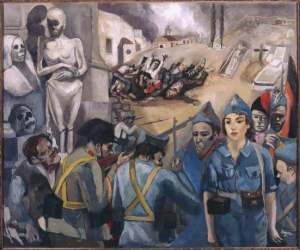
Out of the 1,200+ victims of Salamanca province, only 154 – 177 people were executed following a formal military court-martial. Roughly 85 percent of all victims (over 1,000 people) were murdered via paseos or sacas by Falangist squads, Guardia Civil, and military detachments. Throughout late 1936, seized documents, union membership lists, and Masonic records from captured territories were funnelled into Salamanca to build the central Political-Social index used to prosecute Republicans across Spain.
Located roughly 20 km north of Salamanca city along the road to Valladolid, the forested hills of Monte de La Orbada were the single deadliest execution site in the province. Throughout late summer and autumn 1936, army and Falangist trucks regularly transported dozens of prisoners from Salamanca’s prisons to be shot and buried in scattered pits. Notably, it was also used to execute groups of out-of-province prisoners, including a convoy of over a dozen workers from Navarra transferred from Pamplona prison who were killed here rather than logged into Salamanca’s jail.
Located in the northwest near the Portuguese border, the Finca Medinilla mass grave is one of the largest single exhumed graves in the province with 15 identified victims when military authorities in Ciudad Rodrigo signed false release orders for a group of detainees, handing them directly to Falangist squads who drove them to the Medinilla estate and shot them. At the same time, as the industrial textile centre of the province, Béjar had a strong socialist and union presence and saw brief resistance to the coup in July 1936. Consequently, it suffered one of the highest per-capita death tolls in the region, with 162 identified fatal victims and 37 unidentified gunshot victims (199 total) recorded in local civil registries, 187 of whom were killed by Falangist death squads.
Detailed archival studies by Ángel Iglesias Ovejero on repression in southwestern Salamanca document wave after wave of mass prison removals from Ciudad Rodrigo’s jail in autumn 1936, including the massacre of residents from Fuenteguinaldo buried at the Camino a Gazapos, the double massacre at Valle del Lagar, and the 25 November massacre at the Finca de Campanilla estate. Matías Andrés Ballesteros Lorenzo, 68, a bricklayer and treasurer/board member of the UGT-affiliated agricultural union, Félix González Alfonso, 50, a day labourer and STT union member from Navasfrías, Demetrio Gutiérrez Roncero, 45, a day labourer originally from Montehermoso (Cáceres), Gabriel Cruz Hernández, 45, a day labourer and STT member from Aldehuela de la Bóveda, Julián Vicente Sánchez Santiago, a resident of Ciudad Rodrigo, Elisardo (Lisardo) de la Nava González, 37, a waiter from Ciudad Rodrigo, and Bruno Fernández Hernández, 34, a day labourer from Castillejo de Dos Casas were all dumped in the estate just outaside Ciudad Rodrigo. In 2019, the Asociación Salamanca Memoria y Justicia announced plans to excavate Finca de Campanilla after completing digs at nearby sites in the Ciudad Rodrigo district (such as La Rad de Pedrotoro and Castillejo de Martín Viejo). Because the 1979 municipal police report only noted that the bodies lay in one of the meadows of the estate, and historical research suggests not all seven victims were necessarily buried in the exact same spot, pinpointing the exact burial coordinates requires extensive ground-penetrating radar surveys and landowner authorisation which they did not receive.
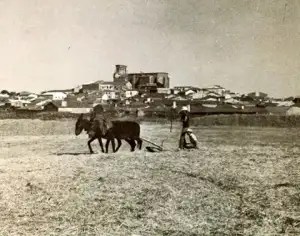
Burial sites on private rural estates (fincas or dehesas) are very common in Salamanca province, representing a significant portion of the roughly 94 to over 100 documented mass graves across the territory. Because Salamanca was dominated by large agricultural and livestock estates, latifundios and dehesas of holm oak pastureland, owned by wealthy landowners sympathetic to the Nationalist uprising, Falangist squads and Guardia Civil routinely used these secluded properties as clandestine execution grounds during the 1936 sacas and paseos.
Unlike municipal cemeteries where gravediggers or town clerks might leave written traces, large private fincas offered miles of isolated woodland, ravines, and pastures behind locked gates, making it nearly impossible for victims’ families to locate or retrieve the bodies. Many estate owners actively collaborated with local Nationalist authorities, allowing death squads to drive trucks onto their land at night. In some cases, executions on fincas specifically targeted agricultural union workers from the Sociedad de Trabajadores de la Tierra who had pushed for land reform during the Second Republic.
Alongside Finca de Campanilla (Ciudad Rodrigo), several other prominent mass graves in the province are located on private rural estates. Finca Medinilla (Bañobárez) is the single largest exhumed mass grave in the province, with 15 identified victims from El Bodón, shot on 11 September 1936. Families successfully exhumed the site in 1979. Finca La Rad de Pedrotoro (Ciudad Rodrigo) is an estate outside Ciudad Rodrigo used during the autumn 1936 sacas, where archaeological teams have conducted modern exhumations. Finca en San Pedro de Rozados is a rural estate south of Salamanca capital where the Asociación Salamanca Memoria y Justicia located a grave holding 4 to 5 labourers from the nearby village of Vecinos, shot on 12 August 1936. Finca La Veguilla and Castillejo de Martín Viejo are estates along the western Agueda river valley near the Portuguese border that saw multiple executions of local day labourers and leftist activists in summer and autumn 1936. At Monte de La Orbada is a broader forested hill zone rather than a single walled finca, this sprawling rural tract north of Salamanca functioned in the exact same way, serving as the province’s largest open-air killing field for dozens of prisoners trucked out of the capital.
While the sheer prevalence of latifundios meant that fincas physically covered much of the province, historians point to multiple reasons why they were used so heavily. In the 1930s, Salamanca, particularly the Campo Charro (the central plain) and the southwest around Ciudad Rodrigo, had one of the highest concentrations of large private estates in northern and central Spain. A small elite of aristocratic and wealthy landowning families controlled vast expanses of holm-oak pastureland used for raising fighting bulls and livestock. Simply put, once you left a town or main highway, almost all surrounding countryside was private finca property.
During the Second Republic (1931–1936), Salamanca was a flashpoint for rural labour unrest. Landless day labuorers, organised into the UGT’s Sociedad de Trabajadores de la Tierra (STT), went on strike for higher wages and pushed for the Republic’s Agrarian Reform Law, which threatened to expropriate underutilised fincas and redistribute them to peasants. When the July 1936 coup succeeded in Salamanca, wealthy landowners and their estate managers funded and joined local Falangist militias. Executing unionised farmworkers directly on the fincas was not just a matter of convenience, it was a symbolic act of social counter-revolution, violently reasserting the landowners’ absolute authority over the land and intimidating the surviving rural workforce into submission.
Unlike municipal cemeteries or public roadsides, where priests, gravediggers, or passing villagers might witness burials or record entries, a walled or gated finca spanning thousands of hectares offered complete impunity. Estate owners actively granted access to Falangist death-squad trucks at night and ordered their private estate guards to dig the pits or keep locals away. For decades under the Franco dictatorship, families had zero legal right to enter private property to search for remains, ensuring the graves stayed hidden.
Execution rates per capita were significantly higher in rural agricultural towns and industrial worker centres than in provincial capitals, both in Salamanca province and across Spain as a whole during the Civil War. While major cities recorded larger absolute numbers of executions simply because they held central prisons and military tribunals, small villages and mid-sized rural towns suffered far more devastating losses relative to their population size. In 1936, Salamanca province had a total population of roughly 350,000, with around 55,000 living in the provincial capital of Salamanca city and nearly 300,000 scattered across 360+ rural municipalities. While roughly 150–180 formal firing-squad executions took place at the Salamanca city cemetery (many of them prisoners brought in from surrounding towns), over 80 npercent of all victims in the province were killed in rural areas. In tiny agrarian villages of 300 to 1,500 residents, such as Fuenteguinaldo, El Bodón, Vecinos, Castillejo de Martín Viejo, or Navasfrías, losing 10 to 25 local union members and councillors meant wiping a percentage of the entire town’s population (and often 5% to 10% of its adult men).
Mid-sized industrial and mining/textile towns saw the worst per-capita rates of all. Béjar, a textile town of roughly 11,000–12,000 inhabitants, suffered 199 documented fatal victims, a rate of roughly 17 deaths per 1,000 residents, several times higher than the per-capita rate of Salamanca city. In a small village, everyone knew everyone’s politics. Local landowners, priests, and Civil Guards could immediately identify every leftist voter, teacher, or Casa del Pueblo union member. Unlike in a large city, where an activist could hide in a working-class neighbourhood or blend into a crowd, rural residents had nowhere to disappear.
Historians of Spanish Civil War repression have documented this same rural-vs-urban per-capita disparity nationwide. Across regions like Andalucía, Extremadura, Aragón, and Castilla y León, rural agricultural provinces and small towns consistently suffered higher per-capita execution rates than major metropolises like Madrid or Barcelona. In many rural towns in Badajoz, Seville, or Zaragoza, Nationalist repression killed a percentage of the entire local population. Large cities had foreign diplomats, journalists, bureaucratic red tape, and dense populations that offered some cover, especially once the chaotic first weeks of summer 1936 passed. In rural areas, local Falangist chiefs and estate owners operated with total impunity, turning local grievances and land disputes into lethal purges. Statistical maps sometimes make cities look deadlier because prisoners from dozens of surrounding villages were transported to the provincial capital’s central prison and executed at the city cemetery, meaning those deaths were registered in the city even though the victims were rural villagers. (I also do not personally like the idea of referring to a percentage of a locations population as being killed, as it reduces these atrocities to a statistic that many people may be happy to push off as minor, when it really is not.)
Under Francisco Franco’s dictatorship, life in Salamanca province was defined by deep economic stagnation, rigid social conservatism, pervasive Catholic-Falangist control, and a lingering atmosphere of fear that triggered one of the largest waves of rural out-migration in Spain. Because Salamanca had served as Franco’s wartime capital from 1936 to 1939, the regime held it up as an ideological showcase of ‘Traditional Spain,’ yet in reality, the province was left economically neglected for decades.
Because over 1,200 locals had been executed in 1936–1937 and hundreds more imprisoned, survival in Salamanca’s villages meant total political conformity. Widows of executed Republicans were often publicly humiliated, having their heads shaved, being forced to drink castor oil, or facing exclusion from ration cards and local jobs, while living side-by-side with the local Falangists and landowners who had denounced their husbands. The Catholic Church, led by Bishop Enrique Pla y Deniel (who had famously lent his Episcopal Palace to Franco in 1936 and penned the pastoral letter defining the war as a Crusade), exercised absolute authority over education, culture, and daily morality. Mass attendance, church weddings, and religious instruction were mandatory for social and professional survival. In rural municipalities, power was monopolised by the local trilogy of the mayor/Falange chief, the parish priest, and the Guardia Civil commander. To travel, apply for a job, or register at university, residents needed a certificate of good political and moral conduct) signed by these local authorities.
During the post-war autarky period, rationing, drought, and black-market hoarding caused severe malnutrition across the province. While wealthy landowners profited from selling grain and livestock on the black market, landless day labourers survived on meagre wages and state-controlled bread rations. Every land reform passed during the Second Republic was immediately reversed. Large finca owners regained total control over wages and hiring; union organising was banned, and farmworkers who had supported the Republic were blacklisted from estate work. While Salamanca city remained a quiet administrative, military, and university town, the province’s only major industrial hub, Béjar, suffered from state neglect, outdated textile machinery, and lack of investment, gradually losing its economic vitality.
Because the province offered almost no industrial jobs and locked rural workers into poverty on latifundios, Salamanca experienced massive depopulation starting in the 1950s and accelerating in the 1960s. Hundreds of thousands of salmantinos abandoned their villages, either moving internally to Madrid, Barcelona, and the Basque Country, or emigrating abroad as guest workers to France, Germany, and Switzerland. Many rural municipalities lost 40% to 60% of their population during the Franco era, creating the demographic hollowing out that still defines rural Salamanca today. Rural areas could have survived had the workers not all been murdered.
The historic University of Salamanca was heavily purged after 1936, with dozens of progressive professors were dismissed, exiled, or executed (including Rector Casto Prieto Carrasco, while Miguel de Unamuno died under house arrest ). For decades, the university was tightly controlled by conservative Catholic and Falangist administrators. Meanwhile, Active guerrilla resistance (maquis) was much weaker in Salamanca than in neighbouring mountainous provinces like León or Cáceres, though small groups operated briefly along the Portuguese border and the Sierra de Francia in the 1940s. By the late 1960s and early 1970s, however, clandestine student groups at the University of Salamanca, worker priests, and underground unionists in Béjar began organising strikes and anti-Franco protests leading up to the dictator’s death in 1975.
Public and legal acceptance of mass-grave exhumations today is strong and routine at the national level, though the practical reality on the ground in Salamanca remains politically divided and heavily dependent on whether a grave is on public or private land. By late 2026, exhumations are regularly carried out across Spain, including active projects in Salamanca such as the Puente del Congosto cemetery exhumation, but attitudes split sharply along generational, political, and property lines.
Responses from modern finca owners in Salamanca are sharply mixed today , ranging from full cooperation to outright refusal or demands for financial compensation, though Spain’s 2022 Democratic Memory Law now gives authorities the legal power to compel access even if an owner objects. Because many fincas in Salamanca have either changed hands or passed down to younger generations, historical memory associations encounter two very different reactions when they approach landowners today. When estates have been sold to new owners outside the original 1936 landowning families, or inherited by descendants who want to clear the moral burden, then owners often grant permission without friction. During the exhumation of four farmworkers near Vecinos (documented by Salamanca RTV al Día), the Asociación Salamanca Memoria y Justicia publicly thanked the landowner for willingly facilitating access to his land so the families could finally recover the remains.
As Luisa Vicente Martín (long-time president of the Asociación Salamanca Memoria y Justicia) noted in an interview with La Crónica de Salamanca, several prominent, wealthy families still active in Salamanca today are direct descendants of the landowners and Falangist leaders involved in the 1936 killings. Many prefer silence to avoid reputational damage. In documented cases in the Ciudad Rodrigo area, such as the mass graves at La Rad de Pedrotoro reported by Público, archaeological teams faced years of delays after the landowner refused free entry and demanded financial compensation to allow digging on her property.
Even when politics are not the primary motive, some dehesa owners resist excavations out of concern over disruption to livestock grazing, hunting seasons, or heavy machinery damaging pastureland, especially when the exact coordinates of a 90-year-old pit are uncertain and require wide exploratory trenching. Basically, it is an inconvenience to them. Historically, under Spain’s 2007 Historical Memory Law, associations were largely stuck if a private finca owner said no or demanded money, as local courts frequently declared themselves incompetent to intervene. However, under Spain’s 2022 Ley de Memoria Democrática, exhumations are now declared to be of public utility and social interest. If a private finca owner refuses permission, public authorities can legally authorise the temporary occupation of the private land to allow state-backed archaeological teams to locate and exhume the victims. While the national law provides this legal lever, the regional government of Castilla y León has been slower to actively enforce compulsory access compared to regions like Andalucia or Navarra, meaning memory associations in Salamanca still rely heavily on negotiation, landowner goodwill, and national ministry funding.
Salamanca’s wealthy bull-breeding and landowning dynasties (ganaderos and terratenientes) played a decisive role in backing Franco, functioning much like the Andalucian señoritos (such as Ramón de Carranza or the Domecq family in Seville/Jerez), though with one unique difference; because Salamanca became Franco’s headquarters, local estate owners literally handed over the physical estates where the Nationalist state and war machine were forged.
If there is a direct Salamanca counterpart to the major Andalusian terrateniente backers, it is Antonio Pérez-Tabernero, patriarch of one of Spain’s most famous fighting-bull dynasties. On 21 September 1936, the rebel generals met in a wooden shed on Antonio Pérez-Tabernero’s Finca San Fernando (near Robliza de Cojos), where he had allowed an improvised military airfield to be built. It was on his estate that the generals voted to name Franco Generalísimo and sole commander of the Nationalist forces. Throughout late 1936, the airfield on Finca San Fernando served as a key operational base for German and Italian military aircraft arriving to support Franco. In early 1937, Pérez-Tabernero also ceded another of his estates, Finca Pedro Llen in Las Veguillas, to establish the paramilitary officer training academy for Falange commanders.
• Finca de Negrillas (Carrascal del Obispo) was turned over to serve as the headquarters and residence for the command staff of the German Condor Legion during their stay in Salamanca. The Matacán and Arauzo estates, large tracts of flat agricultural dehesa land east of Salamanca city, were immediately ceded by local landowners to build the Matacán airfield, which became the primary logistical hub for German Junkers bombers and Italian Fiat fighters operating on the Madrid and northern fronts.
Just like the aristocratic landowners in Andalucia who funded General Queipo de Llano’s coup in Seville, Salamanca’s cattle barons and wheat magnates backed the uprising collectively through money, transport, and rural militias. Leading Salamanca landowning families, including the Pérez-Tabernero, Sánchez-Tabernero, Cobaleda, and Clairac families (many tied to the right-wing CEDA party and Catholic agrarian syndicates), contributed massive sums of cash, livestock, grain, and fleets of trucks to equip the rebel army.
As documented in studies of Salamanca during the Civil War, major agrarian proprietors actively financed the purchase of arms prior to July 1936 and outfitted local Falangist and Requeté squads once the coup began. Similar to Andalucia, where landowners used Falangist cavalry squads to hunt down unionised day labourers across the countryside, Salamanca’s terratenientes enlisted their armed estate guards alongside Falangist patrols to police the dehesas, identify local union leaders, and facilitate night-time executions on remote estate grounds.
To a remarkable degree, the same landowning and cattle-breeding dynasties still own and dominate Salamanca’s Campo Charro today, though many estates have been subdivided among heirs or diversified into luxury hunting, events, and rural tourism. Unlike urban industrial fortunes that rose and fell over the past 90 years, agricultural dehesa land in Salamanca has stayed largely within the same interconnected family networks since before 1936. Descendants of Antonio Pérez-Tabernero and his brothers (Graciliano and Alipio) remain among the most prominent landowners and fighting-bull breeders in Salamanca. While parts of the family branched out to other major fincas in the province, such as Juan Ignacio Pérez-Tabernero at Finca Linejo (Matilla de los Caños), the family still holds major estates across the Campo Charro. Even today, descendants like Delfina and Begoña Pérez-Tabernero actively maintain and revive the historic family cattle brands originally forged on Finca San Fernando in Robliza de Cojos.
The Sánchez-Tabernero, Cobaleda, and Marquesado de Llén Lines, through centuries of strategic intermarriage among Salamanca’s agrarian elite (such as the Sánchez de Terrones and Marquesado de Llén families tied to Pedro Llen), the same surnames of Pérez-Tabernero, Sánchez-Tabernero, Cobaleda, García-Cascón, and Clairac continue to appear at the top of Salamanca’s agricultural associations, bull-breeding registries, and local politics. Because pure fighting-bull breeding has become less profitable due to changing bullfighting economics and EU agricultural rules, many third- and fourth-generation owners have kept their ancestral fincas intact by turning them into exclusive partridge-hunting reserves, corporate retreat centres, and high-end wedding venues, such as Finca Las Ahijaderas de Pedro Llen in Las Veguillas, all on land still filled with bodies.
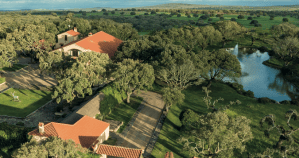
According to the victim registry of the Asociación Salamanca Memoria y Justicia, civil death certificates from Las Veguillas record executions taking place directly within the boundaries of Finca Pedro Llen, the estate Antonio Pérez-Tabernero ceded to host the Falange officer academy in 1937. Official Civil Registry entries for Las Veguillas (Folio 63, Acta 12) document victims being abducted and shot at approximately 6:00pm at a spot called Charca-Teja located between kilometres 21 and 22 inside the Finca Pedro Llen estate in Las Veguillas.
While major military command hubs like Finca San Fernando (Robliza de Cojos, site of the Aeródromo de San Fernando) and Finca de Negrillas (Carrascal del Obispo, Condor Legion headquarters) were heavily guarded operational airfields and command posts rather than clandestine dumping grounds, the surrounding municipalities of the Campo Charro contain several documented fincas with mass graves.
Just next door to Pedro Llen, an estate in San Pedro de Rozados held the remains of four agricultural day labourers from Vecinos who were abducted and shot on 12 August 1936. The Asociación Salamanca Memoria y Justicia successfully exhumed this finca grave in 2015 after reaching an agreement with the modern landowner. As noted in the provincial mass grave mapping reports, out of the more than 80–94 catalogued graves across Salamanca (also viewable on the RTVE Salamanca Mass Graves Map), dozens remain unexhumed on private dehesas across the central plains because oral testimonies from 1936 often only identified the general estate name rather than exact field coordinates.
Under Franco, no land redistribution ever occurred; instead, agrarian subsidies and state protection reinforced the latifundio system for four decades. Massive dehesa estates spanning hundreds or thousands of hectares are rarely broken up for small farming because the arid holm-oak pastureland is only economically viable as large-scale grazing or hunting tracts, keeping ownership concentrated in the hands of the families who already held the deeds in 1936.
Today, among the general public, especially younger generations and grandchildren of the Civil War generation, exhumations are widely viewed as a basic humanitarian right rather than a partisan issue. Public dignified reburial ceremonies, such as the handover of remains in Castillejo de Martín Viejo, regularly draw respectful local crowds and municipal support.
The post-Franco pact of silence has largely broken down. Families in rural Salamanca openly publish appeals to find living relatives for DNA matching before digs begin.
Under Spain’s 2022 Democratic Memory Law, the central government treats the search for missing victims as a direct state obligation, funding forensic teams (such as the Aranzadi Science Society) and a national DNA bank. In Castilla y León, conservative and far-right political leaders have frequently criticised national memory laws as reopening old wounds, introducing regional Concordia proposals and creating bureaucratic friction. While regional authorities still formally authorise technical exhumation permits, local memory associations frequently accuse regional institutions of dragging their feet compared to the central government.
There is an active exhumation project underway right now in Salamanca province at the municipal cemetery of Puente del Congosto, led by the Asociación Salamanca Memoria y Justicia, targeting a mass grave holding 17 victims executed in the municipality in August and September 1936. Among the identified victims are Mateo Nieto Montero, Pablo Hernández Neila, and brothers Miguel and Emilio Escobar Moreno, alongside several men whose identities remain unknown. After the Puente del Congosto Town Council opened formal administrative proceedings in July 2026, the association has spent the autumn preparing the excavation and issuing public appeals for living relatives to come forward for DNA matching before forensic teams open the grave.
While archival research has documented between 1,124 and 1,750 fatal victims in Salamanca province, historians and memory associations emphasise that the true number is higher, likely closer to 1,500–2,000+,because hundreds of extrajudicial killings were never entered into official civil registries. The gap between official figures and local oral histories comes down to how deaths were recorded (or deliberately concealed) in 1936. When Judge Baltasar Garzón compiled the first national court tally of Francoist disappearances in 2008, Salamanca was initially listed at 650 missing persons, a figure based only on preliminary family reports. Over two decades of going village by village through civil registries (Registros Civiles) and military court archives, the Asociación Salamanca Memoria y Justicia documented 1,124 to 1,250 confirmed fatal victims, the vast majority of whom remain missing in unexhumed mass graves. By combining local victims killed inside Salamanca with salmantinos executed in other provinces, prisoners who died of disease/neglect in Francoist jails, and oral testimonies, the Salamanca Cemetery Memorial had inscribed over 1,740 names (while the association’s broader database tracks over 13,000 residents subjected to prison, fines, or purges).
Historians regard the 1,250 figure as a rock-solid minimum floor,. Oral histories across rural Salamanca consistently point to unrecorded deaths. In summer and autumn 1936, Falangist squads frequently picked up migrant seasonal workers, out-of-province travellers, or isolated villagers and buried them on private fincas without ever notifying a municipal judge or clerk. No faked death certificate was ever written, they left zero paper trail. Also, to avoid registering a murder, local authorities often told families, or wrote in parish notes, that a missing man had fled to Portugal, escaped to the Red zone, or died at the front. Oral histories in border towns around Ciudad Rodrigo and Vitigudino preserve memories of men who never reached Portugal because they were shot on local estates.
When deaths were logged in 1936, clerks were forbidden from writing ‘executed.’ Instead, records listed causes like bleeding, trauma, found in the countryside, or disappearing. Researchers have had to rely on local oral memory to confirm which of these entries were political murders rather than accidents. Because Salamanca was Franco’s headquarters, prisoners from neighbouring provinces (such as Navarra, Zamora, Cáceres, and Ávila) were trucked into Salamanca and executed at sites like Monte de La Orbada without ever being registered in local municipal books, meaning neither Salamanca’s civil registries nor their hometown records account for them. We could be back here in ten years time having the same conversation (like we were ten years ago) at the current rate.
- Alicante, Valencia
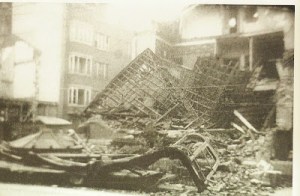
The Eight-Hour Bombing of Alicante (Bombardeo de las ocho horas) was a major German Condor Legion night air raid that began at 7:50pm on 28 November 1936 and lasted until 3:00am on 29 November, marking the first large-scale strategic night bombardment of a Republican port city.
Sixteen German Junkers Ju-52/3m bombers of the Condor Legion took off from their base at Tablada (Seville), flying at altitudes between 2,000 and 2,500 metres. Because night navigation over long distances was still primitive in 1936, the bombers were guided onto Alicante by radio homing signals transmitted from a German cruiser and two German destroyers stationed offshore in the Mediterranean. The aircraft dropped roughly 160 bomb, totalling around 14.4 tons of high explosives and over 4,600 incendiary devices. Rather than carpet-bombing the city centre, the raid targeted key logistical infrastructure: the port facilities, the CAMPSA fuel depots, the railway stations, and the Rabasa airfield.
German and Nationalist planners aimed to cripple Alicante’s port and rail network to stop incoming shipments of Soviet weapons, tanks, and fuel arriving by sea for the defence of Madrid. At the time, and for decades afterward, locals and propaganda claimed the raid was direct retaliation for the execution of Falange founder José Antonio Primo de Rivera in Alicante’s prison eon 20 November 1936. Modern historians note this was largely coincidental or secondary, as Franco’s headquarters did not even publicly confirm Primo de Rivera’s death until 1938, and the target selection was strictly logistical.
Despite lasting over seven hours, the raid caused three deaths (two men and one child) and 26 injuries, alongside heavy material damage to port warehouses and rail lines. Casualty figures stayed low because the bombers focused on peripheral industrial zones rather than dense residential neighbourhoods, and residents fled into basements and nearby hills.
Alicante rebounded rapidly from the physical and logistical damage of the 28 November 1936 raid, though the attack permanently transformed the city’s civil defence, civilian psychology, and later wartime vulnerability. Because the Condor Legion’s primary objective was to knock out the port and rail network to stop Soviet supply ships, the most immediate test was how quickly Alicante could resume functioning as the Republic’s primary Mediterranean supply hub.
Though the raid damaged port warehouses, rail tracks, and fuel infrastructure, it failed to permanently close the port or halt the railway. Within days and weeks, dockworkers and engineers cleared the debris, and Alicante continued operating as the Republic’s vital maritime lifeline for incoming Soviet weapons, grain, and fuel. Because the 16 Junkers Ju-52 bombers targeted peripheral industrial zones (the docks, CAMPSA fuel tanks, and Rabasa airfield) rather than the dense residential core, Alicante’s historic neighbourhoods, civic buildings, and residential housing emerged largely intact from this specific raid.
While the physical scars from November 1936 were repaired quickly, the psychological shock permanently changed daily life in the city. After 28 November, Alicante instituted strict nightly blackouts, air-raid siren protocols, and anti-aircraft batteries. Daily routines, factory shifts, and port unloading were permanently reorganised around night-time air alerts. Ironically, Alicante’s relatively quick recovery from the November 1936 raid, and its continued importance as a Republican port, made it a prime target later in the war, when Italian Aviazione Legionaria bombers shifted from peripheral logistics to direct terror bombing of the civilian centre.
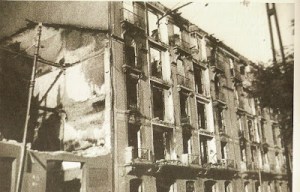
The most lethal consequence of the bombing occurred on the ground immediately after the all-clear sounded. Enraged by the night-long terror, armed Popular Front militiamen stormed Alicante’s provincial prison, extracted roughly 52-53 right-wing political prisoners, and executed them by firing squad against the walls of the municipal cemetery in the early hours of 29 November (one prisoner survived by escaping). The saca was the single deadliest act of Republican rearguard repression in Alicante province during the entire Civil War, accounting for roughly one-sixth of all political executions in the city between 1936 and 1939.
As soon as the air raid ended at 3:00 AM, groups of armed Popular Front militiamen and members of local defence committees converged on Alicante’s Provincial Prison. With the complicity of several sympathetic prison officials, who, according to post-war judicial records compiled by the University of Alicante’s Archivo de la Democracia, helped compile names and in some cases added detainees over personal grudges, militiamen drew up a list of 52 to 53 right-wing detainees. The prisoners were loaded onto trucks and driven to the outer walls of the San Blas Municipal Cemetery on the western edge of Alicante, where they were lined up and shot by firing squad before dawn.
Historical sources cite between 49 and 52 fatalities (with 51–52 being the most widely accepted figures in local archives). The slight variance in numbers stems from how registries counted one wounded survivor and whether a few victims were logged on 28 or 29 November. Out of the 52 or 53 men taken to the cemetery walls, one prisoner survived by feigning death and escaping in the darkness after the initial volley, later providing eyewitness testimony of the massacre.
The 29 November saca wiped out a cross-section of Alicante’s conservative elite, middle class, and clergy who had been rounded up since July 1936. They were members of the CEDA party, Traditionalist Carlists, Renovación Española monarchists, local Falangist sympathisers, lawyers, doctors, engineers, merchants, and conservative journalists from Alicante city and surrounding towns such as Alcoy, Elche, and Villena. Several priests and religious brothers who had been held in protective or preventive custody inside the provincial jail.
The massacre deeply embarrassed the Republican civil authorities in Alicante and the central government in Valencia, which had been trying since autumn 1936 to curb uncontrolled militia sacas and channel all cases through formal People’s Tribunals. Following the 29 November killings, security around Alicante’s prisons was tightened, preventing another mass saca of that scale in the city for the remainder of the war. When Nationalist forces captured Alicante at the end of March 1939, the 29 November 1936 cemetery massacre became a centrepiece of Franco’s Causa General prosecution in the province. Victims’ bodies were exhumed for state-sponsored funeral rites, and dozens of former prison guards, militiamen, and local Popular Front officials accused of participating in, or failing to stop, the saca were tried by military courts-martial and executed at the very same San Blas cemetery walls.
The bodies were exhumed and reburied almost immediately after Francoist forces captured Alicante in March–April 1939, and dozens of the alleged perpetrators were identified, tried, and executed during the post-war military trials. Because the victims were Nationalist sympathisers, clergy, and conservative elites, their recovery and the prosecution of their killers were top priorities for the new Francoist authorities in spring 1939, the exact opposite of the decades-long silence surrounding Republican mass graves.
Families recovered the remains for individual Catholic burials or placement in a dedicated monument to the Caídos por Dios y por España (Fallen for God and Spain) inside the cemetery. Unlike Republican victims whose names were erased from public records, the victims of the 29 November saca were heavily commemorated by the regime. As documented in local historical archives such as Alicante Vivo, dozens of streets and public buildings in Alicante, such as Calle César Elguezábal (named in 1939) and numerous streets named on 17 July 1955, were renamed in honour of the men killed that night.
Because one prisoner survived the firing squad by feigning death and escaping, and because the original prison extraction lists and shift logs from the Reformatorio de Adultos were preserved, Francoist investigators quickly reconstructed the chain of events. In 1939–1940, the 29 November 1936 saca became one of the primary charges in Alicante’s Causa General. Investigators identified members of the local Comité de Salud Pública (Public Health Committee), Popular Front militiamen who formed the firing squad, and several prison guards/officials who had handed over the detainees or added names to the execution list.
While several top political organisers fled into exile from Alicante’s port in late March 1939, those who remained behind, including prison guards, drivers, and militiamen implicated in the saca, were convicted of adhesion to military rebellion and sentenced to death in rapid military courts-martial. Many were executed by firing squad against the very same walls of the San Blas cemetery in 1939 and 1940, and buried in the cemetery’s unmarked Republican mass graves (such as Fosa X, which only began undergoing forensic exhumation in 2021. All mass grave sites in the region are Republican).
As detailed in historical studies of repression and exile in Alicante, the 29 November 1936 execution of 52 right-wing prisoners was treated by the new authorities as a premier blood-crime. Anyone linked, even tangentially, to the prison administration, Popular Front committees, or militias in November 1936 was singled out for swift death sentences and shot against the very same San Blas cemetery walls in 1939–1940.
- Paracuellos, Madrid
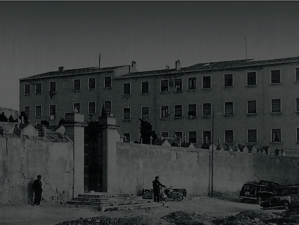
On 28 November 1936, a morning saca removed roughly 110 to 113 prisoners from Madrid’s San Antón prison (a converted religious school) and transported them by bus to Paracuellos del Jarama. Among those executed that morning were two of the most prominent individual and group victims of the Madrid rearguard killings.
Aged 57, Pedro Muñoz Seca was one of Spain’s most popular and commercially successful comic playwrights, famous for inventing the astracanada farce genre and writing La venganza de Don Mendo. A staunch monarchist and personal friend of exiled King Alfonso XIII, he had openly mocked the Second Republic in several plays. Arrested in Barcelona in July 1936 while attending a play premiere, he was transferred to San Antón prison in Madrid. According to eyewitness testimonies from prison mates and gravediggers, he maintained his trademark dry humour up to the moment he faced the firing squad on 28 November, reportedly telling his captors they could take ‘his estate, his wealth, and his life, but there is one thing you cannot take from me, the fear that I have!
Also killed that day was the 13 Missionary Oblates of Mary Immaculate. These three priests, seven young seminarians/scholastics, and 3 lay brothers, belonged to the Missionary Oblates of Mary Immaculate community in Pozuelo de Alarcón, just outside Madrid. Detained after militias seized their seminary in July 1936 and eventually concentrated in San Antón prison, they were included in the 28 November extraction solely on account of their religious status, without formal charges or trial. Led by their Provincial Superior, Fr. Francisco Esteban Lacal, all 13 were shot together at Paracuellos. They were later beatified by Pope Benedict XVI in Madrid in December 2011, and their feast day is observed on 28 November.
Alongside them, the 28 November San Antón convoy also included the first group of Augustinian friars from the Monastery of El Escorial, part of a larger community of 65 Augustinian friars executed across the 28 and 30 November sacas, as well as 15-year-old Falangist detainee Ricardo Rambal Madueño, who miraculously survived both the volley and the coup de grâce and crawled out of the trench after the militias left.
- Barranco de San Daniel, Ibdes, Zaragoza, Aragon
On the night of 28 November 1936, Falangist and Nationalist militias carried out an extrajudicial execution in the Calatayud comarca of Zaragoza province, killing seven residents from the village of Castejón de las Armas and burying them in an unmarked mass grave in the Barranco de San Daniel near Ibdes.
The seven identified men, Casimiro Martínez, Antonio Monge, Jesús Pérez, Pedro Somed, Dionisio Pérez, Marcelino Pérez, and Diego Martínez Inogés were ordinary villagers, agricultural workers, and local left-wing or Republican sympathizers from Castejón de las Armas, a small rural municipality along the Piedra River. Though Castejón de las Armas and the surrounding Calatayud district fell rapidly to rebel forces in July 1936 without becoming an active front line, local Falangist squads and Guardia Civil conducted systematic cleansing raids throughout the summer and autumn of 1936 to eliminate anyone linked to Popular Front parties, rural unions, or the Republican municipal council.
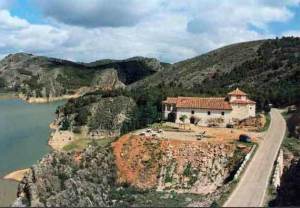
Taken from custody under cover of darkness on 28 November, the seven men were transported roughly 10km south into the neighbouring municipality of Ibdes. They were shot in the dry riverbed of the Barranco de San Daniel near the hermitage of San Daniel and what is now the Embalse de la Tranquera reservoir and buried in a common pit. According to the Government of Aragon’s Cultural Heritage Information System (SIPCA) and the Association for the Recovery of Historical Memory of Aragón (ARMHA), the Barranco de San Daniel mass grave remains unexhumed and unmarked, with its exact location known only approximately due to decades of terrain changes and reservoir construction. A separate mass grave in Ibdes, at the Valdearagón site, holds seven additional victims from Castejón de las Armas executed during the same autumn purge.