- Oviedo, Asturias
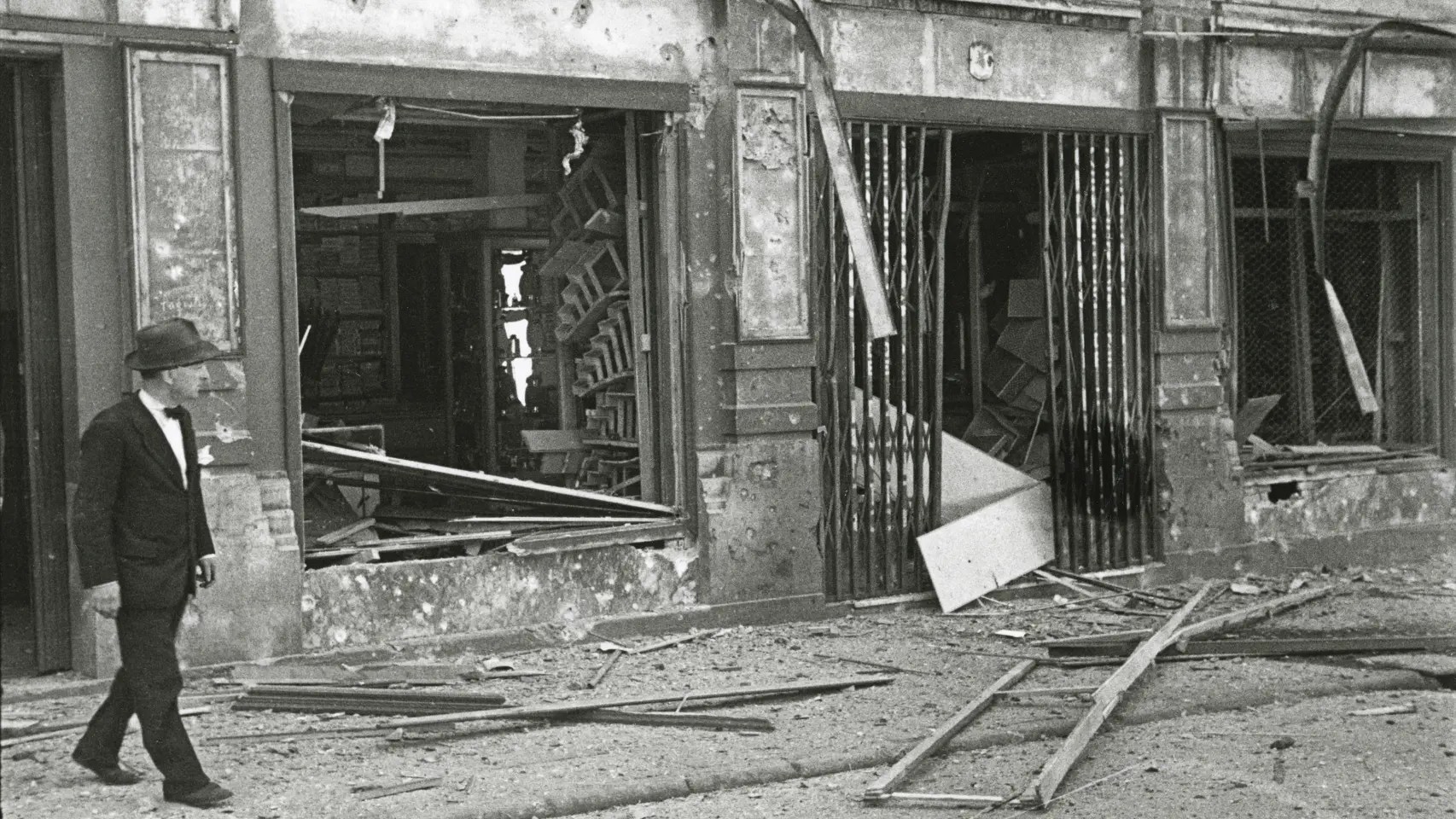
On 10 September 1936, Republican aircraft subjected Oviedo to another prolonged bombardment while ground forces continued their offensive around the besieged city. At least 150 civilians had taken shelter in the basement of the recently constructed Casa del Chorín, at the corner of Calle Caveda and Calle Foncalada, believing its substantial structure offered protection from the air raids.
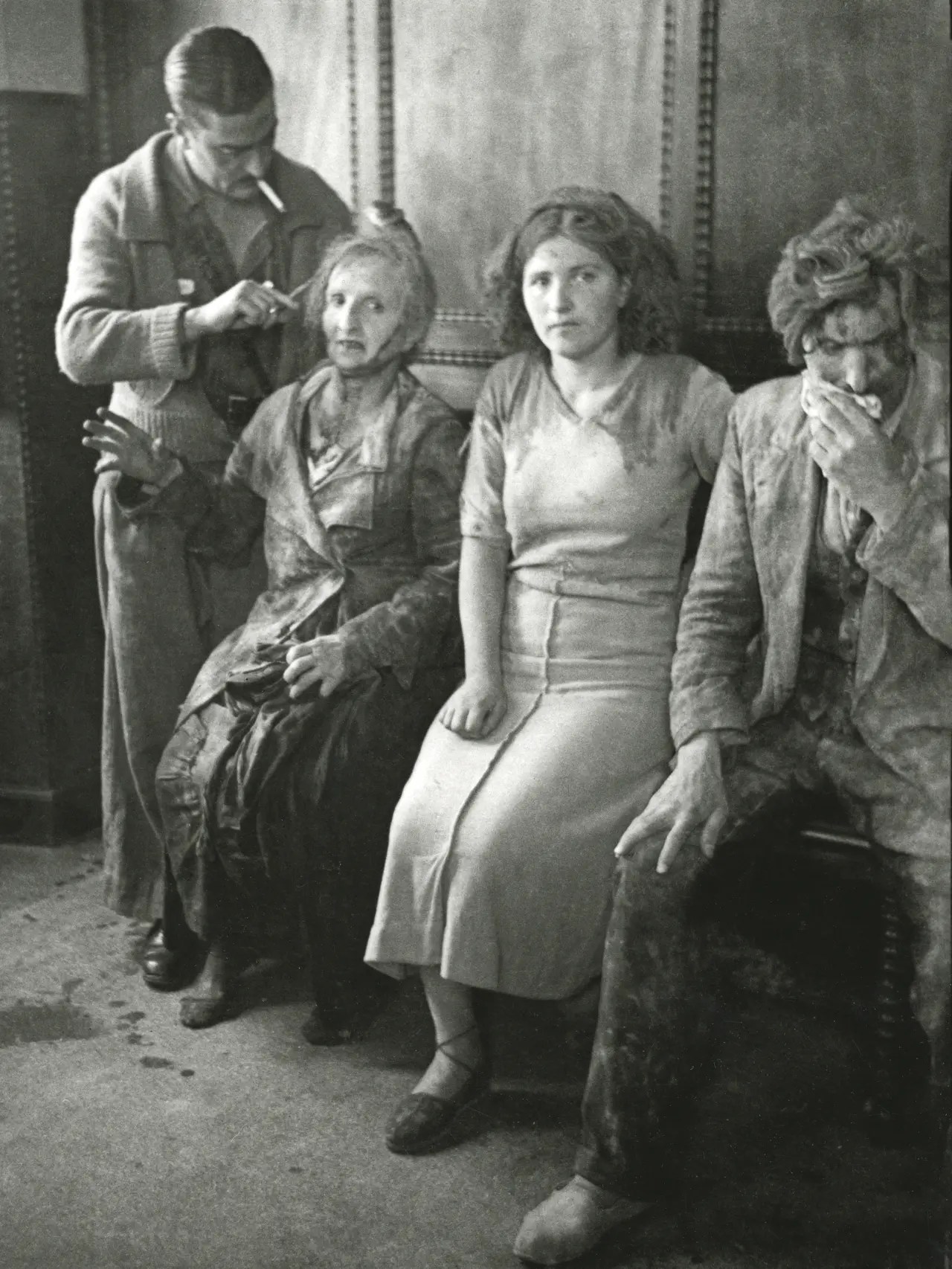
A bomb intended for the surrounding urban area, some accounts identify the nearby Santa Clara barracks as the likely military target, entered through the rear courtyard and exploded in the basement. Women and children were particularly numerous among those sheltering there. The explosion killed entire members of some families and left 35–40 people wounded. Contemporary and later accounts claimed up to 120 dead, while some wartime claims went higher. The physical destruction made an exact count difficult, and no definitive list of everyone sheltering inside has been established. Thirteen bodies remain unidentified, along with remains belonging to at least five other people; the victims were of all ages.
One survivor’s family illustrates the scale of the loss. Eight-year-old José Manuel García Peruyera had been sent out by his mother to find baby food shortly before the raid. While he was away, the bomb killed his mother María Luisa, his twin brothers Miguel Ángel and Luis, his grandparents Francisco and María, and his aunts Ángeles and Eloína. Decades later, García Peruyera was still trying to establish where the remains recovered from the building had been buried.
The Casa del Chorín became one of the best-known civilian tragedies of the siege and was subsequently incorporated into Nationalist accounts of Republican bombardment of Oviedo. Behind that later political use was a straightforward civilian disaster: a basement being used as an air-raid shelter received a direct bomb hit while more than 150 people were inside.
West from the city, From Cornellana, the main road towards Grado climbed through the heights of La Cabruñana, and during the second week of September the Republican defenders made those heights the place where they intended to stop the Galician columns. Grado lay beyond them in a broad basin, only about twenty-five to thirty kilometres by road from Oviedo. If the Nationalists could get through La Cabruñana, the relief force would be closer to Aranda than at any previous point in the campaign.
The geography favoured the Republicans. Men positioned above the road could observe movement below and fire on troops trying to climb towards them, while the steep slopes restricted the usefulness of vehicles and made it difficult to move artillery and ammunition. The Republican defence was commanded by Commander Gállego, with militia drawn from the Asturian forces trying simultaneously to contain Aranda in Oviedo and prevent the Galician columns reaching him. Several thousand Republican troops appear to have been available across the wider sector, though the surviving evidence does not allow a reliable figure for how many were actually fighting on La Cabruñana at any one time.
Fighting developed around 10–11 September and continued for several days. Martín Alonso’s Nationalists could not simply drive down the road towards Grado while the heights remained in Republican hands, so separate groups worked against the position from different directions. Rain added another problem on 13 September, turning tracks and slopes into difficult ground for men already having to carry ammunition and weapons away from the roads.
Gállego’s militia were still holding La Cabruñana on the 13th, but their position was becoming dangerous. Teijeiro’s troops manoeuvred beyond part of the Republican line on 14 September, threatening to cut off men who remained on the heights. The Republican withdrawal that followed was not the disappearance of the defending force; the militia pulled back eastwards rather than risk being trapped between the Nationalist columns.
That opened the way to Grado, which the Nationalists entered on 15 September. The town itself did not require another battle on the scale of La Cabruñana because the Republicans had already made their principal stand on the approaches. For civilians in Grado, , the change was immediate: a town that had remained behind the Republican front since July was now occupied by Nationalist troops and became an important base for the next stage of their advance.
The Nationalists could now look east towards Oviedo, but the remaining twenty-five kilometres were deceptive. The Republicans had lost La Cabruñana without losing the forces defending western Asturias, and ahead lay the Nalón valley, Trubia and Peñaflor. Once again, rivers, bridges and steep ground offered places where a retreating force could concentrate and stop a larger body of men from simply moving along the road.
- Logroño (La Rioja)
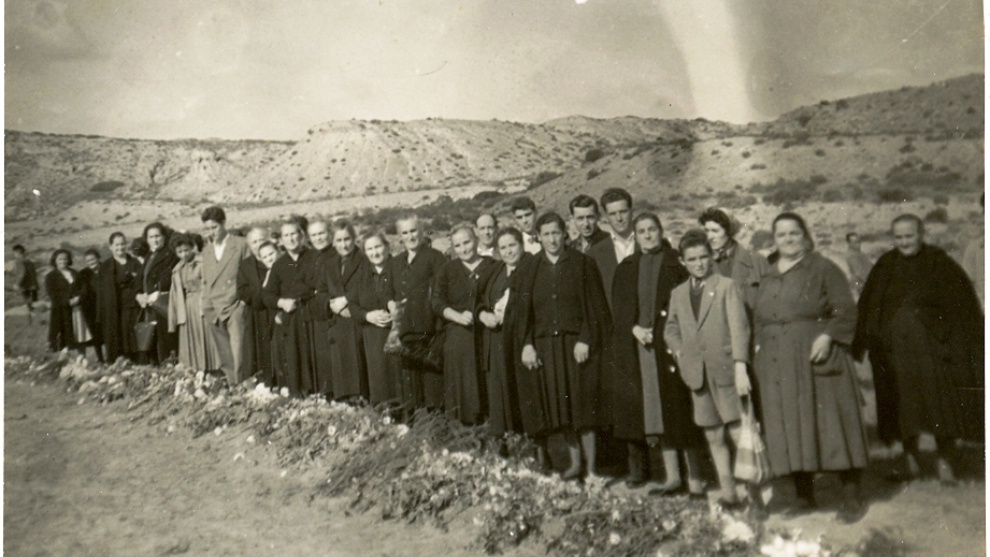
On 10 September 1936, Nationalist repression in La Rioja began to centre on a killing ground at La Barranca, in the Dehesa de Barriguelo outside Lardero, a few kilometres south of Logroño. Prisoners held by the Nationalist authorities were taken there in groups, shot, and buried in trenches. The killings continued beyond September until 15 December 1936, by which time more than 400 people had been killed at La Barranca.
The first documented group arrived on 10 September. One account describes a truck carrying six prisoners from Navarrete. Further prisoners from Navarrete were killed on 11 September, including José María Santaolalla García, a Socialist councillor and UGT member; Celedonio Cabezón Huego, a nineteen-year-old agricultural worker and PSOE member; and Moisés Torrealba Álvez, an agricultural worker belonging to the UGT. Some records place individual deaths at nearby La Grajera rather than La Barranca, but they belonged to the same area of Nationalist repression around Logroño and Lardero. On 12 September, another eight agricultural workers were shot at La Barranca and left buried in the trench. Identified victims from the killings that day include Laureano Blasco Castellar, a UGT agricultural worker from Navarrete; Constantino Marín Medina, secretary of the Navarrete UGT; and Mauricio Blanco Casado, an agricultural worker from Torrecilla sobre Alesanco who also taught local children to read and write.
The executions continued on 15 September. Among the identified victims were Fernando Amutio Etayo, an agricultural worker from Lardero; Isidoro Cereceda García, a blacksmith from Navarrete; and Jesús Angulo Álvarez, a cart-builder and Socialist activist from Fuenmayor. Further killings are recorded at La Barranca on 19 September. On 21 September, one of those killed was Casimiro Valderrama Pozo, a seventeen-year-old shepherd from Casalarreina who belonged to the local UGT agricultural workers’ society. More prisoners were killed in the La Barranca and La Grajera area on 22 September.
The largest September killing at La Barranca came on 24 September, when a major saca of prisoners was brought from Logroño. Approximately 48–50 people were shot in a single operation, making it one of the largest individual massacres of the repression in La Rioja. At least thirteen of the victims came from Calahorra. Some had been arrested there following the September funeral of Falangist Ángel Hernández Díaz. Named victims recorded for 24 September include Prudencio Alcalde Ibáñez and Ángel Alcalde Rubio. On 26 September, the victims included Ángel Adán Galilea, a fifty-four-year-old night watchman, and Ángel Ezquerro Ezquerro, associated with Pradejón. Another group was killed on 27 September, including Ignacio Fernández Aragón, from Medrano, and Cirilo Ruiz Díez.
The people taken to La Barranca were civilians already in the hands of the Nationalist authorities, rather than casualties of fighting between Republican and Nationalist troops. Many were agricultural workers, trade union members, Socialist or Republican activists, councillors, and other people identified with the political and labour organisations that had operated legally under the Republic. Prisoners were transported from Logroño and surrounding towns to the isolated ground outside Lardero, shot, and buried there. September was only the beginning of La Barranca’s use as a major execution site. From 10 September to 15 December 1936, more than 400 men and women were killed there, making it one of the principal mass graves of Nationalist repression in La Rioja. As of 2026, 394 victims have been identified. The mass grave site is only 5km outside Logroño city, which has its own mass grave site with 367 identified Republican victims.
- Valencia
- Valladolid, Old Castile
In early September 1936, a group of men had been arrested and imprisoned in the Dueñas Town Hall. On the night of September 10th-11th, four men were taken out and murdered, apparently against the walls surrounding the Valoria la Buena cemetery, where they were buried the following morning as unknown, though it was known that they were residents of Dueñas. There are witnesses who saw the four bodies lying at the cemetery gate. Later, the gravedigger from Valoria collected the bodies and buried them together in a grave. That grave was later purchased by the relatives of Jacinto Montero and Félix Medina.

