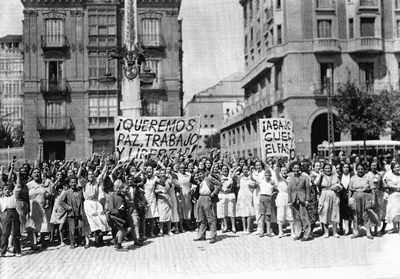
When the military uprising began in Barcelona on 19 July 1936, women appeared in public spaces in ways that challenged assumptions held by supporters and opponents. Some carried rifles, joined militia units, helped defend barricades, and travelled to the front. Others became organisers, journalists, educators, political activists, trade unionists, committee members, and public representatives of the anti-fascist struggle. The image of the miliciana, the armed anti-fascist woman wearing overalls or a militia cap, quickly became one of the defining symbols of the early Spanish Civil War. Photographs of young women carrying rifles in the streets of Barcelona circulated across Europe. To many observers, they appeared to represent a revolution not only in politics but also in gender relations, though the reality behind those images was more complex than later mythology often suggested. Women in Barcelona did not suddenly become politically active when the military uprising began. By the summer of 1936, thousands of women were already participating in the social, economic, and political life of the city, although their opportunities remained constrained by law, custom, and deeply rooted expectations about gender.
Barcelona was one of the most industrialised cities in Spain. Women worked throughout the city’s economy, particularly in the textile industry, garment workshops, food processing, domestic service, retail businesses, and other forms of wage labour. Many working-class families depended upon the earnings of women as well as men, especially during periods of economic hardship. Female workers often endured long hours, low pay, and insecure employment. Married women frequently faced the additional burden of domestic responsibilities alongside paid work. These conditions helped draw many women toward labour organisations. Women participated in strikes, workplace disputes, and union campaigns long before the Civil War began. Although men dominated most senior positions within the labour movement, women were active members of trade unions and frequently took part in collective action. During major strikes in Barcelona, women appeared on picket lines, attended meetings, organised neighbourhood networks, and confronted employers and police alongside male workers.
Political participation was expanding during the years of the Second Republic. Women gained the right to vote in 1931 and first exercised that right in the general election of 1933. Access to education improved, secular schools expanded, and debates about divorce, marriage, religion, and women’s rights became increasingly visible within Spanish society. For many women, particularly those from working-class backgrounds, these changes created opportunities that had not existed a generation earlier. At the same time, traditional expectations remained powerful. Spanish society in the 1930s was still overwhelmingly shaped by assumptions that women should prioritise marriage, motherhood, domestic responsibilities, and religious life. Even within progressive political movements, many men who supported social reform continued to hold conservative views about women’s roles. Participation in public life often required women to challenge political opponents and attitudes within their own organisations.
Barcelona’s anarchist movement provided some of the most important opportunities for politically active women. The Confederación Nacional del Trabajo (CNT) attracted female workers who saw connections between economic inequality, political repression, and gender discrimination. Women contributed to anarchist newspapers, attended educational programmes, organised cultural activities, and participated in neighbourhood campaigns. The movement’s emphasis on education and self-improvement appealed to many women who viewed knowledge as a means of achieving greater independence. But anarchist organisations were not free from sexism. Women often found themselves excluded from leadership positions or treated as secondary participants despite their contributions. Some female activists complained that male comrades who spoke passionately about social revolution frequently remained unwilling to challenge traditional assumptions about women’s place within the family or political organisations. These frustrations helped shape a generation of female activists who believed that women’s emancipation required more than class revolution alone. Among them were Lucía Sánchez Saornil, Mercedes Comaposada, and Amparo Poch y Gascón, women who would later become central figures in Mujeres Libres. All three had been politically active before the Civil War. Their experiences convinced them that women needed greater access to education, professional opportunities, and political participation if genuine equality was ever to be achieved.
By July 1936, Barcelona already contained a substantial population of politically engaged women. Some were anarchists, others socialists, communists, republicans, or Catalan nationalists. Some worked in factories, others in offices, schools, hospitals, shops, or their own homes. Their backgrounds and beliefs varied considerably, but many shared a growing conviction that women should play a larger role in shaping Spanish society.
The collapse of established authority of July 1936 during the military uprising created opportunities that had previously seemed impossible. Women who had spent years organising in unions, political groups, educational campaigns, and neighbourhood movements suddenly found themselves operating in a world where many of the old social boundaries had weakened. The visibility of women in revolutionary Barcelona was the result of decades of activism, organisation, and social change that had already been transforming the city before the first shots of the Civil War were fired.
When rebel troops moved into Barcelona on the morning of 19 July 1936, the fighting that erupted across Barcelona was chaotic and decentralised. Unlike a conventional battle fought by clearly defined armies, much of the struggle unfolded at street level. Rebel troops attempted to seize key locations, including Plaça de Catalunya, the Telefónica building, military barracks, government offices, and major road junctions. Resistance emerged from a combination of loyal security forces, organised workers, political activists, and local residents. Women were present throughout this process, though their experiences varied considerably depending upon where they lived and to which organisations they belonged. As fighting intensified, many women found themselves operating in public spaces from which they had traditionally been excluded. Streets became political and military spaces simultaneously.
During the first hours of the rebellion, access to weapons remained a major problem for anti-fascist forces. Many civilians possessed little more than hunting guns, pistols, or improvised weapons. The situation changed dramatically once rebel positions began to fall. The capture of military installations, particularly the Sant Andreu barracks, placed thousands of rifles and large quantities of ammunition into anti-fascist hands. Women were among the crowds that entered these newly seized spaces. Contemporary accounts and later testimonies describe women collecting weapons, helping transport supplies, and participating in the frantic effort to arm the city’s defenders. Some women chose to carry weapons themselves. The exact number remains difficult to determine, but contemporary photographs, eyewitness accounts, and later memoirs leave little doubt that armed women were present during and immediately after the fighting. Their visibility attracted enormous attention because it challenged assumptions held by much of Spanish society. Many conservative observers regarded the sight of armed women as shocking or unnatural. Supporters of the revolution often viewed the same images as evidence that a new society was emerging.
The atmosphere following the defeat of the uprising reinforced these developments. During the days immediately after 19 July, many anti-fascists believed they had not simply defended the Republic but opened the possibility of profound social change. Traditional authorities appeared weakened or discredited. Employers had fled some workplaces. Barracks had fallen. Political prisoners were released. Revolutionary organisations suddenly exercised influence on a scale that would have seemed impossible only a week earlier. For many women, this moment created opportunities that had rarely existed before. Participation expanded beyond supporting male activists or attending political meetings. Women could now be seen openly joining militia units, speaking at public gatherings, helping administer revolutionary organisations, and shaping the future direction of their communities. These opportunities were uneven and often contested, but they were nonetheless real.
The experience was not the same for all women. Political beliefs, social class, education, employment, and family circumstances all influenced how individuals responded to events. Some embraced revolutionary change enthusiastically. Some supported the Republic without supporting social revolution. Barcelona’s women were never a single political group, they were workers, teachers, students, shopkeepers, clerks, nurses, intellectuals, domestic workers, mothers, daughters, and activists with differing priorities and beliefs. But in the space created by that victory, women became more visible than ever before in the political and public life of Barcelona and this visibility would help create one of the most enduring images of the early Civil War, of women standing beside men on barricades, carrying rifles, participating in revolutionary organisations, and claiming a place within a struggle that many believed would transform both Spain and their own lives. Those images became famous around the world, but they represented something deeper than a moment of military resistance. They reflected the sudden expansion of possibilities that many women experienced during the extraordinary days following the defeat of the uprising in Barcelona.

Concha Pérez Clado
Among the many olwomen who participated in the revolutionary mobilisation that followed the defeat of the military uprising in Barcelona, few left a clearer firsthand record than Concha Pérez Collado.
Born in Barcelona in 1915, Pérez Collado grew up in a working-class environment shaped by many of the social tensions that characterised early twentieth-century Spain. Like countless young people in Barcelona, she encountered politics not primarily through formal institutions but through neighbourhood networks, workplaces, trade unions, and the wider culture of labour activism that permeated much of the city. Before the Civil War began, she had already become involved in libertarian and anarchist circles associated with the CNT and anarchist youth organisations. Her political development reflected a broader pattern visible among many young anarchists of the period. Activism was rarely confined to elections or party meetings. It often involved educational programmes, cultural activities, labour organising, and community networks that sought to create alternatives to traditional political structures. By the summer of 1936, Pérez Collado belonged to a generation of politically engaged young women who viewed social change as both possible and necessary.
When the military uprising erupted on 19 July, she was twenty-one years old. Like many residents of Barcelona, she was drawn immediately into events. Later recollections describe her participation in the construction of barricades and other defensive measures during the fighting. She also became involved in patrols and activities directed against rebel positions after the uprising had begun to collapse. Although later photographs of militiawomen often encouraged romanticised interpretations of women’s participation, Pérez Collado’s own accounts generally presented a more practical and less glamorous picture of revolutionary mobilisation. She described confusion, urgency, shortages, and the sense that ordinary people were being forced to take responsibility for defending their communities.
Following the defeat of the uprising in Barcelona, Pérez Collado joined the Aguiluchos militia associated with the Les Corts district. The formation was one of many volunteer units that emerged during the revolutionary weeks following the coup’s failure in Catalonia. Like other militia organisations, it combined military objectives with political ideals. Volunteers believed they were fighting not only against the military rebellion but also for a transformed society.
Her decision to join a militia is significant because it illustrates the opportunities that briefly opened for women during the summer of 1936. Although women had long participated in political movements, it had been far less common for them to be accepted openly into armed formations. The collapse of established authority in Barcelona created circumstances in which some women could move into roles that had previously been difficult or impossible to imagine. Their participation was never uncontested, and women remained a minority within militia organisations, but their presence was real.
Pérez Collado later travelled toward the Aragón front as part of the broader mobilisation that carried thousands of volunteers westward from Catalonia. The departure of these columns became one of the defining features of the revolutionary summer. For many participants, the journey represented both a military campaign against the rebellion and a social mission intended to spread revolutionary change into the countryside.
What makes Pérez Collado especially valuable to historians is not simply that she took part in these events, but that she lived long enough to reflect upon them in detail. Through interviews, memoirs, and oral history projects, she provided a rare firsthand perspective on the experiences of working-class women who participated directly in the revolutionary movement. Her testimony offers a corrective to both romantic myths and dismissive stereotypes.
On one hand, she challenged simplistic portrayals of militiawomen as heroic icons frozen in famous photographs. On the other, she also rejected attempts to minimise women’s participation by treating them as mere spectators or auxiliaries. Her recollections demonstrate that women were active participants in the political and social upheaval unleashed by the Civil War, even if their experiences often differed from those of male comrades.
Pérez Collado repeatedly emphasised that many women did not join the struggle in search of symbolic recognition. They joined because they believed fascism threatened their communities, their organisations, and the freedoms they had gained during the years of the Second Republic. Their motivations were political, personal, and practical rather than purely ideological.
Her life helps illuminate one of the central themes of July 1936. The significance of women like Concha Pérez Collado was not that they represented an entirely new phenomenon. Women had been politically active for years. Rather, the defeat of the uprising created a brief period in which women could participate more visibly and directly in public, political, and military life than ever before. Through her experiences, modern readers can see how revolutionary Barcelona opened possibilities that many women had long sought, even if those possibilities would later be constrained by the demands and realities of war.
In 1997, Pérez Collado, along with a group of women over 80 years old, founded the association Women of ’36 to remind new generations that the political and social advances women enjoy today stem from a struggle that became evident in 1931 with the advent of the Republic. They also aimed to ensure that this history was not forgotten. During the ten years the association existed, they gave 179 talks in secondary schools, 35 in universities, conducted 185 personal interviews, and participated in radio programmes and documentaries.
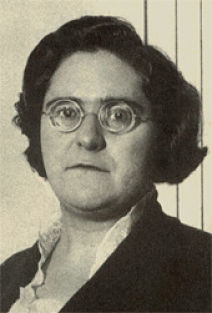
Federica Montseny Mañé
If Concha Pérez Collado represents the experiences of many young working-class women drawn into the revolutionary upheaval of July 1936, Federica Montseny illustrates a different but equally important aspect of women’s changing roles during the Civil War: political leadership.
By the time the military uprising began, Montseny was already one of the most recognisable figures within the Spanish anarchist movement. Unlike many activists whose influence was confined largely to local organisations, she was known throughout Spain as a writer, journalist, public speaker, and intellectual. Her prominence meant that when revolutionary events unfolded in Barcelona during July 1936, she was not merely a participant but one of the individuals helping to interpret and shape them.
Born in Madrid in 1905, Montseny grew up in an unusual environment. Her parents, Juan Montseny and Teresa Mañé, were prominent anarchists who published newspapers, books, and political literature under the names Federico Urales and Soledad Gustavo. Their household functioned as both a family home and a centre of anarchist intellectual activity. Discussions about politics, education, social reform, and revolutionary theory formed part of everyday life from an early age. This background gave Montseny opportunities unavailable to many Spanish women of her generation. She received a broad education, became an avid reader, and began writing while still young. Over time she established herself as a prolific author whose novels, essays, and articles reached audiences far beyond traditional anarchist circles. Through journalism and public speaking she became one of the movement’s most effective communicators.
Within a political culture where leadership positions were overwhelmingly occupied by men, Montseny emerged as one of the most influential female voices in Spanish public life. She regularly addressed large meetings, participated in major debates within the anarchist movement, and commented on issues ranging from labour organisation to education, religion, family life, and women’s rights. Her prominence demonstrated that women could occupy visible positions within political movements, even if such examples remained relatively uncommon.
When the military uprising began in July 1936, Montseny was in Catalonia and witnessed the extraordinary transformation that followed the defeat of the rebellion in Barcelona. The days after 19 July brought a collapse of normal authority unlike anything most Spaniards had experienced. Barracks had fallen, weapons had been distributed, revolutionary committees appeared across the city, and armed patrols became a common sight. Later, Montseny would describe the atmosphere as one of exhilaration mixed with uncertainty. For many anarchists, it seemed that decades of struggle had suddenly opened the possibility of genuine social revolution. Factories were being collectivised, workers were assuming control over workplaces, and traditional hierarchies appeared to be crumbling. At the same time, nobody knew how long the situation would last or what form the future might take.
Montseny occupied a particularly interesting position within these developments because she stood at the intersection of several different struggles. She was an anarchist committed to social revolution, an anti-fascist determined to defeat the military uprising, and a woman operating in political spaces that remained heavily male-dominated despite revolutionary rhetoric about equality.
Like many anarchist women, she was acutely aware that political liberation did not automatically produce gender equality. Although anarchist organisations generally supported broader roles for women than many conservative groups, female activists still encountered prejudice, exclusion, and assumptions about their proper place in society. Montseny’s prominence challenged those assumptions simply through her public visibility. Her speeches and writings often addressed questions of education, social welfare, family relationships, and personal freedom. She argued that genuine emancipation required more than political change alone. Society itself needed transformation. In this respect, her ideas overlapped with many of the concerns that would later inspire Mujeres Libres and other efforts to expand women’s participation within the broader revolutionary movement.
The significance of Montseny’s career became even clearer later in 1936. In November, she accepted the position of Minister of Health in the Republican government headed by Francisco Largo Caballero. The decision was controversial because anarchists had traditionally opposed participation in state institutions, many leaders believed the military emergency required cooperation between different anti-fascist forces. Her appointment made her the first female cabinet minister in Spanish history and this achievement carried symbolic importance far beyond the immediate political situation. At a time when women in many European countries remained excluded from senior political office, Montseny became one of the most prominent female politicians on the continent. Her position reflected the extraordinary upheavals unleashed by the Civil War and the opportunities that briefly emerged during the revolutionary atmosphere of 1936. Montseny’s story reminds us that women’s participation in revolutionary Barcelona was not limited to armed struggle. Women also acted as writers, organisers, intellectuals, speakers, administrators, educators, and political leaders. Their influence was exercised not only on barricades and battlefields but also through ideas, institutions, and movements that sought to redefine Spanish society itself.
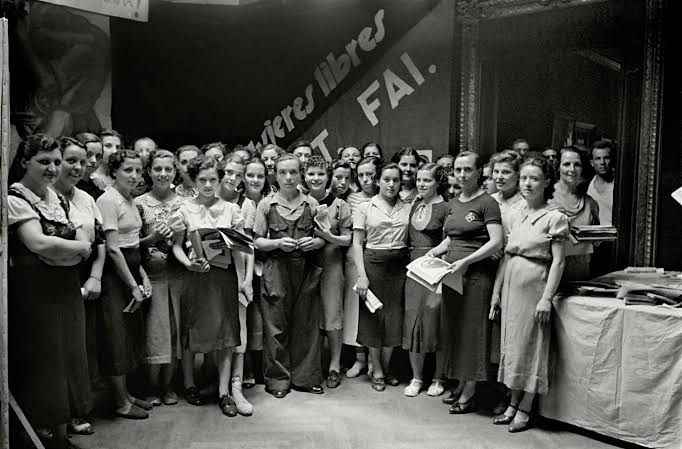
The Women of Mujeres Libres
Among the many organisations that emerged during the revolutionary upheaval of 1936, none did more to address the specific experiences of women than Mujeres Libres (Free Women).
The organisation was formally established only a few months before the Civil War, its origins lay in frustrations that had been building for years among female anarchists. Many women supported the goals of the anarchist movement and participated actively in unions, strikes, educational campaigns, and political organisations. they often found themselves marginalised within movements that spoke passionately about freedom and equality while continuing to reproduce many of the assumptions of the wider society. Women frequently discovered that male comrades who opposed capitalism, militarism, and state authority could still assume that leadership, public speaking, and political decision-making were primarily male responsibilities. Meetings were often dominated by men. Educational opportunities were uneven. Women with family responsibilities frequently found it harder to participate fully in political activity. Some female activists concluded that social revolution alone would not automatically eliminate gender inequality. The most important figures behind Mujeres Libres were Lucía Sánchez Saornil, Mercedes Comaposada, and Amparo Poch y Gascón.
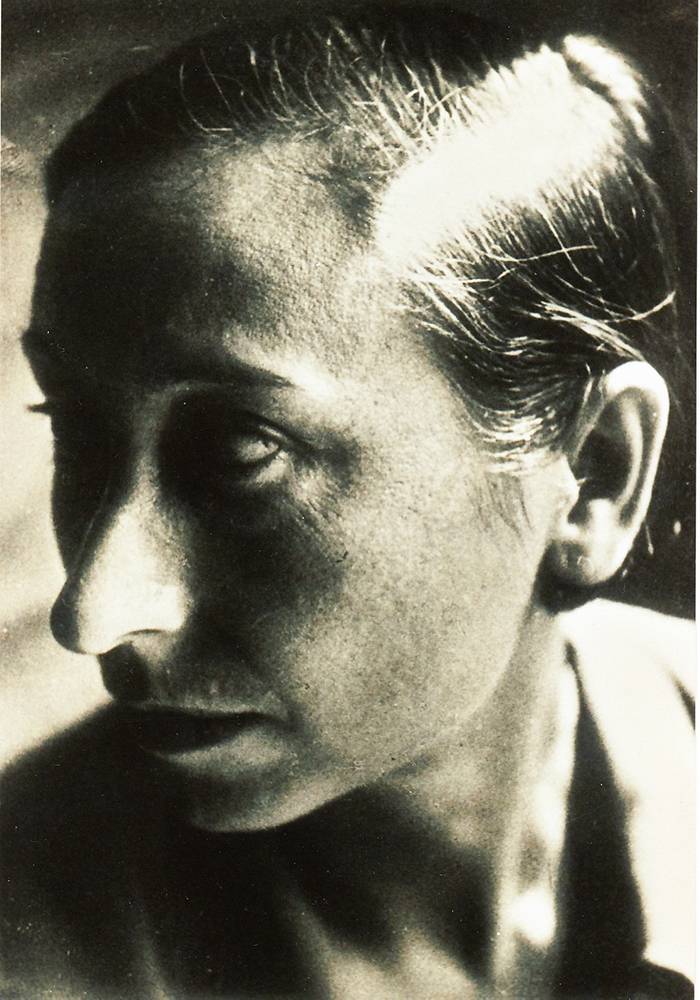
Lucía Sánchez Saornil was a poet, journalist, and committed anarchist. She had spent years writing about social issues and labour politics, while also confronting the limitations faced by women within both Spanish society and the anarchist movement itself. Sánchez Saornil argued that women required their own spaces for education, political development, and collective organisation. She believed that many working-class women remained excluded from revolutionary activity not because they lacked ability or commitment, but because social and cultural barriers continued to restrict their opportunities. (her full biography will be in a separate post)
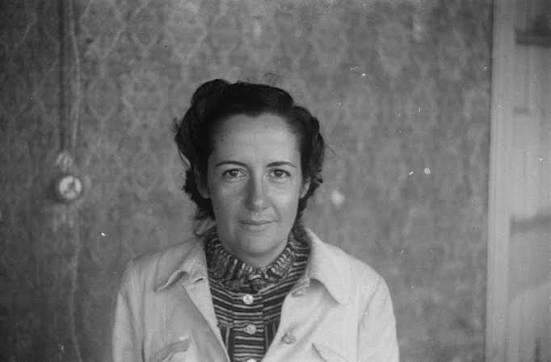
Mercedes Comaposada came from a background in education and law. Deeply committed to adult learning and social improvement, she believed that education was essential if women were to participate fully in public life. Many working-class women had received little formal schooling and possessed limited opportunities to acquire professional skills. Comaposada viewed education not as a secondary issue but as a foundation for genuine emancipation. (full biography to come separately)
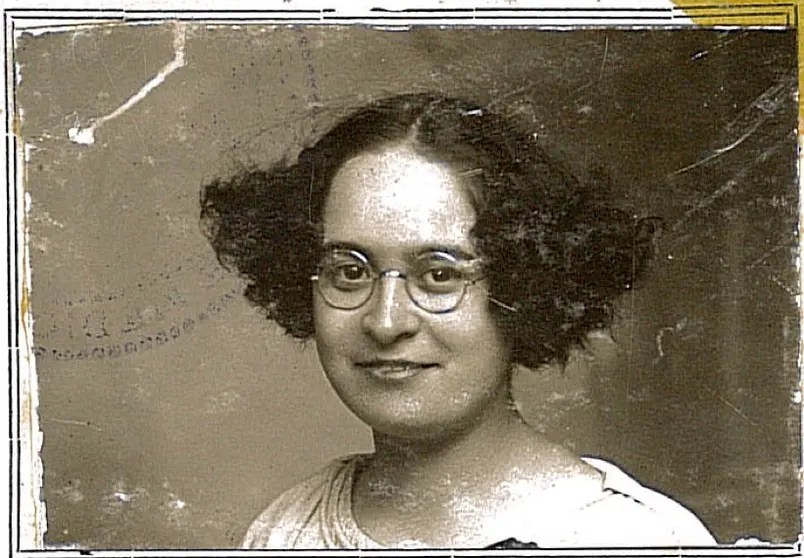
Amparo Poch y Gascón brought another perspective. One of Spain’s first female doctors, she combined medical work with activism and social reform. Poch was particularly interested in public health, childcare, sexual education, and women’s wellbeing. At a time when discussions of such subjects remained controversial, she argued that women should have greater knowledge and control over their own lives and bodies. (full biography and her impressive bibliography will be a separate post)
Together, these women helped create an organisation that was unusual even within the revolutionary atmosphere of 1936. Mujeres Libres did not see itself as a conventional feminist organisation in the modern sense, nor did it simply function as a women’s auxiliary attached to the anarchist movement. Instead, its members argued that women faced a unique set of obstacles that required specific attention. They often spoke of fighting a triple slavery – ignorance, economic dependence, and gender inequality. Their goal was not merely to recruit women into existing organisations but to equip them with the knowledge, confidence, and practical skills necessary to participate fully in revolutionary society.
The collapse of established authority in Barcelona and other Republican cities created opportunities that had previously seemed impossible. Factories, offices, hospitals, schools, unions, and political organisations suddenly required people capable of assuming new responsibilities. Women who had often been excluded from leadership roles found themselves operating in a society undergoing rapid transformation. Mujeres Libres responded by organising educational programmes, literacy classes, vocational training, childcare initiatives, and political discussions. The organisation sought to prepare women not merely to support the revolution but to help shape it. Mujeres Libres members believed that a revolution could not succeed if half the population remained dependent upon the other half. They argued that women should become active participants in every aspect of social, political, economic, and cultural life.
The organisation encouraged women to enter occupations and activities from which they had often been excluded. It promoted education, technical training, public speaking, journalism, administration, and political organising. Women were encouraged to see themselves not as helpers standing behind events but as people capable of influencing and directing them. Membership expanded rapidly during the war. By 1938, the organisation would claim tens of thousands of members across Republican Spain, though precise figures remain debated by historians. Regardless of the exact number, Mujeres Libres became one of the largest women’s organisations in the Republican zone.
Many male anarchists supported the organisation and welcomed women’s increased participation, but others questioned whether a separate women’s organisation was necessary at all. Some argued that anarchism already sought equality and special organisations for women were unnecessary, but Mujeres Libres disagreed, and pointed out that formal declarations of equality meant little if women still lacked access to education, influence, and opportunities.
The famous photographs of armed militiawomen remain some of the most recognisable images of the early Civil War, but the longer-lasting legacy of Mujeres Libres came from its members who sought not only to defend the Republic or participate in a revolution, but to expand what women believed they could become. In doing so, they helped create one of the most ambitious experiments in women’s political and social participation in twentieth-century Spain. For a brief period during the Civil War, many women in Barcelona and across Republican Spain found opportunities that previous generations could scarcely have imagined.