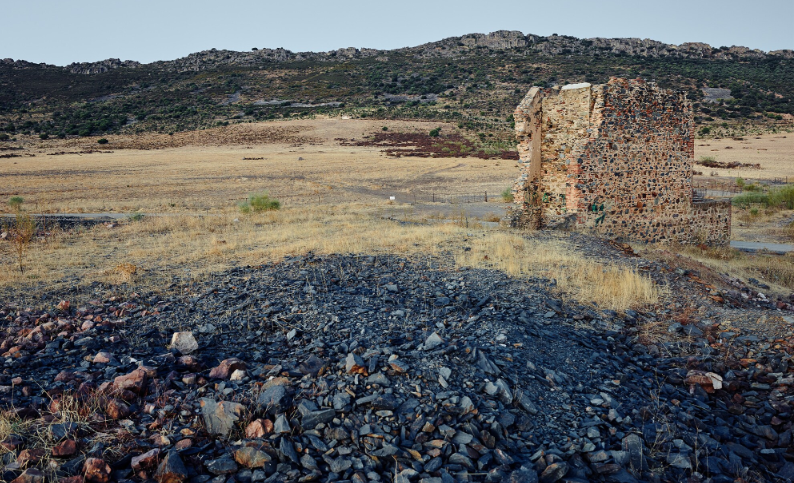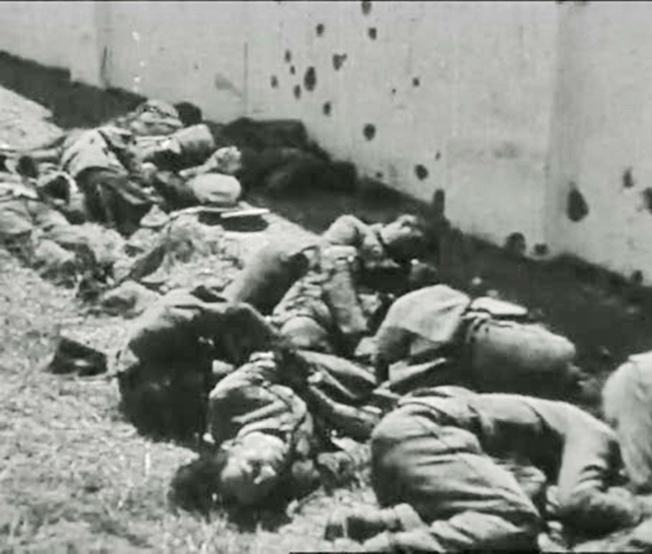


The capture of Mérida on 10 August left Badajoz, 65km west, as the last major Republican stronghold in western Extremadura. Colonel Juan Yagüe had secured the vital bridges over the Guadiana River and united the Nationalist forces advancing north from Seville with those holding Cáceres. The road to the provincial capital now lay open. Rather than pausing after the hard fighting at Mérida, Yagüe ordered the Army of Africa west towards Badajoz, determined to maintain the momentum that had characterised the campaign since leaving Andalusia.Republican survivors withdrew in disorder. Assault Guards, Carabineros, militia volunteers, and remnants of the forces that had defended Mérida fell back along the road to Badajoz, bringing with them many of their wounded and what equipment they had managed to save. Unknown numbers of civilians from Mérida, Almendralejo, Zafra, Los Santos de Maimona, Fuente de Cantos, and other towns already occupied by the Nationalists were fleeing, and many carried stories of summary executions, arrests, and disappearances that followed the Army of Africa’s advance. Likewise, the countryside was filled with trains of refugees who had escaped Andalucia and the wider Badajoz province, kicking up dust in the heat as they struggled north. This meant planes could easily target them, and mounted groups of Falangists and local landowners could easily shoot them down, leaving them where they fell. One eyewitness account told of 500 killed in a single day.
Responsibility for defending Badajoz city rested with Colonel Ildefonso Puigdendolas Ponce de León. His command included Assault Guards, Carabineros, loyal army personnel, armed workers, and militia formations drawn principally from socialist and anarchist organisations. The arrival of retreating troops increased the number of Republicans, but many units had suffered losses in earlier fighting, ammunition stocks were limited, and there was little prospect of substantial reinforcements reaching the city. Badajoz now stood isolated between the advancing Nationalist columns and the Portuguese frontier 6km away.
During the following two days, the Republicans strengthened the city’s seventeenth-century bastioned walls. Machine-gun positions covered the principal approaches, barricades rose behind the main gates, and defensive positions were established around the Puerta de la Trinidad, the Puerta de Carros, and other likely points of attack. Civilians filled sandbags, dug trenches, and prepared shelters as artillery could already be heard in the distance. Shops closed, public life largely ceased, and many families sought refuge in cellars or substantial public buildings while others attempted to escape across the nearby Portuguese border before the city was surrounded.
Yagüe allowed the Republicans little time to prepare. His force, built around the Spanish Foreign Legion and the Moroccan Regulares, remained highly mobile despite the fighting at Mérida. Supported by artillery, armoured vehicles, and aircraft, it reached the outskirts of Badajoz on 13 August. Reconnaissance parties examined the city’s defences while artillery positions were established east of the walls. Rather than beginning a prolonged siege, Yagüe prepared for a direct assault. His orders were to continue the advance towards Madrid as quickly as possible, and every day spent before Badajoz delayed that objective. By the evening of 13 August, Badajoz was effectively surrounded but refugees still streamed towards the Portuguese frontier.
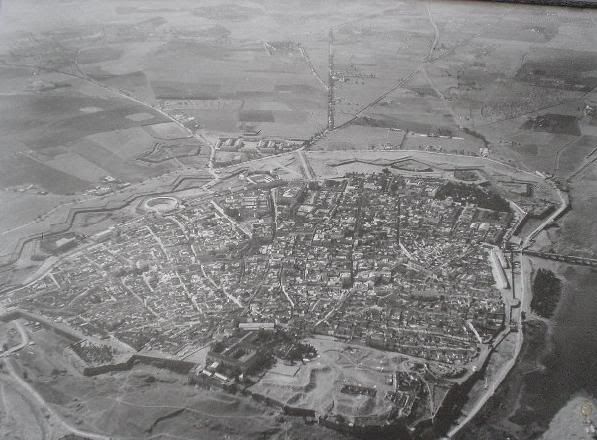
Badajoz had a population of about 41,000 and stood only six kilometres from the Portuguese frontier. It controlled the principal road and railway links between Mérida, Cáceres, Madrid, Seville, and Lisbon. Its capture would secure the Nationalist flank along Portugal, remove a Republican base west of Mérida, and complete Nationalist control of the main communications corridor through western Extremadura. Yagüe could not continue towards Madrid while leaving several thousand armed Republicans behind him at Badajoz. Hiss assault force consisted principally of units of the Spanish Foreign Legion and the Moroccan Regulares, supported by field artillery, machine-gun detachments, armoured vehicles, and aircraft. The exact number of troops committed to the attack remains uncertain. Most modern historians estimate that between 2,000 and 3,000 men took part in the assault, surviving operational records do not permit a precise total or identify the strength of every participating unit.
Inside Badajoz, Colonel Ildefonso Puigdendolas organised the defence with the forces available to him. His command included regular army soldiers, Assault Guards, Carabineros, local militia, armed trade union members, and volunteers from socialist, communist, and anarchist organisations. Men who had escaped the fighting at Mérida also reached the city before the Nationalists arrived, but no reliable record survives of how many joined the defence. Estimates of the Republican strength generally range between 3,000 and 5,000 armed Republicans, depending on whether retreating troops and armed civilians are included. The Republican garrison may have outnumbered the attackers, it lacked the cohesion of the Army of Africa. Many Republicans had received little military training, units had been assembled from different organisations only weeks earlier, and there was no opportunity to conduct a reparation of the city’s defences. But the city remained enclosed by a seventeenth-century bastioned enceinte designed to withstand artillery and assault. Thick masonry walls, projecting bastions, dry ditches, and heavily defended gateways forced an attacking force to cross open ground before reaching the defences. Republican machine-gun positions covered the eastern approaches around the Puerta de la Trinidad and the southern entrances near the Puerta de Carros, where any assault would be exposed to concentrated fire. Once Yagüe committed his men against those positions, there would be little room to manoeuvre. The battle would be decided by whether the attackers could force a breach before the Republicans reorganised behind the walls.
The defence had begun to fracture before Yagüe launched the main assault. On 10 August, Puigdendolas ordered the evacuation of the exposed Cuartel de Menacho, outside the walls, and concentrated its occupants in the Cuartel de la Bomba inside the city. He distributed machine guns among several positions: Carabineros received weapons below the Military Hospital, one machine gun went into the cathedral tower, two covered the Baluarte de San Pedro beside the Grupo Escolar, and two more occupied the Baluarte de Santa María below the bullring. These placements show that Puigdendolas expected attacks against several sectors rather than only the Puerta de la Trinidad.
On 13 August, Nationalist troops occupied the abandoned Cuartel de Menacho. Its capture gave Antonio Castejón’s column a position immediately outside the southern and south-eastern defences and placed the Cuartel de la Bomba within reach. That evening, , several officers of the Regimiento de Infantería Castilla No. 3 were already preparing not to resist. Captain Obidio Fernández Palacios, positioned at the Grupo Escolar, told other officers that he intended to prevent his company from firing and to facilitate contact with the approaching columns. Men under his command later testified that signals were made with torches during the night to indicate where the attackers might enter.
Puigdendolas continued to organise resistance. At approximately 3:00am on 14 August, he sent troops and machine guns to the barricade at the Post and Telegraph building. Captain de Miguel placed the remaining machine guns at the opening near the slaughterhouse and at other barricades. The surviving evidence contradicts any simple claim that the city had been abandoned by its commanders before dawn: Puigdendolas was still shifting weapons and men into threatened positions only hours before the main fighting.
Castejón’s troops occupied the Cuartel de la Bomba before Commander José Vierna Trápaga’s Legionnaires completed their attack at the Baluarte de la Trinidad. This point is important because the capture of Badajoz did not depend upon a single successful charge through the Trinidad gate. Nationalist forces entered through the La Bomba sector while severe fighting continued farther east. The internal collapse of part of the regular garrison and the penetration achieved from Menacho opened one route into the city before the most famous assault had reached its conclusion.
At the Trinidad sector, the IV Bandera of the Spanish Foreign Legion advanced under Vierna Trápaga against the bastion and the modern road opening beside the gate. The approach crossed exposed ground covered by Republican rifle and machine-gun positions. Legion units sustained heavy losses there, the frequently repeated claim that one company lost seventy-six of ninety men has not been established securely enough to use as an exact figure. What can be stated is that resistance at Trinidad remained substantial after other parts of the defence had begun to disintegrate. Joaquín Gil Honduvilla’s study, based partly on the post-capture proceedings against officers of the Castilla Regiment, identifies the Baluarte de la Trinidad as the principal site of Nationalist combat deaths during the assault.
The simultaneous penetrations meant the Republicans could not concentrate his remaining forces. Castejón’s troops had entered through the Cuartel de la Bomba sector, while Vierna’s Legionnaires pressed the Trinidad defences and other Nationalist units approached additional breaches and gates. The walls continued to protect individual positions, but they could no longer provide a continuous defensive perimeter. Once Nationalist troops reached the streets behind the fortifications, the Republicans at the gates and bastions faced attack from directions for which their positions had not been prepared.
By mid-morning, fighting had spread from the bastions into the streets. Republican soldiers, Assault Guards, Carabineros, and militia fought from intersections, public buildings, and barricades erected behind the walls. In several districts, the attackers had to clear streets building by building, exchanging rifle and machine-gun fire at close range. Some Republicans attempted to withdraw towards the city centre, while others became isolated as Nationalist columns approached from different directions. As communications broke down, individual groups continued fighting without knowing whether neighbouring positions still held. Colonel Ildefonso Puigdendolas recognised that the defence could no longer be coordinated. During the afternoon he crossed into Portugal with a number of officers and soldiers, where they were disarmed and interned by the Portuguese authorities at Elvas. Thousands of others remained inside Badajoz. Some discarded their weapons and tried to return home while others hid in houses or sought refuge with relatives.
Legionnaires, Regulares, and accompanying Nationalist forces occupied government offices, police stations, barracks, the railway station, telephone exchange, and other strategic buildings while patrols moved through the surrounding streets. Captured Republicans were separated from civilians, but the distinction did not matter. Membership of a trade union, service in a militia, employment by the Republican administration, subscription to a leftist newspaper, or denunciation by a neighbour could all bring arrest. Local supporters of the uprising accompanied soldiers through parts of the city, identifying known political opponents and public officials.
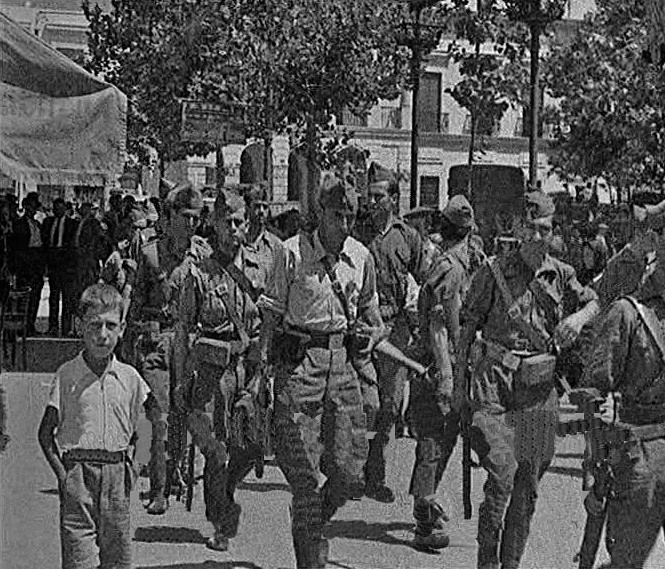
The first prisoners were gathered wherever sufficient space could be found. The Cuartel de la Bomba, only hours earlier one of the principal defensive positions, became a holding point for captured soldiers. Other detainees were assembled in military installations and public buildings while officers attempted to identify members of the Republican armed forces, political leaders, and trade union activists. Throughout the afternoon, new groups of prisoners arrived as house searches continued and Nationalist control extended into every district.
The collapse of the defence left more than 41,000 residents, together with an unknown number of refugees from Mérida and neighbouring towns, inside a city controlled by the Army of Africa. Yagüe had committed approximately 3,000 Legionnaires, Regulares, artillerymen, and supporting troops to the attack. The surviving records do not identify how many of those men remained in each part of Badajoz after the fighting, and no reliable strength return gives the size of the first occupation garrison. Antonio Castejón’s and Carlos Asensio’s formations still controlled the city, , and their Legion and Regulares units supplied the armed force that searched streets, guarded prisoners, and carried out the first killings. Local Falangists, Guardia Civil personnel, and right-wing civilians soon joined them.
The attackers began killing men before they had completed the capture of Badajoz. Legionnaires shot forty-three wounded militia members whom they found in the Military Hospital. Other soldiers killed Republicans in the streets after they surrendered or discarded their weapons. Men who had removed uniforms or hidden their weapons could not assume that civilian clothing would protect them. Soldiers and screening officers reportedly examined shoulders for bruising that they interpreted as evidence that a man or woman had recently fired a rifle. Local informants supplied names, recognised political activists, and identified neighbours who had served the Republican municipality or workers’ organisations. Contemporary reports describe a selection process that combined physical inspection, political affiliation, and personal denunciation.
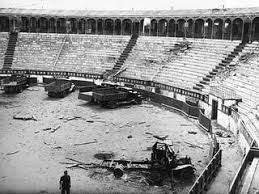
The occupation forces used several places to confine prisoners, but the Plaza de Toros became the largest and best-documented collection point. Soldiers drove captured Republicans and civilian detainees into its enclosed arena and dependencies during the afternoon and evening of 14 August. Other prisoners remained at the Cuartel de la Bomba, the Comandancia Militar, and additional military buildings. Foreign correspondents who entered Badajoz on 15 August described continuing arrests, bodies in the streets, and large groups of prisoners awaiting execution. Jacques Berthet reported blood outside the Comandancia Militar and stated that arrests and shootings continued at the Plaza de Toros.
Municipal employees later recalled that the authorities summoned them during the early hours of 15 August and ordered them to remove bodies from the bullring. One council worker said that Guardia Civil officers collected him at approximately 3:00am. He reached the Plaza de Toros around half an hour later and found rows and separate piles of dead prisoners. His work party loaded bodies onto a truck and carried them to the cemetery. He remembered making at least seven journeys that day and finding new bodies after each return, which indicates that firing squads continued to bring out and kill groups while the work crews transported earlier victims. The blood was ankle deep throughout the bullring.
Portugal did not offer equal protection to every refugee. António de Oliveira Salazar’s Estado Novo supported the military uprising and treated armed Republicans and politically active men as a security threat. Portuguese authorities showed some willingness to admit women, children, elderly people, and foreign nationals. Officials could classify those men as soldiers even when they wore civilian clothing, particularly when they travelled alone or carried evidence of military service. The regime’s cooperation with the Nationalists also meant that return placed refugees directly in the hands of the forces they had fled. Later in 1936, Lieutenant António Augusto de Seixas protected more than 1,000 Spanish refugees near Barrancos by placing 616 people in the recognised Coitadinha camp and secretly sheltering another 411 at Russianas. His intervention showed that Portuguese officers possessed some room to resist the regime’s policy, but the Badajoz refugees who crossed near Elvas in mid-August could not rely on similar protection.
Mário Neves, Jacques Berthet, and Marcel Dany approached Badajoz from the Portuguese side and entered on 15 August. They encountered a city in which Legionnaires and Regulares still exercised direct control, bodies remained in streets and public spaces, and soldiers continued to bring in civilians for immediate executions. On 16 August, he noticed smoke rising near the cemetery; he subsequently learned that work parties had piled bodies there, soaked them with fuel, and burned them as a way of speeding up the body dumping process.
Marcel Dany later recalled hundreds of prisoners inside the bullring at a time. Trucks continued arriving with more detainees, accompanied by Falangists in blue shirts. Dany’s account places the Falange directly inside the arrest process, a continuing theme that had chased many Andalucíans north into Extremadura, chased by local Falange groups eager to join in the killing. Jay Allen also gathered accounts of prisoners entering the Plaza de Toros in groups and of executions continuing there after 14 August. He estimated that firing parties killed men and women with set up machine-guns and shot the prisoners in batches of twenty, with 800 shot on 1 August and another 1,200 brought in that evening for a morning execution, some witnessed by Nationalist spectators. His later report gave a total of up to 4,000 dead as boasted by Yague. Allen personally described about 1,800 bodies, figures that historians continue to examine rather than accept as a complete contemporary count.
Francisco Espinosa Maestre later identified approximately 1,400 named victims of Nationalist repression in western Badajoz Province during August 1936 alone and argued that incomplete registration means the true total probably exceeded 3,800. Across Badajoz Province as a whole, modern estimates suggest that around 10,000 to 12,000 people died in Nationalist repression during the Civil War and immediate post-war years. That number does not take into account the mass pack rapes committed by soldiers on the women of Badajoz, who followed in the footsteps of over towns that saw untold number of women repeated rapes, tortured, poisoned with castor oil, had their heads shaved and forced to walk through town naked. Surviving such cruelty would have been difficult, especially under repression, and many of these same women would have been rounded up for having Republican relatives, and then executed. The figures also do not take into account the number of children orphaned, and if they were not murdered, were left to starve to death.
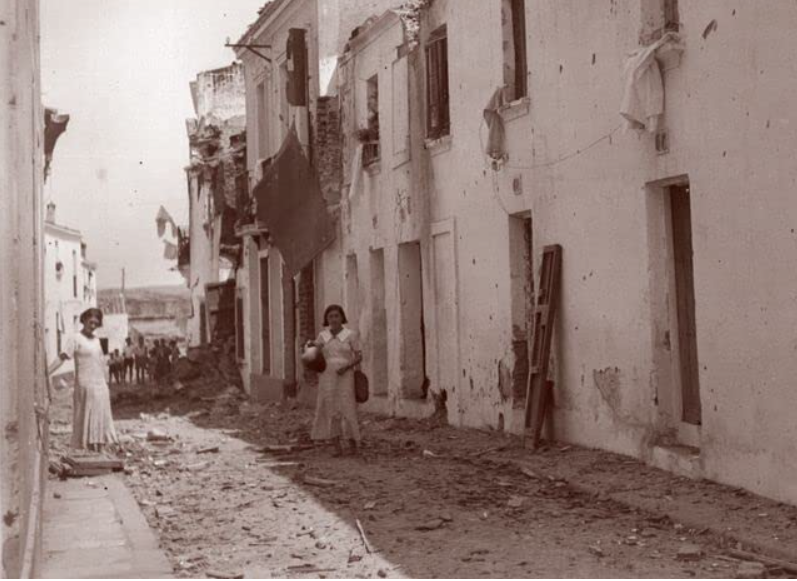
Even the best modern estimates almost certainly understate the scale of the killing. They rely largely on cemetery registers, civil records, and surviving documentation, but the repression extended well beyond Badajoz itself. Falangists, landowners, and other supporters of the uprising hunted Republican agricultural workers, families, and refugees across the surrounding countryside. Some victims died beside roads, in gutters, or on rural estates and never entered any official record. Others disappeared after Portuguese authorities returned them across the frontier. Their names survive only in family testimony, if they survive at all.
Yague was soon known as the Carnicero de Badajoz (Butcher of Badajoz), a title he seemingly enjoyed, and claimed he could not risk leaving behind a town of people with potential Republicans inside to potentially regroup as he ordered his army onwards towards Madrid. Before leaving Badajoz Yagüe spoke to American journalist John T. Whitaker about why he chose to kill ten percent of the town in a matter of days. ‘Of course we shot them… what do you expect? Was I supposed to take 4,000 reds with me as my column advanced, racing against time? Was I expected to turn them loose in my rear and let them make Badajoz red again?’
The town in Soria where Yague was born was renamed from San Leonardo to San Leonardo de Yagüe in his honour but is currently under review to be renamed again. The monument to Yague was removed in 2009. The Palacio de Congresos, built on the site of the old Badajoz bullring has a sculpture by Blanca Muñoz, which casts a spiral shadow every August 14 to mark the day of the massacre.