On 22 July 1936, the struggle for control of Spain increasingly became a struggle over transport, communication, and international support. While fighting continued across the country, one of the most important developments of the opening week became clear: most of the Spanish navy had remained loyal to the Second Spanish Republic. This loyalty was crucial because the rebels’ strongest professional troops, the Army of Africa under General Francisco Franco, remained trapped in Spanish Morocco. Without naval access across the Strait of Gibraltar, moving large numbers of soldiers into mainland Spain would be difficult and dangerous.
The navy’s survival for the Republic owed much to lower-ranking sailors and non-commissioned officers who distrusted many senior commanders involved in the uprising. One of the most important figures was radio operator Benjamín Balboa. Working in the naval communications system in Madrid, Balboa intercepted messages linked to the uprising and warned Republican authorities and loyal sailors aboard Spanish ships. On several vessels, sailors mutinied against rebel officers, seized control, and formed committees loyal to the Republic.
The result was dramatic. Much of the navy remained operational for the Republican side, but at enormous internal cost. Many officers were arrested or killed during the mutinies. Spain lost a large proportion of its experienced naval officer corps within days. Nevertheless, the Republican government retained most major warships, including destroyers and cruisers, giving it temporary control over much of the western Mediterranean and the Strait of Gibraltar. This immediately created a strategic crisis for the rebels. Franco and the Army of Africa could not simply cross into Andalusia in large numbers while Republican warships threatened transport routes. The situation increasingly pushed the Nationalists toward seeking urgent foreign assistance from Fascist Italy and Nazi Germany. The immediate priority for the rebels was not bombing or reconnaissance but transport. Aircraft began carrying small groups of officers, specialists, supplies, and eventually troops across the Strait of Gibraltar. Although modest at first, these flights marked the beginning of an unprecedented military airlift. Faced with Republican naval control of the sea routes, the rebels increasingly turned to the air as their only reliable connection between Morocco and mainland Spain.
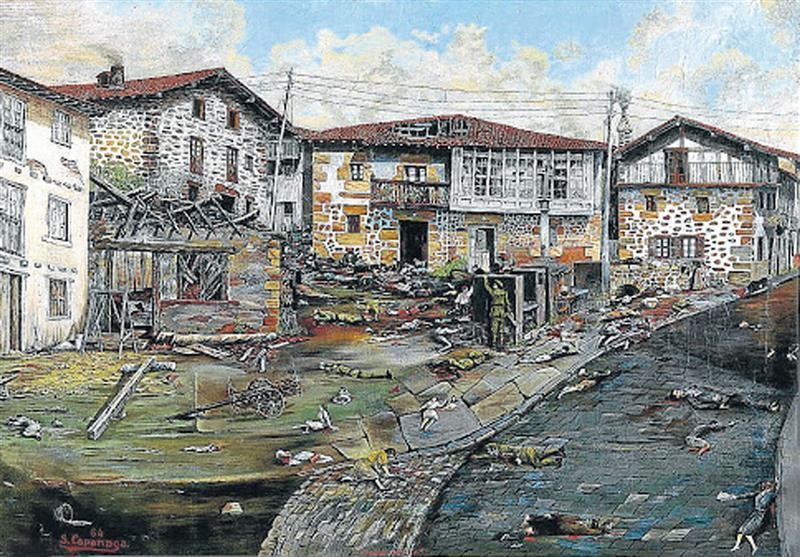
On the morning of 22 July 1936, the small Basque town of Otxandio (Ochandiano), in Biscay, became the scene of one of the earliest deliberate air attacks on a civilian population during the Spanish Civil War. Situated on the mountain road between Vitoria and Durango, the town had strategic importance as Republican forces sought to block Nationalist advances from neighbouring Álava into Biscay.
At approximately 9:30 am, two Nationalist Breguet XIX aircraft, operating from the airfield at Logroño, flew over the town. Because the aircraft still carried Republican markings, many residents believed they were friendly and gathered in Andikona Square, where celebrations for the feast of Santa Marina were taking place. Moments later, the aircraft dropped their bombs into the crowded square before departing.
The attack killed 61 people, according to the most widely accepted modern estimate, although some historians have suggested the death toll may have been higher. Many of the victims were civilians, including women and children, and more than one hundred others were wounded. The destruction of homes and public buildings shocked the surrounding region, where few people had yet experienced aerial bombardment.
Nationalist commanders maintained that the raid had been directed against Republican military forces in the town, but the high proportion of civilian casualties quickly made Otxandio a symbol of the dangers posed by the new form of aerial warfare. For the Basque population, the bombing served as a grim warning of what lay ahead. Less than a year later, the towns of Durango and Guernica would suffer even more devastating air attacks, making Otxandio the first in a series of bombings that came to define the air war over the Basque Country. Though overshadowed by the later destruction of Guernica, the bombing of Otxandio remains a significant early example of the devastating impact that military aviation could have on civilian communities during the Spanish Civil War.
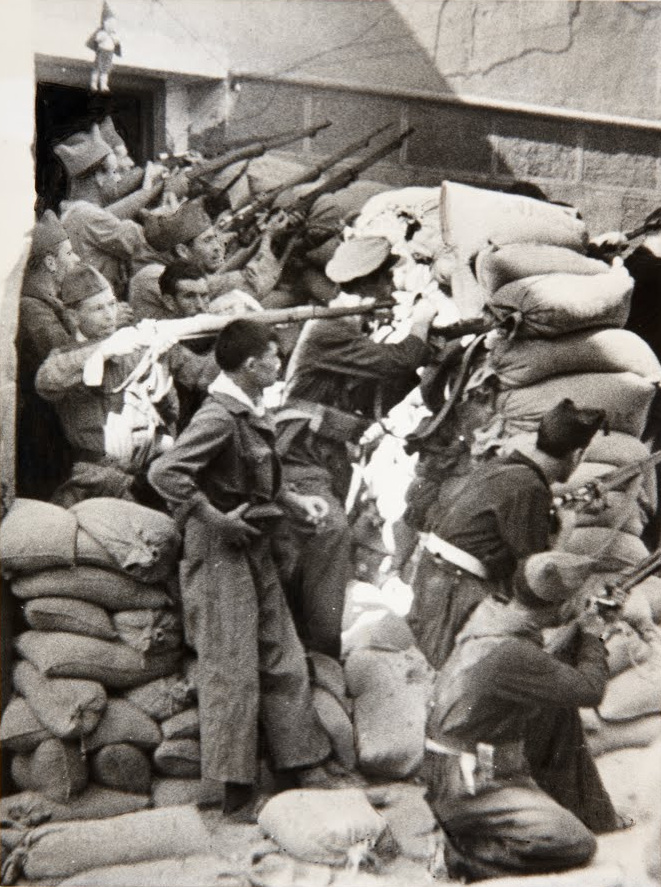
Meanwhile in Toledo, the Siege of the Alcázar continued intensifying. Colonel José Moscardó and the defenders inside the fortress prepared for what they increasingly realised would be a prolonged siege rather than a short standoff. Republican artillery positions strengthened around the city while militias and government forces tightened the encirclement. Read all about the siege of Toledo in depth HERE
In Madrid, Republican authorities and workers’ militias consolidated control following the fall of the Montaña Barracks two days earlier. Armed patrols guarded streets, searched suspected right-wing districts, and monitored possible rebel sympathisers. The government still feared additional military uprisings within the capital, while revolutionary organisations expanded their influence rapidly. Read all about Madrid’s uprising in depth HERE
In Barcelona, revolutionary change accelerated after the defeat of the uprising. Churches and religious institutions were attacked in some districts, factories increasingly passed into workers’ control, and armed militias openly patrolled the streets. The newly created Central Committee of Antifascist Militias of Catalonia continued organising militia columns and weapons distribution, reflecting the weakened authority of traditional state institutions. Read all about Barcelona’s uprising in depth HERE
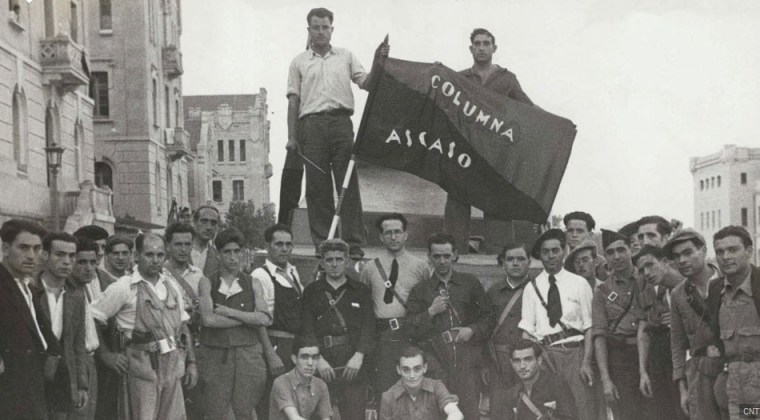
In Aragón, anarchist militia groups began preparing expeditions from Catalonia toward Zaragoza, which remained firmly in rebel hands. The city’s loss continued frustrating Republican and anarchist leaders because Zaragoza had possessed one of the strongest labour movements in Spain before the uprising succeeded there. Across Republican-held Spain, militia columns were beginning to move beyond their home cities. Volunteers recruited by trade unions, political parties, and anti-fascist organisations travelled by truck, bus, and requisitioned vehicles toward emerging fronts. Many possessed little military training, but their departure reflected a growing belief that the rebellion could only be defeated through offensive action rather than local defence alone. Read all about Aragón’s uprising in depth HERE
In Seville, General Gonzalo Queipo de Llano deepened rebel control through arrests, executions, and military patrols. Rebel radio broadcasts from Seville became increasingly important Nationalist propaganda tools, often mixing military announcements with threats against opponents of the uprising. Read about Seville’s collapse in depth HERE
In the Canary Islands, the final organised resistance to the rebellion collapsed in Vallehermoso on La Gomera. Local Republican supporters, workers, and police had attempted resistance despite overwhelming odds. After the town fell, several participants were later executed by rebel authorities. Events there reflected a broader pattern already developing across Spain: once an area was secured by either side, repression against political enemies followed rapidly.
With a population of approximately 12,500, Arahal, 45km southeast of Seville was one of the largest Republican-held towns remaining east of Seville during the first week of the military uprising. Nationalist aircraft from Tablada Air Base bombed the town while artillery shelled its outskirts as a column of Legionnaires and Moroccan Regulares advanced from Seville. Faced with overwhelming firepower, many residents fled into the surrounding countryside before Nationalist troops entered Arahal on 22 July 1936, bringing Republican control of the town to an end.
During the final hours before the occupation, 36 right-wing prisoners remained confined in the municipal jail. After the cells were opened, around a dozen escaped, but 22 or 23 prisoners stayed behind, thinking their freedom was a trap. Later that evening, unknown assailants set fire to the building, killing those who remained inside. Responsibility for the fire has never been conclusively established and continues to be debated by historians. The prison may have been bombed, or burning about right-wing soldiers to blame the Republicans, but no independent witness saw the event.
The occupation of Arahal was followed by one of the bloodiest campaigns of repression in Seville Province. Nationalist troops, assisted by local supporters, carried out mass arrests and executions over the following days and weeks, targeting Republican officials, trade unionists and suspected supporters of the Republic. Historians disagree on the final death toll, with estimates ranging from around 150 to well over 1,000 victims, but all agree that Arahal suffered one of the largest massacres in Andalucía during the opening weeks of the Civil War. Contemporary testimony and later historical research also record repeated acts of intense sexual violence against women after the town’s capture, although the full extent of these crimes can no longer be established from the surviving evidence, as the women’s testimonies were not gathered.
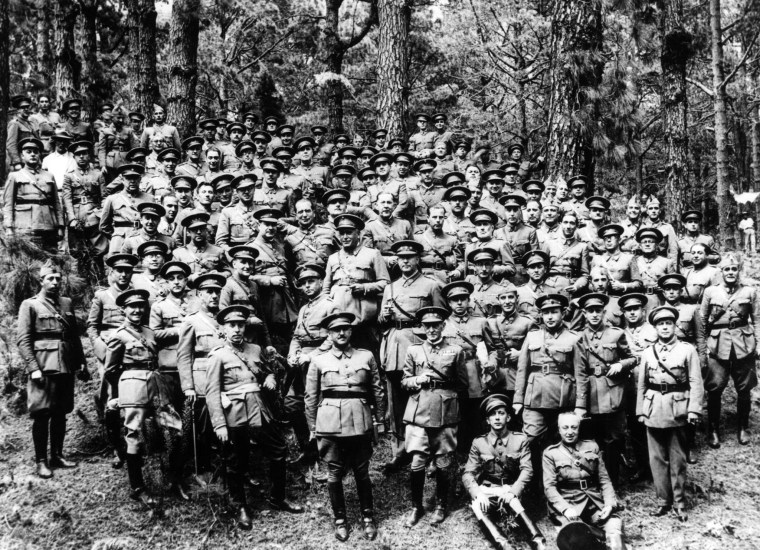
By this stage, the Spanish Army itself was fragmenting. Some units had joined the rebellion, others remained loyal to the Republic, and many had simply disintegrated amid confusion and political division. In numerous Republican cities, armed militias now outnumbered regular troops. Both sides increasingly relied upon improvised forces, volunteers, and local commanders as the structures of the pre-war army gave way to the realities of civil war.
The first direct foreign military assistance for the rebels was beginning to appear. The first arrangements for German and Italian assistance were being made to assist the Nationalists, particularly with transport operations between Morocco and mainland Spain. Although still limited at this stage, this marked the beginning of large-scale foreign intervention in the conflict. The arrival of foreign aircraft was historically significant beyond Spain itself. The air transport of troops from Morocco would become one of the first major military airlifts in modern history. More importantly, it signalled that European fascist powers already viewed the Spanish conflict as strategically and ideologically important.
By 22 July, another consequence of the failed coup was becoming increasingly apparent that the pre-war Spanish Army was ceasing to exist as a unified national institution. Some garrisons had joined the rebellion, others had remained loyal to the Republic, and many had simply fragmented amid confusion, desertion, and political division. Officers and soldiers often found themselves making personal decisions about loyalty rather than following orders from a functioning chain of command.
In Republican-held areas, distrust of the regular army ran deep. Many civilians blamed sections of the officer corps for attempting to overthrow the elected government, while the government itself increasingly relied upon workers’ militias, Assault Guards, loyal soldiers, and local defence committees. In rebel territory, military authority remained stronger, but even there the uprising depended upon cooperation between army officers, Guardia Civil, Falangists, Carlists, and civilian supporters. Across much of Spain, the institutions that had existed before 17 July were breaking down. The conflict was no longer being fought primarily by the professional army of the Spanish state, but by an increasingly complex mixture of soldiers, militia volunteers, political activists, police forces, and local organisations. Both sides would spend the coming months attempting to rebuild effective military structures from the chaos left behind by the failed coup.
The Republican side decided to also seek foreign assistance. France, under the Popular Front government of Léon Blum, showed early signs of sympathy toward the Republic, though the French government remained cautious and deeply divided over how far intervention should go.
 CAROLINE ANGUS