This Week in Spanish Civil War History Extra: 80 Years since the Málaga-Almería Massacre

‘The Moors are coming’

By January 1937, the Spanish Civil War already six months old, and the southern region of Andalucía had already been through its fair share of horrors. With much of the area sided with the Republicans, the Nationalists, led by fascist Franco (and his German and Italian allies) were hot on ripping through Andalucía and ruling the area, and were having great success. In January, General Queipo de Lllano, who had already enjoyed mass executions through Andalucía, was named head of the Army of the South, a division of 15,000 troops, made up of Spanish soldiers and Moorish fighters from Morocco, based in Seville. They were aided by Italian men brought in from Cadiz, 10,000 ‘Blackshirts’, and were ordered to take Málaga on the southern coast, picking up Granada, Marbella and Ronda on the way, along with the surrounding rural areas.

bandicam-2017-02-08-14-17-38-504

The city of Málaga, population 250,000, plus another 90,000 who had fled there from the countryside, saw no immediate reason to worry, and their 12,000 Republican militia (only 8,000 armed) did not take up any training, dug in no trenches, set up no road blocks and manned no hilltop lookouts. They simply did not have the manpower or supplies to defend themselves. The Nationalists were battle-hardened men who had no problem killing brutally, particularly the Moorish soldiers, who had committed horrid crimes elsewhere in Spain.

The attack began on February 3, 1937 when Ronda was defeated by Nationalist troops, leading them right to Málaga, coming from the west. The Italian troops, who had entered the region from the northern hills, arrived on February 6. At that point, all the people of the city could either fight or flee. Through the day on February 7, the Republican fighters were torn apart by the onslaught of the Nationalists, and executions began. It mattered little whether you were a militiaman or not, you were executed. Women were raped brutally, and then shot if the rape didn’t kill them. Children were killed in the crossfire or just killed as collateral damage. February 8 marked the official fall of Málaga, completely swamped with Nationalist soldiers and bombed from the air by German and Italian planes. Boats offshore also bombarded the city. Around 4,000 people were killed in the initial executions alone, though exact numbers are not possible.

The people of Málaga had only one way to go; east along the coast towards the haven of Almería, an area relatively safe at this point in the war. But Almería was 220km (135 miles) along the N-340. It is unknown precisely how many people tried to flee, either on foot, donkey or by truck (until petrol ran out anyway), though an estimate by Contemporary History professors Encarnación Barranquero and Lucia Prieto is 100,000 now-refugees.

By dawn on February 8, the city was Nationalist territory, and many of the people who fled were around 30 kilometres east in Torre del Mar, walking the sparse road. Trucks that ambled past were loaded with children, parents eager to get them to safety any way possible, begging the trucks to take children from their arms as they walked. They had to walk with everything they owned, clothes, bedding, sewing machines, tools, water, anything they had, strapped and carried by their bodies or donkeys. But the walk was not their only problem. General Queipo de Llano was not content with taking the city and executing those who didn’t flee. The refugees would be chased.

As people trekked the winding, hilly, unsealed road, the troops were making their way behind them, swift and trained for marching. Then bombing from the air along the road began. People had nowhere to hide – caves, ditches, rocks, anything had to be used for defense as the Nationalists looked to wipe out the lot. The 16-kilometre stretch between Nerja (55 kilometres east of Málaga) and La Herradura suffered a terrible fate as the first wave of civilians were attacked, bodies littering the road as they were defenseless from the air. Parents were forced to dig with their hands and bury their children. People pressed themselves against cliff-faces in the hope of safety and died on the spot. Gutters filled with bodies as they fell from the roadside. Whole extended families were found lying together, all dead, and some with children left alive, picked up by other people strong enough to carry an extra person. The bridge over the Guadalfeo River, 90 kilometres from Málaga, was bombed, sending innocent refugees into the water and drowned at nightfall.

By the time the refugees arrived in Motril, 95 kilometres from Málaga, the International Brigades were there to help defend them against the Nationalists, but many refugees were now injured, starving and exhausted, and still had a long way to go, with family members left dead on the roadside. None would return until the end of the war, some remained in exile for life. Reports state that skeletons of the people killed on that dusty stretch were still to be found on the roadside until the mid-1960’s. No one wanted to go home along the N-340, and the whole incident was silenced.

One man became well-known in the mess, a Canadian named Norman Bethune. A doctor and ambulance driver, he was in Spain to fight fascism as an international volunteer. His ambulance raced back and forth along this road, trying to save all he could. To read about Bethune, try ‘The Ambulance Man and the Spanish Civil War’ by Paul Read. It’s a shame the locals who suffered this event were not so well-known, their stories limited to tales told between generations until recently.

Professors at the University of Málaga estimate over 5,000 people died on the road, based on oral histories collected, plus burial records in Salamanca, and Málaga archives. Bodies were not properly buried or treated, so the exact figure can never be established. Those killed and buried along the roadside are still left there today. Ten years ago, the Diputación de Málaga opened its archives for professors to complete historical memory works on the massacre in the area, to accompany the stories of 400 people who came forward with their personal accounts of the event.

The Malaga-Almeria massacre is commemorated at Torre del Mar, considered a halfway point along the road where the massacre took place, on February 7, the date people began to flee their homes in Málaga. This attack was almost a practice, a prelude to many atrocities that would go on to occur in WWII. The damage done to the people of Málaga, the towns that were in the firing line towards Almeria, and the whole rural region itself is unimaginable, and how it shaped and changed the lives and lifestyle of following generation in the area has been largely ignored until recent times.

If you are interested and can read Spanish, the book by professors Encarnación Barranquero and Lucia Prieto from the University of Malaga is Poblacion y Guerra Civil en Málaga: Caido Exodo y Refugio, an excellent book, well researched, with powerful personal recollections.

A first person account written is 1937 is Norman Bethune’s The crime on the road Malaga-Almeria : narrative with graphic documents revealing fascist cruelty (if you can get a copy – I can’t!)

~~

This is not a detailed analysis, just a highlight (lowlight?) of the week’s events. Things get lost in translation – Feel free to suggest an addition/clarification/correction below. The more the world remembers, the better. All photos are auto-linked to source for credit.

Women of the Spanish Civil War: Part 1 – Lucía Sánchez Saornil

cntLucía Sánchez Saornil was born in Madrid on 13 December 1895, and raised in poverty by her father. Sánchez got accepted into the Royal Academy of Fine Arts of San Fernando (Madrid) with her passion for poetry, and by 1919 she had already been published in multiple journals, where she used a pen name. As a man, she was able to write of lesbian themes; at that time, all gay relationships (and anything related) was subject to censorship and prison time, all still illegal in Spain. This lead to Sánchez having to keep her private life very private for her safety. However, she wrote alongside many modern new authors, dedicated to promoting new literary styles, but only as a man.

1933Sánchez worked for the as a phone operator at Telefónica, and in 1931, participated in the union strike arranged by the CNT (anarchist workers union), and ignited her passion for activism. In 1933, Sánchez gained a role with the CNT in Madrid, as their Writing Secretary, and edited their own journal, right until the start of the Spanish Civil War in 1936. Her writing quickly established her as a feminist and addressed the urgent need for better equality in Spain. At that time, gender roles were extremely strict and went unquestioned. Sánchez wrote of how motherhood should not have to define a woman and that women deserved far better treatment. The anarchist movement praised equal rights, but it seemed as all talk and no action, with men who claimed to be anarchists still sexist in the home. Women still were forced into marriage and single women required a chaperone in public. Women still received half the income of men. The working class women were not receiving any benefits promised by the Second Spanish Republic.

In 1935, Sánchez decided to form the Mujeres Libres (Free Women), along with Mercedes Comaposada, a socialist lawyer in Madrid. They argued that social revolution and women’s revolution were the same thing; that women’s issues were everyone’s issues. They started their magazine, and were soon joined by Amparo Poch y Gascon, a doctor who believed in sexual freedom and the abolishment of double standards for women. The women felt that their contribution to the CNT was not being treated equally, and that sexism was rampant. At same time, Soledad Estorach in Barcelona started the Grupo Cultural Feminino, a group committed to equality in unions. In 1936, the groups came together and formed the Agrupacion Mujeres Libres, a group which would grow to 30,000 members.

The anarchists believed that women’s equality would be naturally created after the social revolution, when the working classes received better rights. However, the Mujeres Libres believed women’s rights could begin right away, and they created networks of support and reported on sexist issues within their unions. By the start of the Spanish Civil War in 1936, coinciding with the Spanish revolution, Mujeres Libres were already formed and prepared, so that women could participate in war fully, both in the revolution and as militia in battle. Sánchez and her team spread propaganda, radio news, and travelled to rural women to give them support.

In order for women to be free as the Spanish Civil War and revolution progressed, the Mujeres Libres organised schools, women’s only social occasions and a women-only newspaper, so women could feel safe and confident as their political consciousness was educated. Many working class women could not read or write, so Mujeres Libres set up classes for these women to attend, and women were trained as nurses for the ever-increasing wounded from the front. At the same time, they were taught about sexual health and post-natal care, to pass on to as many women as possible. Much had been denied to working class women in the past, and they finally started to receive basic help.

Mujeres Libres did not become part of the CNT or FAI, as they wished to be an independent anarchist group. As men left to fight at the front (along with many women, who are largely forgotten by history), the Mujeres Libres had women work-ready to fill men’s roles. While still stuck in female roles like cooking for the militia and nursing the wounded, women were also being training in shooting by Mujeres Libres. Also formed was daycare for children as women empowered themselves, and the children were educated in the causes their mothers fought to achieve. Mothers, in turn, received information on child care and development, for the better of the whole family. They also published their first Mujeres Libres magazine as the war broke out, being printed until the front reached Barcelona.

Mujures Libres had much opposition, as feminism does today, believing women cannot be a good mother and a good working woman. Their roles would always be limited to parenting. Many believed that anarchism could not work if women soughtto undermine men, even though one of their aim goals was an egalitarian society with freedom for all. As Mujeres Libres flourished, so did the man tears, who got scared and voiced opposition. To this day, no one has figured out why men are so scared of women.

The revolution broke down ten months after the outbreak of war, and the ability of the Mujeres Libres faltered. The inability to work together got the better of the left-wing factions, and the strength of the Nationalists slowly ate away at freedoms gained for the working class. Fighting and killing became the only activity in all parts of Spain.

Sánchez fled to Valencia and worked as a journal editor for Threshold, and met the love of her life, America Barroso. Sánchez became a member of the SIA (international antifascist union) and worked as their General Secretary, who supplied anarchist aid to the wounded and fleeing during the war. Sánchez and Barroso were forced to flee to France in 1939 as anarchists, but were forced out of there by Nazis in 1941. Sánchez did not have the luxury of anonymity and had to live quietly in Valencia, living with her ‘wife’s’ family, as all same-sex relationships were illegal, and fascism and Catholicism were raining down. Sánchez worked as an editor and Barroso worked at the Argentine consulate, until Sánchez died of cancer in 1960, aged 75.

Sánchez was buried quietly in Valencia with a headstone which reads –

¿Pero es verdad que la esperanza ha muerto? But is it true that hope has died?

~~

This is not a detailed analysis, just a highlight of the Sánchez’s life. Things get lost in translation – Feel free to suggest an addition/clarification/correction below. The more the world remembers, the better. All photos are linked to source for credit

Francoist Street Names Are Out. Women’s Accomplishments In Spain Are Finally In

2016 saw the 80th anniversary of the start of the Spanish Civil War, and the 41st celebration of Francisco Franco‘s death. Yet on many streets all over Spain, the men who fought and assisted Franco though his 39 years of war and dictatorship are still revered with street names, vile and cruel men who harmed untold thousands. It is long past time to remove these names, and the opportunity to name streets after women has finally arrived.

Spain’s political situation is a hot mess – the December 2015 election ended in a stalemate, and subsequent efforts for coalition and even new elections have produced not a lot. The left-wing Podemos party, made of newcomers and small groups coming together to gain power, have found their place in some cities, such as Madrid and Barcelona. Spain has the History Memory Law, enacted in 2007, which provides rules to allow the reburial of SCW victims, and removal of all Franco (and Franco cronies) monuments, dedications and street names (the law has a wide range of powers; this is just an example). While many cry about leaving the past in the past, those with a wider view want to put right as much as can possibly be done. It is time to use Article 15 of the memory laws to change the streets named after men who murdered their way to power and used fear to stay there.

Some examples of names changes is in Calle de Soledad Cazorla (Spanish link), named after Spain’s first female public prosecutor, who used her position to fight gender violence. Until now, the street was named after Andrés Saliquet (Spanish link), an old-school General and fascist party member, serving in the war and the dictatorship. The notorious General José Varela loses his street name to journalist Carmen de Burgos in Granada, likewise Federica Montseny, Spain’s first female minister, will replace Colonel Chápuli.  Madrid’s Plaza Caudillo (if you’re new, Franco was referred to as the Caudillo, the leader) will be Plaza Mayor in El Pardo.

Places like León have just 5% of female street names, Cadiz has just 3%. People ask why it matters – the naming of a street in your honour is a great privilege; it shows prominence. The lack of female names shows that they are considered better at home than out in the world. Women’s achievements are simply not being recognised in this traditional way of having a street in their honour in Spain. Madrid has 137 streets which are named after the Virgin Mary, but not streets named after real women. Women’s roles are confined to being imagined virgin saints, not actual accomplished members of a community.

Valencia has a new law, meaning that 80% of new names, or streets in need of a change, must be female names. In the Poblet area in the west of the city, eight new streets are needed, and are being decided by public suggestion. Author Carmen Martín Gaite is in the running, along with Las Trece Rosas, 13 women murdered by a firing squad in Madrid in 1939.

The northern city of Oviedo has 22 new streets, a majority going to women. Alicante has a new law ensuring women are included while 50 Francoist streets are removed, and northern Bilbao and southern Cadiz now have mandates in place guaranteeing female names. Cadiz has only eight female street names, all saints, a situation about to be rectified.  In Santander, a motion is in place to remove Francoism from the city and celebrate women, a move which has faced steady criticism (aka fascist man tears).

Without surprise, all this comes with its complainers. The usual cries of ‘that’s just complaining feminists, don’t indulge them’ is rife, with machismo still strong in Spain. Giving women the same rights and rewards as men scares many, as does the notion of altering traditions, even when traditions are inappropriate. Somehow, giving a street name to a fascist murderer is okay, as is keeping the name because ‘tradition’. Changing the name to erase an evil man from memory, and embracing a successful woman still frightens many delicate flowers.

The 2007 memory law has had little success in its nine years. Granada alone has 4,000 victims still dumped in mass graves, Seville has only reburied two of the 104 mass graves in the region. You only need to look at the maps of each region on the Historical Memory Association website to see how many mass graves (fosas) country-wide are ongoing. As family members of the victims pass away themselves, voices are becoming lost and the commitment to the past needs to be honoured. Trouble is, Europe is doing its terrifying swing to the right. Spain is no stranger to the Hitler-fascist salute, regularly done at Francoist sites (especially Valle de los Caídos), and Nazi groups have been springing into violence recently in Madrid. Spain needs to be un-Francoed as fast as possible, and that level of hate needs to be eliminated.

It can be easy to say that what happened in the Franco years is in the past and no longer relevant. But as long as dedications to remarkable women like Dolores Ibárruri are opposed by those in power (due to her left-wing work), the past is still haunting the present. Guadalajara, near Madrid, has the highest number of female street names at a tiny 9.5%, all-but named after virgins and saints. The names are dedicated to women who are bound in legend and many hundreds of years out of date. Women are overlooked in history, so inaccuracies are ever-present. Meanwhile, Spain has a plethora of successful feminists, leaders, scientists, teachers, and modern sports stars who could be honoured, yet are forgotten.  Why not Calle Maruja Mallo (artist), Avenida Clara Campoamor Rodriguez (suffragette), or Paseo Margarita Salas (biochemist). Spain needs more streets named after women like Ángela Iglesias Rebollar (Spanish link), murdered by Franco’s killers, remembered for their struggles.

It’s not like Spain isn’t in need of change; young women need role models, advertised the way men are exposed to their role models, and largely take for granted – because they’ve always been right in front of them. Why have streets and plazas named after Nazi-style killers when you can have streets named after María Mayor Fernández de Cámara y Pita, who fought against the English in 1589, or Manuela Malasaña Oñoro who saw off the French from Madrid in 1808, or pianist Alicia de Larrocha from Barcelona who was an extraordinary composer, or Rosalia Mera Goyenechea from A Coruña who became the richest female entrepreneur worldwide and used her riches to help other women, as such as fighting anti-abortion laws.

Another issue is not just the lack of female names, it’s irrelevance of those that do exist. Margaret Thatcher was given a plaza in Madrid, hardly a popular move. Madrid also has Calle de Quiñones,  homage to the first female run printing workshop, but without her full name, how can anyone look up Maria de Quiñones from the 17th century (did any of you reading this know that until now?).

Galicia is leading the way by looking through historical information to find forgotten women, as is Barcelona, and making sure people can find information about all people awarded a street name. The southern city of Córdoba has passed a law saying 50% of new names must be female, which currently boasts just 6% of female names.

My personal suggestions (in addition to the ones above) –

Isabel-Clara Simó i Monllor – Valencian writer, one of the most important writers in the Catalan language

Clara Campoamor Rodriguez – women’s right campaigner

Federica Montseny Mañé – first female cabinet member – minister of health

Carmen Amaya  – influential flamenco dancer

Alicia de Larrocha – extraordinary pianist and composer

Margarita Salas – biochemist and geneticist

Rosalia Mera Goyenechea – world’s richest female entrepreneur, co-founder of Zara

Rosa Montero Gayo – journalist and author

María de los Ángeles Alvariño González – fishery research biologist and oceanographer

Magdalena (Magda) Bermejo – primatologist

Emilia Espinoza Hazelip  – pioneer of the concept of synergistic gardening

Patri Vergara – professor in Physiology, first woman President of the International Council for Laboratory Animal Science

Dolors Aleu i Riera – first female Spanish doctor

Ana María Matute Ausejo – writer and member of the Real Academia Española

Emilia Pardo Bazán  – Galician novelist, journalist, essayist, critic and scholar

María Josefa Crescencia Ortiz Téllez- Girón/ Doña Josefa Ortiz de Domínguez – insurgent and supporter of the Mexican War of Independence

Rosalía de Castro – Galician writer and poet

It’s not about women being elevated above men, it’s about women being given their due. It’s about successful people (yes, women are people) not being forgotten, their accomplishments out there for all to remember.
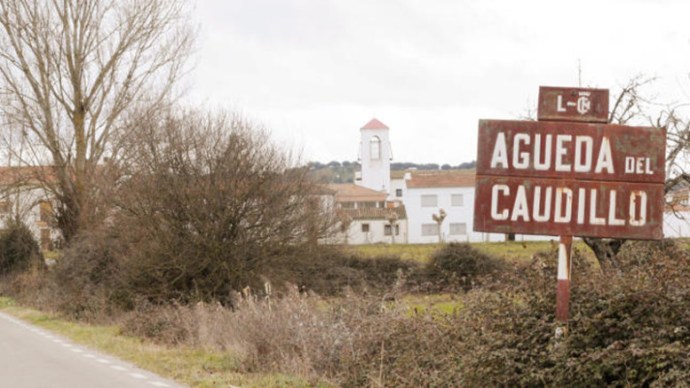
Sign at entrance to town of Águeda del Caudillo. Photo: Gaceta de Salamanca


This Week in Spanish Civil War History – Week 14 and 15: 17 – 31 October 1936

Week 14 and 15: 17 – 31 October 1936

Sorry for the delays, as the website was hacked and is only just back online now. Normal service is resumed.

Week 14

October 18

The Republican government creates the ‘Mixed Brigades’. This combines the army units which remained loyal during the initial rebellion, and militia groups of all forms fighting around Spain. This mix is titled the Popular Army, the name coming from the Popular Front party in government. While anarchist groups are not art of the government (yet), their militias are still able to be part of the Popular Army.
.
Week 15

October 24

The first shipment of gold arrives in the Soviet Union; the first shipment of over half the Spanish supply which will be sent to Moscow. It is worth around $35 per ounce, a total of around almost $600 million, though Spain only gets half its worth.

October 27

Russian tanks finally get to Madrid to defend the city. T-26 tanks, around 10 tonnes in weight each, are dispatched from Madrid main’s train station and head straight to the front. The Nationalists outside the city already have tanks, supplied by Italy and Germany. The Republicans have been using Molotov cocktails to hold back the Nationalists until now and are in desperate relief to save the city.

.

T-26 tank outside Seseña

October 27

The Nationalist unleash an air raid on Madrid. Six bombs are dropped in Plaza Colón, a major square in the city, heavily populated. A queue of women and children are waiting to get milk and a bomb lands directly on them. A total of 16 are killed, another 60 seriously injured. The air raid comes from a Junker Ju-52 with a German pilot. The bombing is labelled the first bombing in history that served no purpose. It was designed solely to bring terror to 900,000 Madrileños. Madrid has no way to stop planes flying overhead and bombing them as they are becoming surrounded by Nationalists, setting the stage for the coming mammoth siege of Madrid.

October 28

A squadron of Soviet Tupolev ANT-40 planes, named Katiuska bombers, drop bombs over the city of Seville, which has been in Nationalist hands since July. This Republican-supported bombing leads the Germans to send more planes and supplies, and set up the Condor Legion in Spain, to overcome the Soviet forces.

Aftermath of the air raid in prep for the Madrid siege

October 29

The town of Seseña is 30 kilometres (18 miles)  south of Madrid, near destroyed Toledo. The Nationalist army, who have marched and massacred their way north are now ready to take Madrid. The Republicans who hold Seseña attempt to hold their town. The new Mixed Brigades, led by Spanish and Russian colonels, lead their mixed-nation/loyalty troops with newly arrived tanks. However no one has any training, other than one Russian tank expert. The Nationalists have their highly trained Spanish and Moroccan troops and Italian tankettes on their side. The Republicans head south of Seseña to engage with the Nationalists about only gain around 1.5 kilometres (1 mile) before they are attacked.

The Republican were able to destroy 11 Italian tankettes and kill 600 soldiers, losing only eight men and three tanks in the fighting. However numbers were on the Nationalists’ side and they won the battle of Seseña when the Republicans were forced to retreat.

The showdown for the siege of Madrid is ready to begin.

~~

This is not a detailed analysis, just a highlight (lowlight?) of the week’s events. Feel free to suggest an addition/clarification/correction below. All photos are linked to source for credit

This Week in Spanish Civil War History – Week 13: 10 – 17 October 1936

October 12

University of Salamanca’s rector, writer Miguel de Unamuno, gives a speech at their Columbus Day celebration. The western city, in the Nationalist-held area, has many important right-wing audience members, including Franco’s wife. Unamuno speaks out harshly against General Millán Astray, who leads the Spanish Legionaires. While Unamuno had previously said he was a supporter of the Nationalist, he changes his mind and calls Astray inhuman, and an example of the terrible rebel uprising.

Unonumo said – It torments me to think that General Millán Astray could dictate the norms of the psychology of the masses. A cripple, who lacks the spiritual greatness of Cervantes, hopes to find relief by adding to the number of cripples around him.

Astray cried from the crowd – Death to intelligence! Long live death! to the praise of the Nationalist-loving crowd.

Unamuno finished his time on stage by replying – This is the temple of intelligence, and I am its high priest. You are profaning its sacred domain. You will win because you have enough brute force. But you will not convince. In order to convince it is necessary to persuade, and to persuade you will need something that you lack: reason and right in the struggle. I see it is useless to ask you to think of Spain. I have spoken.

Unamuno left the meeting with Franco’s wife Carmen polo, which secured his immediate safety. But he is soon removed from his job and put under house arrest. He will die, humiliated and ruined, two months later.

October 14

The first 500 international volunteers arrive in Albacete, the eastern town set up as the training base for all international volunteers.

October 15

The first ship from the Soviet Union, carrying Republican bought weapons arrives in the port of Cartagena. The weapons are sorely needed as the Nationalist army continues their bloody march towards Madrid.

~~

This is not a detailed analysis, just a highlight (lowlight?) of the week’s events. Feel free to suggest an addition/clarification/correction below. All photos are linked to source for credit