Francoist Street Names Are Out. Women’s Accomplishments In Spain Are Finally In

2016 saw the 80th anniversary of the start of the Spanish Civil War, and the 41st celebration of Francisco Franco‘s death. Yet on many streets all over Spain, the men who fought and assisted Franco though his 39 years of war and dictatorship are still revered with street names, vile and cruel men who harmed untold thousands. It is long past time to remove these names, and the opportunity to name streets after women has finally arrived.

Spain’s political situation is a hot mess – the December 2015 election ended in a stalemate, and subsequent efforts for coalition and even new elections have produced not a lot. The left-wing Podemos party, made of newcomers and small groups coming together to gain power, have found their place in some cities, such as Madrid and Barcelona. Spain has the History Memory Law, enacted in 2007, which provides rules to allow the reburial of SCW victims, and removal of all Franco (and Franco cronies) monuments, dedications and street names (the law has a wide range of powers; this is just an example). While many cry about leaving the past in the past, those with a wider view want to put right as much as can possibly be done. It is time to use Article 15 of the memory laws to change the streets named after men who murdered their way to power and used fear to stay there.

Some examples of names changes is in Calle de Soledad Cazorla (Spanish link), named after Spain’s first female public prosecutor, who used her position to fight gender violence. Until now, the street was named after Andrés Saliquet (Spanish link), an old-school General and fascist party member, serving in the war and the dictatorship. The notorious General José Varela loses his street name to journalist Carmen de Burgos in Granada, likewise Federica Montseny, Spain’s first female minister, will replace Colonel Chápuli.  Madrid’s Plaza Caudillo (if you’re new, Franco was referred to as the Caudillo, the leader) will be Plaza Mayor in El Pardo.

Places like León have just 5% of female street names, Cadiz has just 3%. People ask why it matters – the naming of a street in your honour is a great privilege; it shows prominence. The lack of female names shows that they are considered better at home than out in the world. Women’s achievements are simply not being recognised in this traditional way of having a street in their honour in Spain. Madrid has 137 streets which are named after the Virgin Mary, but not streets named after real women. Women’s roles are confined to being imagined virgin saints, not actual accomplished members of a community.

Valencia has a new law, meaning that 80% of new names, or streets in need of a change, must be female names. In the Poblet area in the west of the city, eight new streets are needed, and are being decided by public suggestion. Author Carmen Martín Gaite is in the running, along with Las Trece Rosas, 13 women murdered by a firing squad in Madrid in 1939.

The northern city of Oviedo has 22 new streets, a majority going to women. Alicante has a new law ensuring women are included while 50 Francoist streets are removed, and northern Bilbao and southern Cadiz now have mandates in place guaranteeing female names. Cadiz has only eight female street names, all saints, a situation about to be rectified.  In Santander, a motion is in place to remove Francoism from the city and celebrate women, a move which has faced steady criticism (aka fascist man tears).

Without surprise, all this comes with its complainers. The usual cries of ‘that’s just complaining feminists, don’t indulge them’ is rife, with machismo still strong in Spain. Giving women the same rights and rewards as men scares many, as does the notion of altering traditions, even when traditions are inappropriate. Somehow, giving a street name to a fascist murderer is okay, as is keeping the name because ‘tradition’. Changing the name to erase an evil man from memory, and embracing a successful woman still frightens many delicate flowers.

The 2007 memory law has had little success in its nine years. Granada alone has 4,000 victims still dumped in mass graves, Seville has only reburied two of the 104 mass graves in the region. You only need to look at the maps of each region on the Historical Memory Association website to see how many mass graves (fosas) country-wide are ongoing. As family members of the victims pass away themselves, voices are becoming lost and the commitment to the past needs to be honoured. Trouble is, Europe is doing its terrifying swing to the right. Spain is no stranger to the Hitler-fascist salute, regularly done at Francoist sites (especially Valle de los Caídos), and Nazi groups have been springing into violence recently in Madrid. Spain needs to be un-Francoed as fast as possible, and that level of hate needs to be eliminated.

It can be easy to say that what happened in the Franco years is in the past and no longer relevant. But as long as dedications to remarkable women like Dolores Ibárruri are opposed by those in power (due to her left-wing work), the past is still haunting the present. Guadalajara, near Madrid, has the highest number of female street names at a tiny 9.5%, all-but named after virgins and saints. The names are dedicated to women who are bound in legend and many hundreds of years out of date. Women are overlooked in history, so inaccuracies are ever-present. Meanwhile, Spain has a plethora of successful feminists, leaders, scientists, teachers, and modern sports stars who could be honoured, yet are forgotten.  Why not Calle Maruja Mallo (artist), Avenida Clara Campoamor Rodriguez (suffragette), or Paseo Margarita Salas (biochemist). Spain needs more streets named after women like Ángela Iglesias Rebollar (Spanish link), murdered by Franco’s killers, remembered for their struggles.

It’s not like Spain isn’t in need of change; young women need role models, advertised the way men are exposed to their role models, and largely take for granted – because they’ve always been right in front of them. Why have streets and plazas named after Nazi-style killers when you can have streets named after María Mayor Fernández de Cámara y Pita, who fought against the English in 1589, or Manuela Malasaña Oñoro who saw off the French from Madrid in 1808, or pianist Alicia de Larrocha from Barcelona who was an extraordinary composer, or Rosalia Mera Goyenechea from A Coruña who became the richest female entrepreneur worldwide and used her riches to help other women, as such as fighting anti-abortion laws.

Another issue is not just the lack of female names, it’s irrelevance of those that do exist. Margaret Thatcher was given a plaza in Madrid, hardly a popular move. Madrid also has Calle de Quiñones,  homage to the first female run printing workshop, but without her full name, how can anyone look up Maria de Quiñones from the 17th century (did any of you reading this know that until now?).

Galicia is leading the way by looking through historical information to find forgotten women, as is Barcelona, and making sure people can find information about all people awarded a street name. The southern city of Córdoba has passed a law saying 50% of new names must be female, which currently boasts just 6% of female names.

My personal suggestions (in addition to the ones above) –

Isabel-Clara Simó i Monllor – Valencian writer, one of the most important writers in the Catalan language

Clara Campoamor Rodriguez – women’s right campaigner

Federica Montseny Mañé – first female cabinet member – minister of health

Carmen Amaya  – influential flamenco dancer

Alicia de Larrocha – extraordinary pianist and composer

Margarita Salas – biochemist and geneticist

Rosalia Mera Goyenechea – world’s richest female entrepreneur, co-founder of Zara

Rosa Montero Gayo – journalist and author

María de los Ángeles Alvariño González – fishery research biologist and oceanographer

Magdalena (Magda) Bermejo – primatologist

Emilia Espinoza Hazelip  – pioneer of the concept of synergistic gardening

Patri Vergara – professor in Physiology, first woman President of the International Council for Laboratory Animal Science

Dolors Aleu i Riera – first female Spanish doctor

Ana María Matute Ausejo – writer and member of the Real Academia Española

Emilia Pardo Bazán  – Galician novelist, journalist, essayist, critic and scholar

María Josefa Crescencia Ortiz Téllez- Girón/ Doña Josefa Ortiz de Domínguez – insurgent and supporter of the Mexican War of Independence

Rosalía de Castro – Galician writer and poet

It’s not about women being elevated above men, it’s about women being given their due. It’s about successful people (yes, women are people) not being forgotten, their accomplishments out there for all to remember.
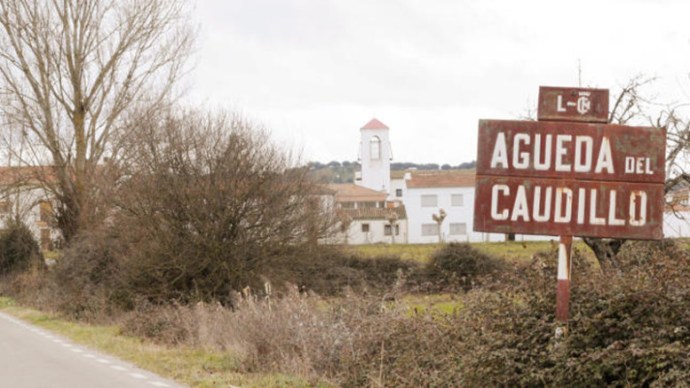
Sign at entrance to town of Águeda del Caudillo. Photo: Gaceta de Salamanca


13 September 1974: The Bombing of Cafetería Rolando

2014 is the 40th anniversary of the bombing of Cafetería Rolando in Madrid. The attack was a significant event in the fight against Francoism and a defining moment in the ETA’s struggle for independence. I first learned about Cafetería Rolando several years ago, and it forms part of my upcoming book, Death in Valencian Dust. In posting this, I do not endorse either side of the ETA struggle, merely recognise the struggle Spain suffered in the 1970’s.

In 1974, to say Spain was at a crossroads would be an understatement. In December 1973, Admiral Luis Carrero Blanco, Spain’s Government President was assassinated by ETA (Basque – Euskadi Ta Askatasuna, Spanish – País Vasco y Libertad, English – Basque Homeland and Freedom), the Basque Country separatist group. For years, ETA had been carrying out attacks and killings around Spain, while other groups started to rise up against the government. In 1974, new Government President Carlos Arias Navarro set up new rules during the spirit of 12 February, keeping in line with Franco’s harsh regime of times past, covering everything from stopping freedom of the press, restriction to the judicial systems, harsh penalties for strikers and protesters, and generally restricting the lives of everyone in the country, everyone outside the búnker, the group of extreme right-wing people surrounding Franco.

The state of the nation deteriorated throughout the year – the church increasingly voiced their opposition to Franco and the regime, the execution of anarchist Catalan Salvador Puig Antich brought people to the streets in protest, the economy slumped, the Communist party mobilised in defense of their sympathisers, workers continued to strike, and universities protested the new draconian laws. Franco himself was seriously ill, and Juan Carlos, his protegé, was taking over all tasks on his behalf. The Portuguese dictatorship collapsed, giving Spaniards more ideas of what they could achieve for themselves. On September 11, 1974, Arias Navarro re-endorsed his changes and announced efforts would double to enforce new laws over the rising tide of anger.

Cafetería Rolando, at 4 Calle del Correos (known as E street), was located in the heart of Madrid, directly off Puerta de Sol. Cafetería Rolando was a large and popular cafe, the local spot for police to visit during their lunch breaks, conveniently located beside the headquarters of the Dirección General de Seguridad (General Directorate of Security) in the famous Real Casa de Correos building. The Dirección General de Seguridad was considered an impenetrable target by ETA and other organisations keen to bring down the regime. Because nearby Cafetería Rolando was so popular with police working nearby, the place became destined for disaster.

 Real Casa de Correos (Cafetería Rolando was to the right of this shot) – Source

On September 13, 1974, at 2.35pm, during a busy lunchtime, a bomb exploded at the entrance to the cafe. The bomb, thirty kilos of dynamite filled with nuts for shrapnel, went off as many enjoyed their lunch, and was large enough to cause serious structural damage to the five-storey building. The ceiling of the café collapsed, resulting in several of the hostel guests upstairs falling into the café. The blast was big enough to shatter the windows of the Real Casa de Correos across the tiny street and several cars were obliterated. Another restaurant, a large place with 300 seated guests next door, was also seriously damaged.

Because of the proximity to the security building, police were on the scene immediately, and the process of saving Cafetería Rolando diners began. An attack of this magnitude, on a place frequented by everyday people, hadn’t been undertaken since the Civil War, catching all by surprise. Seventy-one people were pulled alive from the rubble, several children. Most victims made a full recovery, though several were left with scarring and mutilation. In total, twelve people were killed, aged from 20 to 78 years old, including a just-married couple. Several café workers were killed, including one who was pulled alive from the rubble but died before surgery. While the attack was allegedly against the police, and several wounded were police and from Franco’s elite special forces, the rest killed were all civilians. A thirteenth victim, a police officer, died two years later from the attack, unable to survive the injuries he sustained.

Source

The list of the dead only fueled speculation of the bombing. As no police officers were listed among the dead, a theory sprang up that a division of the extreme right themselves planted the bomb. Police earlier that day had been told to avoid the café, but these rumours were never directly admitted. Franco was keen to catch whomever had committed the act, while others, both for and against the government, took the opportunity to criticise the regime, plus Arias Navarro himself, and the búnker, the powerful political families. Everyone had an agenda for establishing blame. The Communist party became a popular target for criticism, initially blamed for the events.

Soon, blame fell on ETA from the Basque Country. They had been killing policemen and guards sporadically since 1968, one just days before the bombing. ETA denied any knowledge of the Cafetería Rolando attack, though throughout Spain, the denial wasn’t taken seriously. Because of the high number of killed and wounded were merely civilians at lunch, both sides of the political fence wanted to see justice done. The assassination of Carrero Blanco less than a year earlier didn’t raise tempers, but the attack on the café brought ETA’s organisation more into the spotlight than ever before.

Famous Basque activist, writer, women rights campaigner and ETA supporter Eva Forest was arrested along with her husband, though her husband was soon released. Forest refused to co-operate and accused the police of ill-treatment during her detainment. It was alleged two Basques, a man and a woman, planted the bomb in Cafetería Rolando, sticking the bomb to the underside of a table, and set off the timer. The identity of those two Basques were never established. It could have been Forest and her husband, playwright Alfonso Sastre, but there was no proof. While many detained in connection to Cafetería Rolando and the Carrero Blanco assassination were released, Forest was kept in prison until 1977, when all political prisoners accused under the Franco regime were given amnesty, to smooth the way for democracy under the new King Juan Carlos. It was rumoured that Forest suffered terribly being in jail, being tortured for all her acts over the years. While Forest admitted to passing on ETA messages and helping with safe houses, she never admitted her part in the Rolando bombing, despite admissions from others in the plot. 

Because of the 1977 amnesty, no one was ever held accountable for the Cafetería Rolando bombing, and no one can never be convicted of any crime relating to the incident.

Calle del Correo today – Source

Victims of Cafetería Rolando 13 September 1974

Antonio Alonso Palacín, mechanic, and his new wife, María Jesús Arcos Tirado, telephone operator aged 28

Francisca Baeza Alarcón, teacher aged 45

Baldomero Barral Fernández, baker aged 24, and his wife María Josefina Pérez Martínez, mother of two aged 21

Antonio Lobo Aguado, railway worker aged 55

Luis Martínez Marín, businessman aged 78

Concepción Pérez Paino, Dirección General de Seguridad admin worker aged 65

María Ángeles Rey Martínez, student aged 20

Gerardo García Pérez, married father of three

Francisco Gómez Vaquero, Cafetería Rolando chef aged 31 

Manuel Llanos Gancedo, waiter at Cafetería Rolando aged 26

Félix Ayuso Pinel, police inspector aged 46. Pinel didn’t die until 1977.

CalledelCorreo(Madrid)

Source

 Here is a link to the news footage of the bombing in 1974 – Atentado etarra en la calle madrileña del Correo (1974)

SPAIN BOOK REVIEW: ‘Adventures of a Doctor’ by E. Martínez Alonso

Martínez

Adventures of a Doctor by Eduardo Martínez Alonso seems to be so rare, I can’t find any cover art or a blurb about this book. I managed to purchase a damaged copy from the New Zealand parliamentary library, and when they tossed this book to me for a mere $6 (about €3.60), they obviously didn’t know what a treasure they had. Eduardo Martínez is quite an extraordinary man with a story that seems to have been largely lost. With the market flooded with 1001 Spanish civil war books, it comes as a great surprise that this book doesn’t get more recognition.

The story starts with the author born in Vigo, Galicia in 1903. His father was from Uruguay, and was the consul in Vigo. As a young boy, Martínez travelled to his father’s homeland, along with his family (he was one of eleven children, and talks of his mother constantly having to nurse his siblings). The story tells of life in northern Spain in the era, and exploits with his brothers and attending a boarding school with mixed success. In 1912, Martínez’s father received a post to Glasgow, and the whole family moved north for a new life. Martínez dreamed of working in hotels or on ships, able to meet people and travel far and wide. He became bilingual at a young age, seeing the benefit of speaking Spanish, English, French and more. But it was his father who said he would be a doctor, not a sailor. As each of the eight boys grew and carved out professions (sisters, of course, were to be wives and caregivers), the prophecy of the hard-working consul came true. The family and Martínez recalls the first world war, his school years and an eventual trip back to Uruguay.

As a trained doctor, Martinez moved to Madrid with his grandmother, and speaks of seeing Anna Pavlova dance at Teatro Real, with the King and Queen in attendance.  He quickly took up a post at Red Cross Hospital, and met Queen Ena, British wife of King Alfonso XIII, and the Duchess of Lecera, who were delighted to have an English-speaking doctor. News travelled of an English-speaking doctor in favour with the queen, and Martínez was in hot demand. Just eighteen months later, Martinez graduated from San Carlos Medical Facility and while meeting the King and Queen socially and professionally, was appointed the medical adviser to the royal family. This proved to be an amazing and dangerous post.

When the Second Spanish Republic was founded in 1931, Martínez was in the palace in Madrid with the royal family as they were deposed. He tells of sitting casually with Queen and princesses as the monarchy fell. As the family were forced into exile and as Spain underwent revolution, Martínez’s position as a monarchist him an easy target. As civil war came five years later, things changed dramatically. Martínez got his family out of Spain in July 1936, or off to the safety of Vigo, and knew he would be in danger as a former royal family aide. Through his work for the Red Cross, he was ordered by a Communist faction to work as a doctor for the Republican side of the war.

On Saturday morning the shooting started. We sat in a bar and heard the crackling of machine guns, the burst of hand grenades, and I saw smoke arising from many quarters of Madrid. By Monday morning a general strike had been called. Everything was paralysed except murder, arson, and rape. The Spanish civil war had commenced – Pg 70

Martínez talks of watching a church burning as priceless works of art were set alight along with the riches of the churches of Madrid. He saw a priest thrown on the flames but was unable to save his life when he pulled the screaming body from the blaze. Most priests were taken out to Casa del Campo to be shot. Men were burning priests but trying to revive pigeons which fell from bell towers, overcome by smoke. Martínez had an apartment in Madrid, and he hid as many people  as he could throughout the war. Nuns and priest were hidden, and forced to serve meals to men who sat and spoke of vicious murders they had committed against the clergy.

Martínez was posted to a town outside Badajoz, Cabeza del Buey,  in the south-west, working for the Communists. While running the hospital, a young nurse, Guadalupe, suggested they flee and work for Franco’s troops instead, but Martínez seemed convinced that he would be killed at some stage, regardless of where he was posted, and claimed no political alliances. In Cabeza del Buey, he was forced to attend mass executions of seemingly innocent men, and despair at violent speeches about revolution and vengeance. He performed many surgeries and saved lives in the  most atrocious conditions. But with no warning, Martínez was shipped off, with Guadalupe, and sent to Ocaña, just outside Aranjuez, to work in the prison there, and be a prisoner himself. As he had in Cabeza del Buey, Martinez managed to get some nuns freed from prison to work as nurses, and treated patients while living in a cell himself. Between dire conditions and deadly activities, a patient told Martínez that his turn to be executed was near. An in understated manner, Martínez talked of his prison escape to Valencia in March 1937, were he managed to procure a fake passport and get aboard the Maine, a ship bound for Marseilles. 

Martínez quickly got himself back in Spain, despite the dangers. He chose to cross the lines and work for the ‘white’ side of Spain, Franco’s rebel army. Red Spain (the Republicans), he felt, thought nothing of him, his work, and long suspected their cause would lose the war, one they never had a chance to win. Posted to Burgos, Valladolid and then San Sebastien, Martínez  then found himself working on the front lines as Franco’s army continued to advance into enemy territory. Towns fell one by one as Martínez fought to save lives, but writes in such a  humble, unassuming manner. Once in Zaragoza, Martínez worked hard to care for patients at the hospitals, and pioneered the use of closed casts on wounds, a procedure first tried with less success twenty years earlier. Despite the smell offending wealthy female volunteers, Martínez’s experiment helped the lives of many patients otherwise in agony as they recovered. He was then moved on to his own mobile surgical unit in Teruel in 1938.

Martínez was there on the ground when troops stopped in Sarrión, 100kms north-west of Valencia, as the war finally came to its brutal end. On April 1st, 1939, the war was over and declared won by Franco in this small town, and after helping a man and his son to Valencia, Martínez sought out all those who had helped him during the war, and moved back to Madrid. No sooner than Martínez had helped his friends and former nurses, and begged for clemency for some condemned to death by the new regime, the second world war broke out. With some family in Vigo and some Britain, travelling on multiple passports, danger was again faced. As Hitler plowed through Europe, Madrid suffered greatly after the civil war and Martínez went to work at Miranda de Ebro, near Burgos, to help war refugees from all nations. With such a humble attitude, he glossed over his feat to aid refugees out of Spain, saving their lives, until in 1942, when his ferrying of innocents was discovered and he was forced to flee Spain. His time working with British Naval Attaché, Captain Alan Hillgarth is barely touched upon, but should surely serve as an incredible tale of a man saving lives at great risk to his own. This two-year period alone could serve as a story all of its own. Just his dramatic escape would serve as its own story, but the author covers it in a few sentences, and neglects to mention he fled with a new wife. He also failed to mention his first marriage which produced two children, but was annulled after Franco took power in 1939 (His wife was a British woman who went home without him). I only found about either marriage after studying the doctor further myself. There are no clues to whom these women are at any point in the book. His personal life is never touched upon.

Again, Martínez talks little of his involvement with the rest of the world war, after being detained when first arriving in Britain (no idea if his Spanish wife was also detained), but worked as a spy for Britain throughout and barely talks about it. He worked at Queen Mary Hospital after the war and oversaw great new procedural advances, meeting some of Europe’s finest surgeons, but then returned home to Madrid. Life was hard in the beleaguered nation, and he again went to work at Red Cross Hospital, specialising in chest surgery. He then moved on to working as the doctor for the Castellana Hilton, newly opened in 1953. He recounts stories of wealthy Americans, and famous movies stars (unnamed) alike, who came to Madrid for all sorts of reasons. He spoke with frustration at his patients demanding penicillin shots, not wanting to discuss why they need this medication. Many guests, male and female, had a penchant for sleeping around and wanting medicine to atone their sins, either before or just after the liaisons which bore infections. One guest talks of being raped and demanding penicillin, though the story is far from convincing to the doctor. Sexual liberation had come to the foreign guests at the Hilton, and expected Martínez’s penicillin to cover it up. He makes his disdain clear for these patients and the abuse of this groundbreaking medication, and of the myriad of alcoholics he was forced to attend to, when little could really be done for them.

The book is written in the manner of a doctor – no-nonsense, no fussing with detail, just the raw facts given out without prejudice. Martínez is a man with the story worthy of a Hollywood blockbuster, but it wouldn’t be his style. This book was written in 1961, and Martinez lived until 1972. It shows what really stood out to the doctor in his life, because details are excluded, and there are many secret operations he simply never wanted to discuss. He is free and easy with dates – because I know the civil war, I could piece together the timelines of the book, but needed to look up world war details and the opening of the Madrid Hilton, just to give myself an idea of how much time passed between chapters.

Martinez’s daughter, Patricia Martínez De Vicente, has written several books in Spanish about her father, notably La Clave Embassy: La Increíble Historia De Un Médico Español Que Salvó a Miles De Perseguidos Por El Nazismo. The stories not told by her father in his memoir are a whole other side to this man who worked tirelessly for others, and had a strong ability to do good, without any need to be recognised.  To read his book is a gift, and I will be also reading his daughter’s books.

*above photo taken just prior to release from the Spanish army, 1939. Photo supplied in the book (page 112)

‘LA RIUÁ’ October 14, 1957: The Flood That Changed Valencia Forever

On October 14, 1957, a little known disaster occurred in the Spanish city of Valencia. When I first moved to Valencia in 2005, I heard the story of the Turia (the Valencia river) flooding the city in the 50’s. Now, the city has the beauty of a park in place of the dry riverbed. Years after I first moved to Spain, I decided to research the event  in more depth (excuse the pun), and it is the backdrop for my second Secrets of Spain novel, Vengeance in the Valencian Water (out Jan. 2014).

Many people are finding this old post and linking it to stories about climate change after the 2024 Valencia flood. What happened to south Valencia on 29 October 2024 is totally different to what happened in Valencia’s previous 80 floods. Climate change is absolutely a factor in Valencia’s floods, the rainfall was heavier than ever, in a shorter space of time than ever before, and flooded an area not given any consideration around safety of climate effects. Valencia is a flood plain, and that doesn’t mean climate change isn’t real. 

In my first book of the series, Blood in Valencian Soil, Cayetano, a bullfighter from Madrid and Luna, a bike mechanic from Valencia, team up to find the burial-place of a murdered Republican soldier and his involvement with an International Brigade nurse, who disappeared from Cuenca in 1939.  The second book of the series, while on the search for more civil war mass graves,  Cayetano’s Falange member grandfather, José, is forced to tell his story of survival  during the Valencian flood which changed his life forever.

city map

The Turia wasn’t always a flowing torrent of water. While there has been recorded flood records since the 1300’s, the riverbed spent most of its time dry, where people would walk to the tiny stream, to wash their clothes. Shack houses sprung up in the riverbed. Sales of animals were held down in the riverbed. It was not a year round flowing river. Serious floods had happened every century the modern city was based against the Turia, the most recent in only 1949 when several dozen people drowned. Even so, they were unprepared for October 1957.

Before you read on, here is the link to a documentary made in 2007 by Valencia University, with radio reports, video footage and eyewitness accounts of the flood. It’s all in Spanish, but if you don’t speak the language, you could just mute the sound and watch the video if you want, you will get the idea. Floods pretty much speak for themselves.

Each October, rain comes to the Valencia region, not so much in the city area, but in the surrounding plains and mountainous area that separates the city from inland Spain (If you’re new to this area, Valencia is both a city and a province of Spain. Just a heads-up). The rainfall surges during this change in autumn, onto land that is very dry after a long year without much rain. On Saturday 12 October, 1957, the heavens opened up over Valencia city, in conjunction to the torrential rains in surrounding villages in the Turia (plains around the city) region. On the morning of Sunday 13 October, Las Provincias newspaper noted that the outlying towns of Lliria, Segorbe, Chelva, Requena and Buñol had received rainfall of 500 millimetres in only two days. The Barranco del Carraixet and Palancia rivers north of the city, and the Magre river to the south, along with the Turia river through than ran Valencia city had all risen, but said there was no reason to worry. The rain began to die down in the city, and by late evening, had stopped completely. What the people of Valencia didn’t know was the immense torrent that was gushing its way down the Turia river towards them.

At around 9.30pm, an emergency call came through from the towns of Pedralba and Vilamarxant, 40 kilometres from Valencia, announcing that both towns had been flooded by a deluge of water as the river swelled beyond breaking point. At 11pm, an alarm sounded in the city, notifying all Guardia Civil and Police to be on alert, as the flood was heading directly towards the populated city.

Just after midnight, with the absence of rain, the river continued to swell, and logs and debris began floating through the city, blocking the bridges that connected the two sides of Valencia. Alarms sounded to alert people, and messengers knocked on doors in the El Carmen and Campanar areas, both the closest barrios on each side of the river’s edge. Radio messages went out with a flurry as police rushed to warn people of impending water. Soon after, the first waves began crashing over the edge of the riverbed, instantly flooding the flat streets on both sides, just as the torrential rains returned. In one hour, the water height pouring against the central city was between one to two metres and rising, cutting people off from any escape in the dark. More than 1000 cubic metes of water per second flowed into the streets, reaching over two metres in some areas. The Manises Dam at the edge of the city rose to seven metres above normal height as the river tripled its width and swallowed up much of  the city and surrounding area. All water, power and phone connections were swamped and collapsed under the water. Reports say manhole covers exploded into the air followed by a violent shot of muddy water  as the water took the city one street at a time.

ciudadinundada-1

(If you don’t speak Spanish – blue: river, green: populated flooded farming areas, purple: city/town flooded, grey: not flooded populated areas. Notice the tiny safe area in the centre of the disaster zone?)

In the centre of the old town lies the Plaza de la Virgen and Plaza de la Reina, where today stands the Valencia cathedral,  the Basilica and the archbishops palace just behind them. Along with  Calle Micalet, this tiny pocket was once home to a mosque and before that a Roman city. This area is built on the slightest, and almost impossible to see, ridge in the land, resulting in these treasures not getting any water and instead were surrounded. (Coincidentally, in my novel, the main character lives one street over from Calle Micalet in this magical pocket of space, but don’t be fooled into thinking they are all going to be safe – you know I don’t write happy endings!)

At 4am, the flood reached its peak of approximately 2,700 cubic metres of water per second, but then quickly tapered off. As the sun rose on Monday October 14, the water continued to decrease and the Manises dam was no longer inundated. From the peak of around eight metres above average to only two metres at the dam, Valencians thought the worst was over. A single telephone line to Castellon in the north remained, so emergency services could get word to Madrid, calling for help. All roads and rail lines leading out of the city towards Madrid, Barcelona and Albacete were blocked, damaged or completely swept away. Many of the bridges that crossed the Turia were damaged or destroyed, along with the beautiful stonework  that lined the river one day earlier.

riada10

As people ventured out into the water and mud-filled streets, the government received a message around midday that things were about to get worse. The towns of Pedralba to Vilamarxant had again been inundated with a second flood, washing away all  landmarks. The water took two more hours to reach Valencia city, with 3,500 cubic meters of water per second hitting around 2pm, accompanied by the worst downpour of rain yet seen; around 100 millimetres in just half an hour, enough that people couldn’t even see in front of them. By 3.30pm, the flood reached its peak of around 6,000 cubic metres of water per second, enough to start washing away  buildings that had been weakened in the first flood. The river had expanded to cover 2,200 hectares. While Valencia city gave many the luxury of multi-story buildings to find shelter above the water line, which rose between 2-5 metres above street level in places, the more outlying areas by the beach and port, including the towns of Nazaret, El Cabanyal and Malvarrosa at the mouth of the river, were on flat land and single level buildings, resulting in a complete catastrophe and loss of life as the water poured into the sea. Only five bridges, the longest-standing stone ones remained in place, though some were damaged and impassable. The worst had finally passed, and the riverbed emptied out into silence again. The final death toll was recorded as 81, though the actual figure remains unknown.

riada07

In the coming days, the army came in by truck and helicopter, bringing up to 500,000 kilos of bread to feed stricken residents. Many needed to be airlifted from rooftops and isolated pockets of dry land as the water receded. Much of the city, port and beach areas were filled with a heavy mud and debris, resulting in a ‘on hands on deck’ response from army and locals alike to clean up. On October 24, dictator Francisco Franco arrived (when much was cleaned already, of course) to survey the damage and have his loyal (oppressed, whatever) subjects cheer for him for coming to the disaster zone. As people lived on bread brought north from Gandia and milk given out by the ladle-load, the long process of rebuilding began. The mud was not completely cleaned away until the end of November.

In June 1958, the outlying port and beach areas suffered a second minor flood, as their drains were still clogged with mud, and the following month ‘Plan Sur’ began, a project to divert the river. The plan had initially been designed over a decade earlier but sidelined due to excessiveness (which is ironic considering the ‘excessiveness’ of everything the Valencian government spends money on). A plan to build an enormous green space in the city was put up against building a huge highway to get people from Madrid to the beach a fraction faster. In 1965 construction began to divert the river south of the city, resulting in  water  flowing around the city for the first time in 1972. At the same time, land cleared by the flood on the other side of the river from the old town was used to create many new buildings, mostly apartments, giving Valencia a construction boom (that’s a whole other tale). The flood had accidentally given Valencia a whole new chapter in its story, already thousands of years old. (I have never seen any water in the river diversion, other than the tiny part where the sea flows into the river mouth. If you have a photo of the Plan Sur river diversion (any  year) with water in it, I would love to see it).

Here is a short clip (in Spanish) made as they designed Plan Sur in the 60’s, with some aerial shots of Valencia if you’re so inclined

In 1976, on his first visit to Valencia as head of State, King Juan Carlos I gifted the dry riverbed to the city, and the highway plan was shelved forever; the 7 kilometre park won its place in Valencia’s history. Construction on the final part of the Turia riverbed park continues today, with most of the park now complete. The ‘top’ of the park has Valencia’s zoo, the Bioparc, and footpaths and bike lanes weave though gardens, streams, sports fields, playgrounds to the other end, home to Valencia’s massive Arts and Sciences complex. The final part, where the old riverbed meets the sea is still to be completed.

While Valencia is an amazing city, the park is the jewel in the crown.

This is a tourism video was taken a few years ago, but shows Valencia from the air, over the park and areas rebuilt after the flood, plus many of the great sights you can read about in my books.

riada1

All photos in 1957 are courtesy of Juan Antonio Soler Aces and 2013 photos are author’s own.