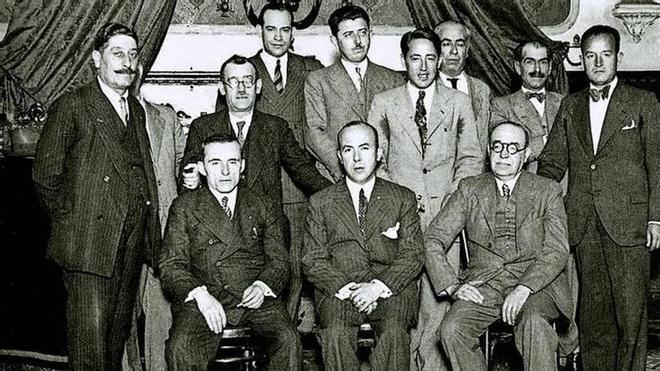
When Spaniards awoke on 19 July 1936, few could have predicted that the fate of Aragón would largely be decided in Zaragoza before the day was over. Situated on the banks of the River Ebro roughly halfway between Madrid and Barcelona, Zaragoza was one of the most important cities in Spain. With a population of around 170,000 inhabitants, it was the largest city in Aragón and a major centre of transport, commerce and military administration. Railways radiated from the city in every direction, linking it to Catalonia, the Basque provinces, Navarre, Old Castile and the Mediterranean coast. Whoever controlled Zaragoza controlled one of the principal crossroads of northern Spain.
The city occupied an equally important position in Spain’s military structure. Zaragoza served as the headquarters of the Fifth Organic Division, giving it responsibility for much of Aragón. Thousands of soldiers were stationed in and around the city, while senior officers exercised authority over a region stretching from the Pyrenees to the plains of Teruel. In a military conspiracy that depended upon the cooperation of key garrisons, Zaragoza was not a secondary objective. It was one of the prizes.
During the years of the Second Republic, the anarcho-syndicalist Confederación Nacional del Trabajo (CNT) had built one of its strongest organisations in the city. Railway workers, metalworkers, construction labourers, transport employees and countless others had joined its ranks. By 1936 the CNT claimed tens of thousands of members in Zaragoza and the surrounding province, making it one of the most influential social and political forces in the region. Socialist organisations, though smaller than in some industrial centres, also maintained a significant presence among the city’s working population.
This coexistence of powerful labour organisations and a large military establishment created an uneasy balance. Zaragoza was a city where Catholic processions and labour demonstrations could draw large crowds; where conservative landowners and industrial workers lived side by side; where supporters of the Republic and its enemies shared the same streets, cafés and workplaces. Political arguments that divided Spain as a whole were visible in miniature throughout the city.
The tensions had intensified throughout the spring and summer of 1936. Following the Popular Front’s electoral victory in February, strikes, demonstrations and political confrontations became increasingly common across Aragón. Rumours of military conspiracies circulated widely. Union leaders expected that sections of the army might attempt to overturn the Republic by force. At the same time, conservative groups feared that Spain was drifting towards revolution.
By July, many Zaragozans sensed that the country was approaching a moment of reckoning. The answer began to emerge on 18 July. News arrived that army officers in Spanish Morocco had risen against the Republic. In Zaragoza, all eyes turned towards one man – General Miguel Cabanellas Ferrer, commander of the Fifth Organic Division. His decision would determine the future of the city.
The region’s economy was shaped primarily by agriculture. Wheat fields covered much of the central Ebro valley, while vineyards, olive groves and small-scale farming dominated many rural districts. Large estates remained common in some areas, particularly in the south, where many labourers worked land they did not own. Elsewhere, smallholders struggled to earn a living from often harsh and unforgiving soil. Economic inequality was a familiar reality across much of Aragón, and disputes over land ownership had become increasingly bitter during the years of the Second Republic. These tensions helped fuel support for political movements promising change. By 1936, the anarchist CNT had established itself as one of the strongest organisations in the region. Its influence was particularly visible in Zaragoza, where it organised railway workers, construction workers, transport employees and industrial labourers. Smaller towns across Aragón also contained active CNT groups, labour unions and anarchist cultural centres. The union’s message of workers’ control, direct action and social transformation found a receptive audience among those frustrated by poverty, unemployment and the slow pace of reform.
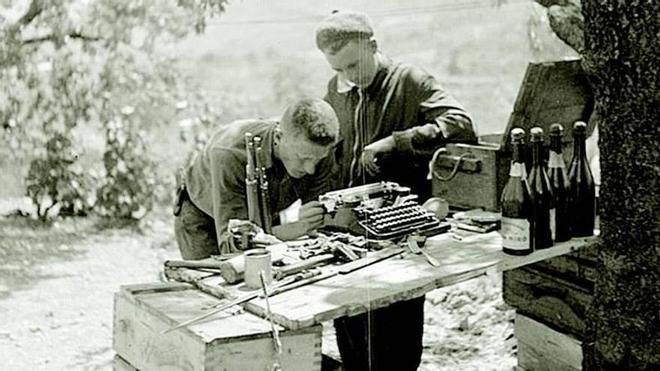
The Socialist movement also maintained a presence throughout the region through the Unión General de Trabajadores (UGT) and the Spanish Socialist Workers’ Party (PSOE), although in Aragón the CNT generally enjoyed greater influence among organised labour. Relations between the two movements varied. In some places they cooperated against conservative opponents; in others they competed for influence among the same workers.
At the same time, Aragón contained powerful conservative forces. The Catholic Church remained deeply influential, particularly in rural communities where parish priests often played a central role in local life. Conservative political parties enjoyed strong support among landowners, business owners and many middle-class families. In neighbouring Navarre, the Carlist movement commanded thousands of dedicated supporters, and its influence extended into parts of Aragón. To many conservatives, the Republic’s reforms represented an attack on religion, tradition and social order.
As political tensions increased across Spain during the first half of 1936, Aragón reflected the country’s growing divisions. Elections, strikes, demonstrations and political meetings frequently became sources of confrontation. Newspapers associated with different political movements offered completely different visions of Spain’s future. For some, the Popular Front victory in February represented hope for reform and social justice. For others, it appeared to confirm fears that revolution was approaching.
During the early hours of 18 July 1936, reports began arriving that army units in Spanish Morocco had rebelled against the Republic. Political leaders, trade unionists and government officials focused their attention on General Miguel Cabanellas, who remained silent. Behind the scenes, Cabanellas was already in communication with the wider conspiracy. For months he had maintained contact with General Emilio Mola in Pamplona, the officer responsible for coordinating much of the military uprising in northern Spain. Mola regarded Zaragoza as one of the most important objectives of the rebellion. A successful uprising there would secure most of western Aragón and provide a direct connection between rebel-held Navarre and territories further south.
Ángel Vera Coronel, the Civil Governor of Zaragoza, had received warnings for months regarding military plotting. Like many Republican officials throughout Spain, he faced a dilemma. Suspicions regarding Cabanellas and other officers were widespread, but suspicions alone were not enough to justify arresting the commander of an entire military district. As news from Morocco spread during the day, labour organisations became increasingly concerned. Union representatives therefore demanded that the 25,000-30,000 workers be armed but this was rejected. By evening, uncertainty still dominated events as the army remained under the command of Cabanellas. The Guardia Civil had not yet openly committed itself. The Assault Guards and Republican authorities lacked the strength to confront the military without broader support, and the workers’ organisations that might have resisted an uprising remained almost entirely unarmed.
By the evening of 19 July 1936, the outcome in Zaragoza was clear. Throughout the day, military units loyal to General Miguel Cabanellas had occupied the city’s key installations, secured government buildings and broken the limited resistance that emerged in unarmed working-class districts. Although isolated pockets of opposition continued in some areas, the Republic had collapsed. Zaragoza’s rebels had achieved their primary objective within hours with almost no argument.
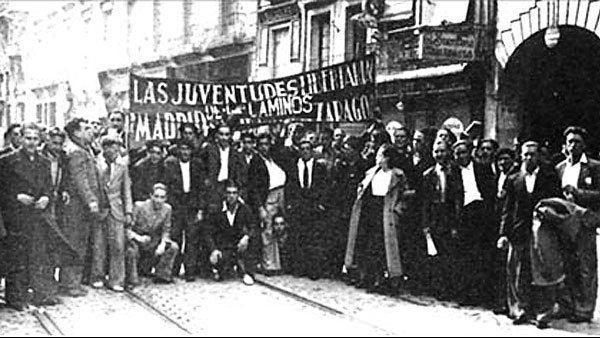
The city’s workers had been unable to overcome the imbalance of force. The CNT may have counted between 25,000 and 30,000 members in Zaragoza and the surrounding industrial districts, while several thousand more workers belonged to the UGT and other left-wing organisations. Yet only a small fraction possessed firearms. Most had never received the rifles they had requested on 18 July. By contrast, the military retained control of the barracks, armouries, machine guns and artillery throughout the crisis. Historians differ on precise figures, but the forces available to the rebels likely numbered between 4,000 and 6,000 soldiers and supporting security personnel. The active resistance, by comparison, was probably measured in hundreds rather than thousands.
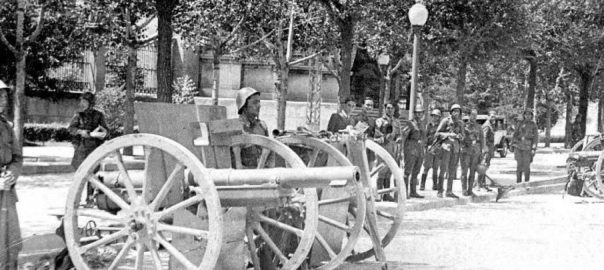
Armed patrols appeared at government buildings, railway stations, communications centres and major intersections. Soldiers guarded strategic sites while security forces moved through the streets enforcing the state of war proclaimed earlier in the day. The presence of uniformed men carrying rifles throughout the city made the answer obvious. There were minor skirmishes and isolated shootings in the area around the City Hall and the Provincial Council building. On July 19, the CNT and UGT unions had called a general strike, which was overwhelmingly supported by the population and halted cleaning, transportation, street lighting, slaughterhouses, cafes, fire stations and more. Cabanellas responded harshly four days later, applying martial law legislation to the strikers, legalizing dismissals, and compiling a list of strike-breakers to replace them. At the same time, all municipal services were militarised. The CNT, which had spent years building one of the strongest anarchist organisations in Spain, now found itself outlawed in practice. Union offices were closed or occupied, and membership records and documents became valuable tools for the authorities, allowing them to identify activists and local organisers. Political parties associated with the Popular Front suddenly had to disappear from public life almost overnight. Civil Governor Ángel Vera Coronel was arrested by the rebels and removed from power. Other Republican officials found themselves in a similarly vulnerable position. Institutions that had governed Zaragoza only hours earlier ceased to function as centres of Republican authority. Their powers passed into the hands of military commanders directing the uprising.
Arrests began before the ‘fighting’ had completely ended, as military authorities, security forces and civilian supporters of the uprising moved rapidly against individuals regarded as potential opponents. Trade union leaders, socialist activists, Republican politicians, municipal officials, teachers and known labour organisers were among the first targets. Some were detained at their homes. Others were arrested at workplaces or while attempting to leave the city. The exact number of arrests carried out during the first twenty-four hours remains unclear, but it quickly rose beyond a handful of prominent political figures. By the end of July, the number of detainees held in Zaragoza had reached into the hundreds.
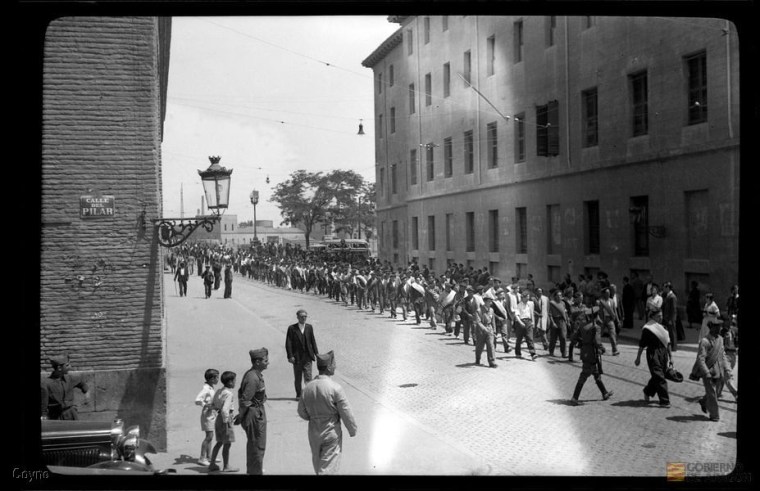
The city’s fall secured the rebels’ position in much of western Aragón and strengthened communications with General Emilio Mola’s forces in Navarre. It denied the Republic control of Aragón’s largest urban centre and one of its most important transport hubs. For the Nationalists, it was one of the most significant victories of the opening days of the war.
Arrests expanded rapidly during the days that followed. One of those who managed to escape was the anarchist organiser Miguel Chueca Cuartero. Before the coup he had been among those warning of a military uprising and seeking weapons for the workers of Zaragoza. Following the rebel victory, he fled the city and eventually joined the revolutionary administration established in Republican Aragón. His escape was the exception rather than the rule. Many of his comrades never managed to leave the city. Executions also began during these first days, and initially, many killings occurred without the formal procedures that would later characterise Francoist repression. Detainees were removed from custody, taken to isolated locations on the outskirts of the city and shot. Contemporary evidence and later investigations indicate that some victims were left near the Imperial Canal, in the open countryside around Valdespartera and in rural areas surrounding Zaragoza before more formal execution procedures were established. The exact number of people executed between 20 and 24 July remains uncertain.
During the final week of July 1936, Zaragoza underwent a remarkable transformation. Only days earlier, the city had been one of many garrisons participating in a military uprising whose outcome remained uncertain. By the end of the month, it had become one of the most important centres of power in rebel Spain. The rebels had secured important victories in Navarre, much of Old Castile, Galicia, western Aragón and parts of Andalucía, but they had failed in Madrid, Barcelona, Valencia, Bilbao and numerous other cities. Spain was no longer experiencing a coup, but civil war.
The success of the uprising in Zaragoza also attracted new supporters to the rebel cause. Local Falangist organisations emerged from the shadows and expanded their activities. Volunteers enlisted in Falangist and Carlist formations. Some joined security duties within the city while others prepared for service at the front.
Military commanders understood that Zaragoza’s position was not entirely secure. Although the city itself had fallen quickly, large areas of eastern Aragón remained outside Nationalist control. Republican authority survived in Catalonia, only a few hundred kilometres to the east. Thousands of armed workers who had defeated the uprising in Barcelona were now looking towards Aragón. The first reports of Republican militia columns moving westward reached Zaragoza during these final days of July. But Zaragoza’s garrison remained intact. The rebels controlled the city’s barracks, defensive positions and transport infrastructure. Reinforcements could be moved more efficiently than those available to the militias and any direct attack would require careful preparation and substantial resources.
As a result, the front began to stabilise. To the west and south lay territory largely controlled by the Nationalists. To the east, Republican and anarchist columns were establishing themselves across much of Aragón. Between them stood Zaragoza, the city’s fate settled for the moment but its strategic importance greater than ever. By the end of July 1936, Zaragoza had become one of the principal strongholds of Nationalist Spain, a city of military patrols, crowded prisons and political silence. The uprising that had lasted less than a day had secured one of the rebellion’s most important strategic victories. Yet the struggle for Aragón was far from over.

