In July 1936 Madrid was the political heart of the Spanish Republic and one of the most heavily militarised cities in the country. The capital contained the headquarters of the 1st Organic Division, eleven regiments, independent battalions, artillery units, military schools and administrative departments. Nearby were the important airfields of Getafe and Cuatro Vientos, while the recently opened Barajas airport connected Madrid with the rest of Spain and Europe.
The city also possessed a formidable concentration of security forces. Twenty-five companies of Assault Guards, fourteen companies of Guardia Civil, five companies of Carabineros and several mounted security squadrons were stationed in or around the capital. Crucially for the Republic, many of their senior commanders remained loyal to the government. The Guardia Civil was under the command of General Sebastián Pozas Perea, one of the most important loyalist officers in Madrid. During the crisis he repeatedly ordered Guardia Civil units to remain loyal to the Republic and authorised the arrest of officers attempting to join the Nationalist rebellion. His decision would prove critical in preventing the conspirators from gaining control of the capital.
Madrid had also become one of the principal centres of the military conspiracy. General Emilio Mola, directing the uprising from Navarre, relied upon supporters within the capital to seize control once the revolt began. His plans depended primarily upon Generals Joaquín Fanjul, Rafael Villegas and García de la Herrán. If Madrid joined the Nationalist rebellion, the Republic would lose its capital, its ministries and much of its authority. If the capital remained loyal, the uprising would face a far more difficult struggle.
News of the military uprising in Morocco reached Madrid on the evening of 17 July. During the following forty-eight hours ministers, generals and party leaders struggled to understand the scale of the Nationalist rebellion. Prime Minister Diego Martínez Barrio attempted to negotiate with Nationalist officers and avoid a civil war, but his efforts collapsed. By 19 July it had become clear that the uprising was spreading. José Giral y Pereira assumed the Presidency and made one of the most consequential decisions of the entire Civil War. Rather than rely solely on uncertain military loyalties, he authorised the distribution of weapons to workers’ organisations throughout Madrid.
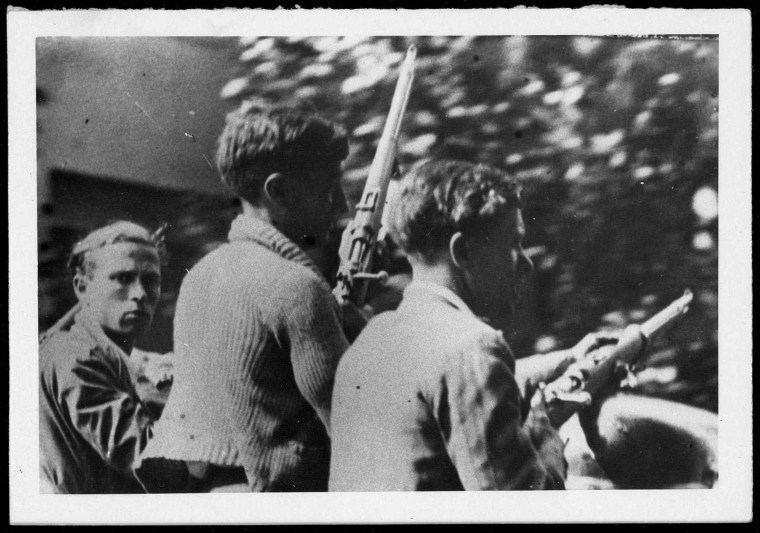
The rifles selected for distribution came from the Parque de Artillería de Monteleón (Artillery Park) in Madrid. Around 65,000 weapons were available, but a serious problem soon emerged. Most of their bolts were stored inside the Montaña Barracks. Lieutenant Rodrigo Gil Ruiz, head of the Artillery Park, became one of the central figures in the defence of Madrid. While politicians debated and military officers hesitated, Gil organised the release of thousands of rifles to Republican organisations, ensuring that the city would not face the uprising unarmed, and managed to distribute approximately 5,000 fully functioning rifles before the scale of the problem became apparent.
The weapons were delivered to CNT and UGT centres across the city. Among those receiving rifles were members of the anarchist movement, and among them was Cipriano Mera Sanz, a Madrid bricklayer and prominent CNT activist who had only recently been released from the Model Prison. Like thousands of other workers, Mera entered the crisis as a civilian rather than a professional soldier. Within days he would be helping organise armed resistance to the Nationalist rebellion. His presence symbolised the transformation taking place across Madrid, where ordinary workers suddenly found themselves defending the Republic.
The decision to release weapons transformed the struggle. Until this point the defence of the Republic had depended largely upon loyal military officers, Assault Guards and Guardia Civil. Now ordinary civilians entered the conflict. Workers streamed towards union headquarters, party offices and government buildings. Some received rifles. Others received ammunition. Many received nothing at all but remained determined to participate.
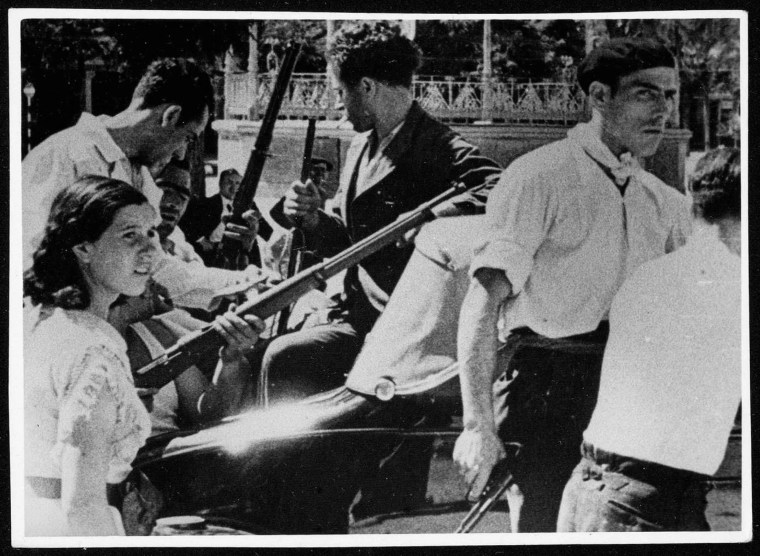
Across Madrid barricades appeared at important intersections. Volunteers guarded strategic buildings, carried messages between districts and monitored suspected Nationalist activity. Tram workers, railwaymen, labourers, students, office workers and shopkeepers joined the mobilisation. The uprising was no longer simply a military conspiracy opposed by the government. It had become a confrontation between the Nationalist rebels and a large section of Madrid’s population.
By the afternoon of 19 July, events in Madrid were moving faster than the conspirators had anticipated. General Emilio Mola’s plans had assumed that sympathetic officers would rise simultaneously across the capital, seize key government buildings and bring the city under military control before organised resistance could develop. Instead, the opposite occurred. The centre of the Nationalist rebellion in Madrid became the Montaña Barracks, a vast military complex overlooking the Manzanares valley on the western edge of the city. Built during the nineteenth century, the barracks occupied a commanding position near Plaza de España and housed large quantities of rifles, machine guns, ammunition and military equipment. Colonel Moisés Serra commanded the installation, while General Joaquín Fanjul emerged as the senior Nationalist figure inside.
Fanjul arrived at the barracks shortly after midday on 19 July. Accompanied by his son and dressed in civilian clothes, he established himself inside Serra’s office and attempted to take charge of the uprising in the capital. Throughout the day officers from other units arrived, together with Falangists, monarchists and civilian supporters who believed they were gathering at the centre of a victorious military Nationalist rebellion. Fanjul addressed the assembled men, explaining the objectives of the uprising and urging them to remain confident. Yet the situation outside the walls was already turning against them.
The government had severed communications with the barracks, preventing effective contact with other military units. Colonel Serra’s refusal to surrender the rifle bolts stored inside had made the installation an obvious target for Republican forces. Just as importantly, news of the Nationalist rebellion had spread rapidly through Madrid’s working-class districts. CNT and UGT organisations mobilised their members, while Socialist and Communist groups directed volunteers towards strategic points throughout the city.
By late afternoon, thousands of people had gathered around the approaches to the barracks. Some were armed with rifles issued only hours earlier. Others carried hunting guns, revolvers or improvised weapons. What united them was the belief that if the Nationalists succeeded in breaking out of the barracks, Madrid itself might fall. The streets leading towards Ferraz Street, Plaza de España and Príncipe Pío became crowded with workers, students, railwaymen, labourers and political activists determined to stop that from happening. Assault Guards and Guardia Civil loyal to the Republic formed the backbone of the cordon, but they stood alongside newly armed civilians from every corner of the capital. Activists like Cipriano Mera moved through the growing crowds helping organise positions and maintain order among the newly armed volunteers.
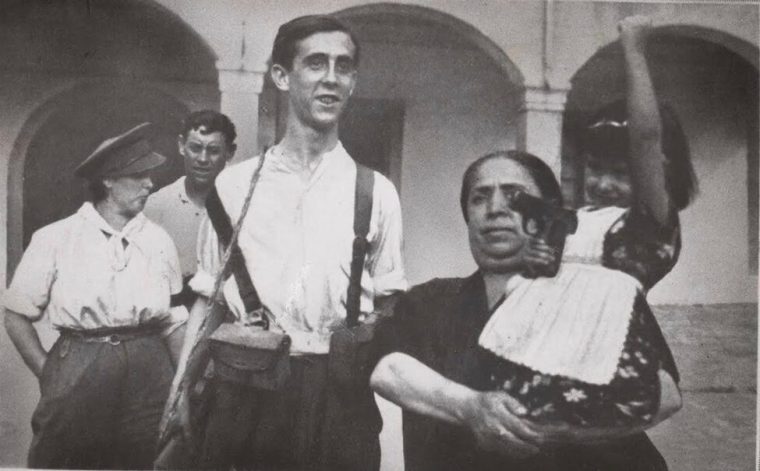
Contemporary accounts suggest that as many as 8,000 people gathered around the barracks during the afternoon and evening. The atmosphere resembled both a military siege and a mass political demonstration. News travelled rapidly through Madrid that the decisive struggle for the capital might already be underway. Crowds continued to arrive long after darkness began to fall.
Inside the barracks, the Nationalist rebels still possessed significant advantages. Fanjul commanded approximately 3,000 soldiers together with several hundred Falangists and monarchist supporters. The defenders controlled machine guns, ammunition stores and fortified positions behind thick walls.
As night fell on 19 July, the struggle for Madrid entered a new phase. The military uprising had failed to seize the capital, but neither had it yet been defeated. Inside the Montaña Barracks, General Joaquín Fanjul and Colonel Moisés Serra still commanded a substantial force. Outside, thousands of Republicans surrounded the complex but had not yet broken through its walls.
Throughout the evening, the cordon around the barracks continued to grow. Assault Guards and Guardia Civil loyal to the Republic occupied key positions around the perimeter, while newly formed militia groups reinforced them. Armed workers established barricades on nearby streets and intersections. Volunteers arrived from districts across the city, many carrying weapons obtained only hours earlier. The gathering around the barracks became one of the largest concentrations of Republican forces in Madrid. Although many participants lacked military training, they possessed one advantage the defenders did not: numbers. The atmosphere outside the walls was tense and uncertain. Reports from other parts of Spain continued to arrive throughout the night. Zaragoza had fallen to the Nationalist rebels and Pamplona remained firmly in rebel hands. Fighting was underway elsewhere across the country.
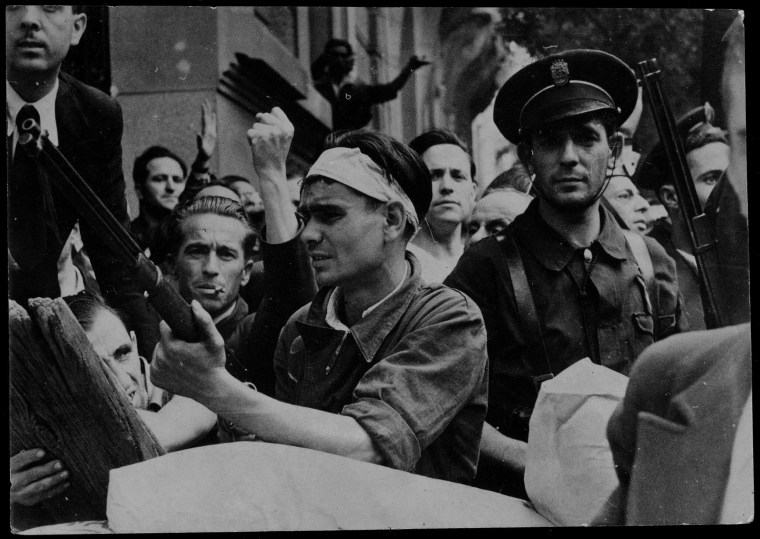
Inside the barracks, conditions steadily deteriorated. The defenders had expected to become the centre of a wider military revolt. Instead, they found themselves increasingly isolated. Communications with the outside world had largely been cut. Telephone lines no longer functioned. Reliable information became scarce. The Nationalist rebels could only speculate about developments elsewhere in Madrid. General Fanjul continued attempting to establish contact with sympathetic forces. Approximately 2,000 soldiers remained inside the complex, together with several hundred Falangists and monarchist supporters. Machine guns covered the approaches and ammunition stocks remained substantial. The thick walls of the barracks offered protection against small-arms fire. Yet a growing sense of isolation began to spread through the garrison. The uprising had been planned as an offensive operation.
Throughout the evening, Republican forces strengthened their positions around the barracks. Assault Guards and Guardia Civil established a formal cordon while newly formed militia groups occupied nearby streets and intersections. Barricades appeared across the western districts of the city. Volunteers arriving from working-class neighbourhoods reinforced positions around Ferraz Street, Plaza de España and Príncipe Pío.
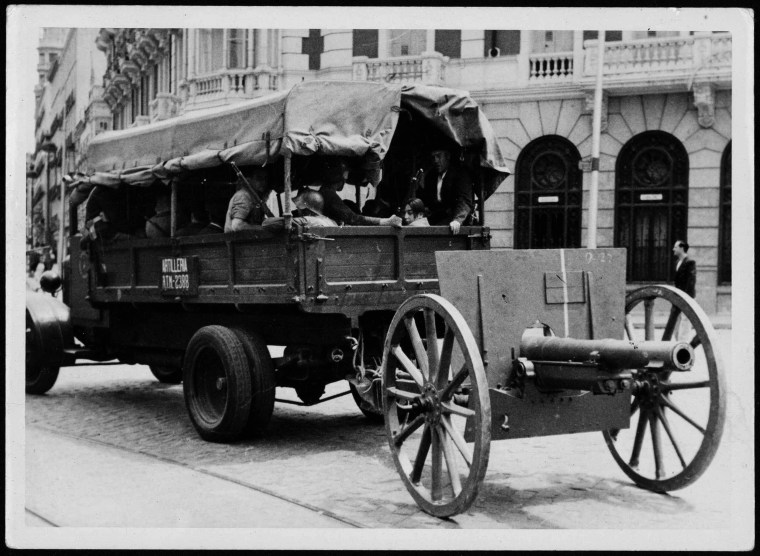
During the night, artillery pieces were brought into position overlooking the barracks. Lieutenant Urbano Orad de la Torre, working alongside Lieutenant Vidal, supervised the deployment of guns that would become crucial to the final assault. While the siege is often remembered for its crowds of armed workers, the Republic’s success also depended upon loyal military officers willing to place their professional expertise at the service of the government. The nearby airfields at Getafe and Cuatro Vientos also had remained loyal to the government. Among those preparing for the attack was Ignacio Hidalgo de Cisneros, one of the most prominent loyalist air officers in Spain. His decision to remain with the Republic ensured that aircraft from Getafe and Cuatro Vientos could support the assault. The loyalty of officers like Hidalgo de Cisneros demonstrated that the uprising had failed to win over the entire military establishment.
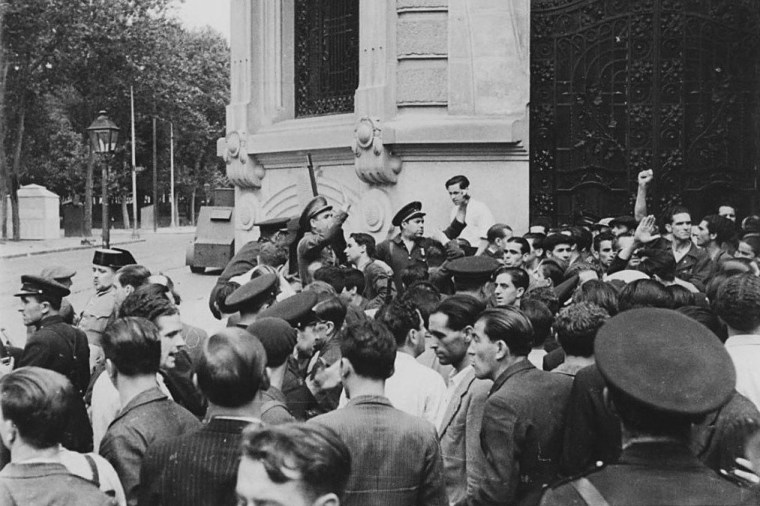
By dawn on 20 July, Republican artillery opened fire on the Montaña Barracks. The guns positioned during the night now began shelling the complex at close range. Each explosion echoed across the western districts of the city, drawing more spectators and volunteers towards the scene. Aircraft from Getafe and Cuatro Vientos also appeared overhead. Their attacks caused relatively little physical damage compared to the artillery, but their presence reinforced an uncomfortable reality for the defenders: they were completely isolated. Shellfire damaged sections of the barracks and casualties mounted among the defenders. A bomb exploding in an internal courtyard caused further losses. General Fanjul and Colonel Moisés Serra were both wounded during the fighting. More damaging than the physical destruction, was the effect upon morale. The belief that the uprising in Madrid could still succeed was becoming increasingly difficult to sustain. At some point around 10:30 a.m., events took a dramatic turn when a white flag appeared at one of the windows overlooking Ferraz Street.
The reaction outside was immediate. After hours of bombardment and tension, many of those surrounding the barracks interpreted the signal as an offer to surrender. Men emerged from cover and some moved cautiously towards the building, but machine-gun fire swept the approaches. The exact sequence of events remains disputed to this day.
The appearance of the white flag was reportedly repeated more than once. Each time hopes of surrender rose, only for firing to resume. Whether this resulted from confusion within the garrison or conflicting orders among the defenders mattered little to the besiegers. Anger rapidly replaced caution. By late morning, increasing numbers of Republicans no longer wanted a surrender, and shortly before noon, Republican forces prepared to storm the barracks.
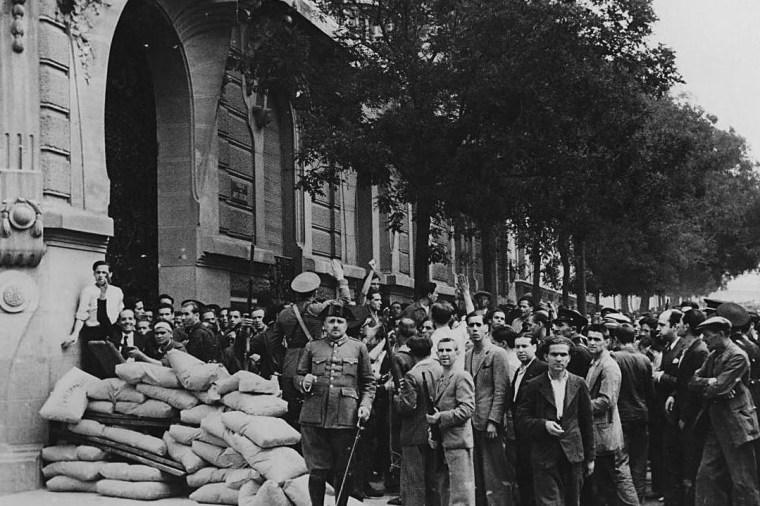
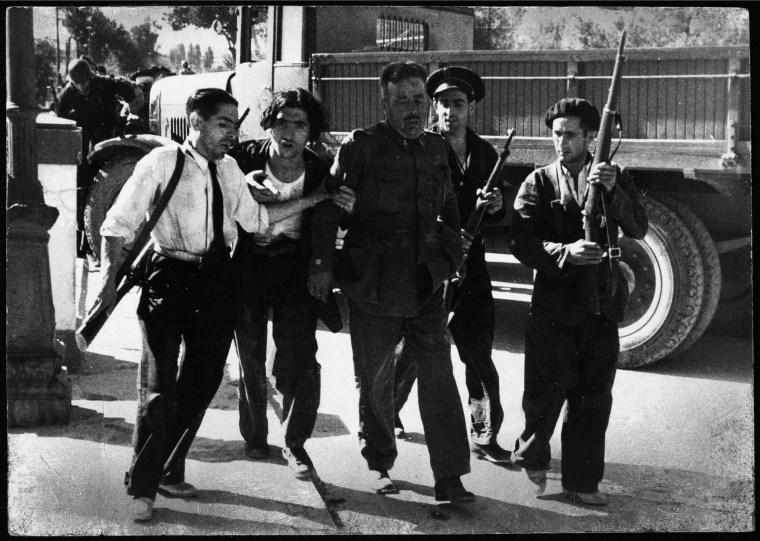
Accounts differ on the precise sequence of events. Some witnesses described sections of the outer defences collapsing under artillery fire. Others emphasised the role played by Assault Guards and Guardia Civil who pushed forward through the entrances once resistance began to falter. Whatever the exact route, by midday armed Republicans were inside the barracks. Once the perimeter was breached, organised resistance quickly disintegrated. Fighting continued in courtyards, corridors and stairwells, but there was no longer any realistic prospect of holding the position. As news spread that the barracks had been entered, large numbers of armed civilians rushed towards the gates. Assault Guards and loyal soldiers attempted to establish control, but the speed of the collapse made this difficult. Crowds poured into the courtyards alongside militia groups and security forces. In several parts of the barracks, defenders attempted to surrender while others continued fighting. Some threw away their weapons and sought protection. Amid the confusion, it was often impossible to determine who had surrendered, who was still resisting and who was attempting to escape. Many defenders were killed during the final fighting. Others died after the organised resistance had ended. Contemporary accounts describe scenes of panic, revenge and confusion as armed civilians confronted men they regarded as traitors responsible for launching a military Nationalist rebellion against the Republic. The killings that occurred inside the barracks remain among the most controversial episodes of Madrid’s July fighting.
Colonel Moisés Serra was killed during the fall of the position, though General Joaquín Fanjul survived. Despite the chaos surrounding the capture of the barracks, he was taken into custody and later tried by a Republican military court and executed in August 1936. Precise casualty figures have always been difficult to establish. Arturo Barea witnessed a number of rebel officers who gathered in a mess room and then shot themselves, while some Falangist and monarchist volunteers wearing civilian clothes were able to slip away in the confusion. Several hundred people are believed to have died during the siege, bombardment and final assault. Many of the dead were defenders, although Republican casualties were also significant. Historians differ over the exact numbers, but there is broad agreement that the fighting around the Montaña Barracks was one of the bloodiest episodes of the uprising in Madrid. Of the 145 rebel officers who had been at the Montaña barracks, 98 died in the fighting, were killed after surrender, committed suicide, or were subsequently executed. Anywhere between 200 – 1,000 soldiers were killed inside the barracks, but the number so Republicans killed remains unknown, though was considerably smaller than the rebels’ losses.
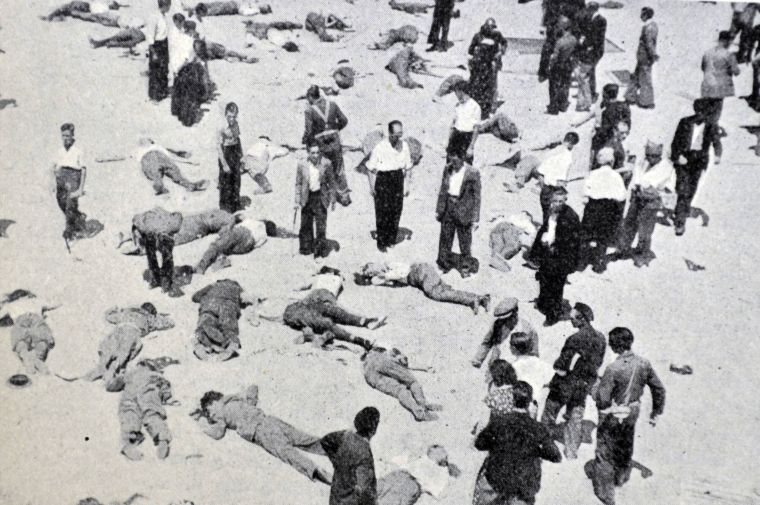
The capture of the barracks also solved the problem that had helped create the siege in the first place. Inside were the rifle bolts desperately needed by the Republican forces. In the hours following the victory, weapons and military supplies were removed and distributed. Whether all of the bolts remained inside when the barracks fell remains disputed by historians, but there is no doubt that the Republican victory greatly increased the quantity of arms available to the defenders of the capital.
The significance of the victory extended far beyond the barracks themselves. The Republic retained control of its capital, its ministries, its communications network and much of the administrative machinery of the Spanish state. The conspirators had hoped that Madrid would join the Nationalist rebellion and provide legitimacy to the military uprising. Instead, the capital remained firmly in Republican hands. The victory belonged partly to loyal officers, Assault Guards and Guardia Civil. Yet it was equally the result of mass mobilisation. Workers, trade unionists, political activists, nurses, messengers, drivers, labourers and thousands of ordinary Madrileños, men and women, had participated in the defence of the Republic.
During the afternoon of 20 July, crowds continued to gather around the ruined barracks. The building that had briefly served as the centre of the Nationalist rebellion in Madrid was transformed into a symbol of Republican victory. Photographs of the shattered complex circulated widely, while visitors travelled to the site to witness the destruction for themselves. In the years that followed, the ruins would remain one of the most powerful reminders of the opening days of the Civil War. The decision to arm the population had fundamentally altered the balance of power within the city. Thousands of rifles remained in the hands of workers’ organisations. CNT and UGT headquarters continued operating as centres of mobilisation. Political parties, trade unions and neighbourhood committees exercised growing influence over security, transport and local administration. Across Madrid, new militia units continued to form. Volunteers arrived daily at union offices, party headquarters and recruitment centres. Many hoped to leave immediately for the fronts developing beyond the capital. Others remained in the city, serving as guards, patrolmen and organisers. The military columns that would soon depart Madrid for the Guadarrama mountains and other fronts began taking shape during these days, though many were still poorly equipped and lacked formal training.
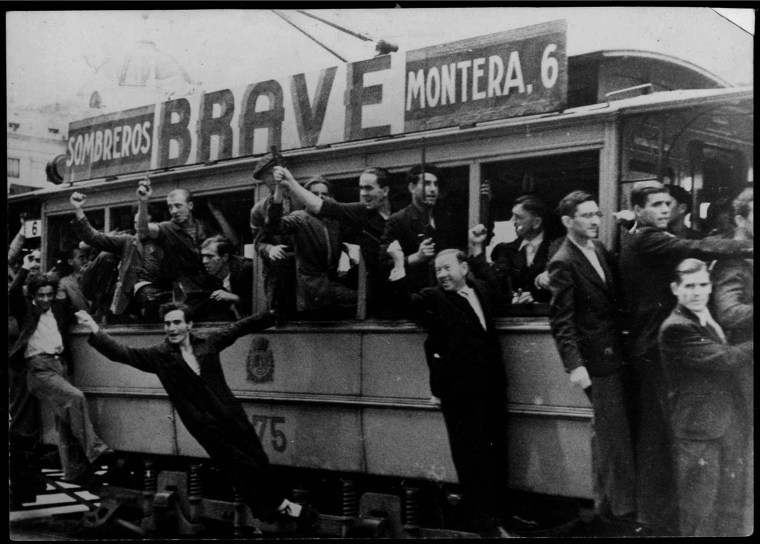
During the final weeks of July, churches, convents and religious institutions were attacked across the capital. Some were burned, looted or occupied by political groups. For many on the left, the Catholic Church was associated with conservative politics, privilege and support for the military Nationalist rebellion. Others attempted to protect religious buildings or clergy from attack. The destruction reflected both long-standing political tensions and the collapse of normal authority during the first weeks of the war. Madrid’s prisons also became a focus of attention. Political prisoners associated with left-wing organisations had already been released during the crisis, while increasing numbers of suspected supporters of the uprising now entered the prison system themselves. The distinction between legal justice, political revenge and revolutionary action often became blurred. Yet despite the uncertainty, many Republicans viewed the final days of July with a sense of achievement.
The Republican victory in Madrid also quickly acquired symbolic significance. Politicians, trade union leaders and activists celebrated the defeat of the uprising. Figures like Dolores Ibárruri used speeches and broadcasts to portray the defence of Madrid as proof that the Nationalist rebellion could be resisted. At a time when Republicans elsewhere were receiving reports of defeats and retreats, the fall of the Montaña Barracks offered a powerful message of hope.