


Note: Note: in 1936, Castilla La Mancha and Madrid did not exist as autonomous communities, rather they were together as part of Castilla La Nueva (New Castile). Castilla La Nueva included Madrid, Guadalajara, Toledo, Cuenca, and Ciudad Real. Today, as per the map above, Madrid is separate to Castilla La-Mancha, but Albacete is included (Albacete was part of Murcia until 1983).
- Madrid and Castilla La Nueva
In the opening minutes of 18 July, numerous off-duty officers, informed through military channels about developments in Morocco, report to regional headquarters and offer their services, and the Prime Minister Santiago Casares Quiroga moved to block all information coming from Morocco. Newspaper offices were raided by 1:00am to stop special editions from being printed. But El Socialista managed to dodge censorship and published the horrifying truth of the uprising at 6:00am.
General Miguel Núñez de Prado y Susbiela was one of the most important Republican officers during the opening hours of the Civil War. Unlike many senior Spanish generals in July 1936, Núñez de Prado remained loyal to the Republic. On 18 July he was serving in Madrid when the government desperately searched for officers it believed it could trust. Núñez de Prado telephoned Tablada air base near Seville just after midnight and ordered bombs and explosives prepared for aircraft arriving from Madrid. He then ordered naval aircraft relocated from Murcia to Málaga in preparation for stopping troops reaching Spain’s mainland.
It had been a busy night. At 1:00am, Casares Quiroga ordered the dismissal of General Virgilio Cabanellas Ferrer (Commander of the 5th Organic Division in Zaragoza and suspected conspirator). He is replaced by General José Miaja Menant (senior army officer considered loyal to the Republic). The order was intended to remove a potentially unreliable commander before the uprising spreads further. At 4:45am, General Carlos de la Cruz Boullosa (Under-Secretary of the War Ministry and one of the government’s senior military administrators) telephoned Las Palmas in the Canary Islands and demanded to speak with General Francisco Franco, who refused to answer. By that time, Franco was meeting rebel officers and issuing final instructions for the military revolt. At 5:30am, he called Franco again and spoke to Colonel Francisco González Peral (senior officer in the Tenerife garrison), who assured Madrid that the troops remain completely loyal, this being the opposite of the truth.
At 7:00am, José Giral Pereira (Republican Minister of the Navy) Giral orders the destroyers Churruca and Dato to open fire on rebel positions in Ceuta. Their officers refuse, marking the first act of naval disobedience. Just ten minutes later, a naval radio operator near Madrid intercepted a coded message from Franco to Cartagena. Instead of transmitting it, he alerts senior ministry officials. He then begins warning naval vessels about the conspiracy. At 7:30am, Juan Moles Ormella (Republican Interior Minister) phoned Santa Cruz demanding to speak with Franco. This results in telephone communications with Tenerife being cut off.
Members of both the UGT and CNT had spent weeks discussing the possibility of a military uprising. Throughout the day, delegations from labour organisations demanded that the government distribute weapons to the people, but their requests were rejected. Casares Quiroga remained convinced that loyal military units and security forces could defeat the rebellion without arming civilians. The government feared that once weapons were distributed, control might pass from the state to revolutionary organisations, but to many workers gathered outside those same buildings, it appeared dangerously naïve. Juan Simeón Vidarte Franco (PSOE deputy and senior Socialist Party organiser) and Andrés Cordero Pérez (PSOE deputy and prominent Socialist politician) met with the Prime Minister Santiago Casares as early at 9:30am and weapons were refused. Inside the government, confidence was beginning to fracture. Socialist figures such as Francisco Largo Caballero and Indalecio Prieto argued that extraordinary measures would be necessary if the Republic was to survive.
Casares Quiroga had not released the government’s first official communication until 8:30am and told Spaniards the uprising was limited to parts of Morocco and that the government had the situation under control. Within half an hour, General Sebastián Pozas Perea (Inspector-General of the Guardia Civil and a loyal Republican officer) ordered Guardia Civil units from several provinces to move toward Madrid, unwittingly causing a power vacuum in small towns.
In the city, officers belonging to the Unión Militar Republicana Antifascista (UMRA), a clandestine organisation of Republican military officers, begin distributing small numbers of firearms to trusted anti-coup activists, primarily in Madrid. The quantities are limited and fall far short of what workers’ organisations are demanding. Rebel officers, particularly in the Madid Montaña Barracks were already looking to take Madrid, and the Republicans were unprepared.
The midday government press conference went out without the Prime Minister and almost no information was shared, only adding to the confusion around the capital. Within the hour, General Miguel García de la Herrán (commander of Madrid’s First Infantry Brigade and participant in the military rebellion) met with General Joaquín Fanjul Goñi Álvarez-Rementería (senior army officer and leading rebel in Madrid). The two men agreed that the uprising in Madrid would begin later that evening if developments elsewhere continued to favour the rebels.
Just before 3:00pm, a radio announcement told the public all was well, just as Prime Minister Casares Quiroga offered his resignation to Manuel Azaña Díaz (President of the Spanish Republic) after receiving the reports of the successful uprising in Seville. At the same time, Casares Quiroga ordered General Luis Martínez Varela (Republican Director-General of Security and trusted government officer) to obtain 45,000 rifle bolts from the Montaña Barracks to prevent soldiers from taking the city. Naturally, the request was refused by commander of the Montaña Barracks Colonel José Serra Bartolomé.
As continuing communications spread round Madrid, the deputies of the PSOE (Spanish Socialist Workers’ Party) gather in the Cortes, Spain’s national parliament, under the leadership of Indalecio Prieto Tuero, one of the Republic’s most influential Socialist politicians, and many demand the replacement of Casares Quiroga and call for the formation of armed militia patrols to defend the Republic. Socialist representatives again demand that weapons be distributed to workers’ organisations, but the Prime Minister kept refusing. The debate continues for approximately ninety minutes, and at 5:30pm, the government released a short messages denying rumours that a state of war has been declared throughout Spain and insisting that government authority remains intact.
By 6:30pm, Prime Minister Casares Quiroga offered his resignation again to President Azaña Díaz, which was accepted, and Azaña had to scramble to reform a new government. Meanwhile, the PSOE and PCE issued a joint message supporting the government and called workers to prepare for resistance, while the UGT declared a general strike wherever rebellion had occurred. The official communication channels continued to repeat that every province of Spain was still loyal to the Republic despite uprisings, both lying to the people, and accidentally admitting mainland Spain was under attack. Government communiqué claims all provinces remain loyal and that the uprising in Seville is being defeated. This is the first official admission that rebellion has spread to mainland Spain.
At around 8:00pm, General José Miaja Menant (commander of the First Military Division in Madrid) refused approaches from military rebels seeking his support, but he also took no actions against them, effectively allowing the coming violence to be prepared. However, Lieutenant Colonel Julio Gil Ruiz (Republican for Ministry of the Interior) ordered firearms distributed to the people. Hundreds of carbines are handed to left-wing activists and trade union members. Armed civilians began appearing on the streets of Madrid for the first time, more than 12 hours after the initial calls went out.
President Manuel Azaña quickly appointed Diego Martínez Barrio, a moderate Republican, to form a new government, and it became clear to all that the Prime Minister had lost his country, leaving Madrid and Spain without any effective leadership. Constant inaction saw General Joaquín Fanjul Goñi (senior army officer, military conspirator and future commander of the uprising in Madrid) move to the Montaña Barracks, places the garrison on alert in preparation for rebellion without resistance, and prepare to take Madrid alongside General Miguel García de la Herrán (commander of Madrid’s First Infantry Brigade).
It was clear Madrid was about to battle for her survival, and just before midnight, Dolores Ibárruri Gómez (La Pasionaria) herself delivered a radio broadcast urging resistance to the uprising. Contemporary versions of the speech include the phrase ¡No pasarán! which would become one of the most famous slogans of the Republican cause. At the same time, Prime Minister of less than two hours, Diego Martínez Barrio, phones General Emilio Mola, the head of the uprising in Pamplona, and attempted a final compromise that might prevent civil war. Mola rejected the proposal as by then, events had already moved beyond the point where political agreements could easily restore the situation.
In nearby Toledo, as reports throughout the day of the uprising in Morocco spread, Republican officials had paid close attention to the behaviour of local military commanders. The central military figure was Colonel José Moscardó (Nationalist rebel and commander of the Alcázar garrison). Moscardó had maintained outward loyalty to the Republic, but Republican authorities increasingly suspected that he sympathised with the military rebellion. The city’s Republican administration, led by Manuel María González López (Republican Civil Governor of Toledo), attempted to maintain order while gathering information. By midnight, Toledo remained under Republican authority, but confidence was rapidly evaporating. The city had not yet chosen its fate, yet the growing mistrust between Republican authorities and the military garrison suggested that confrontation was becoming unavoidable.
Guadalajara remained under Republican control and saw none of the dramatic fighting occurring in cities such as Seville or Barcelona. Local authorities monitored developments while political parties, trade unions and security forces prepared for the possibility that the military uprising might spread into the province, but the day passed without a successful rebel challenge to government authority.
Cuenca remained under Republican control and experienced none of the major fighting that erupted in parts of Spain. The military uprising failed to gain immediate support in the province, allowing civil authorities and loyal security forces to maintain order while news from Madrid, Seville and Zaragoza was closely followed. Although political tensions were high and local organisations began preparing for the possibility of wider conflict, Cuenca passed through the opening days of the war relatively quietly. By the end of July, both the city and province remained securely within the Republican zone and connected to the government-held territories of central and eastern Spain.
Throughout July 1936, Ciudad Real remained under Republican control. The coup failed to secure either the provincial capital, Ciudad Real, or the wider province, where Socialist, Republican and trade-union organisations retained significant influence. Local military officers who supported the rebellion were unable to establish authority, while loyal security forces, workers’ organisations and newly formed militias helped maintain control for the Republic. Although the province did not witness the large-scale urban battles seen in cities such as Barcelona, Zaragoza or Seville, tensions remained high as arrests were made, political opponents were monitored, and volunteers mobilised for the front. By the end of July, Ciudad Real formed part of the continuous Republican-held territory stretching south from Madrid and would later become an important rear-area province supporting Republican military operations in central Spain.
- Zaragoza
For supporters of the Republic, Zaragoza in Aragón was one of the great lost opportunities of July 1936. Few cities better demonstrate how the military uprising succeeded because Republicans were neutralised before they could act. By the summer of 1936, Zaragoza was one of the strongest centres of organised labour in Spain. The city was a major railway hub, an industrial centre, and the heartland of the anarchist movement in Aragón. The CNT had tens of thousands of members in the city and surrounding region. Socialist organisations, Republican parties and trade unions were deeply rooted in working-class neighbourhoods. Unlike Pamplona, where the political right enjoyed broad support, Zaragoza contained a large population that was prepared to defend the Republic if given the opportunity.
The problem was that the city’s fate rested with its military commander. That commander was General Miguel Cabanellas (Nationalist rebel and commander of the V Organic Division). Unlike some officers elsewhere who hesitated or concealed their intentions until the last moment, Cabanellas had already committed himself to the military rebellion. Although he had once opposed the monarchy and had even supported the establishment of the Republic in 1931, by July 1936 he was fully involved in the plot organised by General Emilio Mola (Nationalist rebel and principal architect of the uprising in northern Spain).
Many labour activists quickly concluded that a nationwide military uprising was underway. Representatives of the CNT, UGT and Republican organisations demanded weapons. Zaragoza’s strategic importance was their key railway links connecting Madrid, Barcelona, the Basque Country and northern Spain. Whoever controlled Zaragoza would possess a major advantage in any wider conflict.
One of the most important events of the day occurred away from public view. The Republican government had attempted to remove Cabanellas from command by sending General Miguel Núñez de Prado (Republican Director-General of Aeronautics) to Zaragoza. Núñez de Prado’s mission was to assume authority and secure the loyalty of the garrison before the rebellion could openly declare itself, but when Núñez de Prado arrived, he was arrested almost immediately by officers loyal to the rebellion. Instead of replacing Cabanellas, he became the prisoners’ prisoner. He was subsequently transferred to Pamplona, where he would later be executed by Nationalist forces. For the Republic, his arrest represented a serious warning that the military command in Zaragoza was already lost. Most residents of the city knew nothing of this at the time.
Throughout 18 July and into the following hours, known Republican activists, labour leaders and political opponents of the rebellion were identified and monitored. Some would be arrested before the uprising was publicly proclaimed. Others would be unable to organise once martial law was declared. By midnight on 18 July, Zaragoza technically remained under the authority of the Republic. The formal declaration of martial law would not occur until the following day. Yet in reality, the decisive struggle had already been lost. The military command was firmly in rebel hands, the government’s chosen representative had been arrested, and the organisations most capable of resisting were being systematically isolated.
The importance of Zaragoza would become clear in the weeks and months that followed. The city became one of the Nationalists’ most important strongholds in north-eastern Spain and a crucial base for operations throughout Aragón. Just as importantly, its fall deprived the Republic of a major industrial and railway centre at the very beginning of the war.
Meanwhile in nearby Huesca, locals occupied a difficult position on the opening day of the uprising. Located in Aragón but close to Navarre, the city was exposed to the influence of regions where the rebellion was gaining momentum. Republican supporters followed developments with growing alarm as reports from Zaragoza and Pamplona became increasingly troubling. The labour movement in Huesca was smaller than in Zaragoza, but Republican and trade union organisations remained active. By midnight, authority formally remained Republican, though the balance was already shifting.
Also, for Republicans in nearby Teruel, the first day of the uprising passed without major violence, but not without concern. News from Zaragoza and other parts of Aragón spread rapidly, creating anxiety among local officials and labour activists. The city’s relative isolation meant that information often arrived slowly and was difficult to verify. Republican institutions remained in place, and no dramatic military confrontation occurred.
- Barcelona
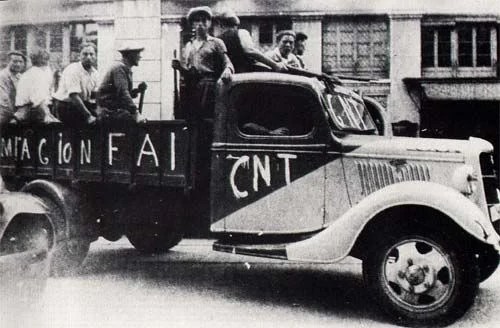
For many people in Barcelona, the military uprising did not come as a surprise. Barcelona was unlike most Spanish cities, as the stronghold of the CNT, the anarcho-syndicalist trade union whose membership in Catalonia numbered in the hundreds of thousands. Alongside the CNT stood the UGT, the POUM, Republican parties, Catalan nationalists and a wide range of left-wing organisations. The city possessed an enormous network of politically active workers who had spent years discussing the possibility of a confrontation with the army.
As the news from Morocco spread, attention quickly turned to the local military garrison. Barcelona contained several major barracks, including the infantry barracks at Pedralbes, the cavalry barracks at Montesa and the large military installations around the city outskirts. Rumours circulated that many officers intended to join the rebellion. Few knew precisely when they would move, but there was little doubt among labour activists that a confrontation was approaching.
The responsibility for maintaining order rested with Lluís Companys (Republican President of the Generalitat of Catalonia). Throughout the day, representatives of the CNT and other organisations demanded weapons from the Catalan government. They argued that if the army was preparing to rise, workers needed rifles immediately. Companys was sympathetic to the threat but cautious about the solution. Like many Republican leaders elsewhere in Spain, he feared that widespread distribution of arms might destroy governmental authority and place power in the hands of revolutionary organisations, and as a result, most requests were refused.
Unlike Madrid, where people largely waited for government action, Barcelona’s labour movement began preparing independently. CNT activists relied on their own intelligence networks. Union members working on the railways, in the docks and in public services monitored military movements throughout the day. Information passed rapidly between neighbourhood committees, workplaces and union offices. Reports of unusual activity around barracks were collected and shared. Vehicles were quietly assembled for possible use in street fighting. Nothing would enough to defeat the army, but it demonstrated that many Barcelonans had already concluded that they might soon have to defend the city themselves.
The arrival of foreign visitors for the People’s Olympiad added another unusual dimension to the crisis. Several thousand athletes, journalists and supporters from across Europe were already in Barcelona for the anti-fascist sporting event that was due to open the following day. As rumours of military rebellion spread, many found themselves trapped in a city preparing for conflict rather than celebration. While workers organised and politicians debated, the rebels continued their own preparations. The rebellion in Barcelona was scheduled to begin during the early hours of 19 July. What the rebels did not fully appreciate was that secrecy had largely evaporated.
The regions of Girona, Lleida, and Tarragona remained under the authority of the Republican government and the Generalitat of Catalonia. News of the military uprising prompted local officials, trade unions and political organisations to prepare for possible unrest, but the rebellion failed to gain significant support in most of the region. As events unfolded in Barcelona, local military commanders largely waited to see the outcome before taking action. Following the defeat of the uprising in the Catalan capital on 19–20 July, any remaining support for the rebellion in Girona, Lleida and Tarragona quickly collapsed, leaving the three provinces firmly within Republican-controlled Catalonia for the remainder of the month.
- Valencia
Valencia had not fallen to the military uprising, no rebel columns had seized the centre, no martial law had been proclaimed. Valencia was Spain’s third-largest city and one of the Republic’s most important urban centres. It possessed a large industrial workforce, a major port, powerful trade unions and a strong tradition of Republican politics. Both the UGT and CNT enjoyed substantial support, while Republican parties maintained deep roots in the city. If civil war came, Valencia was expected to be one of the Republic’s principal strongholds.
Union offices became centres of discussion and information gathering. Labour leaders attempted to determine which military commanders could be trusted and whether Valencia’s garrison intended to join the uprising. Delegations demanded weapons from the authorities. Many workers believed the Republic was facing an organised military rebellion and feared that hesitation would prove fatal. At the centre of the military situation stood General Fernando Martínez Monje (Republican commander of the III Organic Division). Unlike several commanders elsewhere in Spain, Martínez Monje did not immediately join the rebellion. His loyalty to the government helped prevent the rapid collapse seen in cities such as Seville. But his position was complicated by the presence of officers who were sympathetic to the rebellion. The most important of these was General Manuel González Carrasco (Nationalist rebel). Mola had selected Carrasco to lead the uprising in Valencia, believing he could rally the city’s military forces to the Nationalist cause. Yet when the moment approached, Carrasco proved indecisive.
Valencia also benefited from divisions among its opponents. One of the rebels’ greatest weaknesses was the lack of broad civilian support. Although the political right remained influential, it lacked the kind of mass mobilisation available to Mola in the north. Some conservative leaders who might have been expected to support the uprising instead adopted cautious positions as events unfolded. This left the rebels in an awkward position. They possessed sympathisers within the military but lacked the momentum that had driven the rebellion forward elsewhere, and the rebels had missed their best opportunity. The uprising depended on speed and surprise. By midnight, Valencia remained under Republican authority.
The significance of this outcome extended far beyond the city itself. Valencia’s port, industries and population made it one of the Republic’s most valuable assets. Every day the city remained loyal strengthened the government’s position. In the months ahead, Valencia would become even more important, eventually serving as the capital of Republican Spain after the government left Madrid.
Just north of Valencia, Castellón experienced the first day of the uprising much like its neighbour. The city possessed strong Republican traditions and active trade unions. Workers gathered in political offices and union halls throughout the day, demanding information and debating the significance of the reports arriving from elsewhere in Spain. By the end of the day, Castellón remained loyal to the Republic and would become part of the Republican-held Mediterranean corridor.
Alicante remained concerned, alert and increasingly aware that events elsewhere in Spain might soon reach the Mediterranean coast. The city possessed strong Republican traditions and active labour organisations. It was a major port, a gateway to the Mediterranean and an important connection between Republican territories. By the end of the day, Alicante remained loyal to the Republic. In retrospect, this loyalty would prove highly significant. The city would remain Republican throughout almost the entire war and would become one of the final refuges for thousands fleeing Nationalist victory in 1939.
- Balearic Islands
The situation in the Balearic Islands off the coast of Valencia remained politically divided. Mallorca, Ibiza and Formentera generally fell under Nationalist control, while Menorca remained loyal to the Republic. The key figure was General Manuel Goded (Nationalist rebel and commander in the Balearics). Goded was one of the most senior officers involved in the uprising and had been assigned a crucial role in the rebellion. His task was not merely to secure the islands but to move on to Barcelona once the rebellion began. Mallorca offered little organised opposition. The military moved quickly to establish control, and the island largely passed into Nationalist hands by 19 July. The capture of Mallorca was important, as strategically, it provided the Nationalists with a central Mediterranean base. Politically, it freed Goded to carry out the next stage of the rebellion. Later that morning on 19 July he departed for Barcelona, believing that the uprising there was succeeding, but fortunately, he was wrong.
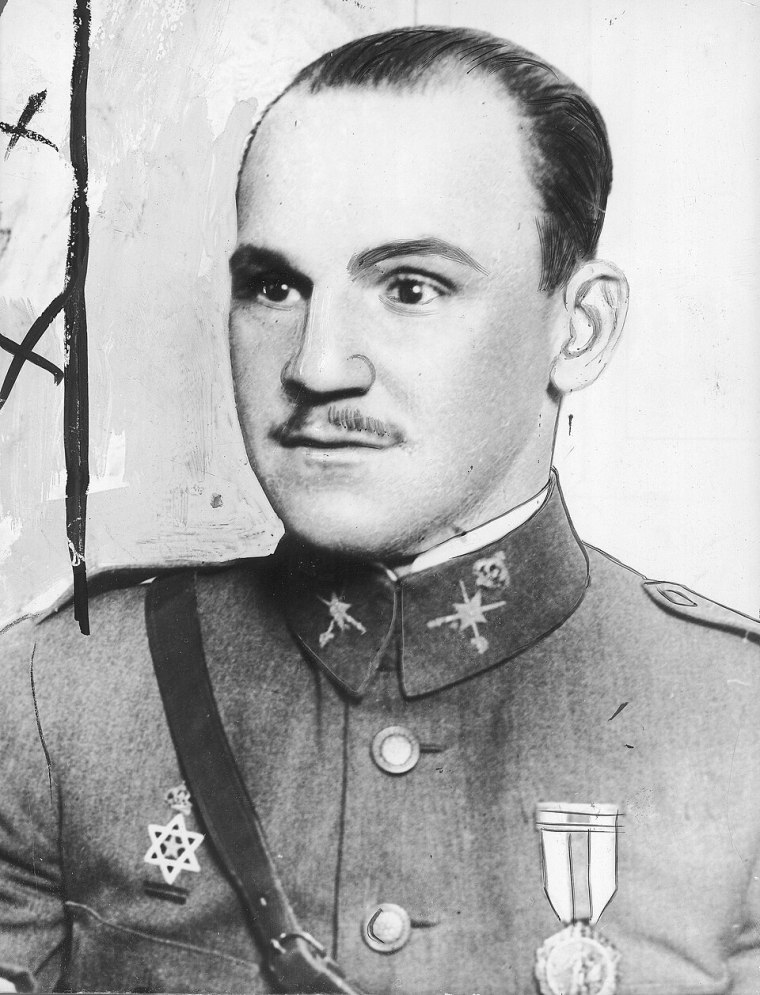
While centres in each province either fell prey to the Nationalist rebels or remained free, it did not mean an entire province came under the control of the victors. Urban and rural loyalties could be, and often were very different. In the early days and weeks of the war, individual areas and villages would have remained starkly opposed to one another, and arrests and killings would be constant.

