
By 19 July 1936, it had become increasingly clear that the military uprising was the beginning of a full civil war. Across Spain, soldiers, police, workers’ militias, political parties, and ordinary civilians fought for control of streets, barracks, railway stations, ports, and government buildings. The fate of the Second Spanish Republic now depended largely upon whether the major population centres could hold out against the uprising.
In Madrid, the Republican government entered crisis. Prime Minister Santiago Casares Quiroga had resigned after criticism that he had failed to react decisively enough to the military conspiracy. His successor, Diego Martínez Barrio, briefly attempted to form a compromise government that might negotiate an end to the uprising before Spain collapsed into full-scale war. The attempt failed almost immediately. By this stage, mistrust and violence had already gone too far.
José Giral y Pereira then became Prime Minister and made one of the most consequential decisions of the war’s opening phase, authorising the distribution of arms to civilians. Rifles were handed to Madrid’s workers’ organisations, political parties, and trade union groups, especially the Confederación Nacional del Trabajo and the Unión General de Trabajadores. The decision helped prevent the collapse of the Republic in several major cities, but it also fundamentally changed the nature of power in Republican Spain. Armed militias now existed alongside, and increasingly independent from, traditional state authority.
Tensions continued escalating around the Madrid Montaña Barracks, where rebel officers and troops under General Joaquín Fanjul Goñi remained fortified. Crowds gathered outside demanding action against the rebels. Throughout the day, fighting and sporadic exchanges of fire occurred around the Montaña Barracks. Loyal security forces, armed workers, and crowds of civilians increasingly surrounded the complex while government authorities attempted to secure its surrender. By nightfall, a major confrontation appeared inevitable. Read all about Madrid’s uprising in depth HERE
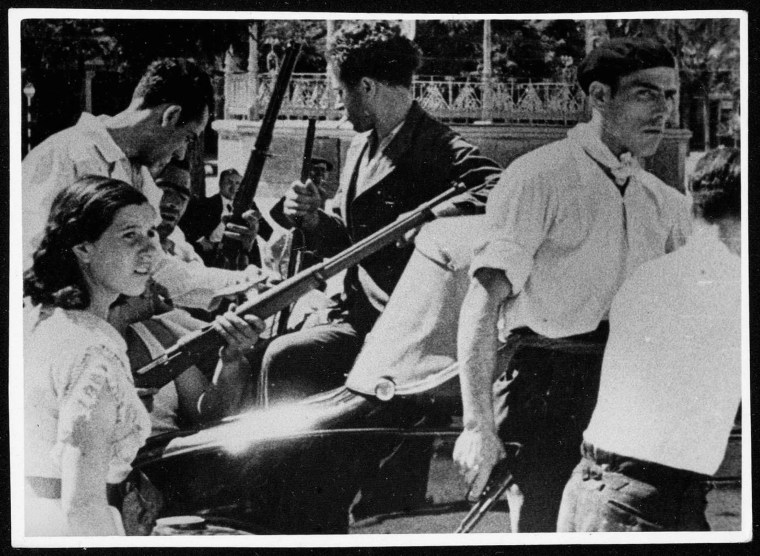
The most dramatic fighting took place in Barcelona. Rebel officers attempted to seize control of the city by occupying strategic points and moving troops through central streets before organised resistance could form. Instead, they encountered determined opposition from workers’ militias, Assault Guards, loyal Guardia Civil, and police units. Heavy fighting broke out across Barcelona as barricades appeared throughout the city. Barcelona had been preparing to host the People’s Olympiad, an international anti-fascist sporting event organised as an alternative to the Berlin Olympics under Nazi Germany. Athletes from numerous countries had already arrived when fighting erupted in the city. The event was cancelled almost immediately as Barcelona descended into armed conflict.
One of the key rebel commanders was General Manuel Goded, one of the senior conspirators in the military plot. Goded flew from Mallorca to Barcelona believing the uprising would succeed quickly, but by the time he arrived the situation was already turning against the rebels. Under pressure, he later broadcast a radio message urging remaining rebel troops in Barcelona to surrender. His defeat was one of the most significant early setbacks suffered by the uprising. Republican forces and armed workers also secured several major military installations, including the Sant Andreu Barracks. The capture of large stores of rifles and ammunition transformed the balance of power in Catalonia. Thousands of weapons were distributed to militia organisations, allowing new volunteer columns to begin forming almost immediately. Read all about Barcelona’s uprising in depth HERE
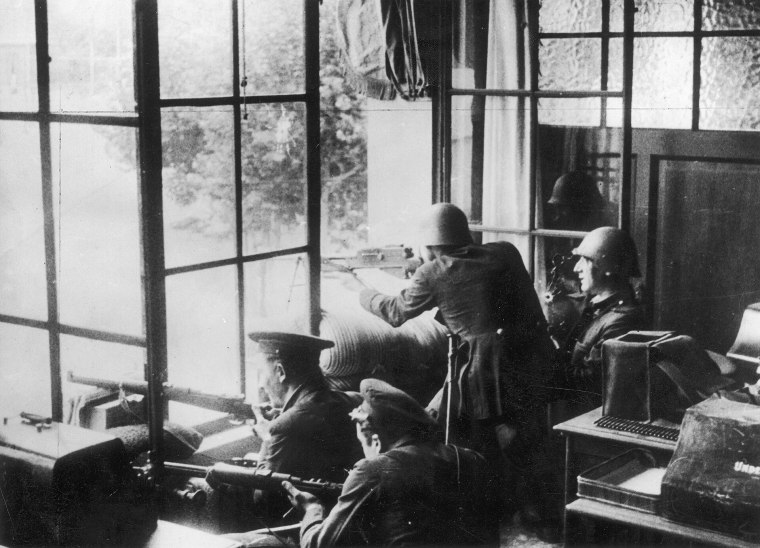
In Seville, General Gonzalo Queipo de Llano tightened his control over the city. Rebel forces consolidated strategic positions while repression intensified against trade unionists, left-wing activists, and Republican supporters. Seville’s capture gave the rebels a critical foothold in southern Spain. Read about Seville’s collapse in depth HERE
In Zaragoza, the uprising remained successful despite the city’s large anarchist movement. Workers there had lacked sufficient access to weapons before the army secured control. The fall of Zaragoza proved strategically important because it linked rebel territories across northern Spain and isolated Republican Catalonia from parts of the interior. Read about Zaragoza’s collapse in depth HERE
In Valencia, the Republic retained control, but workers’ militias increasingly dominated the streets as fears of further military uprisings spread. The city was moving toward the same mixture of anti-fascist mobilisation and revolutionary tension already visible in Madrid and Barcelona.
In the Basque Country and Asturias, the situation remained mixed but generally more favourable to the Republic. Bilbao stayed loyal, supported by labour movements and Basque nationalists, while Asturias’ mining communities mobilised strongly against the uprising. Nearby Navarre remained firmly in rebel hands, where conservative Carlist militias actively and openly supported the military rebellion.
In Spanish Morocco, General Francisco Franco arrived in Tetuán and formally took command of the Army of Africa. This was one of the most important developments of the opening days because these troops, including the Spanish Foreign Legion and Moroccan Regulares, were among the most experienced fighting forces available to the rebels. If Franco could transport them into mainland Spain, the balance of the war could shift dramatically.
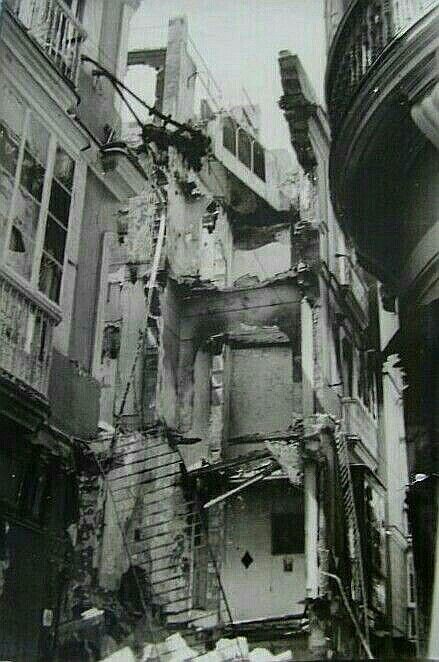
In Cádiz, the military uprising continued to gain ground after rebel officers moved against the Republican authorities. The city occupied a position of enormous strategic importance, sitting directly opposite Spanish Morocco and controlling one of the principal gateways between North Africa and mainland Spain. During the first hours of the rebellion, army officers, Guardia Civil, and right-wing supporters seized key military and administrative positions. Workers’ organisations and Republican supporters attempted to organise resistance, but they possessed few weapons and little ability to challenge trained troops.
Fighting and arrests accompanied the takeover. Republican officials, trade union members, and known left-wing activists became immediate targets as rebel control expanded through the city. The docks, railway facilities, government offices, and communications centres were gradually secured. By 19 July, organised resistance had largely been broken, though arrests and searches continued. The victory in Cádiz gave the rebels one of the most valuable ports in Spain. Together with their control of Spanish Morocco, it created the foundations for the later transfer of the Army of Africa to the mainland, a development that would profoundly influence the course of the war.
For many residents, the consequences were immediate. The defeat of the Republic in the city was followed by repression directed against labour activists, political opponents, and individuals suspected of loyalty to the government. Like many provincial cities that fell quickly to the uprising, Cádiz would experience a wave of arrests and executions in the weeks that followed, long after the fighting itself had ended.
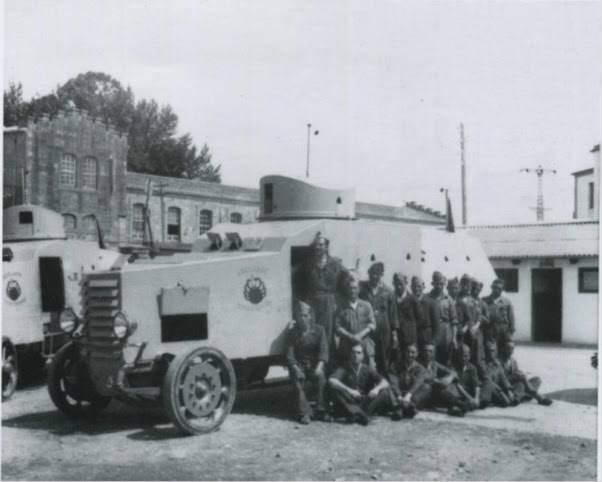
Events in Ferrol highlighted the complex struggle taking place within Spain’s navy. The city was home to one of the country’s most important naval arsenals and shipbuilding facilities. Warships were under construction in its docks, large stores of weapons and ammunition were held within the base, and thousands of sailors, dockworkers, naval personnel, and civilian employees depended upon the naval industry for their livelihoods. When news of the military uprising arrived, the situation quickly became confused and dangerous. Many senior naval officers supported the rebellion, while numerous sailors and civilian workers remained loyal to the Republic. As tensions escalated, armed confrontations broke out between opposing factions. Sailors attempted to organise resistance, workers sought weapons, and Republican supporters tried to prevent the naval base from falling under rebel control.
The rebels ultimately secured Ferrol after gaining control of key military installations and suppressing opposition within the city. The victory gave them possession of one of Spain’s most valuable naval facilities, including shipyards, arsenals, and vessels under construction. For local Republicans, trade unionists, and left-wing activists, defeat brought swift consequences. Arrests began almost immediately, followed by a wave of repression that would continue in the weeks ahead.
The struggle for Ferrol also reflected a wider pattern emerging across Spain. While many naval officers joined the rebellion, large numbers of sailors did not. Throughout the fleet, crews challenged their commanders, arrested suspected conspirators, and in some cases seized control of their ships. As a result, the Republic retained much of the navy despite losing important bases like Ferrol. This contradiction would become one of the defining features of the war’s opening weeks: the rebels controlled key naval installations on land, while many of the ships themselves remained outside their control. One of the most significant developments of the day occurred at sea. Although many senior naval officers supported the military uprising, large numbers of sailors remained loyal to the Republic.
By the evening of 19 July, neither side had secured the rapid victory it expected. The rebels controlled large parts of conservative rural Spain and several important military zones, while the Republic retained many of the largest cities, industrial centres, and ports. More importantly, political authority itself was fragmenting. In Republican areas, militias, unions, and revolutionary committees increasingly exercised power alongside the state. In rebel-held territories, military rule and repression intensified rapidly.

