This Week In Spanish Civil War History Extra: Siege of the Toledo Alcázar – 21 July – 27 September 1936

1280px-die_gartenlaube_1887_b_085

Sketch of the Alcázar above Toledo in 1887

The Alcázar of Toledo was beautifully constructed fortress in the town which was strategically placed on a small hill by a river. First used by the Romans in 59BC, the location ruled over the plains during Roman, Visigoth and Moorish rule. The town was home to Christian, Muslim and Jewish communities living together through the centuries in relative peace. But in 1085 the city fell under Christian rule and the slow decline of the harmony commenced. By 1520, the Alcázar, a palace fortress, was built on the top of the hilltop town by the royal family, and stood until the destruction during the Spanish Civil War in 1936.

The war started on July 17, 1936 when Franco took over the army in Spanish Morocco and staged an uprising. By the morning of the 18th, strict, religious army leader José Moscardó e Ituarte, the military governor of the area, took control of the Guardia Civil police, and decided to lead and control the hilltop town. Toledo had an arms factory, and the Republican government and its followers battled for days to get their hands on the weapons and gain control of their home. Colonel Moscardo was able to fend off the Republicans with his men, and moves were made for Republican reinforcements from Madrid to arrive. By July 20, killings were already occurring on the streets, with both sides attacking and wounding one another, as in all towns and cities in Spain.

t3_3062tq

The grotesque habit of Republicans digging up clergy to show everyone their mortality in Toledo, like everywhere in Spain

Colonel Moscardo had just 800 Guardia Civil officers, around 100 army officers, and the support of 200 right-wing public members. The Guardia Civil had plenty of ammunition to bring to the uprising, but between all these men they only had rifles, a couple of machine guns and a few grenades. Meanwhile, the Republicans in Madrid sent in 8,000 militia men, left-wing supporters banded into groups to save their country, mostly anarchists and workers’ union members. The air force had also sided with the Republicans and were able to fly over Toledo for surveillance and bombing.

Between the call to rise up and claim the city by the rebels on July 17 and the following four days, the Republicans managed to hold off the right-wingers, with only one man arrested as a Republican activist. However, between 100-200 people were taken hostage by the Nationalists, and they including the town’s governor and his family. The hostages and Nationalist families, those belonging to the Guardia Civil men, were put inside the city Alcázar to be safe from the Republicans. This started a siege, with Nationalists trapped in the Alcázar and the Republicans keen to take back their town.

The Alcázar prior to the siege

By July 22, the Republican surge meant the town was in their hands, with the exception of the great Alcázar, which was under bombardment from the air. On July 23, Colonel Moscardo, inside the Alcazar, got a phone call from the Republican leader, Commissar Cabello. They had taken Moscardo’s son hostage, age just 16, and threatened execution. Moscardo told his son to die as a patriot, which young Luis agreed to do. However the Republicans did not yet have the heart to shoot the boy.

For the next three weeks, the Nationalists stayed safe in the Alcázar as the Republicans continued to attack. The insiders only fought when militia fired at the building, or planes dropped bombs from above. Constant bombardment to the strong Alcázar began to weaken the northern side of the fortress. But the constant back and forth of fire, bombs and grenades, meant no one could get close enough to the Alcázar to get inside, not even to the buildings surrounding the building, all of which were still under Nationalist control and huddled together for safety. Sometime in mid-August, Moscardo’s 16-year-old son was shot and killed as the Republican frustrations mounted. Likewise, the hostages inside the Alcázar met an ugly end.

Republicans try to get close to the Alcázar

However, by early September, the northern side of the Alcázar was in collapse, and the Republicans decided to change tactics. In a momentary downing of weapons on September 9, Major Vicente Rojo Lluch, an army man who decided to fight for the Republicans rather than with the army, went to the Alcázar to speak to Colonel Moscardo. Rojo offered Moscardo the chance to surrender and leave the Alcázar but it was refused. Moscardo requested a priest be sent to the Alcázar, as two babies had been born inside the besieged fortress and needed to be baptised. Despite being anti-religion, the Republicans allowed this request.

Inside the Alcázar before the bombing

As the priests of Toledo had been killed or fled the town at the outbreak of war, a preacher from Madrid arrive on September 11 and entered the Alcázar to baptise newborns and offer spiritual guidance to the 1000 strong right-wingers, including final absolution in case of death. Again Rojo offered a surrender, but no one would leave the Alcázar; they would rather die than give up. In retaliation, Republicans fired and threw grenades at the Alcázar, destroying all communications with the insiders.

The Chilean ambassador to Spain wanted to help with the negotiations for surrender, but the grenade launch had wiped out all the phones, and at this stage, surrender was no longer an option for the Nationalists.

 .

All the while air and ground fire had been sent back and forth, Republicans had been digging tunnels to come up right underneath the Alcázar. By September 18, after a month of digging, the two tunnels were complete and under the southwest tower of the Alcázar. Soon-to-be appointed Spanish prime minister, Francisco Largo Caballero, went into the mines and detonated a huge supply of explosives, which flattened much of the tower. As the dust settled and panic reigned, the Republicans stormed the Alcázar with tanks and armoured cars. Still, they could not get inside the mighty fortress, and constant firing went on for days.

qa7kf

Explosions destroy the exterior

By September 22, all those inside were in the interior courtyard of the Alcázar, and most of the garrison has also left their posts on the exterior of the building for their own safety. Another two days of fighting made no progress for either side.

Just as the siege looked as if it would end with the slaughter of the Nationalists, reinforcements finally arrived in the city.  On September 27, the Republicans, desperate to get inside, had no choice but to abandon their cause and flee to Aranjuez, 44 kilometres north of Toledo. This large withdrawal left few attacking the Alcázar, as they knew of the danger about to arrive.

The Alcázar is destroyed into a mess

Nationalist soldiers, consisting of Spanish Legionnaires and Moroccan troops (the Moros), had been marching north from Seville, massacring everyone in their path, their reputations already bloody and horrific. On September 27, all it took was the first 100 soldiers to enter the city and kill everyone still holding out. They also murdered the doctors, nurses and patients in the hospital, all Republicans and their supporters. All those inside the Alcázar were released, only five dead, of natural causes.

For all the killing and the destruction of the nearly 500-year-old Alcázar, Toledo as a location had no strategic value. But the determination of the Nationalists was used a propaganda for those fighting in other areas, and the media took a huge interest in the battle. The arms factory, which was raided early in the war, was the only important location in the area, and was now worthless. The weapons and supplies dropped to help the trapped Nationalists could have been better used in other areas, and even Franco’s advisors were upset Franco even bothered to ‘save’ Toledo at all, when Madrid 55 kilometres north was more important.

Interior of the building after ‘liberation’

Those who escaped after being inside the Alcázar were treated as heroes and used as morale boosters. Much had been made of the Republicans’ mine explosion, with media flocking to see the event. But when the Republicans were forced to flee a week alter, and Franco claimed the town, the Republicans plan to show the world their strength instead showed their terrible loss.

Final destruction

As soon as Moscardo and the others left the Alcázar, the soldiers immediately left Toledo destroyed physically and emotionally, and continued their march north to try to take Madrid. The initial stand-off and attacks on Toledo were all for nothing.

Survivors have to live among their ruined town

The restoration of the Alcázar didn’t begin until well after the war ending in 1939, and today houses the  Biblioteca Autonómica (Castilla-La Mancha Regional Library) the and   Museo del Ejército (Museum of the Army).

The Alcázar today

~~

This is not a detailed analysis, just highlights (lowlights?) of the siege. Feel free to suggest an addition/clarification/correction below. All photos are linked to source for credit.

This Week In Spanish Civil War History Extra: ‘Falling Soldier’ by Robert Capa – 5 September 1936

“With lively step, breasting the wind, clenching their rifles, they ran down the slope covered with thick stubble. Suddenly their soaring was interrupted, a bullet whistled — a fratricidal bullet — and their blood was drunk by their native soil” – French magazine Vu 23/9/36

The Falling Soldier, Loyalist Militiaman at the Moment of Death, Cerro Muriano, September 5, 1936

The Falling Soldier is one of the world’s best known war photographs of all time. Taken by Robert Capa on 5 September, 1936, during the battle for Cerro Muriano, a town 20 kilometres north of Córdoba.

The man in the photo is Federico Borrell García, a 24-year-old man from Alcoy/Alcoi in the Valencia region. He had traveled as part of the Columna Alcoiana sent to Córdoba to help them fight off the ever-advancing Nationalist forces. Borrell, nicknamed Taino, was shot at around 5pm at La Loma de las Malagueñas, a hill outside the town of Cerro Muriano, when the column was attacked from behind. He was the only man in the Columna Alcoiana to be killed that day.  The photo is listed to show a man from the Iberian Federation of Libertarian Youth (FIJL), but Borrell, an anarchist, was later identified through the photo by his brother, Everisto.

Falling Soldier shows Borrell at the moment of death. He was shot through the head (some reports say the heart), killing him before he even fell. The photo was one of seven taken in sequence quite by luck (on Capa’s part at least) before Borrell lands on his back, with his rifle still slipping from his hand. At the time, Robert Capa was in a gully/trench on the hill, hidden from the enemy fire, holding his camera high above his head to capture the fighting. Soon after, Falange members from the Nationalists claimed the photo was a fake, but for forty years, the photo was considered one the best war shots of all time (the other great shot, also Capa’s, was of soldiers landing on D-Day).

image-1-in-series-capa_big_pic3

Posing in the gully – Borrell is the man on the left above, and then the man below –

Capa,_Death_of_a_Loyalist_Soldier

These photos, shot six and seven in the sequence, are of another man, the man third of the left in the top photo –  

9b049a5e76ff45a097e66ac93e16250dcapbig

Since 1975, complaints about the photo have raged. Capa, (who died in 1954 when he stood on a landmine in now-Vietnam), was defended by his brother, stating the photo was authentic. Capa’s famous photograph sidekick, Gerda Taro, died during the war in 1937. Many photos in the Spanish Civil War were staged because journalists and photographers couldn’t get to the front lines to see the action. Capa had been forced to stage before, and on this very day, said he had been relaxed with the soldiers during a quiet period before an ambush.

Capa always claimed the photo was taken at La Loma de las Malagueñas outside Cerro Muriano, but naysayers claim it was taken at Espejo, over 50 kilometres south from Cerro Muriano. It is also stated that Borrell is not the man in the photo, despite being identified by his own brother.

In 2009, José Manuel Susperregui Echeveste, a professor from the University of the Basque Country, released Sombras de Fotografía (Shadows of Photography – well worth a look, along with many of his books). The professor studied the backgrounds of Capa’s photograph, and worked with historians in the area of Córdoba to determine the landscape, and it was Espejo, not Cerro Muriano, that was claimed in the shots.

Susperregui’s theory maintains that the Falling Soldier shot was staged, but the others in the sequence are real. Also to back up the professor’s claims, is the fact the Capa gave contradicting statements on the events of the day. Capa is recorded as saying Borrell was shot by a sniper, and another time by machine-gun fire. He also spoke of taking the photo, both in and out of the gully on the hillside.  As the landscape of Espejo hasn’t changed from 1936 to present day, reporters have been out photographing the region in an attempt to find the exact location, with many claiming success.

article-1201116-05C9BC54000005DC-359_634x386 article-1201116-05C9BC54000005DC-656_634x387

1936 ‘Cerro Muriano’ and 2009 Espejo, by Magnum Photos

Others also claim that perhaps Borrell was killed by a sniper while posing for photographs for Capa. Susperregui addressed those rumours as well, claiming there were no snipers in the Córdoba area at the time, a suggestion difficult to verify. The inconsistencies also lead people to suggest the photo was taken by Gerda Taro, not Capa, as has been discovered in Capa’s collection in recent years. Some claim they saw Borrell get shot, others claim Borrell was posing for a photo and was killed, leading Capa to rarely speak about the events.

Capa’s shots in the gully, the theory is some carried on down the hill, some were drawn back, including Borrell when he was shot

It was the Mexican Suitcase discovery in 2009 that then further discredited Falling Soldier. In 2009, a suitcase was found, holding Capa’s negatives from his career, which were sent to Mexico after the war. The photos of Robert Capa, Gerda Taro and David Seymour were all thrown in together. The incredibly talented Gerda Taro died just short of her 27th birthday in 1937, in an accident with a Republican tank. The immense David Seymour, or David Chim, ran Magnum Photos until his death by machine gun during the 1956 Suez War. What the Mexican suitcase showed, that while there were negatives of the sequence of the Falling Soldier, photo number five of seven, the famous shot, was missing.

The Mexican Suitcase tour was a huge success, with the photos in galleries widely seen. Other photos in the sequence were also displayed, including shot five, despite no negative found. The negatives in the suitcase have been analysed, and results show it is Espejo, not Cerro Muriano in the background. Because the sixth and seventh shots show a dead soldier, someone other than Borrell, leads many to say the famous photo was staged. Meanwhile, many others claim it is still completely real, based on the angles, the recollections of Capa, and the details of fighting on September 5, 1936. The photo shows a scene far removed from traditional war shots and different to other staged photos of injured men, meaning there will probably never be a real answer to what killed Borrell, when, where, or if it is really Borrell at all. We will never really know.

Me? I like to believe the photo is real. Why? my own personal sense of whimsy. I would like to believe maybe Gerda Taro took that photo, hence why Robert Capa couldn’t recall the details correctly. Gerda Taro was the first female war photographer, brilliant and daring in her short lifetime. After all, who is Robert Capa? Not an American photographer, rather Endre Friedmann from Hungary, the same way Taro was Gerta Pohorylle from Germany, the pair having to flee their homelands and invent Robert Capa in Paris. Her work was often used under the name Robert Capa. History isn’t fond of powerful women. My theory is total speculation, based on nothing but my own ideas and a love of feminism. Maybe the theory of them all, thinking they were safe, outside the town, were talking and taking photos when a bullet really did strike down Borrell, and no one wanted to talk about it.

Perhaps it is a fake, something that had us all fooled for 80 years. If Falling Soldier isn’t real, it is still a posed shot to display what happened to so many Spaniards, that even now there isn’t an agreed figure on the number of dead. No one who has seen Capa’s collection can doubt his abilities, and is it really that hard to believe that a photo can be taken at that moment when life is taken away?

Either way, rest in peace, Federico Borrell García of Alcoi, Valencia – January 3, 1912 – September 5, 1936

~~

This is not a full detailed analysis, instead a simplified report of Falling Soldier and its authenticity. Feel free to suggest an addition/clarification/correction below. All photos are linked to source for credit.

This Week in Spanish Civil War History Extra: Battle of Badajoz – 14 August 1936

The Battle of Badajoz was one of the first leading battles, and victories, for the right-wing Nationalist rebels in the Spanish Civil War. Won on 14 August 1936, the massacre at Badajoz has long been used as propaganda against the cruel Franco forces.

Where-is-Badajoz-on-map-SpainThe war was almost one month old. Areas controlled by Nationalist armies were fractured between north and south, and needed to connect their territories. Badajoz, a town of around 41,000, on the border with Portugal, became a prime target. Nationalist forces set out north from Seville on their way towards central Madrid. By August 10, Colonel Juan Yague (a notorious killer, especially of innocents) and his 2250 troops had taken the town of Mérida, just 60 km east from Badajoz. Yague had orders to take Badajoz to help link their north and south frontiers and have the area next to the Portuguese border under their control.

Badajoz was already flooded by refugees from all directions from killings happening in both towns and in the country. Some rich right-wing landowners were even holding days when they and their friends would go killing peasants while on horseback. Killings and reprisals killings were uncontrolled and widespread. For three days, Badajoz suffered aerial bombing from planes donated to the Nationalist troops from Italy and Germany. The town’s mood was one of impending doom.

d98360eac2749741688f3a491ad31773Badajoz from the air 1936

After dawn on 14 August, the Nationalists stormed the north gate of the city, Puerta de Los Carros, and the south gate, Puerta de la Trinidad. While the Republicans managed to hold back the soldiers at the south gate, the brutal Moorish troops won at the north gate, breaching the city and overcoming the barracks inside. An ugly battle ensued, with the Nationalists killing with bayonets and knives as they overtook the whole town. Many Republican militia defected to join the Nationalist troops, and many surrendered. Everyone in sight was killed throughout the day, even when surrendering. All the leaders of the town and Republican militia, including the mayor, had left the town early in the day and made it to Portugal, abandoning the people to their deaths.

The Nationalist troops took much delight in slaughtering as many people as possible, including unarmed women and children. Their leaders had been promoting the use of rape against women as a weapon from the outbreak of war as well. Anyone who wasn’t immediately killed on sight was rounded up. While many were marched to the local bullring and executed by firing squads, many were simple killed on the street. Estimates of between 1000 and 1800 people were executed on the first day of fighting. In one main street, Calle San Juan, around 300 bodies were left there after execution. Through the night and into the next day, anyone even suspected of being a left-wing sympathiser was taken from their homes and sent to the bullring for execution. Journalists ran censored stories about the massacre, including a Portuguese journalist, who fled home with the story, refusing to ever set foot in Badajoz ever again after witnessing torture and execution.

The true death toll of the Badajoz massacre remains unknown, but estimated somewhere between 1300 and 4000 people. No official death toll was taken. Most were killed by firing squad or machine gun fire in the bullring, to the point where prisoners stood ankle-deep in blood with other bodies as they were murdered. Reports of mutilation were made, though exact behaviour is unknown. It was suggested that some were killed bullfight style, chased around and stabbed in the back and then mutilated. The Moorish troops were well-known for their vicious and sadistic nature. Up to 10% of the town died in this one battle.

14a1-cuartelmontanaAn early photo of inside the bullring

The battle of Badajoz gave one of the war’s most famous quotes, when Colonel Yague, who by then had earned his ‘Butcher of Badajoz’ nickname, told an American journalist (with much pride) – “Of course we shot them. What do you expect? Was I supposed to take 4,000 reds with me as my column advanced, racing against time? Was I expected to turn them loose in my rear and let them make Badajoz red again?” While the battle is labelled as fighting during a war, much has been said about reclassifying it genocide or a crime against humanity, which it most certainly was.

Around the Badajoz region, another 2000 people were killed by the marching soldiers, mostly farmers. While the Republicans were labelled ‘reds’, the Nationalists were now known as the ‘white terror’. Sadly this was only the start of a long civil war.

fusilamientos_badajoz_1936Firing squad against the wall outside the bullring

The leaders of the defense committee and the mayor were found in Portugal and returned home to face execution a short time later. This battle would be far from Badajoz’s only major battle during the war. But this initial massacre linked the north and south elements of the Nationalists, strengthening their advance on the country.

~~

This is not a detailed analysis, instead a simplified report of events in Badajoz. Feel free to suggest an addition/clarification/correction below. All photos are linked to source for credit. Against usual preference, I chose to add the firing squad photos as it is a painfully accurate reflection of the event.

13 September 1974: The Bombing of Cafetería Rolando

2014 is the 40th anniversary of the bombing of Cafetería Rolando in Madrid. The attack was a significant event in the fight against Francoism and a defining moment in the ETA’s struggle for independence. I first learned about Cafetería Rolando several years ago, and it forms part of my upcoming book, Death in Valencian Dust. In posting this, I do not endorse either side of the ETA struggle, merely recognise the struggle Spain suffered in the 1970’s.

In 1974, to say Spain was at a crossroads would be an understatement. In December 1973, Admiral Luis Carrero Blanco, Spain’s Government President was assassinated by ETA (Basque – Euskadi Ta Askatasuna, Spanish – País Vasco y Libertad, English – Basque Homeland and Freedom), the Basque Country separatist group. For years, ETA had been carrying out attacks and killings around Spain, while other groups started to rise up against the government. In 1974, new Government President Carlos Arias Navarro set up new rules during the spirit of 12 February, keeping in line with Franco’s harsh regime of times past, covering everything from stopping freedom of the press, restriction to the judicial systems, harsh penalties for strikers and protesters, and generally restricting the lives of everyone in the country, everyone outside the búnker, the group of extreme right-wing people surrounding Franco.

The state of the nation deteriorated throughout the year – the church increasingly voiced their opposition to Franco and the regime, the execution of anarchist Catalan Salvador Puig Antich brought people to the streets in protest, the economy slumped, the Communist party mobilised in defense of their sympathisers, workers continued to strike, and universities protested the new draconian laws. Franco himself was seriously ill, and Juan Carlos, his protegé, was taking over all tasks on his behalf. The Portuguese dictatorship collapsed, giving Spaniards more ideas of what they could achieve for themselves. On September 11, 1974, Arias Navarro re-endorsed his changes and announced efforts would double to enforce new laws over the rising tide of anger.

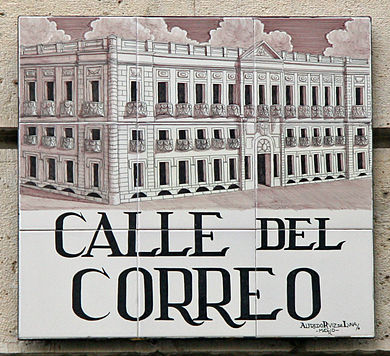
Cafetería Rolando, at 4 Calle del Correos (known as E street), was located in the heart of Madrid, directly off Puerta de Sol. Cafetería Rolando was a large and popular cafe, the local spot for police to visit during their lunch breaks, conveniently located beside the headquarters of the Dirección General de Seguridad (General Directorate of Security) in the famous Real Casa de Correos building. The Dirección General de Seguridad was considered an impenetrable target by ETA and other organisations keen to bring down the regime. Because nearby Cafetería Rolando was so popular with police working nearby, the place became destined for disaster.

 Real Casa de Correos (Cafetería Rolando was to the right of this shot) – Source

On September 13, 1974, at 2.35pm, during a busy lunchtime, a bomb exploded at the entrance to the cafe. The bomb, thirty kilos of dynamite filled with nuts for shrapnel, went off as many enjoyed their lunch, and was large enough to cause serious structural damage to the five-storey building. The ceiling of the café collapsed, resulting in several of the hostel guests upstairs falling into the café. The blast was big enough to shatter the windows of the Real Casa de Correos across the tiny street and several cars were obliterated. Another restaurant, a large place with 300 seated guests next door, was also seriously damaged.

Because of the proximity to the security building, police were on the scene immediately, and the process of saving Cafetería Rolando diners began. An attack of this magnitude, on a place frequented by everyday people, hadn’t been undertaken since the Civil War, catching all by surprise. Seventy-one people were pulled alive from the rubble, several children. Most victims made a full recovery, though several were left with scarring and mutilation. In total, twelve people were killed, aged from 20 to 78 years old, including a just-married couple. Several café workers were killed, including one who was pulled alive from the rubble but died before surgery. While the attack was allegedly against the police, and several wounded were police and from Franco’s elite special forces, the rest killed were all civilians. A thirteenth victim, a police officer, died two years later from the attack, unable to survive the injuries he sustained.

Source

The list of the dead only fueled speculation of the bombing. As no police officers were listed among the dead, a theory sprang up that a division of the extreme right themselves planted the bomb. Police earlier that day had been told to avoid the café, but these rumours were never directly admitted. Franco was keen to catch whomever had committed the act, while others, both for and against the government, took the opportunity to criticise the regime, plus Arias Navarro himself, and the búnker, the powerful political families. Everyone had an agenda for establishing blame. The Communist party became a popular target for criticism, initially blamed for the events.

Soon, blame fell on ETA from the Basque Country. They had been killing policemen and guards sporadically since 1968, one just days before the bombing. ETA denied any knowledge of the Cafetería Rolando attack, though throughout Spain, the denial wasn’t taken seriously. Because of the high number of killed and wounded were merely civilians at lunch, both sides of the political fence wanted to see justice done. The assassination of Carrero Blanco less than a year earlier didn’t raise tempers, but the attack on the café brought ETA’s organisation more into the spotlight than ever before.

Famous Basque activist, writer, women rights campaigner and ETA supporter Eva Forest was arrested along with her husband, though her husband was soon released. Forest refused to co-operate and accused the police of ill-treatment during her detainment. It was alleged two Basques, a man and a woman, planted the bomb in Cafetería Rolando, sticking the bomb to the underside of a table, and set off the timer. The identity of those two Basques were never established. It could have been Forest and her husband, playwright Alfonso Sastre, but there was no proof. While many detained in connection to Cafetería Rolando and the Carrero Blanco assassination were released, Forest was kept in prison until 1977, when all political prisoners accused under the Franco regime were given amnesty, to smooth the way for democracy under the new King Juan Carlos. It was rumoured that Forest suffered terribly being in jail, being tortured for all her acts over the years. While Forest admitted to passing on ETA messages and helping with safe houses, she never admitted her part in the Rolando bombing, despite admissions from others in the plot. 

Because of the 1977 amnesty, no one was ever held accountable for the Cafetería Rolando bombing, and no one can never be convicted of any crime relating to the incident.

Calle del Correo today – Source

Victims of Cafetería Rolando 13 September 1974

Antonio Alonso Palacín, mechanic, and his new wife, María Jesús Arcos Tirado, telephone operator aged 28

Francisca Baeza Alarcón, teacher aged 45

Baldomero Barral Fernández, baker aged 24, and his wife María Josefina Pérez Martínez, mother of two aged 21

Antonio Lobo Aguado, railway worker aged 55

Luis Martínez Marín, businessman aged 78

Concepción Pérez Paino, Dirección General de Seguridad admin worker aged 65

María Ángeles Rey Martínez, student aged 20

Gerardo García Pérez, married father of three

Francisco Gómez Vaquero, Cafetería Rolando chef aged 31 

Manuel Llanos Gancedo, waiter at Cafetería Rolando aged 26

Félix Ayuso Pinel, police inspector aged 46. Pinel didn’t die until 1977.
CalledelCorreo(Madrid)

Source

 Here is a link to the news footage of the bombing in 1974 – Atentado etarra en la calle madrileña del Correo (1974)

SPAIN BOOK REVIEW: ‘Adventures of a Doctor’ by E. Martínez Alonso

Martínez

Adventures of a Doctor by Eduardo Martínez Alonso seems to be so rare, I can’t find any cover art or a blurb about this book. I managed to purchase a damaged copy from the New Zealand parliamentary library, and when they tossed this book to me for a mere $6 (about €3.60), they obviously didn’t know what a treasure they had. Eduardo Martínez is quite an extraordinary man with a story that seems to have been largely lost. With the market flooded with 1001 Spanish civil war books, it comes as a great surprise that this book doesn’t get more recognition.

The story starts with the author born in Vigo, Galicia in 1903. His father was from Uruguay, and was the consul in Vigo. As a young boy, Martínez travelled to his father’s homeland, along with his family (he was one of eleven children, and talks of his mother constantly having to nurse his siblings). The story tells of life in northern Spain in the era, and exploits with his brothers and attending a boarding school with mixed success. In 1912, Martínez’s father received a post to Glasgow, and the whole family moved north for a new life. Martínez dreamed of working in hotels or on ships, able to meet people and travel far and wide. He became bilingual at a young age, seeing the benefit of speaking Spanish, English, French and more. But it was his father who said he would be a doctor, not a sailor. As each of the eight boys grew and carved out professions (sisters, of course, were to be wives and caregivers), the prophecy of the hard-working consul came true. The family and Martínez recalls the first world war, his school years and an eventual trip back to Uruguay.

As a trained doctor, Martinez moved to Madrid with his grandmother, and speaks of seeing Anna Pavlova dance at Teatro Real, with the King and Queen in attendance.  He quickly took up a post at Red Cross Hospital, and met Queen Ena, British wife of King Alfonso XIII, and the Duchess of Lecera, who were delighted to have an English-speaking doctor. News travelled of an English-speaking doctor in favour with the queen, and Martínez was in hot demand. Just eighteen months later, Martinez graduated from San Carlos Medical Facility and while meeting the King and Queen socially and professionally, was appointed the medical adviser to the royal family. This proved to be an amazing and dangerous post.

When the Second Spanish Republic was founded in 1931, Martínez was in the palace in Madrid with the royal family as they were deposed. He tells of sitting casually with Queen and princesses as the monarchy fell. As the family were forced into exile and as Spain underwent revolution, Martínez’s position as a monarchist him an easy target. As civil war came five years later, things changed dramatically. Martínez got his family out of Spain in July 1936, or off to the safety of Vigo, and knew he would be in danger as a former royal family aide. Through his work for the Red Cross, he was ordered by a Communist faction to work as a doctor for the Republican side of the war.

On Saturday morning the shooting started. We sat in a bar and heard the crackling of machine guns, the burst of hand grenades, and I saw smoke arising from many quarters of Madrid. By Monday morning a general strike had been called. Everything was paralysed except murder, arson, and rape. The Spanish civil war had commenced – Pg 70

Martínez talks of watching a church burning as priceless works of art were set alight along with the riches of the churches of Madrid. He saw a priest thrown on the flames but was unable to save his life when he pulled the screaming body from the blaze. Most priests were taken out to Casa del Campo to be shot. Men were burning priests but trying to revive pigeons which fell from bell towers, overcome by smoke. Martínez had an apartment in Madrid, and he hid as many people  as he could throughout the war. Nuns and priest were hidden, and forced to serve meals to men who sat and spoke of vicious murders they had committed against the clergy.

Martínez was posted to a town outside Badajoz, Cabeza del Buey,  in the south-west, working for the Communists. While running the hospital, a young nurse, Guadalupe, suggested they flee and work for Franco’s troops instead, but Martínez seemed convinced that he would be killed at some stage, regardless of where he was posted, and claimed no political alliances. In Cabeza del Buey, he was forced to attend mass executions of seemingly innocent men, and despair at violent speeches about revolution and vengeance. He performed many surgeries and saved lives in the  most atrocious conditions. But with no warning, Martínez was shipped off, with Guadalupe, and sent to Ocaña, just outside Aranjuez, to work in the prison there, and be a prisoner himself. As he had in Cabeza del Buey, Martinez managed to get some nuns freed from prison to work as nurses, and treated patients while living in a cell himself. Between dire conditions and deadly activities, a patient told Martínez that his turn to be executed was near. An in understated manner, Martínez talked of his prison escape to Valencia in March 1937, were he managed to procure a fake passport and get aboard the Maine, a ship bound for Marseilles. 

Martínez quickly got himself back in Spain, despite the dangers. He chose to cross the lines and work for the ‘white’ side of Spain, Franco’s rebel army. Red Spain (the Republicans), he felt, thought nothing of him, his work, and long suspected their cause would lose the war, one they never had a chance to win. Posted to Burgos, Valladolid and then San Sebastien, Martínez  then found himself working on the front lines as Franco’s army continued to advance into enemy territory. Towns fell one by one as Martínez fought to save lives, but writes in such a  humble, unassuming manner. Once in Zaragoza, Martínez worked hard to care for patients at the hospitals, and pioneered the use of closed casts on wounds, a procedure first tried with less success twenty years earlier. Despite the smell offending wealthy female volunteers, Martínez’s experiment helped the lives of many patients otherwise in agony as they recovered. He was then moved on to his own mobile surgical unit in Teruel in 1938.

Martínez was there on the ground when troops stopped in Sarrión, 100kms north-west of Valencia, as the war finally came to its brutal end. On April 1st, 1939, the war was over and declared won by Franco in this small town, and after helping a man and his son to Valencia, Martínez sought out all those who had helped him during the war, and moved back to Madrid. No sooner than Martínez had helped his friends and former nurses, and begged for clemency for some condemned to death by the new regime, the second world war broke out. With some family in Vigo and some Britain, travelling on multiple passports, danger was again faced. As Hitler plowed through Europe, Madrid suffered greatly after the civil war and Martínez went to work at Miranda de Ebro, near Burgos, to help war refugees from all nations. With such a humble attitude, he glossed over his feat to aid refugees out of Spain, saving their lives, until in 1942, when his ferrying of innocents was discovered and he was forced to flee Spain. His time working with British Naval Attaché, Captain Alan Hillgarth is barely touched upon, but should surely serve as an incredible tale of a man saving lives at great risk to his own. This two-year period alone could serve as a story all of its own. Just his dramatic escape would serve as its own story, but the author covers it in a few sentences, and neglects to mention he fled with a new wife. He also failed to mention his first marriage which produced two children, but was annulled after Franco took power in 1939 (His wife was a British woman who went home without him). I only found about either marriage after studying the doctor further myself. There are no clues to whom these women are at any point in the book. His personal life is never touched upon.

Again, Martínez talks little of his involvement with the rest of the world war, after being detained when first arriving in Britain (no idea if his Spanish wife was also detained), but worked as a spy for Britain throughout and barely talks about it. He worked at Queen Mary Hospital after the war and oversaw great new procedural advances, meeting some of Europe’s finest surgeons, but then returned home to Madrid. Life was hard in the beleaguered nation, and he again went to work at Red Cross Hospital, specialising in chest surgery. He then moved on to working as the doctor for the Castellana Hilton, newly opened in 1953. He recounts stories of wealthy Americans, and famous movies stars (unnamed) alike, who came to Madrid for all sorts of reasons. He spoke with frustration at his patients demanding penicillin shots, not wanting to discuss why they need this medication. Many guests, male and female, had a penchant for sleeping around and wanting medicine to atone their sins, either before or just after the liaisons which bore infections. One guest talks of being raped and demanding penicillin, though the story is far from convincing to the doctor. Sexual liberation had come to the foreign guests at the Hilton, and expected Martínez’s penicillin to cover it up. He makes his disdain clear for these patients and the abuse of this groundbreaking medication, and of the myriad of alcoholics he was forced to attend to, when little could really be done for them.

The book is written in the manner of a doctor – no-nonsense, no fussing with detail, just the raw facts given out without prejudice. Martínez is a man with the story worthy of a Hollywood blockbuster, but it wouldn’t be his style. This book was written in 1961, and Martinez lived until 1972. It shows what really stood out to the doctor in his life, because details are excluded, and there are many secret operations he simply never wanted to discuss. He is free and easy with dates – because I know the civil war, I could piece together the timelines of the book, but needed to look up world war details and the opening of the Madrid Hilton, just to give myself an idea of how much time passed between chapters.

Martinez’s daughter, Patricia Martínez De Vicente, has written several books in Spanish about her father, notably La Clave Embassy: La Increíble Historia De Un Médico Español Que Salvó a Miles De Perseguidos Por El Nazismo. The stories not told by her father in his memoir are a whole other side to this man who worked tirelessly for others, and had a strong ability to do good, without any need to be recognised.  To read his book is a gift, and I will be also reading his daughter’s books.

*above photo taken just prior to release from the Spanish army, 1939. Photo supplied in the book (page 112)