By the beginning of July 1936, the conspiracy against the Spanish Republic had moved far beyond vague discussion among dissatisfied generals. Plans for military revolt had been developing for months, but during these first days of July the movement became increasingly coordinated, disciplined, and urgent. Although many ordinary Spaniards sensed something was coming, few understood how extensive the preparations had become.
The central organiser of the conspiracy was Emilio Mola, known among conspirators as El Director. Mola operated primarily from Pamplona in Navarre, a deeply conservative and strongly Catholic region in northern Spain with significant monarchist support. Pamplona became one of the safest centres for planning because local right-wing networks, especially the Carlists, were fiercely hostile to the Republic. The Carlists were ultra-conservative monarchists who wanted to restore a traditional Catholic monarchy. Unlike the Falange, which was fascist and modern in style, the Carlists idealised old rural, religious Spain. By July 1936, thousands of Carlist paramilitaries known as Requetés were quietly preparing weapons, uniforms, and transport throughout Navarre. Many trained secretly in the countryside under the guise of religious gatherings or hunting excursions.
Mola’s conspiracy aimed to unite several groups that did not entirely trust one another, the conservative army officers, monarchists, Carlists, sections of the Catholic right, wealthy landowners, and the fascist Falange. What united them was fear of the Republic and hatred of the political left. Many conspirators believed Spain stood on the verge of communist revolution. Others believed the Republic had destroyed military authority, religion, and national unity. Some officers also feared the collapse of social hierarchy itself as strikes, land occupations, and worker militancy spread throughout Spain.
The conspiracy’s military core involved garrisons across mainland Spain and Spanish Morocco. Spanish Morocco was especially important because it housed the Army of Africa, Spain’s most experienced and battle-hardened force. This army included the Spanish Foreign Legion, Moroccan colonial troops known as Regulares, and professional officers hardened by years of brutal warfare in North Africa. Many conspirators believed control of the Army of Africa would determine whether the uprising succeeded or failed.
At this stage, Francisco Franco remained stationed in the Canary Islands after the Republican government transferred him there months earlier in an attempt to isolate him politically. Franco still hesitated during early July. Unlike some conspirators, he feared premature action could fail and lead to execution or imprisonment. His caution frustrated more aggressive plotters, though many still viewed him as essential because of his prestige within the army.
Meanwhile, José Sanjurjo remained in exile in Portugal after his failed coup attempt against the Republic in 1932. Despite exile, Sanjurjo remained symbolically important to monarchists and conservatives. Many conspirators intended him to become the rebellion’s public leader after victory. Communication between conspirators occurred through letters, trusted couriers, coded telegrams, and personal meetings. Mola issued increasingly detailed secret instructions describing how officers should seize government buildings, arrest left-wing leaders, occupy radio stations, control transport hubs, and impose military authority.
One of Mola’s most chilling directives concerned repression. He warned officers that the uprising must be accompanied by extreme violence to destroy resistance quickly. The goal was not merely military victory, but political terror sufficient to crush trade unions, socialist parties, anarchist organisations, and Republican opposition entirely.
The Republican government possessed fragments of intelligence about the conspiracy but failed to appreciate its scale. Prime Minister Santiago Casares Quiroga received warnings from informants, labour organisations, and some loyal officers, yet hesitated to act decisively. Government ministers feared that mass arrests of generals might provoke the very uprising they hoped to avoid. This hesitation increasingly angered the left. Socialist, communist, and anarchist organisations demanded weapons to defend the Republic. The government refused, still hoping legal authority and military discipline could preserve order.
Throughout Madrid during these days, rumours spread constantly through cafés, newspaper offices, trade unions, military clubs, and ministries. Some believed the coup would begin within hours; others dismissed the warnings as exaggeration. Newspapers reflected the atmosphere of panic, as right-wing papers warned of communist revolution, left-wing papers warned of fascist conspiracy, and centrist politicians increasingly sounded powerless.
By 3 July 1936, Spain still appeared outwardly functional. Parliament met, trains ran, cafés remained open, and newspapers printed normally. Yet beneath this appearance of routine, conspirators finalised military plans while armed political groups prepared for confrontation. Much of the country sensed that the Republic stood dangerously close to collapse, even if few yet understood how near civil war truly was.
Between 4 and 6 July 1936, the conspiracy against the Republic deepened while political violence spread visibly across Spain. These days were marked less by one dramatic event than by a growing sense that the state itself was weakening. Newspapers, parliament, cafés, military clubs, union halls, and churches all carried the same atmosphere of approaching catastrophe.
The centre of the military conspiracy remained under the direction of Emilio Mola in Pamplona. Navarre had effectively become the safest organising base for anti-Republican forces because of its deeply conservative and Catholic population.
Meanwhile, in Madrid, the Republican government appeared increasingly paralysed. Prime Minister Santiago Casares Quiroga received repeated warnings about military conspiracy from socialist organisations, police informants, loyal officers, and trade unions. Despite this, the government still hesitated to arrest senior generals or arm workers’ organisations. Casares Quiroga believed that drastic action might provoke immediate rebellion and hoped the army’s institutional discipline would ultimately hold.
Madrid during these days became intensely volatile. Falangist gunmen carried out shootings and revenge attacks across the city. Members of the fascist Falange targeted socialist activists, police officers, and union organisers, while left-wing militants retaliated against right-wing figures.
Although imprisoned in Alicante, José Antonio Primo de Rivera remained symbolically central to Falangist activity. Messages were smuggled between imprisoned leaders and underground Falange networks, which continued organising clandestinely despite government repression.
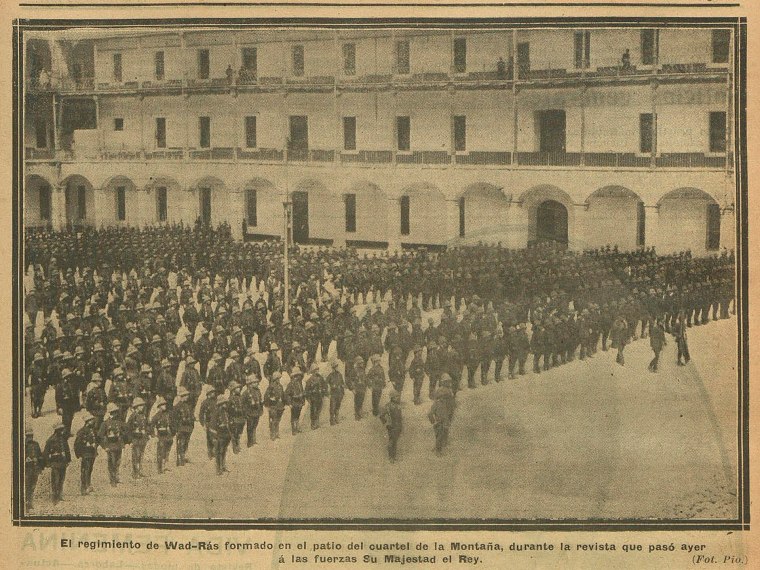
One of the major centres of tension was the Cuartel de la Montaña barracks in Madrid, where suspicions already existed regarding anti-Republican officers. Similar anxieties surrounded military garrisons in Zaragoza, Seville, Valladolid, Burgos, and Pamplona. The city of Zaragoza was especially important because General Miguel Cabanellas commanded forces there. Though personally more moderate than some conspirators, his position would become crucial once the uprising began.
In Seville, Gonzalo Queipo de Llano quietly prepared support networks among officers despite publicly appearing loyal to the Republic. Seville’s strategic importance came from its transport links and access to southern Spain. Francisco Franco remained in the Canary Islands, outwardly cautious but increasingly involved in conspiracy discussions.
During these days, conspirators also finalised arrangements involving Spanish Morocco. The Army of Africa remained essential to coup planning because it was the most professional and battle-hardened force available. Officers in Morocco, including Juan Yagüe, and José Enrique Varela, quietly prepared for mobilisation. At the same time, political radicalisation intensified among civilians. In working-class districts of Madrid and Barcelona, socialist youth groups patrolled neighbourhoods, anarchists stockpiled weapons, and communist organisations expanded anti-fascist meetings. Barcelona in particular remained a stronghold of anarchism. Members of the CNT and FAI believed fascist uprising was increasingly likely and debated how workers should respond if the army rebelled.
By 7 July 1936, the conspiracy against the Republic had entered its final organisational phase. During these days, military planning became more disciplined and coordinated, while political violence and fear spread further through Spain’s major cities. Although daily life outwardly continued, many politicians, journalists, officers, and ordinary civilians now sensed that the country stood dangerously close to armed conflict.
The centre of operations remained with Emilio Mola in Pamplona. Mola spent these days refining the final structure of the uprising and communicating with sympathetic officers throughout Spain. His instructions emphasised speed, coordination, and ruthless repression. He believed hesitation would doom the rebellion. Tensions emerged during these days between Mola and Carlist leaders, particularly Manuel Fal Conde. Many Carlists wanted guarantees that the uprising would restore a traditional monarchy and protect Catholic authority. Mola, meanwhile, prioritised military unity above ideology. Despite disagreements, both sides recognised they needed one another.
At the same time, the conspiracy expanded further within the army. In Zaragoza, Miguel Cabanellas quietly prepared military cooperation while maintaining outward loyalty to the Republic. Zaragoza was strategically crucial because it linked northern and eastern Spain and contained important military infrastructure. In Valladolid and Burgos, conservative officers increasingly coordinated with monarchist civilians and Falangist organisers. Burgos would later become one of the Nationalists’ major political centres during the war.
One crucial development involved the chartering of the British aircraft Dragon Rapide. Monarchist financier Juan March helped fund arrangements for the aircraft, which would eventually transport Franco from the Canary Islands to Morocco once the uprising began. The planning of the Dragon Rapide operation involved monarchist agents, British contacts, and military conspirators operating through London, Lisbon, and the Canary Islands. Although seemingly minor, the aircraft later became one of the most famous logistical details of the coup.
By 10 July 1936, Spain had entered a state of near paralysis. Ministers continued attending parliament and newspapers appeared each morning, yet beneath this ordinary surface almost every major political faction expected violence. The government of Santiago Casares Quiroga faced growing pressure from all directions. Intelligence reports continued arriving warning of military conspiracy. Yet Casares Quiroga hesitated to act decisively. He believed mass arrests of generals could trigger the very rebellion he hoped to prevent. His government still placed faith in the institutional loyalty of the army, despite increasing evidence that large sections of the officer corps were preparing revolt.
The socialist UGT and anarchist CNT unions increasingly demanded weapons for workers’ militias. In Madrid and Barcelona, many labour activists believed a fascist coup was imminent and argued the government’s passivity was suicidal. In Madrid, political violence continued intensifying. Falangist gunmen carried out attacks against socialist activists and union members. Left-wing militants retaliated through revenge attacks and neighbourhood patrols. Many districts of Madrid increasingly resembled armed political territories rather than neutral civic spaces. Suspicion within the military also deepened. At the Cuartel de la Montaña barracks in Madrid, Republican authorities already distrusted certain officers, though they still lacked confidence to move decisively against them.


You must be logged in to post a comment.