On Sunday 12 July 1936, Madrid was already living in a state of political fever. The city had not yet become the besieged capital of a civil war, but it was no longer a normal European capital either. Rumours moved faster than police reports. Political funerals had become demonstrations. Uniforms, party badges, newspapers, churches, cafés and street corners all carried danger.
Lieutenant José del Castillo Sáenz de Tejada was thirty-five years old, an officer of the Guardia de Asalto (Assault Guard), the urban security force created under the Republic. He was also known as a man of the left, sympathising with socialism, belonged to the anti-fascist military organisation Unión Militar Republicana Antifascista (UMRA), and had helped train socialist militia groups. This made him admired by some and hated by others; to his enemies on the right, he was not simply a policeman. He was a uniformed symbol of the Republic’s armed left.
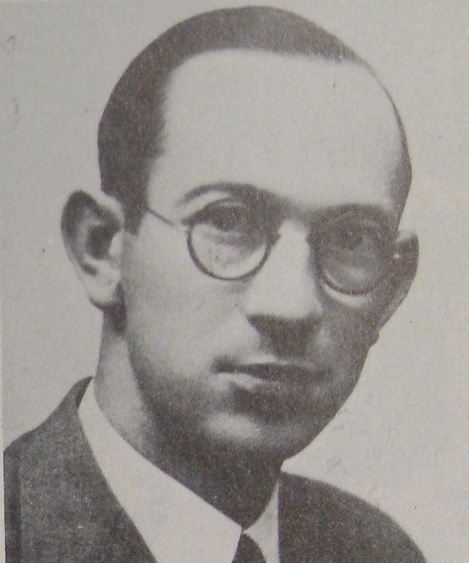
Castillo had already been marked. After the violence surrounding the April 1936 funeral of Anastasio de los Reyes, in which right-wing and Falangist mourners clashed with security forces and left-wing crowds, Castillo’s name became associated with the bloodshed. One of those injured was José Luis Llaguno Acha, a young Carlist. Castillo was nearly lynched by the protesters and had to be removed from the scene by the officers under his command, who took him to the Dirección General de Seguridad (General Directorate of Security), where he gave a statement and was released without charge. From that day on, Castillo became a target of right-wing militias; threats became frequent, and his superiors proposed transferring him out of Madrid, which he refused. He survived two assassination attempts, and the Socialist Youth militias escorted him without his knowledge. His wife, Consuelo Morales, said that before their wedding she had received an anonymous warning asking why she was marrying a man who would soon be a corpse. Whether the threat came from Falangists, Carlists, or another right-wing group remains disputed, but the meaning was plain enough. The sense of danger had sharpened further in May, when Captain Carlos Faraudo, another officer linked with socialist militia training, was shot dead in Madrid. Castillo and Faraudo were both military men who had sided with the Republic and the workers, and who therefore seemed to be targets in a campaign of political assassination.
That Sunday evening Castillo spent time like an ordinary young husband in summer Madrid. Some accounts say he had been to the bullring at Las Ventas and then walked with Consuelo through the city. Shortly before ten o’clock, Castillo left his home in Calle Augusto Figueroa. His destination was the Pontejos barracks near Puerta del Sol, where he was due to begin service with his company at ten. The route was short and familiar, with the streets still filled with people living an ordinary day like himself. At the junction of Calle Augusto Figueroa and Calle Fuencarral, near the small religious building, the chapel of the Humilladero, several men were waiting.
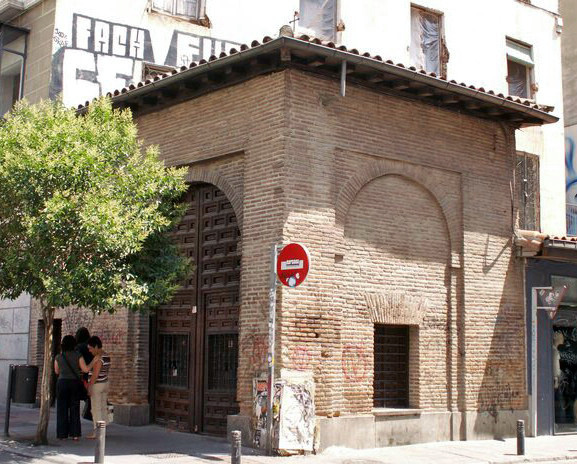
The official account given that night by the Undersecretary of the Interior, Bibiano Fernández Osorio y Tafall, stated that at about 10:05 p.m. a group of apparently four men were waiting near Castillo’s home. As Castillo appeared, one of them identified him. A witness heard the words, that’s him, that’s him.’ One of the most vivid accounts came from the passerby Fernán Cruz, who had just got off a tram near Augusto Figueroa and Fuencarral. He said he saw the Assault Guard lieutenant coming across the street when four or five men suddenly appeared behind him. Cruz could not be certain of the exact number. He heard one of them shout, ‘That’s him, that’s him; shoot him.’ A burst of gunfire followed and Castillo staggered and fell against Cruz, knocking him to the ground. Cruz later said he was so shaken that he lost his glasses and, in his confusion, briefly put on another pair found near the body before someone returned his own. Castillo did not have time to defend himself, struck in the arm and the chest. Doctors later recorded a wound to the left arm, breaking his upper arm, and a fatal wound in the precordial region near the heart. Another civilian was also hit, an eighteen-year-old José Luis Álvarez, a pharmacy assistant from Calle Malasaña, was seriously wounded with a fractured femur.
Cruz and another man, named in press accounts as Félix Terán or Torán, helped put Castillo into a passing car or taxi and took him to the surgical emergency centre in Calle de la Ternera. According to the medical account, Castillo died before or during the journey. Cruz remembered what he believed were Castillo’s final words, which were, ‘take me to my wife, who has only just left me.’
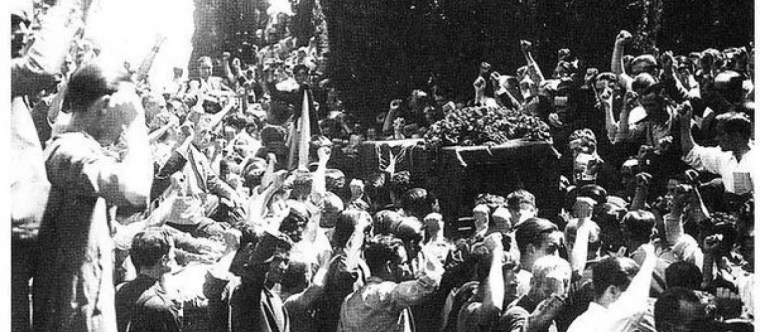
Consuelo Morales soon arrived at the medical centre after hearing that something had happened. Those present tried to prevent her from seeing the corpse, and told her he was wounded rather than dead, but she suspected the truth. Contemporary press descriptions of her arrival are highly emotional, but even allowing for journalistic drama, the scene appears to have been devastating. By around eleven o’clock, the killing had become more than a crime scene. Senior officials arrived, including the Dirección General de Seguridad, José Alonso Mallol. Officers, agents and police officials gathered. The body was transferred to the DGS, where a chapel of rest was set up in the Salón Rojo. Castillo’s uniform jacket was placed back on him after he had been examined. Family members came. So did comrades, officers, Assault Guards, political allies, workers and sympathisers. At the Pontejos barracks, Castillo’s associates were furious. They believed the killing was part of a chain of right-wing attacks against officers loyal to the Republic and sympathetic to the left. In the barracks and around the security offices, the word that mattered was revenge. According to later reconstructions, some officers and guards shouted that they could no longer tolerate fascist gunmen killing them while the government did nothing.
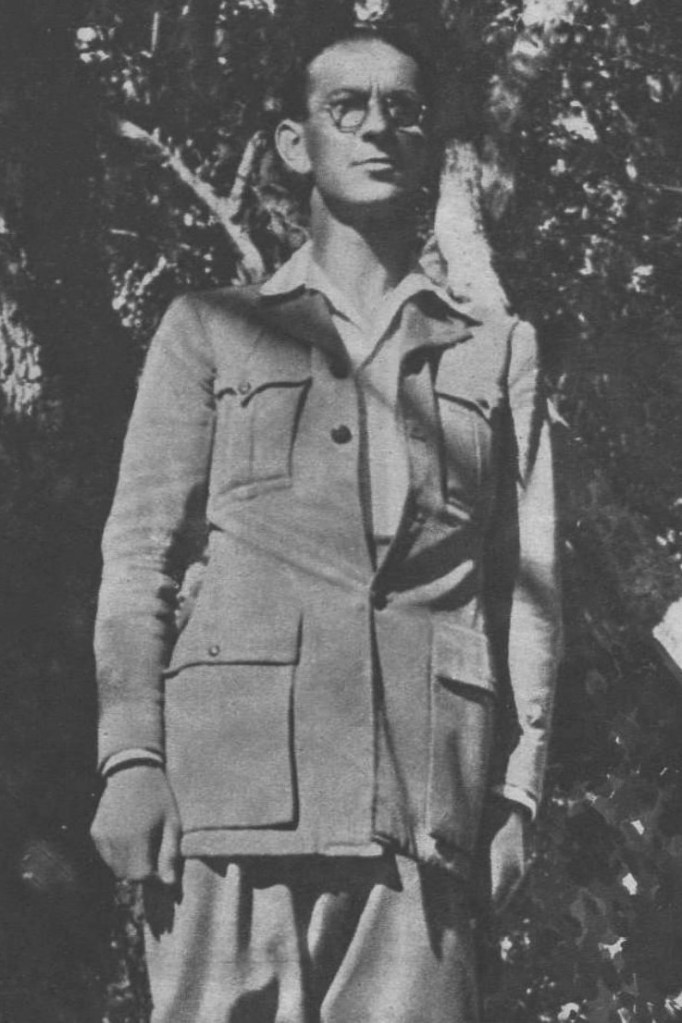
Who killed Castillo remains one of the disputed points. Many accounts, especially Republican and left-wing accounts at the time, blamed Falangist gunmen. Historians such as Paul Preston and Gabriel Jackson have also identified the killers as Falangists or right-wing extremists. Ian Gibson, after detailed investigation, argued instead that the killers were Carlist requetés, acting in revenge for the earlier wounding of José Luis Llaguno Acha, but this was proven false. Other writers have suggested links to the UME, the right-wing military conspiracy. Falangists were suspected of the crime. Besides being an instructor in the Motorized Brigade, Castillo had recently implicated in the death of Andrés Sáenz de Heredia, a Falangist and cousin of José Antonio. Historian Hugh Thomas blamed to Ángel Alcázar de Velasco, who was in prison but had associates who could carry out an attack, though they claimed they had received an express order from José Antonio Primo Rivera (also imprisoned at the time) not to carry out the assassination. A member of the Unión Militar Española (Spanish Military Union, UME), Alfonso Gómez-Cobián confessed to the killing, but got all the details of the event wrong and was likely not even in Madrid that night. Other conspiracy theories claim evidence that it was an inside job, designed to provoke the assassination of José Calvo Sotelo in the next few hours, which contradicts the beliefs around his own killing.
José and Consuelo had only married less than a month earlier on 20 May, and Consuelo was three months pregnant. She and her family fled to the relative safety of Valencia, and gave birth to a daughter in January 1937. She was arrested along with her family on unspecified charges in 1939, but she was released nine months later, in time to see her child pass away, and she was not granted her full widow’s pension until 1983 when the country had finally thrown off Franco and the tentative years of establishing democracy.
These types of killings had been happening all over Spain for some time, and Castillo’s name would have likely been forgotten like so many others, had Castillo’s associates not travelled to José Calvo Sotelo’s home in the early hours of 13 July 1936.


You must be logged in to post a comment.