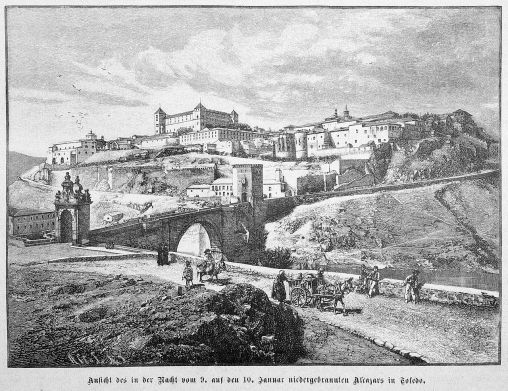
Sketch of the Alcázar above Toledo in 1887
The Alcázar of Toledo was beautifully constructed fortress in the town which was strategically placed on a small hill by a river. First used by the Romans in 59BC, the location ruled over the plains during Roman, Visigoth and Moorish rule. The town was home to Christian, Muslim and Jewish communities living together through the centuries in relative peace. But in 1085 the city fell under Christian rule and the slow decline of the harmony commenced. By 1520, the Alcázar, a palace fortress, was built on the top of the hilltop town by the royal family, and stood until the destruction during the Spanish Civil War in 1936.
The war started on July 17, 1936 when Franco took over the army in Spanish Morocco and staged an uprising. By the morning of the 18th, strict, religious army leader José Moscardó e Ituarte, the military governor of the area, took control of the Guardia Civil police, and decided to lead and control the hilltop town. Toledo had an arms factory, and the Republican government and its followers battled for days to get their hands on the weapons and gain control of their home. Colonel Moscardo was able to fend off the Republicans with his men, and moves were made for Republican reinforcements from Madrid to arrive. By July 20, killings were already occurring on the streets, with both sides attacking and wounding one another, as in all towns and cities in Spain.

The grotesque habit of Republicans digging up clergy to show everyone their mortality in Toledo, like everywhere in Spain
Colonel Moscardo had just 800 Guardia Civil officers, around 100 army officers, and the support of 200 right-wing public members. The Guardia Civil had plenty of ammunition to bring to the uprising, but between all these men they only had rifles, a couple of machine guns and a few grenades. Meanwhile, the Republicans in Madrid sent in 8,000 militia men, left-wing supporters banded into groups to save their country, mostly anarchists and workers’ union members. The air force had also sided with the Republicans and were able to fly over Toledo for surveillance and bombing.
Between the call to rise up and claim the city by the rebels on July 17 and the following four days, the Republicans managed to hold off the right-wingers, with only one man arrested as a Republican activist. However, between 100-200 people were taken hostage by the Nationalists, and they including the town’s governor and his family. The hostages and Nationalist families, those belonging to the Guardia Civil men, were put inside the city Alcázar to be safe from the Republicans. This started a siege, with Nationalists trapped in the Alcázar and the Republicans keen to take back their town.
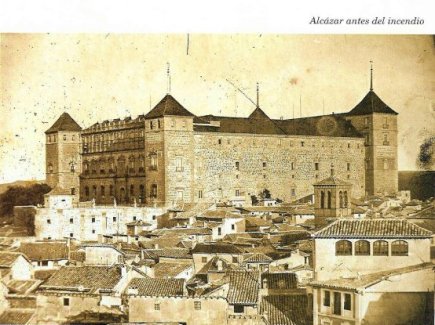
The Alcázar prior to the siege
By July 22, the Republican surge meant the town was in their hands, with the exception of the great Alcázar, which was under bombardment from the air. On July 23, Colonel Moscardo, inside the Alcazar, got a phone call from the Republican leader, Commissar Cabello. They had taken Moscardo’s son hostage, age just 16, and threatened execution. Moscardo told his son to die as a patriot, which young Luis agreed to do. However the Republicans did not yet have the heart to shoot the boy.
For the next three weeks, the Nationalists stayed safe in the Alcázar as the Republicans continued to attack. The insiders only fought when militia fired at the building, or planes dropped bombs from above. Constant bombardment to the strong Alcázar began to weaken the northern side of the fortress. But the constant back and forth of fire, bombs and grenades, meant no one could get close enough to the Alcázar to get inside, not even to the buildings surrounding the building, all of which were still under Nationalist control and huddled together for safety. Sometime in mid-August, Moscardo’s 16-year-old son was shot and killed as the Republican frustrations mounted. Likewise, the hostages inside the Alcázar met an ugly end.

Republicans try to get close to the Alcázar
However, by early September, the northern side of the Alcázar was in collapse, and the Republicans decided to change tactics. In a momentary downing of weapons on September 9, Major Vicente Rojo Lluch, an army man who decided to fight for the Republicans rather than with the army, went to the Alcázar to speak to Colonel Moscardo. Rojo offered Moscardo the chance to surrender and leave the Alcázar but it was refused. Moscardo requested a priest be sent to the Alcázar, as two babies had been born inside the besieged fortress and needed to be baptised. Despite being anti-religion, the Republicans allowed this request.
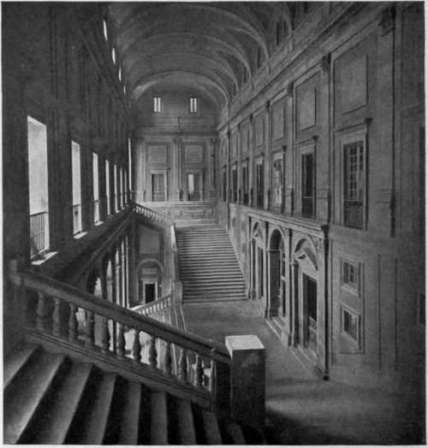
Inside the Alcázar before the bombing
As the priests of Toledo had been killed or fled the town at the outbreak of war, a preacher from Madrid arrive on September 11 and entered the Alcázar to baptise newborns and offer spiritual guidance to the 1000 strong right-wingers, including final absolution in case of death. Again Rojo offered a surrender, but no one would leave the Alcázar; they would rather die than give up. In retaliation, Republicans fired and threw grenades at the Alcázar, destroying all communications with the insiders.
The Chilean ambassador to Spain wanted to help with the negotiations for surrender, but the grenade launch had wiped out all the phones, and at this stage, surrender was no longer an option for the Nationalists.
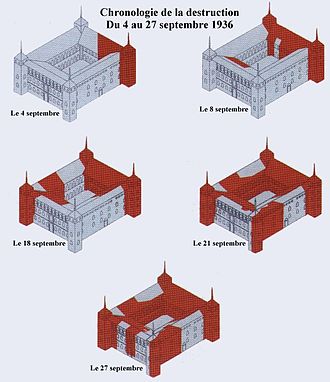
.
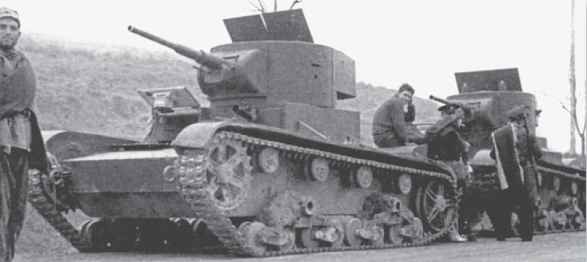
All the while air and ground fire had been sent back and forth, Republicans had been digging tunnels to come up right underneath the Alcázar. By September 18, after a month of digging, the two tunnels were complete and under the southwest tower of the Alcázar. Soon-to-be appointed Spanish prime minister, Francisco Largo Caballero, went into the mines and detonated a huge supply of explosives, which flattened much of the tower. As the dust settled and panic reigned, the Republicans stormed the Alcázar with tanks and armoured cars. Still, they could not get inside the mighty fortress, and constant firing went on for days.

Explosions destroy the exterior
By September 22, all those inside were in the interior courtyard of the Alcázar, and most of the garrison has also left their posts on the exterior of the building for their own safety. Another two days of fighting made no progress for either side.
Just as the siege looked as if it would end with the slaughter of the Nationalists, reinforcements finally arrived in the city. On September 27, the Republicans, desperate to get inside, had no choice but to abandon their cause and flee to Aranjuez, 44 kilometres north of Toledo. This large withdrawal left few attacking the Alcázar, as they knew of the danger about to arrive.
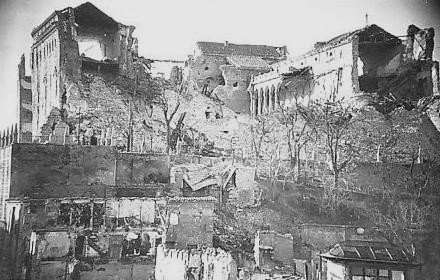
The Alcázar is destroyed into a mess
Nationalist soldiers, consisting of Spanish Legionnaires and Moroccan troops (the Moros), had been marching north from Seville, massacring everyone in their path, their reputations already bloody and horrific. On September 27, all it took was the first 100 soldiers to enter the city and kill everyone still holding out. They also murdered the doctors, nurses and patients in the hospital, all Republicans and their supporters. All those inside the Alcázar were released, only five dead, of natural causes.
For all the killing and the destruction of the nearly 500-year-old Alcázar, Toledo as a location had no strategic value. But the determination of the Nationalists was used a propaganda for those fighting in other areas, and the media took a huge interest in the battle. The arms factory, which was raided early in the war, was the only important location in the area, and was now worthless. The weapons and supplies dropped to help the trapped Nationalists could have been better used in other areas, and even Franco’s advisors were upset Franco even bothered to ‘save’ Toledo at all, when Madrid 55 kilometres north was more important.


Interior of the building after ‘liberation’
Those who escaped after being inside the Alcázar were treated as heroes and used as morale boosters. Much had been made of the Republicans’ mine explosion, with media flocking to see the event. But when the Republicans were forced to flee a week alter, and Franco claimed the town, the Republicans plan to show the world their strength instead showed their terrible loss.
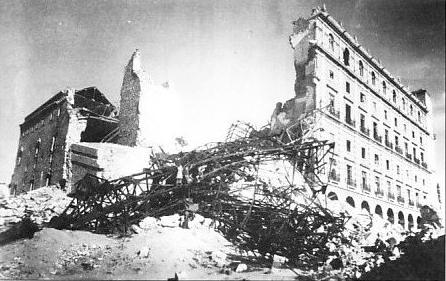
Final destruction
As soon as Moscardo and the others left the Alcázar, the soldiers immediately left Toledo destroyed physically and emotionally, and continued their march north to try to take Madrid. The initial stand-off and attacks on Toledo were all for nothing.
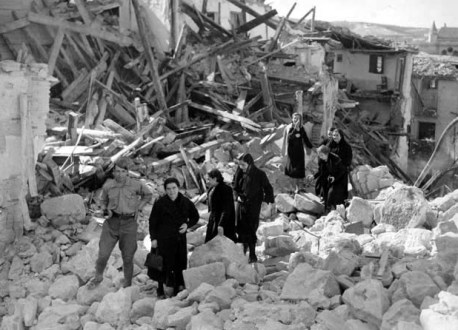
Survivors have to live among their ruined town
The restoration of the Alcázar didn’t begin until well after the war ending in 1939, and today houses the Biblioteca Autonómica (Castilla-La Mancha Regional Library) the and Museo del Ejército (Museum of the Army).

The Alcázar today
~~
This is not a detailed analysis, just highlights (lowlights?) of the siege. Feel free to suggest an addition/clarification/correction below. All photos are linked to source for credit.


 CAROLINE ANGUS
_b_085.jpg)

