Valencia is full of gems, some well-known, some kept a pretty little secret. This week is Casa Calabuig, (Avinguda del Port) Avenida del Puerto 336. This beauty has been standing on the busy end of the main road to the port for well over almost the port area and was lucky not to suffer much damage during the civil war. While the area around the building has changed dramatically, such as the demise of the Gran Hotel del Puerto (destroyed after the war), the Santa Maria del Mar church across the street is still also intact after post-war restoration. The port road was renamed Avenida de Lenin during the Second Spanish Republic of 1936-39, shown in some of the below photos.
1890’s
1920’s
1935
1935
restoration 2008
2013
2013
2013
Photos of Avenida del Puerto by Caroline Angus Baker and courtesy of Elena Casals andJuan Antonio Soler Aces
1940: The Spanish Civil War is over, and Madrid lies ruined, its people starving, while the Germans continue their relentless march through Europe. Britain now stands alone while General Franco considers whether to abandon neutrality and enter the war.
Into this uncertain world comes Harry Brett: a traumatised veteran of Dunkirk turned reluctant spy for the British Secret Service. Sent to gain the confidence of old schoolfriend Sandy Forsyth, now a shady Madrid businessman, Harry finds himself involved in a dangerous game – and surrounded by memories.
Meanwhile Sandy’s girlfriend, ex-Red Cross nurse Barbara Clare, is engaged on a secret mission of her own – to find her former lover Bernie Piper, a passionate Communist in the International Brigades, who vanished on the bloody battlefields of the Jarama.
A vivid and haunting depiction of wartime Spain, Winter in Madrid is an intimate and compelling tale which offers a remarkable sense of history unfolding, and the profound impact of impossible choices.
~~
I must confess that Winter in Madrid is ‘that’ book for me – the one everyone seems to rave about, but I never ended up reading. I got this book five years ago, but after the first two chapters, put it aside, finding its ‘rich British toff’ language to be tiring. Then my father ‘borrowed’ the book, and I only got it back 18 months ago when he passed away. Still, only now could I push on and finally read.
The first forty or so pages set up the story of Harry Brett, a British war veteran invalided out after Dunkirk. Harry is recruited to be a spy in Madrid, thanks to his Spanish fluency and his connections within a public school upbringing (often called private school in most countries. Rich bratty kids). With all of the snobbish upper class language of Downton Abbey, but with none of the poise, Harry is convinced to fly to Madrid in 1940 and spy on an old school mate, who is claiming to have found gold deposits outside Madrid. If Franco has gold, he will rely less on the frugal aid Britain provides, and will be compelled to ditch their neutrality in the Second World War. Hitler is winning, England is looking weary, and newly fascist Spain could be a threat.
That is where we meet the star of the show – Madrid, 1940. The only word to be used is stark in its portrayal, and rightly so. The author has done an unquestionable job in his research of the time. The lives of those in Madrid are intolerable, and the spirits of the proud people are well and truly starving and crushed by the fascist regime. Slightly annoyingly, the book jumps between time periods, of Harry’s days in his snobby school, 1931 where he and friend Bernie first go to Madrid, and the city is down-trodden but on the verge of change, and 1936, when the war starts, and the souls of the working class are surging with hope. I suppose the schoolyard sections are there to show the life of Harry, his interaction with best buddy Bernie, and that of Sandy Forsyth, the rich brat who had gone to bigger things under Franco. The jumps in time period fill in all the blanks, but it means the book leaps about more often than most stories.
Along the way, we meet Barbara Clare, former lover of Communist Bernie, who spurned his upper-crust lifestyle for new ideals, and was listed as missing presumed killed in Jarama 1937. Barbara fell head over heels but Bernie left her in Madrid to fight on the front lines. Three years on, Barbara has moved on to Sandy, who ‘made her’, as he says in the most rapist-like way when he’s angry. Barbara is difficult to love – she had the courage to be in Spain during the war with the Red Cross, but has been reduced to being a borderline alcoholic, chain-smoking rich housewife (without the ring). She sighs her way through concerts with Franco while wearing fur, while most are freezing. She laments on her misery while living in almost paradise-like surroundings while Madrid languishes with hunger. She can’t get over poor Bernie, who was never a smart guy but had plenty of good intentions. I rather hoped lung cancer would kick in through all Barbara’s cigarettes and waif-like point-of-view.
Harry pushes on, spying on Sandy and Barbara, meeting many nasty characters under the Franco regime. He attends lavish parties hosted by wartime murderers, but walks the streets of the poor as he remembers Bernie. As the web begins to twist around the characters, Harry meets Sofia in the most unusual circumstances. Sofia has had a tough working class life and is the epitome of the locals in the area. Harry spends more time with her, and finally realises he is sleep-walking through life thanks to his rich, snobbish school education. As the push to uncover Sandy’s gold mine continues, Harry and Barbara each keep a variety of secrets which unthreads their fragile minds and pits their survival against evil characters.
Bernie’s point of view tells the story of a British communist stuck in a concentration camp outside the town of Cuenca, and the harsh conditions imposed. Many people fail to realise the existence of Spanish concentration camps under Franco, never photographed and dismantled completely after use. All these characters conspire against each other and those around them, resulting in a massive twist ending where not everyone survives and all the characters are left with blood on their hands.
I know Madrid well and know Cuenca like the back of my hand, and reading about the places in this time period genuinely interests me. If you know little about the Spanish civil war or the Franco regime, this book will give you a realistic insight. The locations and descriptions are exquisite, and the author’s work on detail and political alliances of the time is stunning. But the conversation, the wealthy British language can be hard to take, leaving the conversations feeling stiff and unfulfilled over endless glasses of whiskey. The book lets down its female characters – Barbara is a flake (maybe weighed down by too many bad Madrid coffees?) and Sofia doesn’t get the prime position she deserves. Harry, the main character of the story, is a nice enough guy, though his fate never concerned me. Sandy is a terrific passive aggressive scumbag and Bernie left me so furious that I threw the book down in anger at the end. Not many books have that effect on me! But rest assured, you will find yourself reading all the way to the end to see what happens to Harry, Bernie, Barbara, Sofia and Sandy. Whether you hope they live, or die in a fire-ball, is up to you.
My rating – 4/5 stars. Madrid is a scene-stealer and a study of eternal struggle, but those inhabiting her are too weak to challenge her dominance.
Sit back and take in many scenes featured in the upcoming novel Vengeance in the Valencian Water, out January 24. Since the book is brand new, I can’t go into detail about what will happen in each scene featured here (no spoilers allowed), but it gives readers a chance to see just what the areas in Valencia and Madrid look like. Enjoy!
(Spanish spellings have been used, rather than Valencian, for street names. Because Valencian was banned under Franco, the book uses Spanish names for consistency, unless otherwise stated)
Valencia – Plaza del temple 50’s, and Plaza Poete Llorante 2013, side by side locations and major book scenes in 1957
Valencia – Town Hall building Plaza Ayuntamiento 2013, and (same place) Plaza del Caudillo 1957, including snow in the winter. The location featured heavily in the 1957 story
Portal de la Valldigna
Calla Miguelete
Calle Frigola
Plaza del Angel
El Carmen
Portal de la Valldigna 1957, directly after the October flood
Torres de Serranos
Valencia Cathedral
Calle Serranos
El Carmen
Old town Valencia new and old, all major book scenes in both 1957 and 2010
Puente Monteolivete 1950’s
Puente Monteolivete 2013
Valencia – Arts and Sciences area where Luna Montgomery lives, 1950’s and today
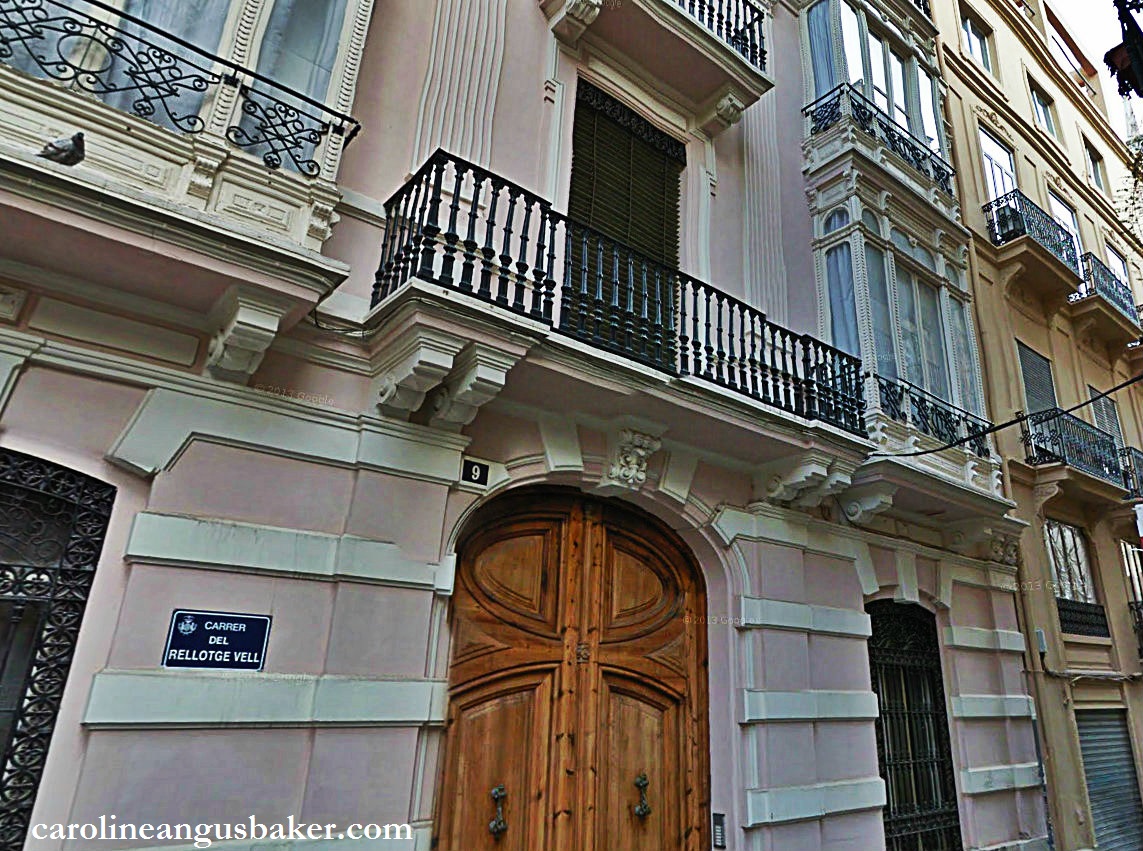
Calle Reloj Viejo
Calle de Reloj Viejo/ Carrer del Rellotge Vell, where José lives in 1957
Las Ventas Madrid
La ventas Madrid
Las Ventas Madrid
Las Ventas Madrid
Las Ventas Madrid
Valencia bullring
Bullrings in both Madrid and Valencia, scenes of fights by Cayetano Beltrán in 2010
Malvarrosa 2013
Malvarossa 1950’s
Valencia beaches 1957 and 2010
Pechina prison 1950’s
Pechina prison gate 2013 ( no longer in use)
Calle Pechina, site of the old prison (featured in 1957 storyline)
Town Hall, Puerta del Sol Madrid
El Retiro park, Madrid
night walk, Madrid old town
Almudena Cemetery Madrid
Scenes from Madrid frequented by Luna Montgomery
Puente de Real post-flood 1960’s
Puente del Real 2013
Chabola slum shacks in riverbed 1940’s
current day riverbed park 2013
Puente del Real
Puente Trinidad
View from Puente Serranos to Puente Fusta and Puente Trinidad
Puente Serranos
Puente Serranos
Puente Regne
Puente Aragon
Riverbed walk
Valencia bridges and riverbed, all featured heavily in both 1957 and 2010 storylines
Valencia Basilica
Las Fallas dresses
La Fallas statues
Valencia bullring
Valencia March celebrations during Las Fallas
Cuenca cathedral, home to another huge scene, the same as in Blood in the Valencian Soil
Part 5 of the Vengeance in the Valencian Water series will be on January 24, the same day as the book release. The post will feature the whole first chapter, which is set in 1957 and can be read for free. Also, Blood in the Valencian Soil will be free on Amazon for three days only, to coincide with the release of Vengeance in the Valencian Water, so you can grab both book in the series to enjoy.
Click here for Part 1, Part 2 and Part 3, featuring all the replies to the recent Q+A session.
All present day photos are author’s own, and 1957 photos are courtesy of Juan Antonio Soler Aces
Here is the final part of the VITVW questions. I have put questions together to answer as many as possible. If yours was missed, let me know in the comments section.
11 ) Did you learn anything new about writing while working on Vengeance in the Valencian Water? Did you enjoy writing this book? Would you change anything about your books?
I learned plenty once again. My last novel release was only five months ago, but I feel like I learned so much about editing in that tiny space of time. I feel like the quality has stepped up another level. Because the time it took to write this book became a mess due to illness, I had to stay on task, and I learned I can write a lot of a short space of time if I make the effort. If I needed to have a chapter done start to finish in a couple of hours, I can do that. Doing 5000 words a day doesn’t feel like a big deal.
I have two individual book series and they are very different to each other, and flipping between the two wasn’t as hard as last time I swapped between them. I finished Violent Daylight and felt ready to finish VITVWonce and for all. Now it’s done, I can go and work onLuminous Colours of Dusk without any trouble. Because I feel happy with the product, can I put it to bed and move on without any worries. Swapping between Night Wants to ForgetandBlood in the Valencian Soilwas harder because the first edition of NWTF never made me happy.
The other thing I learned is that you need to have several proofreaders. Everyone puts their hands up to volunteer to proofread, but then bow out when they see the level of reading involved. It makes perfect sense, since the world is a busy place, so always get a few extra readers, just in case. Big thanks to Sue Sharpe, who volunteered to painstakingly edit the book, and to Mary Mixon who proofread the entire book in a really short space of time. I wouldn’t change a thing!
Tip to looker thinner than you are on research trips – stand in a giant room filled with fat pillars
12 ) What did you mean when you wrote on Twitter – ‘I hope I don’t sound like a Franco sympathiser in my next book’? Why do you write about Franco? Is it possible to be objective about Franco?
Eek – Franco questions. It instantly remind me of the troll who told me I was liar and Franco is a hero and a genius. That really happened.
If you have read the first book in the series, you won’t be confused about where my political alliances lie – I am an unashamed leftie. Writing a story about a group of anarchists in the Spanish civil war didn’t produce any trouble for me – the desire for freedom, rights for the working class and equality for women appeal to everything I stand for. Of course, the two families in the series come from different angles – one Republican anarchists and one Nationalists heavily in favour of Franco. In VITVW, the story learns more about the Morales family and their Franco and religious leanings. What I know is that people on either side of the divide believe in their ideals without question, so I wrote a family who believe Franco was a hero. It’s not my personal belief, and there are plenty of lines in the book which go against what I think is true. Remember it’s not the final book in the series, so it will swing back to my beliefs more in the next book. What’s the point of writing the series if I don’t explore both sides? I am not endorsing Franco at all, the book does not even attempt to do that, and I still dislike religion as much as ever.
I may take photos of this Falange loving weirdness, but I don’t support it
13 ) Will this book be hard to read if I don’t know anything about the history of Spain? Is this book for Spain lovers? I have never been to Spain, will this book to be complicated?
I hope not! This is not a true story; it’s not a set of facts. VITVW is a novel, first and foremost. While I stuck to reality in terms of the timelines, the people are completely fictional. Are there groups of Franco lovers out there, ready to praise the man? You bet there are (they are called the Spanish government… I’m kidding… but not really…), I spoke to Franco lovers personally. Headlines used in the Valencian papers are close to reality, but the characters are fictional when looking for their stolen babies, and you don’t need to already know the background of the baby stealing process of the Franco era – everything you need to understand in the story is included. Likewise with the 2010 drugs in cycling scandal – everything you need to know to understand it is there.
14) Tell us a few things about you that we don’t know about you. Is your online persona the same as your real-life persona?
Jaja, my online persona is probably way cooler than real life. In saying that, I am a snappy dresser (I wish) and get into some funny situations. Things you might not know –
I like radishes
I get so seasick that my backyard hammock is even off-limits unless I take my seasickness pills
My homemade salad dressing is made with condensed milk
I scuff the toes of every pair of shoes I own
I climbed onto a railway line when a train hit a car (first on the scene) when I was only 13. Only two of the six car occupants survived. It was as bad as you could imagine. Only two years later I dealt with my step-brother’s body being fished from a river.
I’ve never understood why some women say they feel threatened by other women. I’ve never felt threatened. Am I the threatening one?
I once cried at a Spanish supermarket
My parents both got terminal cancer in their 50’s, which taught me to never hold back – dreams, words, goals; there is no extra time, now is the time to get out there
When I was 17, I carried around a Volvo Ocean Race magazine everywhere I went – I ended up getting work on sails for a team
As a child, I was pulled from classes to take part in a special writing course. The teacher said I had terrific storyline ideas, but I would never be smart enough to write a book
My best friend is my brother who sadly lives in Australia (upside – epic holidays together)
I feel like the last stay-at-home mother left in New Zealand
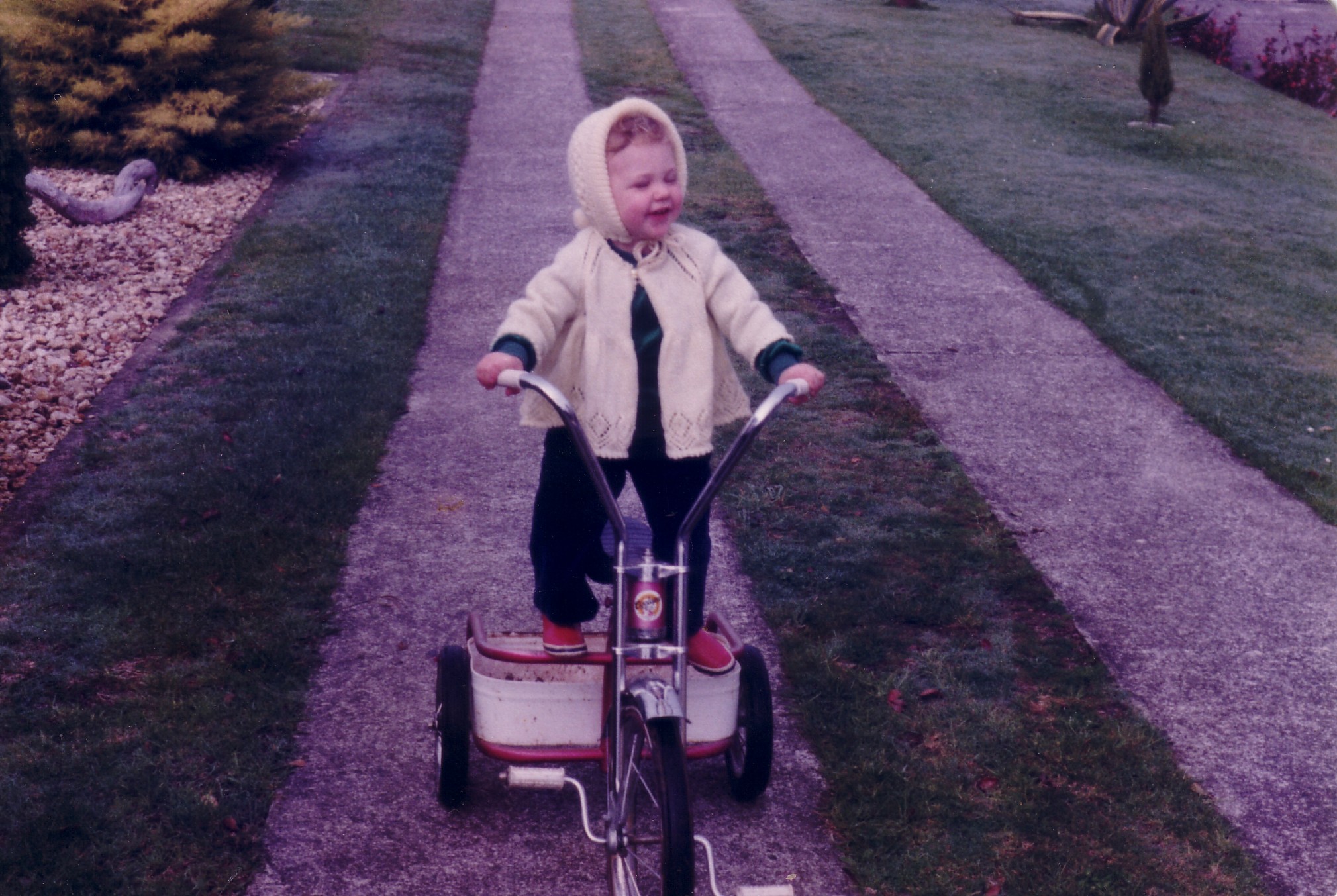
I was a show-off in 1982 (and a natural blonde! Shh…)
15 ) What else are you writing?
The inevitable question. I will go back to finishing Luminous Colours of Dusk, the third and possibly last book in the Canna Medici series. I’m not sure I could live without Canna! Another book high on the agenda is my novel based in Barcelona, about the glory and demise of the Republican ideals in the civil war. The pressure to get historical detail correct is massive, and the book is a challenge. I do little bouts of writing and researching at a time, rather than taking on the project full-time, because I’m just not ready. I will have to return to Barcelona for a second research trip in the near future. Of course there with be the third novel in the Luna Montgomery series, Death in the Valencian Dust, which will take a lot of work. I also have a book about cheating on someone with cancer, a book about being a pioneer moving to New Zealand in the late 1800’s, and an Australian gold rush story to flesh out. Those six should keep me busy for the rest of the decade, and I’m sure more will come to mind.
Canna Medici 3
Luna Montgomery 3
Catalina Peligrosa
Upcoming cover art
Up next is Part 4 of VITVW, photos and locations used in the book. Part 5 will have the first chapter free to read on January 2014, book release day.
Here we go, part two of the Q+A, time for some of the more specific questions –
6 ) Did you base the characters on real-life people, like with Blood in the Valencian Soil?
Rather than look at the situations of specific individuals and make a fictional tale based on their lives, this book takes a different vein. This book follows real events (like BITVS) but has all fictional characters. This book is a snapshot of Valencia in 1957 and the characters live in what was reality at the time. I spent countless hours studying photographs and recollections of the city and its way of life at the time. I also studied the 1957 flood over the period of about a year, so I knew all the details I needed. I got to point where I knew the water level of individual streets around the city. I also walked those streets in Valencia, to visualise the scenarios for myself. All of the characters are entirely fictional, and would not want to meet these people in person!
As for the 2010 characters, they are all also fictional, but live in Spain as it was that year. One chapter sees Luna caught up in a protests in Madrid, and I made sure there was a protest in Puerta del Sol in that month, and checked what they protested against and what their signs said. The timeline is accurate, but no one is based on a real person.
Graham Hunt was kind enough to capture this, so it had to go in the book
7 ) What did you research for the book? You talk about research a lot of twitter.
Jaja, my twitter rambling coming back to bite me. Following on my from the last question – I researched a lot. For me, when I sit down to write, I need to be able to envisage the whole scene in my mind before a word can be written. When it’s based in Valencia, imagining somewhere is a piece of cake. But still, I need to know the details are in place before I can start. For example, when writing José in 1957, I needed to know what his Guardia Civil uniform looked like, or what the fashion of the time looked like in Valencia. That meant tracking down photographs in 1957. There is one scene were José has to wear what I imagine as the most ugly brown suit ever, but then in another, the smoothest grey suit you can imagine. I know both of these were on sale because I checked. I don’t spend a great deal of time on clothing unless it’s relevant to the scene, so you don’t feel bombarded with inane tidbits. But when they buy 1957 swimsuits, I checked to see what you could get at Malvarrosa at the time. Beach umbrellas are the right colour, restaurant decor is correct, street names are correct, even the flowers bought at the market are the right type. When Franco arrives, his car is the right kind, the positions are correct, the aides are dressed properly. When it comes to bullfighting, the clothes are correct, the details of a fight are correct, the feeling from the crowd is correct ( I know this because I sat there to get it right). Valencia is the perfect place to use as a location because there is just so much to see, and how much the city has changed is incredible. I have studied the detail of the city from the mid-1800’s until now and the changes are amazing, yet the core, the heart of the city remains the same.
Calle Miguelete 1957
Calle Miguelete 2013
Calle Miguelete at Plaza de la Virgen, both Jose’s 1957 and Luna’s 2010 reality
8) Are there any storyline pieces you are worried about? Does reaction to the book worry you?
Does it worry me? Only all the time. Writing a book is like walking around naked, you are fully exposed to embarrassment and ridicule. I feel like a running joke – an author with an anxiety disorder. I dream about being teased about typos. After writing a chapter, I put on a cynical hat and question its believability. With the Luna Montgomery series, I want things to be as realistic as possible. Fortunately, by following real-life scenarios, the possibility of the storyline being over-the-top is nigh impossible. With the flood, it’s all real, as is the babies stolen by the church. None of that needed to be made up. The 2010 storyline gave me more worries. The medical details were something I was careful with – there’s nothing worse than reading/watching something and a character is sick and makes an instant miracle recovery. Anyone who suffered or nursed someone with a serious illness or injury will see right through it. I had to check the detail very carefully. I fight constantly with Luna and Cayetano, to make sure they are believable and full of flaws. Perfection doesn’t exist and neither of them can appear to have the upper hand over the other. They both make mistakes, they both say stupid things, like any couple. I worried, about halfway through, that Luna was being too needy, and then wasn’t being strong enough. At the end, I did worry if all the feminists out there will be disappointed with her life choices, but to me, she does all she needs to do for all around her. She doesn’t have the luxury of making decisions to suit herself. I also worry if Cayetano comes off as arrogant or selfish at times, but have tried to suitably redeem him. You aren’t supposed to like every character all the time anyway.
9 )Why give Luna two children? What’s the point?
There is plenty of point. From the very beginning, I imagined Luna with two sons. Luna is the very first character I ever created, back in 2009 when I was still finding my feet. (You can’t accuse me of not taking my time with the characters. I took 18 months off these characters to work on Canna Medici while I got this series together.) Luna meets Cayetano and their lives are a mess. They meet to uncover murdered relatives, so it’s not a love story. From the very beginning, Cayetano always had María, his wife. That in itself is a nightmare, but to have Luna as a single woman would be too easy, and make her too perfect. I made her a parent because it suits her, she’s the type to cope well with sons. I had to also make her a widow, because that was the only way to make her solo mother, no other scenario worked on Luna and Fabrizio as a couple. I’ve been the child of a solo mother, and know just how amazing they are. To have a male and female lead character makes it easy for them to fall into a relationship, or at least an affair, and by making Luna a widowed solo mother, and Cayetano already married, it gave me far more scope to develop the characters and their interactions. They come from totally different perspectives, and not just because their families sit on opposite sides of the political and religious divide. They cannot understand each other’s situations because they are so bogged down in their own realities. Just when the path seems smooth for a quiet life, I have something to throw in the mix. This isn’t a romance novel (but if you like romance, I have one in the pipeline to come out after my next civil war book, so bear with me!)
10 ) Which of the two books (Blood in the Valencian Soil and Vengeance in the Valencian Water) have you enjoyed writing the most….and why?
That is a really hard choice. BITVS was my baby, I nursed her for quite some before I got the book I wanted. It is centred in the civil war, something that gives me enough inspiration to write 100 books. It is set around a murdered grandfather, something very close to home for me. The issue of relative killed in the civil war and hidden away also hits close to home for me. The story of a kiwi nurse in Spain is something I took the time to understand, follow and genuinely care about. It was great to meet the family of Renee Shadbolt, the real Scarlett Montgomery, and how proud they were of her. Real people in real scenarios flourishing and despairing was what I wanted to create. I will always love BITVS.
Calle Miguelete 1937
Calle Miguelete 1957
Calle Miguelete 2013
one place – three periods in the series
VITVW is totally different. Writing one book and making it my baby seems easy compared to following it up with a suitable sequel. I wanted to continue the series, but at the same time, make a story that can stand on its own. It needed to pack all the punch of the first book, without going over old detail. I can’t remember when I decided to write a Valencia flood novel, but I don’t think it’s been done before (feel free to correct me). It would have been easy to have Luna and Cayetano go back through another civil war story and it probably would have worked, too. But going back to the 1950’s instead of the 1930’s gave the series new life. The third book goes to the 1970’s, so the state of Spain under Franco through the years can be seen in long form. From war in the 30’s, to the heavy-handed rule of the 50’s, to the unstable 70’s, the story of the Beltrán and Morales families can tell a huge story. The present day storyline also gives that chance. BITVS is set in 2009, VITVW in 2010 and then Death in the Valencian Dust in 2013, and Spain changes in this tiny time frame, giving me plenty to work with. As long as Rajoy is in power, enough things will be screwed up, providing plenty of ideas.
I would have to say BITVS is my favourite to write because it was the first in this big project, but VITVW gave me huge satisfaction too, as I feel I have done a really good job with it. I wouldn’t change a thing, and feel my writing style is much better now.
Click here to read the Part 1 with the free book offer Q+A. Part 3 will have all remaining questions, Part 4 is Valencia in photos, and Part 5 is the first chapter, available January 24, the same day as the book release.






 CAROLINE ANGUS