Ahead of the release of Henry VIII’s Children: Legitimate and Illegitimate Sons and Daughters of the Tudor King on 30 May (Pen & Sword Currently have a 30% off special throughout May), I am doing a 15-part series on some of the smaller, lesser-known details that are covered in the book. These details played out in the background of the defining moments of the lives of each of Henry’s children. Here is a short introduction to Etheldreda Malte, daughter of the king.
PART 5: ETHELDREDA MALTE
This portrait painted in the 1550s, was once considered to be Queen Mary
Among the women King Henry VIII is thought to have bedded, few stand out; but of those thought to have become pregnant, one was listed as a royal laundress. What did persist was the suggestion that Henry fathered a daughter named Etheldreda Malte. King Henry had his pick of women at court and had no reason to keep his indiscretions and choices a secret. So why did Etheldreda’s mother’s name get lost among the bevvy of women unfortunately remembered as royal mistresses? A daughter born to a laundress would have been forgotten, and yet the baby of this rumoured affair instead lived her life in the orbit of her supposed half-sister Queen Elizabeth.
The window between 1525-1535 is littered with supposed affairs between King Henry and ‘forgettable’ women, among them Joan (or Jane or Joanna) Dingley alias Dobson. Dingley was a common name at court among the lesser-ranked members right through to those working in the privy chamber. Sir John Moore, from the merchant hub of Dunclent (also spelt Dunkelyn, Douklin or Dobson) in Worcestershire, had a daughter named Joan (or Jane), who married James Dingley at a young age in the mid-1520s, but James died soon after. Later rumours claimed Joan ‘met’ King Henry, and Etheldreda (or Audrey) was born in the late 1520s, and the Moore and Dingley families remained working quietly at court.
A man of a similar social standing as Joan Dingley was John Malte, the king’s tailor. By 1530, Malte was doing well in the king’s household, and by the mid-1540s had been lavished with manors and lands far beyond what a servant could expect, earning thousands from the leases granted to him while he designed, created, and finished King Henry’s attire. But in January 1547, as Henry was aware of his failing health, he finalised a 1,312l 12d (over £550,000 today) gift of lands, manors, and livestock to ‘John and Etheldred Malte, alias Dyngley, bastard daughter of the said John Malte and Joan Dyngley alias Dobson’. The fine lands and grants were for Etheldreda and her heirs, not for Malte’s sons.
King Henry had ordered Malte to ensure Etheldreda’s education, and she married Sir John Harington of Stepney, an attendant of Sir Thomas Seymour, and then the Grey family while Etheldreda served Princess Elizabeth, including spending time in The Tower with her during Queen Mary’s reign. Etheldreda remained close to Elizabeth only to die just months after seeing her alleged half-sister be crowned queen in 1559.
Up next, the making of Henry Fitzroy, Wannabe King of the North
Ahead of the release of Henry VIII’s Children: Legitimate and Illegitimate Sons and Daughters of the Tudor King on 30 May (Pen & Sword Currently have a 30% off special throughout May), I am doing a 15-part series on some of the smaller, lesser-known details that are covered in the book. These details played out in the background of the defining moments of the lives of each of Henry’s children. Here is a tiny snippet of each of the men who claimed (or were later claimed) to be the sons of Henry VIII. Many men claimed to be illegitimate sons of Henry VIII, for assorted reasons. As with claims made by others through the centuries, the information is impossible to verify, just assertions made by bold men in return for favour or protection.
PART 4: THE ILLEGITIMATE SONS
John Perrot
Perrot was born in the second week of November 1528, likely at Haroldston manor in Pembrokeshire, Wales.24 Perrot’s mother was Mary Berkeley of Thornbury, Gloucestershire, daughter of Thomas Berkeley and Susan FitzAlan. Mary Berkeley lived as a ward with her uncle Maurice Baron Berkeley, alongside another ward Thomas Perrot, son of Sir Thomas Perrot and Lady Katherine Poyntz. Fellow wards Thomas and Mary married at a noticeably young age and lived in Pembrokeshire, with their daughters Jane and Elizabeth when baby John was born in 1528. Assertions have been made that Mary Berkeley was a lady-in-waiting to Katherine of Aragon, yet there is no evidence to prove this. The Berkeley/FitzAlan families were prestigious and well-connected families in England and Ireland, while the Perrot men fought at the Battle of Flodden and were wealthy Welsh landowners. John Perrot would go on to live at court and in noble circles in Henry VIII, Edward VI, and Elizabeth I’s reigns, spend time in control of parts of Wales and Ireland under Queen Elizabeth’s and lead a dramatic royal life.
Thomas Stuckeley
Despite the rumours of the king and the Boleyn sisters, many others were put forward as possible lovers of the king, one such lady being Jane Pollard. By 1525, Jane had married Sir Hugh Stukeley and was almost thirty years of age. Sir Hugh and Lady Jane had ten children, five sons and five daughters, however, with sketchy details, the birth order of the children is hard to judge. Their marriage went ahead around 1512, with their youngest son born in 1529. Thomas Stuckeley was roughly the middle child of this surprisingly healthy large family, with all ten children living until adulthood. Jane Pollard herself was one of eleven children and had married well into a high-ranking family. Hugh Stukeley’s father Sir Thomas was the eldest of seven, had been Knight of the Body to King Henry in 1516, and had inherited the vast glamourous estate of Affeton in Devonshire. Sir Hugh and Lady Jane certainly had the family connections to move in royal circles, and Affeton was a home fine enough to host the king and many nobles, including the respected and beloved Courtenays.
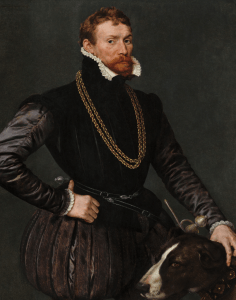
Her son Thomas Stuckeley worked for Charles Brandon, Duke of Suffolk under Henry VIII, and then went on to lie, cheat and swindle his way through Edward VI, King Henri of France, Mary I, Elizabeth I, Holy Roman Emperor Philip, and Pope Gregory, before disappearing alongside King Sebastian of Portugal during a battle in Morroco.
Richard Edwardes
Edwardes was born in North Petherton, Somerset in 1525, to William Edwardes and his wife Agnes Blewitt. The legends say King Henry visited hunting grounds and met Agnes, who cannot have been more than fifteen in 1525, and fathered her child. The trouble with the theory is that King Henry did not travel on progress anywhere near Somerset in the 1523-1525 window in which Agnes gave birth. Agnes was not a lady at the royal court. A tale that King Henry paid Agnes a stipend for her baby’s education is similarly nothing but theory.
Agnes’ son Richard Edwardes grew up in North Petherton before attending Oxford in 1540, studying under George Etheridge, becoming a fellow in 1544 and joining Christ Church College Oxford in 1546. But Edwardes’ talents lay in composing, poetry, and writing plays, and joined the Chapel Royal in 1557. A life at court writing now-famous and Shakespeare-inspiring plays, and composing music for Queen Elizabeth I saw Edwardes happy and successful, only for him to die right before receiving a substantial gift from the queen now rumoured to be his sister.
Henry Lee
One of the more unusual claims was yet another son named Henry, this child born in 1533-1534. This child was born at a time when King Henry was married to Anne Boleyn and their daughter Princess Elizabeth had just been born. Baby Henry’s father, Sir Anthony Lee was an attendant to Thomas Cromwell, who married Lady Margaret Wyatt, daughter of Cromwell’s dear friend Sir Henry Wyatt. The pair likely met as Margaret Wyatt was close to Thomas Cromwell, and she spent time with him and his wife before her marriage, and again in later years when her husband was in prison. But Margaret Wyatt, Margaret Lee after marrying in 1532, was a lady-in-waiting for Anne Boleyn, albeit a quiet woman. Margaret would have spent much time at court, well within King Henry’s sights.
Henry Lee lived a reasonably quiet life among his educated circle of family and friends as he worked in parliament, and rose to become Queen Elizabeth’s Champion in 1570, at the age of fifty-seven. Henry remained close to the queen for another twenty years before doing the one thing almost no one (except his grandfather Henry Wyatt) did in a Tudor court – retire happy in old age.
Ahead of the release of Henry VIII’s Children: Legitimate and Illegitimate Sons and Daughters of the Tudor King on 30 May (Pen & Sword Currently have a 30% off special throughout May), I am doing a 15-part series on some of the smaller, lesser-known details that are covered in the book. These details played out in the background of the defining moments of the lives of each of Henry’s children. Here is a snippet of the story of Mary Boleyn’s children.
PART 3 – THE CAREY CHILDREN
Of the handful of illegitimate children ascribed to King Henry’s name, Catherine Carey holds the greatest claim. Yet even then, the story of her parentage is as flimsy as the evidence for King Henry’s involvement with Catherine’s mother. Mary Boleyn is well-known as a mistress to the king; a tale so often told it gives rise to its own common myths and tropes. Mary returned home from her time in France and was married to William Carey in February 1520. Many theories on how King Henry and then embarked on an affair with Mary are based entirely on hearsay and fiction.
Lady Mary Boleyn, also known as Lady Carey, via wikimedia commons
What is certain is by early 1524, Mary Boleyn gave birth to Catherine. But Mary was married, and naturally, baby Catherine was attributed to William Carey, and despite later slander, no one at the time suspected auburn-haired Catherine to be the king’s daughter. Catherine Carey’s birth came at a time when King Henry was increasingly anxious about the royal succession, and the birth of auburn-haired Henry Carey, likely in early 1526, only made things more complicated.
Catherine and her brother Henry likely lived with their parents during their early years; William Carey was granted the borough of Buckingham in February 1526, in a specific entail that stipulated the land could only be inherited by all ‘lawfully begotten’ heirs. By this time, Mary and King Henry had likely given up any potential relationship. Life for young Catherine Carey was like any of the period, until the sweating sickness outbreak, when William Carey suddenly died on 22 June 1528. Catherine probably stayed with her mother Mary after Carey’s death, while Henry Carey went to live in Anne Boleyn’s care, now she was the Boleyn in the king’s affections.
Despite the Boleyn family’s standing, Catherine Carey’s early life is a mystery. Young when her aunt was queen, her movements and life go unrecorded, though when her mother Mary married Sir William Stafford and fell pregnant in 1534, Catherine likely lived either in Calais, where soldier Stafford was stationed, or at the various estates in Staffordshire owned by Stafford’s noble father. Mary and her new husband were quiet during the execution of Anne Boleyn, but in late 1539, Thomas Cromwell invited Mary and young Catherine to court to meet Anna of Cleves. Catherine was given a place in Anna of Cleves’ household at court, as short-lived as it would be. Catherine used the time wisely; by 26 April 1540, sixteen-year-old Catherine married Francis Knollys, who had been drafted into the gentlemen-pensioners with Catherine’s father.
Catherine transferred to new Queen Katheryn Howard’s household in late 1540, only to leave and embark on a family Henry VIII could have only dreamed of – sixteen children born over twenty-two years. After her marriage, an act of parliament ensured Francis Knollys’ lands were jointly in Catherine’s name, and soon after, Mary Knollys was born. A year later came Henry Knollys, followed Lettice, William, and Edward by 1547, who lived between their estates at Rotherfield Greys in Oxfordshire and Reading in Berkshire when not in London.
Being married to a staunch Protestant, Catherine was well-placed when Edward VI took the throne. Francis Knollys did well, being knighted in 1547 for his work against Scotland, aided William Cecil in religious changes, and by the time King Edward died in 1553, was already well-endowed with lands and estates. These came in useful, as Robert, Richard, Elizabeth, Maud, Thomas, and Francis the younger were been born to Catherine during King Edward’s reign, many with the rich auburn hair of the Tudors. But darker times soon befell Catherine when Queen Mary took the throne, leaving Protestants like herself at Mary’s mercy. Princess Elizabeth penned a sad goodbye to Catherine just before she, Francis, and their children left England for the safety of Germany during Mary’s reign.
Catherine and Francis Knollys needed to relocate to Frankfurt, and this period of instability gave Catherine a break from childbirth; she had given birth every year since she had married, so unless unfortunate miscarriages occurred, she was likely apart from her husband at times, before giving birth to Anne in 1555. Catherine then joined Francis in Germany, taking only five of her children, forced to leave the rest behind, probably at Rotherfield Greys.
Catherine Carey, Lady Knollys, via wikimedia commons
Catherine’s husband Francis did well among the Protestants in Germany, before returning to England on the death of Queen Mary in November 1558. The following month, Catherine moved into Queen Elizabeth’s household as Chief Lady of the Bedchamber, the most senior lady-in-waiting. Francis was admitted to the Privy Council as Queen Elizabeth took power. As soon as Catherine was safe back in England with her husband at court, the yearly pregnancies returned, with daughters born in successive years, Catherine, Cecily, Margaret, and then Dudley Knollys, though Dudley did not survive long after birth. Thankfully, Catherine was never again recorded as pregnant, though her remaining surviving portrait shows her pregnant, likely with Dudley. Their comfortable and favoured lives continued in relative peace throughout the 1560s with Catherine as head of Elizabeth’s chamber, but she fell ill and died on 15 January 1569 at Hampton Court Palace.
Henry Carey, born on 4 March 1526, had a similarly obscure upbringing as his sister Catherine. He likely lived with his family until his father’s death in 1528 and became a ward of Anne Boleyn, who placed him in a Cistercian monastery to be educated. He did benefit from the tutoring of French scholar Nicholas Bourbon in 1535, but other than that, his life goes unrecorded. Despite the pedigree the Carey household had through their Beaufort/Spencer lineage (William Carey’s aunt was Countess of Northumberland), it seems as if the Carey family quickly forgot Henry and his sister Catherine after William Carey’s death. These details only fuel speculation about their true parentage. As all monasteries were closed by 1540, Henry Carey could have been placed in any number of households, possibly even Princess Elizabeth’s. He was not forgotten; his sister was a noblewoman, and in 1545, he married Anne Morgan, granddaughter of Blanche Milbourne, Lady Troy, one of Princess Elizabeth’s early governesses. His wife’s aunt, Blanche Parry, also spent time serving Princess Elizabeth.
Henry Carey, Baron Hunsdon, via wikimedia commons
Henry Carey was selected for parliament in 1547 under King Edward and again in 1554-5 under Queen Mary, suggesting he had moderate religious views and obeyed the constantly changing religious rules. As soon as Elizabeth became queen in November 1558, she knighted her cousin Henry Carey and made him a baron after her coronation a few months later. Elizabeth gave Carey her manor at Hunsdon, which had been a home belonging to Queen Mary only months earlier, and where Elizabeth (and possibly Henry Carey himself) spent much time growing up. Carey also gained lands in multiple locations, a pension, a court role, and became a Knight of the Garter. They clearly knew each other very well.
Decade after decade, Carey served his queen, including facing off against rebellions and possible invasions of England. His wife Anne gave him thirteen children, with illegitimate children also born to Carey through the years. But Henry Carey fell ill in July 1596 and died at Somerset House on The Strand in London. Queen Elizabeth offered Henry Carey the earldom of Ormond on his deathbed, a title once belonging to their shared grandfather Thomas Boleyn, but Carey declined.
The families of Catherine and Henry Carey ensured the family line with dozens of children. Whether they secretly carried on Henry VIII’s bloodline, while his legitimate children could not, is entirely a matter of conjecture. Even if the rumours were untrue, the Carey children and grandchildren had strikingly similar looks to Queen Elizabeth, so perhaps it was the Boleyn genes that prevailed over the Tudors. After all, it is not a descendant of Henry VIII who sits on the English throne today, but a descendant of Mary Boleyn, in King Charles III.
Ahead of the release of Henry VIII’s Children: Legitimate and Illegitimate Sons and Daughters of the Tudor King on 30 May (Pen & Sword Currently have a 30% off special throughout May), I am doing a 15-part series on some of the smaller, lesser-known details that are covered in the book. These details played out in the background of the defining moments of the lives of each of Henry’s children. Here is a snippet the story of Bessie Blount’s second child born to King Henry.
PART 2: THE BIRTH OF ELIZABETH TAILBOYS
When the king’s illegitimate son Henry Fitzroy was born in June 1519, the royal court was on progress, only travelling north to Essex in August. King Henry and the court stayed at Havering for three nights, less than twenty miles south of Blackmore, where Henry’s mistress Bessie Blount and her new son lived at the priory. Nearby Newhall Palace then hosted the banquet of the summer, where the king spent 200l (over £100,000 today) on a masque to be performed, and this is likely when the myth of how Henry boasted of a son was born (in truth, he toasted King Francis’ new son Henri). Henry then moved to Heron Hall, just six miles from Blackmore between 12-14 September, and likely met with Bessie and her son at this time, or indeed several times during these close movements around her home in August and September.
Blackmore Church, via wikimedia commons
Assuming Bessie had a straightforward birth, by mid-September, Bessie would have recovered and been able to resume her relationship with the king. The king was not a man to use and discard women; despite the later image of a gluttonous, womanising tyrant, Henry was once a charming, popular, athletic, and intelligent man who loved to love. There is nothing to suggest Bessie was tossed aside. Given that Bessie then gave birth again, likely at Blackmore in mid-1520, her relationship with Henry was still ongoing, and their baby Elizabeth could have been conceived during Henry’s September visit to the area.
Newhall Palace, renamed Beaulieu Palace in 1523, via wikimedia commons
Bessie’s second child shared the surname of her first husband, whom she only married several years later. Baby Elizabeth possibly had no surname for a time, living quietly with her mother at Blackmore. Lord Herbert of Chirbury, who wrote of King Henry with the benefit of now lost evidence, recorded, ‘(Henry Fitzroy), roving so equally like to both his parents, that he became the first emblem of their mutual affection’. Whether Herbert meant the literal ‘first’ emblem or its sixteenth-century meaning of ‘foremost’, both suggest there was more than one result of their relationship.
In June 1520, King Henry and the entire court attended the Field of Cloth of Gold in France, including Bessie’s father John Blount, and all their extended relatives in royal service. Bessie Blount is the notable exception. Given baby Elizabeth was twenty-two in 1542, she was born while the king was away. Bessie’s absence in France is suddenly much easier to explain.
It was two more years before Henry had Cardinal Wolsey find a husband for Bessie, though some historians suggest Henry wanted Bessie married off as soon as Fitzroy was born, and that baby Elizabeth was not Henry’s daughter. There are things to suggest that was not true. Given that Bessie did not fall pregnant again after her daughter Elizabeth’s birth in mid-1520, her relationship with the king may have cooled. Bessie and her family had not received much in the way of gifts or grants from the king, but Henry could help her find a good marriage. Cardinal Wolsey, who had been overseeing Fitzroy’s life and housing, arranged for Bessie to marry one of his wards, Gilbert Tailboys. Tailboys was a suitable husband and would gain the barony of Kyme after his father died. The date of the marriage goes unrecorded, but Bessie and her husband received the Tailboys’ lands in Somerset, Yorkshire and Lincolnshire on 18 June 1522, Fitzroy’s third birthday. This suggests the marriage had recently taken place, with the land worth 200l and with an annuity of 40l (around £20,000 today). While Bessie’s many sisters were doomed to the fate of simple marriages and provincial lives, Bessie was safe. More sons for Bessie quickly followed, with George born in 1523 and Robert born in 1528, and at least three tragic losses between the two.
Little Malvern Priory, one of the last lands given to Elizabeth Tailboys by King Henry in late 1546, via wikimedia commons
Meanwhile, Henry Fitzroy’s sister Elizabeth, while named Tailboys, was not forgotten by the king, even if she was not acknowledged as his daughter. King Henry visited Elizabeth once she was grown, helped her gain the title of baroness in her own right, and backed her in legal battles against her terrible first husband. Elizabeth was able to live the life of a titled and wealthy heiress, and married Ambrose Dudley, becoming the Countess of Warwick. Elizabeth Tailboys had never been welcome among the Tailboys family but was certainly welcome in noble circles throughout her life.
Ahead of the release of Henry VIII’s Children: Legitimate and Illegitimate Sons and Daughters of the Tudor King on 30 May (Pen & Sword Currently have a 30% off special throughout May) , I am doing a 15-part series on some of the smaller, lesser-known details that are covered in the book. These details played out in the background of the defining moments of the lives of each of Henry’s children.
PART 1: The Royal Lockdown of 1517-18
King Henry, in his typically luxurious manner, hosted a banquet at Greenwich on 7 July 1517, to celebrate England’s new League in Defense of the Church, a three-sided treaty with King Charles of Spain and Holy Roman Emperor Maximilian. This treaty specifically excluded France, but also defended the Catholic faith. The festivities of St Thomas’ Day celebrated the alliance; dinners, banquets, jousts, dancing, music, and a buffet thirty feet long, with meals brought out on elephants, panthers, and lions. But, among the glorious celebratory jousts, the worst possible scenario occurred, a huge outbreak of sweating sickness. The international pageant was not over, but ominous news of sudden deaths arrived at the court. While the disease did periodically spring up in England, it is also possible the hundreds of international visitors may have transported the illness. Two of King Henry’s younger privy chamber men, Thomas Baron Clinton, and Lord Grey of Wilton, died suddenly at Richmond.
Windsor Castle, via wikimedia commons
Henry and Katharine fled immediately to Windsor and did not see their eighteen-month-old daughter Princess Mary for months. The last thing they needed was their precious daughter succumbing to the illness, not unlike the illness that killed Prince Arthur fifteen years earlier. The illness spread through England and then Europe, and deaths quickly ran into the thousands. Cardinal Wolsey fell sick with the illness for the fourth time and vowed to take a pilgrimage to Walsingham if he survived. The illness killed noble and common-born subjects with impunity, and with the king away, the locals of London planned more attacks on foreign merchants.
Farnham Castle drawbridge entrance, via wikimedia commons
Henry and Katharine passed the months in seclusion, but those around them kept dying, and they fled to Farnham Castle to allow Windsor to be cleaned. They only returned to Windsor for New Year, where they could be reunited with Princess Mary. Mary stayed on with her parents at Windsor, celebrating her second birthday, and met Venetian ambassador Sebastian Guistanian on 28 February 1518. The sweating sickness was still out of control, but the ambassador touched Mary’s hand, given more deference and respect than Katharine. It was at this meeting that Henry uttered his well-known boast that Mary never cried, and Mary’s first public word. After the meeting, Henry and Katharine, and likely Mary too, left for Woodstock Palace to continue running from the sweat.
Woodstock Palace, via wikimedia commons
While Henry started his first book in isolation, Assertio Septem Sacramentorum, a collection of claims refuting Martin Luther’s works, the quiet time for the royal couple had a better result; Queen Katharine was finally pregnant, likely conceiving in early March 1518. The queen took a private pilgrimage to St Frideswide’s in Oxford, to give an offering to Christ Church cathedral’s relics. Having multiple children gave Henry and Katharine options; if Katharine had a son, England would have an heir, and Queen Claude of France had just given birth to a son. Mary could marry him and be Queen of France.
This time, thanks to the illness and the resulting isolation, Katharine kept her pregnancy quiet, and Princess Mary was returned home to Ditton to remain safe, as even Henry’s bedchamber servants were dying. Katharine did have a few ladies to keep her company during isolation, one being twenty-year-old Bessie Blount. While still in isolation, Princess Mary’s future marriage to infant Francis, Dauphin of France was agreed upon on 30 June 1518, and at once, this upset King Charles of Spain and Emperor Maximilian, the same rulers Henry had painstakingly entertained one year earlier when the banquet unwittingly released the sweating sickness.
Bisham Manor, once attached to Bisham Priory, via wikimedia commons
Around the time of the marriage treaty, the sweating sickness infiltrated Princess Mary’s household, when one of her servants fell desperately ill. Henry ordered Mary’s household to move to Bisham, eleven miles northwest of her home at Ditton, before travelling to The More in Hertfordshire, where the king remained safe with Katharine. By this time, Katharine would have been visibly pregnant, and news of her pregnancy had spread. After time with her parents and staying well, Princess Mary’s household continued to move through summer homes, stopping at Havering, Hatfield, and Tittenhanger, before heading back to Ditton. This period of dodging the sweating sickness gave Mary one of the longest periods of her life when she could stay with both of her parents.
Havering Palace, via wikimedia commons
By September 1518, it was back to business as usual at the royal court, with a lavish banquet in honour of French delegates in London for Mary’s betrothal treaty on 2 October. England was giving away its heir in marriage; it was a massive gamble and the couple needed a son, so France did not take England’s crown when Mary married. As Queen Katharine was due to give birth to the longed-for royal son, King Henry was paired for dancing at the banquet with Bessie Blount.
Queen Katharine’s last child, a baby girl, was stillborn or died just after birth on 10 November 1518. Bessie would give birth to illegitimate Henry Fitzroy nine months after the banquet.
 Ahead of the release of Henry VIII’s Children: Legitimate and Illegitimate Sons and Daughters of the Tudor King on 30 May (Pen & Sword Currently have a 30% off special throughout May), I am doing a 15-part series on some of the smaller, lesser-known details that are covered in the book. These details played out in the background of the defining moments of the lives of each of Henry’s children. Here is a short introduction to Etheldreda Malte, daughter of the king.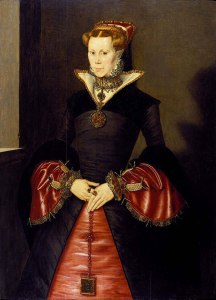
 Ahead of the release of

 Thomas Stuckeley
 Henry Lee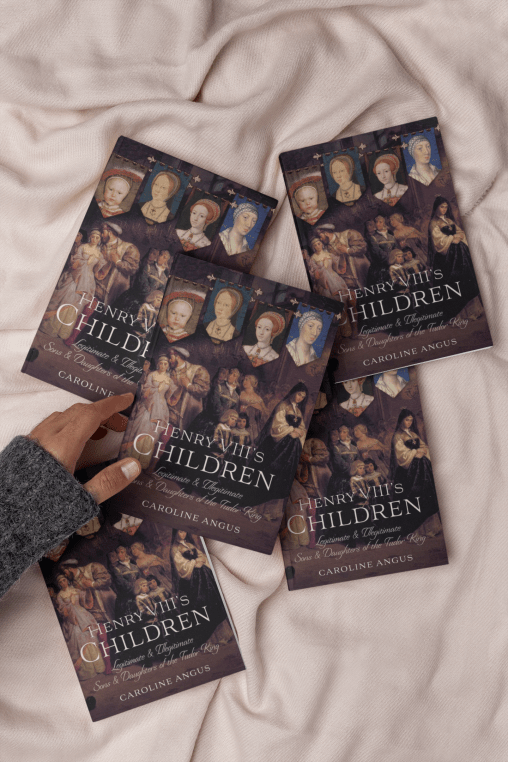




 CAROLINE ANGUS