
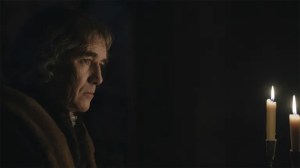
Watching Wolf Hall 2, The Mirror and the Light, you would be forgiven for wondering why Cromwell wrote to King Henry and begged for mercy. Being cruel was in Henry’s nature. When Cromwell’s letter arrived to the king, he had his secretary Ralph Sadler read it aloud three times. Henry was feeling the weight of his mistake in arresting Cromwell by 9 July when work was piling up and Cromwell was no longer there as an intermediary between the king and all those who needed something. Cromwell had been attainted and the writ had gone through parliament. Henry couldn’t set a legal precedent and overrule an attainder. But contrary to belief, Henry did grant Cromwell mercy, by having him beheaded as an earl, not hanged or burned like a commoner.
The letter written by Cromwell to King Henry on 30 June 1540 served primarily to recall the finer points of Henry’s marriage to Anne of Cleves (note: Cromwell was not speaking the full truth, rather the agreed set of lies needed to create the Henry-Anna annulment). Cromwell had been interrogated the day prior by Norfolk, Audley and Fitzwilliam, with Wriothesley writing out a series of questions and answers to be signed by Cromwell and sent to Henry directly. Also on 29 June, the House of Lords passed the final draft of Cromwell’s Act of Attainder, meaning he had been declared guilty of treason on the false evidence provided primarily by Norfolk, Gardiner, Fitzwilliam and Wriothesley. The initial draft had gone through parliament ten days earlier, passing unanimously, likewise the final draft on 29 June (not that anyone actually had any choice but to vote in favour). Cromwell would have received this information at his interrogation, and being the man who wrote the Treasons Act 1534, knew that the punishment was hanging, drawing and quartering (though even Henry commuted it beheading much of the time).
This long letter survives in two forms, as a heavily mutilated draft (British Museum Oth. C. x f.247), and a finished copy (Hatfield House, Cecil Papers, 124-7) , both written on the same date. Below is a modern copy (using modern punctuation, as Cromwell loved extremely long sentences) from my book of Cromwell correspondence. I have added footnotes for the names mentioned, in case you get people mixed up. On The Mirror and the Light, Cromwell is called Lord Chancellor, which is not true, he was Vicegerent and Lord Privy Seal.

To the king, my most gracious Sovereign lord, his Royal Majesty.
Most merciful king and most gracious sovereign lord, may it please the same to be advertised that the last time it pleased your benign goodness, to send unto me the right honourable Lord Chancellor,[1] the Right Honourable Duke of Norfolk,[2] and the Lord Admiral[3] to examine, and also to declare to me, diverse things from your Majesty, amongst the which, one special thing they moved and thereupon charged me as I would answer, before God at the dreadful day of Judgement and also upon the extreme danger and damnation of my soul and conscience, to say what I knew in the marriage and concerning the marriage between your highness and the queen, to the which I answered as I knew, declaring to them the particulars as nigh as I then could call to remembrance, which when they had heard, they, in your Majesty’s name, and upon like charge as they had given me, before commanded me to write to your highness the truth as much as I knew in that matter, which now I do, and the very truth as God shall save me, to the uttermost of my knowledge.
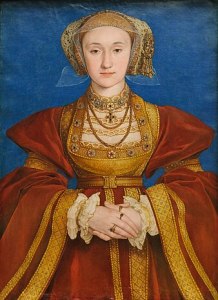
First, after your Majesty heard of the lady Anne of Cleves’ arrival at Dover and that her journeys were appointed towards Greenwich, and that she should be at Rochester on New Year’s Eve at night, your highness declared to me that you would privily visit her at Rochester upon New Year’s Day, adding these words “to nourish love,” which accordingly your Grace did upon New Year’s Day as is abovesaid. And the next day being Friday, your Grace returned to Greenwich where I spoke with your Grace and demanded of your Majesty how you liked the lady Anne. Your highness answered, as I thought heavily and not pleasantly, “nothing so well as she was spoken of.” Saying further that if your highness had known as much before as you then knew, she should not have come within this realm, saying as by way of lamentation what remedy, unto the which I answered and said I knew none but was very sorry. Therefore, and so God knows, I thought it a hard beginning, the next day after the receipt of the said lady and her entry made into Greenwich and after your highness had brought her to her chamber, I then waited upon your highness in your privy chamber, and being there, your Grace called me to you, saying to me these words, or the like, “my lord, is it not as I told you, say what they will, she is nothing so fair as she has been reported, howbeit, she is well and seemly.” Whereunto I answered, saying, “by my faith, Sir, you say truth,” adding thereunto that yet I thought she had a queenly manner, and nevertheless was sorry that your Grace was no better content, and thereupon your Grace commanded me to call together your Council, which were these by name: the Archbishop of Canterbury,[4] the Dukes of Norfolk and Suffolk,[5] my lord Admiral, my lord of Durham[6] and myself, to common of those matters, and to know what commission the Agents of Cleves had brought as well, touching the performance of the covenants sent before from hence to Doctor Wootton[7] to have been concluded in Cleves, as also in the declaration how the matters stood for the covenants of marriage between the Duke of Lorraine’s son[8] and the said lady Anne. Whereupon, Olisleger[9] and Hoghestein[10] were called and the matters purposed, whereby it plainly appeared that they were much astounded and abashed and desired that they might make answer in the next morning, which was Sunday. Upon Sunday in the morning, your said Councillors and they met early, and there again it was proposed unto them, as well touching the omission for the performance of the treaty and articles sent to Master Wootton, and also touching the contracts and covenants of marriage between the Duke of Lorraine’s son and the lady Anne, and what terms they stood in. To the which things so proposed, they answered as men much perplexed that as touching the commission they had none to treat concerning the articles sent to Mr. Wootton, and as to the contract and covenant of marriage they could say nothing but that a revocation was made, and that they were but spouseless, and finally after much reasoning they offered themselves to remain prisoners until such time as they should have sent unto them from Cleves, the first articles ratified under the Duke,[11] their Master’s, signature and seal, and also the copy of the revocation made between the Duke of Lorraine’s son and the lady Anne. Upon the which answers, I was sent to your highness by my lords of your said Council to declare to your highness what answer they had made, and came to your highness by the privy way into your privy chamber and declared to the same all the circumstances, where your Grace was very much displeased, saying I am not well handled, insomuch that I might well perceive that your highness was fully determined not to have gone through with the marriage at that time, saying unto me these word or the like, in effect that, “if it were not that she is come so far into my realm, and the great preparations that my states and people have made for her, and for fear of making of a ruffle in the world, that is to mean to drive her brother into the hands of the Emperor and French king’s hands, being now together, I would never have nor marry her,” so that I might well perceive your Grace was neither content with the person nor yet content with the preceding of the Agents. And after dinner, the said Sunday, your Grace sent for all your said Councillors, and in repeating how your highness was handled as well as touching the said articles and also the said matter of the Duke of Lorraine’s son, it might, and I doubt not, did appear to them how loathe your highness was to have married at that time. And thereupon and upon the considerations aforesaid, your Grace thought that it should be well done that she should make a protestation before your said Councillors, and notaries to be present, that she was free from all contracts which was done accordingly. Thereupon, I repairing to your highness, declaring how that she had made her protestation, whereunto your Grace answered in effect the words, or much like, “there is none other remedy but that I must need against my will, put my neck in the yoke,” and so I departed, leaving your highness in a study or pensiveness. And yet your Grace determined the next morning to go through, and in the morning which was Monday, your Majesty, preparing yourself towards the ceremony, there was some question who should lead here to church and it was appointed that the Earl of Essex[12] desist, and an earl that came with her should lead her to church, and thereupon one came to your highness and said unto you that the Earl of Essex was not yet come, whereupon your Grace appointed me to be the one that should lead here. And so I went unto her chamber to the intent to have done your commandment, and shortly after I came into the chamber, the Earl of Essex had come, whereupon I repaired back again in to your Grace’s privy chamber and showed your highness how he had come, and thereupon your Majesty advanced towards the gallery out of your privy chamber, and your Grace, being in and about the middle of your chamber of presence, called me unto you, saying the words or the like in sentence, “my lord, if it were not to satisfy the world and my realm, I would not do that I must do this day for no earthly thing.” And there, with one brought your Grace’s word that she was coming, and thereupon your Grace repaired into the gallery towards the closet and there paused her coming, being nothing content that she so long tarried as I judged then, and so consequently she came, and your Grace afterwards proceeded to the ceremony, and then being finished travelled the day, as appertained, and the night after the custom. And in the morning on Tuesday, I repairing to your Majesty in to your privy chamber, finding your Grace not so pleasant as I trusted to have done, I was so bold to ask your Grace how you liked the queen, whereunto your Grace soberly answered, saying that I was not all men, surely my lord as you know I liked her before not well but now I like her much worse. For to quote your highness; “I have felt her belly and her breasts and thereby as I can judge she should be not a maid, which struck me so to the heart when I felt them that I had neither will nor courage to proceed any further in other matters,” saying, “I have left her as good a maid as I found her,” which me thought then you spoke displeasantly, which I was very sorry to hear. Your highness also, after Candlemas, and before Shrovetide, once or twice said that you were in the same case with her as you were before and that your heart could never consent to meddle with her carnally. Notwithstanding, your highness alleged that you, for the most part, used to lie with her nightly or every second night, and yet your Majesty ever said that she was as good a maid for you as ever her mother bore her, for anything that you had ministered to her. Your highness showed me also in Lent last passed, at such time as your Grace had some communication with her of my lady Mary how that she began to wax stubborn and wilful, ever lamenting your fate and ever verifying that you had never any carnal knowledge with her, and also after Easter your Grace likewise at diverse times. In the Whitsun week. in your Grace’s privy chamber at Greenwich, exceedingly lamented your fate and that your greatest grief was that you should surely never have any more children for the comfort of this realm if you should so continue, assuring me that before God you thought she was never your lawfully wife, at which time your Grace knows what answer I made, which was that I would for my part do my uttermost to comfort and deliver your Grace of your affliction, and how sorry I was, both to see and hear your Grace. God knows your Grace diverse times since Whitsuntide declared the like to me, ever alleging one thing, and also saying that you had as much done to much the consent of your heart and mind as ever did man, and that you took God to witness, but ever you said the obstacle could never out of your mind, and gracious prince, after that you had first seen her at Rochester, I never thought in my heart that you were or would be contented with that marriage, and Sir, I know now in what case I stand in, which is only in the mercy of God and your Grace, if I have not to the uttermost of my remembrance said the truth and the whole truth in this matter, God never help me. I am sure as I think there is no man living in this your realm that knew more in this then I did, your highness only except, and I am sure my lord Admiral, calling to his remembrance, can show your highness and be my witness to what I said unto him after your Grace came from Rochester, and also after your Grace’s marriage, and also now of late since Whitsuntide, and I doubt not but many and diverse of my lords of your Council, both before your manage and since, have right well perceived that your Majesty has not been well pleased with your marriage, and as I shall answer to God I never thought your Grace content after you had once seen her at Rochester, and this is all that I know.
Most gracious and most merciful sovereign lord, beseeching almighty God, whoever in all your causes has ever counselled perceived, opened, maintained, relieved and defended your highness so he now will save to counsel you, preserve you, maintain you, remedy you, relieve and defend you as may be most to your honour, wealth prosperity, health and comfort of your heart’s desires. For the which, and for the long life and prosperous reign of your most royal Majesty, I shall, during my life and while I am here, pray to almighty God that He of his most abundant goodness, will help aid and comfort you, and after your continuance of Nestor’s[13] years, that that most noble Imp, the prince’s grace, your most dear son, may succeed you to reign long, prosperously and felicitously to God’s pleasure, beseeching most humbly, your Grace to pardon this, my rude writing, and to consider that I am a most woeful prisoner, ready to take the death when it shall please God and your Majesty. Yet the frail flesh incites me continually to call to your Grace for mercy and pardon for my offences and in this, Christ save, preserve, and keep you. Written the Tower, this Wednesday the last of June, with the heavy heart and trembling hand of your highness’ most heavy and most miserable prisoner and poor slave.
Most gracious prince, I cry for mercye, mercye, mercye
THOMAS CRUMWELL
~~~
All texts and sources come from The Letters and Remembrances of Thomas Cromwell. My publisher might come for you if you plagiarise.
[1] Thomas Audley, good friend to Cromwell
[2] Thomas Howard, Duke of Norfolk one of Cromwell’s biggest enemies alongside Stephen Gardiner
[3] William Fitzwilliam, who took the Lord Privy Seal role in 1540, only to die two years later
[4] Thomas Cranmer, Archbishop of Canterbury, close friend to Cromwell, created the English bible together
[5] Charles Brandon, Duke of Suffolk, sometimes friend to Cromwell, neutral in most matters
[6] Bishop Cuthbert Tunstall of Durham, staunch Catholic and enemy of Cromwell
[7] Nicholas Wootton, English ambassador to Cleves who arranged the marriage
[8] Francis I of Lorraine, Duke of Lorraine from 1544, died in 1545
[9] Henry Olisleger, Vice-Chancellor of Cleves, and ambassador to England
[10] Wernerus von Hoghestein, Chancellor and Hofmeister (court master) to the Duke of Cleves
[11] Wilhelm, Duke of Cleves, Anna’s elder brother
[12] Henry Bourchier, who died horse-riding on 13 March 1540, the king giving the Essex title to Cromwell on 18 April 1540
[13] Nestor from the Iliad, known for wisdom and generosity, which increased as he aged. The comparison was considered a compliment



 CAROLINE ANGUS