This Week in Spanish Civil War History Extra: 80 Years since the Málaga-Almería Massacre

‘The Moors are coming’

By January 1937, the Spanish Civil War already six months old, and the southern region of Andalucía had already been through its fair share of horrors. With much of the area sided with the Republicans, the Nationalists, led by fascist Franco (and his German and Italian allies) were hot on ripping through Andalucía and ruling the area, and were having great success. In January, General Queipo de Lllano, who had already enjoyed mass executions through Andalucía, was named head of the Army of the South, a division of 15,000 troops, made up of Spanish soldiers and Moorish fighters from Morocco, based in Seville. They were aided by Italian men brought in from Cadiz, 10,000 ‘Blackshirts’, and were ordered to take Málaga on the southern coast, picking up Granada, Marbella and Ronda on the way, along with the surrounding rural areas.

bandicam-2017-02-08-14-17-38-504

The city of Málaga, population 250,000, plus another 90,000 who had fled there from the countryside, saw no immediate reason to worry, and their 12,000 Republican militia (only 8,000 armed) did not take up any training, dug in no trenches, set up no road blocks and manned no hilltop lookouts. They simply did not have the manpower or supplies to defend themselves. The Nationalists were battle-hardened men who had no problem killing brutally, particularly the Moorish soldiers, who had committed horrid crimes elsewhere in Spain.

The attack began on February 3, 1937 when Ronda was defeated by Nationalist troops, leading them right to Málaga, coming from the west. The Italian troops, who had entered the region from the northern hills, arrived on February 6. At that point, all the people of the city could either fight or flee. Through the day on February 7, the Republican fighters were torn apart by the onslaught of the Nationalists, and executions began. It mattered little whether you were a militiaman or not, you were executed. Women were raped brutally, and then shot if the rape didn’t kill them. Children were killed in the crossfire or just killed as collateral damage. February 8 marked the official fall of Málaga, completely swamped with Nationalist soldiers and bombed from the air by German and Italian planes. Boats offshore also bombarded the city. Around 4,000 people were killed in the initial executions alone, though exact numbers are not possible.

The people of Málaga had only one way to go; east along the coast towards the haven of Almería, an area relatively safe at this point in the war. But Almería was 220km (135 miles) along the N-340. It is unknown precisely how many people tried to flee, either on foot, donkey or by truck (until petrol ran out anyway), though an estimate by Contemporary History professors Encarnación Barranquero and Lucia Prieto is 100,000 now-refugees.

By dawn on February 8, the city was Nationalist territory, and many of the people who fled were around 30 kilometres east in Torre del Mar, walking the sparse road. Trucks that ambled past were loaded with children, parents eager to get them to safety any way possible, begging the trucks to take children from their arms as they walked. They had to walk with everything they owned, clothes, bedding, sewing machines, tools, water, anything they had, strapped and carried by their bodies or donkeys. But the walk was not their only problem. General Queipo de Llano was not content with taking the city and executing those who didn’t flee. The refugees would be chased.

As people trekked the winding, hilly, unsealed road, the troops were making their way behind them, swift and trained for marching. Then bombing from the air along the road began. People had nowhere to hide – caves, ditches, rocks, anything had to be used for defense as the Nationalists looked to wipe out the lot. The 16-kilometre stretch between Nerja (55 kilometres east of Málaga) and La Herradura suffered a terrible fate as the first wave of civilians were attacked, bodies littering the road as they were defenseless from the air. Parents were forced to dig with their hands and bury their children. People pressed themselves against cliff-faces in the hope of safety and died on the spot. Gutters filled with bodies as they fell from the roadside. Whole extended families were found lying together, all dead, and some with children left alive, picked up by other people strong enough to carry an extra person. The bridge over the Guadalfeo River, 90 kilometres from Málaga, was bombed, sending innocent refugees into the water and drowned at nightfall.

By the time the refugees arrived in Motril, 95 kilometres from Málaga, the International Brigades were there to help defend them against the Nationalists, but many refugees were now injured, starving and exhausted, and still had a long way to go, with family members left dead on the roadside. None would return until the end of the war, some remained in exile for life. Reports state that skeletons of the people killed on that dusty stretch were still to be found on the roadside until the mid-1960’s. No one wanted to go home along the N-340, and the whole incident was silenced.

One man became well-known in the mess, a Canadian named Norman Bethune. A doctor and ambulance driver, he was in Spain to fight fascism as an international volunteer. His ambulance raced back and forth along this road, trying to save all he could. To read about Bethune, try ‘The Ambulance Man and the Spanish Civil War’ by Paul Read. It’s a shame the locals who suffered this event were not so well-known, their stories limited to tales told between generations until recently.

Professors at the University of Málaga estimate over 5,000 people died on the road, based on oral histories collected, plus burial records in Salamanca, and Málaga archives. Bodies were not properly buried or treated, so the exact figure can never be established. Those killed and buried along the roadside are still left there today. Ten years ago, the Diputación de Málaga opened its archives for professors to complete historical memory works on the massacre in the area, to accompany the stories of 400 people who came forward with their personal accounts of the event.

The Malaga-Almeria massacre is commemorated at Torre del Mar, considered a halfway point along the road where the massacre took place, on February 7, the date people began to flee their homes in Málaga. This attack was almost a practice, a prelude to many atrocities that would go on to occur in WWII. The damage done to the people of Málaga, the towns that were in the firing line towards Almeria, and the whole rural region itself is unimaginable, and how it shaped and changed the lives and lifestyle of following generation in the area has been largely ignored until recent times.

If you are interested and can read Spanish, the book by professors Encarnación Barranquero and Lucia Prieto from the University of Malaga is Poblacion y Guerra Civil en Málaga: Caido Exodo y Refugio, an excellent book, well researched, with powerful personal recollections.

A first person account written is 1937 is Norman Bethune’s The crime on the road Malaga-Almeria : narrative with graphic documents revealing fascist cruelty (if you can get a copy – I can’t!)

~~

This is not a detailed analysis, just a highlight (lowlight?) of the week’s events. Things get lost in translation – Feel free to suggest an addition/clarification/correction below. The more the world remembers, the better. All photos are auto-linked to source for credit.

Francoist Street Names Are Out. Women’s Accomplishments In Spain Are Finally In

2016 saw the 80th anniversary of the start of the Spanish Civil War, and the 41st celebration of Francisco Franco‘s death. Yet on many streets all over Spain, the men who fought and assisted Franco though his 39 years of war and dictatorship are still revered with street names, vile and cruel men who harmed untold thousands. It is long past time to remove these names, and the opportunity to name streets after women has finally arrived.

Spain’s political situation is a hot mess – the December 2015 election ended in a stalemate, and subsequent efforts for coalition and even new elections have produced not a lot. The left-wing Podemos party, made of newcomers and small groups coming together to gain power, have found their place in some cities, such as Madrid and Barcelona. Spain has the History Memory Law, enacted in 2007, which provides rules to allow the reburial of SCW victims, and removal of all Franco (and Franco cronies) monuments, dedications and street names (the law has a wide range of powers; this is just an example). While many cry about leaving the past in the past, those with a wider view want to put right as much as can possibly be done. It is time to use Article 15 of the memory laws to change the streets named after men who murdered their way to power and used fear to stay there.

Some examples of names changes is in Calle de Soledad Cazorla (Spanish link), named after Spain’s first female public prosecutor, who used her position to fight gender violence. Until now, the street was named after Andrés Saliquet (Spanish link), an old-school General and fascist party member, serving in the war and the dictatorship. The notorious General José Varela loses his street name to journalist Carmen de Burgos in Granada, likewise Federica Montseny, Spain’s first female minister, will replace Colonel Chápuli.  Madrid’s Plaza Caudillo (if you’re new, Franco was referred to as the Caudillo, the leader) will be Plaza Mayor in El Pardo.

Places like León have just 5% of female street names, Cadiz has just 3%. People ask why it matters – the naming of a street in your honour is a great privilege; it shows prominence. The lack of female names shows that they are considered better at home than out in the world. Women’s achievements are simply not being recognised in this traditional way of having a street in their honour in Spain. Madrid has 137 streets which are named after the Virgin Mary, but not streets named after real women. Women’s roles are confined to being imagined virgin saints, not actual accomplished members of a community.

Valencia has a new law, meaning that 80% of new names, or streets in need of a change, must be female names. In the Poblet area in the west of the city, eight new streets are needed, and are being decided by public suggestion. Author Carmen Martín Gaite is in the running, along with Las Trece Rosas, 13 women murdered by a firing squad in Madrid in 1939.

The northern city of Oviedo has 22 new streets, a majority going to women. Alicante has a new law ensuring women are included while 50 Francoist streets are removed, and northern Bilbao and southern Cadiz now have mandates in place guaranteeing female names. Cadiz has only eight female street names, all saints, a situation about to be rectified.  In Santander, a motion is in place to remove Francoism from the city and celebrate women, a move which has faced steady criticism (aka fascist man tears).

Without surprise, all this comes with its complainers. The usual cries of ‘that’s just complaining feminists, don’t indulge them’ is rife, with machismo still strong in Spain. Giving women the same rights and rewards as men scares many, as does the notion of altering traditions, even when traditions are inappropriate. Somehow, giving a street name to a fascist murderer is okay, as is keeping the name because ‘tradition’. Changing the name to erase an evil man from memory, and embracing a successful woman still frightens many delicate flowers.

The 2007 memory law has had little success in its nine years. Granada alone has 4,000 victims still dumped in mass graves, Seville has only reburied two of the 104 mass graves in the region. You only need to look at the maps of each region on the Historical Memory Association website to see how many mass graves (fosas) country-wide are ongoing. As family members of the victims pass away themselves, voices are becoming lost and the commitment to the past needs to be honoured. Trouble is, Europe is doing its terrifying swing to the right. Spain is no stranger to the Hitler-fascist salute, regularly done at Francoist sites (especially Valle de los Caídos), and Nazi groups have been springing into violence recently in Madrid. Spain needs to be un-Francoed as fast as possible, and that level of hate needs to be eliminated.

It can be easy to say that what happened in the Franco years is in the past and no longer relevant. But as long as dedications to remarkable women like Dolores Ibárruri are opposed by those in power (due to her left-wing work), the past is still haunting the present. Guadalajara, near Madrid, has the highest number of female street names at a tiny 9.5%, all-but named after virgins and saints. The names are dedicated to women who are bound in legend and many hundreds of years out of date. Women are overlooked in history, so inaccuracies are ever-present. Meanwhile, Spain has a plethora of successful feminists, leaders, scientists, teachers, and modern sports stars who could be honoured, yet are forgotten.  Why not Calle Maruja Mallo (artist), Avenida Clara Campoamor Rodriguez (suffragette), or Paseo Margarita Salas (biochemist). Spain needs more streets named after women like Ángela Iglesias Rebollar (Spanish link), murdered by Franco’s killers, remembered for their struggles.

It’s not like Spain isn’t in need of change; young women need role models, advertised the way men are exposed to their role models, and largely take for granted – because they’ve always been right in front of them. Why have streets and plazas named after Nazi-style killers when you can have streets named after María Mayor Fernández de Cámara y Pita, who fought against the English in 1589, or Manuela Malasaña Oñoro who saw off the French from Madrid in 1808, or pianist Alicia de Larrocha from Barcelona who was an extraordinary composer, or Rosalia Mera Goyenechea from A Coruña who became the richest female entrepreneur worldwide and used her riches to help other women, as such as fighting anti-abortion laws.

Another issue is not just the lack of female names, it’s irrelevance of those that do exist. Margaret Thatcher was given a plaza in Madrid, hardly a popular move. Madrid also has Calle de Quiñones,  homage to the first female run printing workshop, but without her full name, how can anyone look up Maria de Quiñones from the 17th century (did any of you reading this know that until now?).

Galicia is leading the way by looking through historical information to find forgotten women, as is Barcelona, and making sure people can find information about all people awarded a street name. The southern city of Córdoba has passed a law saying 50% of new names must be female, which currently boasts just 6% of female names.

My personal suggestions (in addition to the ones above) –

Isabel-Clara Simó i Monllor – Valencian writer, one of the most important writers in the Catalan language

Clara Campoamor Rodriguez – women’s right campaigner

Federica Montseny Mañé – first female cabinet member – minister of health

Carmen Amaya  – influential flamenco dancer

Alicia de Larrocha – extraordinary pianist and composer

Margarita Salas – biochemist and geneticist

Rosalia Mera Goyenechea – world’s richest female entrepreneur, co-founder of Zara

Rosa Montero Gayo – journalist and author

María de los Ángeles Alvariño González – fishery research biologist and oceanographer

Magdalena (Magda) Bermejo – primatologist

Emilia Espinoza Hazelip  – pioneer of the concept of synergistic gardening

Patri Vergara – professor in Physiology, first woman President of the International Council for Laboratory Animal Science

Dolors Aleu i Riera – first female Spanish doctor

Ana María Matute Ausejo – writer and member of the Real Academia Española

Emilia Pardo Bazán  – Galician novelist, journalist, essayist, critic and scholar

María Josefa Crescencia Ortiz Téllez- Girón/ Doña Josefa Ortiz de Domínguez – insurgent and supporter of the Mexican War of Independence

Rosalía de Castro – Galician writer and poet

It’s not about women being elevated above men, it’s about women being given their due. It’s about successful people (yes, women are people) not being forgotten, their accomplishments out there for all to remember.

Sign at entrance to town of Águeda del Caudillo. Photo: Gaceta de Salamanca


This Week in Spanish Civil War History – Week 13: 10 – 17 October 1936

October 12

University of Salamanca’s rector, writer Miguel de Unamuno, gives a speech at their Columbus Day celebration. The western city, in the Nationalist-held area, has many important right-wing audience members, including Franco’s wife. Unamuno speaks out harshly against General Millán Astray, who leads the Spanish Legionaires. While Unamuno had previously said he was a supporter of the Nationalist, he changes his mind and calls Astray inhuman, and an example of the terrible rebel uprising.

Unonumo said – It torments me to think that General Millán Astray could dictate the norms of the psychology of the masses. A cripple, who lacks the spiritual greatness of Cervantes, hopes to find relief by adding to the number of cripples around him.

Astray cried from the crowd – Death to intelligence! Long live death! to the praise of the Nationalist-loving crowd.

Unamuno finished his time on stage by replying – This is the temple of intelligence, and I am its high priest. You are profaning its sacred domain. You will win because you have enough brute force. But you will not convince. In order to convince it is necessary to persuade, and to persuade you will need something that you lack: reason and right in the struggle. I see it is useless to ask you to think of Spain. I have spoken.

Unamuno left the meeting with Franco’s wife Carmen polo, which secured his immediate safety. But he is soon removed from his job and put under house arrest. He will die, humiliated and ruined, two months later.

October 14

The first 500 international volunteers arrive in Albacete, the eastern town set up as the training base for all international volunteers.

October 15

The first ship from the Soviet Union, carrying Republican bought weapons arrives in the port of Cartagena. The weapons are sorely needed as the Nationalist army continues their bloody march towards Madrid.

~~

This is not a detailed analysis, just a highlight (lowlight?) of the week’s events. Feel free to suggest an addition/clarification/correction below. All photos are linked to source for credit

This Week In Spanish Civil War History Extra: Siege of the Toledo Alcázar – 21 July – 27 September 1936

1280px-die_gartenlaube_1887_b_085

Sketch of the Alcázar above Toledo in 1887

The Alcázar of Toledo was beautifully constructed fortress in the town which was strategically placed on a small hill by a river. First used by the Romans in 59BC, the location ruled over the plains during Roman, Visigoth and Moorish rule. The town was home to Christian, Muslim and Jewish communities living together through the centuries in relative peace. But in 1085 the city fell under Christian rule and the slow decline of the harmony commenced. By 1520, the Alcázar, a palace fortress, was built on the top of the hilltop town by the royal family, and stood until the destruction during the Spanish Civil War in 1936.

The war started on July 17, 1936 when Franco took over the army in Spanish Morocco and staged an uprising. By the morning of the 18th, strict, religious army leader José Moscardó e Ituarte, the military governor of the area, took control of the Guardia Civil police, and decided to lead and control the hilltop town. Toledo had an arms factory, and the Republican government and its followers battled for days to get their hands on the weapons and gain control of their home. Colonel Moscardo was able to fend off the Republicans with his men, and moves were made for Republican reinforcements from Madrid to arrive. By July 20, killings were already occurring on the streets, with both sides attacking and wounding one another, as in all towns and cities in Spain.

t3_3062tq

The grotesque habit of Republicans digging up clergy to show everyone their mortality in Toledo, like everywhere in Spain

Colonel Moscardo had just 800 Guardia Civil officers, around 100 army officers, and the support of 200 right-wing public members. The Guardia Civil had plenty of ammunition to bring to the uprising, but between all these men they only had rifles, a couple of machine guns and a few grenades. Meanwhile, the Republicans in Madrid sent in 8,000 militia men, left-wing supporters banded into groups to save their country, mostly anarchists and workers’ union members. The air force had also sided with the Republicans and were able to fly over Toledo for surveillance and bombing.

Between the call to rise up and claim the city by the rebels on July 17 and the following four days, the Republicans managed to hold off the right-wingers, with only one man arrested as a Republican activist. However, between 100-200 people were taken hostage by the Nationalists, and they including the town’s governor and his family. The hostages and Nationalist families, those belonging to the Guardia Civil men, were put inside the city Alcázar to be safe from the Republicans. This started a siege, with Nationalists trapped in the Alcázar and the Republicans keen to take back their town.

The Alcázar prior to the siege

By July 22, the Republican surge meant the town was in their hands, with the exception of the great Alcázar, which was under bombardment from the air. On July 23, Colonel Moscardo, inside the Alcazar, got a phone call from the Republican leader, Commissar Cabello. They had taken Moscardo’s son hostage, age just 16, and threatened execution. Moscardo told his son to die as a patriot, which young Luis agreed to do. However the Republicans did not yet have the heart to shoot the boy.

For the next three weeks, the Nationalists stayed safe in the Alcázar as the Republicans continued to attack. The insiders only fought when militia fired at the building, or planes dropped bombs from above. Constant bombardment to the strong Alcázar began to weaken the northern side of the fortress. But the constant back and forth of fire, bombs and grenades, meant no one could get close enough to the Alcázar to get inside, not even to the buildings surrounding the building, all of which were still under Nationalist control and huddled together for safety. Sometime in mid-August, Moscardo’s 16-year-old son was shot and killed as the Republican frustrations mounted. Likewise, the hostages inside the Alcázar met an ugly end.

Republicans try to get close to the Alcázar

However, by early September, the northern side of the Alcázar was in collapse, and the Republicans decided to change tactics. In a momentary downing of weapons on September 9, Major Vicente Rojo Lluch, an army man who decided to fight for the Republicans rather than with the army, went to the Alcázar to speak to Colonel Moscardo. Rojo offered Moscardo the chance to surrender and leave the Alcázar but it was refused. Moscardo requested a priest be sent to the Alcázar, as two babies had been born inside the besieged fortress and needed to be baptised. Despite being anti-religion, the Republicans allowed this request.

Inside the Alcázar before the bombing

As the priests of Toledo had been killed or fled the town at the outbreak of war, a preacher from Madrid arrive on September 11 and entered the Alcázar to baptise newborns and offer spiritual guidance to the 1000 strong right-wingers, including final absolution in case of death. Again Rojo offered a surrender, but no one would leave the Alcázar; they would rather die than give up. In retaliation, Republicans fired and threw grenades at the Alcázar, destroying all communications with the insiders.

The Chilean ambassador to Spain wanted to help with the negotiations for surrender, but the grenade launch had wiped out all the phones, and at this stage, surrender was no longer an option for the Nationalists.

 .

All the while air and ground fire had been sent back and forth, Republicans had been digging tunnels to come up right underneath the Alcázar. By September 18, after a month of digging, the two tunnels were complete and under the southwest tower of the Alcázar. Soon-to-be appointed Spanish prime minister, Francisco Largo Caballero, went into the mines and detonated a huge supply of explosives, which flattened much of the tower. As the dust settled and panic reigned, the Republicans stormed the Alcázar with tanks and armoured cars. Still, they could not get inside the mighty fortress, and constant firing went on for days.

qa7kf

Explosions destroy the exterior

By September 22, all those inside were in the interior courtyard of the Alcázar, and most of the garrison has also left their posts on the exterior of the building for their own safety. Another two days of fighting made no progress for either side.

Just as the siege looked as if it would end with the slaughter of the Nationalists, reinforcements finally arrived in the city.  On September 27, the Republicans, desperate to get inside, had no choice but to abandon their cause and flee to Aranjuez, 44 kilometres north of Toledo. This large withdrawal left few attacking the Alcázar, as they knew of the danger about to arrive.

The Alcázar is destroyed into a mess

Nationalist soldiers, consisting of Spanish Legionnaires and Moroccan troops (the Moros), had been marching north from Seville, massacring everyone in their path, their reputations already bloody and horrific. On September 27, all it took was the first 100 soldiers to enter the city and kill everyone still holding out. They also murdered the doctors, nurses and patients in the hospital, all Republicans and their supporters. All those inside the Alcázar were released, only five dead, of natural causes.

For all the killing and the destruction of the nearly 500-year-old Alcázar, Toledo as a location had no strategic value. But the determination of the Nationalists was used a propaganda for those fighting in other areas, and the media took a huge interest in the battle. The arms factory, which was raided early in the war, was the only important location in the area, and was now worthless. The weapons and supplies dropped to help the trapped Nationalists could have been better used in other areas, and even Franco’s advisors were upset Franco even bothered to ‘save’ Toledo at all, when Madrid 55 kilometres north was more important.

Interior of the building after ‘liberation’

Those who escaped after being inside the Alcázar were treated as heroes and used as morale boosters. Much had been made of the Republicans’ mine explosion, with media flocking to see the event. But when the Republicans were forced to flee a week alter, and Franco claimed the town, the Republicans plan to show the world their strength instead showed their terrible loss.

Final destruction

As soon as Moscardo and the others left the Alcázar, the soldiers immediately left Toledo destroyed physically and emotionally, and continued their march north to try to take Madrid. The initial stand-off and attacks on Toledo were all for nothing.

Survivors have to live among their ruined town

The restoration of the Alcázar didn’t begin until well after the war ending in 1939, and today houses the  Biblioteca Autonómica (Castilla-La Mancha Regional Library) the and   Museo del Ejército (Museum of the Army).

The Alcázar today

~~

This is not a detailed analysis, just highlights (lowlights?) of the siege. Feel free to suggest an addition/clarification/correction below. All photos are linked to source for credit.

13 September 1974: The Bombing of Cafetería Rolando

2014 is the 40th anniversary of the bombing of Cafetería Rolando in Madrid. The attack was a significant event in the fight against Francoism and a defining moment in the ETA’s struggle for independence. I first learned about Cafetería Rolando several years ago, and it forms part of my upcoming book, Death in Valencian Dust. In posting this, I do not endorse either side of the ETA struggle, merely recognise the struggle Spain suffered in the 1970’s.

In 1974, to say Spain was at a crossroads would be an understatement. In December 1973, Admiral Luis Carrero Blanco, Spain’s Government President was assassinated by ETA (Basque – Euskadi Ta Askatasuna, Spanish – País Vasco y Libertad, English – Basque Homeland and Freedom), the Basque Country separatist group. For years, ETA had been carrying out attacks and killings around Spain, while other groups started to rise up against the government. In 1974, new Government President Carlos Arias Navarro set up new rules during the spirit of 12 February, keeping in line with Franco’s harsh regime of times past, covering everything from stopping freedom of the press, restriction to the judicial systems, harsh penalties for strikers and protesters, and generally restricting the lives of everyone in the country, everyone outside the búnker, the group of extreme right-wing people surrounding Franco.

The state of the nation deteriorated throughout the year – the church increasingly voiced their opposition to Franco and the regime, the execution of anarchist Catalan Salvador Puig Antich brought people to the streets in protest, the economy slumped, the Communist party mobilised in defense of their sympathisers, workers continued to strike, and universities protested the new draconian laws. Franco himself was seriously ill, and Juan Carlos, his protegé, was taking over all tasks on his behalf. The Portuguese dictatorship collapsed, giving Spaniards more ideas of what they could achieve for themselves. On September 11, 1974, Arias Navarro re-endorsed his changes and announced efforts would double to enforce new laws over the rising tide of anger.

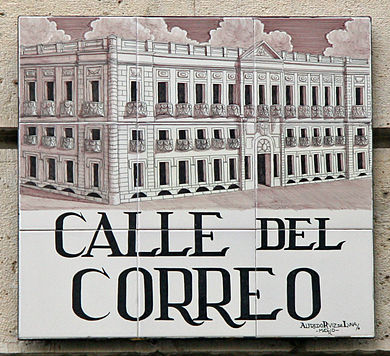
Cafetería Rolando, at 4 Calle del Correos (known as E street), was located in the heart of Madrid, directly off Puerta de Sol. Cafetería Rolando was a large and popular cafe, the local spot for police to visit during their lunch breaks, conveniently located beside the headquarters of the Dirección General de Seguridad (General Directorate of Security) in the famous Real Casa de Correos building. The Dirección General de Seguridad was considered an impenetrable target by ETA and other organisations keen to bring down the regime. Because nearby Cafetería Rolando was so popular with police working nearby, the place became destined for disaster.

 Real Casa de Correos (Cafetería Rolando was to the right of this shot) – Source

On September 13, 1974, at 2.35pm, during a busy lunchtime, a bomb exploded at the entrance to the cafe. The bomb, thirty kilos of dynamite filled with nuts for shrapnel, went off as many enjoyed their lunch, and was large enough to cause serious structural damage to the five-storey building. The ceiling of the café collapsed, resulting in several of the hostel guests upstairs falling into the café. The blast was big enough to shatter the windows of the Real Casa de Correos across the tiny street and several cars were obliterated. Another restaurant, a large place with 300 seated guests next door, was also seriously damaged.

Because of the proximity to the security building, police were on the scene immediately, and the process of saving Cafetería Rolando diners began. An attack of this magnitude, on a place frequented by everyday people, hadn’t been undertaken since the Civil War, catching all by surprise. Seventy-one people were pulled alive from the rubble, several children. Most victims made a full recovery, though several were left with scarring and mutilation. In total, twelve people were killed, aged from 20 to 78 years old, including a just-married couple. Several café workers were killed, including one who was pulled alive from the rubble but died before surgery. While the attack was allegedly against the police, and several wounded were police and from Franco’s elite special forces, the rest killed were all civilians. A thirteenth victim, a police officer, died two years later from the attack, unable to survive the injuries he sustained.

Source

The list of the dead only fueled speculation of the bombing. As no police officers were listed among the dead, a theory sprang up that a division of the extreme right themselves planted the bomb. Police earlier that day had been told to avoid the café, but these rumours were never directly admitted. Franco was keen to catch whomever had committed the act, while others, both for and against the government, took the opportunity to criticise the regime, plus Arias Navarro himself, and the búnker, the powerful political families. Everyone had an agenda for establishing blame. The Communist party became a popular target for criticism, initially blamed for the events.

Soon, blame fell on ETA from the Basque Country. They had been killing policemen and guards sporadically since 1968, one just days before the bombing. ETA denied any knowledge of the Cafetería Rolando attack, though throughout Spain, the denial wasn’t taken seriously. Because of the high number of killed and wounded were merely civilians at lunch, both sides of the political fence wanted to see justice done. The assassination of Carrero Blanco less than a year earlier didn’t raise tempers, but the attack on the café brought ETA’s organisation more into the spotlight than ever before.

Famous Basque activist, writer, women rights campaigner and ETA supporter Eva Forest was arrested along with her husband, though her husband was soon released. Forest refused to co-operate and accused the police of ill-treatment during her detainment. It was alleged two Basques, a man and a woman, planted the bomb in Cafetería Rolando, sticking the bomb to the underside of a table, and set off the timer. The identity of those two Basques were never established. It could have been Forest and her husband, playwright Alfonso Sastre, but there was no proof. While many detained in connection to Cafetería Rolando and the Carrero Blanco assassination were released, Forest was kept in prison until 1977, when all political prisoners accused under the Franco regime were given amnesty, to smooth the way for democracy under the new King Juan Carlos. It was rumoured that Forest suffered terribly being in jail, being tortured for all her acts over the years. While Forest admitted to passing on ETA messages and helping with safe houses, she never admitted her part in the Rolando bombing, despite admissions from others in the plot. 

Because of the 1977 amnesty, no one was ever held accountable for the Cafetería Rolando bombing, and no one can never be convicted of any crime relating to the incident.

Calle del Correo today – Source

Victims of Cafetería Rolando 13 September 1974

Antonio Alonso Palacín, mechanic, and his new wife, María Jesús Arcos Tirado, telephone operator aged 28

Francisca Baeza Alarcón, teacher aged 45

Baldomero Barral Fernández, baker aged 24, and his wife María Josefina Pérez Martínez, mother of two aged 21

Antonio Lobo Aguado, railway worker aged 55

Luis Martínez Marín, businessman aged 78

Concepción Pérez Paino, Dirección General de Seguridad admin worker aged 65

María Ángeles Rey Martínez, student aged 20

Gerardo García Pérez, married father of three

Francisco Gómez Vaquero, Cafetería Rolando chef aged 31 

Manuel Llanos Gancedo, waiter at Cafetería Rolando aged 26

Félix Ayuso Pinel, police inspector aged 46. Pinel didn’t die until 1977.
CalledelCorreo(Madrid)

Source

 Here is a link to the news footage of the bombing in 1974 – Atentado etarra en la calle madrileña del Correo (1974)