This Week in Spanish Civil War History – Week 28: 22 – 29 January 1937

Week 28: 22 – 29 January 1937

January 22

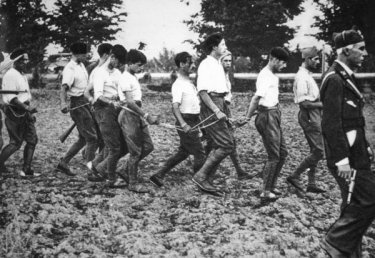
The Nationalists forces have been constantly battling to take Madrid since early November and still not able to get into the city. Franco decides its time to change tactics and attempt to cut off the city  by crossing the Jarama river, south-east of the city. This will cut off Madrid’s communications with Valencia to the east, which is the temporary Spanish capital. Franco groups together General Mola, General Varela and General Orgaz, and plans an attack 7 miles south of Madrid, with 25,000 troops and heavy artillery. The German Condors are also called in to help, while Italian troops plan an attack on Guadalajara at the same time. They plan to attack in early February.

Nationalist forces in the Jarama region

January 25

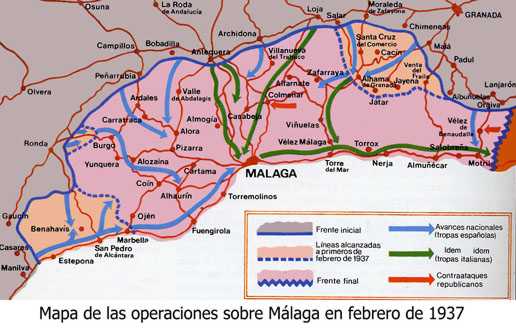
The newly formed Army of the South is still marching towards Malaga in the far south. The city is still in Republican hands, but their inland areas are slowing being eaten away by incoming troops left and right, while Italian troops march in to meet them in Malaga. The troops will take the remaining 10 miles left inland around the city in every direction as they face no resistance from unarmed Republicans.

January 27

The Basque Statute of Autonomy in the north is still holding, after being formed in October. The city of Bilbao is filled with civilians who have fled to the far north to find safety from Nationalist forces. But the Nationalists have been striking the city from the air repeatedly, to outcries from both sides. The Basques/Republicans are mostly civilians trying to stay safe, and there are prison-ships parked in the city where Nationalists are being held, now in danger by their own side. Over January, 224 are killed.

January 29

The workers’ militia are still controlling Barcelona, and most of the Catalonia region; most workers belong to the CNT/FAI. These militias have been working with the Catalonian government since the uprising in July, though the workers unions have control of the area. They have around two million members, plus the allies from the UGT union with one million members, and the Communists have just a few thousand. Regardless of numbers, everyone has equal representation.

Through some of the Catalonia region, and through much of the neighbouring Aragon region, militias have established an anarchist-led movement based on freedom and lack of government, working with the locals. While these sides in Barcelona are opposed to the Nationalist invaders, the Republican government in Valencia also sees these people as enemies, as the movement promotes freedom from government. As the situation continues to evolve, the CNT maintain control, with some representation from the Communists. The anarchists have opposition to all supervisory positions.

But trouble is starting to brew as so many factions working together is running into constant problems. The anarchists cannot work closely with the Socialists, Communists and Catalan nationalists (as in wanting independence from Spain, not the rebel Nationalists). Barcelona also has the communists splitting into different factions, some supporting Spain and the Soviet Union, the others supporting the Catalonian independence groups. Also now gaining traction are the Marxists, who formed the POUM (including famous writer George Orwell), who believe in war to gain social revolution, like the anarchists.  But the Marxists are also flaring up against Trotsyists. With all these groups working and living together, while trying to set up a new social order and hold back the Nationalist troops trying to conquer the area, things are getting heated and shaky in the northeast. They are more looking at each other rather than their common enemy.
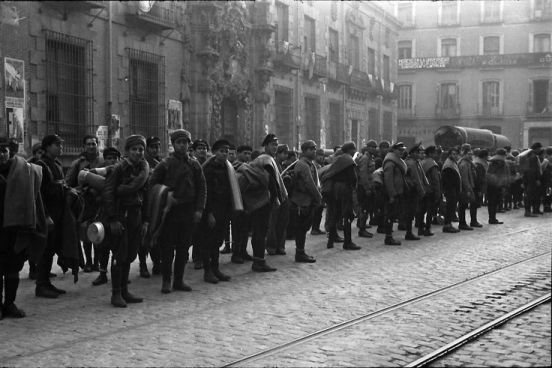
XV International Brigade volunteers arrive in Barcelona, January, 1937

~~

This is not a detailed analysis, just a highlight (lowlight?) of the week’s events. Things get lost in translation – Feel free to suggest an addition/clarification/correction below. The more the world remembers, the better. All photos are linked to source for credit.
This Week in Spanish Civil War History – Week 27: 15 – 22 January 1937

January 15

The third battle of Corunna Road ceases. The Nationalists have convincingly won the first and second waves of battle, and now both sides are exhausted. The XII International Brigades do not have the men or supplies to take back any of the northwest Madrid areas, and the Nationalists can’t get any further with their numbers. Both sides are now exhausted and give up in their plans. The Corunna Road route is still technically open and supplies still have a chance of getting through to Madrid, though now the city will have to rely more on the roads coming from Valencia and Aragon in the east/northeast.

Routes of soldiers prior to the battle: Spanish/Moroccans blue, Italians green, Republicans resistance red

January 17

The Nationalists form a plan to take Malaga on the southern coast. The huge losses at the Battle of Corunna Road have made the Nationalists keen to redirect their offensive, and decide to focus away from Madrid. The Nationalists have had 10,000 fresh troops arrive from Italy to the port of Cádiz, and are sent towards Malaga with their light tanks and armoured cars. Columns of Moroccan troops mixed with Spanish Carlists troops, around 15,000 men,  are sent from Seville and Granada. The Nationalists have four cruisers, the  Canarias, Baleares and Velasco ready to bomb Malaga from the sea, and the German Admiral Graf Spee is brought into the area.

The troops form the new Army of the South, run by Captain Queipo de Llano, who brings in men from the west while Antonio Muñoz Jiménez brings in men from the northeast. The Republicans hold a stretch of coastline around 25 miles long, with the port city of Malaga in the centre. In the first week, the advance of the Nationalist troops is 15 miles into the Republican held area, as the Republicans are poorly armed.

As Nationalist troops march through the Malaga region, the Republicans fail to see the groups of Nationalists are all heading directly for Malaga, so the city is not notified or prepared for the huge coming attack. Malaga is run by around 12,000 anarchist CNT militia, though only 8,000 are armed. There are rumblings between the allied CNT and communist militias, and none of the men in the area have been trained for warfare, though are keen to fight for their home. The Republicans have little ammunition, have no trenches dug, no roadblocks in place and nothing to protect them from the air.

The lack of preparation from the Republicans means the large civilian population of Malaga are now under serious threat, and a massacre is imminent.

Defence at Cerro de los Angeles

January 19

General Enrique Líster based in Madrid is in control of more International Brigades, which are going in numbers and more men are becoming trained, or are now already battle-worn. The Republicans are in short supply of both men and ammunition. General Lister leads a column of International Brigades to try to recapture Cerro de los Angeles, just south Madrid. The Nationalists took the overlooking area of Madrid in November and have been using the hill as an artillery base to shell the city. Lister and his foreign volunteers claim the hill for the Republicans are a day of fighting. Madrid is in need of this respite from constant bombardment.

Republicans atop Cerro de los Angeles, once a religious site


~~

This is not a detailed analysis, just a highlight (lowlight?) of the week’s events. Things get lost in translation – Feel free to suggest an addition/clarification/correction below. The more the world remembers, the better. All photos are linked to source for credit.

This Week in Spanish Civil War History – Week 9: 12 – 18 September 1936

Week 9: 12 – 18 September 1936

The Nationalists march into San Sebastián

September 13

The Basques surrender San Sebastián as the Nationalists advance after their win at Irún two weeks ago. After the death and destruction of Irún, the people let the Nationalists come in without a single shot fired, but anarchists who are running want to burn the city, as in Irún. The Basques turn on one another to ensure the city isn’t destroyed, and the anarchists are killed. An estimated 30,000 (of a total of 80,000) people flee San Sebastián west towards Bilbao, the Basque Country’s biggest city. The evacuation was planned, but 600 people are murdered by the Nationalists after their victory parade, include the mayor and 17 priests who are loyal to the Basques. The Basque language is also banned.

Also…

The Republican government decide to send some of their national gold reserves to the Soviet Union. The gold will be used as security for future purchase of equipment and materials. While the Republicans need the supplies, they get less than half of the gold’s value in equipment.

September 14

The siege of Santuario de Nuestra Señora de la Cabeza begins in Andújar, near Jaén, in the south. Around 1,200 Nationalist civilians guarded by Guardia Civil members have been in the hilltop Nuestra Señora de la Cabeza church since August, as the town as been held by the Republicans. The Republicans now begin the battle to take the church and capture or kill the Nationalist supporters on the hill. The Nationalist leader wants to surrender, but is overthrown for another commander, who refuses to surrender, starting the siege. Luckily (for the Nationalists) they are dropped supplies from the air so they can hold out on the hilltop, for what is the first day in an eight month battle.

The Nuestra Señora de la Cabeza before the bombings

September 14

Pope Pius XI speaks out against the the Republican Government for their actions, and its ‘satanic hate against God’ (nicely forgetting all the harm the church has done to the people). Despite the war being almost two months old, this outrage only comes after the murder of Josep Samsó of the Santa María de Mataró basilica in Barcelona. After being imprisoned, he was then taken and executed, a fate given to countless priests.

September 16

The Nationalists take the town of Ronda in the south. Ronda had been under the control of Republicans since the war’s outbreak, and many churches destroyed and priests killed. General Verela takes the town and starts the executions. Many flee to Malaga nearby, still under Republican control, and some flee into nearby hills. Rumours of the fleeing Republicans living as bandits in the hills persist for another 15 years.

The Ronda bridge over the El Tajo gorge. Both sides of the war pushed their prisoners from the edge, and the prison cell in the bridge was used for torture

September 18

Continuing on from last week’s failed negotiations in Toledo (see here if you missed it)…

For the past month, Republicans have been digging two tunnels, mining to get under the southwest tower of Toledo’s famous Alcázar, which has 1,000 Nationalists inside, refusing to surrender. The mines are done, and Prime Minister Francisco Largo Caballero detonates an early morning bomb, which destroys the tower completely. As those inside cope with the surprise attack, the Republicans launch a four-pronged attack of the Alcázar in tanks and armoured cars. The Republicans still do not get inside the Alcázar, and continue their attack for another night and day with aerial bombing. The Alcázar is now heavily damaged and the two-month siege will soon come to an end.

Timeline of the Alcazar destruction

~~

This is not a detailed analysis, just a highlight (lowlight?) of the week’s events. Feel free to suggest an addition/clarification/correction below. All photos are linked to source for credit

This Week In Spanish Civil War History – Week 2: July 25 – 31 1936


Week 2: 25 – 31 July 1936

July 25

Hitler agrees to support Franco’s bid to take over Spain. Franco needs urgent supplies and Hitler needs a distraction from his plans to dominate Europe.

Reprisal killings are happening in the south, in and around Seville. Numbers of deaths are unknown; anyone suspected of supporting the Republicans is taken away to face a firing squad.

franco_hitler

Franco and Hitler

July 26

German and Italian planes land in Morocco, ready to help the Nationalist cause. With a naval blockade halting the transfer of soldiers from Morocco to the mainland, they can be flown instead.

July 27 

The Nationalists control Seville with reinforcements from Morocco on the German-donated airplanes. Seville is to be a main centre for the rebels to plan their sweep north to capture all of Andalusia in southern Spain.

Aircraft used by the Nationalists drop a bomb on a market in Malaga, killing mainly women and children.

Fighting between Republicans and Nationalists continues in the eastern cities of Valencia and Alicante, which haven’t been captured by either side yet. Both cities are Republican strongholds.

00001d7d_big

Republicans fighting in the streets

July 28

First bulk arrival of German and Italian planes into mainland Spain. Masses of troops arrive, ready to help local military forces, now vastly outnumbering the Republican people.

Savoia-Marchetti_SM.81

German donated aircraft used in Spain

July 29

Northern city of Gijon still fighting for control; military haven’t yet been able to claim the area.

July 30

Fighting still ongoing in Valencia as the large Republican population manage to contain the military in their barracks. Local people in support of the Nationalists are subdued by the worker’s Republican groups. Reports of old grudges between individuals being resolved with shooting, masked as executions due to the rebellion.

July 31

Great Britain bans the sale of weapons to the Republic. Most of Europe foolishly thinks that non-intervention is better than assistance.

400 Nationalist supporters killed by Republican supporters in Toledo as part of reprisal killings.

Reports from all locations of both Republicans and Nationalists being pulled from their homes and murdered, based on the perception of who they support. Reports of mass rape of women prior to being put before firing squads. Republicans are angry and trying to weed out ‘traitors’; Nationalists are killing the educated – doctors, lawyers, teachers, artists, government workers, anyone left-wing, and anyone suspected of voting Popular Front last February. Full-scale massacre has begun.

Republican prisoners about to be shot by Nationalist firing squad

Men being marched to firing squads

~~

This is not a detailed analysis, just a highlight (lowlight?) of the week’s events. Feel free to suggestion an addition/clarification/correction below. All photos are linked to source for credit.

SPAIN BOOK REVIEW: ‘Moving to Spain with Children’ by Lisa Sadleir

Ilustracion Portada Moving to Spain whith Children

Don’t even think of Moving to Spain with Children without reading this essential self-help manual. Compiled by a successful British working Mum who has experienced the relocation roller-coaster for you, the highs, lows and occasional shrieks of panic, it could save you months of hassle and heartache. Chapters cover: Timing your Move; Choosing the Best Location; Property Purchase; Schooling; Paperwork; Learning Spanish; Healthcare; Bringing Pets to Spain; Starting a Business… …And other considerations crucial to ensuring a smooth transition to your new lifestyle. With information that’s bang up-to-date, Lisa “tells it like it is”. Spiced with the author’s own heart-warming anecdotes, you’ll arrive at the same place her own family is now – but in half the time: Living and loving family life in Spain! If you have ever wished for the gift of hindsight, “Moving to Spain with Children” is just that: a gift of a book!

Cover and blurb from amazon

~~

Moving to Spain with Children is the latest offering from Lisa Sadleir, a long-time successful expat based in Mijas, Malaga, in southern Spain. Sadleir has a hugely popular website familylifeinspain.com, to help people make the move to Spain, which can be a magnificent experience, or epic disaster, dependent on many factors. Sadleir is also an independent relocation adviser and personal property finder at ccbspain.com.

Thanks to Sadleir, this book can solve any problem which may arise when moving your children to Spain. This extremely comprehensive book covers everything, from the essentials, choosing your location and time of year in which to move (a classic error for many), how to cope with the language and cultural barrier, to the most important aspect for parents, the education of their children. The education section alone is stand-out, covering all ages and needs, with real-life experience from parents and children.

Another huge consideration, healthcare, is fully explored, with options to suit the needs and budgets of all families through the country. The NIE process, Número de Identificación de Extranjero (basically a foreigners pass) can be fraught with trouble. The book covers the process for EU members, though many steps are also relevant to non-EU members, provided you have completed your paperwork at the Spanish embassy in your own country first. The process of registering on the Padrón, having yourself registered with the town hall, is included and essential. Dependent on your home nation, your circumstances and even the mood of the staff member you encounter, gaining NIE or residency can be a real mixed bag, so having this information laid out could be a huge help for many. When I first moved to Spain, I managed to gain an NIE through a bit of a backhand deal, simplifying the process, but even then I had to jump through fiery hoops at the embassy. There is no such thing as being over-prepared.

The never-ending trials and tribulations of purchasing a property and starting a business in Spain is fully covered, along with more personal experiences and examples to help you, along with (finger crossed) simpler matters such as money and banking considerations. Another section is extensively devoted to bringing your pet to Spain (something I’ve never even thought about), for those furrier family members. The book finishes with things to consider when leaving home and a reminder not to burn your bridges before you leave. Moving to Spain is an incredible experience, but the move can be difficult. I have seen plenty of people fail at the experiment, right down to a husband at the airport, begging his wife not to leave their new life behind.

This book would appeal to anyone moving to Spain, even if there are no children to consider, with practical and realistic advice. But when moving your children, so many issues need to be well planned, and I wish this book had existed when I first embarked on life in Spain. Finally, solid advice all in one place, from someone who has succeeded at Spanish life. Just take a look at Sadleir’s website and Facebook page to see success on a fantastic level!

To buy the book – 

USA / International – Ebook / Print

UK –  Ebook / Print

Spain  Ebook / Print

Visit Lisa Sadleir’s websites on moving to Spain –

familylifeinspain.com

ccbspain.com

movetomalaga.com

movetomijas.com