This Week in Spanish Civil War History – Week 25: 1 -7 January 1937

January 1

By the 25th week of the war, neither side would be able to say their plans had been executed the way they hoped. The Nationalists had hoped to invade, take Madrid and rule the nation within weeks or months. The Republicans came together, multiple factions with similar principles, hoping to oust the fascists. At no stage were they prepared enough to see through their goals. 1937 would see Franco’s plans to take Spain become more established. Franco had much help from Hitler and Mussolini, while the Republicans still had the Soviets on their side, due to the large Communist faction in Spain. But with Republicans made up of many groups and no one clear leader, divisions were one of the main forces at play in the war, with Anarchists and Communists splitting constantly from the Socialists and workers’ militias. As with all wars, the regular people were constant losers.

January 3

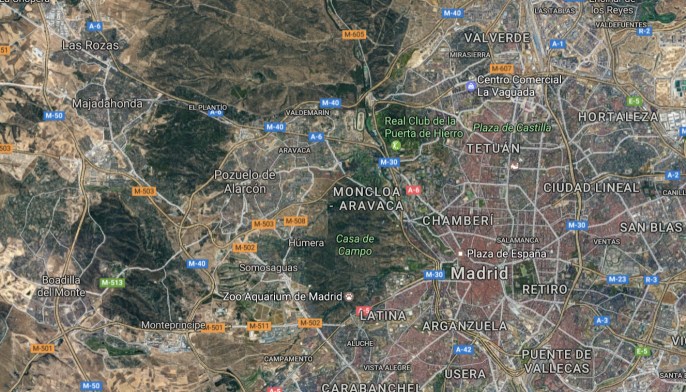
The third battle for Corunna Road, just northwest of Madrid city, commences.  General Orgaz Yoldi has gained more Nationalist reinforcements and begins the offensive, known as the Battle of the Fog. The Nationalists retake the town of Boadilla del Monte, as the Republicans are still suffering from their earlier losses. The Republican have five divisions working together, along with the XIV International Brigades, but have little ammunition and have to surrender the town and that portion of the crucial supply route of Corunna Road.

January 4

With surging numbers of Nationalist soldiers coming from the right, the Republicans have to retreat even further away from Boadilla del Monte and also lose the town of Las Rozas, just 11km north of Boadilla del Monte. The weather is at freezing point all day and night and the fog continues to make battle ever more difficult.

The Republicans deploy more units from Pozuelo, ten kilometers west of Madrid city. The Modesto division, a brigade of four units combined, manage to secure the front while other units retreat from advancing Nationalists. The fog continues to thicken, aiding to secure the front for the Republicans and keep the Nationalists at bay, though the strategic towns have been lost. But once the fog lifts, the Republicans know they are in trouble.

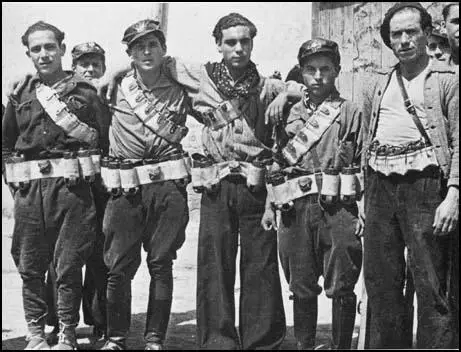
Some of the Thaelmann battalion prior to battle

January 5

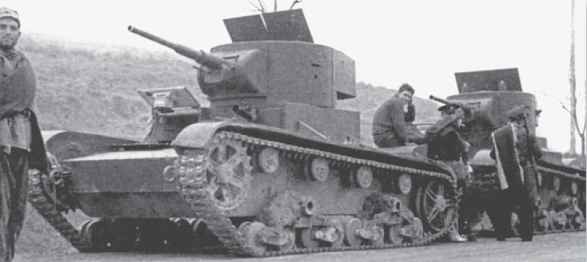
As the fog lifts, the Nationalists, with 18,000 troops and air support, attack Pozuelo, where many Republican forces are in retreat. The Republicans run out of ammunition, including for the T26 tanks from Russia, which have destroyed 25 German tanks throughout the day. The Republicans have to scatter, without weapons or communication, being split by the attack. Republican General Miaja tries to get the German Thaelmann battalion of the XIV International Brigade back together, along with Lister’s Communist unit, in order to try to regroup. The Nationalists continue to widen their hold over Corunna Road and also take the opportunity to bomb the city of Madrid, mostly by day.

All of the XIV International Brigades are forced far back from Boadilla del Monte and the Nationalists have Corunna Road. They meet up with other Republican groups and are ordered to retake Las Rozas, but they lack the men or firepower to do so. Among the young foreigner volunteers was untrained machine-gunner 17-year-old Esmond Romilly, nephew of Franco-sympathiser Winston Churchill. (It was rumoured that Romilly was Churchill’s own son, Churchill having bedded his wife’s sister. The sisters’ mother was a notorious cheater, and their real father(s) is unknown. Several men are options, one being the grandfather of young Romilly’s wife – meaning the young couple were first cousins. The rich do like to make their own rules, and the family is fascinating/bizarre.)

January 7

The Nationalists bomb Las Rozas from the air, destroying the town and killing almost all the Republicans and International Brigades huddled nearby for safety. The locals of the town have already long fled, hiding in caves in the Hoyo de Manzanares mountains nearby. All but 35 Republicans are killed, those not killed manage to retreat wounded. Those foreigners who survived, such as young Romilly, are sent home with wounds and illness. Romilly went on to write a book named Boadilla, all about the slaughter of  the battle. The Nationalists are in total control of the area, and ready to begin their final push to control all of Corunna road. Both sides have now lost around 15,000 men each.

I’ll will post a review when I get the chance

~~

This is not a detailed analysis, just a highlight (lowlight?) of the week’s events. Things get lost in translation – Feel free to suggest an addition/clarification/correction below. The more the world remembers, the better. All photos are linked to source for credit.

Francoist Street Names Are Out. Women’s Accomplishments In Spain Are Finally In

2016 saw the 80th anniversary of the start of the Spanish Civil War, and the 41st celebration of Francisco Franco‘s death. Yet on many streets all over Spain, the men who fought and assisted Franco though his 39 years of war and dictatorship are still revered with street names, vile and cruel men who harmed untold thousands. It is long past time to remove these names, and the opportunity to name streets after women has finally arrived.

Spain’s political situation is a hot mess – the December 2015 election ended in a stalemate, and subsequent efforts for coalition and even new elections have produced not a lot. The left-wing Podemos party, made of newcomers and small groups coming together to gain power, have found their place in some cities, such as Madrid and Barcelona. Spain has the History Memory Law, enacted in 2007, which provides rules to allow the reburial of SCW victims, and removal of all Franco (and Franco cronies) monuments, dedications and street names (the law has a wide range of powers; this is just an example). While many cry about leaving the past in the past, those with a wider view want to put right as much as can possibly be done. It is time to use Article 15 of the memory laws to change the streets named after men who murdered their way to power and used fear to stay there.

Some examples of names changes is in Calle de Soledad Cazorla (Spanish link), named after Spain’s first female public prosecutor, who used her position to fight gender violence. Until now, the street was named after Andrés Saliquet (Spanish link), an old-school General and fascist party member, serving in the war and the dictatorship. The notorious General José Varela loses his street name to journalist Carmen de Burgos in Granada, likewise Federica Montseny, Spain’s first female minister, will replace Colonel Chápuli.  Madrid’s Plaza Caudillo (if you’re new, Franco was referred to as the Caudillo, the leader) will be Plaza Mayor in El Pardo.

Places like León have just 5% of female street names, Cadiz has just 3%. People ask why it matters – the naming of a street in your honour is a great privilege; it shows prominence. The lack of female names shows that they are considered better at home than out in the world. Women’s achievements are simply not being recognised in this traditional way of having a street in their honour in Spain. Madrid has 137 streets which are named after the Virgin Mary, but not streets named after real women. Women’s roles are confined to being imagined virgin saints, not actual accomplished members of a community.

Valencia has a new law, meaning that 80% of new names, or streets in need of a change, must be female names. In the Poblet area in the west of the city, eight new streets are needed, and are being decided by public suggestion. Author Carmen Martín Gaite is in the running, along with Las Trece Rosas, 13 women murdered by a firing squad in Madrid in 1939.

The northern city of Oviedo has 22 new streets, a majority going to women. Alicante has a new law ensuring women are included while 50 Francoist streets are removed, and northern Bilbao and southern Cadiz now have mandates in place guaranteeing female names. Cadiz has only eight female street names, all saints, a situation about to be rectified.  In Santander, a motion is in place to remove Francoism from the city and celebrate women, a move which has faced steady criticism (aka fascist man tears).

Without surprise, all this comes with its complainers. The usual cries of ‘that’s just complaining feminists, don’t indulge them’ is rife, with machismo still strong in Spain. Giving women the same rights and rewards as men scares many, as does the notion of altering traditions, even when traditions are inappropriate. Somehow, giving a street name to a fascist murderer is okay, as is keeping the name because ‘tradition’. Changing the name to erase an evil man from memory, and embracing a successful woman still frightens many delicate flowers.

The 2007 memory law has had little success in its nine years. Granada alone has 4,000 victims still dumped in mass graves, Seville has only reburied two of the 104 mass graves in the region. You only need to look at the maps of each region on the Historical Memory Association website to see how many mass graves (fosas) country-wide are ongoing. As family members of the victims pass away themselves, voices are becoming lost and the commitment to the past needs to be honoured. Trouble is, Europe is doing its terrifying swing to the right. Spain is no stranger to the Hitler-fascist salute, regularly done at Francoist sites (especially Valle de los Caídos), and Nazi groups have been springing into violence recently in Madrid. Spain needs to be un-Francoed as fast as possible, and that level of hate needs to be eliminated.

It can be easy to say that what happened in the Franco years is in the past and no longer relevant. But as long as dedications to remarkable women like Dolores Ibárruri are opposed by those in power (due to her left-wing work), the past is still haunting the present. Guadalajara, near Madrid, has the highest number of female street names at a tiny 9.5%, all-but named after virgins and saints. The names are dedicated to women who are bound in legend and many hundreds of years out of date. Women are overlooked in history, so inaccuracies are ever-present. Meanwhile, Spain has a plethora of successful feminists, leaders, scientists, teachers, and modern sports stars who could be honoured, yet are forgotten.  Why not Calle Maruja Mallo (artist), Avenida Clara Campoamor Rodriguez (suffragette), or Paseo Margarita Salas (biochemist). Spain needs more streets named after women like Ángela Iglesias Rebollar (Spanish link), murdered by Franco’s killers, remembered for their struggles.

It’s not like Spain isn’t in need of change; young women need role models, advertised the way men are exposed to their role models, and largely take for granted – because they’ve always been right in front of them. Why have streets and plazas named after Nazi-style killers when you can have streets named after María Mayor Fernández de Cámara y Pita, who fought against the English in 1589, or Manuela Malasaña Oñoro who saw off the French from Madrid in 1808, or pianist Alicia de Larrocha from Barcelona who was an extraordinary composer, or Rosalia Mera Goyenechea from A Coruña who became the richest female entrepreneur worldwide and used her riches to help other women, as such as fighting anti-abortion laws.

Another issue is not just the lack of female names, it’s irrelevance of those that do exist. Margaret Thatcher was given a plaza in Madrid, hardly a popular move. Madrid also has Calle de Quiñones,  homage to the first female run printing workshop, but without her full name, how can anyone look up Maria de Quiñones from the 17th century (did any of you reading this know that until now?).

Galicia is leading the way by looking through historical information to find forgotten women, as is Barcelona, and making sure people can find information about all people awarded a street name. The southern city of Córdoba has passed a law saying 50% of new names must be female, which currently boasts just 6% of female names.

My personal suggestions (in addition to the ones above) –

Isabel-Clara Simó i Monllor – Valencian writer, one of the most important writers in the Catalan language

Clara Campoamor Rodriguez – women’s right campaigner

Federica Montseny Mañé – first female cabinet member – minister of health

Carmen Amaya  – influential flamenco dancer

Alicia de Larrocha – extraordinary pianist and composer

Margarita Salas – biochemist and geneticist

Rosalia Mera Goyenechea – world’s richest female entrepreneur, co-founder of Zara

Rosa Montero Gayo – journalist and author

María de los Ángeles Alvariño González – fishery research biologist and oceanographer

Magdalena (Magda) Bermejo – primatologist

Emilia Espinoza Hazelip  – pioneer of the concept of synergistic gardening

Patri Vergara – professor in Physiology, first woman President of the International Council for Laboratory Animal Science

Dolors Aleu i Riera – first female Spanish doctor

Ana María Matute Ausejo – writer and member of the Real Academia Española

Emilia Pardo Bazán  – Galician novelist, journalist, essayist, critic and scholar

María Josefa Crescencia Ortiz Téllez- Girón/ Doña Josefa Ortiz de Domínguez – insurgent and supporter of the Mexican War of Independence

Rosalía de Castro – Galician writer and poet

It’s not about women being elevated above men, it’s about women being given their due. It’s about successful people (yes, women are people) not being forgotten, their accomplishments out there for all to remember.

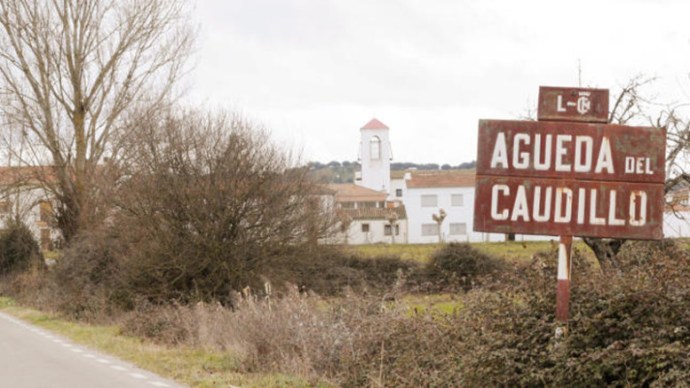
Sign at entrance to town of Águeda del Caudillo. Photo: Gaceta de Salamanca


This Week in Spanish Civil War History – Week 21 and 22: 5 – 19 December 1936

Week 21 and 22: 5 – 19 December 1936

December 11

Germany, Italy and Portugal are still helping the Nationalist rebel cause despite signing the Non-Intervention Agreement. Julio Alvarez del Vayo, Spain’s delegate to the League of Nations, gives a speech in Geneva, arguing they must pull out from supporting the rebel cause. He also blasts the democractic nations still holding to the Non-Intervention pact for isolating the elected Spanish government. The committee for non-intervention and its signees are either helping the invaders or sitting back for personal comfort, making the whole situation worse.

Julio Álvarez del Vayo

December 13

The Aceituna Campaign starts when the Nationalists try to take the town of Andújar, near Jaén in Spain’s south. They attack with 4,000 troops, occupying 2,600 square kilometres and quickly take the small town Lopera. It is the start of a three-week campaign, with the first week seeing little advance as the Nationalists occupy uninhabited country areas in preparation to take protected towns. Part of the campaign includes saving the 1,200 fascists trapped in the Siege of Santuario de Nuestra Señora de la Cabeza, a hilltop monastery which has been a sanctuary since the outbreak of war. By now, troops are around 20 kilometres from the monastery but no help is provided to the civilians inside (though they have been getting air drops of supplies since August).

A great many number of people were displaced around the Andújar region in 1936

December 13

Hot on the heels of the first campaign, The Second Battle of Corunna Road starts north of Madrid. The Nationalists have already tried to cut the Corunna Road so nothing can get in or out of Madrid but failed, and launch another attack. The battle will last for over a month before the Nationalist control the road but still cannot cut Madrid off from the rest of Spain.

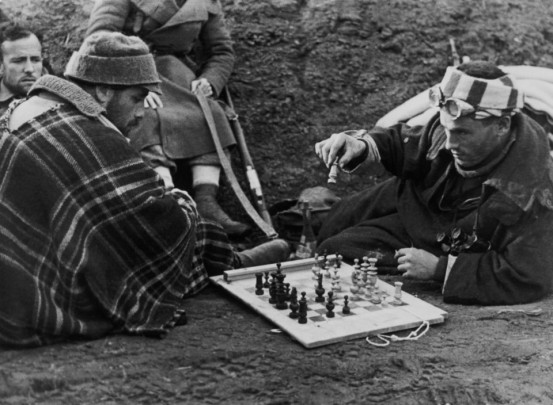
SPAIN. Madrid. November-December 1936. Republican soldiers.

Republicans take a break (morale and sanity were low by this time) – Robert Capa

December 14

Troops, tanks and machine guns are used by the Nationalists to take the town of Boadilla del Monte (now a suburb of Madrid), as part of the Battle for Corunna Road. Russian tanks and International Brigades on behalf of the Republicans fight back and take the town back, but are surrounded by the Nationalists. The fighting continues until December 19 when the Nationalists retreat to focus on other areas in the Corunna Road area.

Snipers (wo)manning the Aragon front

December 17

A new government, Consejo de Aragon, is established in the northeast anarchist stronghold of the Aragon region. The front line keeping Aragon safe is an anarchist and socialist coalition. Villages have already started their revolution, changing to live under anarchist ideals, with self-organization, collectives to run farms and factories, and public shared rule. Money is replaced with anarchist approved coupons in some areas, and land and wealth is distributed evenly between all. This area is the most radically changed by self-governing revolution.

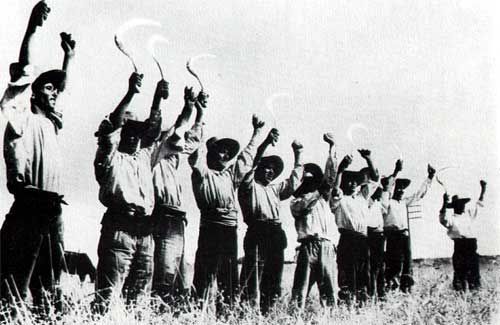
Agarian collective workers in Aragon


~~

This is not a detailed analysis, just a highlight (lowlight?) of the week’s events. Things get lost in translation – Feel free to suggest an addition/clarification/correction below. The more the world remembers, the better. All photos are linked to source for credit.

This Week In Spanish Civil War History Extra: 80 Years Since The Death of Buenaventura Durruti – 20 November 1936

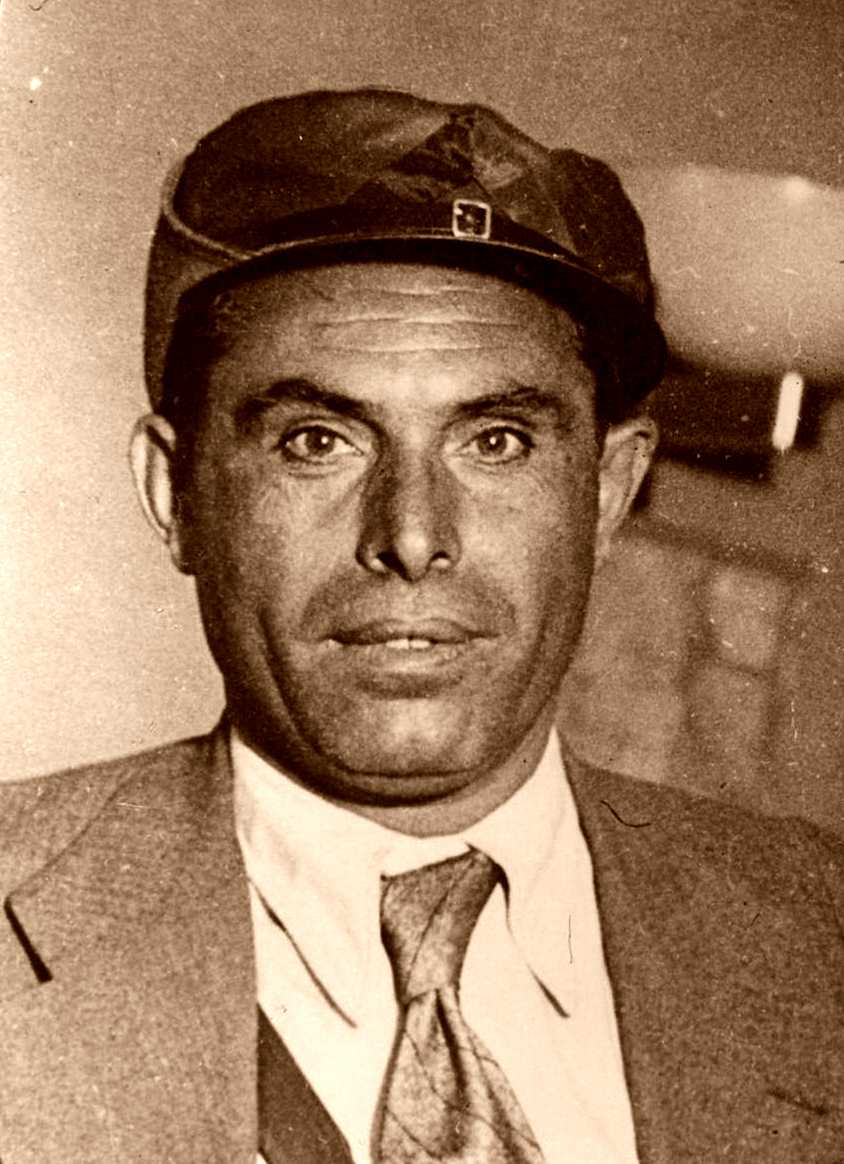
José Buenaventura Durruti Dumange was born 14 July 1896 in León, northwest Spain, as the second of eight boys born to Anastasia Dumangue, and Santiago Durruti, a railway worker and self-described socialist.

Durruti left school at 14 and started as mechanic on the railway with his father. The pair became members of the UGT, Unión General de Trabajadores (socialist General Workers Union). This quiet start to life changed in August 1917, when the UGT took part in a strike, when the government struck down an agreement between unions and their employers. To stop the general strike, the army was brought in to stop them, killing 70 and harming another 500. Another 2,000 were jailed without being tried for any crime. Young Durruti escaped the fighting, but exiled himself to France for safety, where he found company in fellow anarchists over the border.
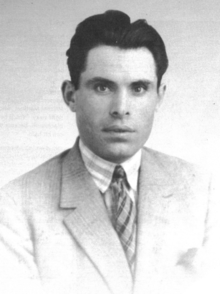
The harsh treatment by the Spanish government on its people changed Durruti forever. He made his way to Paris and worked there as a mechanic for three years, before deciding to return home. He got over the border and onto nearby city San Sebastian on the northern coast. By now he was an anarchist, and set up his own group named Los Justicieros (The Avengers) with well-known local anarchists Suberviola, Ruiz, Aldabatrecu and Marcelino del Campo, and others keen to fight. While Durruti had been in Paris, thousands of workers had been fighting, jailed or killed by the government while defending their rights, and Durruti wanted a high place in helping them all.

On 15 August 1921, San Sebastian had the inauguration of the Gran Kursaal, a beautiful La Belle Époque style building for the city, with casinos, restaurants and a flourish of the cosmopolitan city’s wealth. King Alfonso XIII attended the opening, and Los Justicieros made their first large play – to assassinate the King. The King, a symbol of all workers were oppressed by, was already under fire for losing 10,000 soldiers in Morocco a month earlier, and had suffered assassination attempts before, but Durruti’s plan failed.
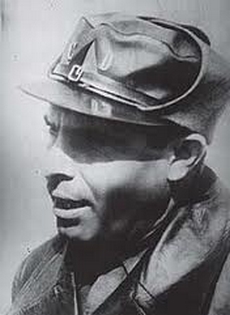
buenaventuradurrutiSoon after this failure, Durruti got approached by the leader of the CNT, Confederación Nacional del Trabajo (National Confederation of Labour), a strong anarchist union. Durruti took the offer of going to Barcelona, where workers and CNT members were being jailed, harmed and killed by the government. Members of the Los Justicieros including Durruti moved to Barcelona, where Durruti met Francisco Ascaso and Juan García Oliver, men, along with other prominent anarchists, would become from friends and start the Los Solidarios (Solidarity) group in early 1922. By this time, members  of the CNT including their president were being assassinated, thrown in jail, or hurt in armed stand-offs as people tried to defend themselves and their fights against the government.

In 1923, Durruti and Ascaso carried out the assassination of Cardinal Juan Soldevilla y Romero, a man wealthy on gambling and hater of the common man. That year was huge in Spain, with Miguel Primo de Rivera taking power in Spain and launching his dictatorship of the nation. Durruti, Ascaso and their allies retaliated by launching attacks on military barracks both in Barcelona and along the border stations which led into France. Often, these attacks harmed more anarchists than government supporters. With so many unsuccessful attempts to upset the regime, Durruti, Ascaso and Oliver left Spain. They went to Cuba, before travelling South America, robbing banks throughout Argentina and Chile. All Latin American countries have been told of Durruti, and he wasn’t safe anywhere.

In 1924, Durruti and Ascaso sent to Paris, to again attempt to assassinate King Alfonso XII. Another failed attempt saw both men in jail for a year. Release saw them awaiting extradition to be executed in Argentina, after being convicted in their absence for crimes committed there. But the French anarchists rose up, and the pair were not extradited, but were exiled from France. They fled to Germany, but were denied asylum, and Belgium and Luxembourg offered no help. They fled back to Paris, and lived in secret on the charity of anarchist sympathisers. They moved to the French city of Lyon but were caught by police, so fled illegally to Belgium before making their way back to Germany. Germany again refused asylum and Belgium took them in after a change of heart. Through all this, the USSR were becoming interested in Durruti’s rising status, but the pair refused to take up ‘communist hospitality’ and live in Russia.

Meanwhile in Spain, a secret anarchist meeting in Valencia saw the opening of the FAI, Federación Anarquista Ibérica (Iberian Anarchist Federation) to bring together various militant groups working for the anarchist cause, and become part of the CNT.

It wasn’t until 1931 when the monarchy was overthrown and exiled, and the Republican government won elections did Durruti and Ascaso came home to Spain. Durruti was influential now, and his presence stirred already-forming splits within the anarchist CNT. Arguments about supporting the Republican government formed, splitting the CNT in two, with the leader Angel Pestaña leaving to form a new party and support the government, and loyal CNT/FAI members, including Durruti, to remain loyal to their anarchist principles. Throughout the year, workers were being killed for striking, with hundreds killed in Barcelona, Seville and elsewhere. Durruti and Ascaso kept robbing banks to give money to workers, but change was coming. Durruti married and had a baby on the way, and he needed to step back.

But in January 1932, the Catalonian FAI staged a violent uprising, and the army retaliated by arresting 120 prominent anarchists, Durruti and Ascaso among them. All were immediately deported to Spanish Guinea, Durruti separated from his wife and two-month-old baby. But continuing surges in violence saw the army back down, and all were sent back to mainland Spain three months later. On his return, he tried to play it safe, with what are called his black years. He joined the Textile Workers’ Syndicate in Barcelona and did factory work, but he was constantly hounded by police for his constant work for unions and the anarchist movement.

By October 1934, Spain was in near collapse. Uprisings by Catalan Nationalists in Barcelona, Madrid and the northern Asturias region saw massive violence. In the Asturias, where workers were well organised, with anarchists, socialists, Stalinists and neo-Trotskyists all working together against their enemy, the Catholic church and the government. The University of Oviedo and the Bishop’s Palace were destroyed, churches we burned, priests shot and nuns raped. Coal miners were striking, and General Franco and his army were sent in to quell drama, killing 1,300 people, mostly the coal miners. Another 3,000 were wounded and another 30,000 jailed, mostly in the Asturias region. The violence saw the rich moving towards fascism to keep themselves safe, while the workers of the country continued to spiral against a system crushing them. The government, now the right-wingers, were looking for blood.

By February 1936, the Republicans returned to power, with full socialist support, but not with the huge anarchist movement, or the smaller communist supporters. Now, the ever increasingly angry fascists, the wealthy and the right-wing religious were ready to pull down the government. Durruti was still in Barcelona, and was forced into hospital in July for hernia surgery, just as war would break out.
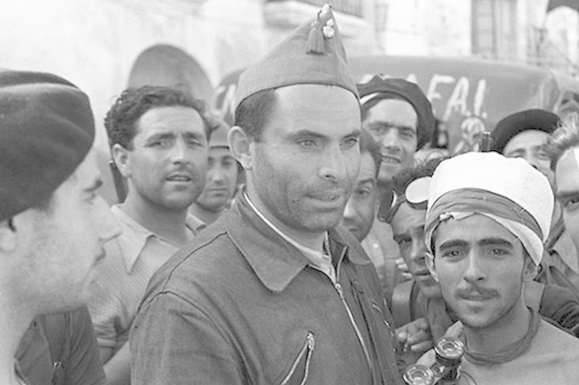
The rich right-wing haters declared a rebellion on July 17, but fighting did not reach Barcelona until the 19th. Durruti, with his wound still open, left hospital and took up arms to squash the army and police seizing the government. Fighting in the streets went on for hours, and the workers, the civilian militia, were winning. At dawn on July 20, Durruti and best friends Ascaso launched an assault on one of the two remaining army barracks not defeated, but Ascaso was shot and killed alongside Durruti as they ran towards the soldiers.

Durruti Column members

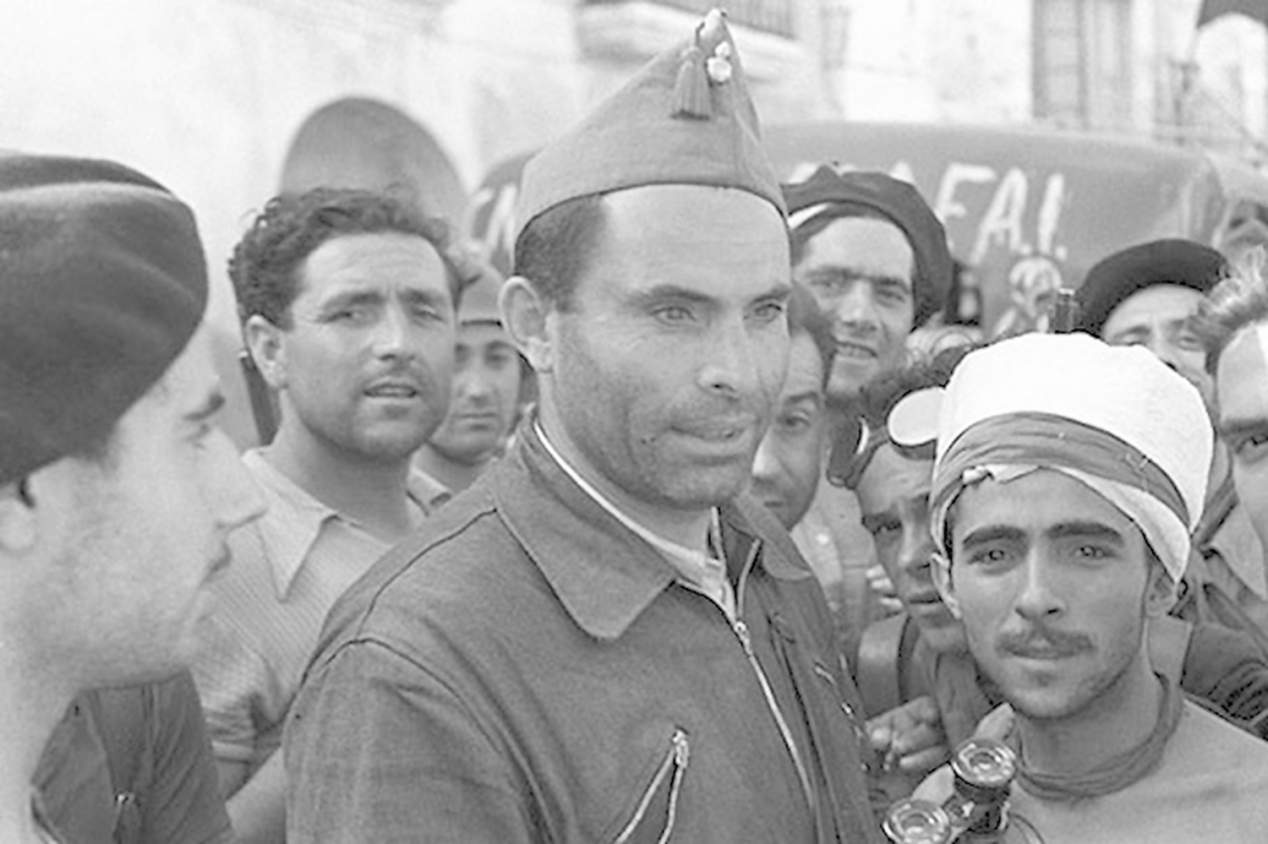
A day later, Durruti along with his other longtime companion Oliver visited the Catalan government leader, still dirty and armed from the attack. They negotiated for the anarchists to join the government and rise up together. The Anti-Fascist Militia’s Committee was formed, bringing together all groups the CNT, the FAI, the UGT, the neo-Trotskyists and a number of Republican groups, taking over as government of Catalonia. Just a week later, teamed with Ascaso’s brother, Durruti and Oliver they formed the ‘Durruti column’ a band of men loyal and ready to take back Spain.

On July 23, Durruti left Barcelona with 1,000 men, ready to save nearby Zaragoza from the army. By the time they marched to Zaragoza, they had between 8,000 and 10,000 men, while other columns worked on saving smaller towns, this large group prepared to save Zaragoza city, though the attack never occurred.  By now, as much of Spain was controlled by the fascists and the army, with people being executed by the thousands, but the Aragon and Catalonia regions were in anarchist hands.

Popular propoganda poster

The Durruti column set out for Madrid, and the group of around 3,000 marched the 350kms to the capital. They arrived on 12 November, just as International Volunteers also arrived to help fight back the siege on the capital. The Durruti Column fighters battled mostly in the north of the city in the Ciudad Universitaria region. Madrid was under full siege, with German planes bombing at night, soldiers attacking by day in every direction, with no escape.

The tide was starting to turn; the Republicans, their supporters and the volunteers were starting to hold off the army. But on November 19 at around 2pm, Durruti was shot in the chest while in the northern region of Madrid. Little was said about the incident as Durruti was rushed to the Ritz Hotel, now a makeshift hospital and surgical theatre. There was little that could be done, and Durruti died at 6am, November 20. The bullet was not even taken from his heart, where it was lodged. He was only 40.

The news of Durruti’s death spread fast, and calls for his body to go home to Barcelona and his family were made. No autopsy was performed on his body, so the calibre of the bullet was not recorded. This made it harder to certify what happened.

The story emerged that Durruti was shot by a sniper. His driver said he had stopped his car on Avenida de la Reina Victoria, the area totally destroyed near the Hospital Clinica. He saw some of the militia leaving the front, and ordered them to return. As Durruti returned to the car, bullets came flying from surrounding destroyed buildings. As Durruti tried to get in the car, a sniper’s bullet shot him in the chest.

Republicans fighting in northern Madrid

This story was relayed over and over, everyone assuming their leader to have died a hero. On November 22, his body arrived back in Barcelona, and half a million people poured in to join the funeral procession. They followed to Montjuïc cemetery where he was laid to rest, and his funeral was the last large gathering of anarchists throughout the rest of the war.

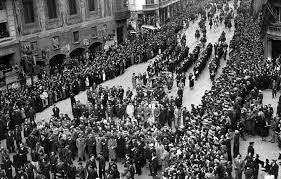
Barcelona funeral

To some, Durruti was a criminal and a bully. To others, he was their salvation against the oppressors. His stories and actions were used for morale and propaganda to help the Republicans cause; this asset now lost. But the story of him dying in a haze of sniper’s bullets continued to circulate, a propaganda story in itself.

But later inquires heard of different stories, from the men who claimed to witness Durruti’s death. Rather than killed by the hiding enemy, the story told was one of simpler disaster. It was said, while planning an attack, one of Durruti’s friends shot him, when a rifle went off by accident. This friendly fire was a common problem due to the poor quality supplies the Republicans fought with. Other rumours suggested Durruti was planning an attack, a sort of suicide mission, and someone shot him to prevent it, though none of that was ever proven. The accidental shooting stayed quiet, the snipers story better to rally the cause.

The Durruti Column was broken up and folded into other groups several months later and while the war did not end until 1 April 1939, the battle to hold Madrid and the Aragon/Catalonia/Valencia regions were the only large success the Republicans had, before eventually falling and suffering another dictatorship for almost 40 years.

~~

This is not a detailed analysis, just a highlight of Durruti’s life. Things get lost in translation – Feel free to suggest an addition/clarification/correction below. The more the world remembers, the better. All photos are linked to source for credit.

This Week in Spanish Civil War History – Week 14 and 15: 17 – 31 October 1936

Week 14 and 15: 17 – 31 October 1936

Sorry for the delays, as the website was hacked and is only just back online now. Normal service is resumed.

Week 14

October 18

The Republican government creates the ‘Mixed Brigades’. This combines the army units which remained loyal during the initial rebellion, and militia groups of all forms fighting around Spain. This mix is titled the Popular Army, the name coming from the Popular Front party in government. While anarchist groups are not art of the government (yet), their militias are still able to be part of the Popular Army.
.
Week 15

October 24

The first shipment of gold arrives in the Soviet Union; the first shipment of over half the Spanish supply which will be sent to Moscow. It is worth around $35 per ounce, a total of around almost $600 million, though Spain only gets half its worth.

October 27

Russian tanks finally get to Madrid to defend the city. T-26 tanks, around 10 tonnes in weight each, are dispatched from Madrid main’s train station and head straight to the front. The Nationalists outside the city already have tanks, supplied by Italy and Germany. The Republicans have been using Molotov cocktails to hold back the Nationalists until now and are in desperate relief to save the city.

.

T-26 tank outside Seseña

October 27

The Nationalist unleash an air raid on Madrid. Six bombs are dropped in Plaza Colón, a major square in the city, heavily populated. A queue of women and children are waiting to get milk and a bomb lands directly on them. A total of 16 are killed, another 60 seriously injured. The air raid comes from a Junker Ju-52 with a German pilot. The bombing is labelled the first bombing in history that served no purpose. It was designed solely to bring terror to 900,000 Madrileños. Madrid has no way to stop planes flying overhead and bombing them as they are becoming surrounded by Nationalists, setting the stage for the coming mammoth siege of Madrid.

October 28

A squadron of Soviet Tupolev ANT-40 planes, named Katiuska bombers, drop bombs over the city of Seville, which has been in Nationalist hands since July. This Republican-supported bombing leads the Germans to send more planes and supplies, and set up the Condor Legion in Spain, to overcome the Soviet forces.

Aftermath of the air raid in prep for the Madrid siege

October 29

The town of Seseña is 30 kilometres (18 miles)  south of Madrid, near destroyed Toledo. The Nationalist army, who have marched and massacred their way north are now ready to take Madrid. The Republicans who hold Seseña attempt to hold their town. The new Mixed Brigades, led by Spanish and Russian colonels, lead their mixed-nation/loyalty troops with newly arrived tanks. However no one has any training, other than one Russian tank expert. The Nationalists have their highly trained Spanish and Moroccan troops and Italian tankettes on their side. The Republicans head south of Seseña to engage with the Nationalists about only gain around 1.5 kilometres (1 mile) before they are attacked.

The Republican were able to destroy 11 Italian tankettes and kill 600 soldiers, losing only eight men and three tanks in the fighting. However numbers were on the Nationalists’ side and they won the battle of Seseña when the Republicans were forced to retreat.

The showdown for the siege of Madrid is ready to begin.

~~

This is not a detailed analysis, just a highlight (lowlight?) of the week’s events. Feel free to suggest an addition/clarification/correction below. All photos are linked to source for credit