MY HEARTY COMMENDATIONS: THE TRANSCRIBED LETTERS AND REMEMBRANCES OF THOMAS CROMWELL NEW EDITION 2025

This Week in Spanish Civil War History Extra: 80 Years Since the Bombing of Durango

The Nationalists had tried everything to get into Madrid. Both the city and surroundings areas in all directions had already been bombarded by March 1937, eight months since the start of the SCW. Franco decided to turn his attention away from the broken yet defiant capital, and launched a new War on the North. General Emilio Mola y Vidal, who was named the leader of the north during the war while Franco commanded the south, decided to wipe out the Basque country. He already had launched offensives throughout the Basque region while basing himself in Burgos (160 kilometres south of the Basque city of Bilbao). Mola decided to deploy 50,000 troops and multiple German planes, but this time had a new plan – to launch ‘terror attacks’, where he would have his men attack civilians instead of military targets. This time, innocents were to be targeted, to inspire fear, to make the Republican held areas cower to the will of the Nationalists, or be hunted down and murdered.

The town of Durango was marked as the test target. Just 30 kilometres south of Bilbao, Durango was a small village, typical of the region and Spain as a whole. With 10,000 people, it was a rail stop between Bilbao and the front lines of the war. While it had no military operations, it was in Republican territory and ripe for attack. Mola wanted to burn the entire province of Vizcaya to the ground for being in Republican territory.

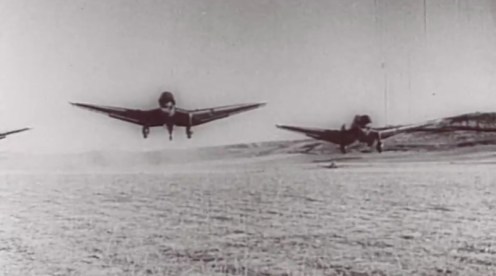
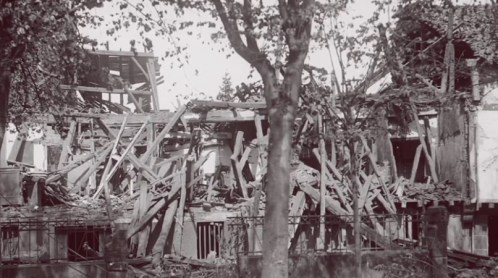
At 8.30am, inhabitants were at Mass at the Santa Maria basilica in the centre of town, and in the basilica arcade, where the local market was held. Five bombers, German Ju-52’s flown by the Condor Legion and Italian Savoia-Marchetti SM.8’s flown by the  Aviazione Legionaria, set out and used the basilica as the focal point. A direct hit was scored from the very beginning; the priest and 26 worshippers were bombed to pieces. The nearby cloister was also destroyed, killed all 14 nuns inside. The market was also hit directly, killing all those looking for food, others killed by falling buildings and horrific injuries from which they could not recover. A total of 281 bombs were dropped on Durango, almost 15,000kg of explosives. Just over 200 buildings were destroyed, though some have been rebuilt and their shrapnel wounds are still visible today.

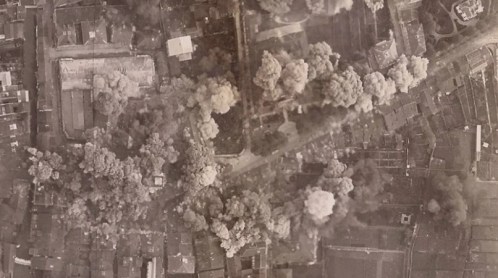
The initial bombing sent the people first into panic, followed by a desperate attempt to rescue those under rubble once the bombers disappeared again. Word spread outside the village; Bilbao received news of the bombings, and send ambulances, doctors and police to help the stricken people of Durango. The tiny village of Ellorrio, ten kilometres from Durango, with no military targets at all, and just a few thousand civilians, was also bombed, like a cruel parting shot at the region.
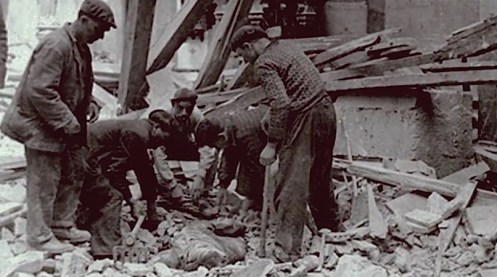
As help from Bilbao tried to get to Durango and people rushed around their village to save as many as they could, the worst was not over. By 5.30pm that same afternoon, the planes returned, this time accompanied by eight Heinkel He-51 fighter bombers, equipped with machine guns. Bombs were dropped to stop those from Bilbao getting to Durango, and the people of the town were machine-gunned down as they tried to help the injured and those trapped in rubble. By the end of the day 250 were dead, with another 100 to die of their injuries, and 200 homes reduced to rubble.

Killings and executions were common by now in Spain; Durango itself had previously carried out executions on Nationalist sympathisers for earlier bombings of Republicans in their small town. Between this ugliness and the front line deaths, Spain was growing used to fear. But now Mola had ushered in a whole new era. Durango became the first place in Europe to be targeted to kill civilians and not military targets. A whole new world of death was born that day in Durango.

Nationalists denied their role entirely. Mola, and Franco henchman General Gonzalo Queipo de Llano said that the Republicans attacked and killed the priest, nuns and the churches of the village, as had happened in other places. They claimed their planes were looking for military targets and it was Cocialists and Communists who came out and used the opportunity to murder innocents.

By April 28, Nationalists soldier had entered Durango and taken over the area. By then, Mola and his killers had stepped up their missions and bombed Guernica (which needs a long post on its own on its commemoration date).

Where the bombs hit in the centre of the Durango old town is now a site for historical memory, and commemorated every 31 March.

~~

This is not a detailed analysis, just a highlight (lowlight?) of events. Things get lost in translation – Feel free to suggest an addition/clarification/correction below. The more the world remembers, the better. All photos are screencaps of the video and linked to source for credit.

This Week in Spanish Civil War History – Week 35/36/37: 12 March – 2 April 1937

March 12

The Republicans are finally in a position to launch an offensive. A midday offensive sees 100 Soviet Rata and Chato fighter planes launched along with two squadrons of larger Katiuska bombers, which have arrived from Albacete. The Italian Nationalists have had their planes grounded due to the fog and sleet water-logging their aircraft. Albacete is 260 kilometres south and has not suffered weather troubles.

As the planes bomb the Nationalists, the Republican divisions are able to attack on the ground with light tanks. Nationalist tankettes get jammed in the mud and are destroyed, easy targets. The Republicans fight back all through the day and forced the Nationalists back to Trijueque, seven kilometres north of Torija. The Nationalists will never regain this ground, and most of the Nationalist XI Gruppo de Banderas are killed, including their commander.

Franco had promised to start a western offensive from Jarama, launching Spanish Nationalists to support the Italians, but this offensive has not appeared. This is allowing the Republicans to have a little breathing space as they fight. The stalemate and killing at Jarama is one possible reason for the lack of support, but another is Franco’s lack of enthusiasm. It is critical in how to battle will play out. Propaganda is also beginning, with the Spanish not pleased that the Italians are launching attacks in Spain, and the Republicans, calling the International Brigades all Jews and Communists (that’s a quote from Germans in Spain, not my opinion), could beat Italians. There is still another 11 days of this battle to play out, but both military and propaganda moves are being created and setting precedents, and numbers are swelling, with the Nationalists about to swell to 50,000 men and the Republicans at 20,000.

March 13

The fog and rain which has plagued both sides abates, allowing the Italian Penne Nere division to retreat from Trijueque. The Republicans attack the towns of Trijueque and Casa del Cabo, one of the first ground successes in the battle. Lister’s 11th column ride tanks along the Zaragoza road while the 14th column under Mera manage to cross the Tajuña River and attack the town of Brihuega. The local CNT militia help Mera to cross the river with a pontoon bridge, which sends the Italians into retreat.

March 14

The Republicans are able to rest after their initial success and their airstrikes continue against the Italians. They are now 20,000 strong, protected by 70 planes and 60 tanks. The Nationalists are reinforced to a huge group of 45,000 men, 50 planes and 80 tanks. Yet, despite this imbalance, the battle is stable and mostly even through the Guadalajara region.

The Republicans capture the strategic and famous Palacio de Ibarra from the Italians at Brihuega. The XI International Brigade and the Garibaldi Battalion take it, and it becomes a symbol of propaganda. Ernest Hemingway writes of the fight and how they took control of the access road through Brihuega and the Guadalajara region. The battle again sees Italians fighting Italians in the Spanish Civil War.

Palacio de Ibarra after the battle

March 16

Fighting continues in the Brihuega region for days and the Republicans slowly make process in pushing back the Nationalist front. The tide has finally turned in the Republicans’ favour. Franco does not deploy any more troops to the campaign and many are upset the Italians are fighting their own pursuits in a Spanish war.

March 18

The weather has again been hampering efforts on both sides. The Republican 14th column still have control of their pontoon bridge on the Tajuña River. Sleet abates about midday and the Republicans are able to get their planes in the air. Through early afternoon Lister and the 14th column fight back the Italians and the Republicans have Brihuega surrounded. The strong Italian Littorio division fighting for the Nationalists are forced to retreat and the XI International Brigade beat back the last of the Nationalists and Italians from the region. While the Italians have a tactical retreat and many are saved from death, they have been roundly defeated. There are so many Nationalists in the area it takes until the following morning to either kill or capture them, or they manage to escape the slew of Republican tanks coming at them.

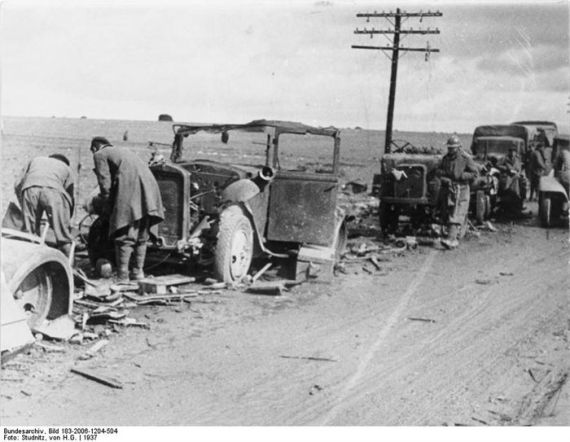
 Cars bombed from the air on the Zaragoza road

March 19

The Guadalajara battle is over. The Republicans have taken huge amounts of the Nationalist artillery and equipment, along with critical documents about the Italian plans in Spain once the Nationalist bases are raided. Around 650 Italians are dead, 500 captured and another 2,000 injured. Thanks to the writings of Ernest Hemingway in the area, the US media sway in the Republicans direction, and Hemingway raises $40,000US to buy ambulances for the Republicans. The US opinion has turned in the Republicans’ favour, but due to communist input in Spain, the US will not openly support the Republicans.

The Spanish government have the documents detailing the Italian involvement in the war, all details of Italy’s violation of the Non-Intervention Committee. Spain submits the papers in London, but the useless Committee refuse the papers and Spain seeks to present them before the League of Nations in Geneva. The constant attacks by Germany and Italy are having a devastating impact as they seek to spread fascism.

March 23

The Republicans at Guadalajara now have Gajenejos and Villaciviosa de Tajuña. All remaining Nationalist men are on the front lines between Ledanca and Hontanares, but the Republicans have enough of a hold on Guadalajara that these men are trapped and must leave the region for safety. These front lines will not move again.

March 31

The War of the North begins

The cruel General Mola decides to launch another offensive in northern Spain with a whopping 50,000 soldiers. Because the Nationalists cannot gain Madrid, instead they seek to take hold of the Basque Country. A new tactic is employed; the Condor Legion launch terror attacks on non-military targets, set to wipe out complete northern villages. Durango (30 kilometres southeast of Bilbao) is the first village targeted as bombs are dropped from German Ju-52 and Italian Savoia-Marchetti SM.81 planes on churches during morning Mass. As people flee the bombing, Heinkel He 51 machine-gunners fly low and fire on the public. Around 300 people are killed, and another 2,500 are injured, all civilians. Nationalists attack a cloister, killing all 14 nuns. The nearby city of Bilbao sends men, police protection and ambulances to help the town, but another air strike blocks their aid.

tiny Durango being bombed by the German planes

Durango is the first place in Europe to be bombed in such a manner, a test run for what shall lay ahead in Spain and then WWII. The tiny village of Elorrio ten kilometres southeast is also bombed the same day, also for no reason whatsoever. The Nationalists deny all claims of killing civilians, blaming Republican uprisings for the church attacks. The war has taken a new turn, using civilian Spaniards as target practice.

The Nationalist wish to wipe out the north, and it is now only twenty days away from the infamous bombing of Guernica.

A more detailed article on the bombing of Durango will be posted in a special This Week in Spanish Civil War History: Extra

April 1

Six German JU-52 bombers attack the city of Jaen, desite the fact they have no military targets. Approximately 159 people are killed and hundreds more injured, another practice raid ahead of Guernica.

~~

This is not a detailed analysis, just a highlight (lowlight?) of the week’s events. Things get lost in translation – Feel free to suggest an addition/clarification/correction below. The more the world remembers, the better. All photos and captions are auto-linked to source for credit, and to provide further information.

This Week in Spanish Civil War History – Week 34: 5 – 12 March 1937

March 5

014guadalajara

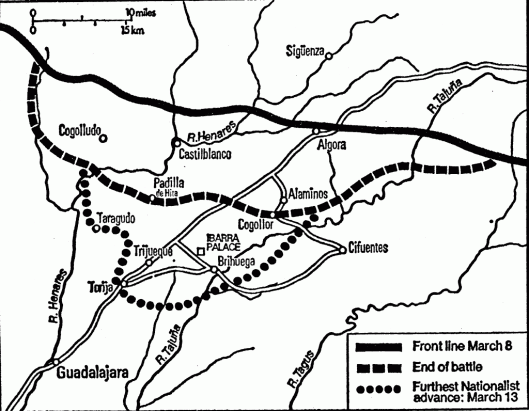
The Nationalists, fuelled with Spanish, Moorish and Italian soldiers, are preparing to attack Guadalajara, 60 kilometres north-east of Madrid. After all the failed attempts to take Madrid, and the collapse of battle at nearby Jarama, the Nationalists are keen to engage again. The Italians, fresh from taking Málaga, are ready to fight. The Nationalists have gathered 35,000 men, hundreds of artillery supplies over 100 tankettes, 32 armoured cars, 3,600 vehicles and 60 planes. Much of the tank, car and plane equipment comes from the Italians, as Mussolini strongly supports the offensive.

The Republicans are the 12th division of the Republican army with only 10,000 men, but only 5,900 rifles, 85 machine guns and 15 artillery pieces. They do have a few light tanks on their side. Guadalajara, until now has been peaceful, so no trenches, road blocks or defensive have been set up, but the Republicans know (assume), a Nationalist attack from the south is imminent. Meanwhile, the Nationalists are preparing to attack the 25 kilometre stretch of the Guadalajara-Alcalá de Henares road, south of Guadalajara, which will cut off the main road, and five other roads which stem from the area.

March 8

The Nationalists attack the front lines at Guadalajara at 7am with both air raids from 70 planes and artillery fire. They break the front lines within half an hour. The 50th Republican Brigade are broken by a barrage of 250 tankettes, extensive artillery, machine guns and trucks and heavy fire. The Italians take the towns of Alaminos, Catejon and Mirabueno on the first day. They capture 12 kilometres of ground, only slowed by heavy late winter fog, not yet at their planned locations of Brihuega and Guadalajara. They have taken the hills, and have a straight downhill roll towards Madrid, and the Republicans are overwhelmed and call for extra men and tanks.

Nationalist machine-gunners in Guadalajara
March 9

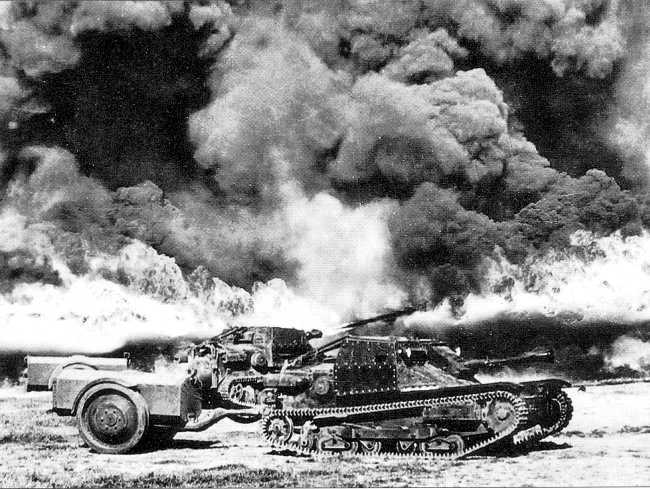
Italian tankettes with flame throwers continue the advance to Guadalajara, but the fog has not lifted, making visibility almost zero. The weather allows the surviving 5oth Republican Brigade members to escape the advancing Italians. By midday, the XI International Brigades arrives at the front – the Thaelamnn, André and Commune de Paris Brigades, all German, French and Balkans volunteers. But the Nationalists are using the Blitzkrieg technique of bombarding the enemy with short, sharp attacks on multiple fronts, which means the enemy slowly becomes surrounded. The Republicans have neither the manpower or firepower to fight this technique. By nightfall, the Nationalists have captured another 18 kilometres and the towns of Almadrones, Masegoso and Cogollor. The Nationalists are now outside the town of strategic Brihuega.
More Republican reinforcements start to arrive, with the arrivals of the Republican 49th and 12th Divisions. Between them and the XI International Brigades, they have 1850 men, 1600 rifles, five tanks and 34 machine guns. War hero General Lister arrives with the Republican 11th division at Torija, on the Madrid-Zaragoza road between the front and Guadalajara. He also places the 12th division to the west and 14th to the east of this main road to take on the Nationalists the next day.
 

March 10

The Republican forces have grown – 4350 men and 26 tanks when the XII International Brigades arrive – the Italian Garibaldi and the Polish Dabrowski battalions. The Nationalists start the day by bombarding the XI International Brigades on the ground and by air. They have no luck breaking the IB’s, despite having 26,000 men on the ground, 900 machine guns and 130 tankettes. They do capture the towns of Brihuega and Miralrio without any trouble.

Both the XI and XII International Brigades are bombarded by the Nationalists all day. The Italian Garibaldi battalion come up against Italian Nationalists at Torija, and the IB’s try to get their countrymen to defect away from the fascists. The fight stops for the day as both sides dig in, three kilometres north of  Torija, and defend themselves as leaflet drops and loudspeakers try to convince Italians not to kill one another.

Republican General Lacalle of the 12th division is forced to resign and Nino Nanetti of the Italian Communists takes over. He cites health (possibly injury) reasons, but he has been clashing with General Jurado, which has been weakening the already overwhelmed Republican strength.

March 11

The Italian Nationalists attack the XI and XII International Brigades again outside Torija and break through, taking the town and main road as the IB’s have to retreat to survive. The Spanish Soria division break through and take both the towns of Hita and Torre del Burgo to the west. Italian planes are halted due to the bad weather, the sleet and fog jamming their planes in soaking airports.

Republican T26 tank

March 12

The Republicans are finally in a position to launch an offensive. A midday offensive sees 100 Soviet Rata and Chato fighter planes launched along with two squadrons of larger Katiuska bombers, which have arrived from Albacete. The Italian Nationalists have had their planes grounded due to the fog and sleet water-logging their aircraft. Albacete is 260 kilometres south and has not suffered weather troubles.

As the planes bomb the Nationalists, the Republican divisions are able to attack on the ground with light tanks. Nationalist tankettes get jammed in the mud and are destroyed, easy targets. The Republicans fight back all through the day and forced the Nationalists back to Trijueque, seven kilometres north of Torija. The Nationalists will never regain this ground, and most of the Nationalist XI Gruppo de Banderas are killed, including their commander.

Franco had promised to start a western offensive from Jarama, launching Spanish Nationalists to support the Italians, but this offensive has not appeared. This is allowing the Republicans to have a little breathing space as they fight. The stalemate and killing at Jarama is one possible reason for the lack of support, but another is Franco’s lack of enthusiasm. It is critical in how to battle will play out. Propaganda is also beginning, with the Spanish not pleased that the Italians are launching attacks in Spain, and the Republicans, calling the International Brigades all Jews and Communists (that’s a quote from Germans in Spain, not my opinion), could beat Italians. There is still another 11 days of this battle to play out, but both military and propaganda moves are being created and setting precedents, and numbers are swelling, with the Nationalists about to peak at 50,000 men and the Republicans at 20,000.

Republicans with a captured tankette

~~

This is not a detailed analysis, just a highlight (lowlight?) of the week’s events. Things get lost in translation – Feel free to suggest an addition/clarification/correction below. The more the world remembers, the better. All photos and captions are auto-linked to source for credit, and to provide further information.

Women in the Spanish Civil War: Part 2 – Federica Montseny Mañé

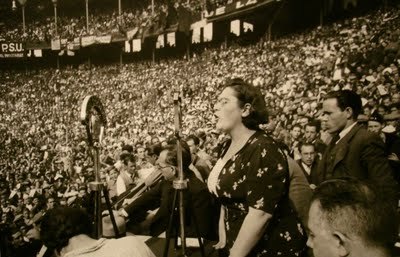
A name synonymous with anarchism and feminism during the Spanish Civil War is Federica Montseny. With a powerful voice and even more powerful convictions, the anarchist cause owes a great deal to Montseny.

Federica Montseny Mañé was born February 12, 1905 in Madrid, the only surviving child of strong anarchist parents. Her mother, teacher Teresa Mañé Miravet (aka Soledad Gustavo) was an anarchist activist, and her father was Juan Montseny Carret (alias Federico Urales) a tunneling worker turned propagandist and anti-authoritarian writer, who had spent time exiled for his beliefs (hence the need for aliases). Together they were editors of La Revista magazine for anarchists from 1898 until 1905 before moving home to Barcelona in 1912 to write libertarian propaganda.

Montseny’s parents were enthusiastic in education, which stayed with their daughter her whole life. As well as the usual basic subjects, Montseny was also educated in arts, politics, dance, philosophy, languages, history and classics. She grew up in a rural environment, and became strong in self-reliance, independence and freedoms not many girls were able to enjoy. She became a writer at an early age, and found her youth of being concerned with herself changed to wanting to share her independence and free thinking with the population. In a country where social, political and feminist freedoms were largely non-existent, anarchism was a way for Montseny to express her views. As with many feminists throughout time, she believed that equal rights cannot exist until women’s rights are addressed. Montseny could see from an early age that women were oppressed in Spain for a variety of social and economic reasons, and social revolution was in dire need.

Montseny published her first novel, Horas trágicas (Tragic Hours) in 1920, at the age of only 15, and another 50 would follow. She was living in a time of huge social upheaval, peppered with violence as workers rose up to the government and landowners alike. She fought to insist women gain the right to choose who to marry, if at all, if and when to have a family, and a woman’s right to choose the father of her children. She also fought for women to be educated in women’s health and pregnancy, which most women were denied. As women were given all responsibility for pregnancy and raising of a baby, Montseny believed that a woman should be given education in order to fill that role as best as possible.

Another view Montseny advocated was free love, rather than the usual view of marriage, which oppressed women in Spain during the era. She entered into a relationship with Josep Esgleas Jaume (aka Germinal Esgleas) and while they would never marry, they remained together for life, with a daughter born prior to the Spanish Civil War, a son during, and a daughter after the war.

The Second Spanish Republic came to Spain in 1931, which paved the way for revolution, and many organisations, such as anarchism, were given more power and confidence that true social changes could be made. The Socialist Republic pushed for changes, with Montseny there to help arrange regional and nationwide meetings to collectivise the people and their needs and ideas. She travelled across Spain, discussing  workers’ rights, women’s rights, how people could stand up to their government, and the need for all to come together for social revolution.

The trouble was that women were still not given any rights during this time. Women were not supposed to travel on their own, or be doing anything that was not controlled by a man. Attending rallies alongside men and spending time with men without a husband or father meant she was not always given the time she deserved – the same as the men advocating for rights. When the government turned conservative in 1933, changes stumbled, and with fascism creeping into Europe, people like Montseny could see the trouble awaiting them.

Montseny supported the Popular Front government went they won the 1936 election, though as an anarchist, this was not an easy decision. Anarchism was not part of the collective group of left-wing parties in the Popular Front at the time. When war broke out in July 1936, it was clear that a violent strike against the rebels was needed for both survival and to protect the left-wing government from fascists.

In November 1936, Montseny was chosen by Prime Minister Largo Caballero to be Minister of Health and Public Assistance, and she joined the Popular Front, despite anarchism still not supporting the government. She was the fourth female government minister in western Europe, (after one in Denmark and two in Finland). While in times of peace this would have been an excellent role for her, during war it was a struggle. Hospitals, doctors and nurses were overrun with wounded and dying from the front lines, and people were refugees in their own war-torn country, moving constantly to try to stay alive. Food and medical supplies were far too sparse to help, and the number of orphans quickly skyrocketed. Health problems broke out as people did not have access to clean water and sanitation. The front lines needed all supplies available, fighting in ‘peaceful’ areas was constant, and the Popular Front began to collapse as the factions brought together fell apart. The anarchists/powerful CNT were reluctant supporters, and the Communists could not agree with either group. All the programmes that the Minister of Health could oversee were in complete disarray.

Despite the situation, Montseny pressed on, and kept up with her support for women’s social revolution. She joined the Mujeres Libres, which arranged schooling for children as their mothers fought in the war effort, were trained with useful skills and educated on multiple subjects. She fought to ensure women who wanted out of prostitution (let’s face it – all of them) could be helped, educated and trained for new roles in society, in a time where women were needed everywhere. New mothers were cared for and pregnant women were also educated in women’s health. She went to anarchist Juan Garcia Oliver, Minister for Justice, to make sure children of unwed mothers were made legitimate, as neither the women or their children deserved to be treated with such disrespect by society. Under her charge, abortion was made legal (Franco destroyed this law immediately after the war).

But with factions on the left collapsing as the war pressed on, Communist pressure  forced Montseny from her post in May 1937. She returned to anarchism, even though many hated her for ever leaving, and continued to help in the war effort to kill fascism. As the war went on, she was forced to accept food packages from friends in the Netherlands. When Barcelona was bombed in 1938, she feared either that or raids by Franco supporters would see her and her family killed. When the Nationalists finally broke Barcelona in January 1939, she, her partner, their daughter, their newborn son and both of her parents fled north through the snow, walking to France. Montseny’s mother died on route, which forced Montseny to leave her body, and the country, behind. Many refugees were now in France, and kept in internment camps, where death swept through those displaced. They lived near Paris, trying to help Spanish refugees, but then the Nazis invaded, forcing them to hide in Toulouse.

Franco was after Montseny specifically now, wanting to execute all those who opposed him and the Nationalists during the war. In 1942, the same time Montseny’s father died in an internment camp, Franco asked the French government to help catch Montseny for extradition. But Montseny was pregnant and the French government refused to send a pregnant woman home to be killed. Spanish refugees were trapped in France, the French pinning them in, and allied countries were of no help.

Montseny and her family were forced to stay in Toulouse, where on top of her 51 novels, Montseny finished 22 nonfiction works, and wrote regularly for two French magazines, despite only learning the language after her exile. She did not return to Barcelona in 1977, two years after Franco was dead.

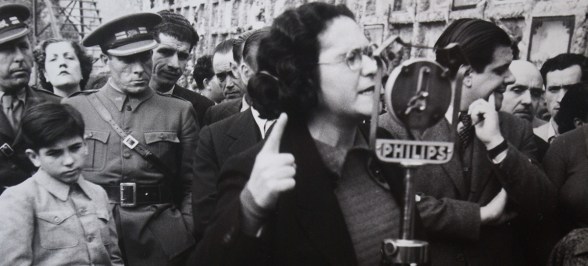
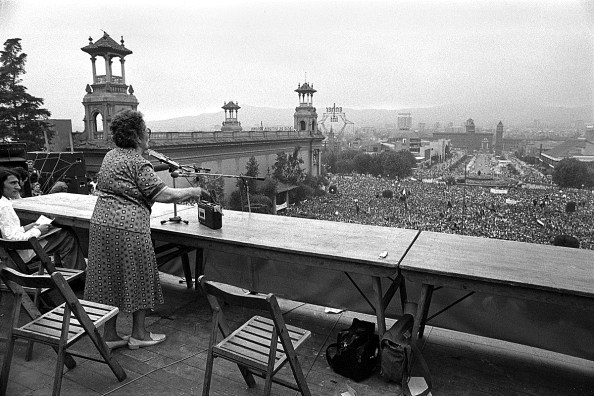
Montseny addresses the first CNT meeting in Barcelona since the war, in 1977

Montseny did not stay in Spain; she continued with her life in Toulouse, publishing her final book, Mis primeros cuarenta años (My First Forty Years) in 1987, and died aged 88 in 1994. She lamented that she was unable to instill her ideals about gender into her children, in particular her son, as the change in generational shifts came too late.

~~

This is not a detailed analysis, just a highlight of the Montseny’s life. Things get lost in translation – Feel free to suggest an addition/clarification/correction below. The more the world remembers, the better. All photos are linked to source for credit

This Week in Spanish Civil War History – Week 32 and 33: 19 February – 5 March 1937

February 20

Republican General Asensio Torrado resigns his post as head of the Central front. Torrado is one of the few ‘Africanista’ Republicans who did not side with the Nationalists at the outbreak of war. Immediately after the initial coup, he led teams of soldiers in the Somosierra area just north of Madrid as well as the Battle of Talavera de la Reina. By October he was sub-secretary for war and leader of the Central Army by November, one of the leaders during the defense of Madrid. He created mixed brigades of men, both trained and those men new to fighting, to create stronger brigades. He was rejected by both anarchist ans communists due to his military-style control of the militias, and was forced to resign after the Republicans failure in Málaga.

February 21

The Non-Intervention Committee set up by the League of Nations officially bans all foreigners volunteering to fight in Spain, useless as thousands have now entered the country, defying their countries, or claiming statelessness. The Non-Intervention Committee is letting large countries such as England, France and the U.S sit on their hands, while individuals worldwide (even as far away as New Zealand) see the need to help Spain. German and Italy defy the ban daily by supporting Franco, and the Soviet Union aides the Republicans.

Captain Merriman prior to his injuries

February 23

The battle of Jarama is ongoing, but with the stalemate at the front line, snipers are killing on both sides, with no progress being made. The new Abraham Lincoln battalion are ordered to take Pingarrón (Suicide Hill) again, and send 450 Americans (supported by an Irish column) off to their first major offensive, one known already as a disaster thanks to previous battles. The men have no artillery or planes for support, but storm the Nationalists over four days, and are violently killed. The battle hears the immortal words of Irish poet Charles Donnelly – ‘even the olives are bleeding’, just before he is killed by machine gun. The Americans lose 127 men and another 200 are wounded, Captain Robert Merriman included, and mutiny ensues. Other Republican units catch those who mutiny to be court-martial, but the Soviets prevent them from being tried or punished. Naturally blame needs to be passed, and XV International Brigade Commander Vladimir Copic is named, who in turn blames wounded Captain Merriman. This marks the end of the battle of Jarama, as both sides are now totally exhausted and nothing can break the stalemate. The front line shall remain here for the rest of the war, a little over two years away.

March 4

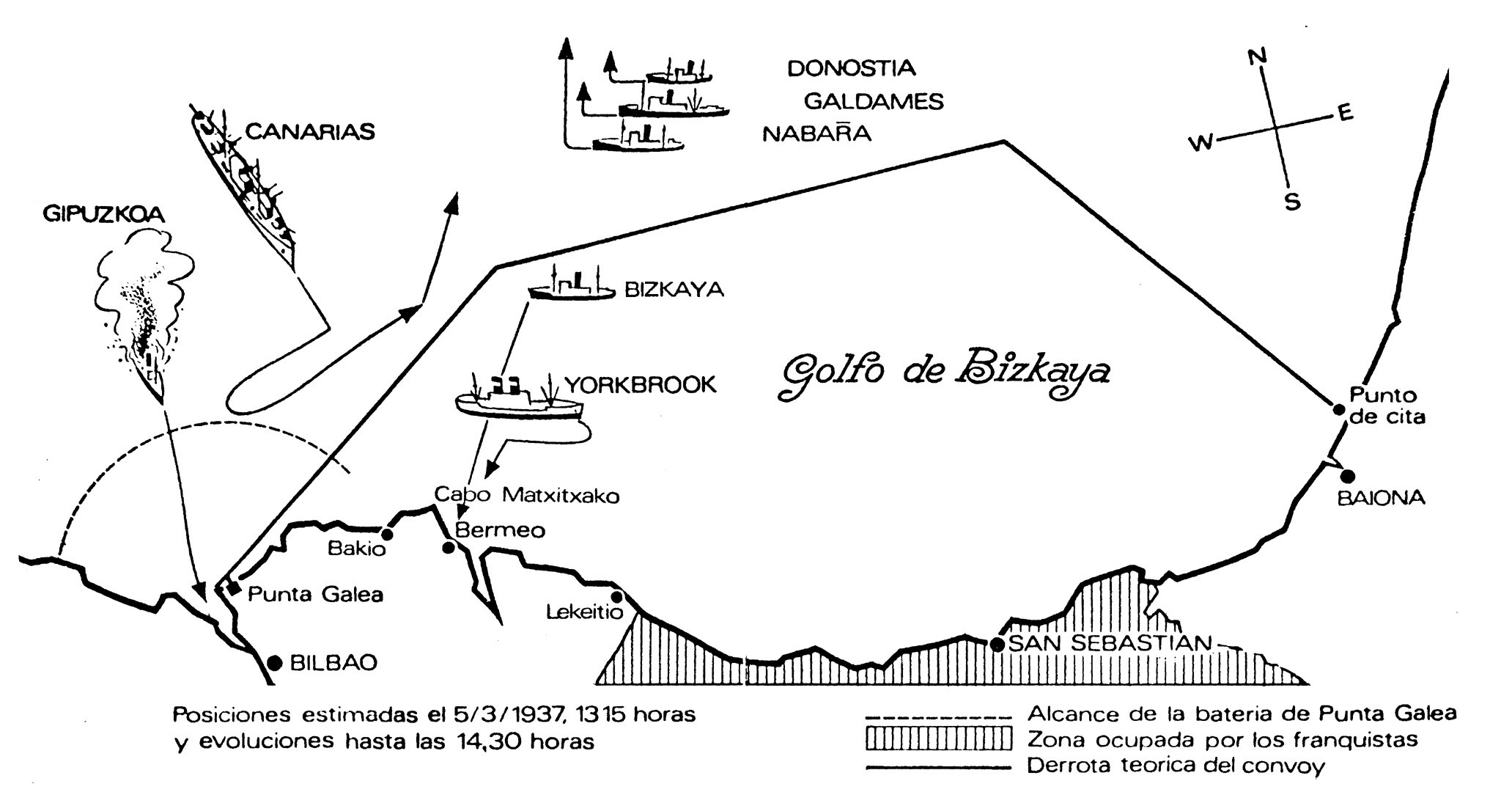
The Battle of Cape Machichaco begins. The Basque Auxiliary navy, supporting the Republican navy, send four trawlers from France to Spain – the Bizcaia, Gipuzkoa, Donostia and Nabarra. They accompany the Galdame, carrying  people, machinery, weapons, mail supplies and 500 tonnes of nickel coins, all owned by the Basque government. The Nationalists send the Canarias from port in Ferrol to stop the Galdame reaching the Basque ports.

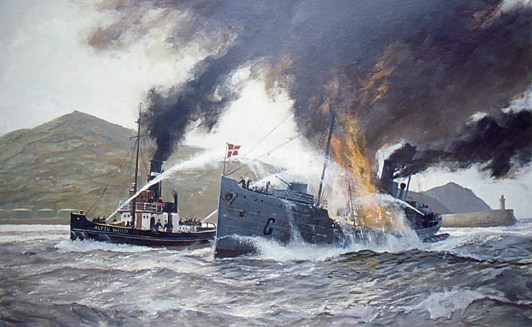
By the following morning, the Canarias was spotted by the Gipuzkoa only twenty miles from Bilbao. Shots were fired, hitting Gipuzkoa on the bridge. Returned fire kills a seaman on the Canarias, and wounds others, forcing them to retreat. The Nabarra and Donostia engage in battle with the Canarias for hours before they are forced to retreat. The Nabarra is hit at the boiler and 29 are killed, including their captain. Another twenty men are forced to abandon ship. All the men are picked up by the Nationalist Canarias and treated for their injuries.

The Galdame is also hit by the Canarias and is captured by the Nationalists, and four are killed in the carnage. Gipuzkoa manages to get to port in Portugalete and Bizcaia lands in Bermeo. Donostia lands in France. The twenty survivors of the Nabarra are sentenced to death by Franco, but the Canarias captains beg mercy, and the men are released in 1938. On board the Galdames, the passengers are let go, expect for politician Manuel Carrasco Formiguera from Catalonia, who is jailed before his execution a year later.

March 5

Trouble begins to mount as the PCE – Communist Part of Spain – holds its first council. They agree to favour democracy, against revolution and Trotskyism. The trouble is that this flies in the face of their allies, the Republican movement, the Spanish government and the powerful anarchist CNT. This decision will bring in-fighting among the Republicans in coming months, weakening the entire movement.

014guadalajaraAlso March 5

The Nationalists, fuelled with Spanish, Moorish and Italian soldiers, are preparing to attack Guadalajara, 60 kilometres north-east of Madrid. After all the failed attempts to take Madrid, and the collapse of battle at nearby Jarama, the Nationalists are keen to engage again. The Italians, fresh from taking Málaga, are ready to fight. The Nationalists have gathered 35,000 men, hundreds of artillery supplies over 100 tankettes, 32 armoured cars, 3,600 vehicles and 60 planes. Much of the tank, car and plane equipment comes from the Italians, as Mussolini strongly supports the offensive.

The Republicans are the 12th division of the Republican army with only 10,000 men, but only 5,900 rifles, 85 machine guns and 15 artillery pieces. They do have a few light tanks on their side. Guadalajara, until now has been peaceful, so no trenches, road blocks or defensive have been set up, but the Republicans know (assume), a Nationalist attack from the south is imminent. Meanwhile, the Nationalists are preparing to attack the 25 kilometre stretch of the Guadalajara-Alcalá de Henares road, south of Guadalajara, which will cut off the main road, and five other roads which stem from the area. The enormous offensive is planned for March 8.

~~

This is not a detailed analysis, just a highlight (lowlight?) of the week’s events. Things get lost in translation – Feel free to suggest an addition/clarification/correction below. The more the world remembers, the better. All photos and captions are auto-linked to source for credit, and to provide further information.