This Week in Spanish Civil War History – Week 65/66/67: 10 – 31 October 1937

October 10 

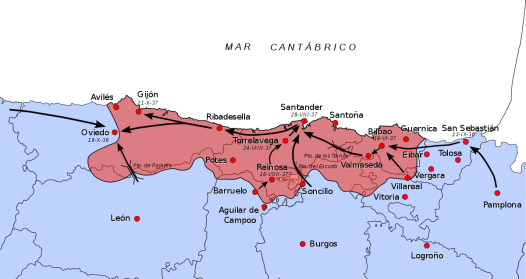
Franco’s Navarrese Brigade are still heading west into Asturias, and reach the small town of Cangas de Onís. The town, deep in the Picos de Europa, is only 65kms from the city of Gijón, which is preparing for invasion.

A mixture of Republican fighters and International Brigades are still keen to take ground in Aragon, and after minimal gains for heavy losses in the battle of Sabiñánigo, they again plan to attack along the Ebro river in the Zaragoza area. Fighting in the rural areas is sparse and it gains little for either side scattered through the region.

October 13

The Madrid Council, representing socialist parties and workers’ unions, confronts the Spanish government (currently in Valencia) over the influence of the PCE (Partido Comunista de España, Communist party of Spain) in the Republican government. They also protest the recent expulsion of Caballeristas, socialist parliamentary supporters of former prime minister Francisco Largo Caballero.

Caballero in Madrid

October 17

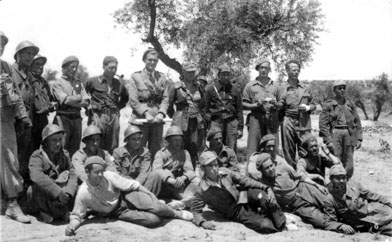
Th Consejo Soberano, the Sovereign Council of Asturias and Leon, decide to evacuate, due to the large number of Nationalist soldiers entering the region from fallen Cantabria. The Consejo Soberano is based in Gijón and officials and their families are taken out of the city for their safety. Asturian villages to the west of Gijón are abandoned, as the 1934 miners revolt is still a fresh horror for those living in the mountain areas.  Guerilla style groups form, to help protect rural areas from incoming Nationalists, but none have the numbers or resources to save anyone. These men will fight to the death and light houses on fire with dynamite if they flee.

Socialist Francisco Largo Caballero is arrested in Madrid while giving an anti-PCE speech at Pardina cinema. He is placed under house arrest in Madrid and held responsible for the Madrid Council’s anger.

The Condor Legion march through Gijon

October 21

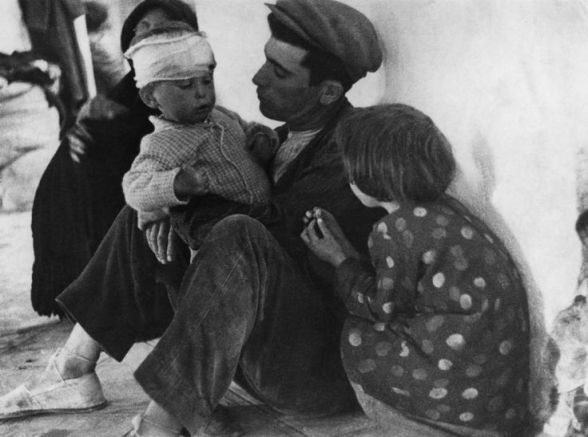
The Nationalist Army of the North finally reaches Gijón. The fall of the city is as bad as expected; rape and murder goes uncontrolled for days as those still in the city are subjected to the Nationalists’ cruelty. Countless thousands are raped and murdered in the first few days of the invasion, and no official count of those tortured and killed is ever recorded. The soldiers plundering the city are so busy with killing, their jurisdiction is called ‘the machine gun’. Unlike many other Republican-held cities, Gijón cannot put up a fight; many have fled, many are already refugees from other cities, they is no international back-up and the atrocities committed are not well-documented or photographed. Wholesale slaughter brings Asturias’ largest city under control within days.

I do not post photos of women raped to death, or mass bodies lined up before firing squads. While the majority of these types of widespread depravity happened earlier in the war, Gijon managed to hold out longer than most main centres. Regardless of when it happened, I do not post such photos. You can search for yourself if you are into such perverse behaviour.

October 30

The Republican government has been safe in Valencia for a year. Valencia is far from the front line and is a base for many Republicans and Spain’s elite who do not side with Franco. Valencia does still suffer many air raids, and the government decides to leave Valencia and move north to Barcelona, despite the Catalonia region not being stable like Valencia.

Need to catch up? – SCW history : October 1936

~~

This is not a detailed analysis, just a highlight (lowlight?) of the week’s events. Things get lost in translation – Feel free to suggest an addition/clarification/correction below. The more the world remembers, the better. All photos and captions are auto-linked to source for credit, and to provide further information.

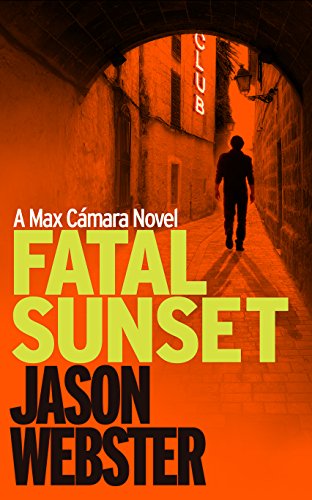
AUGUST SPAIN BOOK REVIEW: ‘Fatal Sunset’ by Jason Webster

In the hills above Valencia is a notorious nightclub called Sunset. When its larger-than-life owner, Jose Luis, dies suddenly, everyone assumes it was a heart attack. Perfectly understandable for a man of his age, size and lifestyle.

Meanwhile, all is not well for Max Cámara at HQ. His new boss, Rita Hernández, has it in for him and his idiosyncratic methods. He must abandon a complex investigation into home-grown extremism to check out what looks like a routine death at Sunset. But an anonymous phone call suggests otherwise…

Back in the city, Max’s journalist girlfriend, Alicia, is working on a lead that could turn out to be the story of her career. How her own investigation connects with Max’s at Sunset, and an unholy network of drug dealers, priests and shady officials protecting a dark government secret, will place both their lives in jeopardy and push everything to the very edge.

~~

(Before I begin – I make no apology for being MIA with Spain book reviews. I didn’t see anything I wanted to read for months. Admittedly, I didn’t look too hard. If I missed something worth reading, leave me a comment)

What can I say about Max Cámara. Fatal Sunset is the sixth book in the series (I’ve reviewed the others here) and the author has decided to really mix things up this time. Fatal Sunset is longer than the previous books, which is a nice bonus, taking in a far bigger plot than in the past. 

Cámara is a Valencian cop who was in Barcelona during the last book, another was based in Albacete. This time he is back in his home city, and out in the Sierra Calderona, the mountains outside Spain, aka my favourite place on Earth and the location of three of my own books, so I was thrilled to get into this novel.

The book starts off from the point of view of the victim, and gets weird fast. Page 2 has the guy reminiscing about his childhood, watching water run along the insides of his mother’s thighs as she washes her ‘down there’ (dude! wtf). But it’s okay, because he’s a victim and is dispatched.

Off to Max Cámara himself, back at the station in Valencia, and wow, he is a changed man. Cámara used to be a likeable, pragmatic rogue, breaking all the rules (in a city/country which was so riddled it didn’t matter). But that guy seems to have withered with age. The world is changing, and at least attempting to clean house, and the women now in charge of the station want everything done properly, not rude, not disrespectful, not wasteful or illegal. Only Cámara doesn’t agree. Cámara seems to go out of his way to be difficult right from the very beginning. He’s handled some high profiles cases in the past and now has developed one hell of an ego. Congrats to the author; it would have easy to just pump out another book with the same old character traits, but Webster hasn’t taken the easy route or written a flawless character.

Cámara likes to continuously point out that he comes from a long line of anarchists, like his wonderful grandfather, and how he likes the disorder and defiance that comes with being an anarchist. Only it doesn’t work for Cámara anymore. He is middle-aged; what he learned as a kid, and was influenced by family, isn’t so important, for now he has had plenty of time to develop his own ideals; he could be a grandfather himself. Cámara isn’t aspiring to be a good anarchist to make granddaddy proud, rather he is a breed of man, breed of cop, which is dying out, and he is rebelling against everything, like an angry kid.

Fatal Sunset bounces between characters for its point of view with every chapter, with enough characters to rival a Games of Thrones book. There is Alicia, Cámara’s girlfriend (girlfriend? She’s middle-aged too. Sidekick maybe), who is, as usual, digging up conspiracies and stories but seems to achieve little, which is a shame.  As Cámara and Alicia works to solve murders and unearth conspiracies, they never work together that well. We get to hear about how she makes breakfast half-naked, or the way her thighs wrinkle when she puts on pants, but Alicia is not a strong character anymore. She has also undergone a transformation, much like Cámara; failure to adapt has also left Alicia misplaced in the world.

However, there is Carlos, the ‘bad guy’, who is digging up stuff on Alicia, and Cámara by association. Carlos is a stiff, self-inflated guy, but the trouble is, he is better at what he does than Cámara and Alicia. The ‘bad guys’ are ruthlessly efficient, where as Cámara is an old-style detective in a new world and seems to succeed with luck as much as with experience.

But the whole theme of old v. new shines through in the short-burst chapters which flick between characters. There is no denying that policing (and the world) is changing around Cámara; the days of sitting around eating paella with his buddy Torres are done. The seedy elements of Valencia, and Spain in general, gives a feeling that the place is as stale as the endless cigarettes. Webster has done a fine job in setting the tone and the vibe of everyone and everything. It’s hard to be specific without giving away the big scandals Cámara and Alicia find (no spoilers here!) but there is a sense that if Cámara didn’t spend so much thinking about himself and how he liked to be different, he could have been more successful. Sometimes it is easier to bring something down by playing by your opponent’s rules rather than your own. Cámara never really figures that out, or at least, never gives it a try. Webster has made a character you want to see succeed, but also want to ring his sweaty neck. Kudos on that score.

There was one passage that stuck out for me, pg 193

Either side of the bag strap, her breasts hung low on her chest, nipples splayed to the sides. Below, her belly was taut and firm, yet the skin sagged in small crescents beneath the navel, where he first airs of her pubis crept up, heralds of the dark silhouetted triangle of her sex. Cámara watched in awe. But for her age, and the signs of motherhood, she appeared like an embodiment of Artemis, the Moon goddess herself out hunting during the hours of night.

And this is just a sliver of the long description of the character. Really, Cámara, really? The characters in the book are all barely described, yet here Cámara is, in the countryside perving on women who run their land nudist-colony style. She could look like a goddess if only she didn’t have qualities that make women real, like age and being a parent? Really, Cámara? The constant descriptions of women as objects makes me feel uncomfortable while I read. I used to like you, Cámara, but you are practically ageing yourself out of the system with the sexism and casual homophobia. Women’s bodies are decorative features to be described for entertainment, and there are people who use words like ‘poof’, as if they were shot out of a cannon in the 50’s and landed in the 21st century by accident. Cámara is circling around a world that needs to change, whether people like it or not. The criminals are evolving, still scum, but evolving. Cámara needs to as well. Both he and Alicia are essentially good people, but this time have not done a great job with their investigations or behaviour.

Congratulations to Jason Webster for his latest installment; six novels based on one central character is no easy feat for a writer, and Webster has successfully moved the character into a new stage in his life in Fatal Sunset, rather than just churning out a book which could have just coasted on the success of previous editions. Thank you, Jason; I have not had a book in my hands that had me turning the pages this fast in a while, or thrown it in frustration at times. This book is certainly not a boring read.

If we see Cámara and Alicia for book seven, I hope they get a holiday first! Cámara needs to chill and eat rice again, but ease up on the marijuana – really, at your age, Max? Just don’t ever leave Alicia behind; a crime character with a steady relationship is rare (no rolling through women like he’s at a drive-thru for Max), and one main reason that sets Webster’s series apart from the generic crime series that are available. I have no interest in reading any crime series other than Webster’s.

This Week in Spanish Civil War History Extra: the Bombing of Valencia – 28 May 1937

Valencia became the Spanish capital city in November 1936, when the government fled the besieged Madrid for the relative safety of the port city, 360 kilometres to the east. Valencia, safely away from a front lines of the war, the Nationalists nowhere near the city for the duration of the war. However, Valencia was not immune to both infighting between Republican and Nationalist sympathisers, and attacks from the air by Nationalist troops. Both German and Italian planes could regularly take off from Soria, 370 kilometres northwest of Valencia. Valencia was bombed repeatedly through the first half of 1937, including an air raid on May 15 which damaged the English embassy, but 28 May held a whole new level of attack.

Planned for just before dawn, Franco’s Nationalist forces planned another air raid over the city, with a plan to bomb ships in Valencia’s port. The English merchant ship, the Cabin, was struck in the port, killing seven sailors and injuring another eight. The English freighter the Pinzon, anchored in the harbour, was also hit, but the bomb failed to explode on impact. No one was injured but the ship’s bridge was damaged. The British claimed only one ship, the Pinzon, was damaged, and that the Cabin was not their ship, despite flying an English flag. It is thought it was a Spanish ship flying an English flag for safety.

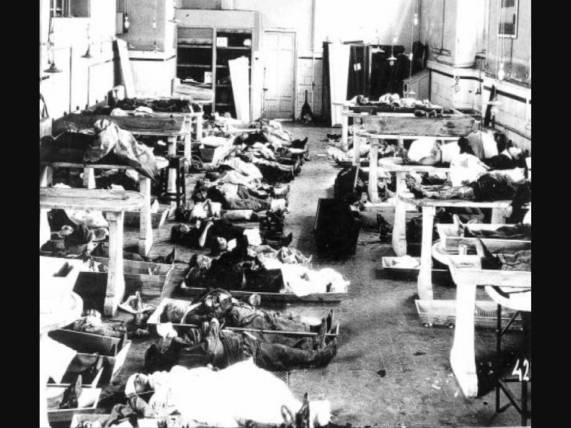
Bombing bodies laid out in a makeshift morgue

Valencia was also home to a large hospital run by the Red Cross, staffed by both Spanish doctors and nurses as well as international volunteers, and supplies were brought in by these volunteers who had done fundraising in their home countries. The Red Cross hospital was clearly marked, including a large cross flag on its roof, so it could be identified and possibly spared from damage. But the Italian planes also bombed the hospital, which was full at the time of the attack. The bombing blew the injured from their hospital beds.

Another fifty buildings were destroyed in the attack, picked seemingly at random as part of the attack, killing innocents still in bed before dawn. The Paraguayan consulate was destroyed, killing seven, although the consul and his family managed to escape. The American embassy was missed, but the US Socialist leader Norman Thomas, his wife and several Americans were bombed in bed, though they managed to escape with few injuries. The American consul Milton Keys also managed to survive when his home was bombed. Valencians wait outside the morgue for news

After the attack, which lasted around 30 minutes, was done, around 200 people were believed killed, though the number is not confirmed and little attention was paid to the attack. Much of the port area of Valencia was destroyed, hampering the Republicans’ ability to receive supplies and bring in international volunteers.

The following day, the air base at Soria, where the Italian planes had returned to after the bombing, was attacked by Republican planes, who bombed and machine-gunned fifty planes on the ground. Many bombings were conducted around Spain at this time as the Germans and Italians practiced their new carpet bombing techniques. While Valencia’s attack had a large loss of life, the city managed to cope through the attack, and so the bombing is not given the same amount of attention as many other happenings at the same time.

~~

This is not a detailed analysis, just a highlight (lowlight?) of the bombing. Things get lost in translation – Feel free to suggest an addition/clarification/correction below. The more the world remembers, the better. All photos and captions are auto-linked to source for credit, and to provide further information.

This Week in Spanish Civil War History – Week 44/45/46: 15 May – 5 June 1937

Sorry the delays over the Shakespeare season. Weekly posts will now return.
May 15

Prime Minister Largo Caballero resigns from his post, now having no alliance with either Anarchists, Socialists or Communists. A member of the centre-left PSOE, Juan Negrín, is appointment Prime Minister, and selects a group of ministers from all groups, Republicans, Communists, Socialists and Basque men to form the government. The CNT however are now cut out entirely from Spain’s government, despite having huge support around the country. The Anarchists are quickly losing strength and the POUM is about to be outlawed completely in Barcelona and around Spain.

May 20

The Nationalist offensive on the Basque Country is destroying the Republicans, who come up with a plan to divert Nationalist troops away from the north. Republican troops in Aragon start plans to take Huesca, and troops in Madrid decide to launch an offensive on Segovia, both to take place by the beginning of June. Bilbao in the north has not yet been taken by Nationalists, but the Republicans/Basque fighters have no reinforcements nor supplies getting into port, and need the Nationalists distracted.

May 27

The La Batalla newspaper, run by the Soviet anti-Stalin POUM ( Workers’ Party of Marxist Unification) is banned in Spain by the new centre-left Negrín parliament. Other communist factions are destroying the POUM.

May 28

The temporary capital city of Valencia is bombed from the air by Nationalist planes, killing 200 people and destroying 50 buildings while attempting to bomb ships in Valencia’s large port. The bombing is done while the city is sleeping, and the Red Cross hospital is targeted during the attack.

NB: A separate post on the attack of Valencia will also be posted.

May 29

Madrid is still surrounded by Nationalist troops since the siege on the city in November 1936. Daily air raids continue to hammer the innocents civilians of the city, and Republican troops devise a plan to break out of the city and push back Nationalist front lines. Republican men, led by a Polish communist leader, use armoured vehicles to try to push back the Nationalists, but the plan is quickly beaten by strong Nationalist troops. The city has been surrounded by large battles in Jarama and Guadalajara, and now the Republicans begin plans to take Brunete, a town 25 kilometres west of the city, and Segovia 90 kilometres north, to push back front lines and relieve Madrid. In the meanwhile, the daily air raids continue from German Condor Legion planes, and Spanish men are taken to Russia to be trained in Russian planes to aid the Republicans against this onslaught.

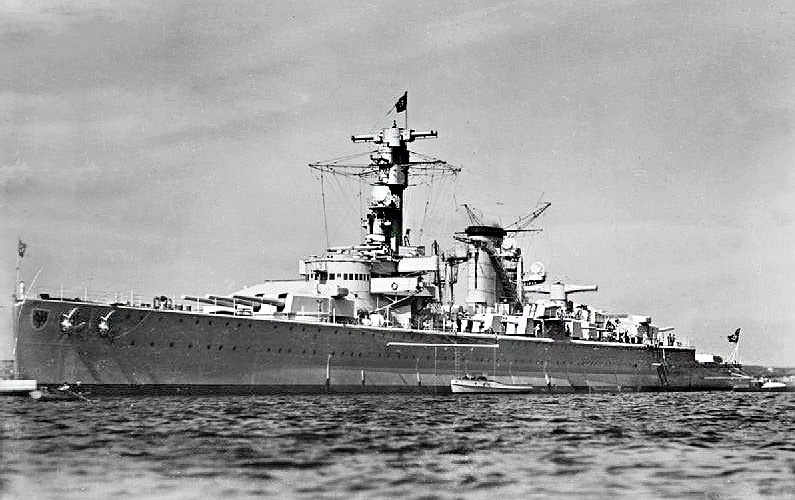
Two Soviet bombers, on behalf of the Republican forces, bomb air bases at Ibiza, off the coast of Nationalist-held Mallorca. The planes, sent from Cartagena, bomb the German cruiser Deutschland, mistaking it for the Nationalist cruiser Canarias. The Deutschland was off the coast of Ibiza as part of the Non-Intervention Committee’s patrol. Both pilots misidentify the ship and drop bombs, killing 31 and wounding another 74.

May 31

Due to the bombing of the Deutschland, both Germany and Italy decide to leave the Non-Intervention Committee. (Pointless as both had defied the Committee from the very beginning and had been killing Spaniards throughout the entire war.) German forces fight back by attacking the port city of Almería, relatively safe during the war until now. The cruiser Admiral Scheer fires off 200 rounds, killing 19 and wounding another 55. Around 150 buildings are destroyed. All the German and Italian ships on the Mediterranean are all backing the Nationalists, not neutral at all.

Spanish prime Minister Juan Negrin defies calls to attack Germany for these killings, as he does not want open war with Germany. The League of Nations calls the attack on Almería justified for the accidental attack on the Deutschland, reminding Spain that Europe and the world do not care about their pain.

The Republican army have three divisions in the Sierra de Guadarrama, the mountains on the north side of Madrid. The 34th, 35th and 69th divisions are brought together under Colonel Domingo Moriones, and given artillery and T-26 tanks. The Guadarrama is held by Nationalist troops and the Republicans attack, and break through the front line at San Ildefonso, around 80 kilometres north of Madrid. the 69th division also take nearby Cruz de la Gallega. The XIV International Brigade head towards La Granja, which brings them close to the strategic Segovia Road and advance towards Cabeza Grande, but only through suffering serious casualties.

June 1

The Republican forces reach La Granja north of Madrid on their way to Segovia, but  the Nationalists begin to fight back with air raids on advancing Republicans on the ground. The Republicans lose the town of Cabeza Grande and casualties begin to mount.

June 3

High ranking Nationalist General Emilio Mola y Vida is killed when his Airspeed Envoy twin-engined aircraft crashes in bad weather on route to Vitoria. Mola is head of the northern Nationalist army, which has been successfully attacking the Basque Country, while Franco is able to focus on Madrid and the south. The war began with Franco, Mola and Sanjurjo all in equal power, but Sanjurjo died in a light plane crash in July 1936. Now with Mola also dead in a light plane crash, Franco is able to assume total control and no one is capable of standing up to him. Rumours that Franco had the men killed swirled, but nothing to suggest more than accidents almost a year apart was ever found. In 1948, Mola will would posthumously named a Grandee of Spain and made a Duke, the title given to his son.

Fidel Dávila is named head of the Nationalist troops in the north to continue the assault on Bilbao.

~~

This is not a detailed analysis, just a highlight (lowlight?) of the week’s events. Things get lost in translation – Feel free to suggest an addition/clarification/correction below. The more the world remembers, the better. All photos and captions are auto-linked to source for credit, and to provide further information.

This Week in Spanish Civil War History – Week 30: 5 – 12 February 1937

February 5

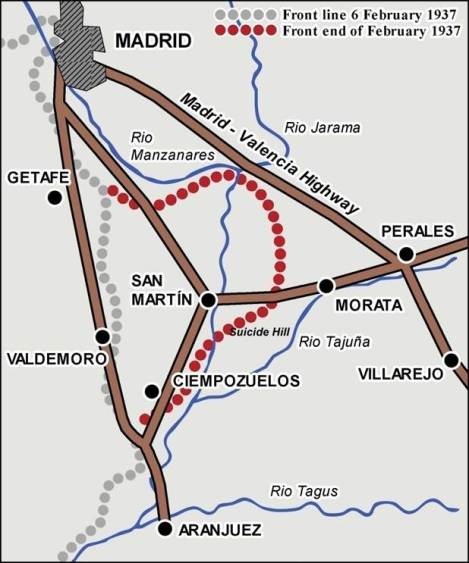
The Nationalist offensive begins on the west bank of the Jarama River, catching the Republicans by surprise after heavy rain. The Nationalists have highly trained men who advance with whole brigades in columns, meaning the Republicans are simply overwhelmed. While the Nationalists have a good first day, they did not gain the total control as planned, and thus begins the now-infamous battle lasting three bloody weeks.

jarama_mapThanks, Richard, for all your great maps. Visit Richard Baxell’s site for detailed Jarama info

February 6

The Nationalists ramp up the offensive of the Jarama valley. With 40,000 troops, of Moroccan soldiers and Spanish Legionnaires, with the German Condor Legion and their machine guns and anti-tank artillery, attack to cut off the Madrid-Valencia road. Alongside them is 600 Irish Blueshirts, ultra right-wing fanatics joining the fight.

Because the Republicans were already planning an offensive against the onslaught coming at them, they are not yet prepared and do not have any high ground safely covered in case of attack. The Nationalists swarm in and take the two main bridges over the  Jarama. The town of Ciempozuelos in the Jarama valley is attacked by the Nationalists and 1,300 men are killed. The Moroccans sneak in under darkness, killing all the Republican bridge guards and taking the area easily. La Marañosa hill, 700 metres high, which overlooks both sides of the Jarama River, is attacked, with the Republicans on top killed.

February 7

Meanwhile, after the Nationalists and Italian Blackshirts swarming the southern area of Málaga in southern Spain, the civilians try to flee then city towards north-eastern Almería. The sole road to take them to safety is filled with the injured and dying as they go on foot, or by slow trucks, to escape being murdered. The road is devoid of all cover and safety fleeing innocents are bombed from the air as soldiers on foot march after them to shoot them down. German planes are bombing the public, as the Navy stands by doing nothing to help the on land civilians. Skeletons will be found along the road for another thirty years.

A separate post on the road massacre will be posted on February 7

February 8

Málaga is now totally in the hands of the Nationalists. Republicans held off rifle and grenade attack, but have nothing to protect them from tanks. Those left in the city are rounded up and executions begin. Those punished with execution are for ambiguous ‘crimes’ for which are put before firing squads.  Torture and mutilation is enjoyed by the Moroccan troops, horrifying the Italian military. Mass rape is instructed by Generals, and women are raped to death, then mutilated.

You can find picture online of women, stripped, raped to death and their bodies left exposed during the SCW. I am not going to post that. Their horrific pain and humiliation is more than enough, let alone sharing images. If you wish to view that, get the fuck off my site. Seriously. Don’t come here again.

The Nationalists outside Madrid take more of the Jarama valley, the west bank of the river now in their control. The Republicans have Soviet tanks to help them hold back the enemy, but sheer numbers and ammunition are on the Nationalists’ side. The Republicans also have no air support, and are left to be bombed constantly by the Germans.

February 9

Nationalist troops win the high ground by the town of Vaciamadrid. They are quickly gaining the outskirts but the Republicans hold onto the centre of the valley. They hold on to the towns of Gozquez de Abajo and San Martin de la Vega. Republican reinforcements arrive on the east banks of the Jarama, meaning the Nationalists cannot cross the water. Heavy rain arrives again, halting the Nationalists further.

February 10

The International Brigades, the XIV and XV battalions, flood in and stop the Nationalists advancing across the Jarama valley. But the Nationalists capture 30 British volunteers at their machine gun location and sent them to the front line, and half are killed by their own side’s shots.

February 11

Moroccan soldiers cross the river and silently cut the throats of the XI International Brigade guards around their camp. More Nationalist men then cross the river and attack the fleeing volunteers. The Nationalists then also charge the Arganda bridge under heavy fire and succeed in their crossing. Republicans have laid mines along the bridge and detonate, but the bridge does not collapse. The Nationalists also attack San Martin de la Vega and cut the throats of all in the way.

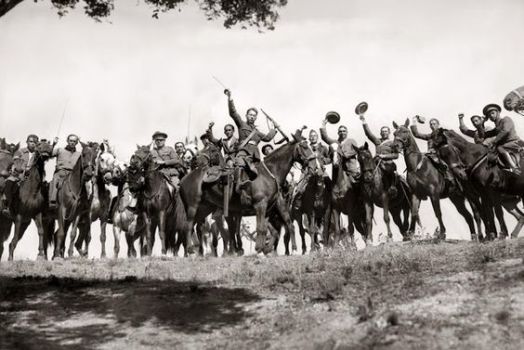
The eastern banks of the river is towered over by Pingarrón hill and the Republican continue to hold the strategic point. The Garabaldi battalion hold off the Nationalists and the XI International Brigade hold off Nationalists on the Arganda-Colmenar road, who are then attacked by Soviet tanks. This holds up further Nationalist advance. Republican planes, 40 Chatos provided by the Soviets, arrive and then shoot down German Condor Legion bombers over the valley.

spanish-civilBritish battalions included New Zealand, Australian, South African and Irish volunteers

February 12

The Soviet planes are giving the Republicans power in the area and the German Condor Legion planes have to retreat. The Nationalists still have to cut off the Madrid-Valencia road. International Brigades, British and Polish men, with Spanish men making up their numbers, try to hold these last few key locations to save the road and keep it open. The volunteers are hacked into pieces by the Nationalists.

The Nationalists have fresh troops in reserve and bring them into the valley to attack the town of Morata. They also take the Pingarrón and Pajares hills in the north the valley. The XI International Brigades are caught on the hills and surrounded, with slaughter resulting. The Republicans hold Pingarrón hill but only just, and the XV International Brigade, three battalions of British, Balkan, German, French/Belgian and Irish battalions banded together, holding the San Martin-Morata road. The British battalion loses 375 men, out of a total of only 600, killed on a hillside now nicknamed Suicide Hill. The French/Belgians have to flee to survive, leaving the British men exposed and outnumbered. The Balkan and German Thaelmann battalions hold off the Nationalists with machine guns. The Nationalists have to turn back, but the Republican lines are now severely broken. The battle still has another two weeks to go.

A separate post on the killings on Suicide Hill will be posted on February 12.

bb_at_jarama~~

This is not a detailed analysis, just a highlight (lowlight?) of the week’s events. Things get lost in translation – Feel free to suggest an addition/clarification/correction below. The more the world remembers, the better. All photos are linked to source for credit.