SPAIN BOOK REVIEW: ‘Spanish Cooking Uncovered: Farmhouse Favourites’ by Paco de Lara and Debbie Jenkins

front-cover-outline

There are so many recipe books available these days, and to be honest, I am put off purchasing any of them. I am no cook; I am not a fan of spending time in the kitchen, and the thought of following a convoluted set of instructions for an hour puts me off dinner completely. Spanish cooking is great for people like me; there are many great flavours and the simplicity means everyone, including the cook, can look forward to a meal.

The story of Grandma María Luisa is one that could have easily never been told. María Luisa, suffering from serious asthma problems, took her doctor’s advice and moved to their family finca (country home) in Murcia in the 1930’s, in an effort to improve her heath. When the Spanish civil war broke out in 1936, María Luisa stopped marking her regular trips between the finca and Valencia, and stayed in the (relative) safety of the country home while the nation underwent a cruel transformation. Like for so many around Spain during this time, life became increasingly dire and families needed to become inventive and self-sufficient if they were to have anything to eat. The war had a devastating effect on all industries, leaving people to survive with next to nothing. After the end of the war in 1939, the following decade brought little more than hardship and starvation to much of the population. María Luisa took on a challenge and was able to help her family by creating recipe ideas to help them through an impossibly difficult period in their lives.

Today, the family finca is an ecotourism farm, and during renovations, María Luisa’s grandson, Paco de Lara, came across old papers. He had stumbled upon over 2,600 wartime recipes in María Luisa’s beautiful handwriting. Combined with María Luisa’s ideas and techniques, these terrific recipes have been transformed into 80 traditional Spanish recipes that anyone can undertake, 70 years after they became a symbol of creativity in a harsh landscape. These recipes were created when food was at its simplest; fresh vegetables, meat, poultry, all healthy options that give the cook and the family an opportunity to enjoy Spanish food at its best. The best part is that Spanish cooking is uncomplicated. This is no book that will have you hunting for many ingredients to create a meal; this is food at its most honest, with wonderful flavours that won’t send your wallet into a spin.

The book details life at the finca during the civil war, and while the recipes have been updated for modern cooking, a few little details about cooking in the 1930’s prevail for your enjoyment. The book is filled with both photos of the recipes and life at the finca.  María Luisa’s Farmhouse Favourites garners no pretensions, just good food, healthy eating, all created by the spirit of a woman with a will to be proud of.

Buy Spanish Cooking Uncovered: Farmhouse Favourites on Kindle and on paperback through Amazon (great Kindle price!), and copies are available at everyone’s favourite English bookstore, Offside Librería  – Calle Torrija 8, Madrid.

See more about Debbie Jenkins at nativespain.com and ecotourism at Finca Torrecillas

Valencia Photo of the Month: Casa Calabuig, Avinguda del Port

Valencia is full of gems, some well-known, some kept a pretty little secret. This week is Casa Calabuig, (Avinguda del Port) Avenida del Puerto 336. This beauty has been standing on the busy end of the main road to the port for well over almost the port area and was lucky not to suffer much damage during the civil war. While the area around the building has changed dramatically, such as the demise of the Gran Hotel del Puerto (destroyed after the war), the Santa Maria del Mar church across the street is still also intact after post-war restoration. The port road was renamed Avenida de Lenin during the Second Spanish Republic of 1936-39, shown in some of the below photos.

Photos of Avenida del Puerto by Caroline Angus Baker and courtesy of Elena Casals and Juan Antonio Soler Aces

SPAIN BOOK REVIEW: ‘Winter in Madrid’ by C J Sansom

Winter in Madrid

1940: The Spanish Civil War is over, and Madrid lies ruined, its people starving, while the Germans continue their relentless march through Europe. Britain now stands alone while General Franco considers whether to abandon neutrality and enter the war.

Into this uncertain world comes Harry Brett: a traumatised veteran of Dunkirk turned reluctant spy for the British Secret Service. Sent to gain the confidence of old schoolfriend Sandy Forsyth, now a shady Madrid businessman, Harry finds himself involved in a dangerous game – and surrounded by memories.

Meanwhile Sandy’s girlfriend, ex-Red Cross nurse Barbara Clare, is engaged on a secret mission of her own – to find her former lover Bernie Piper, a passionate Communist in the International Brigades, who vanished on the bloody battlefields of the Jarama.

A vivid and haunting depiction of wartime Spain, Winter in Madrid is an intimate and compelling tale which offers a remarkable sense of history unfolding, and the profound impact of impossible choices.

~~

I must confess that Winter in Madrid is ‘that’ book for me – the one everyone seems to rave about, but I never ended up reading. I got this book five years ago, but after the first two chapters, put it aside, finding its ‘rich British toff’ language to be tiring. Then my father ‘borrowed’ the book, and I only got it back 18 months ago when he passed away. Still, only now could I push on and finally read.

The first forty or so pages set up the story of Harry Brett, a British war veteran invalided out after Dunkirk. Harry is recruited to be a spy in Madrid, thanks to his Spanish fluency and his connections within a public school upbringing (often called private school in most countries. Rich bratty kids). With all of the snobbish upper class language of Downton Abbey, but with none of the poise, Harry is convinced to fly to Madrid in 1940 and spy on an old school mate, who is claiming to have found gold deposits outside Madrid. If Franco has gold, he will rely less on the frugal aid Britain provides, and will be compelled to ditch their neutrality in the Second World War. Hitler is winning, England is looking weary, and newly fascist Spain could be a threat.

That is where we meet the star of the show – Madrid, 1940. The only word to be used is stark in its portrayal, and rightly so. The author has done an unquestionable job in his research of the time. The lives of those in Madrid are intolerable, and the spirits of the proud people are well and truly starving and crushed by the fascist regime. Slightly annoyingly, the book jumps between time periods, of Harry’s days in his snobby school, 1931 where he and friend Bernie first go to Madrid, and the city is down-trodden but on the verge of change, and 1936, when the war starts, and the souls of the working class are surging with hope. I suppose the schoolyard sections are there to show the life of Harry, his interaction with best buddy Bernie, and that of Sandy Forsyth, the rich brat who had gone to bigger things under Franco. The jumps in time period fill in all the blanks, but it means the book leaps about more often than most stories.

Along the way, we meet Barbara Clare, former lover of Communist Bernie, who spurned his upper-crust lifestyle for new ideals, and was listed as missing presumed killed in Jarama 1937. Barbara fell head over heels but Bernie left her in Madrid to fight on the front lines. Three years on, Barbara has moved on to Sandy, who ‘made her’, as he says in the most rapist-like way when he’s angry. Barbara is difficult to love – she had the courage to be in Spain during the war with the Red Cross, but has been reduced to being a borderline alcoholic, chain-smoking rich housewife (without the ring). She sighs her way through concerts with Franco while wearing fur, while most are freezing. She laments on her misery while living in almost paradise-like surroundings while Madrid languishes with hunger. She can’t get over poor  Bernie, who was never a smart guy but had plenty of good intentions. I rather hoped lung cancer would kick in through all Barbara’s cigarettes and waif-like point-of-view.

Harry pushes on, spying on Sandy and Barbara, meeting many nasty characters under the Franco regime. He attends lavish parties hosted by wartime murderers, but walks the streets of the poor as he remembers Bernie. As the web begins to twist around the characters, Harry meets Sofia in the most unusual circumstances. Sofia has had a tough working class life and is the epitome of the locals in the area. Harry spends more time with her, and finally realises he is sleep-walking through life thanks to his rich, snobbish school education. As the push to uncover Sandy’s gold mine continues, Harry and Barbara each keep a variety of secrets which unthreads their fragile minds and pits their survival against evil characters.

Bernie’s point of view tells the story of a British communist stuck in a concentration camp outside the town of Cuenca, and the harsh conditions imposed. Many people fail to realise the existence of Spanish concentration camps under Franco, never photographed and dismantled completely after use. All these characters conspire against each other and those around them, resulting in a massive twist ending where not everyone survives and all the characters are left with blood on their hands.

I know Madrid well and know Cuenca like the back of my hand, and reading about the places in this time period genuinely interests me. If you know little about the Spanish civil war or the Franco regime, this book will give you a realistic insight. The locations and descriptions are exquisite, and the author’s work on detail and political alliances of the time is stunning. But the conversation, the wealthy British language can be hard to take, leaving the conversations feeling stiff and unfulfilled over endless glasses of whiskey. The book lets down its female characters – Barbara is a flake (maybe weighed down by too many bad Madrid coffees?) and Sofia doesn’t get the prime position she deserves. Harry, the main character of the story, is a nice enough guy, though his fate never concerned me. Sandy is a terrific passive aggressive scumbag and Bernie left me so furious that I threw the book down in anger at the end. Not many books have that effect on me!  But rest assured, you will find yourself reading all the way to the end to see what happens to Harry, Bernie, Barbara, Sofia and Sandy. Whether you hope they live, or die in a fire-ball, is up to you.

My rating – 4/5 stars. Madrid is a scene-stealer and a study of eternal struggle, but those inhabiting her are too weak to challenge her dominance.

Part 4: Vengeance in the Valencian Water: Photo Tour

Sit back and take in many scenes featured in the upcoming novel Vengeance in the Valencian Water, out January 24. Since the book is brand new, I can’t go into detail about what will happen in each scene featured here (no spoilers allowed), but it gives readers a chance to see just what the areas in Valencia and Madrid look like. Enjoy!

(Spanish spellings have been used, rather than Valencian, for street names. Because Valencian was banned under Franco, the book uses Spanish names for consistency, unless otherwise stated)


Valencia – Plaza del temple 50’s, and Plaza Poete Llorante 2013, side by side locations and major book scenes in 1957


Valencia – Town Hall building Plaza Ayuntamiento 2013, and (same place) Plaza del Caudillo 1957, including snow in the winter. The location featured heavily in the 1957 story


Old town Valencia new and old, all major book scenes in both 1957 and 2010


Valencia – Arts and Sciences area where Luna Montgomery lives,  1950’s and today

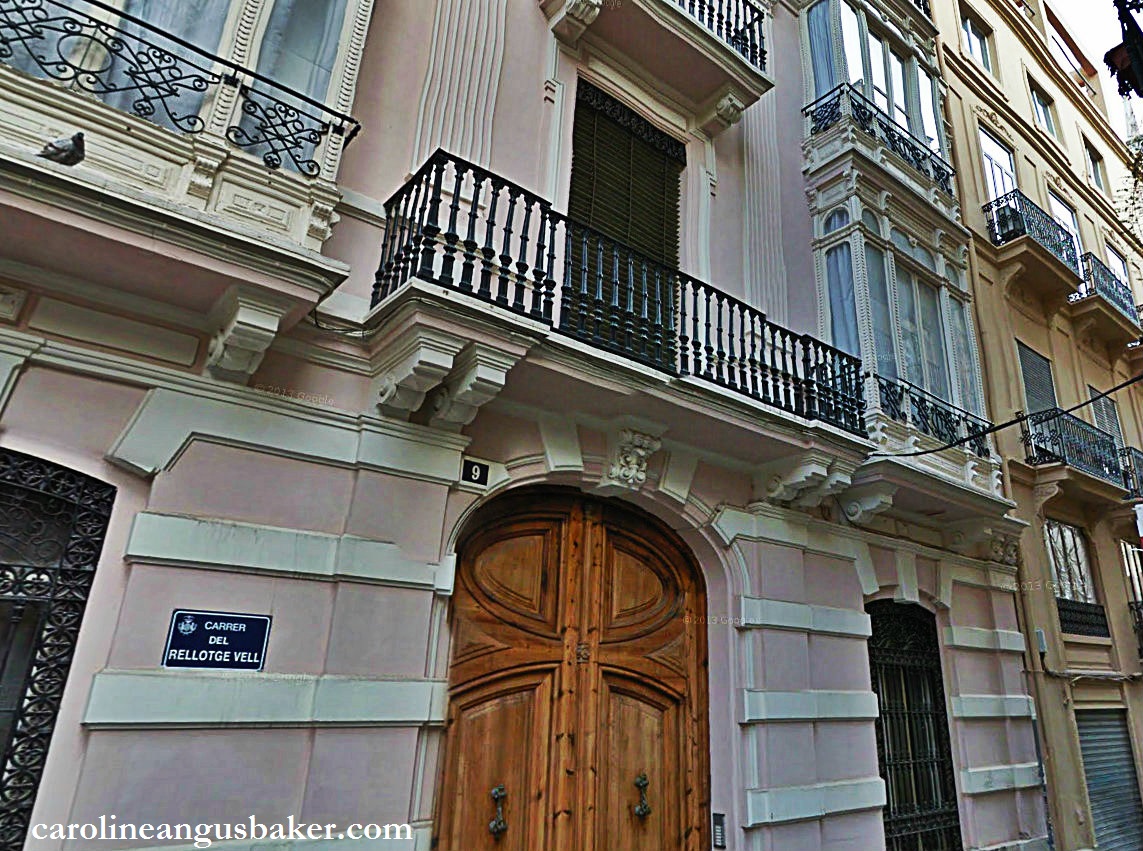
Calle Reloj Viejo
Calle Reloj Viejo

Calle de Reloj Viejo/ Carrer del Rellotge Vell, where José lives in 1957


Bullrings in both Madrid and Valencia, scenes of fights by Cayetano Beltrán in 2010


Valencia beaches 1957 and 2010


Calle Pechina, site of the old prison (featured in 1957 storyline)


Scenes from Madrid frequented by Luna Montgomery


Valencia bridges and riverbed, all featured heavily in both 1957 and 2010 storylines


Valencia March celebrations during Las Fallas

cathedral

Cuenca cathedral, home to another huge scene, the same as in Blood in the Valencian Soil

Part 5 of the Vengeance in the Valencian Water series will be on January 24, the same day as the book release. The post will feature the whole first chapter, which is set in 1957 and can be read for free. Also, Blood in the Valencian Soil will be free on Amazon for three days only, to coincide with the release of Vengeance in the Valencian Water, so you can grab both book in the series to enjoy.

Click here for Part 1Part 2 and Part 3, featuring all the replies to the recent Q+A session.

All present day photos are author’s own, and 1957 photos are courtesy of Juan Antonio Soler Aces 

SPAIN BOOK REVIEW: ‘City of Sorrows’ by Susan Nadathur

CITY OF SORROWS is an emotionally intense story about how relationships can get complicated, and how life is not always the way we want it to be . . . Under normal circumstances, they never would have met. Andres is a wealthy Spaniard, Diego a poor Gypsy, Rajiv an Indian immigrant. On a dark road outside the city of Seville, the lives of these three men come crashing together. One man’s anger leads to an unthinkable act, triggering another man’s obsession and forcing the third to negotiate his way through the underside of life. The choices they make ripple outward, throwing not only their lives, but an entire city, into turmoil and change. A devastating loss. A dangerous obsession. CITY OF SORROWS is an epic story of love, death, romance and rage. About what controls us . . . and the choices we must make to be free.

~~

As a fan of the city of Seville, I jumped at the chance to read some Spain-based fiction. This book brings together three very different men on a path that could either save or destroy them.

The main protagonist is Diego, a young Gypsy living on the edge of poverty in Seville. We meet Diego young and married, with a seventeen-year-old wife who is already six months pregnant. The naivety and youth is a mix for a fun new relationship but their tale is not a happy one. When disaster befalls the young couple, the entire city of Seville burns with rage as racism between Spaniards and Gypsies literally ignites. Diego’s life falls to awful lows filled with crime and revenge, which could end him.

Diego crosses paths with Andres, a rich young Spaniard, and not a character many could indulge or come to like. Andres’ hatred of Gypsies, born out of a cliché and unfair stereotype in his own head, leads him to make a simple yet cruel decision that costs someone their life. Andres is mean, tortured, racist and lazy, and while he tried is best to redeem himself through the guise of caring for his young sister Adela, it can be hard to not wish Andres would step in front of a bus.

A third man, Rajiv, a young Indian fresh in the city of Seville, is a wholly likable character. I live in an Indian community, all those who have emigrated for a new life, and the story of this man mimics one of so many real people in the world. He is kind, intelligent and good in the face of all that troubles him – mostly Andres, who he is forced to work with and help. Rajiv is on a different path in life to the other two men in the book, yet their stories weave together in the heartache that swirls through Seville.

Susan Nadathur has done a wonderful job at creating characters that both endear and infuriate, and it shows the divide between Spaniards and Gypsies in Spain. It shows how three different men from three different walks of life and effect, hurt and save one another, as well as explaining the inside details of Gypsy life. As chapters flip between the point of view of each man, one cannot help but want to turn the pages to see where their favourite character ends up next.

Learn more about Susan Nadathur here