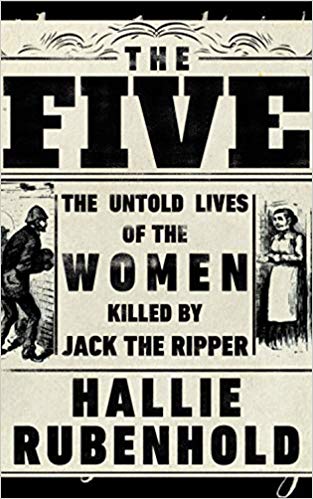
HISTORICAL BOOK REVIEW SERIES: “The Five” by Hallie Rubenhold

Five devastating human stories and a dark and moving portrait of Victorian London—the untold lives of the women killed by Jack the Ripper.

Polly, Annie, Elizabeth, Catherine and Mary-Jane are famous for the same thing, though they never met. They came from Fleet Street, Knightsbridge, Wolverhampton, Sweden, and Wales. They wrote ballads, ran coffee houses, lived on country estates, they breathed ink-dust from printing presses and escaped people-traffickers.

What they had in common was the year of their murders: 1888. The person responsible was never identified, but the character created by the press to fill that gap has become far more famous than any of these five women.

For more than a century, newspapers have been keen to tell us that “the Ripper” preyed on prostitutes. Not only is this untrue, as historian Hallie Rubenhold has discovered, it has prevented the real stories of these fascinating women from being told. Now, in this devastating narrative of five lives, Rubenhold finally sets the record straight, revealing a world not just of Dickens and Queen Victoria, but of poverty, homelessness and rampant misogyny. They died because they were in the wrong place at the wrong time—but their greatest misfortune was to be born a woman.

Cover and blurb via Amazon

~~

I read my first Ripper book as a teen, some twenty years ago, and had to lock it in my parents’ back shed, as the photos of Mary Jane Kelly were so disgusting. But every book on the subject is the same – lurid sexual innuendo, infinite bloody detail, the cunning of a killer, oh, who could he be?

This book answers who Jack the Ripper really was – he was no one. No one. A weak man preying on the weak. This book gives us the information we really need – who the victims were, where they started, what went wrong, and how they ended up alone in the dark in Whitechapel.

Women are beaten and/or killed and then discarded every day. Prostitutes? No one even bats an eyelid, they are just a thing, not a real person. Did no one ever find it odd that these victims were older women, not your typical prostitute trope? Did no one ever bother to check if these all women were prostitutes, or if that fact was simply a note written down by a policeman in 1888, who wouldn’t have cared either way?

We have been fed books on Jack the Ripper for years, all using the same so-called facts, same accounts, same coroner observations, same eyewitness stories. Rather than relying those details, which have been proven as unreliable, lacking, vague or just sloppy, Rubenhold has gone back further, and found a jam-packed history of these women’s lives, far from what happened the night they died. Their lives, their realities, their struggles. The strict and cruel reality of having to have a man in your life, whether you wanted one or not. The reality of alcohol destroying lives and families. The reality being young and brutalised, and needing to start all over again. In Mary Jane Kelly’s case, the reality of being young and pretty, and ending up as a prostitute to greedy and unforgiving men. All of the victims grew up away from the misery of Whitechapel, but forced into the slum due to the misfortune of being single or a discarded wife.

Was Jack the Ripper a doctor? Royalty? A lunatic, a butcher, a rich gentleman? He was just another man who hated women and took out his rage on whoever he could. These five women were vulnerable and alone, and a pathetic man chose to kill them while they were alone. Five women, who didn’t even get the chance to fight for their lives, were not murdered by some hero, but by someone who could barely call themselves human. How the Ripper could be considered interesting is so puzzling. These five women have complex and heartbreaking stories thanks to Rubenhold, a wonderful palate cleanser after years of books salivating about sex and murder.

This book will show you that society hasn’t moved on as much as we like to think, and the hatred spewed towards the author for writing about the victims instead of a weak and lazy killer is a sad indictment indeed.
This Week in Spanish Civil War History – Weeks 138 – 141: 1 – 25 March 1939

March 3

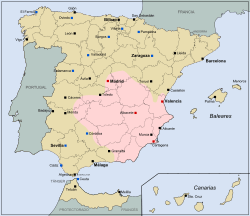
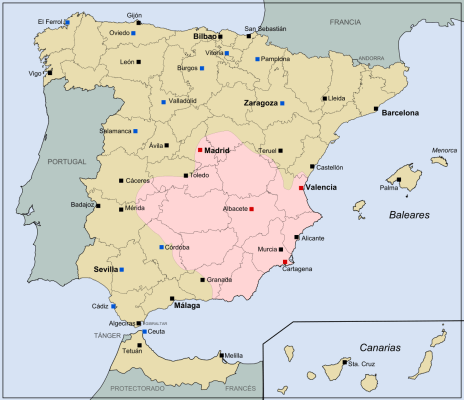
Now that the Republicans have lost Catalonia, they have no chance of winning the war. The Republicans still holds Madrid after almost three years of being surrounded, and another thirty percent of the country. But Barcelona is the head of the war industry, all now in Nationalist hands. More than 220,000 men and women have died fighting the Nationalists, Republican president Azaña has quit, and the UK and France have recognised Franco’s government. Prime Minister Negrin still wants to battle on, supported by the PCE Communists, while the CNT, the SIM and the PSOE and UGT are also working together, but want to stage a coup against the Prime Minister and the Communists.

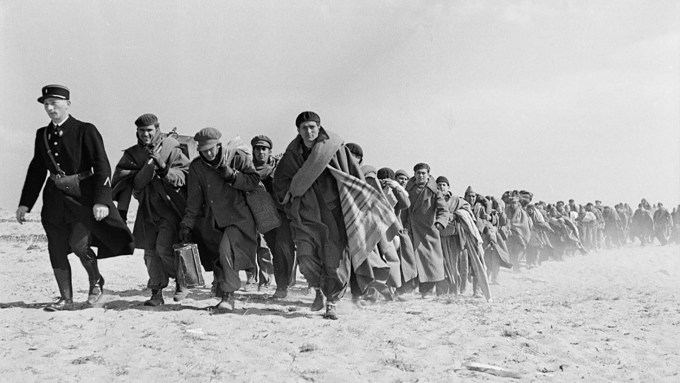
Spanish refugees in concentration camps on French beaches

March 4

Negrin sends Communist PCE Francisco Galán to Cartagena to take over command of the naval base. Cartagena has been under the control of General Casado, and remaining Republicans revolt in Cartagena, and Galán is arrested. The Fifth Column members in Cartagena decide to join Casado’s rebellion and take the coastal batteries of Los Dolores and the local radio station. They broadcast a call for help to fight the coming Nationalists and name retired General Rafael Barrionuevo as governor of the city. The Nationalists have already sent 16 ships with 20,000 men towards Cartagena, but the coup members have the coastal batteries, meaning landing is impossible.

March 5

The Nationalists bomb the harbour of Cartagena from the air so their ships can dock in the city. The surprise attack by five bombers sinks the Republican destroyer Sánchez Barcáiztegui, but those all on board manage to escape. Republican Commander Miguel Buiza orders the entire Republican fleet to leave Cartagena in an attempt to escape damage before they plan their next move. They still have three cruisers,  Miguel de Cervantes, Libertad and Mendez Nuñez, as well as another eight destroyers all in good order, which head for Bizerte in Tunisia. None of the ships will ever return, interned by the French.

March 6

The Republican government flees Spain into France in permanent exile. General Casado, having staged his coup against the Prime Minister, is backed by General Miaja in Madrid, and sets out to arrest all communists in the city, believing they are going to rise up and try to take Republican Spain. Fights begin breaking out all over the city as Republicans start to turn on one another in desperation. Casado appoints himself the Commander of the Republican Army of the Centre and leader of the National Defence Council, who wish to negotiate with Franco. Colonel Barceló, who had been Commander of the Army of the Centre, resists these moves, but General Casado is supported by the heads of the Levante, Extremadura and Andalusia armies.

Franco orders his ships heading for Cartagena to hold off, as the Republican coup still have the batteries ready at the port. All ships pull back, except for the SS Castillo de Olite, which is fired upon three times at close range. The ship quickly breaks in two and sinks. While 700 Nationalist troops are rescued and taken prisoner, another 1,225 soldiers drown in what is Spain’s biggest naval tragedy.

The SS Olite prior to sinking

March 11

Five days of fighting in Madrid has led to Colonel Barceló and his men marching into Madrid to take control of the city and out of General Casado’s hands. But Barceló and his men are defeated after bloody street battles. Barceló and his commissar Jose Conesa are arrested and put before a military tribunal in Madrid a day later. Up to 2,000 are dead in just five days.

The National Defence Council, Casado on the left

March 12

General Casado, leading the Consejo de Defensa Nacional (National Defence Council) with many supporting factions – Julian Besteiro, Wenceslao Carrillo, Gonzalez Marín and Eduardo Val (CNT), Antonio Perez (UGT), and Republicans representatives Miguel San Andrés and Jose del Río. They group attempt to negotiate with Franco, but Franco wants nothing but total surrender, with massive repercussions for Republicans supporters.  Casado wants safety for surviving Republican soldiers and civilian sympathisers, which Franco will not agree to in any form.

Fighting has also been taking place in other Republican held areas. In Ciudad Real, Extremadura army troops rise against Communist deputy Martínez Cárton and take control of the city. Cartagena, scene of the initial uprising, is now firmly in the hands of rebel Republicans, and the Communist factions have lost all control over the port and city.

March 15

The executions of Colonel Barceló, his commissar and their supporters take place in Madrid. The Communists among the Republic have no power, and neither do any of the groups which have clung together throughout almost three years of war. Madrid cannot hold out against Nationalists troops any longer and Franco is ready to march upon the city.

Madrid ready to surrender

March 20

Franco and his men are planning the final offensive of Spain. No negotiations from Casado or Madrid have worked, and Nationalist troops are slowly heading into every remaining Republican area to take total control. Republican troops will fight the Nationalists, lacking men, food, clothing and ammunition. The ports of Valencia and Alicante are the last place that people can run to, fleeing the coming Franco troops. All ports are blocked, all ships captured within three miles of the coast, but Valencia and Alicante are still in Republican held zones, meaning people have a slim chance of getting on board a foreign ship. Many would rather kill themselves on the dock at Alicante and Valencia than be captured by the Nationalists. For the leaders of Republican troops, such as Casado, they must flee the country before the arrival of Franco’s men, or they will be immediately executed.

2,638 people managed to get on board the Welsh Stanbrook in Alicante when the captain took as many of the 30,000 refugees as he could fit in what was a trip to collect oranges and saffron.

~~

This is not a detailed analysis, just a highlight (lowlight?) of the month’s events. Things get lost in translation – Feel free to suggest an addition/clarification/correction below. The more the world remembers, the better. All photos and captions are auto-linked to source for credit, and to provide further information.

HISTORICAL BOOK REVIEW SERIES: ‘Richard III: Loyalty Binds Me” by Matthew Lewis

King Richard III remains one of the most controversial figures in British history. Matthew Lewis’s new biography aims to become a definitive account by exploring what is known of his childhood and the impacts it had on his personality and view of the world. He would be cast into insecurity and exile only to become a royal prince before his tenth birthday.

As Richard spends his teenage years under the watchful gaze of his older brother, Edward IV, he is eventually placed in the household of their cousin, the Earl of Warwick, remembered as the Kingmaker; but as the relationship between a king and his most influential magnate breaks down, Richard is compelled to make a choice when the House of York fractures. After another period in exile, Richard returns to become the most powerful nobleman in England. The work he involves himself in during the years that follow demonstrates a drive and commitment but also a dangerous naïveté. 

When crisis hits in 1483, it is to Richard that his older brother turns on his death-bed. The events of 1483 remain contentious and hotly debated, but by understanding the Richard who began that year, it will become clearer what drove some of his actions and decisions. Returning to primary sources and considering the evidence available, this new life undoes the myths and presents a real man living in tumultuous times.

cover and blurb via Amberley Publishing

~~

I have to be honest, I am very much Ricardian. I can’t tell you how many times I’ve watched Richard III get vilified by Shakespeare (well, by 21st century actors, anyway) and barely contain my rage.  I don’t think Richard is perfect, a completely impeachable hero (no one is), but I also don’t think him a child-killing villain. There are few like Richard, a man who had suffered a great deal in a short time before his fateful battle at Bosworth. And it takes an author as fine as Lewis to dig into the details of Richard’s life. Most books either love or hate Richard, whereas this writer doesn’t go down either road, and instead gives us an insight into the mind of a man who became king, lost his own family, and then was overthrown by a man with a flimsy claim. Richard was a king, now a legend, but he was also just a man, and here is a book where we finally get to meet Richard. I moved books around on my Richard shelves to make room for this biography before it even came out.

While many books write about 1483 onwards, so much happened in Richard’s life leading up to the crown. The first half of the book digs deep into Richard, those in his life, the battles he fought, his ideals in life and religion, all as he grew into the king people focus on now. Much happened to Richard in his short life – overcoming a spinal deformity would have shaped his thoughts. He grew up around powerful people, like the Nevilles, who would do anything for power. Richard was prepared to lay down his life for his brother Edward, and yet his brother George betrayed them both, harm which would cause a wound that could never truly heal. Edward was king on the back of Richard’s hard work, and Richard ran the north in England and kept an eye on Scotland for his sovereign, all before the age of thirty.

But when King Edward died in April 1483, all the moments in Richard’s life which shaped him would come in play. The next three months have been debated since the moment they happened, but this book gives a reader a more detailed insight into why Richard acted as he did, thought as he did. It seems Richard was neither a murderous villain desperate for power, or an innocent caught up in a disaster. The illegitimacy of the Princes in the Tower is well discussed too, whether Richard was fooled, or did he simply miss important details, or was he the master? I can’t tell you, because spoilers, but the murky situation and Richard’s handling is a reflection of many events long before the mess with the Princes. Another important detail in the events of 1483 is the death of Hastings, a particular favourite subject of mine. Again, in the interest of spoilers (as in the excellent research on Lewis’ part) I won’t share all that is written, but the whole situation felt fresh to me, a tough feat after 500 years and a whole lot of writing on the subject.

Richard’s life went from a powerful ruler in the north after years of fighting, to having brother George executed, to his brother Edward dead before his time, to being thrust onto the throne, to his nephews disappeared, to his precious wife and son dead from illness, to betrayal by men he trusted… how much can one man take in only a few years? By the time Richard faced Henry Tudor at Bosworth, Richard’s life was circling the drain, yet he remained confident of victory. This book talks of Richard in a positive way, without soundly like it is gushing with adoration; rather, it shows the whole life of an extraordinary man. England could have had a fine king, had Richard been given the chance.

This book is worthy of five stars. Matthew Lewis wrote The Survival of the Princes in the Tower not to long ago, one of the best books I’ve ever read. Loyalty Binds Me is an excellent addition to any library. Imagine saying you like Richard III but don’t have Lewis in your collection?

This Week in Spanish Civil War History – Weeks 133 – 137: 1 – 28 February 1939

February 1

Prime Minister Negrín, holding a meeting at Figueres Castle, suggests a surrender to Franco, on one condition – those left living would be respected and they  could vote on how a new government would be formed. Franco does not accept this surrender.

February 2

The Nationalists who took Barcelona have made the 100 kilometres hike north and take Girona, which no longer has any Republican protection.

Nationalists take Girona

February 3

The Nationalist troops from Girona hike another 15 kilometres north, to catch up with any refugees still trying to escape to France. They are now only 50 kilometres from the border to France, and will close the border once they arrive. German planes are still bombing refugees from the air.

February 4 

After a month of fighting, the Valsequillo Offensive comes to end, as Nationalist forces around Peraleda del Zaucejo on the Extremadura/Andalucia border recapture all the area the Republicans had initially captured. At one stage, the Republicans had 500 square miles of land taken, though none had any strategic benefit, and the Nationalists have quickly taken it all back. The Republicans have suffered 6000 deaths and casualties, only 2000 for the Nationalists in an utterly pointless battle.

February 7

The island of Menorca, still held by the Republicans, is captured by the Nationalists by ship, with no resistance. Mallorca has been Nationalist-held for most of the war, and now the smaller island of Menorca is simply brought into the fold. Only one person is killed, but the Republicans start planning  a coup with Prime Minister Negrin.

February 8

All Republican troops are ordered to get to the border and are now also allowed to cross into France, along with the hundreds of thousands of refugees trying to reach the border. On foot, or on carts or trucks, Republican Spaniards are facing sleet and snow to try to reach France.

Refugees crossing at Le Perthus

February 9

The Nationalist troops finally reach the border into France. Between 400,000 to 500,000 Republican refugees have survived to get into France. The Republican president Manuel Azaña, Prime Minister Juan Negrín, Republican Army chief of staff Vicente Rojo, and Catalonian president Lluís Companys and his Catalan government have all made it over the border. Most people have crossed in the region have crossed at Le Perthus, but Prime Minister Negrín crosses back into Spain.

Refugees crossing at Le Perthus

February 10

The final Republican troops of General Modesto’s Army of the Ebro cross into France, just in time, as the border into France is totally sealed by Nationalist troops. Anyone still on the Spanish side has to side with the Nationalists, or would be killed or oppressed. With Catalonia totally in Nationalist hands, the Republicans have lost 200,000 troops and the entire Catalan war industry. But the Republicans still hold thirty percent of Spain, and their Prime Minister is back in the country and confident they can continue to resist.

Refugees heading for the brutal refugees camps in France

February 12

The 10.30am train arrives in Xàtiva Railway Station, sixty kilometres south from Valencia, carrying the 49th mixed brigade of the Republican army, to be transferred north. The station was also filled with family and friends of the troops when five Italian Savoia-Marchetti SM.79 bombers arrive from Mallorca and drop twenty 250kg bombs from 13,800 feet. The bombing makes a direct hit on the train, killing 129 people, 109  instantly. Most are troops, though 14 women and three children are also killed. A few surviving troops are still sent on to join other brigades, as the 49th was too decimated to continue with any plans. Another 200 people are injured in the brutal attack.

Bombing Xativa from the air

February 13

From Burgos, Franco publishes his Ley de Responsabilidades Políticas (Law of Political Responsibilities). The law states that anyone who opposed the Nationalist rebellion and coup in July 1936, and anyone a member of any Republican party from October 1934, is guilty of military rebellion (ironically). As the law is backdated to 1 October 1934, all Republican sympathisers and members can be prosecuted for aiding the Republican rebellion (again, how ironic).

The Ley de Responsabilidades Políticas punishes people with fines ranging from 1000 pesetas through to confiscations of all assets. Anyone prosecuted could also be punished with restriction of movement and activities, forced to live where appointed and possible loss of Spanish citizenship, depending on their level of Republican association. Anyone dead or disappeared (either as refugees in France or those killed and dumped in the war) will have their remaining family members prosecuted on their behalf.

Between 1939 and 1945, 500,000 people, dead or alive, will be prosecuted, some two percent of the population.

February 27

Both France and Great Britain  decide to end their role in the Non-Intervention agreement and recognise Franco and his Nationalist government in Burgos. With the threat of European war, and half a million Spanish refugees in the south, France has their border with Spain blocked, with Franco’s ally Germany also causing strife. France needs to focus on itself and endorses fascism in Spain, as Germany and Italy have done throughout the war.

Britain has less reason to endorse Franco. Labour leader Clement Attlee, Leader of the Opposition, is furious with Prime Minister Neville Chamberlain’s decision. He stated, the first voice to do so, that Britain was hypocritical after almost three years of “non-intervention,” yet their lack of intervention is instead the thing that has helped fascism spread through Europe.

~~

This is not a detailed analysis, just a highlight (lowlight?) of the month’s events. Things get lost in translation – Feel free to suggest an addition/clarification/correction below. The more the world remembers, the better. All photos and captions are auto-linked to source for credit, and to provide further information.

This Week in Spanish Civil War History – Weeks 132 – 133: 21 – 31 January 1939: 80 Years Since the Fall of Barcelona

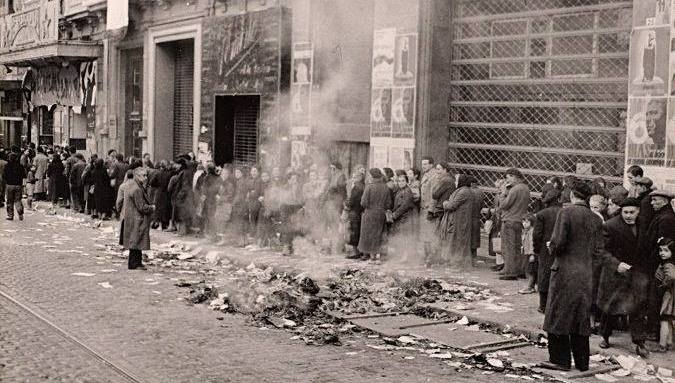
Civilians line up for food in Barcelona in freezing weather

January 21

Today marks the first of four days of successive bombing in Barcelona by Nationalist aircraft, with ten flyovers bringing bombs into the streets. After almost three years of war, Barcelona is weary, despite being far from the front until now. The Nationalists are fast advancing through Catalonia, with little or no resistance.

January 22

The Nationalist counteroffensive in Valsequillo is five days old, and they have taken all 500 square kilometres the Republicans have taken over the month. The Nationalists take the strategic town of Peraleda del Zaucejo, on the Extremadura/Andalucia border.  The only other town the Republicans hold falls only three days later. The Republicans have lost almost 6,000 men by this time, for no gain at all.

General Solchaga and General Yagüe’s Nationalist troops reached the Llobregat river, just a few kilometres west of Barcelona,  Generals Muñoz Grandes and Garcia Valiño attacked Sabadell and Terrassa, and General Gambara advances to Badalona.  Barcelona is now surrounded by the Nationalists and the three lines of defense set up around Barcelona, composed of all men aged 18 -45, with all the city’s industry militarised, cannot save the city. Prime Minister Negrín gets a call from the head of the Republican Army, General Rojo, to tell him that the frontline around Barcelona has been completely shattered.

January 23

The Republican government decides to abandon Barcelona as the capital and heads for Figueres Castle, and most of Barcelona’s political prisoners are released. Much of the population of the city is now fleeing north towards France, and the men on the frontline have either been killed or have retreated from advancing Nationalists. The aircraft overhead are still bombing Barcelona ten times per day.

January 25

One day after General Garcia Valiño’s men capture Manresa, the Nationalist vanguard takes the town of Tibidabo, the highest mountain around Barcelona, which overlooks the entire city. The Nationalists are now on the outskirts of Barcelona and all the defensive lines are gone.

Sadly, some in Barcelona felt like fascism was liberation. Talk about messed up

January 26

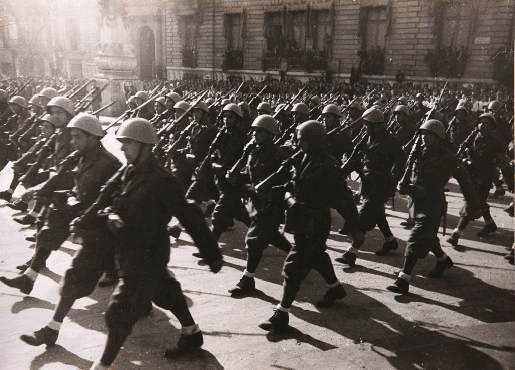
Nationalist troops march through the streets of Barcelona, where General Yagüe’s  Regulares begin their execution spree. While Barcelona is ravaged, the Catalonia offensive is halted briefly, meaning many civilians who have fled north towards France have no advancing troops at their backs . But the German Condor Legion and and Italian Aviazione Legionaria  continue their campaign from the air, bombing towns and roads on the 160 kilometre hike to the French border.

Franco’s fascist troops enter Barcelona

January 28

The town of Granollers, thirty kilometres north of central Barcelona is captured by the Nationalists. Just eight kilometres north of Granollers, the town of La Garriga has 10,000 people, 7,000 of them Madrid and Basque refugees, and now has the remaining Republican troops under General Lister hiding with them. With the Nationalists in Granollers, the men have to leave, while the refugees have nowhere to go but towards France, if they dare.

Refugees head for the border

January 29

The Italians send ten bombers to La Garriaga, and bomb the town over two days, though Republican troops are gone, leaving 13 civilian casualties; one local, five refugees and seven children. Bombing La Garriga’s train station means getting north is much harder for Republicans.

January 31

The French government, who announced they opened the border on January 28, start receiving the first of 400,000 – 500,000 refugees into the country, those who are first to make the walk through the snow. Republican troops are not yet permitted to enter, yet the remaining men are flanking the refugees on their dangerous walk, while the German Condor Legion continues to bomb them from overhead. Once the Nationalists reach the frontier, they plan to close the border, meaning there is nothing but executions and oppression for all remaining Spaniards who opposed the rebel invasion. They have only ten more days to make the freezing, bomb-ridden march towards France, while starved and/or injured and all traumatised.

Republican men head for the border

~~

This is not a detailed analysis, just a highlight (lowlight?) of the month’s events. Things get lost in translation – Feel free to suggest an addition/clarification/correction below. The more the world remembers, the better. All photos and captions are auto-linked to source for credit, and to provide further information.