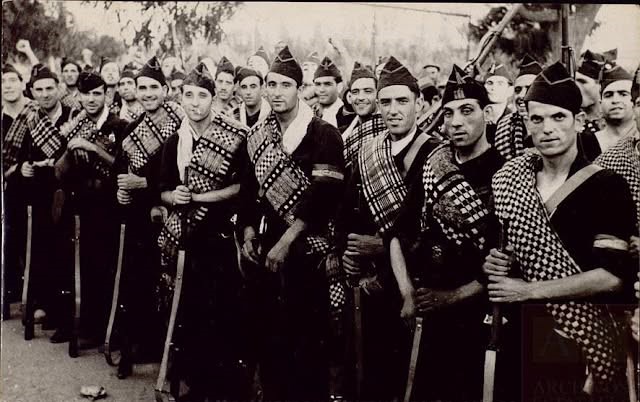
Among the many militia formations created in Valencia during the summer of 1936, none developed a more unusual reputation than the Columna Fantasma (Ghost Column), officially known as the Columna Uribarri (Uribarri Column). While most Valencian columns were raised to reinforce the Republican front in Aragón, Uribarri’s formation was organised as a mobile force that could be dispatched wherever the Republic faced its most urgent military crisis. During August 1936 alone, its volunteers would fight on Mediterranean islands, return to Valencia, and then cross Spain to Extremadura, giving rise to the nickname by which the column is remembered.
The formation took its name from Captain Manuel Uribarri Barutell, a career officer of the Guardia Civil born in Burjassot, 5km from Valencia city, on 23 November 1896. Uribarri belonged to the small group of professional officers who remained loyal to the Republic after the military uprising of July 1936. In Valencia, where the rebellion collapsed after several days of tension, he became one of the principal military advisers to the revolutionary organisations that had assumed control of the city. On 19 July, he was appointed military commander of the revolutionary strike committee, helping to organise the defence of Valencia, distribute captured weapons, and train the growing number of civilian volunteers offering their services.
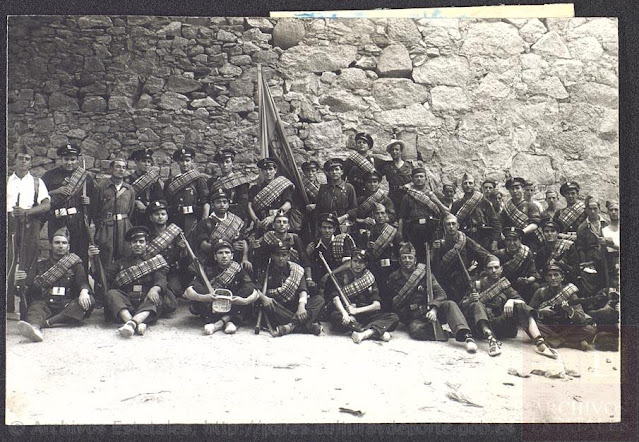
While the Iron Column, which emerged from the CNT and FAI, and the Torres-Benedito Column combined several political organisations for service on the Aragón front, the Uribarri Column was conceived from the outset as a mixed formation. Its professional core consisted of loyal members of the Guardia Civil, Carabineros, and Assault Guards, men already familiar with firearms, discipline and field operations. Around them gathered civilian volunteers drawn from Valencia’s republican parties, workers’ organisations and trade unions. Contemporary estimates place the column’s initial strength at approximately 400 to 500 men, making it considerably smaller than some of the formations later sent to Aragón, but unusually well balanced in terms of experience.
The volunteers represented a broad cross-section of Valencian society. Some had spent years in uniform as policemen or customs officers. Others had been mechanics, railway workers, drivers, labourers, clerks or political activists only weeks before the war. Most of the civilian recruits possessed little military experience, yet they were expected to serve alongside professional security personnel almost immediately. This combination gave the column a character unlike that of many other militia formations. It retained the political enthusiasm of the volunteer militias while benefiting from the practical knowledge of men who understood military organisation, weapons, communications and transport.
Its equipment reflected the urgency with which it had been assembled. Standard service rifles were supplemented by weapons captured after the defeat of the uprising in Valencia, while machine guns and ammunition remained limited. Uniforms were scarce, and many volunteers continued to wear civilian clothing or workers’ overalls. The column relied heavily on requisitioned civilian transport, including buses, commercial lorries and private motor vehicles, allowing it to move far more quickly than formations dependent upon marching. Every vehicle carried not only men but also ammunition, fuel, food, medical supplies and engineering equipment, making the column largely self-sufficient for short operations.
The Republic did not intend the Uribarri Column to occupy a fixed sector of the front. Instead, it was created as a rapidly deployable force capable of reinforcing threatened areas at short notice. That role would distinguish it from every other major Valencian column raised during the opening months of the Civil War. Rather than spending August establishing itself along a single front, the column would be sent wherever Republican commanders believed its combination of mobility, professional experience and volunteer enthusiasm could be used most effectively.
The Uribarri Column received its first assignment almost immediately after it was formed. Rather than joining the growing Republican offensive into Aragón, the column was ordered to take part in an expedition to the Balearic Islands, where the military uprising had left the archipelago divided between Republican and Nationalist control. Republican leaders feared that Nationalist possession of the islands would threaten shipping in the western Mediterranean and provide a base for future naval and air operations against the east coast of Spain. Recovering the islands therefore became an early priority. The task also reflected the nature of Uribarri’s formation. While the larger militia columns assembled for Aragón, his was relatively compact, contained a substantial proportion of experienced Guardia Civil, Carabineros and Assault Guards, were organised for rapid deployment. Its volunteers were expected to undertake an operation that required coordination between ships, landing parties and supporting forces, making professional experience particularly valuable.
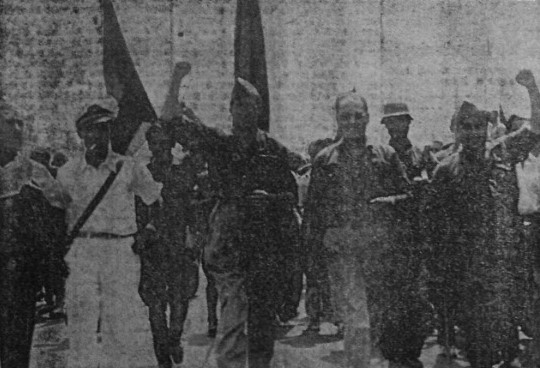
On 7 August 1936, the column departed Valencia by sea. The volunteers embarked carrying rifles, ammunition, machine guns, food, medical supplies and whatever personal belongings they could transport. Many still wore civilian clothing or blue workers’ overalls rather than military uniforms, a reminder that most had been ordinary civilians only weeks earlier. The ships carried not only fighting men but also the equipment required to establish themselves immediately after landing, as there would be little opportunity for resupply once ashore.
The expedition formed part of the wider Republican operation commanded by Captain Alberto Bayo, although the Uribarri Column retained its own command structure under Captain Manuel Uribarri. Its immediate objectives were limited and clearly defined; secure Formentera and assist in the occupation of Ibiza, removing the remaining Nationalist presence before larger operations were undertaken elsewhere in the archipelago.
The operation achieved its immediate objectives with comparatively little resistance. Republican forces occupied Formentera before moving against Ibiza, where Uribarri’s men participated in the island’s capture. The successful occupation provided an important propaganda victory during the opening weeks of the war and temporarily restored Republican control over much of the Pityusic Islands.
For the volunteers themselves, the expedition was unlike anything they had previously experienced. Most had never travelled as soldiers, let alone taken part in an amphibious operation. Within days of leaving Valencia they had crossed the Mediterranean, landed on unfamiliar territory, occupied two islands and begun adapting to military life under active service conditions. The expedition also strengthened the cohesion of the column. Men who had previously known one another only through political organisations, workplaces or military service were now living, travelling and operating together as a single unit.
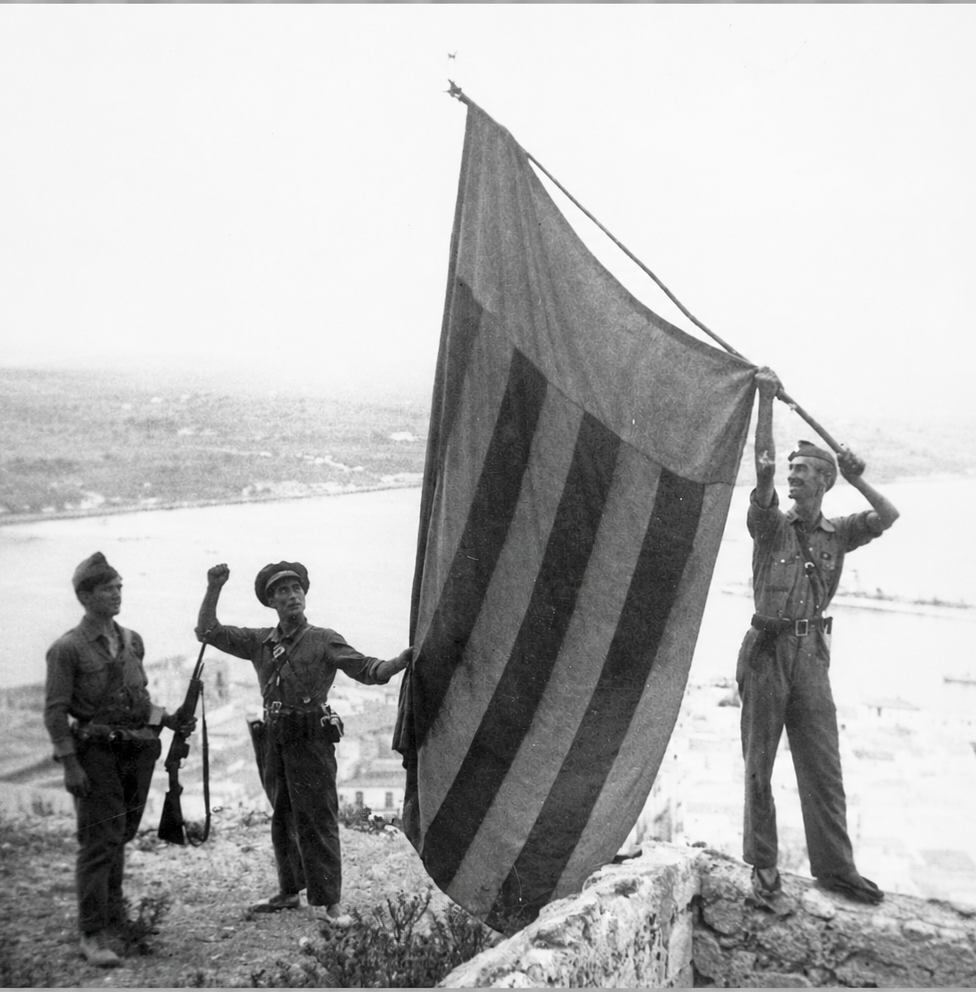
The Balearic campaign also demonstrated the column’s distinctly Valencian identity. During the occupation of Ibiza, members of the formation raised the Senyera, reflecting the presence of Valencian republican and Valencianist volunteers within its ranks. The Uribarri Column consciously presented itself as a force raised in Valencia and serving the Republic beyond its own region. The column’s stay in the Balearics was brief, and differences soon emerged between Uribarri and Alberto Bayo over the direction of the campaign and the command arrangements for the proposed assault on Mallorca. Rather than continue under conditions he considered unacceptable, Uribarri withdrew his men and returned to Valencia on 13 August. Their first mission had lasted less than a week, but it had already established the qualities that would define the formation throughout August: rapid deployment, operational flexibility and a willingness to move wherever the Republic believed it was needed most.
The Uribarri Column returned to Valencia on 13 August 1936, but its volunteers found little resemblance to the city they had left only days earlier. New militia columns continued to form, recruits queued outside political headquarters waiting to be armed, and workshops, garages and railway yards worked continuously to support the Republic’s expanding war effort. The Nationalist advance through Extremadura had meanwhile transformed the military situation. On 11 August, Mérida had fallen. Three days later, Badajoz was captured, opening the road towards Madrid. Republican commanders urgently required reinforcements, and the Uribarri Column, already organised and battle-tested, became an obvious choice, since the Uribarri Column was never assigned a permanent operational sector. Its purpose was to reinforce threatened areas wherever the need was greatest. This flexibility became its defining characteristic. Rather than remaining in one place, the column was expected to complete one assignment before moving immediately to the next, a role that few Republican formations were capable of fulfilling during the chaotic opening months of the war.
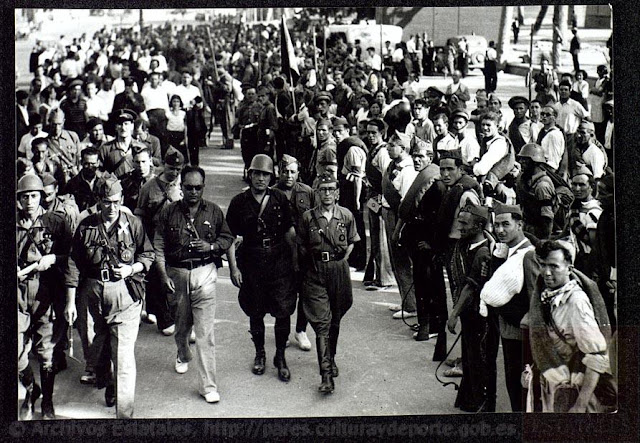
The days spent back in Valencia were devoted to reorganisation as fresh volunteers joined the column, replacing men left behind in the Balearics and increasing its overall strength. Weapons and ammunition were redistributed, food and medical supplies replenished, while mechanics inspected and repaired the civilian vehicles upon which the column depended. Unlike a conventional army unit with an established transport service, the Uribarri Column relied largely upon requisitioned buses, commercial lorries, private cars and trucks. These vehicles carried not only the volunteers but also fuel, spare tyres, engineering equipment, field kitchens, medical stores and ammunition. Their maintenance became as important as the condition of the rifles carried by the men.
The composition of the column also evolved because of the large number of volunteers almost overtaking the number of experienced core of Guardia Civil, Carabineros and Assault Guards. Many had already witnessed the departure of friends and relatives for Aragón and now found themselves assigned to a formation whose destination remained uncertain until the last moment. Drivers, mechanics, clerks and medical orderlies joined riflemen and machine-gun crews, reflecting the growing complexity of the organisation. A mobile column required far more than armed volunteers. Every movement depended upon men capable of maintaining vehicles, organising supplies, treating casualties and keeping the formation operating far from its base in Valencia.
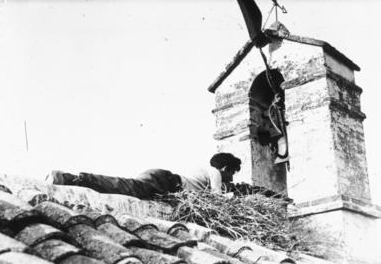
It was during this period that the nickname ‘Ghost Column’ began to gain wider currency. Contemporary observers watched the formation disappear from Valencia for the Balearic Islands, only to see it return briefly before departing once again for an entirely different theatre of war. Its movements were so frequent that newspapers often struggled to report its location before it had already moved elsewhere. Within days of returning from the Mediterranean, the column received fresh orders. The volunteers boarded trains and motor vehicles for a journey across Spain towards Extremadura, where Republican commanders hoped the column’s mobility and experienced leadership might help slow the Army of Africa and the Nationalist advance. For the men of the Ghost Column, the war had already become a succession of rapidly changing missions rather than service on a fixed front, a pattern that would continue throughout the remainder of August. Its redeployment reflected the Republic’s increasingly desperate strategic situation. The rapid Nationalist advance from Seville through Extremadura had captured Mérida and Badajoz in quick succession, threatening the road to Madrid, meaning the Ghost Column was sent to one of the most threatened sectors of the war.
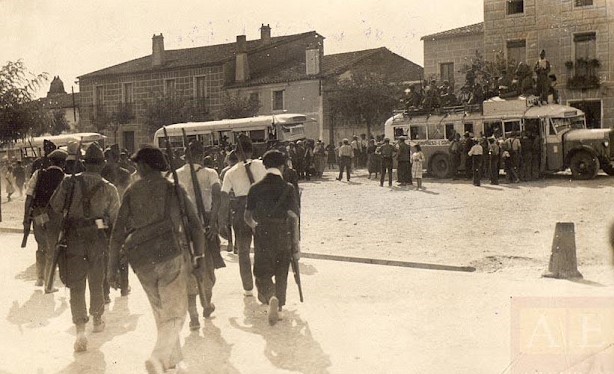
After travelling by rail across central Spain, the volunteers transferred once again to their buses, lorries and other requisitioned vehicles for the final stages of the journey into the Sierra de Guadalupe. Their destination was a rapidly changing front where Republican commanders were attempting to assemble enough men to delay the Army of Africa. As the column advanced through Puerto de San Vicente towards Alía, it encountered a landscape very different from that of eastern Spain. The mountains were sparsely populated, communications were poor, and many roads were little more than rough tracks. Maintaining supplies became considerably more difficult than during the Balearic expedition. Fuel, food, ammunition and drinking water all had to travel over long distances, while mechanics worked constantly to keep ageing civilian vehicles operating on roads for which they had never been designed.
The Ghost Column’s immediate responsibility was to reinforce the Republican forces holding the mountain approaches around Guadalupe. Its role was to strengthen a threatened front, occupy key villages, patrol the roads, and prevent Nationalist forces from passing through the Sierra unchecked. Like many Republican formations during August 1936, its objectives changed according to events. Villages secured one day could be abandoned the next as commanders responded to new reports from neighbouring sectors.
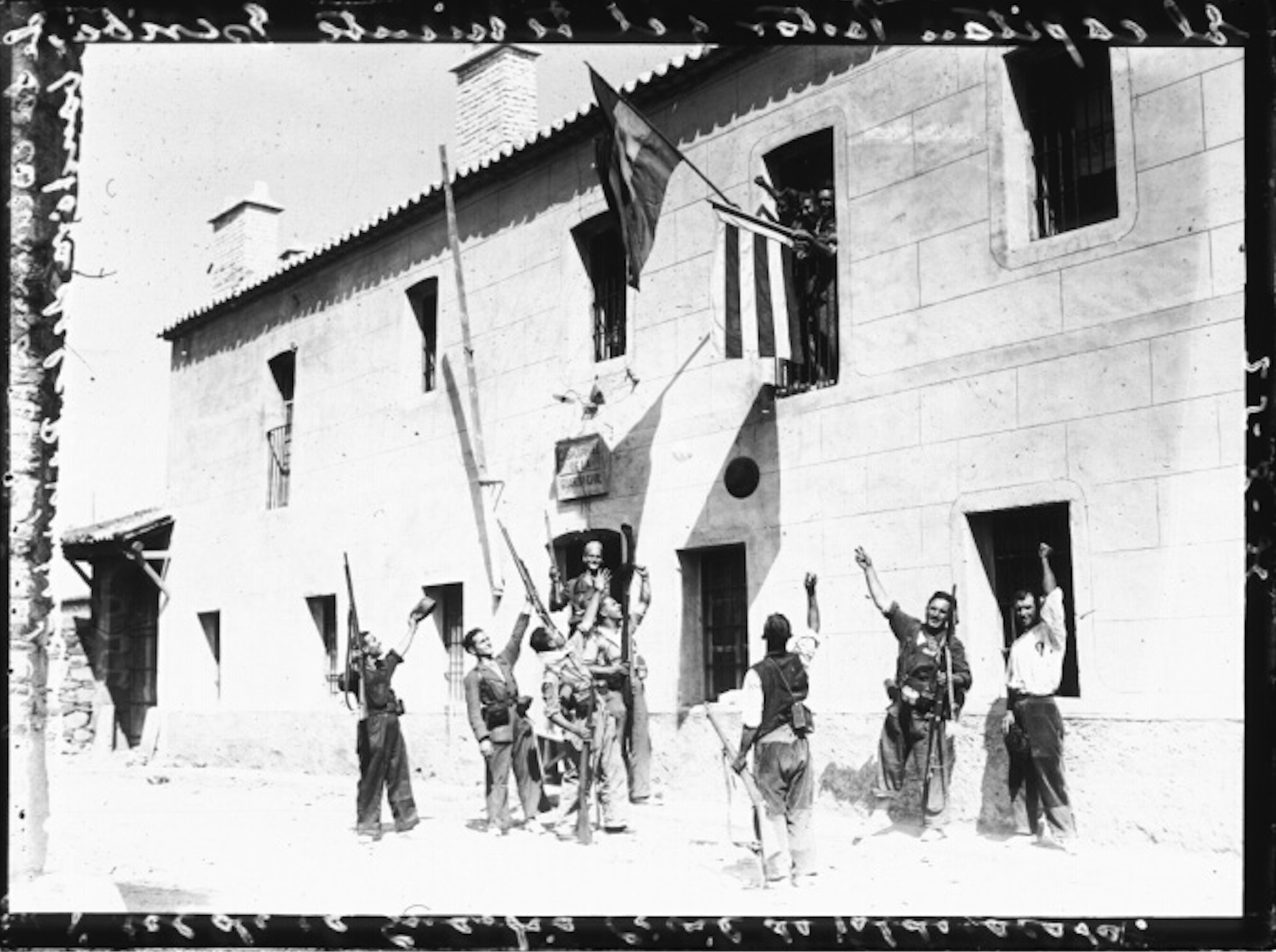
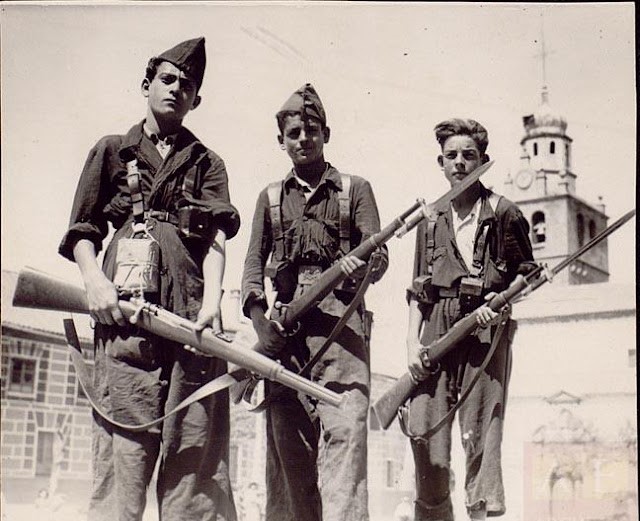
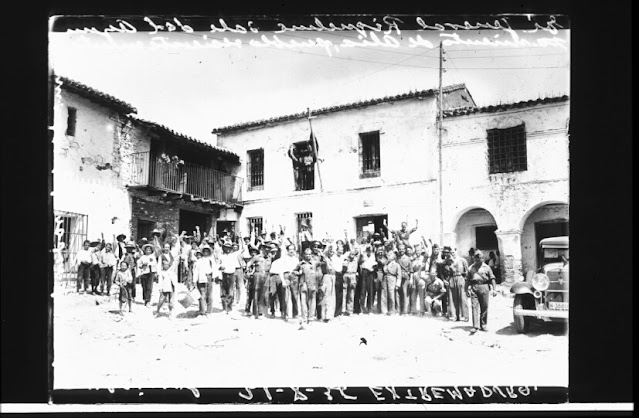
During its advance, the column occupied settlements including Valdelacasa de Tajo, where several of the best-known photographs of the formation were taken. One image shows members of the column posing with a guitar reportedly captured from Nationalist forces, while another records the Senyera, the traditional flag of Valencia, flying from the church tower after the town had come under Republican control. These photographs are among the clearest surviving images of the Ghost Column during its brief existence and illustrate the volunteers in the field rather than during formal parades or recruitment campaigns.
The campaign in the Sierra de Guadalupe also demonstrated how quickly the column had adapted since leaving Valencia. Only weeks earlier many of its volunteers had never handled a rifle in military service. By late August they had crossed the Mediterranean, taken part in the occupation of two islands, travelled across Spain, established themselves in the mountains of Extremadura, and were operating alongside other Republican formations in defence of one of the most threatened sectors of the front. The transformation from hastily assembled volunteers into an experienced mobile column had occurred with remarkable speed.
That experience came at a cost. As Nationalist pressure increased, Republican forces in the Sierra were gradually compelled to withdraw. The Ghost Column retreated with the rest of the Republican line, abandoning the hope of establishing a permanent position in the mountains. Although the campaign failed to halt the Nationalist advance, it reinforced the column’s growing reputation as a formation capable of moving rapidly from one crisis to the next. Before August had ended, the volunteers were once again preparing to leave a front they had occupied for only a matter of days, continuing the extraordinary pattern of movement that had earned them the name Ghost Column, and their adventures would continue throughout the year.


You must be logged in to post a comment.