On 23 September 1936, Josefa Gómez Mera was executed in Ferrol after being accused of using her position in the port to provide employment to women associated with the political left. Her case shows that the Nationalist repression in Ferrol extended beyond arrests of politicians, trade union leaders and naval personnel into something much more immediate for working families who could still obtain a day’s work and earn a wage.
Gómez Mera worked among the women employed in loading and unloading ships in the port of Ferrol and acted as their delegate. Female dock labour was physically demanding and often insecure, with employment distributed according to the labour required when ships arrived. The person involved in organising or allocating workers could consequently influence which women obtained paid shifts.
Before the military uprising, Gómez Mera had been active in the Socialist movement. After the Nationalists took control of Ferrol in July, political affiliation could affect employment as well as personal safety. Left-wing organisations were suppressed, their officials and activists arrested, and workplaces increasingly came under the supervision of authorities and employers operating within the new Nationalist political system.
Gómez Mera was accused specifically of favouring women who had previously belonged to left-wing organisations when distributing dock work. It was not a question of whether the unions could organise, as the political histories of individual women could determine whether they were considered suitable for employment, while someone who continued giving work to former left-wing activists could herself be accused of political disloyalty.
Her previous Socialist activity made her particularly vulnerable. The Nationalist authorities treated her conduct at the docks not merely as a dispute over employment but as evidence that she continued to favour people associated with the defeated political and trade-union organisations. She was summarily executed on 23 September.
While sailors were being prosecuted for resisting the July uprising and large groups of prisoners were being taken for execution, political control was also entering the shipyards, docks and hiring arrangements on which working-class households depended. For women employed on the waterfront, the consequences of the Nationalist takeover could include not only the destruction of their political organisations but exclusion from the work through which they supported themselves and their families.
Ávila, Old Castile
During the initial military coup of July 1936, the provincial capital of Ávila quickly fell under Nationalist control. But a highly unusual and tense tactical situation developed just outside the city gates, as for much of the early conflict and into September 1936, Republican troops successfully held the strategic mountain pass of Puerto del Boquerón, situated just 12km south of Ávila city.Despite holding this critical high-ground position right on the doorstep of a major Nationalist stronghold, Republican forces would famously fail to exploit the position to launch a decisive assault to retake the provincial capital, and it would become one of the most glaring tactical missed opportunities of the early Spanish Civil War.
.
By late September 1936, the Nationalist high command moved to permanently neutralise this threat. Rebel units, including the Columna Nevado and forces under Commander Julián Velao, launched a counter-offensive from the area. They captured neighbouring towns like El Herradón and San Bartolomé de Pinares, securing the Nationalist flank and closing off Republican access to Ávila. The opening days of September 1936 had been defined by escalating violence from the air and brutal political purges on the ground. On 1 September 1936, a Republican aircraft struck the town of Arévalo (50km north of Ávila city), killing one civilian and wounding three others. Nationalist fighter planes pursued the aircraft and shot it down nearby at Adanero. In turn, Republican planes also bombed Ávila city in immediate, brutal retaliation for these air raids, Nationalist authorities in Ávila city extracted roughly 30 Republican and political prisoners from the local jail and executed them.
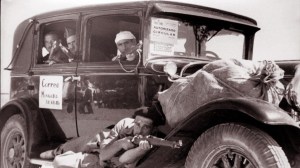
Colonel Mangada’s mail car in Navalperal, via Alberto and Segovia, ABC 1936
On 4 September, Republican reinforcements had moved into the Puerto del Boquerón positions. They included Guardia Civil personnel from the Logroño, Zaragoza, and Alicante contingents, serving on the Republican side under Captain Del Barco, together with other Republican personnel. On 10 September, fighting at Puerto del Boquerón caused dead, wounded, and missing among the Republican Guardia Civil and other troops defending the position. The Republican Columna Del Rosal had spent the day hastily constructing fortifications. Their forces were actively deployed across the Ávila towns of Lanzahíta and Pedro Bernardo to block the Nationalist advance.A squadron Moroccan Regulares was transferred from Seville directly to the Valle del Tiétar front line to reinforce Colonel Monasterio’s Nationalist column, and just on the border of the province near the Alto del León pass, Nationalist forces had executed a successful operation to capture Cabeza Renales, securing heights to protect their supply lines into Ávila.
.
At the same time, in the southern reaches of the province, Nationalist forces rounded up four prominent Republican figures from the town of Mombeltrán.The prisoners included the local town pharmacist, the night watchman, a telegraph worker, and the town secretary. They were driven to a secluded spot known as Las Añaíllas near Cuevas del Valle, where they were summarily executed and buried in unmarked graves.
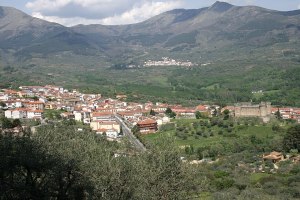
Mombeltrán today, via Wikimedia Commons
Throughout early September, Republican aircraft heavily targeted the border region between Ávila (Aldeavieja) and Segovia (Villacastín). They dropped bombs almost daily to disrupt the heavy flow of Nationalist troops, ammunition, and food moving toward the critical Sierra fronts. September also saw Ávila serve as a primary staging ground for major Nationalist offensive campaigns heading south into the province, already controlled by the Columna Monasterio under Colonel José Monasterio Ituarte. It comprised 1,200 – 1,500 men, including regular army soldiers, Guardia Civil, and fascist Falange militias. In September, this column marched south out of Ávila city, crossing rugged mountain passes like the Puerto del Pico to invade the isolated Republican pocket of the Valle del Tiétar and captured the town of Arenas de San Pedro. Upon entry, Falangist militias immediately executed 11 out of the 13 democratically elected members of the Republican municipal council, including the local blacksmith and town mayor, Serafín Felipe Gómez.
At the same time, Nationalist troops were strengthening the mountain line to the west. Their positions extended through Artiñuelas, Mata de San Blas, Cabeza Renales, La Cepeda, and the Boquerón de Las Navas del Marqués. The purpose was to prevent Republican troops operating from the Peguerinos area from infiltrating further into Nationalist-held territory and threatening communications behind the Alto del León front. The locations formed a contiguous geographic ridge line along the border zones of Ávila, Segovia, and Madrid.Had the Republicans successfully broken through from Peguerinos, they could have cut off the vital supply roads and logistical arteries feeding the main Nationalist positions at the Alto del León pass, which was the central gateway to Madrid. (This defensive belt remains one of the best-preserved architectural legacies of the war, with dozens of stone and concrete trenches, pillboxes, and machine-gun nests still visible along hiking trails across Las Navas del Marqués and Peguerinos.)
Republican milicianos at Peguerinos, via ABC
The Republican forces had decided to establish a highly active base of operations in the densely forested heights of Peguerinos. From there, Republican guerrilla and militia units could launch frequent raids to disrupt Nationalist movements. The isolated mountain village, perched over 1,300 metres high in the Sierra de Guadarrama, served as one of the most aggressive, resilient, and chaotic Republican frontier bastions threatening Nationalist-held Ávila. Unlike the highly structured military columns nearby, the Republican garrison at Peguerinos was the traditional mix of loyal regular soldiers and ideological militias, managed by elements of the Mangada Column (led by the eccentric Republican Colonel Julio Mangada) alongside urban trade union militias travelling up from Madrid. Also, forces from the elite communist Batallón de Acero and the Octubre nº 1 militia were deployed to this rugged terrain, and because of the dense pine forests surrounding the village, the force operated heavily as a guerrilla outfit. They knew the mountain passes intimately, allowing small units to slip past Nationalist lines undetected. Their constant raids forced the Nationalists to pull hundreds of front-line troops away from the assault on Madrid just to guard their rear flanks along the Artiñuelas-Cabeza Renales line. Following intense artillery bombardments and close-quarters infantry, the Nationalist forces broke through, and upon on capturing Peguerinos, the Nationalist forces systematically burned and destroyed most of the village to deny the Republicans a forward base. The human cost was devastating; remaining militias were executed on the spot, and the town’s civilian infrastructure was utterly ruined, leaving it a ghost town for the remainder of the mountain campaign.
The Nationalists had also deployed a heavy concentration of Falangist militias and regular troops under the Columna Iruretagoyena to reinforce the ridge lines.Around 10 September, intensive military movements had seen both sides clashing over the ultimate high ground flanking Peguerinos, Cueva Valiente (the highest peak in the Malagón sierra at 1,903 metres) and Cerro Valiente. By securing these peaks, they constructed a massive defensive network of stone trenches, artillery emplacements, and parapets that completely dominated the view of the valley below.
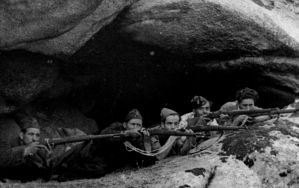
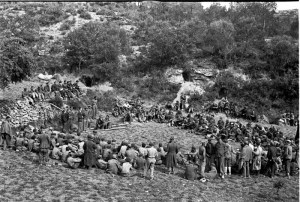
Republicans gather near the front, date and author unknown
But the Republicans had refused to give up, and on 16 September, moving in small guerrilla formations, elements of the Columna Mangada and incoming trade union militias from Madrid continually pushed up through the ravine networks, where Nationalist units were drawn into dense woodland ambushes, reportedly leaving substantial casualties in the Peguerinos sector. By the final week of September, the heavy troop movements slowed into a bitter, static stalemate. The Nationalists held the surrounding high peaks (preventing a Republican march on Ávila), while the Republicans held the eastern access points leading toward Madrid, setting the frontline in stone for months to come.
But on 23 September 1936, Puerto del Boquerón witnessed the critical turning point of the local mountain campaign. Having recognised that the Republican presence just 12km from Ávila city was an unacceptable vulnerability, the Nationalist High Command officially formed and mobilized a dedicated counter-offensive strike force (the Columna de operaciones) directly inside Ávila city. This specific troop movement on 23 September altered the frontline dynamics, as up until this date, the Nationalist command in Ávila did not possess a sufficiently organised, firm defensive or offensive force to dislodge the Republicans entrenched at the pass. But by 23 September, the arrival of newly organised Nationalist military units allowed them to formally establish an offensive column under a unified operational command. Approximately 800-1,000 men formed the vanguard of the assault column. The column drew heavily from professional colonial troops and provincial garrisons arriving in Ávila. It included Tabor de Larache Moroccan Regulares, a company from the Regimiento de La Victoria, originally arriving as a garrison from nearby Salamanca, a company of Assault Guards, a group of Guardia Civil, and 30 Carlist Requetés. The goal was to permanently push back the Republican forces who had failed to exploit their close proximity to the provincial capital. The mobilisation on 23 September served as the direct catalyst for the heavy fighting that erupted over the next 48 hours.
.
The Republican forces holding Puerto del Boquerón had larger numbers but lacked heavy logistical support and unified professional military cohesion. Approximately 1,500 men were deployed to hold the pass.They were commanded by Commander Julio Dueso Landaida and Communist politician José Cazorla, leading the Octubre, Meabe, and the Libertad battalions, including dedicated defensive companies composed of railway workers (ferroviarios) and tramway workers (tranviarios). Early in the war, the primary psychological imperative of the Madrid militias was strictly defensive, holding the mountain gates (los puertos) to stop the Nationalist advance toward the capital. Operating with a defensive siege mentality, the militia leaders lacked the strategic training, coordination, and tactical doctrine required to plan, coordinate, and execute a complex offensive operations checklist against a fortified provincial capital.
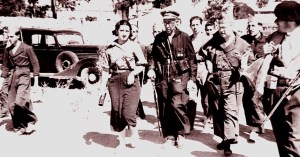
Colonel Mangada in 1936, via Santos Yubero, Communidad de of Madrid
The massive failure at Puerto del Boquerón was also laid at the feet of Republican Colonel Julio Mangada. He was celebrated early on as a populist hero in Madrid for winning minor skirmishes, his military decision-making was highly erratic and risk-averse. Rather than maintaining momentum and pushing his columns forward to liberate Ávila when its garrison was at its weakest in late July and August, Mangada had chosen to halt, consolidate, and celebrate local victories. This passivity gave the Nationalists the crucial resource they needed most – time to bring in reinforcements. Seeing the proximity of the threat at Puerto del Boquerón, the Nationalist high command rapidly fortified the capital as early as 27 July while the Republicans made no gains or planned future operations on the capital. By September, the Nationalists had transformed Ávila from an exposed outpost into a heavily reinforced staging ground backed by elite Moroccan Regulares and organised cavalry. By remaining stationary and treating Puerto del Boquerón as a permanent shield rather than a springboard for an attack, the Republican command allowed the Nationalists to dictate the timeline, leading directly to the crushing counter-offensive that broke the Republican lines on 23–26 September.
The day began as a Nationalist tactical manoeuvre to trap the Republicans. Having finalised the assembly of the operational column in Ávila city, the rebel force pushed southward toward the base of the pass. At the very start of the advance, the initial Nationalist commander, Commander Leonardo Ropero, but despite losing their leader, the Nationalist troops utilised Moroccan Tabor de Larache to press forward, driving the Republican outposts back toward the main pass.
.
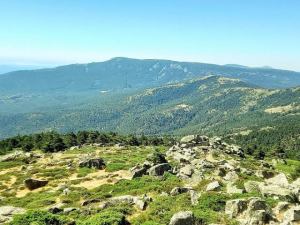
The peak at El Herradón, via Wikiloc
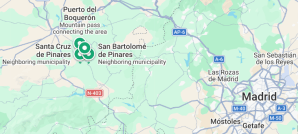
With the Nationalists aggressively scaling the ridges, the battlefield expanded from the pass down into the surrounding valleys the following day. To break the defensive lines of the Republican Octubre and Meabe battalions, the Nationalists called in heavy German-supplied Junkers Ju 52 bombers. The thunderous aerial bombardment systematically pounded the open Republican trench lines and rocky parapets.Simultaneously, Lapuente’s troops executed a flanking maneuver to capture the village of El Herradón. This cut off the lower supply road, panicking the Republican militia forces who realised they were facing a structural envelopment. The following day, the Tabor de Larache troops, supported by the Regimiento de La Victoria from Salamanca, launched a concentrated, highly organised assault against the Republican core. Lacking heavy artillery and unified military discipline, the fragmented Republican railway and tramway worker militias began to crumble. Under intense pressure, Commander Julio Dueso Landaida and political commissioner José Cazorla were forced to order a general, chaotic retreat to prevent their 1,500 men from being completely massacred. The final day of the offensive on 26 September solidified the newly won lines and purging the remaining resistance. Nationalist units aggressively swept the neighbouring villages of Santa Cruz de Pinares and San Bartolomé de Pinares. By capturing these towns, they formally connected with other rebel columns operating in the region. This permanently closed the gap to Ávila and successfully insulated the rear communications of the Alto del León front line. Dozens of Republican militia combatants were killed during the fluid fighting as the lines fled the the 1,304-metre pass and the surrounding ridges and folded backward toward the Madrid border, but the true number of dead has been been fully understood.
.
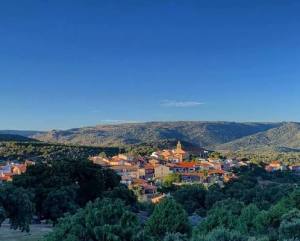
The village of Santa Cruz de Pinares today, via Wikimedia Commons
The capture of Puerto del Boquerón opened up a corridor for rapid Nationalist advance, heavily accelerating the systematic cleansing of the surrounding municipalities. The Moroccan Regulares and Falangist militias operating in this column took few official military prisoners during frontline breakthroughs. Routed militia members captured with arms in the immediate vicinity of the pass were routinely executed on the spot to avoid straining supply lines.As the Nationalist column pressed past the pass to capture adjacent villages over the next three days, El Herradón on 24 September, Santa Cruz de Pinares on 25 September, and San Bartolomé de Pinares on 26 September, local right-wing networks immediately pointed out unionists and Republican sympathisers. The wave of repression following the breakthrough resulted in the execution of local civilians. These victims were buried extrajudicially in roadside trenches and makeshift pits along the slopes of the Paramera and Malagón sierras, matching the violent protocols seen throughout the rest of Ávila province that month.
.
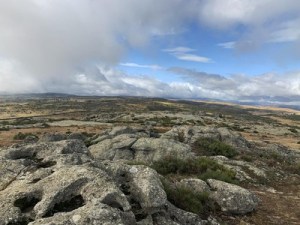
Alto del León/Guadarrama pass today, via Wikiloc. Locations like Puerto del Boquerón are just desolate mountaintops, often coated in snow
At the same time, deep in the central mountain range near Navarredonda, right-wing Falangist militias established a makeshift interrogation and execution centre near the Parador de Gredos. Throughout late September, local workers and Republican trade unionists rounded up from surrounding mountain villages, such as El Arenal, were driven to the pines around the Parador, shot, and left in unmarked mass graves. Just outside Ávila city, the tiny town of Tornadizos de Ávila experienced targeted political purges. Following the early-war assassination of their local mayor, Cándido Martín, Nationalist elements rounded up six more civilian residents on 29 September 1936. After being publicly tortured and humiliated, they were executed extrajudicially. September also marked the start of the school year, prompting the Nationalist administration to institute formal, sweeping legal and structural cleansings across public life with the purge of the teachers (Depuración del Magisterio). Dozens of female and male teachers were immediately stripped of their livelihoods, blacklisted, or driven into forced internal exile inside the province simply for having links to secular, left-wing, or democratically aligned professional organisations during the Republic.
.
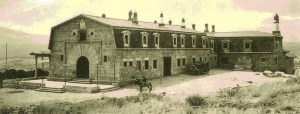
The Parador de Gredos, the luxury hotel opened in 1928, which sits close the execution site, via Paradores. Yes, you can still holiday here
Historical research indicates that at least 38 educators were killed within the province during the war. The vast majority, 32 of them, were executed by the Nationalist coup forces, while six were killed by anarchist militias in the highly contested southern valleys. When Nationalist authorities executed a group of roughly 30 Republican prisoners at the wall of the Ávila city cemetery in retaliation for regional bombings, the group included prominent educational leaders who were seen as ‘poisoning’ the youth with secular, progressive values. Conrada María López Santos was a local schoolteacher from the Ávila village of Navaluenga who was affiliated with the socialist teachers’ union (FETE-UGT). Miguel Tejerina Fernández and Francisco Agustín Rodríguez were highly respected regional Inspectors of Primary Education (Inspectores de Primera Enseñanza). They were executed alongside Conrada López Santos. In a stark display of institutional bureaucracy, the Nationalist rectorate of Salamanca formally issued a decree suspending both dead men from their jobs and salaries two months after they had already been shot. Throughout September, schools reopened across Nationalist-held Ávila with a radically altered staff. Roughly 25% of the province’s entire teaching force was permanently purged, blacklisted, or driven into forced internal exile. They were systematically replaced by Catholic clergy, Falangist loyalists, and Nationalist veterans to enforce a strict regime of religious and military obedience.


You must be logged in to post a comment.