Princess Mary in 1544 by ‘Master John’, possibly Susanna Horenbout, NPG428
Only three years of Thomas Cromwell’s private bank account records still exist, and February 1537 hid a little piece of gossip. On 22 February, Cromwell’s private clerk made a note:
Lady Mary’s Grace, by Mr. Wriothesley, for by cause My Lord was her Valentine, 15l.
Never again, for any reason, is a Valentine mentioned in Cromwell’s paperwork. Cromwell had sent gifts and money to Princess Mary many times, and despite their extremely divided religious beliefs, they seemed to get along very well. Princess Mary’s letters to Cromwell were usually informal and kind, and they shared many godchildren, Cromwell’s grandson Henry included. Rumours that Cromwell would marry Mary had fallen from the lips of his enemies multiple times, all without basis of proof or merit, and it was used as part of the smear campaign in 1540 (along with Cromwell marrying Princess Margaret Douglas for some random reason).
Was the 15l (around £6,500 today) the gift itself, or did he spend 15l on something? A man could get a nice horse or two for that money. If it had been jewellery, it would have specified, as all of Cromwell’s payments to jewellers gave detail. Did Princess Mary need cheering up, so Cromwell sent her a gift? Her life had much improved by February 1537, reconciled with her father and Queen Jane, and spent Candlemas at Greenwich before moving onto Whitehall. Mary might have known Jane was newly pregnant, which significantly changed Mary’s life. Recently, the Pilgrimage of Grace had been calling for the king to make Mary his heir, or have her take the throne from her father, among many demands. The royal court needed to be seen as a solid unit that trusted one another, and that definitely included Cromwell’s need to be seen as in favour.
Or was the Valentine entry simply a joke? Had Thomas Wriothesley dropped off the gift to Princess Mary on St. Valentine’s Day and made a quip to Cromwell or Avery, who then wrote it in the ledger? or was the gift meant in a more simplistic pagan way, symbolising purification and health, or just the celebration of the start of spring? We have absolutely no way of knowing, but the comment was never crossed out of the ledger. Ledger entries were not always made on the day the bill was paid or money was received, so all detail is lost. But given that Wriothesley turned traitor against his master in 1540, perhaps the comment of Cromwell once sending a Valentine to Princess Mary was mentioned…
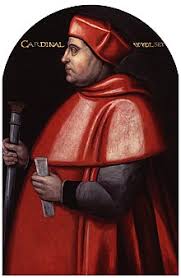
On 6 February 1530, Cardinal Thomas Wolsey was looking to have his various vague charges of praemunire, and potential treason dropped by the king, after a blisteringly harsh parliament tried to have him convicted, the penalty being execution. Only Thomas Cromwell had spoken out in Wolsey’s defence, which had softened King Henry’s stance, and several others had tried to speak in Cromwell’s name to the king’s praising him and his courage, most notably Sir John Russell and Sir John Gage. Wolsey wrote many begging, pleading, woeful letters to Cromwell though the final months of 1529 and early 1530, begging for help and money, even though Cromwell visited Esher Place regularly, and paid wages and for supplies for the household.
On 6 February 1530, the king was close to caving and forgiving Wolsey for not securing an annulment, and several had gently tried to persuade the king to relent, catching Anne Boleyn’s anger in the process. Two letters from Wolsey survive, both attributed 6 February 1530, begging Cromwell to help him, as Cromwell had not recently visited Esher, due to the death of his wife Elizabeth. Wolsey was more concerned with himself than Cromwell’s retreat to Austin Friars in pain. Here is a portion of both letters, taken from my book of Cromwell letters, with my modern spelling and punctuation. Italics are all mine.
THOMAS WOLSEY TO THOMAS CROMWELL6 FEBRUARY (Cott. App. XLVIII. 19)
“Mine only comfort, at the reverence of God leave me not now, for if you do I shall not long live in this wretched world. You will not believe how I am altered, for that I have heard nothing from you of your proceedings and expeditions in my matters… I hope you will not allow all your former labours to me to be cast away. I beg you to redub (restore) the matter, continue your accustomable goodness and sent me some comfort… Written this morning with a moste heavy heart, by your assured, Thomas Cromwell, we are miserable and unfortunate.”
This second letter is very mutilated and difficult to decipher. Wolsey tries to instruct Cromwell to speak to Secretary Stephen Gardiner and Treasurer William Fitzwilliam, and asks that Henry Norris and John Russell speak to the king on Wolsey’s behalf. He also requests John Arundell to travel to Esher and that Henry Percy was lying to the king about Wolsey. There was also a charge that Wolsey had coins minted with his face rather than the king’s which raised questions of further treason. It was Cromwell you spoke to the king on Wolsey’s behalf that following week, and got Wolsey’s charges all dropped.
THOMAS WOLSEY TO THOAMS CROMWELL 6 FEBRUARY 1530 (Cott. App. XLVIII. 18)
“Mine own good, trusty, and most assured refuge in this, my calamity. I am so encumbered with heaviness and anxiety that I cannot remember everything, but I trust to you to supply what we lack… that you may be plain to Mr. Treasurer (Fitzwilliam), and specially Mr Steven (Gardiner), who, upon consideration thereof, may be the (person?) with the king in allotting and appointing of my pardon if he listen. No man can do me more good and you … yourself refer that his opinion was that I should have no less then 4,000l (£1.8 million today) yearly to live with, which mine… degree considered is with the lest, I could not forbear putting you in remembrance hereof, remitting the bettering thereof to your wisdom and good handling; and as touching the coin (where Wolsey had his face minted on a series of coins in 1526, which was seen as treason) with the letters and badge in the same, you may for your better knowledge refer to Robert Amadas and other officers (of the mint )… learned how the usage has been (done in this way for centuries)… I would gladly have (lawyer and attendant John) Arundell (here)… (Henry Percy, Earl of) Northumberland’s untrue and wrong information … meant mean betwixt him (and I?) … Mr. Norris, Sir John Russell … my good and ever be greatly to my comfort.”
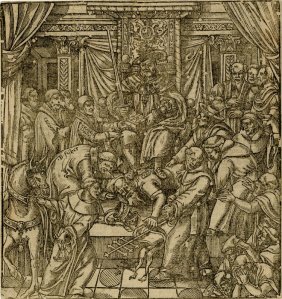
Henry VIII as Supreme Head of the English church (British Museum 1973 U 219)
Welcome back to a new year, and a new series, On This Day with Thomas Cromwell. The series will feature happenings on different dates in Cromwell’s life, as seen through his surviving correspondence. I will be posting on Instagram, Tiktok, Facebook, and Bluesky, and some of the larger posts will also be added here.
Today we start off with a huge event, when Cromwell submitted to the 1533 parliament The Act of Restraint of Appeals, also known as the Ecclesiastical Appeals Act, Statute in Restraint of Appeals, or ‘An Acte that the Appeles in suche Cases as have ben used to be pursued to the See of Rome shall not be from hensforth had ne used but wythin this Realme’. One 4 February, Cromwell, who by this time was in charge of parliament, placed this act 14th in a list of 16 acts to be passed, all of which reached royal assent on 7 April 1533 (note that the original acts were dated with the Julian calendar, which ended the year 1532 on 31 March, so the acts were all originally labelled as 1532. I only use the Georgian calendar when listing Cromwell’s letters and petitions, as do all legal frameworks).
Queen Katharine of Aragon (Lambeth 26)
Who cared about the The Act of Restraint of Appeals? As it turned out, many powerful people, the most powerful of them all being Katharine of Aragon, Queen of England. Queen Katharine had been on the throne since 1509, and there was no need or desire for her to give up that position, except when King Henry claimed to be in love with Anne Boleyn. Four years on from the messy and inconclusive legatine court annulment hearing before Cardinals Wolsey and Campeggio, Katharine had been petitioning Pope Clement to refuse her husband King Henry an annulment so he could remarry. King Henry was all talk when it came to divorce, but hadn’t really made that many petitions for an annulment, more just attacked those around him, and wrote to many abroad in the hopes of support.
But Thomas Cromwell had not been so idle. In 1532, he wrote the The Supplication Of The Commons Against The Ordinaries, which became known as the Submission of the Clergy. That made Henry VIII the ‘Head of the Church in England as far as the law allowed.’ All clergy had to bow to the king, not the authority of the Pope in Rome. Months later, Archbishop of Canterbury William Warham died, and after sending out the necessary papal papers, Thomas Cranmer was found abroad and brought home to be the new archbishop, just as Cromwell and Henry both wanted. Cranmer had recently been radicalised in Europe, and finally had come to see the ‘benefits’ for a reformed church in England (and not just because he had been dallying with a Swiss girl).
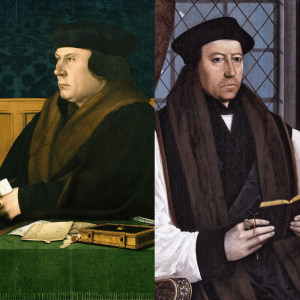
Thomas Cromwell (Frick 1915.1.76) and Thomas Cranmer (NPG 535)
But ultimately, for all the legal paperwork, Pope Clement still existed. The Catholic faith still existed. A law didn’t change people’s opinions or beliefs. A person could, in theory, still go around the new Archbishop Cranmer and write to the Pope and ask for an ecclesiastic ruling. Katharine of Aragon’s petition to save her marriage remained intact. Despite being an ardent supporter of Queen Katharine and her daughter Princess Mary, Thomas Cromwell was the one to do the work, and cut off Katharine’s hopes of saving her marriage and title. It would be treason to go against this law, the penalty being death.
The Act of Restraint of Appeals is the primary legal foundation of the English Reformation. By ensuring no one in England could seek the Pope’s rulings over King Henry, it made the Church of England essentially real, as its own standing faith, overseen by a monarch, who was anointed by God to rule. The petition went to parliament on 4 February 1533, the only major act of the session, neatly squeezed between an act about paving the road from The Strand to Charing Cross in London, and an act against excessively nice clothing (that’s a whole topic on its own). The large roll Cromwell submitted (written in a scribe’s hand) was the first of ten drafts worked on through the session, and included both Cromwell and the king’s handwriting as the statutes were argued, corrected and settled. This meant the king could have the final ruling on subjects like his own divorce, and passed that power to Archbishop Cranmer to formally put it to Convocation and rule the marriage of Henry and Katharine void, clearing the way for pregnant Anne Boleyn to be crowned. The Act of Restraint of Appeals made everything possible for the English Reformation, leaving many dead when they dared to refuse.
The law of only repealed in full by the Statute Law (Repeals) Act 1969, though Northern Ireland was free of the act by 1950.
Here is the text of the completed draft, with modern spelling, punctuation, and italics placed by me, directly from my book of Cromwell’s letters. I have underlined the most important and relevant parts if you would prefer not to slog through this wordy middle-English decree.
THE ACT OF RESTRAINT IN APPEALS, 4 February 1533 (MSS Cleo. E. VI. 185)
‘An Acte that the Appeles in suche Cases as have ben used to be pursued to the See of Rome shall not be from hensforth had ne used but wythin this Realme’
I. An Act that feeds in such cases, as have been used to be pursued to the See of Rome, shall not be from henceforth had nor used but within this realm where, by diverse sundry old authentic histories and chronicles, it is manifestly declared and expressed that this realm of England is an empire, and so has been accepted in the world, governed by one Supreme Head and King having the dignity and royal estate of the imperial Crown of the same, unto whom a body politic, compact of all sorts and degrees of people divided in terms and by names of Spiritualty and Temporality, be bound and owe to bear next to God a natural and humble obedience; he being also instituted and furnished by the goodness and sufferance of Almighty God with plenary, whole, and entire power, pre-eminence, authority, prerogative, and jurisdiction to render and yield justice and final determination to all manner of folk, residents or subjects within this his realm, in all causes, matters, debates, and contentions happening to occur, insurrect, or begin within the limits thereof, without restraint or provocation to any foreign princes or potentates of the world: the body spiritual whereof, having power when any cause of the law divine happened to come in question or of spiritual learning, then it was declared, interpreted, and shown by that part of the said body politic called the Spiritualty, now being usually called the English Church, which always has been reputed and also found of that sort that both for knowledge, integrity, and sufficiency of number, it has been always thought and is also at this hour sufficient and mete for itself, without the intermeddling of any exterior person or persons, to declare and determine all such doubts, and to administer all such offices and duties as to their rooms spiritual does appertain. For the due administration whereof and to keep them from corruption and sinister affection the King’s most noble progenitors, and the ancestors of the nobles of this realm, have sufficiently endowed the said Church both with honour and possessions. And the laws temporal for trial of propriety of lands and goods, and for the conservation of the people of this realm in unity and peace without ravin (plunder) or spoil, was and yet is administered, adjudged, and executed by sundry judges and administers of the other part of the said body politic called the Temporality, and both their authorities and jurisdictions do conjoin together in the due administration of justice the one to help the other. And whereas the King his most noble progenitors, and the Nobility and Commons of this said realm, at diverse and sundry Parliaments as well in the time of King Edward the First, Edward the Third, Richard the Second, Henry the Fourth, and other noble kings of this realm, made sundry ordinances, laws, statutes, and provisions for the entire and sure conservation of the prerogatives, liberties, and preeminence of the said imperial Crown of this realm, and of the jurisdictions spiritual and temporal of the same, to keep it from the annoyance as well of the See of Rome as from the authority of other foreign potentates attempting the diminution or violation thereof as often and from time to time as any such annoyance or attempt might be known or espied. And notwithstanding the said good statutes and ordinances made in the time of the King’s most noble progenitors in preservation of the authority and prerogative of the said imperial Crown as is aforesaid, yet nevertheless since the making of the said good statutes and ordinances diverse and sundry inconveniences and dangers not provided for plainly by the said former acts, statutes, and ordinances have risen and sprung by reason of appeals sued out of this realm to the see of Rome, in causes testamentary causes of matrimony and divorces, right of tithes, oblations and obventions (offerings to God), not only to the great inquietation, vexation, trouble, costs, and charges of the King’s Highness and many of his subjects and residents in this his realm, but also to the great delay, and let to the true and speedy determination of the said causes, for so much as the parties appealing to the said court of Rome most commonly do the same for the delay of justice. And forasmuch as the great distance of way is so far out of this realm, so that the necessary proofs nor the true knowledge of the cause can neither there be so well known nor the witnesses there so well examined as within this realm, so that the parties grieved by means of the said appeals be most times without remedy. In consideration whereof the King’s Highness, his Nobles and Commons, considering the great enormities, dangers, long delays, and hurts that as well to his Highness as to his said nobles, subjects, commons, and residents of this his realm in the said causes testamentary, causes of matrimony and divorces, tithes, oblations, and obventions do daily ensue, does therefore by his royal assent and by the assent of the Lord’s spiritual and temporal and the Commons in this present Parliament assembled and by authority of the same, enact, establish, and ordain that all causes testamentary, causes of matrimony and divorces, rights of tithes, oblations, and obventions, the knowledge whereof by the goodness of princes of this realm and by the laws and customs of the same appertains to the spiritual jurisdiction of this realm already commenced, moved, depending, being, happening, or hereafter coming in contention, debate, or question within this realm or within any the King’s dominions or marches of the same or elsewhere, whether they concern the King our Sovereign Lord, his heirs or successors, or any other subjects or residents within the same of what degree soever they be, shall be from henceforth heard, examined, discussed, clearly finally and definitively adjudged and determined, within the King’s jurisdiction and authority and not elsewhere, in such courts spiritual and temporal of the same as the natures, conditions, and qualities of the causes and matters aforesaid in contention or hereafter happening in contention shall require, without having any respect to any custom, use, or sufferance in hindrance, let, or prejudice of the same or to any other thing used or suffered to the contrary thereof by any other manner person or persons in any manner of ways. Any foreign inhibitions, appeals, sentences, summons, citations, suspensions, interdictions, excommunications, restraints, judgments, or any other process or impediments of what natures, names, qualities, or conditions soever they be, from the See of Rome or any other foreign courts or potentates of the world, or from and out of this realm or any other the King’s dominions or marches of the same to the See of Rome or to any other foreign courts or potentates, to the let or impediment thereof in any wise notwithstanding. And potentates that it shall be lawful to the King our Sovereign Lord and to his heirs and successors, and to all other subjects or residents within this realm or within any the King’s dominions or marches of the same, notwithstanding that hereafter it should happen any excommencement, excommunications, interdictions, citations, or any other censures or foreign process out of any outward parties to be fulminate, provulged (proclaimed), declared, or put in execution within this said realm or in any other place or places for any of the causes before rehearsed, in prejudice, derogation, or contempt of this said Act and the very true meaning and execution thereof, may and shall nevertheless as well pursue, execute, have, and enjoy the meets, profits, benefits, and commodities of all such processes, sentences, judgments,, and determinations, done or hereafter to be done in any of the said courts spiritual or temporal as the cases shall require, within the limits, power, and authority of this the King’s said realm and dominions and marches of the same, and those only and none other to take place and to be firmly observed and obeyed within the same. As also that all spiritual prelates, pastors, ministers, and curates within this realm and the dominions of the same shall and may use, minister, execute, and do, or cause to be used administered, executed, and done, all sacraments, sacramentals, divine services, and all other things within the said realm and dominions unto all the subjects of the same as Catholic and Christian men are owe to do. Any foreign citations, processes, inhibitions, suspensions, interdictions, excommunications, or appeals for or touching any of the causes aforesaid from or to the See of Rome or any other foreign prince or foreign courts to the let or contrary thereof in any ways notwithstanding. And if any of the said spiritual persons, by the occasion of the said fulminations of any of the same interdictions, censures, inhibitions, excommunications, appeals, suspensions, summons, or other foreign citations for the causes before said or for any of them, do at any time hereafter refuse to minister or to cause to be ministered the said sacraments and sacramentals and other divine services in form as is aforesaid, shall for every such time or times that they or any of them do refuse so to do or to cause to be done, have one year’s imprisonment and to make fine and ransom at the King’s pleasure.
II. And it is further enacted that if any person or persons do attempt move, purchase, or procure, from or to the See of Rome or from or to any other foreign court or courts out of this realm, any manner foreign process, inhibitions, appeals, sentences, summons, citations, suspensions, interdictions, excommunications, restraints, or judgments, of what nature, kind, or quality soever they be, or execute any of the same process, or do any act or acts to the let, impediment, hindrance or derogation of any process, sentence, judgment, or determination had, made, done, or hereafter to be had, done, or made in any courts of this realm or the King’s said dominions or marshes of the same for any of the causes aforesaid. . .that then every person or persons so doing, and their fautors (supporters), comforters, abettors, procurers, executors, and counsellors, and every of them being convicted of the same, for every such default shall incur and run in the same pains, penalties, and forfeitures ordained and provided by the statute of provision and praemunire made in the sixteenth year of the reign of King Richard the Second.
III. And furthermore in eschewing the said great enormities, inquietations, delays, charges, and expenses hereafter to be sustained in pursuing of such appeals and foreign process do therefore ordain and enact that in such cases where heretofore any of the King’s subjects or residents have used to pursue, provoke, or procure any appeal to the see of Rome they shall from henceforth take, have, and use their appeals within this realm and not elsewhere, in manner and form as hereafter ensue and not otherwise. That is to say, first from the archdeacon or his official, if the matter or cause be there begun, to the bishop diocesan of the said See, and likewise, if it be commenced before the bishop diocesan or his commissary, from the bishop diocesan or his commissary, within fifteen days next ensuing the judgment or sentence thereof there given, to the archbishop of the province of Canterbury, if it be within his province, and if it be within the province of York then to the archbishop of York; and so likewise to all other archbishops in other the King’s dominions as the case by the order of justice shall require; and there to be definitively and finally ordered, decreed, and adjudged according to justice, without any other appellation or provocation to any other person or persons, court or courts. And if the matter or contention for any of the causes aforesaid be or shall be commenced before the archdeacon of any archbishop or his commissary, then the party grieved shall or may take his appeal, within fifteen days next after judgment or sentence there given, to the Court of the Arches or Audience of the same archbishop or archbishops, and from the said Court of the Arches or Audience, within fifteen days then next ensuing after judgment or sentence there given, to the archbishop of the same province, there to be definitively and finally determined without any other or further process or appeal thereupon to be had or ensued.
IV. And in case any cause, matter, or contention which has, does, shall, or may touch the King, his heirs or successive kings of this realm, that in all and every such case or cases the party grieved shall or may appeal to the spiritual prelates and other abbots and priors of the Upper House assembled and convocated by the King’s writ in the Convocation being or next ensuing within the province or provinces where the same matter of contention is or shall be begun; so that every such appeal be taken by the party grieved within fifteen days next after the judgment or sentence thereupon given or to be given. And this whatsoever be done or shall be done and affirmed, determined, decreed, and adjudged by the foresaid prelates, abbots, and priors of the Upper House of the said Convocation as is aforesaid, appertaining, concerning, or belonging to the King, his heirs or successors, in any of these foresaid causes of appeals, shall stand and be taken for a final decree, sentence, judgment, definition, and determination, and the same matter so determined never after to come in question and debate to be examined in any other court or courts. And if it shall happen any person or persons hereafter to pursue or provoke any appeal contrary to the effect of this Act, or refuse to obey, execute, and observe all things comprised within the same that then every person and persons so doing, refusing, or offending, their procurers, fautors (patrons), advocates, counsellors, and abettors, and every of them, shall incur into the pains, forfeitures, and penalties ordained and provided in the said statute made in the said sixteenth year of King Richard the Second.
All three books in the Thomas Cromwell Queenmaker Series are available for free to download from Amazon onto any device, just in time for the holiday season. The deal is available on all Amazon sites worldwide (or Amazon US if you live in a country without its own dedicated site, as I do).
The deal is available from Friday 20 December 12:01am – Friday 24 December 11:59pm PST (Friday 20 December 8:00am – Wednesday 25 December 8:00am UK time or Friday 20 December 9:00pm – Wednesday 25 December 9:00pm NZ time), otherwise click here for your time zone
To find out more about the three books, and links to download, see below –
The moderate man shall inherit the kingdom. That man needs to be the Queenmaker.
London, May 1529 – Cardinal Wolsey has ruled England in King Henry VIII’s name for most of his reign. Now Henry wants to leave his extraordinary Spanish wife of twenty years, Queen Katherine, to marry Anne Boleyn and secure a male heir for the kingdom. Only God can end a marriage, through his appointed voices on Earth, the powerful Cardinal Wolsey, and Cardinal Campeggio sent from Rome in the Pope’s place. Wolsey’s faithful attendant, commoner Thomas Cromwell, has the mind, the skills and the ambition to secure a royal annulment.
Cromwell’s forgotten past in Italy reappears with Campeggio’s new attendant, Nicóla Frescobaldi, the peculiar son of Cromwell’s former Italian master. While the great Cardinals of Christendom fight the King, the Pope and their God for an annulment, Cromwell and Frescobaldi hold the power over a country at war with its own conscience. Cromwell is called the double-minded man, whose golden eyes make money appear. Now Cromwell wants the power to destroy the Catholic Church in England. Frescobaldi is known as the waif-like creature, the Pope’s favourite companion, but Frescobaldi wants freedom from Pope Clement and his Medici family in Italy.
Cromwell and Frescobaldi will place themselves into the heart of religious and political influence as they strive to create an English queen, or lose their heads for their crimes and sinful secrets.
London, November 1533 – Thomas Cromwell and Nicóla Frescobaldi have their queen on the throne. The Catholic Church is being destroyed as the Reformation looms over England. Cromwell has total power at court and in parliament, while Frescobaldi wins favour with the king’s illegitimate son, Henry Fitzroy.
But England’s fate is uncertain. The nobles still despise Cromwell and his Italian creature. Anne has not given the king a son. Queen Katherine refuses to give up her title, and Thomas More and Bishop Fisher defy their king. The final Plantagenets think they should hold the throne while the Catholics want Princess Mary named as heir.
England can be reformed, but Cromwell must dissolve all the monasteries and abbeys, and with the king on his side, the plan to change religion will sever heads. Queen Anne is losing Henry’s love, but Cromwell could suffer if Anne loses her crown. Frescobaldi creates a daring plan to replace Anne and regain the Pope’s favour, but Cromwell must execute the plans on his own. Schemes will go astray and the wrong heads will be severed to satisfy a vengeful sovereign.
Kings will rise, queens shall fall, children will perish, and the people of England will march in a pilgrimage to take Cromwell’s head, while Frescobaldi will have to make the ultimate sacrifice.
London, January 1537 – Thomas Cromwell is in deep mourning. His new queen is on the throne at King Henry’s command, but the personal cost is too high. Nicòla Frescobaldi is lying dead inside the Medici tomb in Florence, and Cromwell’s only daughter Jane is missing. Now, the people of England have rebelled against their king, marching to London to start a civil war. The Pilgrimage of Grace has two demands: remove all the Reformation changes from religion and cut off Cromwell’s head.
Cromwell needs his friends, allies and the king’s favour more than ever, but he can do nothing when Queen Jane dies giving England its son and heir. Cromwell’s son has married the Queen’s sister, but the Seymours will disappear from favour if Cromwell does not eliminate all those able to take their place. There is only one solution; become Queenmaker yet again and find a foreign princess for Henry, one to seal religious change and create stability in the war of Catholic against Protestant.
Nicòla Frescobaldi may be dead, but Duchess Nicòletta of Florence is not, so Cromwell and his creature can rule politics again to control England and Ireland. But when war with the Holy Roman Empire threatens, all of Cromwell’s powers, titles and schemes cannot save him from his oldest enemy in England, and a betrayal deep in the heart of the powerful Cromwellian faction.
Final page of Cromwell’s letter, held by Robert Gascoyne-Cecil, 7th Marquess of Salisbury, at Hatfield House.
Watching Wolf Hall 2, The Mirror and the Light, you would be forgiven for wondering why Cromwell wrote to King Henry and begged for mercy. Being cruel was in Henry’s nature. When Cromwell’s letter arrived to the king, he had his secretary Ralph Sadler read it aloud three times. Henry was feeling the weight of his mistake in arresting Cromwell by 9 July when work was piling up and Cromwell was no longer there as an intermediary between the king and all those who needed something. Cromwell had been attainted and the writ had gone through parliament. Henry couldn’t set a legal precedent and overrule an attainder. But contrary to belief, Henry did grant Cromwell mercy, by having him beheaded as an earl, not hanged or burned like a commoner.
The letter written by Cromwell to King Henry on 30 June 1540 served primarily to recall the finer points of Henry’s marriage to Anne of Cleves (note: Cromwell was not speaking the full truth, rather the agreed set of lies needed to create the Henry-Anna annulment). Cromwell had been interrogated the day prior by Norfolk, Audley and Fitzwilliam, with Wriothesley writing out a series of questions and answers to be signed by Cromwell and sent to Henry directly. Also on 29 June, the House of Lords passed the final draft of Cromwell’s Act of Attainder, meaning he had been declared guilty of treason on the false evidence provided primarily by Norfolk, Gardiner, Fitzwilliam and Wriothesley. The initial draft had gone through parliament ten days earlier, passing unanimously, likewise the final draft on 29 June (not that anyone actually had any choice but to vote in favour). Cromwell would have received this information at his interrogation, and being the man who wrote the Treasons Act 1534, knew that the punishment was hanging, drawing and quartering (though even Henry commuted it beheading much of the time).
This long letter survives in two forms, as a heavily mutilated draft (British Museum Oth. C. x f.247), and a finished copy (Hatfield House, Cecil Papers, 124-7) , both written on the same date. Below is a modern copy (using modern punctuation, as Cromwell loved extremely long sentences) from my book of Cromwell correspondence. I have added footnotes for the names mentioned, in case you get people mixed up. On The Mirror and the Light, Cromwell is called Lord Chancellor, which is not true, he was Vicegerent and Lord Privy Seal.
A very good replica of the letter from The Mirror and the Light
To the king, my most gracious Sovereign lord, his Royal Majesty.
Most merciful king and most gracious sovereign lord, may it please the same to be advertised that the last time it pleased your benign goodness, to send unto me the right honourable Lord Chancellor,[1] the Right Honourable Duke of Norfolk,[2] and the Lord Admiral[3] to examine, and also to declare to me, diverse things from your Majesty, amongst the which, one special thing they moved and thereupon charged me as I would answer, before God at the dreadful day of Judgement and also upon the extreme danger and damnation of my soul and conscience, to say what I knew in the marriage and concerning the marriage between your highness and the queen, to the which I answered as I knew, declaring to them the particulars as nigh as I then could call to remembrance, which when they had heard, they, in your Majesty’s name, and upon like charge as they had given me, before commanded me to write to your highness the truth as much as I knew in that matter, which now I do, and the very truth as God shall save me, to the uttermost of my knowledge.
First, after your Majesty heard of the lady Anne of Cleves’ arrival at Dover and that her journeys were appointed towards Greenwich, and that she should be at Rochester on New Year’s Eve at night, your highness declared to me that you would privily visit her at Rochester upon New Year’s Day, adding these words “to nourish love,” which accordingly your Grace did upon New Year’s Day as is abovesaid. And the next day being Friday, your Grace returned to Greenwich where I spoke with your Grace and demanded of your Majesty how you liked the lady Anne. Your highness answered, as I thought heavily and not pleasantly, “nothing so well as she was spoken of.” Saying further that if your highness had known as much before as you then knew, she should not have come within this realm, saying as by way of lamentation what remedy, unto the which I answered and said I knew none but was very sorry. Therefore, and so God knows, I thought it a hard beginning, the next day after the receipt of the said lady and her entry made into Greenwich and after your highness had brought her to her chamber, I then waited upon your highness in your privy chamber, and being there, your Grace called me to you, saying to me these words, or the like, “my lord, is it not as I told you, say what they will, she is nothing so fair as she has been reported, howbeit, she is well and seemly.” Whereunto I answered, saying, “by my faith, Sir, you say truth,” adding thereunto that yet I thought she had a queenly manner, and nevertheless was sorry that your Grace was no better content, and thereupon your Grace commanded me to call together your Council, which were these by name: the Archbishop of Canterbury,[4] the Dukes of Norfolk and Suffolk,[5] my lord Admiral, my lord of Durham[6] and myself, to common of those matters, and to know what commission the Agents of Cleves had brought as well, touching the performance of the covenants sent before from hence to Doctor Wootton[7] to have been concluded in Cleves, as also in the declaration how the matters stood for the covenants of marriage between the Duke of Lorraine’s son[8] and the said lady Anne. Whereupon, Olisleger[9] and Hoghestein[10] were called and the matters purposed, whereby it plainly appeared that they were much astounded and abashed and desired that they might make answer in the next morning, which was Sunday. Upon Sunday in the morning, your said Councillors and they met early, and there again it was proposed unto them, as well touching the omission for the performance of the treaty and articles sent to Master Wootton, and also touching the contracts and covenants of marriage between the Duke of Lorraine’s son and the lady Anne, and what terms they stood in. To the which things so proposed, they answered as men much perplexed that as touching the commission they had none to treat concerning the articles sent to Mr. Wootton, and as to the contract and covenant of marriage they could say nothing but that a revocation was made, and that they were but spouseless, and finally after much reasoning they offered themselves to remain prisoners until such time as they should have sent unto them from Cleves, the first articles ratified under the Duke,[11] their Master’s, signature and seal, and also the copy of the revocation made between the Duke of Lorraine’s son and the lady Anne. Upon the which answers, I was sent to your highness by my lords of your said Council to declare to your highness what answer they had made, and came to your highness by the privy way into your privy chamber and declared to the same all the circumstances, where your Grace was very much displeased, saying I am not well handled, insomuch that I might well perceive that your highness was fully determined not to have gone through with the marriage at that time, saying unto me these word or the like, in effect that, “if it were not that she is come so far into my realm, and the great preparations that my states and people have made for her, and for fear of making of a ruffle in the world, that is to mean to drive her brother into the hands of the Emperor and French king’s hands, being now together, I would never have nor marry her,” so that I might well perceive your Grace was neither content with the person nor yet content with the preceding of the Agents. And after dinner, the said Sunday, your Grace sent for all your said Councillors, and in repeating how your highness was handled as well as touching the said articles and also the said matter of the Duke of Lorraine’s son, it might, and I doubt not, did appear to them how loathe your highness was to have married at that time. And thereupon and upon the considerations aforesaid, your Grace thought that it should be well done that she should make a protestation before your said Councillors, and notaries to be present, that she was free from all contracts which was done accordingly. Thereupon, I repairing to your highness, declaring how that she had made her protestation, whereunto your Grace answered in effect the words, or much like, “there is none other remedy but that I must need against my will, put my neck in the yoke,” and so I departed, leaving your highness in a study or pensiveness. And yet your Grace determined the next morning to go through, and in the morning which was Monday, your Majesty, preparing yourself towards the ceremony, there was some question who should lead here to church and it was appointed that the Earl of Essex[12] desist, and an earl that came with her should lead her to church, and thereupon one came to your highness and said unto you that the Earl of Essex was not yet come, whereupon your Grace appointed me to be the one that should lead here. And so I went unto her chamber to the intent to have done your commandment, and shortly after I came into the chamber, the Earl of Essex had come, whereupon I repaired back again in to your Grace’s privy chamber and showed your highness how he had come, and thereupon your Majesty advanced towards the gallery out of your privy chamber, and your Grace, being in and about the middle of your chamber of presence, called me unto you, saying the words or the like in sentence, “my lord, if it were not to satisfy the world and my realm, I would not do that I must do this day for no earthly thing.” And there, with one brought your Grace’s word that she was coming, and thereupon your Grace repaired into the gallery towards the closet and there paused her coming, being nothing content that she so long tarried as I judged then, and so consequently she came, and your Grace afterwards proceeded to the ceremony, and then being finished travelled the day, as appertained, and the night after the custom. And in the morning on Tuesday, I repairing to your Majesty in to your privy chamber, finding your Grace not so pleasant as I trusted to have done, I was so bold to ask your Grace how you liked the queen, whereunto your Grace soberly answered, saying that I was not all men, surely my lord as you know I liked her before not well but now I like her much worse. For to quote your highness; “I have felt her belly and her breasts and thereby as I can judge she should be not a maid, which struck me so to the heart when I felt them that I had neither will nor courage to proceed any further in other matters,” saying, “I have left her as good a maid as I found her,” which me thought then you spoke displeasantly, which I was very sorry to hear. Your highness also, after Candlemas, and before Shrovetide, once or twice said that you were in the same case with her as you were before and that your heart could never consent to meddle with her carnally. Notwithstanding, your highness alleged that you, for the most part, used to lie with her nightly or every second night, and yet your Majesty ever said that she was as good a maid for you as ever her mother bore her, for anything that you had ministered to her. Your highness showed me also in Lent last passed, at such time as your Grace had some communication with her of my lady Mary how that she began to wax stubborn and wilful, ever lamenting your fate and ever verifying that you had never any carnal knowledge with her, and also after Easter your Grace likewise at diverse times. In the Whitsun week. in your Grace’s privy chamber at Greenwich, exceedingly lamented your fate and that your greatest grief was that you should surely never have any more children for the comfort of this realm if you should so continue, assuring me that before God you thought she was never your lawfully wife, at which time your Grace knows what answer I made, which was that I would for my part do my uttermost to comfort and deliver your Grace of your affliction, and how sorry I was, both to see and hear your Grace. God knows your Grace diverse times since Whitsuntide declared the like to me, ever alleging one thing, and also saying that you had as much done to much the consent of your heart and mind as ever did man, and that you took God to witness, but ever you said the obstacle could never out of your mind, and gracious prince, after that you had first seen her at Rochester, I never thought in my heart that you were or would be contented with that marriage, and Sir, I know now in what case I stand in, which is only in the mercy of God and your Grace, if I have not to the uttermost of my remembrance said the truth and the whole truth in this matter, God never help me. I am sure as I think there is no man living in this your realm that knew more in this then I did, your highness only except, and I am sure my lord Admiral, calling to his remembrance, can show your highness and be my witness to what I said unto him after your Grace came from Rochester, and also after your Grace’s marriage, and also now of late since Whitsuntide, and I doubt not but many and diverse of my lords of your Council, both before your manage and since, have right well perceived that your Majesty has not been well pleased with your marriage, and as I shall answer to God I never thought your Grace content after you had once seen her at Rochester, and this is all that I know.
Most gracious and most merciful sovereign lord, beseeching almighty God, whoever in all your causes has ever counselled perceived, opened, maintained, relieved and defended your highness so he now will save to counsel you, preserve you, maintain you, remedy you, relieve and defend you as may be most to your honour, wealth prosperity, health and comfort of your heart’s desires. For the which, and for the long life and prosperous reign of your most royal Majesty, I shall, during my life and while I am here, pray to almighty God that He of his most abundant goodness, will help aid and comfort you, and after your continuance of Nestor’s[13] years, that that most noble Imp, the prince’s grace, your most dear son, may succeed you to reign long, prosperously and felicitously to God’s pleasure, beseeching most humbly, your Grace to pardon this, my rude writing, and to consider that I am a most woeful prisoner, ready to take the death when it shall please God and your Majesty. Yet the frail flesh incites me continually to call to your Grace for mercy and pardon for my offences and in this, Christ save, preserve, and keep you. Written the Tower, this Wednesday the last of June, with the heavy heart and trembling hand of your highness’ most heavy and most miserable prisoner and poor slave.
Most gracious prince, I cry for mercye, mercye, mercye









 CAROLINE ANGUS