MY HEARTY COMMENDATIONS: THE TRANSCRIBED LETTERS AND REMEMBRANCES OF THOMAS CROMWELL NEW EDITION 2025

OTD with Thomas Cromwell, 13 April 1532: The Supplication Against the Ordinaries

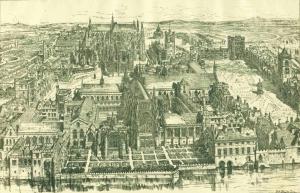
Westminster in the Tudor period. H J Brewer, The Builder magazine, 1884

THE SUPPLICATION OF THE COMMONS AGAINST THE ORDINARIES, April 1532 (Wilkins, III. 750)

The Supplication of the Commons Against the Ordinaries was one of Cromwell’s 1532 masterstrokes. The papers were grievances against the Ordinaries, as abuse was rife within the Church, along with issues surrounding the way they ignored their own laws and unfairly punished lay people for similar behaviour. It is unknown when the Supplication was first drafted; Cromwell may have had his papers drawn up years in advance, given all he had seen over the past few years.[2] The supplication passed in the Commons in January and formally put to King Henry in March.

By the end of April, the King received the Answer of the Ordinaries after it passed through Convocation, who naturally argued against what Cromwell had written. The Church held an enormous amount of power in England, making their own laws and passing their own sentences on laypeople, who did not have the education to argue their case, nor the money to bribe church officials in return for safety. Stripping the Ordinaries of their powers would hand much control back to the King and help a lot of innocent people.[3]   In 1533, Cromwell set to work in moving the jurisdiction of laws from the church to the crown, something we take for granted today.

‘A boke ayenst the clergy for takyng excessyve Fees’

To the King our Sovereign Lord

In most humble ways shown unto your excellent highness and most prudent wisdom, your faithful, loving and most humble and obedient subjects, The Commons in this your present Parliament, assembled that where of late as well, through new fantastical and erroneous opinions grown by occasion of frantic, seditious and overthwartly framed books compiled, imprinted, published and made in the English tongue, contrary and against the very true Catholic and Christian Faith, and also by the unreasonable and extreme rigour indiscrete and uncharitable behaviour and dealing of diverse ordinaries. The Commissaries and Substitutes which have heretofore had the examination in and upon the said errors and heretical opinions. Much discord, variance and debate has risen and more and more daily is like to increase and ensue amongst the universal sort of your said subjects, as well as spiritual and temporal, either against others in most uncharitable manners, to the great inquietation, vexation and breech of your peace within this your most Catholic realm. The special particular grieves whereof which most principally concerned your said Commons and lay subjects, and which are as they undoubtedly suppose the very chief foundations, occasions and causes that daily fosters, nourishes and maintains the said seditions, factions, deadly hatred and most uncharitable partakings, either part and sort of your said subjects, spiritual and temporal, against the other hereafter followingly do ensue.

First, where the prelates and spiritual Ordinaries of this your most excellent realm of England and the clergy of the same, have in their convocations, heretofore made and caused to be made, and also daily do, make diverse and many factions of laws, constitutions and ordinances without your knowledge or most royal assent, and without the assent and consent of any your lay subjects, unto the which laws your said lay subjects have not only heretofore and daily be bounden constrained to obey, as well in their bodies, goods and possessions, but also been compelled daily to incur into the censures of the same, and been continually put to importable charges and expenses against all equal right and good conscience. And yet your said humble subjects nor their predecessors could ever be privy to the said laws, nor any of the said laws have been declared unto them in the English tongue or otherwise published. By knowledge whereof, they might have extued (avoided) the dangers, censures, and penalties of the same. Which laws so made your said most humble and obedient subjects under the support of your Majesty are supposed to be not only to the diminution and derogation of your imperial jurisdiction and prerogative royal, but also to the great prejudice, inquietation and damage of all your said subjects. And also, where now of late there has been devised by the most Reverend father in God William, Archbishop of Canterbury, that in the courts which he calls His Courts of the Arches and Audience, shall be but only ten proctors at his deputation, which be sworn to prefer and promote the only jurisdiction and preferment of the said courts. By reason whereof, if any of your lay subjects shoulder have any lawful cause against the Judge of the said Courts or against any doctor or proctor of the same, or any of their friends or adherents, they cannot may in any wise have indifferent counsel. And also all the causes depending in any of the said courts may, by the confederacy of the said few proctors, be in such wise tracked and delayed, as your subjects suing in the same shall be put to importable charges, costs and expenses. And in case that any matters there being preferred should touch your Crown Regal Jurisdiction and prerogative royal, yet the same shall not be disclosed by any of the said proctors for fear of loss of their offices. Wherefore, your said most obedient subjects under the protection of your majesty suppose that your highness should have the nomination of some convenient number of proctors to be always attendant in the said courts of the arches and audience there to be sworn as well to the preferment of your jurisdiction and prerogative royal, as to the expedition of all the causes of your lay subjects repairing and suing to the same.

And where also many of your said most humble and obedient subjects and specially those that be of the poorest sort within this your realm, been daily convened and called before the said spiritual Ordinaries, their Commissaries and Substitutes and Officials sometimes at the pleasure of the said Ordinaries and Substitutes, for malice without any cause and sometimes at the only promotion and accusement of their false summoners and apparitors being very light and indiscrete persons, without any lawful cause of accusation or credible fame proved against them, and without any presentment in the visitation been inquieted, disturbed vexed, troubled and put to excessive and importable charges for them to bear, and many times be suspended and excommunicated for small and light causes, upon the only certificate of the proctors of the adversaries made under a feigned seal, which every proctor has in his keeping, whereas the party suspended and excommunicated many times never had any warning and yet when he shall be absolved if it be out of the court he shall be compelled to pay to his own proctor 20 pence, and to the proctor which is against him another 20 pence, and 20 pence to the scribe besides a pricey reward that the Judge shall have to the great impoverishing of your said poor lay subjects.

Also, your said most humble and obedient subjects find them grieved with the great and excessive fees taken in the said spiritual courts and in especially in the said Courts of the Arches, and audience where they take; for every citation 2 shillings 6 pence; for every inhibition 6 shillings 8 pence; for every proxy 16 pence, for every certificate 16 pence; for every libel 3 shillings 4 pence; for every answer to any libel 3 shillings 4 pence; for every act, even if it be but two words to the Register 4 pence; for every personal citation or decree 3 shillings 4 pence; for every sentence or judgement to the Judge 26 shillings 8 pence; for every testimonial upon any such sentence or judgement 26 shillings 8 pence; for every significate 12 shillings; for every commission to examine witnesses 12 shillings. Which is thought to be importable to be borne by your said subjects and very necessary to be reformed.

Furthermore, where the said spiritual Ordinaries many times purposely to revenge their inward grieves and displeasures and to put their said laws in execution their Commissaries and Substitutes sometimes for their own pleasures, sometimes by the sinister procurement of other spiritual persons use, to make out process against diverse of your said subjects and thereby compel them to appear before themselves to answer at a certain day and place to such articles as by them shall be of office before themselves. Then, purposed and that secretly and not in open places, and forthwith upon their appearance without cause or any declaration, then made or showed commit and send them to ward, where they remain without bail or mainprise (non-custodial bail) sometimes half a year, and sometimes a whole year and more. Nor they may in any ways know either the cause of their imprisonment or any name of their accuser, and finally their great costs, charges and expenses therein, when all is examined and nothing can be proved against them, but they clearly innocent for any fault or crime that can be laid onto them in that part, been set again at large without any recompense or amends in that behalf to be towards them adjudged.

And also, if percase upon the said process and appearance any party be upon the said matter, cause or examination brought forth and named either as party or witness, and then upon the proffe (pre-trial evidence) and trial thereof not able to prove and verify his said accusation or testimony against the party so accused to be true, then the person so causelessly accused is clearly for the more part without any remedy for his charges and wrongful vexation to be in that part towards him adjudged and recovered.

Also, upon the examination of the said accusation, if heresy be ordinarily laid onto the charge of the party so accused, then the said Ordinaries or their ministers use to put to them such subtle interrogatories concerning the high mysteries of our faith as are able quickly to trap a simple unlearned, or yet a well-witted lay man without learning, and bring them by such sinister introduction, some to his own confusion. And forthwith, if there any chance heresy to be, by such subtle policy by him confessed in words, and yet never committed nor thought in deed, then put they without further favour the said person either to make his purgation, and so thereby to lose his honesty and credence for ever, or else as some simple silly soul precisely standing to the clear testimony of his own well-known conscience rather than to confess his innocent truth to abide thextreme examynacion of deth by the Fyer the extremity in that behalf and so is utterly destroyed.

And if by fortune the said party so accused is to deny the said accusation and so put his adversary to prove the false same untruly forged and imagined against him, then for the more part such witnesses as been brought forth for the same be they but two in number, never so sore defamed of little truth or credence, adversaries or enemies to the party yet they shall be allowed and enabled only by discretion of the said Ordinaries, their Commissaries and Substitutes, and there upon sufficient cause to proceed to judgement to deliver the party so accused either to the secular hands and so to be burned after abjuration without remedy, and before if he submit himself to compel him when best happens, to make his purgation and bear a(n emblem of a) fagotte to his extreme shame and utter undoing.

In consideration whereof, most gracious Sovereign Lord, and forasmuch as there is at this present time and by a few years past has been outrageous violence on the one part and much default and lack of payment, and sufferance, charity and good will on the other part, a marvelous disorder of the godly quiet, peace and tranquility that this your realm heretofore ever hitherto has been in, thorough your politic wisdom in most honourable fame and Catholic faith inviolably preserved. It may therefore, most benign Sovereign lord, like your excellent goodness for the tender and universally indifferent zeal, benign love, and favour that your highness bears toward both the said parties, the said articles if they shall be, by your most clear and perfect judgement, thought any instruments or causes of the said variance and disorder, or those and all other occasions whatsoever accompanied by your highness, to make towards the said factions deeply and weightily, after your accustomed eyes and manner searched, weighed and considered graciously, to provide all violence on both sides utterly and clearly set a part some such necessary and behofull (discerning) remedies as may effectually reconcile and bring in perpetual unity your said subjects, spiritual and temporal. And for the establishing thereof to make and ordain on both sides such straight laws against the breakers, transgressors and offenders as shall be too heavy, dangerous, and weighty for them, or any of them, to bear, suffer and sustain. Whereunto, your said Commons, most humbly, heartily, and entirely, beseech your grace as the only head Sovereign, Lord Protector and Defender of both the said parties, in whom and by whom the only and sole redress, reformation and remedy herein absolutely rests and remains. By occasion whereof, all your said Commons, in their conscience surely accompt) that besides the marvellous, fervent love that your highness shall thereby gain and engender in their hearts towards your Grace, you shall do the most princely feat, and show the most honourable and charitable president and mirror that ever a Sovereign lord did upon his subjects and with that, merit and deserve of our merciful lord’s eternal bliss, whose goodness grant your Grace in most godly, princely and honourable estate, long to reign, prosper and continue as the Sovereign lord over all your said most humble and most obedient subjects.

And Where also. the said prelates and Ordinaries daily do permit and suffer the parsons, vicars curates, parish priests and other spiritual persons having cure of soul within this your realm, ministering unto your said loving subjects to exact and take of your humble and obedient subjects, diverse sums of money for the Sacraments and sacramentals of holy church, as the holy sacrament of the altar, baptism, matrimony, confession, burials, weddings, churchings, and such other sometimes denying the same without they first being paid the said sums of money and to take for the ministration of the same of your said subjects divers and certain sums of money alleging the same to be their duties. Which sacraments and sacramentals your said most humble and obedient subjects, under the protection of your highness, do suppose and think ought to be in most reverent charitable and goodly wise freely ministered unto them at all times, requisite without denial or any manner some or exaction of any manner sums of money or other duty or contribution to be asked demanded or required for the same to be demanded or asked for the same. And also, where in the spiritual courts of the said Prelates and Ordinaries been limited and appointed for many Judges, Scribes, Apparitors, Summoners, Appraisers, and other ministers for the approbation of testaments, which coveting so much their own private lucres (immoral profits) and satisfaction of the appetites of the said Prelates and Ordinaries, that when any of your said loving subjects do repair to any of the said Courts for the probate of any testaments they do in such ways extorte and make long delays or excessively take of them so large fees and rewards for the same, as is importable for them to bear directly against all justice law, equity and good conscience.

And also where most gracious Sovereign, the Judges Constituted and appointed by the said spiritual Ordinaries in their said Courts to here and determine causes there, do in likewise daily take many great and excessive fees and rewards of your said poor subjects having any cause or matier depending before them as is aforesaid And over that when any Judgement or sentence by the said Judge shall be given before them will also have great sums of money for the same. So that nothing is or can be obtained in any of the said Courts without money.

Wherefore, Your said most humble and obedient subjects do therefore, under your gracious correction and support, suppose it were very necessary that the said Ordinaries in the deputation of such Judges should be bound to appoint and assign such discreet, gracious and honest persons having sufficient learning, wit, discretion and understanding and also being indeed with such spiritual promotions stipend and salary as they, being Judges in their said courts, might and may minister to every person repairing to the same Justice without taking any manner, fee or reward for any manner sentence or judgement to be given before them, and also, whereas diverse spiritual persons being presented as well by your highness and by other patrons within this your realm to any diverse benefices or other spiritual promotion. The said Ordinaries and there ministers do not only take of them for their Letters of Institution and Induction, many great and excessive large sums of money and rewards, but also do pact and covenant with the same, taking sure bonds for their indemnity to answer to the said Ordinaries the first fruits of the said benefices after their Institution, so as they being ones presented or promoted as is aforesaid been by the said Ordinaries very extremely uncharitably handled, to their no little hindrance and impoverishment, which your said subjects suppose not only to be against all laws right and good conscience, but also to be simony (benefice for profit) and contrary to the laws of God.

And also, whereas the said spiritual Ordinaries do daily confer and give sundry benefices unto certain young folks, calling them their nephews or kinsfolk, being in their minority and within age not apt nor able to serve the cure of any such benefice. Whereby, the said ordinaries do keep and detain the fruits and profits of the same benefices in their own hands and thereby accumulate to themselves right great and large sums of money and yearly profits to the most pernicious example of all your said lay subjects and so the curates and other promotions given unto such infants been only given but employed to enrich the enriching of the said Ordinaries and the poor silly souls of your people and subjects which should be taught in the parishes given as aforesaid for lack of good curates do perish without doctrine or any good teaching.

And also where a great number of holy days which now at this present time, with very small devotion be solemnised, and kept throughout this your realm, upon the which many great abominable and execrable vices, idle and wanton sports been used and exercised, which holy days, if it may stand with your gracious pleasure, and special such as fall in the harvest might, by your majesty, by the advice of your most honourable council, prelates and Ordinaries be made fewer in number, and those that shall hereafter be ordained to stand and continue might and may be the more devoutly, religiously and reverently observed to the lord of almighty God and to the increase of your high honour and fame.

[1] LP v no. 978, 13 Apr 1532

[2] G. R. Elton, The Commons Supplication of 1532, p. 107-136

[3] ibid

Cromwell’s ledgers are printed in full in The Letters and Remembrances of Thomas Cromwell
OTD with Thomas Cromwell, 7 April 1540: Cromwell and Secretary Sadler

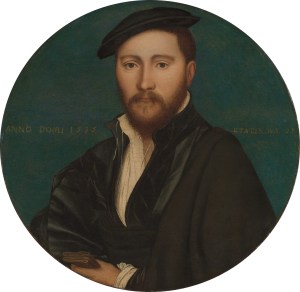
Ralph Sadler by Hans Holbein. Metropolitan Museum of Art, 49.7.28

On 7 April, 1540, Cromwell wrote to Ralph Sadler, newly the co-secretary to the King. How odd Cromwell must have felt to write to the Master Secretary after six official years in the role himself. The letter concerns sending Richard Pate to replace Thomas Wyatt and Thomas Legh with the Emperor, so that Wyatt could accompany the Prince of Salerno, Ferdinando Sanseverino, to England for a visit. The letter shows the teething problems of the role changing hands; whereas Cromwell and Henry could have discussed matters, now the King would tell Sadler, who would talk to Cromwell, who then had to explain his suggestion, and then Sadler reported back to Henry. At the time, Cromwell was at home at Austin Friars while Sadler was at court with the king. This was a long-standing arrangement that allowed Cromwell a bit of space from court when needed.  

Sadler and Thomas Wriothesley were the first men to share the role, a situation that would not last. Promoted into the role because of his favour and loyalty, Ralph Sadler was more than capable of the role, trusted by the king, and would give another 40 years of fine loyal service to the crown. Sadler’s partner in the role, Wriothesley, would soon become a traitor to his master in an attempt to gain his own favour before bullying Sadler out of the role. Wriothesley died alone in 1550 after eventually being spurned by the court.

This is one of the final letters sent out under the name Thaosm Cromwell, as Cromwell was then given an earldom and started signing letters as Thomas Essex.

THOMAS LORD CROMWELL TO SECRETARY RALPH SADLER, 7 April 1540 (Roy. 7 C. xvi, f. 149)

To my assured loving friend, Mr. Sadler, Esquire, one of the King’s Majesty’s two principal secretaries.

Master Secretary, after my right hearty commendations, by your letters addressed unto me by this bearer, I do perceive the King’s Majesty’s pleasure touching answer to Mr. Wyatt’s letters, which I received as I rode hither, and be now remitted unto me, I require you to signify to his Majesty that I shall, according to my most bounden duty, cause Mr. Pate to put himself in order, and give advertisement to Mr. Wyatt accordingly. Immediately upon the receipt of your answer to the letters which dispatch to Mr. Wyatt, I shall stay till that time upon the purpose following.

First, where his Majesty thinks that Mr. Pate might arrive in such season as Mr. Wyatt might well accompany the Prince of Salerno hither, surely I think the same, but whether Mr. Wyatt should have his opportunity to depart so soon after Mr. Pate’s coming as he might well accompany the said Prince or no, I doubt much, the time of the taking of his leave, and the receipt of such letters and matter as he should bring with him not being in his arbiter or appointment. And yet as I think it were not mete that he made too much haste even at his departure, lest thereby he should lose some knowledge worthy to be related after to the King’s Majesty. Again, under his Majesty’s correction, I think it more mete that Mr. Wyatt should animate the said prince of himself to come hither as though he had given no significance of it, then that he should accompany him, being there his highness’ ambassador.

The world which knows that an ambassador dares not conduct such a man without his Master’s knowledge may think otherwise of it then there is cause, seeing it shall be no doubt of it opened that neither he has desired license to come, nor yet shall be recommended by the Emperor. In my poor opinion, it should be well done that some warnings were sent to Calais for his entertainment if he come, and some order for the like at Dover etc. for his money after he shall be here arrived, without making any further suits unto him in this behalf. Wherein, nevertheless I refer me wholly to his Majesty’s pleasure as my bounden duty requires and shall upon your answer make the dispatch accordingly.

Touching Legh, I think the opinion good for his coming home with Mr. Wyatt, which I trust shall be composed in such ways as he shall not stick at it, and then his Majesty may object to him his contemptuous absence at his pleasure. And if his gracious pleasure be that I shall send the minute after it shall be devised, I shall accomplish his pleasure therein as shall appertain. Since the beginning of this letter, I am informed that Mr. Pate is there. I pray you send for him and help him to take his leave that he may repair hither with diligence, and in the mean season, his letters of credence shall be prepared. But as for instructions, I think he shall better take them at Mr. Wyatt’s hand as to learn the state of things, then we can advise him here, unless it shall please the King’s Majesty to commit any other secret matter unto him then I know of. Thus, most heartily fare you well. From London this Wednesday night

 Your assured friend

THOMAS CRUMWELL

Note added by attendant – My Lord Privy Seal to Mr Sadler.

Cromwell’s ledgers are printed in full in The Letters and Remembrances of Thomas Cromwell
Wolf Hall 2: The Mirror and the Light – What happened to Gregory Cromwell?

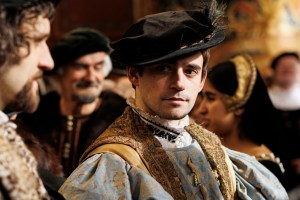
Gregory Cromwell in The Mirror and the Light. Playground Entertainment/Nick Briggs

Gregory Cromwell (c. 1520–1551) was probably the antithesis of his intelligent, well-travelled and fervent father. The character certainly got a glow-up of sorts in The Mirror and the Light.

Born around 1520, Gregory was the eldest of the Cromwell children, with Anne born c.1523 and Grace c.1527. The Cromwells lived in the heart of the Italian quarter of London on Fenchurch Street, before the family moved a few blocks north into Austin Friars in early 1523. It was a big household – Gregory’s grandmother Mercy Prior lived there, along with his paternal aunt and uncle Elizabeth and William Wellyfed and their three children Christopher, William, and Alice, and his maternal aunt and uncle Joan and John Williamson, and their daughter Joan. Also in the household were the Williams children Richard, Gregory and Walter with their father Morgan Williams, though they also had their own household as well until 1528. Added to that was Thomas Cromwell’s ward Ralph Sadler and his younger brother Nicholas. Gregory got to grow up in a large and wealthy family environment, and was away in Cambridge when sweating sickness struck London, killing his mother, and also away one year later when his sisters died. For Gregory, like his father, being away from home likely saved his life.

At age 7, Gregory, with his cousins Christopher Wellyfed and Nicholas Sadler, being similar in age were grouped together for their formal education, starting at home with John Palgrave, then moving to live with Prioress Vernon and being taught by John Chekying in Cambridge. Gregory’s years in education were largely unremarkable (except when Christopher Wellyfed was setting thigs on fire, costing his uncle a small fortune). By the time that Cromwell had got Anne Boleyn on the throne, it was obvious Gregory needed a different life away from formal education at Cambridge. Gregory began an annual routine of spending months away from home at a time, travelling the country and staying with friends of his father, visiting the countryside all around England and the Welsh marshes, a lifestyle similar to the king’s illegitimate son Henry Fitzroy. He even stayed with the Duke of Norfolk for a summer when the duke and Cromwell were briefly attempting to get along in 1536.

One of the most significant events in Gregory’s life was his marriage to Elizabeth Seymour in 1537. Elizabeth was the sister of Jane Seymour, Henry VIII’s third wife, making Gregory the king’s brother-in-law by marriage. He had his own household set up and paid for by his father, and it included Gregory’s half-sister Jane Cromwell, who had been born in 1530 to an unknown mother. Jane had grown up in the large Cromwell household at Austin Friars, but from 1537 onwards, lived with Gregory, alongside his new wife Elizabeth.

In late 1538, Thomas Cromwell had to deal with Gregory being punished by the church for sexual crimes. The event wasn’t hushed up, rather handled by clergymen who had no interest in embarrassing Elizabeth, the king’s sister-in-law. Gregory and Elizabeth were living at Lewes Priory, where Cromwell had set up them up with lands and manors that were large enough to host the king on progress, and his reputation was destroyed. Pregnant Elizabeth Cromwell and her infant son Henry were brought close to Cromwell at Mortlake, while Gregory lived separately from his wife, though they reconciled before Edward Cromwell was born in early 1539. They could not return to Sussex.

Gregory spent no time at court or worked for his father. Cromwell kept his adoptive sons Ralph Sadler and Richard Cromwell close, yet Gregory had no part in his father’s business. The only role Gregory had was to attend Queen Jane Seymour’s funeral, ride ahead of Cromwell’s mustered troops in 1539, and later welcome Queen Anna of Cleves to England, but these roles were also minor. When Cromwell was arrested in 1540, Gregory and Elizabeth Cromwell were at Leeds Castle, where Cromwell had set up a new life for them in 1539, where baby Thomas Cromwell was born in 1540.

King Henry was not in the habit of punishing the families of traitors (the Pole family excluded obviously). Gregory’s marriage to Elizabeth secured his social standing and protected him when his father fell from grace. Elizabeth wrote to her former brother-in-law the king, denouncing Thomas Cromwell after his downfall, and she and Gregory were allowed Launde Abbey, bought by Thomas Cromwell several years earlier. Gregory was also made 1st Baron Cromwell, making him appear worthy of the position of Prince Edward’s uncle, as he could not inherit any of his father’s titles or money.

Gregory and Elizabeth stayed quietly at Launde, having two more children, Katherine in 1541, and Frances in 1542. Gregory diligently attended parliament each year but achieved nothing, though did amass a large amount of lands, enough to make a tidy living. If anything, Gregory was one of those peers Cromwell never liked; those who were rewarded for their status rather than their effort. Gregory was also given permission to not fight in France when hostilities broke out, claiming his health was poor. Gregory has no political or religious beliefs or affiliations that linked to any cause.

In the late 1540s, Gregory’s fortunes continued to improve under the reign of Edward VI, who was influenced by Protestant reformers. He maintained his position as a member of the gentry, though he did not seek high office. Gregory was made a Knight of the Bath in 1547 by his nephew King Edward, but he spent no time at court.  But the disease that claimed his mother and sisters, sweating sickness, remerged in 1551, killing Gregory at age thirty, and also his son Edward, not yet a teenager.

Elizabeth quickly remarried, and young Henry Cromwell married his stepsister Mary Paulet, a granddaughter of one of the Grey sisters Cromwell once served, and produced a line of Irish Cromwells who lived with mixed success. Thomas Cromwell the younger went into English politics with Ralph Sadler and a friend, Seymour servant William Cecil, and served Queen Elizabeth with the level of skill, respect and intelligence shown by his grandfather. Thomas became a parliamentary historian, creating papers still useful in studying the Elizabethan era today. Of the Cromwellian grand-daughters, Katherine married John Strode of Devon and had six children. Frances Cromwell married a cousin of her sister’s husband, Robert Strode, but she sadly died after giving birth to her son, aged only 20.

After what happened in the mighty rise and fall of Thomas Cromwell, it is not surprising his sons and grandchildren were not so prepared to stick out their neck.

Wolf Hall 2: The Mirror and the Light – What happened to Richard Cromwell alias Williams?

Richard Cromwell in The Mirror and the Light. Playground Entertainment/Nick Briggs

From The Private Life of Thomas Cromwell

Richard Williams was born around 1510, the son of Morgan Williams, a Welsh lawyer based in the Wandsworth/Putney area, and Katherine Cromwell (died 1517), the eldest sister of Thomas Cromwell. Initially, Richard and his brothers Gregory and Walter were all named Williams after their father, who worked for Thomas Grey, 2nd Marquis of Dorset and the wider Grey family. From about age 10, Richard worked with his father Morgan, and his uncle, fellow lawyer Thomas Cromwell, who had married Elizabeth Williams nee Wyckes. Morgan Williams died in 1528, likely of the same sweating sickness that killed Elizabeth Cromwell (and her daughters one year later). All three Williams children were part of the Cromwell household, as were their cousins Christopher, William, and Alice Wellyfed (children of Thomas Cromwell’s sister Elizabeth and her husband William Wellyfed), in London when the sweating sickness attacked the population.

By 1529, Richard was working for his uncle, and changed his surname to Cromwell, as did his brother Walter. Middle brother Gregory stayed as Williams, to avoid confusion with Thomas Cromwell’s son Gregory. Richard Cromwell rose in noble favour, liked and respected by all, working for Stephen Gardiner between 1530-1533 before going back to his uncle to see through the Dissolution of the Monasteries. In the process, Richard was awarded many great lands and homes, including the family manor in Hinchinbrooke. Richard married Frances Murfyn, stepdaughter of London mayor (and Cromwell family friend) Sir Thomas Denys in 1533, after initially looking to marry Catherine St. Leger of Anne Boleyn’s court (Anne  prevented her lady from marrying a Cromwell).

During the early 1540s, Richard Cromwell was at the height of his power, benefiting from the immense wealth and influence he had acquired through his family’s connection to the dissolution of the monasteries and King Henry’s personal favour. By 1540, Richard Cromwell had firmly established himself as a wealthy landowner and loyal servant of the Crown. But the dramatic downfall of his uncle Thomas on July 28, 1540, marked a turning point in Richard’s career. Richard had been named ‘the king’s diamond’ at the May Day celebration only one month before Thomas Cromwell’s arrest, and was given a knighthood. A painting celebrating the moment Richard was given a diamond from the king’s hand still remains today. This favour with Henry meant that when his uncle had to be destroyed to appease Emperor Charles, Richard Cromwell did not suffer the same fate as his uncle. Richard was not only in the king’s service because of his uncle and had created strong relations with powerful nobles at court on his own merit. His position remained secure, though he would have been acutely aware of the dangers of falling into royal disfavour.

Richard became the High Sheriff of Cambridgeshire and Huntingdonshire in 1541, and MP for Huntingdonshire in parliament again in 1542. King Henry loved to be bestow lands and buildings on Richard, including Huntingdon and St Neots Priories, the  Friary of St Francis, the Priory of St Helen Bishopsgate, Neath Abbey in near his family home in Glamorgan, Penally and Manobier manors, and the constableship of Goodrich Castle in the Welsh Marches. These properties each had valuations that ran into the hundreds of pounds back then, translating into being worth millions today. These all came thick and fast after Thomas Cromwell’s death, who had already ensured Richard gained many monasteries during dissolution in the 1530s. Richard soon became extremely wealthy, and was the only person allowed to openly mourn Thomas Cromwell at court. Life was not easy though, as Richard lost his wife Frances in early 1542, leaving behind only two surviving children, five-year-old Henry and newborn Francis.

By 1543, Henry VIII had turned his attention toward France, renewing hostilities that had long characterised Anglo-French relations. Richard Cromwell, an experienced soldier and a member of the gentry, played a major role in these military campaigns. In 1544, he joined the English army in the invasion of northern France, where Henry sought to reclaim lost English territories. Richard participated in the siege of Boulogne, a major English military success. This military involvement demonstrated his loyalty to Henry VIII and his commitment to securing favour at court. While he was primarily known as a landowner and administrator, his service in France reinforced his status as a capable and trusted nobleman. His involvement in these campaigns also reflected his continuing ability to navigate the complexities of Tudor politics despite the stain of his uncle’s downfall.

Sir Richard Cromwell’s life was cut short in 1544 aged only 34, possibly from illness likely picked up during the French campaign. His death did not lead to the downfall of his family; rather, his descendants continued to hold influence, with his great-grandson, Oliver Cromwell, rising to become Lord Protector of England in the mid-17th century, with catastrophic consequences for the Cromwell name. After Oliver Cromwell’s death, the family name was returned to Williams.

Wolf Hall 2: The Mirror and the Light – What Happened to Ralph Sadler?

Cromwell and Sadler in The Mirror and the Light. Photo: BBC/Playground Entertainment

From The Private Life of Thomas Cromwell

Thomas and Elizabeth Cromwell may not have had their own children in the early period of their marriage (just as Cromwell’s sisters did not), but they did take on a ward, young Ralph Sadler. Cromwell met Henry Sadler from Hackney, who worked with Morgan Williams for Thomas Grey, 2nd Marquess of Dorset. In 1517, Sadler’s wife Margaret died, leaving him with three young boys, Ralph, John, and infant Nicholas. Ralph, aged between seven to ten years old, went into Cromwell’s household and simply never left, becoming a son to Cromwell in all but name. Cromwell and Henry Sadler remained friends throughout their lives, the pair dying
just months apart, with Cromwell happy to aid the entire Sadler family. Ralph Sadler was Cromwell ward until 1527, when he started work as a clerk, first appearing in the paperwork on a murder case Cromwell was overseeing, the death of  Isabella Watson and her unborn baby.

Following the downfall of his patron and surrogate father, in 1540, Sadler managed to maintain his position at court, proving himself indispensable through his administrative expertise and diplomatic abilities. As co-Master Secretary to the king (with Thomas Wriothesley) since April 1540, Sadler came to grief alongside Sir Thomas Wyatt in early 1541, when the pair were arrested  on the king’s orders on very undefined terms. The king was still in a period of mourning Cromwell and yet suspicious of Cromwellians at court. The exact ‘crimes’ that Sadler and Wyatt committed go largely unrecorded. Sadler was given the chance to speak with Henry, and he managed to smooth-talk his way out of prison and remained in the privy chamber and Privy Council (Wyatt was sent to trial for speaking undefined slander and found innocent months later when Henry calmed down).

But Thomas Wriothesley, the great traitor, constantly bullied Ralph in his shared role as secretary. Sadler stayed out of Wriothesley’s way, and was one of the men tasked with overseeing the interrogation and execution of Queen Katheryn Howard in late 1541 and early 1542, alongside Thomas Cranmer. Sadler was removed as co-secretary in 1543 and given a figurehead role in the king’s wardrobe so he could remain close to the king, but his official position was to be a diplomat and advisor. Sadler did his best to make moves against Stephen Gardiner and the Duke of Norfolk throughout the rest of Henry’s reign in revenge for their behaviour against Cromwell. Both men continued to stir up trouble throughout the 1540s, and both men were committed to the Tower for all of King Edward’s reign.

Sadler came to grief in 1545, when his wife Lady Ellen’s first husband Matthew Barre reappeared, not dead after all, but the king had parliament ratify Sadler’s marriage and legitimise his children Thomas, Edward, Henry, Anne, Mary, Jane, and Dorothy through the Legitimation of Sir Ralph Sadler’s Children Act 1545 (37 Hen. 8. c. 30). The couple remained married for another 25 years until Ellen’s death.

After Cromwell’s execution, Sadler continued in the service of Henry VIII, who valued his experience in Scottish diplomacy. In the 1540s, he was sent as an ambassador to Scotland, where he worked to secure the Treaty of Greenwich (1543), which sought to unite England and Scotland through the marriage of Henry’s son, Edward VI, to Mary, Queen of Scots. The treaty ultimately failed due to Scottish resistance, leading to a period of military conflict known as the Rough Wooing. Sadler played a role in advising English commanders during this war, reflecting his continued importance in Henry’s foreign policy.

Henry VIII’s death in 1547 did not diminish Sadler’s influence. Under the rule of the young Edward VI, he remained active in government, supporting the Lord Protector, Edward Seymour, Duke of Somerset. He was involved in England’s ongoing military campaigns in Scotland, notably at the Battle of Pinkie Cleugh (1547). Sadler also took on key administrative roles, such as serving as Treasurer of the Army.

Following Somerset’s fall in 1549, Sadler’s career became more precarious. He briefly aligned with John Dudley, Duke of Northumberland, who took control of the government. However, when Mary I became queen in 1553, Sadler withdrew from public affairs due to his Protestant sympathies. Unlike many others associated with Edward VI’s Protestant government, he avoided execution, though he spent much of Mary’s reign in relative obscurity.

Sadler’s fortunes revived with Elizabeth I’s accession in 1558. As a Protestant, he was well-suited to serve the new queen. His deep knowledge of Scottish affairs made him invaluable during the tense negotiations between England and Scotland in the 1560s. He was again appointed as an ambassador to Scotland in 1559–1560, playing a role in securing the Treaty of Edinburgh (1560), which ended French influence in Scotland and helped establish Protestant control under James Stewart, Earl of Moray.

In the later years of Elizabeth’s reign, Sadler was tasked with overseeing the imprisonment of Mary, Queen of Scots. Though he had previously advocated diplomacy with Scotland, he recognised Mary as a potential threat to Elizabeth. In 1584, he was given the difficult role of Mary’s jailer at Tutbury Castle, though he treated her with kindness.

Sadler remained an esteemed elder statesman until his death in 1587, and he died as the richest commoner in England. His long career was marked by adaptability and discretion, allowing him to serve Tudor monarchs across a volatile period of English history. Unlike many of his contemporaries, he managed to navigate the shifting tides of court politics without suffering disgrace or execution.

The Life and Letters of Ralph Sadler will be published in 2026