MY HEARTY COMMENDATIONS: THE TRANSCRIBED LETTERS AND REMEMBRANCES OF THOMAS CROMWELL NEW EDITION 2025

PART 3: ‘Luminous Colours of Dusk’ Author Q+A

When I put out the call for questions ahead of my Luminous Colours of Dusk book release, inevitably there would be questions about Spain and my books based there. So, here is a Q&A section dedicated to my Secrets of Spain series.

Why write about books based in Spain?

That is a good question. I’m a New Zealander, a baby country with a small but interesting history. To write the story of my family coming out to this pioneering nation from Scotland and Ireland would make a great tale. But when I moved to Spain, the place spoke to me, as it has spoken to so many foreigners over time. I feel a personal connection to the struggles of the country, and the history and politics speaks to me better than my home country. (Though, since it’s election time in New Zealand, I’m pretty outspoken at the moment). You can find a 1001 books based in Madrid, Barcelona, or anywhere in southern Spain, but Valencia sits outside the spotlight. You only have to visit the city to understand how unique it is, and to me, the perfect setting to write books. The history of the place gives so many exciting possibilities.

Why write about the Spanish civil war?

There is no war like the Spanish civil war. There was no one side versus another, rather factions coming together, struggling against the enemy and one another. Nothing is as vicious as a civil war, yet other nations weighed in, while some stayed on the sidelines with their own agendas. Volunteers came to fight and changed the course of the war. While one side defeated the other, and evil won the war, some believe the outcome was a good one. There were no winners in Spain, and the wounds are not fully healed. The multiple facets are what drives my interest.

Out of your Spanish books, who is your favorite character?

Tough question! Luna Montgomery was the first character I ever created, but she has a great supporting cast in Blood in the Valencian Soil and Vengeance in the Valencian Water. I have always enjoyed writing Paco Beltrán, patriarch of the Beltrán Morales bullfighting family. He played a good role in both books, and has a big space in the third book, Death in the Valencian Dust. As evil as he was, I enjoyed also writing José Morales. His transformation from conflicted young officer to evil Francoist was a joy to undertake. I know a lot of people found him hard to stomach, but some really liked him. Scarlett Montgomery was a great character for me, as she was based on a real life New Zealand nurse who defied her country and went to the civil war.

How much research do you do for your Spain-based books?

I lost count of the hours spent researching years ago. I never stop researching – everyday conversations with Spain lovers help me. Even tiny comments can come in handy for minor details. I can often sit down and need a basic piece of info for a chapter and spend all day reading, long forgetting the original point I needed. One day I sat down at my desk at just after 9am, needed a detail on where a bus stop was in 1957, and then my alarm rang to stop writing at 2.45. Somehow, the whole day had disappeared. I never know where I will find helpful information. Between all the books and websites I use, I can be buried in info, much like my desk is. I can’t actually see my desk under all the stuff I have piled up ahead of my next book on Valencia.

I am lucky to be part of #wabas – Writers and Bloggers about Spain. The members are kind enough to let me be part of their group and I can absorb all kinds of information from them, so thanks!

What will the next Luna Montgomery book be about?

(I’ll try to keep this as spoiler-free as possible for readers still on books one and two)

Death in the Valencian Dust is another double timeline story, split between 1975 and 2014. At the end of the second book, Cayetano Beltrán asks his uncle Jaime about the time he went to prison in Valencia in 1975. It is centred around the time when Franco dies and King Juan Carlos takes over, and the upheaval Jaime goes through thanks to some dodgy dealings in Valencia. The 2014 timeline sees Cayetano at age 45, facing retirement from bullfighting, while Luna’s life is going in a very different direction. Cayetano is struggling with Luna’s rising career and ambitions while the sun sets on all he has ever known. The Beltrán Morales family has undergone a major upheaval since we saw them in 2010 (cant tell yet!), and in the shadow of King Juan Carlos retiring, they reflect on their family and the loss of all the traditional Spanish ideals they have previously enjoyed.

Have you ever had the desire for Luna Montgomery and Darren James to become a couple?

Pro-cyclist Darren James will be in the third book very prominently, and still rubbing Cayetano Beltrán up the wrong way. The men will find common ground with the changes in their lives and careers, but they are an uneasy alliance with Luna endlessly caught in the middle. Have I had the desire to have Luna and Darren as a couple? Yeah, I have thought about it. There is a lot of logic in a pairing like them. The third book isn’t out yet…

How do you feel about reviews of the series? Do you seek out reviews?

I’m not really comfortable with asking for book reviews. I am pretty happy with the reviews I have received, and get nice little messages via twitter regularly from people who are reading. I write a niche subject so it is easy to get lost in the crush of millions of books to read. I am meticulous with my planning of the series, and that satisfies me personally.

Of all the people you have killed in the series, which was the hardest?

SPOILER ALERT – you may want to skip this bit if you are not finished the books

I have always felt bad about killing Alejandro Beltrán. To me, it was an awful way to die and I feel sorry for writing it. Cayetano Ortega was a tough character to kill as well. In fact, everyone from the first book in the 1939 timeline met a sad end.

Do you have a book planned, away from the Secrets of Spain series?

I do, my long suffering novel based in Spanish civil war slowly continues to grow in size. The book starts in Barcelona 1937 and progresses throughout much of the war, based mostly among the fighting of Madrid, Barcelona and Teruel (and surrounding areas). That will be released after Death in the Valencian Dust, with all new characters from me. The characters are fictional, based on real accounts, and set to the real timeline and outcomes of the war itself.

Do you use social media much for book promotion?

It was be impossible to work without social media, though I have placed a ban on using it on my computer, or I never get any work done. I have broken my bad social media habits. In saying that, you can always catch up with me. Twitter is my preferred medium, much more than Facebook. You can find me –

Website: here obviously carolineangusbaker.com

Facebook: Caroline Angus Baker (subscribe, since I make many public posts)

Twitter: Writer_Caroline

Pinterest: WriterCaroline

Tumblr: Duende Lover

Google+ : Caroline Angus Baker

Book Links:

US – Caroline Angus Baker

UK  – Caroline Angus Baker

New Zealand (paperback only) Caroline Angus Baker 

~~

Part 4 is all the questions about writing, and Part 5 is the first chapter of Luminous Colours of Dusk. Also, there will be a free promotion on Night Wants to Forget and Violent Daylight. Details will in Part 4.

Click here for Part 1 – all about Canna Medici – PART 1: ‘Luminous Colours of Dusk’ Author Q+A

Click here for Part 2 – all about me – PART 2: ‘Luminous Colours of Dusk’ Author Q+A

PART 2: ‘Luminous Colours of Dusk’ Author Q+A
caroline

Hello, welcome to part two of my author Q&A, home to all the more unusual questions I was asked via social media. Today is all about… me! We shall be doing this section rapid-fire style. Where do you peeps get your questions?

Click here for Part 1, all about the upcoming Luminous Colours of Dusk

1) What is the weirdest thing you have Googled?

Tough choice – What does a mercenary cost? How long does it take to strangle someone? How long does a severed hand stay warm? Which switchblade fits in a bra? You know, standard fare.

2) Name something you learned at school

When you’re 17 and your math teacher is 24, and he wants to hang out with you in the photocopy room, it’s not to help out with your recipe book pages.

3) What will your cemetery headstone say? 

I REGRET NOTHING! (Just kidding, I don’t want a headstone – scatter me!)

4) How do you react to a bad review of one of your books?

Sulking, pyjamas, The Borgias and hot chocolate.

5) Do you make your bed?

Pfft… nope.

6) Do you get road rage?

Oh God, yes. Five minutes in the car and I’m flipping someone off.

7) What is the toughest thing to write?

Um… I don’t know if anything has been tough, but I remember reading back chapter 14 of Vengeance in the Valencian Water, and thinking, ‘no one should have ideas like this’. It is outside the boundaries of normal, healthy thoughts.

8) Is there something you would refuse to write about?

I have yet to come across an issue I can’t broach, but obviously rape and murder of children will never be a subject of mine.

9) What is the strangest thing that has been said to you by a reader?

I know what flavour of ice cream you would be. (He confessed to being naked when he messaged me)

10) What is the biggest lie you have told?

Sure, I can speak Portuguese!

11) Do you have a special skill?

I have an excellent memory. It irritates the crap out of my husband.

12) Do you dream?

I dream very, very vividly, which I have been able to use in writing. Just last night, I was trapped as a victim of human trafficking in the desert.

13) Have you ever gotten into a fight?

Ahhh… verbally – yes, that happens very regularly, online and in real life. Physically, I have only ever slugged a few people, the last time was when I punched a guy in the supermarket car-park when he tried to force me into his car.

14) Do you drink or smoke?

Drinking – only in Spain. At home I am a teetotal. Smoking – gross!

15) How do you come up with book titles?

They come to me at random. All of the Canna series’ titles are from one piece in Violent Daylight – “Night wants to forget the sun, but is defeated every morning. It’s violent, the way daylight overpowers the night. But at least we get the luminous colours of dusk each evening.” If you read the books they would make more sense. As for my Spain series, I wanted to make sure Valencia was in each title, since I love the city so much.

16) What holiday location would you most like to visit?

The Alps in southern France and the Pyrenees, I have never been and want to visit all the best mountain climbs for cycling.

17) What has been the toughest criticism and best compliment given to your writing?

Someone said that the Canna series brought them back to reading again. Someone else said my characters are boring and unlikable. Each is only an opinion, sometimes compliments can sound fake, sometimes criticism sounds like trolling. It can be hard to decide on what to believe.

18) Do you get twitter trolls?

Hell yes! Mostly guys who take offence to my feminist posts (Seriously? You hate equality?) In saying that, there’s plenty of vicious/jealous/stupid women out there too. A few months ago, a friend (real life) had a problem with her husband and strippers (won’t go into details for privacy), and I tweeted that I don’t think strippers are acceptable ever, regardless of other’s opinions. Some woman tweeted that her celebrity crush doesn’t like strippers and I need to shut the fuck up. How the hell she came to that conclusion…. talk about lala land. On the upside, a few of my followers agreed with her, so hello, block function! That cleared out some tripe. There are always trolls about, and it doesn’t annoy me much. Block, block, block.

19) Which is harder to write – sex or violence?

Neither. Give me a wedding or heartfelt romantic plea and I’m stumped. I’ll take a murder or secret affair any day.

20) Do you believe in God?

Nope.

21) Do you still think you’re a Spain fraud?

Not so much anymore. After I wrote Why Spain? many people denied my fraudster claim. I haven’t been writing about Spain much this year, which probably helps my fraudster feelings. I start a new Spain novel in two weeks; that might change my feelings again.

22) Have you ever done anything you are ashamed of?

I damaged a friend’s car in Buñol, outside Valencia, and lied about it.

23) Are you a good holiday companion?

Ask my husband about the time we were in Seville, it was 46 degrees and we were lost.

24) Do you have a day job as well?

Yes, though the summer is much busier than the winter. Sailing classes, swimming lessons, sports, field trips, reading, spelling, whatever my children’s school needs.

25) Where do you see yourself in 10 years?

I have no idea, and I love that fact. I don’t know who I will be in 10 years.

~~~

Phew! The next post is back to my writing, all about the books I have written (besides Luminous Colours of Dusk), and what is coming next.

Click here for PART 1: ‘Luminous Colours of Dusk’ Author Q+A and look out for an upcoming free book offer coming soon!

PART 1: ‘Luminous Colours of Dusk’ Author Q+A

luminouscoloursofdusk

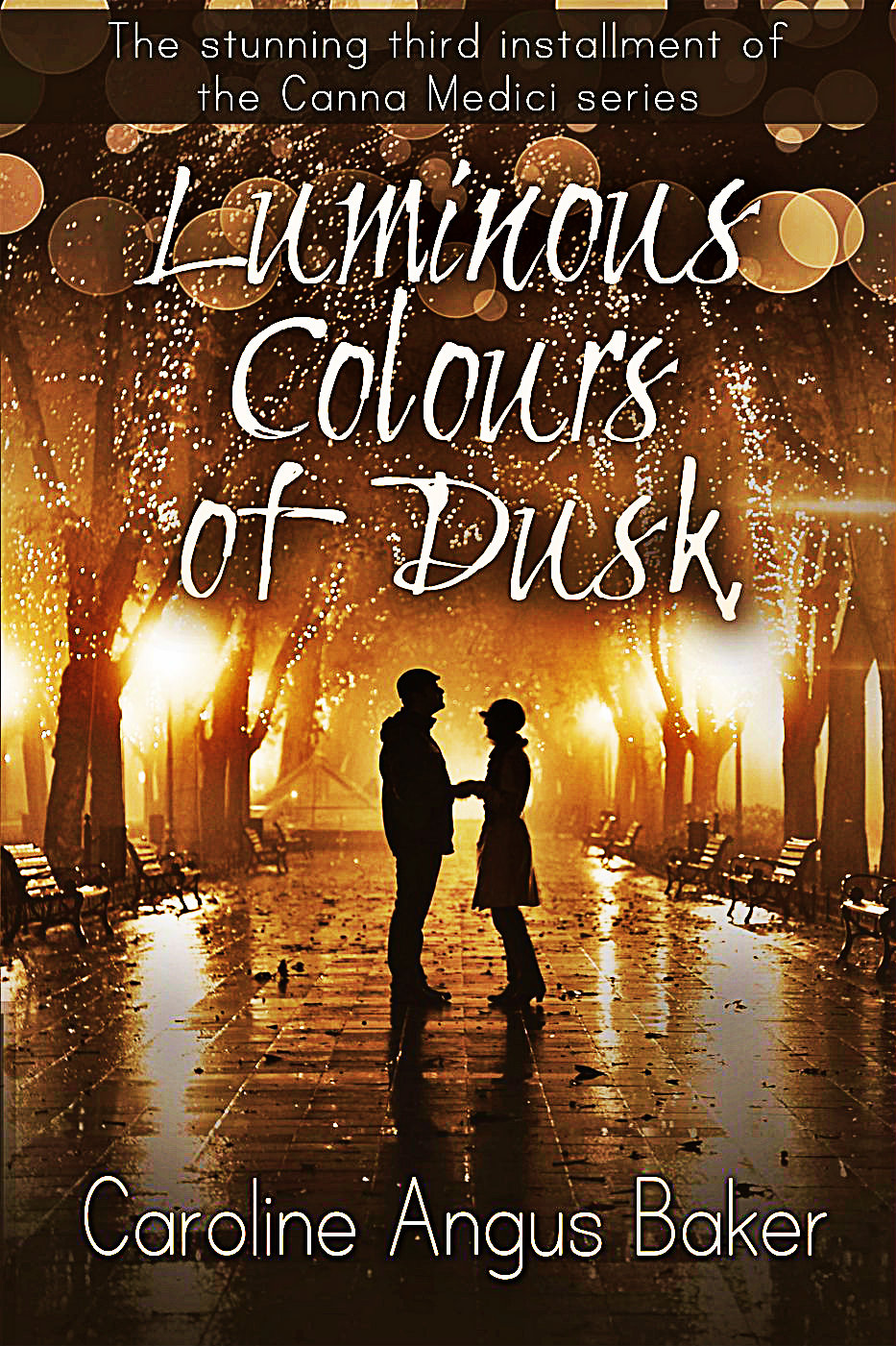
Eighteen months have passed since Canna Medici’s second near-death experience. Her new life has taken shape in the Corsican seaside town of Bonifacio, married to her soul-mate, Spanish baritone Claudio Ramos Ibáñez. With a successful boatyard to run, Canna doesn’t realise that her meddlesome friend, Abigail Troublé, is keen to move on from the death of her husband with a certain opera star…

One piece of the couple’s perfect life is missing. Claudio’s young son, Casamiro, still lives in London with his mother, Veena. As Canna and Claudio’s belated wedding ceremony looms, Claudio learns that life may give him a way to keep Casamiro on a more permanent basis, but custody will come at a great cost…

When Canna and Claudio are forced to spend more time in London, Claudio’s colleagues from Virtuosi, the now-broken famous opera quartet, want him to return and take his place as a superstar. With life in the spotlight and a custody battle, Claudio is too distracted to realise the danger of Canna’s mysterious Italian visitor…

It’s time for Canna to lay the ghosts of her murderous and drug-addicted past to rest, once and for all, but life crumbles when a surprise arrival shakes her happiness to the core…

~~

Hello and welcome to the first part of the Q+A about my new book. I have split it into five parts so it isn’t one long bore of a post (I hate posts that drag on and on, regardless of the content). Part 5 will be the first chapter of the book, which will be released on Kindle and in paperback on August 29.

Thanks for the questions I received here, on Twitter and Facebook. It’s not too late to add a question. I have added questions together and mashed similar questions into one to answer as many as I can. Part 1 will focus mainly on the upcoming book, with separate blogs on me, my other works and writing. I realise many people are still on book one and two, so I am going to make this as spoiler-free as possible, which could be a challenge. Let’s start with something easy –

1) What is Luminous Colours of Dusk (LCOD) all about? What can we expect from Canna for the third time?

LCOD is the third visit to Canna-land, to see if Canna Medici can make good on all the promises she made at the end of Violent Daylight – to gain control of her bipolar, kick her addictions and her dealings with her Italian crime family, and attempt to become less Contessa di Caraceni and more Mrs Catherine Ramos. From the very beginning of Night Wants to Forget, Canna was suffering the trauma of a hit-and-run accident and her subsequent drug addiction, and her ever-looming bipolar disorder, which she refused to acknowledge. Canna has suffered many up and downs, got herself in situations that were dangerous, deadly to some, she committed a shitload of crimes, and at the end of the second book, failed in her attempts to keep her impulsive behaviour under control, and almost died again. LCOD starts eighteen months after the final scenes in Sydney in Violent Daylight, and shows Canna making changes. Her life is now based in Bonifacio, southern Corsica, and things have been travelling along a very different path, but it’s easy to see the cut-throat mannerisms so many readers love are all still inside Canna. Now juggling what Canna finds most irritating – normal life – but when a serious illness and a request from the Italian Caraceni crime family come along, Canna realises maybe she is capable of more than she ever thought. The effect it will have on her new husband, Claudio Ramos, will be the most profound change of all.

2) Will Canna ever make good on her threat to kill Dane Porter? Will Claudio and Dane reconcile? Will opera quartet Virtuosi get back together?

There is an even 50/50 split with tenor Dane Porter – half love him and half hate him. Claudio refers to Dane as the idiot man-child now. Canna has a stable life – home, husband, career, therapy, friends – and anyone who messes with her carefully balanced sobriety will be on the receiving end of a vicious rage. As for Claudio, he has bigger things to worry about than Dane. You get so see much more of Virtuosi than in Violent Daylight when Canna was busy in Milan. Each relationship within the Virtuosi Eight will suffer a huge shift, and not all members will still be there at the end.

3) Have you ever wanted to soften Canna? Do you feel as if Canna is not good enough for Claudio? Do you ever wish Canna and Claudio remained platonic? What if Claudio’s wife Veena had never gotten pregnant? Is Claudio too forgiving?

Soften Canna? Never. There are enough soft characters in the world, Canna Medici could never be one of them. Canna isn’t going to change – and why should she? She’s brash, no question, and she is stronger than many people like their female characters. Here is fiction about women with more bite and honesty. As for being platonic, it was great while Canna and Claudio were sidekicks, but they were like two sharks circling one another most of the time. Neither of them ever wanted a platonic relationship. Claudio is very forgiving of Canna’s behaviour, which can both aid her poor choices and sometimes help her too. If he was tougher on Canna, chances are they both would be dead by now. Claudio’s wife, Veena Valadez, getting pregnant was planned from the beginning, and the dynamic shaped the future. I couldn’t imagine them without the interruption of Casamiro being born. Had Veena not become pregnant, I’m not sure the third book could even exist.

4 ) What is the hardest part of writing about Canna? Do you regret anything Canna has done? 

Canna hates children, and it’s weird to write. I have four sons and they are my life. Canna is child-free and barren. It has helped define her as a woman, and she sees no future in parenting. Canna decided that motherhood wouldn’t fit into her career when she was young, then married early into the Caraceni crime family and decided never to be bound to them by blood. Her mindset became so permanent that motherhood seems too foreign now. She talks about Claudio’s son as an irritation, why do people breed? Is that thing clean and changed? The noise machine stole my seat. Canna sees baby Casamiro as the barrier to true happiness. Canna is who she is because of her life and her actions. She is whimsical and violent, cunning and confused. She makes mistakes, people die, reality bites – she is like everyone else. Canna doesn’t have regrets and neither do I.

5 ) Will Canna really ever change? Have you ever wanted to kill Canna? Does anyone believe Canna can stop her addictions?

Kill Canna? Hell yes! In the first draft of Night Wants to Forget, Canna was shot by Giuseppe Savelli’s daughter, and Claudio drowned himself at Erik’s wedding when he found out Canna was dead. Obviously, had I followed that path, there wouldn’t be three books. I have thought of hitting Canna with another car, a drug overdose, suicide, good old-fashioned mob hit… she tends to wiggle out of anything I throw at her. As for changing, it depends on what you see as a change. If you want her to stop swearing or getting in fist fights, then no, she won’t change. If you want her to stop hurting herself, you are with me, because I want her to stop that too. Addictions never go away, and you can see that in Canna, but honesty is the first stage in stepping back from the cliff of disaster. She is a constant work in progress. Canna’s severe depression cannot be cured, only managed.

6 ) What locations do we get to visit in LCOD?

Canna and Claudio live in Bonifacio in a home that have rebuilt, but spend a lot time back on Pembridge Crescent in London, where it all began for them. They spend quite a bit of time in Dubrovnik, and visit Prague, Milan, Zurich, Cartagena (yes!) and Madrid. Once again, London holds the pain, Madrid holds the big surprises, Milan the drama.

7 ) Who inspired the characters? Are there any real-life people written into the stories? Is Canna based on yourself?

I am not Canna Medici. Though, between her money and lifestyle, I wouldn’t be adverse to being her sometimes. There is no one person who inspires me to write Canna, she is totally in my imagination. She can fire up an idea at any time, though I can’t get through an episode of The Sopranos or The Borgias without having a Canna idea. Who the characters all started out as have totally changed now. As time passed, they got deeper, and their choices and characteristics became clear to me. The main female characters – Lea Jacobs, Holly Stafford and Rebecca Myer are all fictional, and I don’t really worry about them too much. They exist to counteract Canna, three different women at different life stages who all accept Canna. Each woman is influenced by Canna, not the other way around. As for Claudio, he is a mixture of men put together. I don’t like everything he says and does, and I’m not always a fan of the strong silent type. But I enjoy writing a less than perfect person. Dane is always been a big kid, and now that he is forty, it’s wearing thin. Henri is a genuinely nice guy, although a little too soft in my opinion, and Erik is that guy in your social circle who you like and hate in equal measure. It’s the totally different voice in them that is important. They started as stereotypes that molded into real people.

8) Who would play Canna and the others in a movie?

French actress Eva Green would be Canna! Clearly there would need to be work for the tattoos and scars, but I think Eva is perfect (and can pull off Canna’s blonde crime family days too)

Photos via Pinterest with links back to original sources

For Claudio I would like Javier Bardem because he is just plain fabulous. As for the rest, I am open to suggestions. If they needed singers to perform the on-stage parts of the books, please get Vittorio Grigolo to play Claudio’s voice! (I know he isn’t a baritone, but let’s not be too picky)

9 ) Are all the main cast back for LCOD? Are there new faces?

LCOD is a mix of old and new. As I said, all of Virtuosi are back, but not all will stay. (Spoiler alert) Henri and Lea have had a baby. Veena Valadez gets to feature far more in the third book, giving readers a chance to see that character developed far better. There is a new addition of a man named Micheletto Alighieri, an Italian who works for Canna, and Rian Crawley, a New Zealander that wants to go into business with her. LCOD also has the introduction of Gabriele Savelli, the young son of murdered Giorgio Savelli, who has family scores to settle with Canna. The character of Abigail Troublé, who managed to squeeze her huge presence into Violent Daylight makes more appearances, and I would love to hear feedback about her.

10 ) Will there be a fourth Canna book? Do you need to read Night Wants to Forget and Violent Daylight before LCOD?

I don’t have any plans at the moment for a fourth book. Finish LCOD and tell me if there needs to be a fourth book. Is the story finished? Could there be more? I can think of new ideas, but I won’t be working on them straight away. I would only write a fourth book if I thought it was solid enough to stand up with the first three. I don’t want to ruin Canna Medici.

You don’t need to read the other books first, but you may be missing out a lot of background detail. The storyline stands alone and there is enough detail to get you through, but without knowing Canna’s struggle in Night Wants to Forget and the murders and secrets of Violent Daylight, some behaviour may not made perfect sense. Still, you could read this book first. When LCOD is released there will be a free promo on the first two books, so you have no need to miss out on anything.

Up next… odd questions asked about me in Part 2.

SPAIN BOOK REVIEW: ‘Nada’ by Carmen Laforet

nada

One of the most important literary works of post-Civil War Spain, Nada is the semi-autobiographical story of an orphaned young woman who leaves her small town to attend university in war-ravaged Barcelona. Edith Grossman’s vital new translation captures Carmen Laforet’s feverish energy, powerful imagery, and subtle humor. Nada, which includes an illuminating Introduction by Mario Vargas Llosa, is one of the great novels of twentieth-century Europe

~~

Nada is one of those books which sat in my to-read pile for far too long. Classics sit waiting while newer releases get sent to me for reviewing. Now, after reading this book in one day, I feel the need to facepalm for sidelining such a novel for so long. I find it difficult to connect with fiction (yes, I know…) but this book is an instant hit.

Nada is the story of 18-year-old Andrea, an orphan who moves to Barcelona from the country, to live with maternal relatives while starting university. Andrea had visited her grandparents’ home before the civil war as a very young child, and was filled with loving memories of city life. But life on Calle de Aribau has become a nightmare.

Gone is the lavish apartment of her family; now they in one half of the house, a dark, scary place filled with odd objects like a grand piano, huge mirrors, big heavy unused furniture and a candelabra, a hint of the former life of the family. As time passes, each of these expensive once-loved items gets sold off to pay for food and hope of survival. The opening chapter where Andrea meets her family is dark enough – they are like skeletons, ghosts in the night, in a home where a cold shower is relief from company, but the damp stains on the wall look like evil clutching hands. Andrea’s grandmother is a starving, frail old woman, surrounded by her adult children – Román, a vile man with hidden depths, tortured by the Republicans for being a Francoist spy. His brother, Juan, an artist who hates his life, beats his wife without remorse, with a demeanor of a broken man who has deeply suffered during the war. Gloria, Juan’s wife, a beautiful but simple-minded woman, who feeds everyone by leaving her baby son at home and winning card games in Barrio Chino. Andrea’s grandfather has died, like her own parents, and are unexplained, by it’s easy to imagine what may have happened to them.

The creepiest character lies in Angustias, the aunt from hell. She is a religious fanatic, who, in standing with her high and mighty attitude, sees Andrea as her charge, who needs to be broken and obedient. Angustias is hell-bent on making sure Andrea has no life, sees nothing, hears nothing, experiences nothing. As Angustias fails and hates Andrea, who has done nothing wrong, she tells her that she should have been beaten to death as a child. Angustias has been hiding a hypocritical lifestyle for so long that she has become almost insane. Even the crazy maid, Antonia, is a horrid and bewildering.

Andrea is a saint for coping with these vicious and hateful people in a dark, freezing cobwebbed environment. While the past hurts and torments her family, Andrea tries to break out – she makes friends, hangs out with artists, meets boys she doesn’t really like much, but reality  is still in the way. Andrea’s close friend Ena is wealthy, which puts a gap between the pair. Ena has the attitude of a child who has wanted for nothing, and has the luxury of wanting and experimenting. Andrea is starving, resorting to drinking water the family’s vegetables have been boiled in. Old pieces are bread are treats.

The book shows the pain of Barcelona post-war in human terms. With its will crushed by Francoism, some have flourished and the losers have been ground down to nothing. Being sniffed out by police for being a ‘red’ is still a threat. Work is hard to find, and money is only for some. The cathedral, in its religious beauty, shines like a beacon while people starve in the alleys nearby. There is little hope for people like Andrea. As the stories of all the characters come together, the haves and have-nots have history that provides both a big twist, and ultimately, a vicious death.

While the Barcelona that Andrea lives in no longer exists, the book gives a perfect feeling to post-war reality. The book was autobiographical, written after Carmen Laforet went to study in Barcelona, before moving on to Madrid. This book will leave you wondering about the long-term fates of all the characters (and their real-life counterparts), if indeed they had one at all.

Nada was published in 1945, the first of LaForet’s novels. If you prefer English, it was excellently translated by Edith Grossman in 2007. Don’t wait to read another week to read Nada.

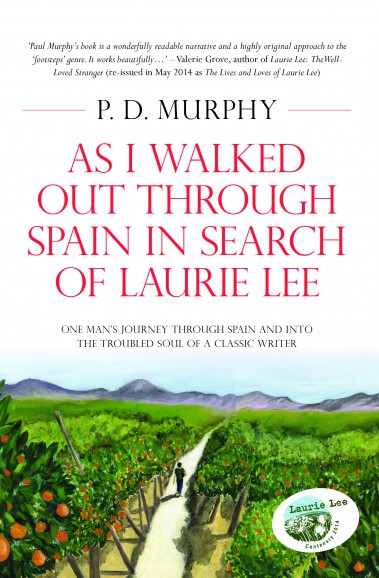
SPAIN BOOK REVIEW: ‘As I Walked Out Through Spain in Search of Laurie Lee’ by P D Murphy

As-I-Walked-Out

Have you ever read a book that changed your life? Had a hero who shared your life? Wanted a second chance in life?

In the summer of 2012, Paul’s life is falling apart: he needs to change things; find some inspiration; he needs to walk out.

Paul sets out across Spain to retrace the footsteps of his literary hero, Laurie Lee. He walks from the Atlantic Ocean in the north all the way down to the Mediterranean Sea. Lee made the same journey in 1935 and walked straight into the perfect storm of the Spanish Civil War and described the experience in his rite-of-passage book As I Walked Out One Midsummer Morning.

Like so many, as a young man, Paul read the book and fell in love with both Spain and Lee. Paul, like Lee, has always dreamed of walking down those white, dusty roads, lined by orange groves, all the way to Seville.

Paul looks deep into the troubled soul of the English national-treasure writer on an emotional journey that stretches to breaking point his relationship with Lee.

Paul is the first writer to fully retrace Laurie Lee’s classic 1935 journey through Spain.

Book cover and blurb via amazon.com

~~

Paul Murphy had a great plan – to retrace Laurie Lee’s step around Spain, as chronicled in his classic As I walked Out One Midsummer Morning. In seeing all the similarities and differences between 1935 and 2012, the author also found himself.

Anyone who has read Lee knows of his style, his matter-of-fact yet poetic prose. British born Murphy has delivered a book with a similar manner – all the details and facts on the trek, along with florid descriptions, amusing anecdotes and a style that is enjoyable to read. Visiting Spain very regularly since 1970, Murphy decided to set out across Spain in Lee’s footsteps, to be written and ready by June 2104, Lee’s 100th birthday. As I Walked Out One Midsummer Morning is a true classic, and to take on this trek would be no easy task, and that is evident throughout reading the book. As I Walked Out Through Spain in Search of Laurie Lee battles many internal demons, such as the issue that heroes can be easily shattered when examined close up. It is easy to idolise, something Murphy did with Lee, but when faced with the reality of Spain, with its powerful emotional pull, Murphy begins to see Lee in a whole different light, far from his pedestal.

Laurie Lee took a long route through Spain, a ferry from the UK to Vigo, and walked to Madrid via Zamora, Valladolid and Segovia. Then we went to Malaga via Toledo,  Valdepeñas, Cordoba, Seville, Cadiz and Gibraltar. Murphy altered the course a little, skipping Gibraltar and visiting Aracena and Ronda. The two-year task from the first steps taken until the release of the book has produced a quite a tale.

The book is laid out as a series of observations by Murphy, peppered with meetings along the journey, with those who fill the author’s conscience and pull him from his beaten path. From flamenco music, to bullfighting, to the fascist call-to-arms, the legacy of the war and Franco years, and lost loves along the way, Murphy delivers all the things people know about Spain, along with finding himself in among the contrasting nation. The book delves deep in the author’s personal life and feelings – lost love, divorce, his relationship with his own family – as a man in his fifties, Murphy goes through an immense change, one many could sympathise with, but perhaps not have the courage to fully understand, let alone express. Spain with its sights, sounds, smells, characters, noise and enlightenment can also be a lonely place, one that can invoke melancholy and a sense of feeling flat. Murphy goes through all the emotions of Spain and sugar coats nothing.

Many of Lee’s writings are open to interpretation and some believe his view too rose-tinted, or even outright lies, but irrespective of these opinions, Murphy does find some of Lee’s Spain still lurking, away from the main centres. Larger towns and cities seem to both educate and show a more modern Spain, with plenty of old opinions still interacting with the 21st century. Like Lee, Murphy is most comfortable in Granada, a wondrous place well described in the book.

We are all searching for something in life, things happen, people change, and Spain is a marvellous place to effect new directions. This huge challenge has been written up by Murphy as if this book was waiting for him all along. Of the 100-plus books I have read this year, only a few have held my interest as much as As I Walked Out Through Spain in Search of Laurie Lee. 

Whether you’re in your late teens like Laurie Lee, your mid-fifties like Paul Murphy, or somewhere in the middle like myself, this book will have something to take away and ponder. Murphy doesn’t try to become Lee, or copy him, but finds his own voice. Honest, fresh and motivating.

Read Fiona Flores Watson’s interview with Paul Murphy here – As I Walked Out: One man’s journey in the footsteps of Laurie Lee