MY HEARTY COMMENDATIONS: THE TRANSCRIBED LETTERS AND REMEMBRANCES OF THOMAS CROMWELL NEW EDITION 2025

HISTORICAL BOOK REVIEW SERIES: ‘The King’s Pearl’ by Melita Thomas

Mary Tudor has always been known as ‘Bloody Mary’, the name given to her by later Protestant chroniclers who vilified her for attempting to re-impose Roman Catholicism in England. Although a more nuanced picture of the first queen regnant has since emerged, she is still stereotyped, depicted as a tragic and lonely figure, personally and politically isolated after the annulment of her parents’ marriage and rescued from obscurity only through the good offices of Katherine Parr.

Although Henry doted on Mary as a child and called her his ‘pearl of the world’, her determination to side with her mother over the annulment both hurt him as a father and damaged perceptions of him as a monarch commanding unhesitating obedience. However, once Mary had finally been pressured into compliance, Henry reverted to being a loving father and Mary played an important role in court life.

As Melita Thomas points out, Mary was a gambler – and not just with cards. Later, she would risk all, including her life, to gain the throne. As a young girl of just seventeen she made the first throw of the dice, defiantly maintaining her claim to be Henry’s legitimate daughter against the determined attempts of Anne Boleyn and the king to break her spirit.

Following the 500th anniversary of Mary’s birth, The King’s Pearl re-examines Mary’s life during the reign of Henry VIII and her complex, dramatic relationship with her father.

cover and blurb via amazon

~~

Called Bloody Mary through the centuries, Queen Mary has never attracted the same level of interest as her little sister Elizabeth I. This book has set out to change the stereotype of Mary, heir to the throne of Henry VIII and her powerful mother, the Queen Katherine. Mary has been seen as a Catholic fanatic, unable to navigate politics with poise or experience, a cruel woman happy to kill Protestants without thought. Mary is seen as married to a Spaniard, which somehow made her an instant tyrant.

In recent times, some authors have tried to make Mary into a more gentle figure; an innocent woman, forced away from her religious mother, determined to turn back time in England, unable to satisfy a husband or make an heir. The King’s Pearl is different again, which makes the book such a nice surprise. Instead, this book looks at Mary from an earlier angle, how her father’s reign impacted on Mary.

Mary’s early life is chronicled in serious detail, before the reality of Henry’s ‘Great Matter’ starts affecting Mary and her life. Mary was a stylish and educated young woman, witty, musical and a skilled horse rider. Mary was not weak or timid, as often portrayed; not constantly alone or at prayer, Mary could hunt or dance, host parties or play games as well as any young woman. She was beautiful and always immaculately dressed. Gone are the dull descriptions that often plagued her mother also, more likely propaganda to portray Elizabeth as superior later in life.

The list of betrothals Mary suffered though makes for bleak reading. Henry never seemed serious in finding a groom for his daughter. Mary was an unchallenged heir for much of her young life, and Henry seemed wary to ever marry her off and make her position as heir more powerful. Mary could defy her father at any time, on any level, and while others were forsaken, Mary was forgiven by Henry, dispelling the notion Henry hated his eldest daughter.

Mary may have had more in common with Elizabeth than either of them would have liked to admit; bright, intelligent girls, separated by their birth and their religion. I feel as if Mary’s reputation suffers due to her sex more than ever – Mary killed less than 300 heretics, her father killed 72,000, yet she is the bloody one? No man would have had a harmed reputation for the killing of 300. Mary rode out and took the throne from Jane Grey, the throne that was rightfully hers, and did her best, in a role she was prepared for, and Mary had her own terms. Only history hasn’t remembered her as well as it should.

This book is a worthy read indeed. Loved it. The author has created an excellent perspective on Queen Mary through facts instead of myth.

HISTORICAL BOOK REVIEW SERIES: ‘Game of Queens’ by Sarah Gristwood

Sixteenth-century Europe saw an explosion of female rule. From Isabella of Castile, and her granddaughter Mary Tudor, to Catherine de Medici, Anne Boleyn, and Elizabeth Tudor, these women wielded enormous power over their territories, shaping the course of European history for over a century. Across boundaries and generations, these royal women were mothers and daughters, mentors and protégées, allies and enemies. For the first time, Europe saw a sisterhood of queens who would not be equaled until modern times.

A fascinating group biography and a thrilling political epic, Game of Queens explores the lives of some of the most beloved (and reviled) queens in history.

cover and blurb via amazon

~~

Sarah Gristwood has written a superb book detailing the lives of incredible queens from England, Spain. France, The Netherlands and Hungary, starting with Isabella of Spain through to Elizabeth I. Without sounding like I am hero-worshipping, this biography is perfection.

Isabella of Spain was unlike any queen before her. She had inherited Castile in her own right, married the king of Aragon and became the warrior leader needed to invade southern Spain and conquer it for the Christians. The example as a female leader set a standard for her daughters, including Katherine, who would go on to be queen of England.

The beauty continues as the book does not solely tell the tales of English queens (though Queen Katherine crushing of the Scots is brilliant, as is Margret Tudor on the Scots side with all her turmoil), other countries and their female leaders are given much page-time. Marguerite of Navarre is detailed, describing the intriguing relationship with her brother Francis I and her own mother, Louise of Savoy. Her diplomatic skills are recognised, along with her role in the Protestant Reformation. Marguerite also tutored Anne Boleyn, noting how Anne’s birth was her downfall, as she knew when to push forward but not when to hold back, not born into a royal role.

Mary of Hungary is a great addition to the book. With her strong noble family, she was a queen in Hungary as well as governor of the Netherlands in her own right. Mary of Guise is displayed as astute in Scotland, and Catherine de Medici’s long life ruling over France is beautifully written. A bastard daughter risen to be a wife of a second son instead became the French queen and was able to steer own family in ruling the nation.

Queenship is regularly overshadowed by kingly pursuits, when history can lavish us with wise, educated women. Religion plays out over every tale, where it could help steer these queens, guide or justify their behaviour and aid them in keeping their kingdoms alive. While the fate of women was always in the hands of male family members, these women took the hand they were dealt and ruled, an example to everyone.

Gristwood’s book is flawless and I would recommend it to absolutely everyone.

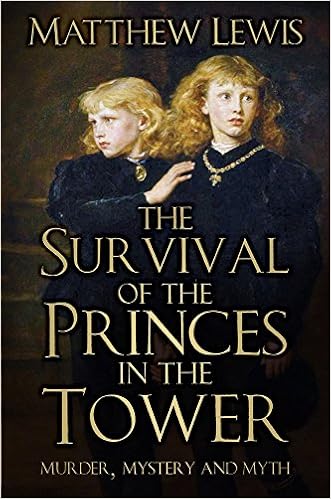
HISTORICAL BOOK REVIEW SERIES: ‘The Survival of the Princes of the Tower’ by Matthew Lewis

The murder of the Princes in the Tower is the most famous cold case in British history. Traditionally considered victims of a ruthless uncle, there are other suspects too often and too easily discounted. There may be no definitive answer, but by delving into the context of their disappearance and the characters of the suspects Matthew Lewis examines the motives and opportunities afresh as well as asking a crucial but often overlooked question: what if there was no murder? What if Edward V and his brother Richard, Duke of York survived their uncle’s reign and even that of their brother-in-law Henry VII? There are glimpses of their possible survival and compelling evidence to give weight to those glimpses, which is considered alongside the possibility of their deaths to provide a rounded and complete assessment of the most fascinating mystery in history.

cover and blurb via amazon

~~

Everyone knows the story of the Princes of the Tower, two royal brothers, one ready to be crowned, his brother the ‘spare heir,’ locked in the Tower of London by their uncle, who would instead crown himself King Richard III. The boys would then disappear from the planet completely soon after.

There is a list of suspects of who murdered Edward, aged 12, and Richard aged 9, at the time of their imprisonment. There is no proof the boys were even murdered, but their total disappearance, and Richard III’s short-lived reign a result of that disappearance, leaves little doubt.

King Richard III is the prime suspect – his brother Edward’s sons were to inherit the throne before him. But King Richard and deceased Edward had a brother – George (also deceased). George himself had a son and daughter, and the departed Edward had a slew of daughters with a claim to the crown. If Richard wanted to kill the boys in the Tower to take the throne, he would have had to eliminate all the children – and he harmed none.

Henry Tudor was in France, ready to invade and marry one of Edward’s daughters and claim the throne. This made the royal sisters of the Princes (and George’s children) threats. Yet King Richard never declared that young Edward and Richard had died in the Tower. They disappeared but were never announced as deceased. The fact they were not known as dead meant they remained a threat. They could have fallen ill; they could have been killed by another.

Henry Stafford, the Duke of Buckingham made himself a suspect in the murder by his behaviour. He rebelled against King Richard, with a view to his own as claim, making him a candidate for needing the boys murdered. Buckingham was quashed by Richard’s forces and executed, and making him the ‘murderer’ would have been so easy. But King Richard never publicly blamed Buckingham for the deaths, when he easily could have used him as a scapegoat. It suggests neither killed the princes.

Some claim Margaret Beaufort, Henry Tudor’s mother, had the boys killed so her son could inherit the throne. There is not a shred of evidence to suggest this but the theory persists through fiction and Lewis’ book does discuss the possibility. Henry Tudor married the Princes’ oldest sister, so the odds of him murdering her brothers is slim.

King Richard III’s guilt seems to easy to accept, and the author brings up many details to help clear Richard’s name. The rumours of the Princes’ death are as strong as the survival of the boys. The Princes’ own mother never blamed Richard for the deaths. The books tell of Elizabeth Woodville and her son Thomas Grey under suspicion, a detail I didn’t know until reading this version of the affair. And then there is Perkin Warbeck, the Prince Richard pretender who haunted Henry VII.

Could Edward and Richard have survived? Was there ever a murder of the Princes in the Tower? Or is there are far more interesting version to be told? This book is fantastic and I would recommend it to Tudor fans and newbies alike. As an A+ fan of Richard III, I welcome any book looking to clear his darkened name. Thank you, Matthew Lewis.

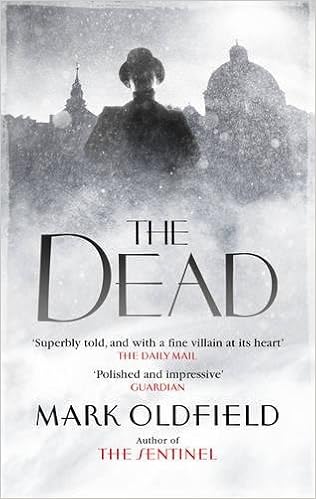
SEPTEMBER SPAIN BOOK REVIEW: ‘The Dead’ by Mark Oldfield

MADRID, 1982.
Comandante Leopoldo Guzmán has decided it is time to disappear. Franco is in his grave and there’s no place in the new order for the one-time head of the dead dictator’s secret police.

But first Guzmán needs money. Luckily, blackmail has always come easily to him – after all, he knows where the bodies are.

And so he should. He buried them.

MADRID, 2010.
Fifteen tangled corpses in a disused mine, three bound skeletons in a sealed cellar – a trail of dead that has led forensic investigator Ana María Galindez to one Comandante Leopoldo Guzmán.

Guzmán himself disappeared decades ago but she fears his toxic legacy lives on. Her investigation has revealed a darkness at the heart of Spain, a conspiracy born amid the corruption and deprivation of Franco’s dictatorship, a conspiracy that after decades in the shadows, is finally ready to bloom.

cover and blurb via amazon

~~

The Dead is a long-awaited book for me – I read The Sentinel and The Exile as soon as they were released, so I pounced on this as well. The Dead is the final in the trilogy of Franco-lover Guzman and the modern-day investigator Ana Maria Galindez, who is literally about to have history come back to bite her.

The Dead moves at such a fast pace you need to make sure you are stable in your seat. You could read The Dead on its own, but I recommend the first two just for the joy. The book lives is in three time periods; 2010, where Galindez is looking for Guzman, whom she has been tracking after forensic evidence put him in the centre of multiple murders and torturing incidents during the Franco regime. The book keeps jumping around, entering 1982, where Guzman runs the Brigada Especial; Franco is dead and the ‘glory’ days of being able to be a vicious fascist is over. Spain is concreting over its past and wants democracy to work. Guzman has one last mission, and wants to end his enemies. What I love is the little flashbacks to 1965, and Inspector Villanuevo who lives in tiny Llanto del Moro. A policeman living under Franco is bound to get caught up in something nasty.

Even with three time periods, the storyline gallops along, the flashbacks filling in details as Galindez tracks Guzman to the bitter ended. The reality of life under Franco and those fragile years post-death swaps out to Spain 2010, not exactly a prosperous time, but at least free. Those who were murdered in Franco’s name, those who are the ‘disappeared’ and the selling of babies all comes back to haunt Spain and Guzman in his final stand.

You all know I love these subjects. My own Spanish trilogy dealt with baby selling, the Brigada Espeical and the ‘disappeared’ from the Spanish Civil War onwards. Only, I like Guzman, even though he was the bad guy. I could never really root for Galindez, the history nerd in me kept referring to the other characters.

In Oldfield’s version, the story is more important than history, so it can appeal to a wide range. The series is neatly tied up and at least some of Spain’s ghost are laid to rest. Reading this made me want to dump all my own work and write another Spanish historical fiction immediately.

Click here to read my reviews of The Sentinel and the Exile

HISTORICAL BOOK REVIEW SERIES: ‘Queens of the Conquest’ by Alison Weir

No automatic alt text available.

In the first volume of an exciting new series, bestselling author Alison Weir brings the dramatic reigns of England’s medieval queens to life.

The lives of England’s medieval queens were packed with incident—love, intrigue, betrayal, adultery, and warfare—but their stories have been largely obscured by centuries of myth and omission. Now esteemed biographer Alison Weir provides a fresh perspective and restores these women to their rightful place in history.

Spanning the years from the Norman conquest in 1066 to the dawn of a new era in 1154, when Henry II succeeded to the throne and Eleanor of Aquitaine, the first Plantagenet queen, was crowned, this epic book brings to vivid life five women, including: Matilda of Flanders, wife of William the Conqueror, the first Norman king; Matilda of Scotland, revered as “the common mother of all England”; and Empress Maud, England’s first female ruler, whose son King Henry II would go on to found the Plantagenet dynasty. More than those who came before or after them, these Norman consorts were recognized as equal sharers in sovereignty. Without the support of their wives, the Norman kings could not have ruled their disparate dominions as effectively.

Drawing from the most reliable contemporary sources, Weir skillfully strips away centuries of romantic lore to share a balanced and authentic take on the importance of these female monarchs. What emerges is a seamless royal saga, an all-encompassing portrait of English medieval queenship, and a sweeping panorama of British history.

cover and blurb via amazon

~~

For far too long, queens have been overshadowed by their kings. Often married, rather than born, into the role, they are considered ‘less than’. While there are many great works now out there about queens, here is a masterpiece of a book of true rulers, ready to lead but ‘betrayed’ by their gender. Queens of the Conquest is, excitingly, the first in a new series, which chronicles war, power, betrayal, tragedy and the odd bright moment.

The first queen in the book is Matilda of Flanders, supporting William the Conqueror as he led the Norman invasion of 1066, and she has a tale just as powerful as any warring king. Instead of simply noting a woman as filled with piety or scandal, Matilda gets a real account of her life. Matilda didn’t want to marry William the Bastard, but with no choice, stood by his side when he became the first king of England.

Their son, Henry I, married Edith of Scotland, and had to change her name to Matilda. Edith/Matilda (or Godiva as she was called by the locals who were putting her down). She was made regent regularly, ran the curia and helped the sick. Edith/Matilda had a grand family lineage in her own right, was well-educated for the time and had a large influnce on articecture.  Her son was killed in a bizarre and stupid accident, meaning she could leave the crown was handed to their daughter, Empress Maude, then renamed Empress Matilda.

Maude/Matilda had married the Holy Roman Emperor, and he died, leaving her to be queen of England in her own right, as her brother was already dead. War raged under Maude/Matilda, but she fought to the very end to hold the throne as hers, not her husband’s/son’s/anyone else related. Naturally, everyone was a real dick about a woman ruling. Maude/Matilda had to marry again, to Geoffrey of Anjou, which was hard because he disliked him; Matilda had to fight wars all over Europe to stay queen. She was a woman who had ruled as queen in Germany and Italy, born to rule, but fought her life away before her son took the English throne to become King Henry II.

Also profiled is Adeliza of Louvain, Henry I’s second wife, whom he had hoped to get a son on, instead of leaving the throne to the incredible Maude/Matilda. Adeliza married Henry soon after his son was killed in the White Ship disaster, a beautiful woman from now-Belgium, a descendant of Charlemagne. Henry I was a huge traveller and Adeliza was always at his side for fifteen years. She gave the king no children, sort-of securing the throne for her stepdaughter Maude/Matilda. Adeliza then went on to marry the royal butler and give him a child.

Also portrayed is Matilda of Boulogne, who married Count Stephen of Mortain. Matilda was niece of the King Baldwin of Jerusalem. When Matilda’s husband heard of Henry I’s death, they rushed to England to take the throne ahead of Empress Maude/Matilda. She was crowned heavily pregnant when the new King Stephen took Maude/Matilda’s place, and was engaged in the battles between these two claimants for eighteen years, sometimes the queen, sometimes deposed, as they battled for control. She helped to found the Knights Templar and negotiated with Maude/Matilda in times of war between them.

None of these women should be forgotten and this book is amazing. If you are into royal history, English history, any kind of history, you should own this book.