OTD with Thomas Cromwell – 12 June 1540: Cromwell writes to King Henry, but not to beg for mercy

Tower of London

The day after Cranmer’s emotional letter to the King, Cromwell could write to the King directly, something his enemies must have dreaded. Anyone would have known that five minutes before the King would have secured Cromwell’s release. They could not take the risk of Cromwell speaking for himself or to Henry, so when the letter went to the King, nerves in and around the privy chamber would have been on edge. Here, Cromwell gained the chance to defend himself against the bizarre claims of treason and heresy, against the claim he mentioned impotency to Wriothesley, and that he had been anything but the finest servant a monarch. This was Cromwell’s one shot, and he did not waste the opportunity.

CROMWELL TO HENRY VIII, 12 June 1540 (MSS Titus B. I, 273)

Most gracious King and most merciful sovereign, your most humble most obedient and most bounden subject and most lamentable servant and prisoner, prostrates at the feet of your most excellent majesty. I have heard your pleasure by the mouth of your Comptroller which was that I should write to your most excellent highness, such things as I thought mete to be written concerning my most miserable state and condition, for the which your most abundant goodness, benignity and license the immortal God there and on reward, Your Majesty. And now, most gracious Prince, to the matter. First whereas I have been accused to your Majesty of treason, to that I say I never in all my life thought willingly to do that thing that might or should displease your Majesty and much less to do or say that thing which of itself is so high and abominable offence, as God knows who I doubt not shall reveal the truth to your Highness. My accusers your Grace knows God forgive them. For as I ever have had love to your honour, person life, prosperity, health, wealth, joy, and comfort, and also your most dear and most entirely beloved son, the Prince his Grace, and your proceeding. God so help me in this my adversity and confound me if ever I thought the contrary. What labours, pains, and travails I have taken according to my most bounden duty, God also knows, for if it were in my power as it is God’s to make your Majesty to live ever young and prosperous, God knows I would, if it had been or were in my power to make you so rich, as you might enrich all men. God help me, as I would do it if it had been, or were, in my power to make your Majesty so puissant as all the world should be compelled to obey you. Christ, he knows I would for so am I of all other most bound for your Majesty who has been the most bountiful prince to me that ever was king to his subject. You are more like a dear father, your Majesty, not offended then a master. Such has been your most grave and godly counsels towards me at sundry times in that I have offended I ask your mercy. Should I now, for such exceeding goodness, benignity, liberality, and bounty be your traitor, nay then the greatest pains were too little for me. Should any faction or any affection to any point make me a traitor to your Majesty then all the devils in hell confound me and the vengeance of God light upon me if I should once have thought it. Most gracious sovereign lord, to my remembrance I never spoke with the Chancellor of the Augmentations[1] and Throckmorton[2] together at one time. But if I did, I am sure I spoke never of any such matter and your Grace knows what manner of man Throgmorton has ever been towards your Grace and your preceding. And what Master Chancellor[3] has been towards me, God and he best knows I will never accuse him. What I have been towards him, your Majesty, right well knows I would to Christ I had obeyed your often most gracious, grave counsels and advertisements, then it had not been with me as now it is. Yet our lord, if it be his will, can do with me as he did with Susan[4] who was falsely accused, unto the which God I have only committed my soul, my body, and goods at your Majesty’s pleasure, in whose mercy and piety I do holy repose me for other hope then in God and your Majesty I have not. Sir, as to your Commonwealth, I have after my wit, power and knowledge travailed therein having had no respect to persons (your Majesty only except) and my duty to the same but that I have done any injustice or wrong willfully, I trust God shall bear my witness and the world not able justly to accuse me, and yet I have not done my duty in all things as I was bound wherefore I ask mercy. If I have heard of any combinations, conventicles or such as were offenders of your laws, I have though not as I should have done for the most part revealed them and also caused them to be punished not of malice as God shall judge me. Nevertheless, Sir, I have meddled in so many matters under your Highness that I am not able to answer them all, but one thing I am well assured of that, wittingly and willingly. I have not had will to offend your Highness, but hard as it is for me or any other meddling as I have done to live under your Grace and your laws, but we must daily offend and where I have offended, I most humbly ask mercy and pardon at your gracious will and pleasure. Amongst other things, most gracious sovereign, Master Comptroller showed me that your Grace showed him that within these 14 days you committed a matter of great secret,[5] which I did reveal contrary to your expectation. Sir, I do remember well the matter which I never revealed to any creature, but this I did, Sir, after your grace had opened the matter first to me in your chamber and declared your lamentable fate declaring the thing which your Highness misliked in the Queen, at which time I showed your Grace that she often desired to speak with me but I dared not and you said why should I not, alleging that I might do much good in going to her and to be playing with her in declaring my mind. I thereupon, lacking opportunity, not being a little grieved spoke privily with her Lord Chamberlain,[6] for the which I ask your Grace mercy, desiring him not naming your Grace to him to find some means that the Queen might be induced to order your Grace pleasantly in her behaviour towards your thinking, thereby for to have had some faults amended, to your Majesty’s comfort. And after that, by general word of the said Lord Chamberlain and others of the Queen’s Council, being with me in my chamber at Westminster for license for the departure of the strange maidens. I then required them to counsel their masters to use all pleasantness to your Highness, the which things undoubtedly warn both spoken before your Majesty committed the secret matter unto me only of purpose that she might have been induced to such pleasant and honourable fashions as might have been to your Grace’s comfort which above all things as God knows I did most court and desire, but that I opened my mouth to any creature after your Majesty committed the secret thereof to me, other than only to my Lord Admiral, which I did by your Grace’s commandment which was upon Sunday last in the morning, whom I then found as willing and glad to ask remedy for your comfort and consolation, and saw by him that he did as much lament your Highness’ fate as ever did a man, and was wonderfully grieved to see your Highness so troubled, wishing greatly your comfort. For the attaining whereof, he said for your honour saved, he would spend the best blood in his body, and if I would not do the like and willingly die for your comfort I would I were in hell, and I would I should receive a thousand deaths. Sir, this is all that I have done in that matter and if I have offended your Majesty, therein prostrate at your Majesty’s feet. I most lowly ask mercy and pardon of your Highness. Sir, there was also laid unto my charge at my examination that I had retained, contrary to your laws, Sir. What exposition may be made upon retainers I know not, but this will I say, if ever I retained any man but such only as were my household servants but against my will God confound me, but, most gracious sovereign, I have been so called on and sought by them that said they were my friend that constrained thereunto. I received their children and friends, not as retainers, for their fathers and parents did promise me to friend them and so took I them not as retainers to my great charge and for none evil as God best knows interpret to the contrary who will most humbly beseeching your Majesty of pardon if I have offended therein. Sir, I do acknowledge myself to have been a most miserable and wretched sinner and that I have not towards God and your Highness behaved myself as I ought and should have done. For the which, my offence to God while I live I shall continually call for his mercy and for my offences to your Grace which God knows were never malicious nor willful, and that I never thought treason to your Highness your realm or posterity. So God, help me in word or deed, nevertheless I prostrate at your Majesty’s feet in what thing soever I have offended I appeal to your Highness for mercy, grace and pardon in such ways as shall be your pleasure beseeching the almighty maker and redeemer of this world to send your Majesty continual and long health, wealth and prosperity with Nestor’s[7] years to reign, and your most dear son, the prince’s grace, to prosper reign and continue long after you, and they that would contrary, a short life, shame, and confusion. Written with the quaking hand and most sorrowful heart of your most sorrowful subject and most humble servant and prisoner, this Saturday at your Tower of London.

THOMAS CRUMWELL


[1] Sir Richard Rich

[2] Michael Throckmorton, servant to Reginald Pole

[3] Thomas Audley, Baron Walden

[4] The Book of Daniel – Susanna falsely accused by lecherous voyeurs

[5] impotence

[6] Thomas Manners, Earl of Rutland

[7] Nestor from the Iliad, known for wisdom and generosity, which increased as he aged
OTD with Thomas Cromwell 4 February 1533: The Act of Restraint of Appeals

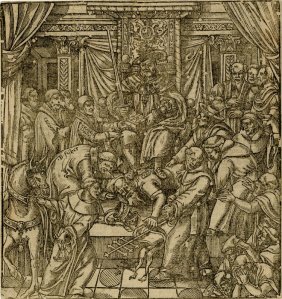
Henry VIII as Supreme Head of the English church (British Museum 1973 U 219)

Welcome back to a new year, and a new series, On This Day with Thomas Cromwell. The series will feature happenings on different dates in Cromwell’s life, as seen through his surviving correspondence. I will be posting on Instagram, Tiktok, Facebook, and Bluesky, and some of the larger posts will also be added here.

Today we start off with a huge event, when Cromwell submitted to the 1533 parliament  The Act of Restraint of Appeals, also known as the Ecclesiastical Appeals Act, Statute in Restraint of Appeals, or ‘An Acte that the Appeles in suche Cases as have ben used to be pursued to the See of Rome shall not be from hensforth had ne used but wythin this Realme’. One 4 February, Cromwell, who by this time was in charge of parliament, placed this act 14th in a list of 16 acts to be passed, all of which reached royal assent on 7 April 1533 (note that the original acts were dated with the Julian calendar, which ended the year 1532 on 31 March, so the acts were all originally labelled as 1532. I only use the Georgian calendar when listing Cromwell’s letters and petitions, as do all legal frameworks).

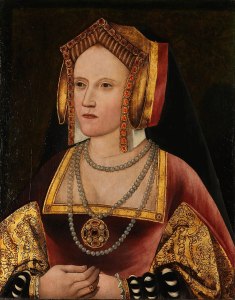
Queen Katharine of Aragon (Lambeth 26)

Who cared about the The Act of Restraint of Appeals? As it turned out, many powerful people, the most powerful of them all being Katharine of Aragon, Queen of England. Queen Katharine had been on the throne since 1509, and there was no need or desire for her to give up that position, except when King Henry claimed to be in love with Anne Boleyn. Four years on from the messy and inconclusive legatine court annulment hearing before Cardinals Wolsey and Campeggio, Katharine had been petitioning Pope Clement to refuse her husband King Henry an annulment so he could remarry. King Henry was all talk when it came to divorce, but hadn’t really made that many petitions for an annulment, more just attacked those around him, and wrote to many abroad in the hopes of support.

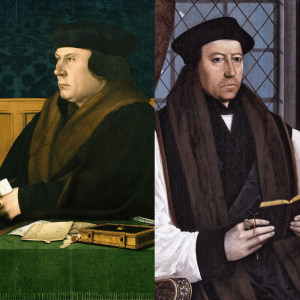
But Thomas Cromwell had not been so idle. In 1532, he wrote the The Supplication Of The Commons Against The Ordinaries, which became known as the Submission of the Clergy. That made Henry VIII the ‘Head of the Church in England as far as the law allowed.’ All clergy had to bow to the king, not the authority of the Pope in Rome. Months later, Archbishop of Canterbury William Warham died, and after sending out the necessary papal papers, Thomas Cranmer was found abroad and brought home to be the new archbishop, just as Cromwell and Henry both wanted. Cranmer had recently been radicalised in Europe, and finally had come to see the ‘benefits’ for a reformed church in England (and not just because he had been dallying with a Swiss girl).

Thomas Cromwell (Frick 1915.1.76) and Thomas Cranmer (NPG 535)

But ultimately, for all the legal paperwork, Pope Clement still existed. The Catholic faith still existed. A law didn’t change people’s opinions or beliefs. A person could, in theory, still go around the new Archbishop Cranmer and write to the Pope and ask for an ecclesiastic ruling. Katharine of Aragon’s petition to save her marriage remained intact. Despite being an ardent supporter of Queen Katharine and her daughter Princess Mary, Thomas Cromwell was the one to do the work, and cut off Katharine’s hopes of saving her marriage and title. It would be treason to go against this law, the penalty being death.

The Act of Restraint of Appeals is the primary legal foundation of the English Reformation. By ensuring no one in England could seek the Pope’s rulings over King Henry, it made the Church of England essentially real, as its own standing faith, overseen by a monarch, who was anointed by God to rule. The petition went to parliament on 4 February 1533, the only major act of the session, neatly squeezed between an act about paving the road from The Strand to Charing Cross in London, and an act against excessively nice clothing (that’s a whole topic on its own). The large roll Cromwell submitted (written in a scribe’s hand) was the first of ten drafts worked on through the session, and included both Cromwell and the king’s handwriting as the statutes were argued, corrected and settled. This meant the king could have the final ruling on subjects like his own divorce, and passed that power to Archbishop Cranmer to formally put it to Convocation and rule the marriage of Henry and Katharine void, clearing the way for pregnant Anne Boleyn to be crowned. The Act of Restraint of Appeals made everything possible for the English Reformation, leaving many dead when they dared to refuse.

The law of only repealed in full by the Statute Law (Repeals) Act 1969, though Northern Ireland was free of the act by 1950.

Here is the text of the completed draft, with modern spelling, punctuation, and italics placed by me, directly from my book of Cromwell’s letters. I have underlined the most important and relevant parts if you would prefer not to slog through this wordy middle-English decree.

THE ACT OF RESTRAINT IN APPEALS, 4 February 1533 (MSS Cleo. E. VI. 185)

‘An Acte that the Appeles in suche Cases as have ben used to be pursued to the See of Rome shall not be from hensforth had ne used but wythin this Realme’

I. An Act that feeds in such cases, as have been used to be pursued to the See of Rome, shall not be from henceforth had nor used but within this realm where, by diverse sundry old authentic histories and chronicles, it is manifestly declared and expressed that this realm of England is an empire, and so has been accepted in the world, governed by one Supreme Head and King having the dignity and royal estate of the imperial Crown of the same, unto whom a body politic, compact of all sorts and degrees of people divided in terms and by names of Spiritualty and Temporality, be bound and owe to bear next to God a natural and humble obedience; he being also instituted and furnished by the goodness and sufferance of Almighty God with plenary, whole, and entire power, pre-eminence, authority, prerogative, and jurisdiction to render and yield justice and final determination to all manner of folk, residents or subjects within this his realm, in all causes, matters, debates, and contentions happening to occur, insurrect, or begin within the limits thereof, without restraint or provocation to any foreign princes or potentates of the world: the body spiritual whereof, having power when any cause of the law divine happened to come in question or of spiritual learning, then it was declared, interpreted, and shown by that part of the said body politic called the Spiritualty, now being usually called the English Church, which always has been reputed and also found of that sort that both for knowledge, integrity, and sufficiency of number, it has been always thought and is also at this hour sufficient and mete for itself, without the intermeddling of any exterior person or persons, to declare and determine all such doubts, and to administer all such offices and duties as to their rooms spiritual does appertain. For the due administration whereof and to keep them from corruption and sinister affection the King’s most noble progenitors, and the ancestors of the nobles of this realm, have sufficiently endowed the said Church both with honour and possessions. And the laws temporal for trial of propriety of lands and goods, and for the conservation of the people of this realm in unity and peace without ravin (plunder) or spoil, was and yet is administered, adjudged, and executed by sundry judges and administers of the other part of the said body politic called the Temporality, and both their authorities and jurisdictions do conjoin together in the due administration of justice the one to help the other. And whereas the King his most noble progenitors, and the Nobility and Commons of this said realm, at diverse and sundry Parliaments as well in the time of King Edward the First, Edward the Third, Richard the Second, Henry the Fourth, and other noble kings of this realm, made sundry ordinances, laws, statutes, and provisions for the entire and sure conservation of the prerogatives, liberties, and preeminence of the said imperial Crown of this realm, and of the jurisdictions spiritual and temporal of the same, to keep it from the annoyance as well of the See of Rome as from the authority of other foreign potentates attempting the diminution or violation thereof as often and from time to time as any such annoyance or attempt might be known or espied. And notwithstanding the said good statutes and ordinances made in the time of the King’s most noble progenitors in preservation of the authority and prerogative of the said imperial Crown as is aforesaid, yet nevertheless since the making of the said good statutes and ordinances diverse and sundry inconveniences and dangers not provided for plainly by the said former acts, statutes, and ordinances have risen and sprung by reason of appeals sued out of this realm to the see of Rome, in causes testamentary causes of matrimony and divorces, right of tithes, oblations and obventions (offerings to God), not only to the great inquietation, vexation, trouble, costs, and charges of the King’s Highness and many of his subjects and residents in this his realm, but also to the great delay, and let to the true and speedy determination of the said causes, for so much as the parties appealing to the said court of Rome most commonly do the same for the delay of justice. And forasmuch as the great distance of way is so far out of this realm, so that the necessary proofs nor the true knowledge of the cause can neither there be so well known nor the witnesses there so well examined as within this realm, so that the parties grieved by means of the said appeals be most times without remedy. In consideration whereof the King’s Highness, his Nobles and Commons, considering the great enormities, dangers, long delays, and hurts that as well to his Highness as to his said nobles, subjects, commons, and residents of this his realm in the said causes testamentary, causes of matrimony and divorces, tithes, oblations, and obventions do daily ensue, does therefore by his royal assent and by the assent of the Lord’s spiritual and temporal and the Commons in this present Parliament assembled and by authority of the same, enact, establish, and ordain that all causes testamentary, causes of matrimony and divorces, rights of tithes, oblations, and obventions, the knowledge whereof by the goodness of princes of this realm and by the laws and customs of the same appertains to the spiritual jurisdiction of this realm already commenced, moved, depending, being, happening, or hereafter coming in contention, debate, or question within this realm or within any the King’s dominions or marches of the same or elsewhere, whether they concern the King our Sovereign Lord, his heirs or successors, or any other subjects or residents within the same of what degree soever they be, shall be from henceforth heard, examined, discussed, clearly finally and definitively adjudged and determined, within the King’s jurisdiction and authority and not elsewhere, in such courts spiritual and temporal of the same as the natures, conditions, and qualities of the causes and matters aforesaid in contention or hereafter happening in contention shall require, without having any respect to any custom, use, or sufferance in hindrance, let, or prejudice of the same or to any other thing used or suffered to the contrary thereof by any other manner person or persons in any manner of ways. Any foreign inhibitions, appeals, sentences, summons, citations, suspensions, interdictions, excommunications, restraints, judgments, or any other process or impediments of what natures, names, qualities, or conditions soever they be, from the See of Rome or any other foreign courts or potentates of the world, or from and out of this realm or any other the King’s dominions or marches of the same to the See of Rome or to any other foreign courts or potentates, to the let or impediment thereof in any wise notwithstanding. And potentates that it shall be lawful to the King our Sovereign Lord and to his heirs and successors, and to all other subjects or residents within this realm or within any the King’s dominions or marches of the same, notwithstanding that hereafter it should happen any excommencement, excommunications, interdictions, citations, or any other censures or foreign process out of any outward parties to be fulminate, provulged (proclaimed), declared, or put in execution within this said realm or in any other place or places for any of the causes before rehearsed, in prejudice, derogation, or contempt of this said Act and the very true meaning and execution thereof, may and shall nevertheless as well pursue, execute, have, and enjoy the meets, profits, benefits, and commodities of all such processes, sentences, judgments,, and determinations, done or hereafter to be done in any of the said courts spiritual or temporal as the cases shall require, within the limits, power, and authority of this the King’s said realm and dominions and marches of the same, and those only and none other to take place and to be firmly observed and obeyed within the same. As also that all spiritual prelates, pastors, ministers, and curates within this realm and the dominions of the same shall and may use, minister, execute, and do, or cause to be used administered, executed, and done, all sacraments, sacramentals, divine services, and all other things within the said realm and dominions unto all the subjects of the same as Catholic and Christian men are owe to do. Any foreign citations, processes, inhibitions, suspensions, interdictions, excommunications, or appeals for or touching any of the causes aforesaid from or to the See of Rome or any other foreign prince or foreign courts to the let or contrary thereof in any ways notwithstanding. And if any of the said spiritual persons, by the occasion of the said fulminations of any of the same interdictions, censures, inhibitions, excommunications, appeals, suspensions, summons, or other foreign citations for the causes before said or for any of them, do at any time hereafter refuse to minister or to cause to be ministered the said sacraments and sacramentals and other divine services in form as is aforesaid, shall for every such time or times that they or any of them do refuse so to do or to cause to be done, have one year’s imprisonment and to make fine and ransom at the King’s pleasure.

II. And it is further enacted that if any person or persons do attempt move, purchase, or procure, from or to the See of Rome or from or to any other foreign court or courts out of this realm, any manner foreign process, inhibitions, appeals, sentences, summons, citations, suspensions, interdictions, excommunications, restraints, or judgments, of what nature, kind, or quality soever they be, or execute any of the same process, or do any act or acts to the let, impediment, hindrance or derogation of any process, sentence, judgment, or determination had, made, done, or hereafter to be had, done, or made in any courts of this realm or the King’s said dominions or marshes of the same for any of the causes aforesaid. . .that then every person or persons so doing, and their fautors (supporters), comforters, abettors, procurers, executors, and counsellors, and every of them being convicted of the same, for every such default shall incur and run in the same pains, penalties, and forfeitures ordained and provided by the statute of provision and praemunire made in the sixteenth year of the reign of King Richard the Second.

III. And furthermore in eschewing the said great enormities, inquietations, delays, charges, and expenses hereafter to be sustained in pursuing of such appeals and foreign process do therefore ordain and enact that in such cases where heretofore any of the King’s subjects or residents have used to pursue, provoke, or procure any appeal to the see of Rome they shall from henceforth take, have, and use their appeals within this realm and not elsewhere, in manner and form as hereafter ensue and not otherwise. That is to say, first from the archdeacon or his official, if the matter or cause be there begun, to the bishop diocesan of the said See, and likewise, if it be commenced before the bishop diocesan or his commissary, from the bishop diocesan or his commissary, within fifteen days next ensuing the judgment or sentence thereof there given, to the archbishop of the province of Canterbury, if it be within his province, and if it be within the province of York then to the archbishop of York; and so likewise to all other archbishops in other the King’s dominions as the case by the order of justice shall require; and there to be definitively and finally ordered, decreed, and adjudged according to justice, without any other appellation or provocation to any other person or persons, court or courts. And if the matter or contention for any of the causes aforesaid be or shall be commenced before the archdeacon of any archbishop or his commissary, then the party grieved shall or may take his appeal, within fifteen days next after judgment or sentence there given, to the Court of the Arches or Audience of the same archbishop or archbishops, and from the said Court of the Arches or Audience, within fifteen days then next ensuing after judgment or sentence there given, to the archbishop of the same province, there to be definitively and finally determined without any other or further process or appeal thereupon to be had or ensued.

IV. And in case any cause, matter, or contention which has, does, shall, or may touch the King, his heirs or successive kings of this realm, that in all and every such case or cases the party grieved shall or may appeal to the spiritual prelates and other abbots and priors of the Upper House assembled and convocated by the King’s writ in the Convocation being or next ensuing within the province or provinces where the same matter of contention is or shall be begun; so that every such appeal be taken by the party grieved within fifteen days next after the judgment or sentence thereupon given or to be given. And this whatsoever be done or shall be done and affirmed, determined, decreed, and adjudged by the foresaid prelates, abbots, and priors of the Upper House of the said Convocation as is aforesaid, appertaining, concerning, or belonging to the King, his heirs or successors, in any of these foresaid causes of appeals, shall stand and be taken for a final decree, sentence, judgment, definition, and determination, and the same matter so determined never after to come in question and debate to be examined in any other court or courts. And if it shall happen any person or persons hereafter to pursue or provoke any appeal contrary to the effect of this Act, or refuse to obey, execute, and observe all things comprised within the same that then every person and persons so doing, refusing, or offending, their procurers, fautors (patrons), advocates, counsellors, and abettors, and every of them, shall incur into the pains, forfeitures, and penalties ordained and provided in the said statute made in the said sixteenth year of King Richard the Second.

Wolf Hall 2: The Mirror and the Light – Did Thomas Cromwell attack the Duke of Norfolk over Cardinal Bainbridge’s Murder?

Norfolk and Gardiner – BBC/Playground Entertainment/Nick Briggs

Welcome to another installment of the details behind Wolf Hall 2: The Mirror and the Light. Thomas Cromwell’s fall from grace has long been seen as a sudden act – one minute he is being made the Earl of Essex, next he is dead, all because King Henry thought Anna of Cleves was ugly. None of that is true, and The Mirror and the Light shows the pivotal moment where Cromwell’s fall began, a full year before his death. However, the truth of the event is very different to what is shown onscreen.

In The Mirror and the Light episode 4, we see Cromwell at a banquet dinner held at Lambeth Palace by Archbishop Cranmer. All of the Privy Council attend, and Bishop Stephen Gardiner decides to stir up trouble by discussing the murder of Cardinal Bainbridge, talking of how he was poisoned by a priest, but instead veers into fantasy land and suggests Cromwell was the killer. Cromwell lashes out at Norfolk, who is off on another tangent complaining about how Cromwell isn’t good enough to be a nobleman, and conspires against everyone. This scene is a good show of research on Cromwell’s life, but bears no resemblance to the truth.

In 1514, Thomas Cromwell went to Rome, one of several trips he took during the decade, working on behalf of a private legal client to argue the Stratford Langthorne tithe dispute. Having seen the ‘factions and manners’ of the Italians for years, and able to speak fluent Italian and Latin, Cromwell was perfect for the job. In Rome, Cromwell stayed at the English Hospice, San Tommaso di Canterbury. The English Hospice at via Monserrato 45 (now The Venerable English College), sat a block from the Tiber river, and a two-mile walk to the Apostolic Palace. The hostel had been catering to English pilgrims to Rome for almost 200  years, and after renovation and reorganisation by King Henry VII, became an important hub for English diplomats visiting the city.

On his May stay, Cromwell met Lancelot Collins, nephew to the hospice’s master Cardinal Christopher Bainbridge, Archbishop of York, and resident English cardinal in Rome. This meeting between Cromwell and Collins would spark another genuine lifelong friendship, with Collins  considered one of the kindest and most generous men in England by even cynical men. Collins valued his friendship with Cromwell for over twenty years, even when, in later life, it would threaten his safety. But Cromwell had already left Rome by 14 July 1514 when Cardinal Bainbridge was poisoned by Rinaldo de Modena, one of Bainbridge’s chaplains, and rumoured lover who had suffered a beating from the cardinal. When interrogated, Modena confessed to planning the murder with Silvester de Gigli of Lucca, Bishop of Worcester and English ambassador in Rome, however, Modena was soon murdered in prison. Bainbridge’s executors, Richard Pace and John Clerk, wanted Gigli arrested for his part in the death, but Gigli swore that Modena was insane, and no charges were brought in Rome or in England.  Either way, Gigli was not charged and he died himself a few years later. Absolutely nothing in the case had anything to do with Cromwell or Wolsey.

Back to 1539, on 2 July, King Henry, already off on progress, commanded Archbishop Cranmer to host a banquet at Lambeth Palace, with both sides of the religious divide ordered to attend, as everyone remained in London. Henry did not attend, but Cromwell, starting to return to health after three full months, could attend his first public occasion. The banquet would go down in infamy. As a man freshly recovered from a torturous illness, Cromwell was far from the calculating, charming man he portrayed at court. Cranmer’s secretary Ralph Morice recorded the evening, which formed the basis of John Foxe’s later book detailing the event. Cromwell and Cranmer were warmest friends and allies, two leaders of the Reformation in England. Morice recalled a rarely recorded argument between the pair. Cromwell muttered to Cranmer:

‘you were born at a happy hour, for do or say what you, the King will always take it well at your hand. And I must needs confess that in some things I have complained of you unto His Majesty, but all in vain, for he will never give credit against you, whatsoever is laid to your charge, but let me or any other of the Council be complained of, his Grace will most seriously chide and fall out with us.’

Whether this uncommon, disrespectful, and candid complaint came before or after the main fireworks is unknown, as Cromwell again made a scene, publicly fighting with the ever-present, ever-meddling, Duke of Norfolk. Norfolk gave a speech about King Henry’s love for Cranmer, and compared Cranmer to Wolsey, calling Wolsey ‘a churlish prelate … who could never abide a nobleman … you know well enough Lord Crumwell, for he was your master …’ Morice then put down his quill, unwilling to record the awful things Norfolk insinuated about Wolsey and Cromwell. Cromwell, only just out of his sickbed, and already surrounded by enemies and a tense meeting of religious views, stood up to defend Wolsey. Cromwell told the room he did not regret his time with Wolsey, well-paid and well-provided for during their six-year friendship. Cromwell then roundly turned against Norfolk, giving him a caustic sixteenth-century dressing down, among other things, saying:

‘I was never so far in love with (Wolsey) as to have waited upon him in Rome if he had been chosen Pope, as I understand (Norfolk) would have done’.

The exchange does not sound hostile now, but it implied Norfolk was prepared to serve the Catholic faith and the Pope over his king, which would be treason. Norfolk bellowed a denial to the claim. Cromwell, through a lack of manners and a vast memory, told everyone Norfolk received 50,000 florins to transport Wolsey to Rome in 1523 when Wolsey was in place to become the Pope. The florins were proof of Norfolk’s plan to go to Rome with Wolsey. While Cranmer and others at the banquet diffused the screaming match, which was unquestionably complemented by bountiful wine and strong egos, the match had been lit between the men. Neither needed to wear the mask of courtesy again, as the peers of the realm had seen and heard all. Cromwell did not know it, but this banquet was the beginning of his ultimate downfall. The illness he suffered that caused him to miss the parliamentary session and the passing of the Six Articles would cause Cromwell to make numerous mistakes

All sources come from The Private Life of Thomas Cromwell. My publisher might come for you if you plagiarise.

FRAILTY OF HUMAN AFFAIRS: Author Q+A – Part 1

How much do you know about Tudor England? Maybe you are an expert; maybe you are new and know no more than Henry VIII and his desire to crop heads (roughly 72,000). Maybe you know Thomas Cromwell was the real genius behind Henry’s reign and changed laws in a way no country has ever known. Maybe you have heard his name a few times, maybe watched Wolf Hall, or get him mixed up with the genocidal Oliver Cromwell of the 1600’s.

Frailty of Human Affairs is set in the years 1529 – 1533, the early years of Cromwell’s rise to control England behind Henry VIII. He was already a wealthy merchant, trader, lawyer and money-lender. He had already served both the royal court for his master,Cardinal Wolsey, and in parliament. But it was 1530’s in which Thomas Cromwell basically picked up England and shook it, changing everything that everyone knew in a way that had never been done, and was never done again. If you are English or in a country invaded and dominated by the English (like here in the antipodes), you can thank Thomas Cromwell that you are not Catholic (unless you want to be, which is your choice now, you do you). Yes, Catholic vs. Protestant reform would have come to England with or without Cromwell’s help, but how it played out would have been very different.

Do you need to understand the difference between Catholic vs. Protestant to read this book?

I have kept it simple because unless you have done religious studies (like me), it can seen as daunting. It did to me at the start. Basically, Catholics pray in church to their priests, bishops archbishops and cardinals. All bow to the Pope in Rome. In Cromwell’s time, prayer had to be done in Latin. The Protestants (literally religious protestors, mostly in Germany) translated the bible from Latin to German and then English, and the translations came out with different rules on how to revere God. These bibles were banned in Cromwell’s time, as they questioned the Church’s real power. These English and German bibles allowed people to understand prayer easier, let them pray where and when they chose, and didn’t expect people to pray a premium in church for their souls to be saved. That’s the over-simplified version, but it’s all you need to start reading.

Why read your Cromwell over another version?

Thomas Cromwell sat in obscurity until around the 1950’s when he was brought back into public knowledge, as the villain behind King Henry VIII and the destruction of Catholic England. In the last decade, much has been written to reinvent Thomas Cromwell as a hero, a smart man who was caught under a despot king. I seek to write neither a hero nor a villain. In a world such as the Tudor court during the 1530’s, every man and woman would have needed to take sides – hero or villain – but I wanted to show that people can be both and neither. Neither Cromwell nor Frescobaldi are in any way perfect, and have intentions of their own as well as serving a king.

Who is Nicóla Frescobaldi in all this?

While Francesco Frescobaldi was the man who found a starving English teenager (Thomas Cromwell) on the streets of Florence, nothing is known about his immediate family. All characters focused around Frescobaldi are purely fictional, including Nicóla and Nicóletta.

Who is Machiavelli?

Niccoló Machiavelli was an Italian writer and diplomat in Florence until his death in 1527. He was at odds with the reigning Medici family, but wrote many books which have been him eternal. ‘The Prince” is his top book, basically the creation of modern political science. Seriously, grab a copy.

Much has been made of who ‘The Prince’ of Niccoló Machiavelli’s book really was. While dedicated to Lorenzo Di Piero De Medici, the book is said to be sometimes based on Cesare Borgia, the infamous son of Pope Alexander VI. The book,  published in handwritten form in 1513, was first published on a printing press in 1532, when Pope Clement VII agreed to its release. Thomas Cromwell and the Protestants were known as fans of the Machiavelli book, though Catholic kings such as Charles V, and French Queens such as Catherine de’ Medici, also endorsed the writing. Who inspired much of the book may in fact be a wide number of people, but Thomas Cromwell and his incredible mind lived in Florence from around 1503 until 1513. Very little is known around this period of his life. Is Cromwell the prince? Frescobaldi believes so.

What is the point of Cromwell’s changes to England?

Henry VIII needs rid of his first wife, who served England for twice as long as his other five wives combined.

Click here to read more on the “Great Matter”

In 1509, King Henry VIII was crowned alongside his new bride, Princess Katherine of Aragon. Katherine had married Henry’s brother, Prince Arthur, in 1501, only for him to die months later. After receiving dispensation from the Pope, the couple married and were crowned in a dual coronation, and would go on to have one daughter and lose another five children at birth.

After having affairs with several well-known mistresses, King Henry set his sights on Anne Boleyn, lady-in-waiting to Queen Katherine, sometime in 1525. By 1527, Henry set his chief advisor, Cardinal Thomas Wolsey, Lord Chancellor of England, to the task of procuring an annulment of his marriage to Katherine, on the grounds that a man could not marry his brother’s widow.

After several failed attempts to persuade Pope Clement VII to agree to an annulment, a decision was made – an ecclesiastic legatine court was to be set up in London. Two cardinals, Cardinal Wolsey and Cardinal Lorenzo Campeggio, a chief confidant of the Pope, would stand in as papal legates (the Pope’s representatives), and through a hearing, decide on whether Henry and Katherine’s marriage was ever lawful in the eyes of God.

The people of England loved Queen Katherine; she had ruled for twenty years, a kind, pious and beautiful Catholic queen all could respect. But Katherine was too old to give Henry what he needed – a son to inherit the English throne. Anne Boleyn was still in her twenties – pretty, sophisticated, intelligent, and young enough to give birth to a male heir.

After being in love with Anne Boleyn for four years, King Henry had become bitter towards his Queen, and also his sixteen-year-old daughter, Princess Mary, whom he considered too unnatural to inherit the throne, as she was female. Anne Boleyn was a mistress who would not share Henry’s bed, and a combination of frustration, longing, and arrogance built in the 38-year-old ruler. Cardinal Wolsey, at Henry’s side for twenty years, and credited with countless successes at home and abroad, and the wealthiest man in England, could not give the King what he wanted, an annulment from Katherine. With the witty Anne Boleyn and her family taking Wolsey’s place at Henry’s side, and the Protestant reformers beginning to eat into England’s Catholic soul, the King could be easily swayed in any direction.

Enter Thomas Cromwell – lawyer and advisor to Thomas Wolsey, a commoner with a smart mind and vivid history throughout Europe, educated in England and Italy, who had ideas on how to create an annulment, and destroy Pope Clement’s power in the process.

By 1529, no one, noble or common, knew what would happen in their realm, and with the anger of the Holy Roman Emperor also weighing upon the annulment issue – the King’s ‘Great Matter” – the threat of war was real, all to gain a male heir for the kingdom. King Henry needed a new queen, and Katherine would never give up her crown.

Why so many characters?

They, with the exception of the Frescobaldi children, Nicóla and Nicóletta, all the characters are real people who served or opposed Henry VIII. There are a lot and they all played a role. There were many more who I have chosen not to showcase, and more will be added in the next books.

England’s royal inner circle by 1529

King Henry VIII

All-powerful, well-educated and athletic ruler of England for twenty years. Aged only 38 years old, a religious, volatile, arrogant man. Father of one legitimate heir, Princess Mary, and a bastard son, Henry Fitzroy, Duke of Richmond and Somerset

Click here for more on Henry VIII

 Queen Katherine

Catholic Spanish princess married to Henry for twenty years – pious, respectable, intelligent, and mother to the only legitimate royal heir, Mary, Princess of Wales

Click here for more on Katherine

Anne Boleyn

High-educated former lady in-waiting to Queen Katherine, daughter to successful courtier Thomas Boleyn

Charles Brandon

Duke of Suffolk, and Henry’s best friend. Married to Henry’s sister Mary, Dowager Queen of France. Member of the Privy Council (advisors to the King on state matters) and the King’s Council (the King’s private advisors)

Thomas Howard

Duke of Norfolk, uncle to Anne Boleyn, close courtier to Henry. Member of the Privy Council and King’s Council

Thomas Boleyn

Lord Rochford and Lord Privy Seal (leader of the Privy Council) and member of the King’s Council. Father to Anne Boleyn, along with popular courtier George Boleyn and the beautiful Mary Boleyn, King Henry’s former mistress

Advisors and courtiers to King Henry

Cardinal Thomas Wolsey

Common-born man risen through the church to become advisor to King Henry, elevated to Cardinal by the Catholic Church, and Lord Chancellor of England, the nation’s most powerful ministerial role

Click here for more on Thomas Wolsey

Thomas Cromwell

Advisor and lawyer to Thomas Wolsey. Member of parliament, wealthy merchant and money-lender. Former soldier, Italian trader and banker and English-trained scholar

Click here for more on Cromwell

Sir Thomas More

Chancellor of the Duchy of Lancaster, respected humanist, author and Catholic theologian. Loyal advisor to King Henry and champion of Dutch writer Erasmus

Thomas Cranmer

Highly educated theologian, humanist and ordained priest, and supporter of Martin Luther. Diplomat to both Spanish court and Holy Roman Emperor on King Henry’s behalf

Archdeacon Stephen Gardiner

Trained in canon (religious) and civil law, and master secretary to Cardinal Wolsey. Well-travelled diplomat, Master of Trinity Hall and expert at Cambridge University

William Warham

Archbishop of Canterbury and leader of the Convocation of Canterbury (religious parliament). Bound to Pope Clement and the Catholic faith

Eustace Chapuys

Imperial Ambassador to England and champion of the cause of Queen Katherine on Charles V’s behalf

Powerful Italian figures in 1529

Pope Clement VII

Pope of Rome and leader of the Catholic faith since 1523. Member of the powerful Florentine Medici dynasty. Imprisoned during the sacking of Rome by Charles V’s soldiers in 1527

Cardinal Lorenzo Campeggio

Powerful and well-travelled cardinal, left in charge of Rome during the Pope’s absences, and Cardinal Legate of England. Representative of Pope Clement abroad

Charles V of Spain

King of Spain, Holy Roman Emperor, King of Italy, King of the Romans, Lord of the Netherlands and Duke of Burgundy, ruler of the German and Austrian states controlled by the Roman Empire. Nephew of Queen Katherine of England

The Medici dynasty

Multi-generational family in control of the Republic of Florence. One of the wealthiest families in Europe, creator of two Popes, including Clement. Ousted from Florence in 1527 during a siege, only to be reinstated with full control and wealth

Nicóla Frescobaldi

Effeminate bastard son to the late Francesco Frescobaldi, a wealthy Florentine merchant and banker. Reclusive favourite courtier of Pope Clement, highly educated man of business and theology

Nicóletta Frescobaldi

Only living daughter of Francesco Frescobaldi. Pre-contracted in marriage to Alessandro de’ Medici

Well known figures in Europe in 1529

Erasmus of Rotterdam

Dutch Renaissance humanist, Catholic priest, social critic, teacher, and theologian. Creator of the Latin New Testament bible based on Greek texts

William Tyndale

Creator of the English language bible, translated from Greek and Hebrew texts. Supporter of Protestant reform. In exile from England and against Henry’s annulment

Martin Luther

German theologian, excommunicated priest and creator of the Protestant Reformation and the German language bible

Niccoló Machiavelli

Recently deceased Florentine diplomat, politician, historian, philosopher, humanist, and writer. Creator of political science

King Francis I of France

Popular young King of France. Well-educated writer and patron to Leonardo da Vinci. Signed the peace treaty at the Field of Cloth of Gold with England

Alessandro de’ Medici

The last senior member of the original Medici generation, illegitimate son of Pope Clement, set to rule Florence. His ‘sister’, Catherine de’ Medici, is set to become a French princess

Stephen Vaughan

English merchant, royal agent and diplomat, and strong supporter of the Protestant Reformation

Popular English courtiers in 1529

Ralph Sadler

Ward and master secretary to Thomas Cromwell

Richard (Williams) Cromwell

Nephew and attendant to Thomas Cromwell

George Cavendish

Writer and faithful attendant to Thomas Wolsey

Edmund Bonner

Faithful friend and chaplain to Thomas Wolsey

Sir Thomas Audley

Barrister and Speaker in the House of Commons

Richard Rich

Popular lawyer and member of parliament

Thomas Wriothesley

Lawyer serving Thomas Cromwell and Stephen Gardiner, clerk of the royal court

Sir Henry Norris                        

Sir Francis Weston

Sir William Brereton                                 

Sir Francis Bryan

Members of the privy chamber of  King Henry

Mark Smeaton

Talented young English composer and musician

Sir Thomas Wyatt

Diplomat, politician, poet, loved friend of Anne Boleyn

Hans Holbein the Younger

Popular German artist, given royal favour for his extraordinary portrait talents

What else do I need to know?

Check out the author Q+A Part 2 on the book for more, or click here to read the first chapter free right now.