This Week in Spanish Civil War History – Weeks 82-85: 80 Years Since the Battle of Teruel, February 1938

February  7

In the last calvary charge of modern warfare, the Nationalists attack Teruel from the north, while Republican forces are centred in the south of the town.  The Nationalists launch an attack along the Alfambra river north of Teruel, a front-line thirty kilometres long with 100,000 men and 500 guns. This massive charge in an undefended area means the Nationalists make it through the front-lines and into Teruel itself. The Republicans who can, run for their lives, scattered out in every direction to hide or be slaughtered. Generals Yague and Aranada consider this their moment of victory in the Teruel battle.
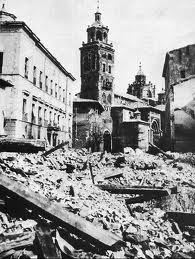
the leftovers of Teruel town itself

February 18

Many Republcians are still in hiding in the Teruel area, and Aranda and Yague have to ensure the town is cut off completely from any further reinforcements reaching the surrounding areas. Anyone left alive not on the Nationalist side must be pulled out of their hiding places and killed. Since the Alfambra charge, the Republicans have lost more than 22,000 men, including 7,000 prisoners, and the Nationalists have claimed an area of 1300 square kilometres around Teruel.

Republicans defenders in Teruel before their capture

February 20

The road from Teruel east to Valencia is destroyed, cutting the area off from the relatively safe Republican city. No one can reach Teruel or surrounding villages and areas, as all mountains and roads are Nationalist front-lines. General Saravia for the Republicans orders a total retreat of all Republicans and International Brigades from this lower Aragon area. Some 14,500 men are still trapped in the new Nationalist zone and have no chance to be rescued or have reinforcements fight their way in to help them in battle.
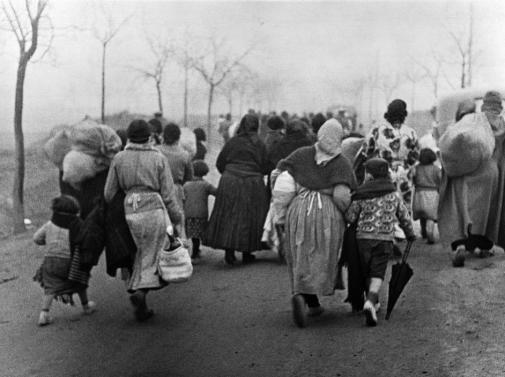
civilians fleeing the Teruel region

February 22

Well known Communist leader El Campesino (Valentín González González), manages to break through Nationalist lines and escape, where he claims he was left by other Communist leaders to die. The Nationalists now have all of the Teruel region to themselves, and declare victory. Their prize is around 10,000 Republican bodies strewn through the town itself. It is estimated that around 85,000 Republicans have been killed, and around 57,000 Nationalists are dead. 

The Nationalists, though battered, can quickly resupply men in the area, thanks to taking the massive factories in the Basque country the year before. But the Republicans have lost the bulk of their men and all of their airforce has been destroyed and cannot be replaced. Not only that but Republican morale has fallen desperately, and now they have no towns or areas in which they occupy to keep Valencia or Barcelona safe from the ever-increasing Nationalists. Franco is ready to begin the new Aragon offensive, to push through to the eastern coast and crush these two cities.
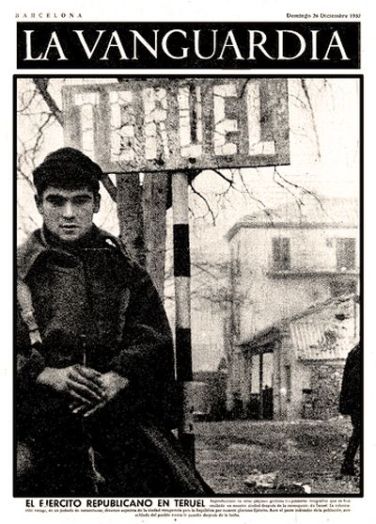
February 25

Any remaining Republicans, Communists and International Brigades left alive in Aragon huddle to form a front line along the bank of the Alfambra river, about 40 kilometres north of the Teruel town itself. As the Nationalists prepare for the upcoming Aragon offensive, these men have no plans or artillery to aid them.
International Brigades after seeking safety north of Teruel

~~

This is not a detailed analysis, just a highlight (lowlight?) of the month’s events. Things get lost in translation – Feel free to suggest an addition/clarification/correction below. The more the world remembers, the better. All photos and captions are auto-linked to source for credit, and to provide further information.

This Week in Spanish Civil War History – Weeks 77-81: Teruel and Cáceres, January 1938

James Neugass accompanying Cuban volunteer Pablo Carbonell, killed in action in Teruel

January 1

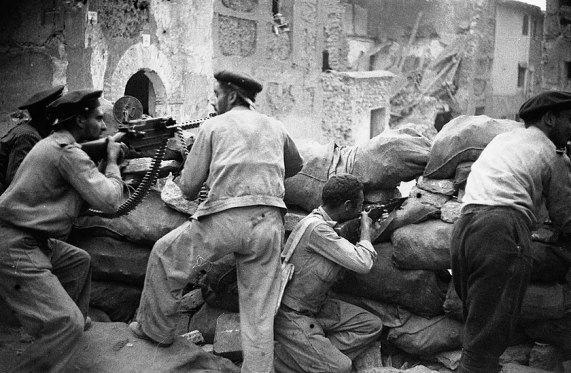
It is Republicans versus Nationalists in hand-to-hand combat in the Convent of Santa Clara, where the original Nationalist garrison are held up on the western edge of Teruel. All the Nationalist fighters in the Convent are killed.

January 3

Another of the initial Nationalist hold-out spots is destroyed, the Civil Governor’s Building. They fight the Republicans floor to floor in the building, the fight witnessed and reported by Ernest Hemingway. All Nationalists in the building are eventually killed, and soon after, the Seminary of Santa Clara is overrun by Republicans when the defenders have no water or food, are low on supplies and the buildings themselves are destroyed by the fighting.

January 8

Colonel Domingo Rey d’Harcourt is still holding out, with only a Bank of Spain building in Nationalist hands inside Teruel, while the reinforcements are still kept outside of the small city. Because of the horrific cold weather, Franco’s troops cannot get into Teruel, and finally Colonel d’Harcourt and his men surrender, along with Bishop Anelmo Polanco. Teruel is officially in Republican hands. The Colonel and Bishop will be sent to Valencia, and then towards Barcelona along with the remaining 40 Nationalist men captured. All will be executed on February 7 en route to France.

January 17

The weather has finally cleared over Teruel. The Nationalist garrison inside the town, which was at 9,500 men when the Republicans first attacked, are all dead. However the 100,000 reinforcements continue to attack the city.

Republicans in Teruel

January 19

The Republicans, despite having similar numbers to the Nationalists, are concerned they cannot hold Teruel, with low supplies and equipment. The International Brigades, who have been in the area, are officially called in to help. The enormous numbers of men on both sides leads to fierce fighting and dramatic damage done to Teruel, though little gains are made for either side. Civilians in the town have now fled, or been killed in the crossfire as the Republicans become surrounded in Teruel.

January 21

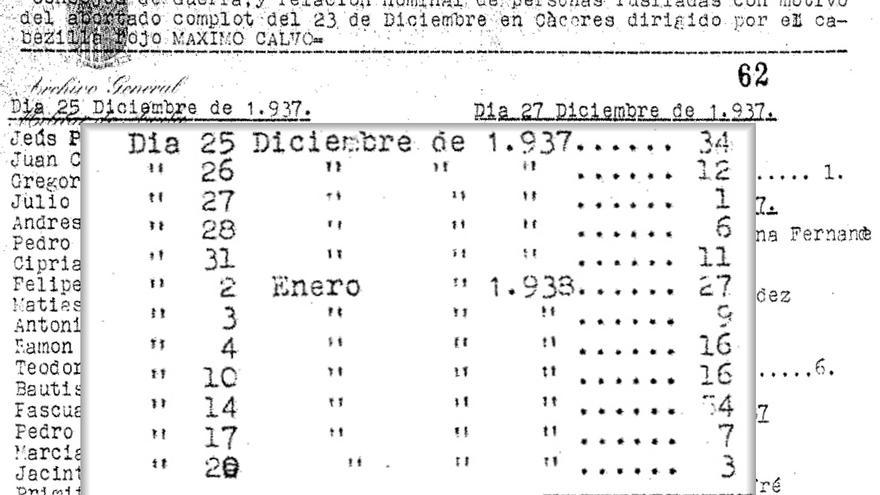
The killings in Cáceres have continued though the first weeks of 1938. By the 20th, a total of 196 Republican civilians have been executed. Among the dead are forty Francoist soldiers who were accused of being secret Republicans. The killings, which started at Christmas, continued over New Year and sixteen miners were killed on The King’s Day, the Epiphany, the most celebrated Spanish day of January 6. The tiny nearby village of Navas del Madroño had 54 people killed in one day, and Malpartida de Cáceres lost twelve men. Men, women and children are lined up and executed through the region, and any orphans left over are sent to brutal Francoist orphanages. A total of 675 people are killed in this tiny region during the war, including the 196 victims of these killings, people killed over rumours and outright lies. Their bodies were not be recovered or given a memorial for nearly 80 years.

Numbers of people killed, in date order.

January 23

Back in Teruel, the Nationalists have finally pushed the Republicans off the Teruel Tooth mountain ridge over the city. The Nationalists still hold the train station and bullring in the southwest area but cannot make any more gains.

January 25

The Republicans launch a huge counteroffensive to take back the Teruel Tooth ridge and the train station, so they can be again connected to Valencia. While numbers are massive on both sides, the Nationalists cannot break into Teruel any further, and the Republicans cannot beat them back. The south of Teruel is where heavy fighting occurs. This bloody fighting without gain for either side will continue for another two weeks. If the Republicans lose Teruel, they will lose their hold over Franco being cut off from the Mediterranean.

The Lincoln Brigade stationed outside Teruel

~~

This is not a detailed analysis, just a highlight (lowlight?) of the week’s events. Things get lost in translation – Feel free to suggest an addition/clarification/correction below. The more the world remembers, the better. All photos and captions are auto-linked to source for credit, and to provide further information.
This Week in Spanish Civil War History – Week 76: The Battle of Teruel 23 – 31 December 1937

December 23

Franco knows his planned Guadalajara offensive is futile, as Teruel needs all of the manpower in the area, despite anger from the German and Italian allies who want to take Madrid and end the war.

December 25

In the small city of Cáceres in the far western region of Extremadura, 34 men are murdered, some taken from the dinner table during quiet Christmas Day meals. A shooting range is set up at the barracks of the 27th Algiers infantry regiment, where sixty Guardia Civil men could kill the chosen victims. Among the victims was the socialist Mayor Antonio Canales and President of the Provincial Council Ramón González Cid. Others were local trade union members, teachers, UGT members and Republican sympathisers, some already under arrest for months. The province had been under Nationalist control since the beginning of the war, but false rumours of an uprising led to the deaths. No plans by Republican or Communist members were planning an uprising, only lies spread by local Nationalist leaders. The story of a fake coup led by Máximo Calvo  was announced by the Falange on December 23, leading to the arrests and execution of the men. It would be the start of one month of scheduled killing around the area, leading to a total 196 dead, including 14 women, all executed for non-existent crimes.

Nationalist Colonel Domingo Rey d’Harcourt has been trying to hold out while reinforcement troops arrive in Teruel. Now two generals, Antonio Aranda and José Enrique Varela have arrived, with fresh  experienced men, and the Condor Legion has arrived to attack Teruel from the air.

December 30

Nationalist men are already making gains, by getting on the La Muela (Teruel Tooth) mountain beside the town. The weather continued to close in on both sides, making defense and attack slow and dangerous.

Frozen tanks seen by Robert Capa

December 31

The Republicans have continued their assault on the four strategic buildings the Nationalist held in the town  -the Convent of Santa Clara and the Seminary of Santa Clara, the Bank of Spain building, and the Civil Governor’s Building. By the time the new year began, all the Nationalists inside the Convent of Santa Clara had been murdered.

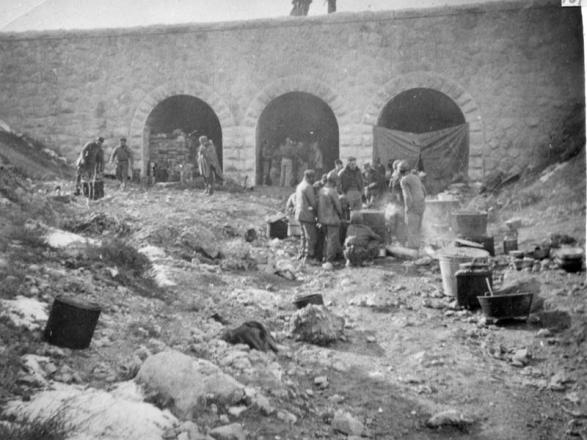
The final day of 1937 saw the start of a vicious four-day blizzard, with frostbite that will claim lives and limbs while the fighting continues. But 1937’s final day also saw the Nationalists hold their position on the Teruel Tooth, and get into Teruel’s bullring and railway station, both at the lowest southern point of the town. With the temperature at minus 18C, machine guns are frozen, and the reinforcement Nationalist troops do not enough warm clothing to make many gains.

~~

This is not a detailed analysis, just a highlight (lowlight?) of the week’s events. Things get lost in translation – Feel free to suggest an addition/clarification/correction below. The more the world remembers, the better. All photos and captions are auto-linked to source for credit, and to provide further information.
 

DECEMBER SPAIN BOOK REVIEW: ‘Alberto’s Lost Birthday’ by Diana Rosie

A little boy and his grandfather embark on a quest to find the old man’s missing birthday in Diana Rosie’s debut novel, Alberto’s Lost Birthday.

Alberto is an old man. But he doesn’t know how old – he remembers nothing before his arrival at an orphanage during the Spanish civil war.

He rarely thinks about his missing childhood, but when seven-year-old Tino discovers his grandfather has never had a birthday party, never blown out candles on a birthday cake, never received a single birthday present, he’s determined things should change. And so the two set out to find Alberto’s birthday.

Their search for the old man’s memories takes them deep into the heart of Spain – a country that has pledged to forget its painful past. As stories of courage, cruelty and love unfold, Alberto realises that he has lost more than a birthday. He has lost a part of himself. But with his grandson’s help, he might just find it again.

cover and blurb via amazon

~~

I read this whole book in one sitting; that is a testament to how easy it is to read this sweet work of fiction. By the time I was two-thirds through, I was desperate to see how it all played out.

The book bounces around the trip of Alberto and his seven-year-old grandson, Tino. Tino’s father is in the hospital after a horrific burning accident, and Alberto tries to distract the child with the story of how, as an orphan, he doesn’t know his own age or birthday. They head off on a road trip to find out what happened to Alberto as a young boy.

Other chapters are peppered through the book from the point of view of other major players  in Alberto’s early life- the woman who cared for him at the orphanage, the girl who grew up with him, the angry fascist commander who was killing people during the Spanish Civil War, Alberto’s birth mother and father, a young priest and an English International Brigade fighter who finds young Alberto in the forest. Between these point of views and of elderly Alberto on his mission, the heartbreaking story all comes together.

The Spanish Civil War rears its ugly head, showing the misery of growing up a orphan in war-time, the realities for Alberto’s birth parents, the sins of the 1930’s, all mixed with a few moments of bad luck, PTSD and beautiful family ties torn to shreds, comes together to find the true date of Alberto’s birth written in a rather unusual place.

.Alberto’s first ever party is laced with a pain I could see coming but didn’t want to acknowledge, but his search also healed pains for many people left scarred by the battles of the late 1930’s. The book is simple and no fuss, has its quiet moments, but tells a painful tale in a gentle way. I really enjoyed this book and would recommend it to everyone.

OCTOBER SPAIN BOOK REVIEW: ‘Petals and Bullets’ by Mark Derby

It was bright moonlight – good bombing light – and once we had to stop and put out our lights as a Fascist aeroplane flew over. They usually come swooping down with guns firing at cars, especially ambulances. Finally we arrived at a town among the hills about 12.30 p.m. Here there is a hospital of about 100 beds in a former convent . . . They expect an attack tonight. – New Zealand nurse Dorothy Morris’s description of her journey to a Republican medical unit of the Spanish Civil War in early 1937

Petals and Bullets is based on the vivid, detailed and evocative letters written by Dorothy Morris to her family in Christchurch, while she was serving in often dangerous circumstances in Spain and other European countries. The letters have been supplemented by wide-ranging research to record a life of outstanding professional dedication, resourcefulness and courage.

Dorothy Aroha Morris (1904–1998) volunteered to serve with Sir George Young’s University Ambulance Unit, and worked at an International Brigades base hospital and as head nurse to a renowned Catalan surgeon. She then headed a Quaker-funded children’s hospital in Murcia, southern Spain. As Franco’s forces advanced, she fled to France and directed Quaker relief services for tens of thousands of Spanish refugees. Nurse Morris spent the Second World War in London munitions factories, as welfare supervisor to their all-female workforces. She then joined the newly formed UN Relief and Rehabilitation Administration, working in the Middle East and Germany with those who had been displaced and made homeless and destitute as a result of the war.

Dorothy Morris’s remarkable and pioneering work in the fields of military medicine for civilian casualties, and large-scale humanitarian relief projects is told in this book for the first time.

cover and blurb via amazon

~~

Spain veined with blood and metals, blue and victorious, proletariat of petals and bullets, alone, alive somnolent, resounding.

The quote from Pablo Neruda starts the book of the life of a woman no one knows, but made a huge difference to the lives of those struggling during the Spanish Civil War. Dorothy Morris was born in Cromwell, New Zealand in 1904, by the mid-thirties was working as a nurse. The book charts her early life in New Zealand, a life filled with change, war and strikes which would have moulded Morris’ plan to live a life of helping others. Gtowing up in Christchurch, Morris left New Zealand for London in 1935, with ideas considered ‘radical’, ready to take on Europe.

Morris spent 1936 in London, helping those who were preparing to leave for Spain as civil war broke out, and helped to raise funds for those in need. But by early 1937, she could stand aside no longer. She applied to go to Spain with Sir George Young, to send ambulances to Málaga in Spain’s south. As they set out for Spain, Franco’s forces destroyed Málaga and the killing reached catastrophic levels. Morris and a small group drove through Europe, managed to get over the border from France, and headed for Valencia. By February 1936, they were all sent to Almería to try save the few refugees that hadn’t been murdered on the roads out of Málaga.

Letters from Morris to her family tell of the horror and desperation in Almería, a small city now filled with traumatised refugees and the threat of Franco’s forces ever-present. Morris was charged with aiding the International Brigades, who were suffering from health problems, horrific injuries and starvation.

Morris was moved to Brunete as the huge battle broke out just a few months after her arrival in Spain. She survived to be moved on to Murcia, to aid starving refugees from Málaga, Cadíz and Seville. She called the place an abyss of misery, a city of just 60,000 which had another 60,000 refugees.

Letters and photos of Morris’ time in Spain are beautifully woven into a story through this book, before detailing how, by February 1939, long after International Brigades had left, Morris had to flee. Sadly, Morris had fallen in love with a Republican doctor, a lover whose name was never revealed. He was sent to the front lines along the Ebro in late 1938, and he disappeared. Morris would never hear from him again.

Morris left Spain via Alicante in February 1939, just before the mass killing of refugees, and went to France, where she would then help the 100,000 men in a refugee camp in Perpignan, and worked to send thousands of Spaniards to Latin America in June 1939.

Morris couldn’t bear to leave the area, and moved to the Pyrenees where she worked helping children in a village name La Coume. Morris served as a nurse throughout the entire WWII, enduring her brothers’ imprisonment in Europe, and was chosen to work for the United Nations from 1944. Morris’ letters tell the story of a strong woman, who truly cared about the plight of the working class, of equality and peace. Dorothy Morris is a woman to inspire everyone after 50 years of caring for the suffering of Europe.