A LITTLE JAUNT TO SPAIN – REVIEW PART 7: Valle de los Caídos: A trip to Franco’s tomb to see a divided Spain

me1

You know how Germans dress in their best every Sunday and go to leave flowers and prayers at Hitler’s grave? Oh wait, they don’t, they opened up about their past, dealt with their issues and moved on as a people decades ago. So why are Spaniards having family picnics near the tomb of fascist dictator Francisco Franco? I packed my best possible neutral opinion and set off into the Madrid forests to find out.

“The moment you move the soil over shallow graves, the agony of Spain will pour out, like fresh blood from a wound. All that pain and hatred is covered by a thin layer. Don’t stir up something you can’t understand” – Blood in the Valencian Soil

I’m no ignorant tourist. I’m aware of the tensions that surround El Valle de los Caídos, the Valley of the Fallen. Some say it shouldn’t be open at all, and for a time when the PSOE was in power, it was closed to the public. It was one of the few places on my trip where I was the only foreigner, trying to quietly pass between families of all ages inside a macabre and eerie Basilica inside a mountain.

What is Valle de los Caídos?  It is a giant memorial to those killed in the Spanish Civil War, but ended up as a monument to only the Nationalist side, headed by ultra-conservative war winner Franco, who is buried there. Even the history surrounding the place is murky. ‘Official’ records say it was built by approximately 2,600 workers, and a handful of them were Republican (left-wing anti-Franco) prisoners. (Long story short, Republican prisoners were basically anyone the new dictatorship didn’t like. Proof that ever committed any crime, against the public or the State was tough to find, unless being a Republican soldier counts as a crime, and it was back then). It was commissioned in 1940 and finished in 1959, but a more accurate report was of 20,000 Republican prisoners taking part, and the number  killed in the process is unknown, some say dozens. You can get an idea of how touchy this subject really is.

Franco40

Franco inspects the site of Valle de los Caídos in 1940
buildwork

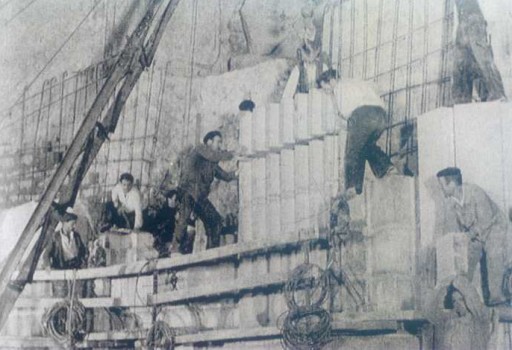
Republican prisoners building the cross
bodies

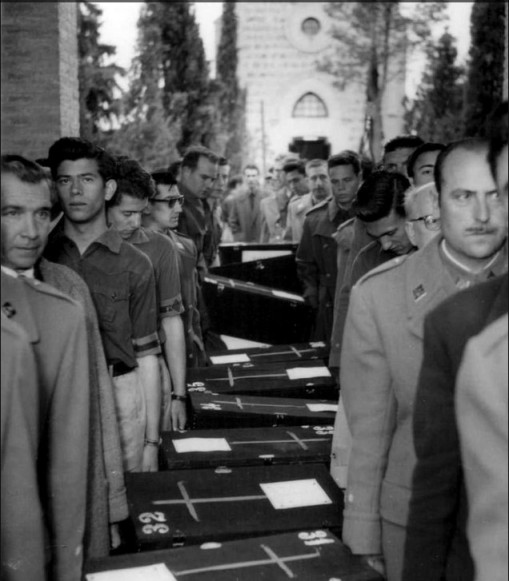
Remains of soldier killed in Toledo arrive to be reburied in 1959

1290096772854

Watching the opening of Valle de los Caídos in 1959

(click to enlarge the photos will launch an amazing slideshow of pics)

Franco created Valle de los Caidos in the Sierra de Guadarrama, the mountains outside Madrid city. Nearby is San Lorenzo de El Escorial, the once summer palace of the royal family (I visited, and the golden tomb is WELL worth the visit – for another post).  The trouble is, Valle de los Caídos was filled with the bodies of killed men, Nationalist (Franco) soldiers and sympathisers. It was a civil war, Spaniard against Spaniard, but those who opposed the rebel army takeover of the Republic were simply forgotten. José Antonio Primo de Rivera, founder of the fascist Falange party is buried there, and Franco was also placed inside a tomb under the basilica in 1975. The exact number of bodies laid to rest inside Valle de los Caídos is unknown, and could be anywhere from 30-35,000. In the last 10 to 15 years, a large number of Republican families and organisations have found the strength and courage to dig up their relatives who were murdered and thrown in mass graves around Spain. However, some have been removed from these graves and placed in Valle de los Caídos without family permission, which only serves to give this place an even more heartbreaking feel.
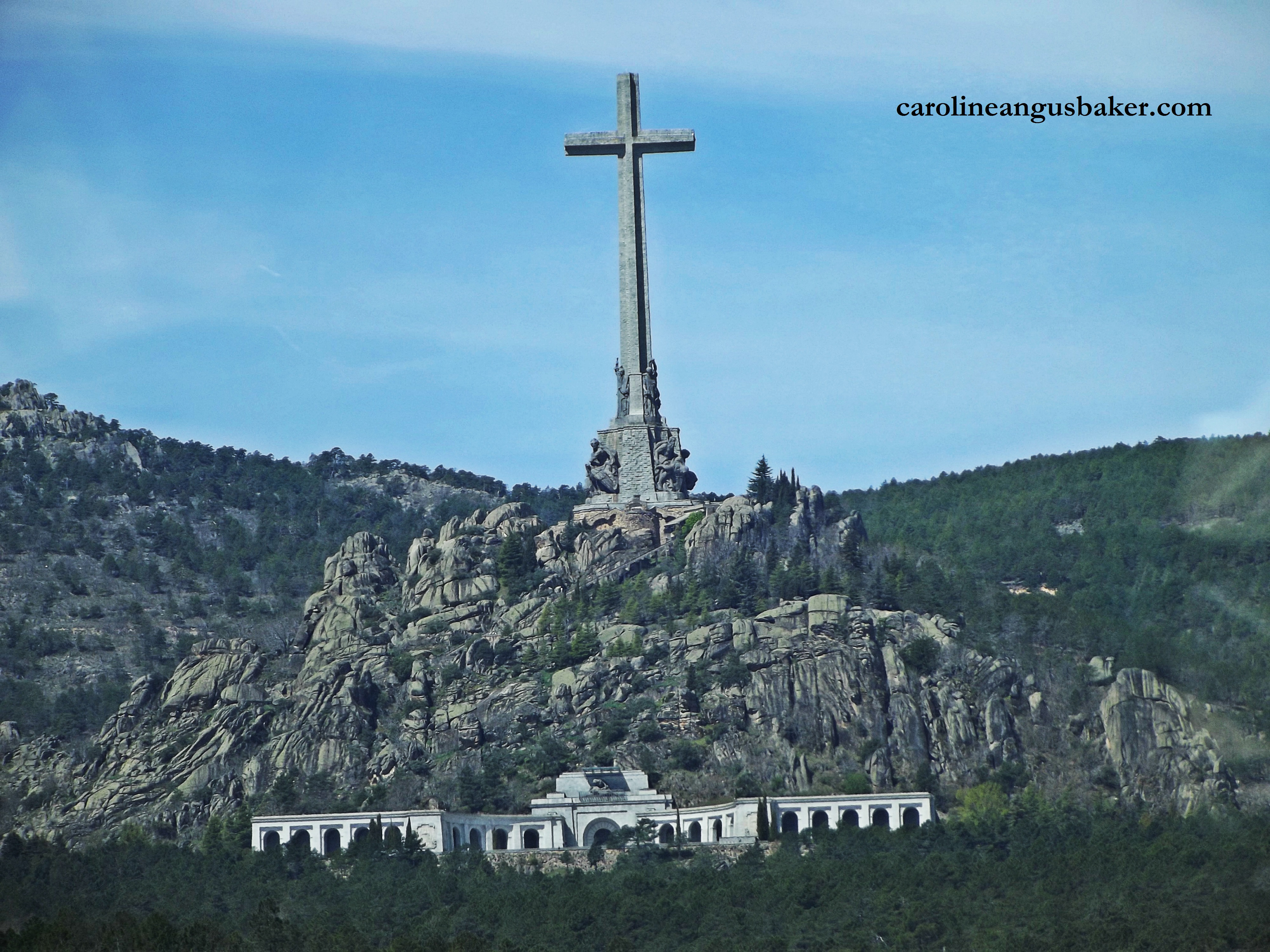
view1

View while driving up the mountain

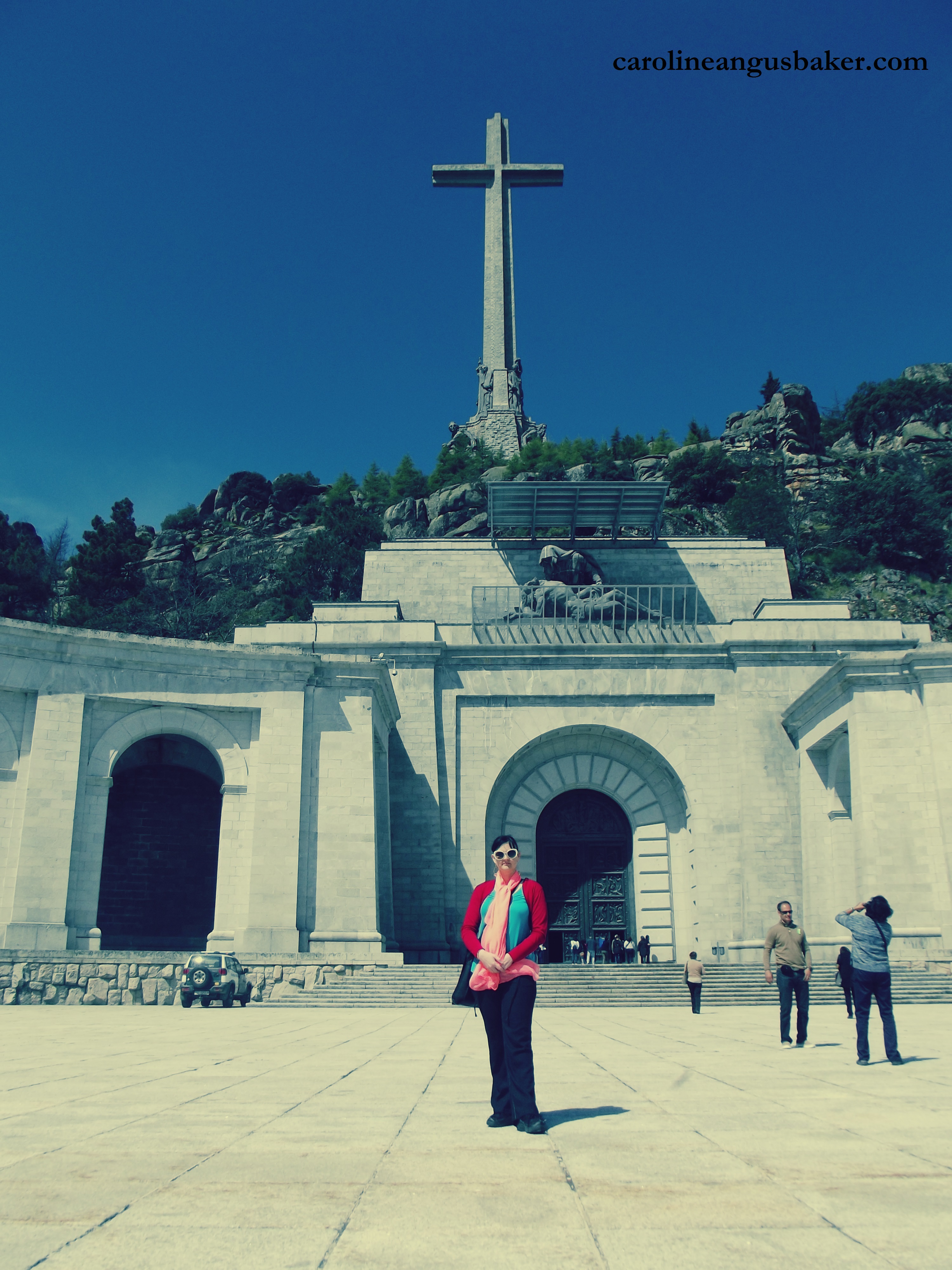
Political views aside, the sight of this location is incredible on its own. You can see it while driving along the motorway, sticking out of the otherwise peaceful mountains the surround the north side of the Madrid province. We went through an innocuous gate off the main road to El Escorial and made our way several kilometers up the mountainside on a bright and beautiful Sunday morning. You constantly catch glimpses of the behemoth through the trees, but until you are standing below the enormous cross  built on the hillside (152 metres, the worlds’ tallest), you cannot grasp the size and scope of the this place.

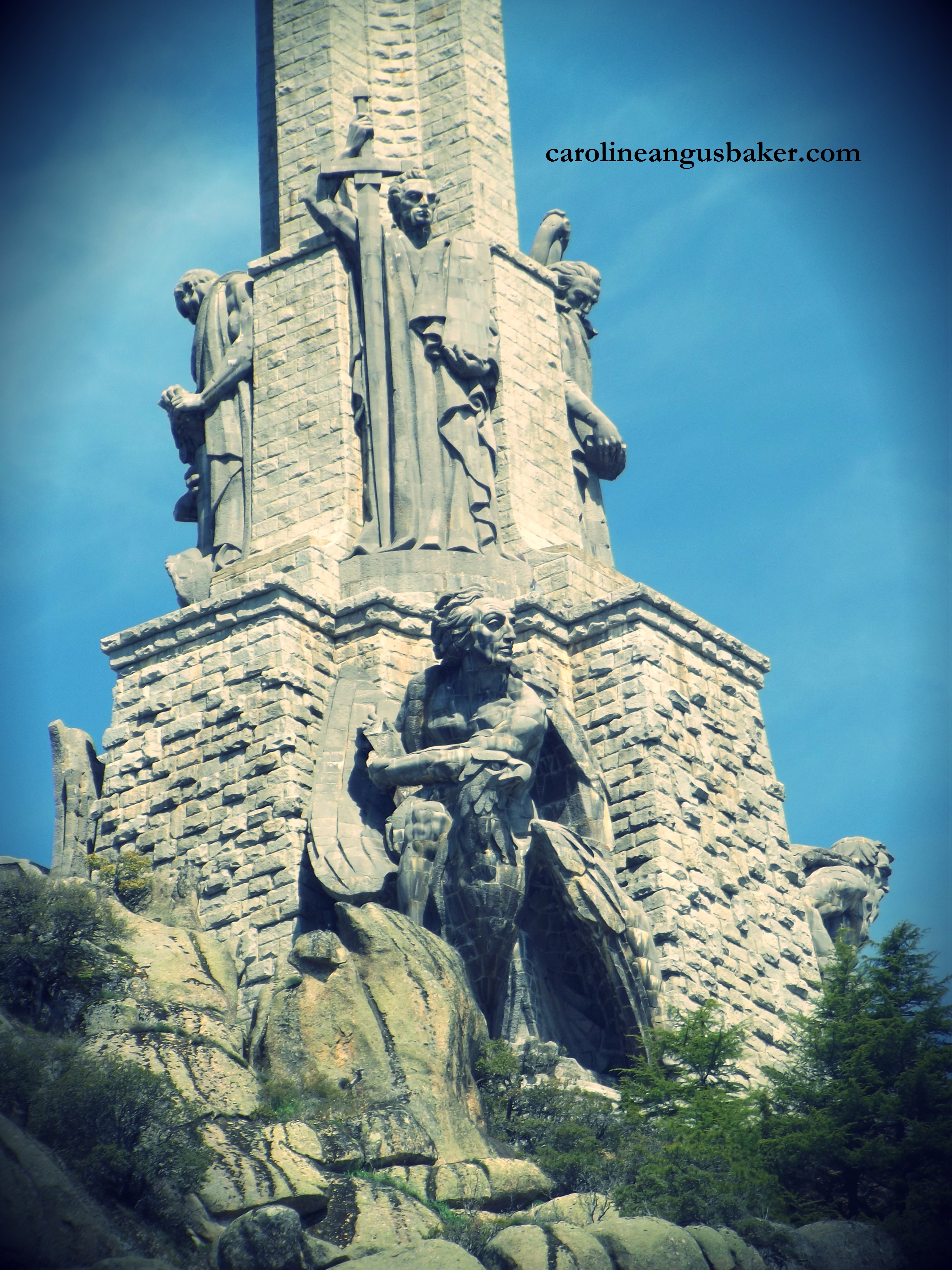
cross1

cross2

DSCF5120

The carpark was filled with cars and buses, and I suspected I was about to turn into another touristed location. Not so! Once at the arch doors to the entrance, the only people in sight were the Guardia Civil. The place itself is situated in a beautiful location and the quality of work done is exquisite. The place could have been built as a place to honour those lost in the war and the healing of a great nation. But given that the crypt is a basilica, and that the church oppressed the Spanish population and the Republican (or left-wing if you prefer) side didn’t support the church, there was never the possibility that the monument could honour both sides of the nation.
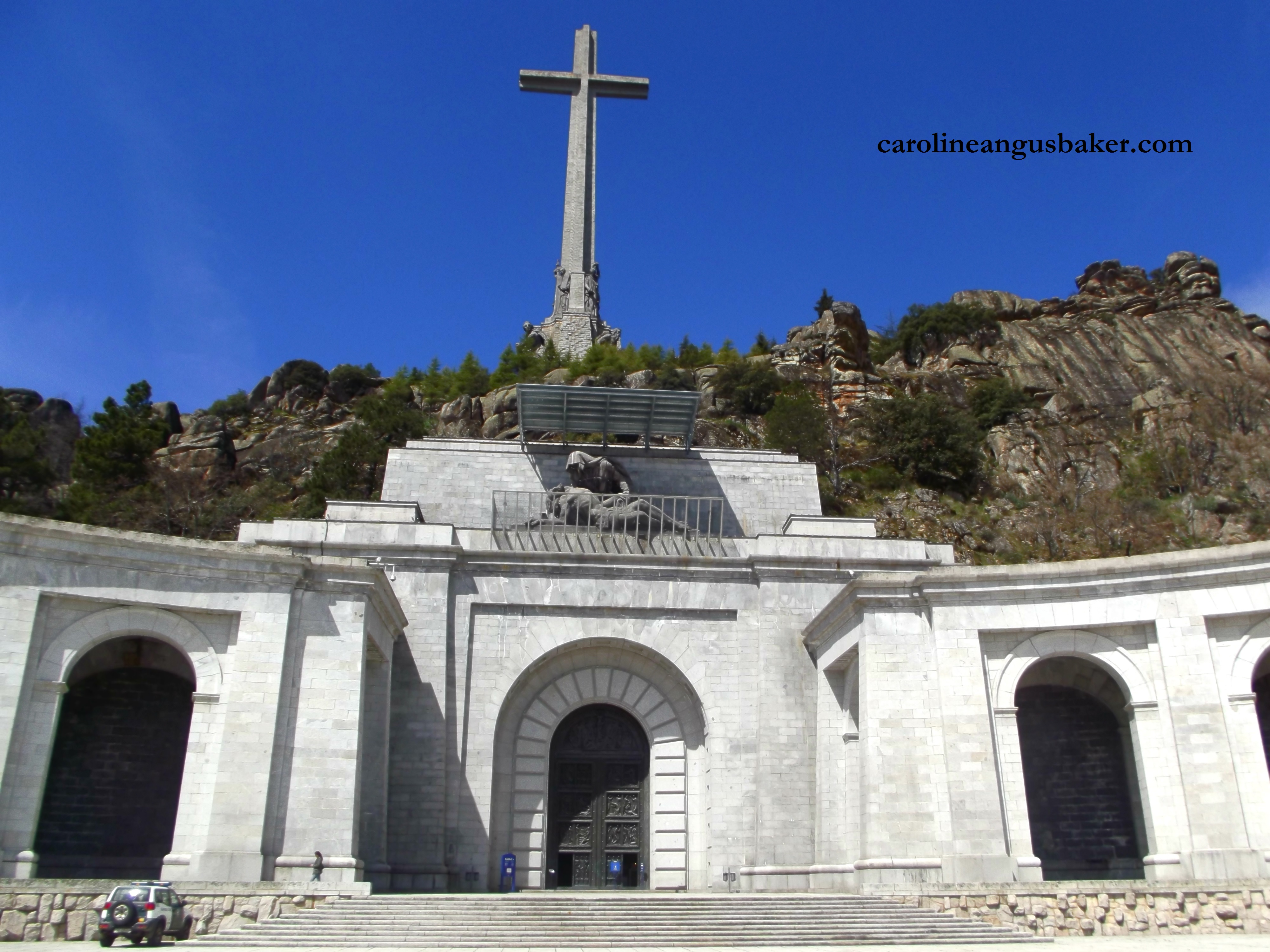
outside1

Entrance archway

outside2

View of the Sierra de Guadarrama

outside3

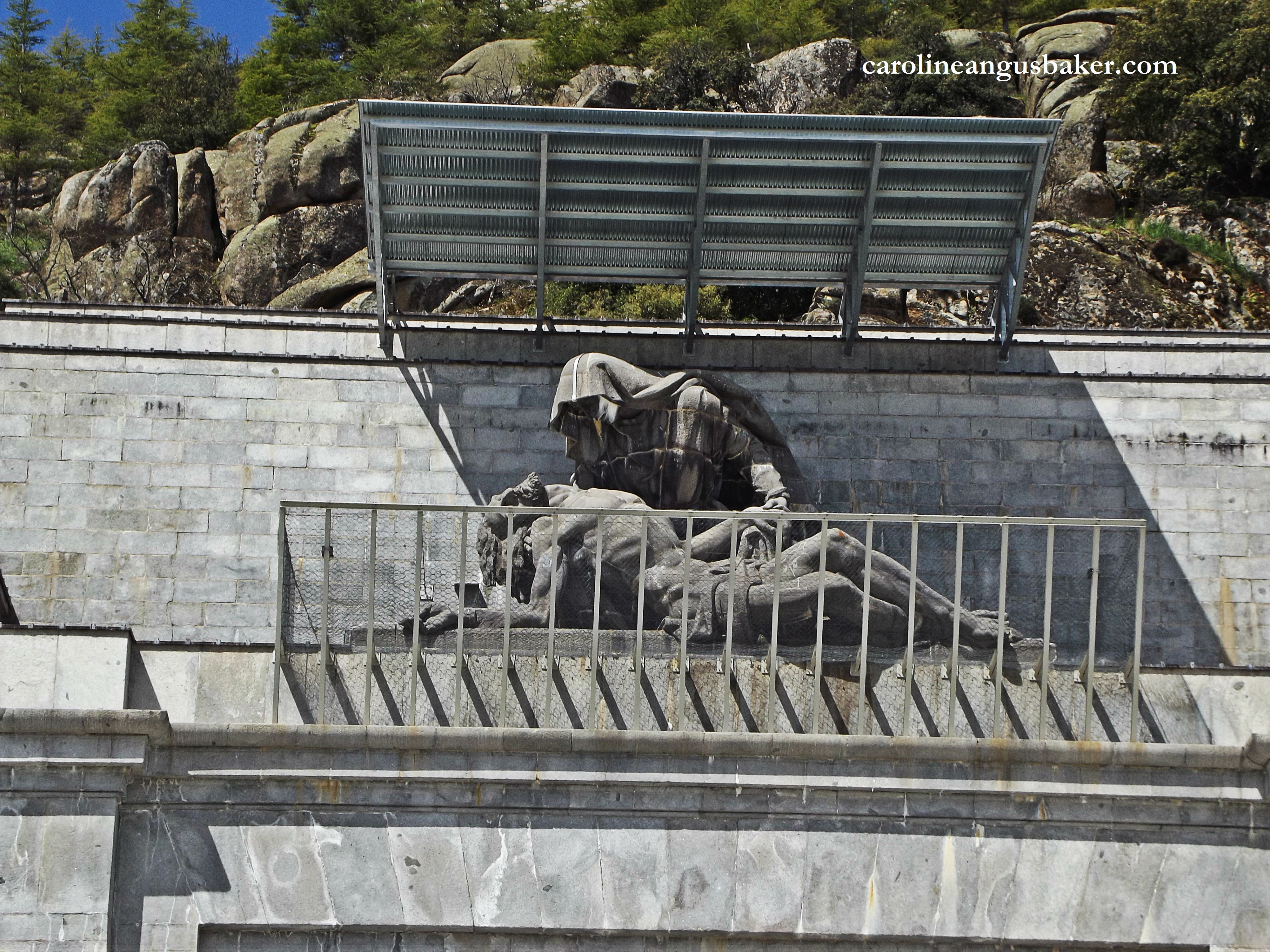
Statue over the entrance – The Pietá

I stepped inside, sadly unsurprised that there is gift shop (After all, what child doesn’t want a gift of a colouring book and pencils from a crypt, or a fan with Franco’s grave printed on it?) I put my camera in my satchel, as photos were forbidden, but I had my iPhone in my pocket, just in case. Then I entered the nave.

nave

Nave

Spain_Valle_Ceiling-1280

Ceiling over the altar

From the moment you go inside, the overwhelming and solemn feel of the cold and dark place takes you over. Giant gloomy and menacing angels brandishing swords bear down on you. The nave is filled with masterpieces of religious painting and tapestries. The attention to detail is second to none. I paused to take in them and the angel statues, but the foreboding sense of the place had already sunk into my bones. Mass was finishing up as I arrived at the altar, and I sat down quietly to listen to children sing in the choir. Children were singing in this place that spoke of death.

angel

Altar angel

Mass ended and the faithful began to wander around the altar, me included. The first thing I noticed was not the menacing  angels, or the elaborate golden Jesus, but the grave of José Antonio Primo de Rivera, which someone had left flowers. Now, can I judge those who come here? No, I can’t. I don’t know why they come. Perhaps their loves ones were buried here,  as Nationalist believers to the Franco cause. It was a civil war and everyone lost one way or another. Can I, or anyone, look down on these people for coming  to pray? No. Whether it’s for a loved one, to feel closer to the history of Spain, or even if they supported Franco, that’s their decision. But what about the people who came to leave flowers on the grave of the founding father of Spain’s fascist party? What was the motivation there? A grieving loved one, or someone with old evil ideas that haven’t been forgotten? It was shiver up the spine stuff.

IMG_1639

Altar

grave

As priests wandered about and nodded hello, I found what I had (kind of) came for – the tomb of Franco placed on the opposite side of the altar below the semi-circle of wooden stalls made for the monks and the choir. There lay flowers on the grave, and this time I saw no reason why anyone would place them there. There are many reasons why people continue to support Franco (and it’s a discussion too long for this post) and I don’t see the merit in any of them. Just to the right lay more floral tributes – dozens to be precise, which had been placed to one side presumably because of the sheer volume. A few people were taking photographs, under the watch of a guard. These people had laid the flowers and wanted to capture the moment, no mistaking their alliances in this case. I asked if I could also take a photo with these people and got permission. Why take it? I don’t know, it’s like watching a car crash, it’s awful but you can’t look away.

I was surprised by the state of the place. Perfection? No. Built into a mountain, they must fight their own war with damp, and you can see that in the granite stonework. Water seeps in here and there, which only gave the place a more unearthly and morbid feel. After all, we were all underground, surrounded by graves…

To the left and right are small rooms, with rows of seats and monuments to Spain’s fallen. People lit candles and families laughed and chatted with priests. What says family day out more than this? I sat in the right room, the entombment, which featured an alabaster Jesus statue. I sat and looked at the wall.  Caídos – Por Dios y Por España. Fallen – For God and For Spain.  All of Spain? Many disagree. Republicans denounce this place, and many here on this random Sunday wore Falange symbols on their lapels.

Placa_Valle_Caidos

Inside the chapel of the emtombment

I will admit it – I silently cried as I sat there, which drew the attention of a priest who thought I needed comfort, and the ‘comforting’ hands of old ladies on my shoulder. Me, the young Catholic attending Mass here? Oh boy, that couldn’t be more untrue.

I headed back through the place, fairly certain I wouldn’t ever be back. I stopped by the gift shop to buy a book on the place, in Spanish, about how the place has reconciled Spain. Hmm. I also grabbed an excellent copy of a collection of civil war photographs. The crypt trinkets and religious adornments could stay where they were. After all, who would wear a Valle de los Caídos t-shirt? Why would you, and for what purpose?

The shining moment came as I left the crypt and stepped out in the sunlight. There stood a group of men, all aged 70 or more, hailing a fascist salute at the cross above the entrance. It was well and truly time to leave.

view

Panoramic view from the main entrance after the fascist saluters said hello and went inside

If there is one thing, it’s that this place is full of emotion. Good emotions? Not all of them. No good ever came from a fascist salute, but it would be too simple to label everyone who visits there, whether they’re crying at Franco’s tomb or having a picnic outside in the sunshine. I am not a religious person and I am not going to tell Catholics how to pray to their God in that Basilica. The books I bought there, their glossy pages gloss over Spain’s history entirely – after all this time, the war and the subsequent dictatorship is not talked about like it should be. Spain shouldn’t have to hide its past. It has been 74 years since the end of the war and yet its presence still lives in Spanish life, whether people say so or not. In 2011, it was decided that moving Franco’s body would be a way of restoring Valle de los Caídos’ image and making it a truly impartial monument to Spain’s fallen, however as the crypt was elevated to Basilica status, the church can decide, and their opinions are not so easy changed.
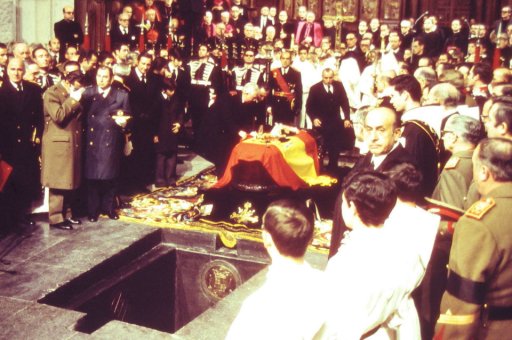
Entierro-de-Franco-en-el-Valle_54064507265_960_639

Franco’s burial in 1975  I wonder who the crying  guy is on the left (click to enlarge and view slideshow)

My personal opinion? The place is worth the visit, despite being a pain to get to if you don’t have a car. I travelled alone, and would I want to take my young family there? I’m honestly not sure. It’s not something you will find in the Spain brochures during your Ryanair flight to the beach in Benidorm or Malaga. But if you’re into Spain history, or have a personal or familial connection to the civil war (as have I) you really should visit. Just leave your camera behind and hush your opinions while you’re there. I know what side I stand on, and I took the bus back to Madrid, convinced more than ever of my opinions. But they remain mine. The other people there were very polite, and believe in what they love – that Spain was better under Franco. Nothing I stumble out in Spanish will make the slightest bit of difference. Check out this photo of a wedding over Franco’s tomb though, that was a surprise find. Just goes to show how divided this place can make people.

Photos by abc.es – protesters waved Republican flags and supporters gave out fascist salutes when Valle de los Caídos reopened. The salute seems to be pretty popular

valle-caidos

Want to visit for yourself? – Valle de los Caídos website

Up next, Part 8 of A Little Jaunt to Spain…. Learning to be a tourist in Spain

Click here for past editions of A Little Jaunt to Spain – Spain 2013 in Review

All photos are author’s own, or linked to original sources
A LITTLE JAUNT TO SPAIN – REVIEW PART 5: Madrid Food Tour with James Blick

IMG_3527

Never complain to a kiwi about flying. Anything less than 12 hours is practically short haul. It takes 30 hours to fly Auckland to Madrid (via Brisbane and Dubai), 25 hours of that in the air. I didn’t sleep the entire trip to Madrid yet again, but I did enjoy watching the scenery of flying over places like Iraq and Turkey. I hit the ground in Madrid, a city I hadn’t visited in seven years. It had all the familiarity of being Spanish, but still, the place felt a bit like a maze.
walk

Madrid is beautiful place to get lost

Little did I know. After one of those awful half-hour naps, I found myself outside the coffin-shaped Teatro Real on a mild  Saturday evening. It was time to get well and truly lost in Madrid by night. A while back I discovered Madrid Food Tour through founder Lauren Aloise, who put me through to James Blick. In true style, you can’t travel anywhere without running into another New Zealander, so to find I would be tripping around Madrid with another kiwi came as no surprise. I had never been on a tour of any kind before; I’m not a fan in any respect. If anyone can change my mind about something, it’s James Blick.
tabernareal

Taberna Real

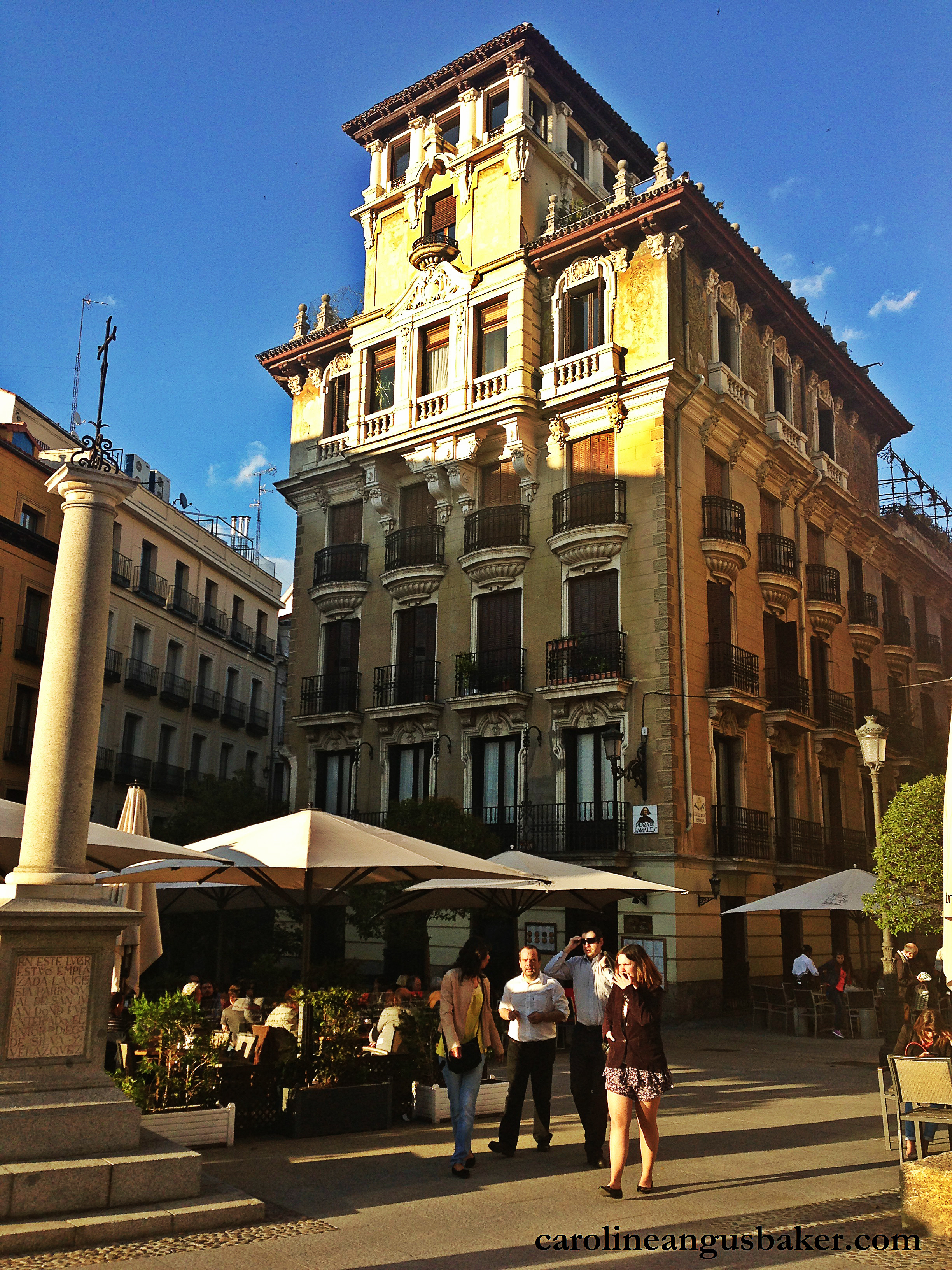
I can only try to convey the fun to be had on the Tapas and History tour. It’s a sights, sounds, smells and tastes experience that needs to be grabbed with both hands. James’ enthusiasm for his city is irresistible, and matched with several engaging couples from the around the world, I started the evening with vermouth at Taberna Real, followed by a warm evening stroll. Plaza de Oriente was filled with families enjoying the last of the sun, along with musicians and locals enjoying a drink in the fading light. It is a part of Madrid I haven’t really wandered much, so by the time we  left Plaza Ramales, the burial place (or not-so burial place in the case of the missing skeleton) of the famous Diego Velázquez besides San Juan Bautista church, I was already lost in Madrid. Not that I really noticed, given the charming company and keen wit of our tour leader.

ramales

Plaza Ramales

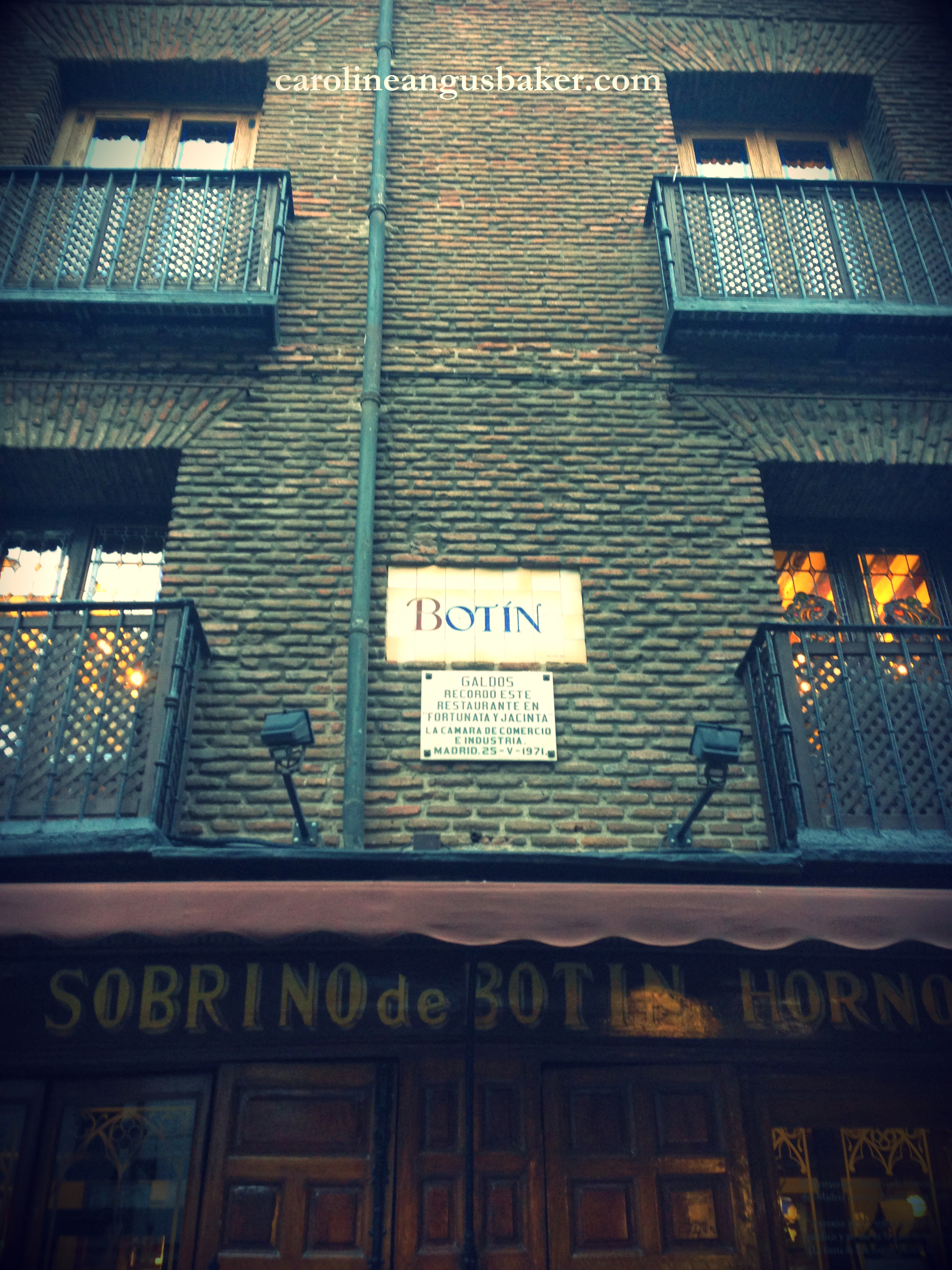
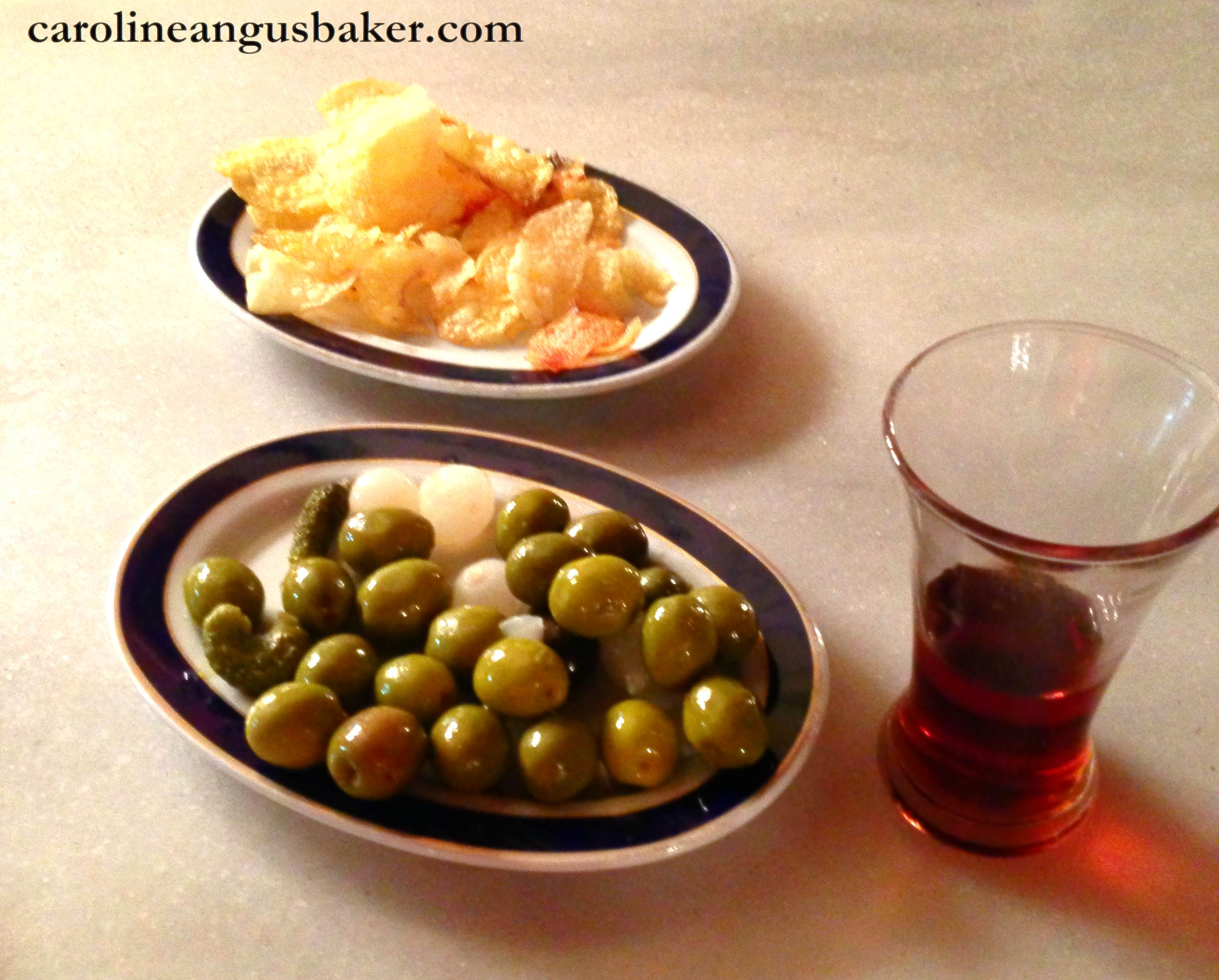
 A quick walk through Plaza del Villa and down past Restaurante Botín, the world’s oldest restaurant, the next bar we stopped at was the kind I love – a tiny place, standing room only to sip wine and eat Spanish deliciousness.

botin 1

botin 2

Restaurante Botín

I admitted my dislike for red wine, which set James a challenge to change my mind. Between the chorizo, blue cheese, anchovies and other such snacks, the red selected for me was excellent. Having the chance to visit places with someone who knows the history of the place greatly enhances the atmosphere.

cuchilleros

IMG_3830

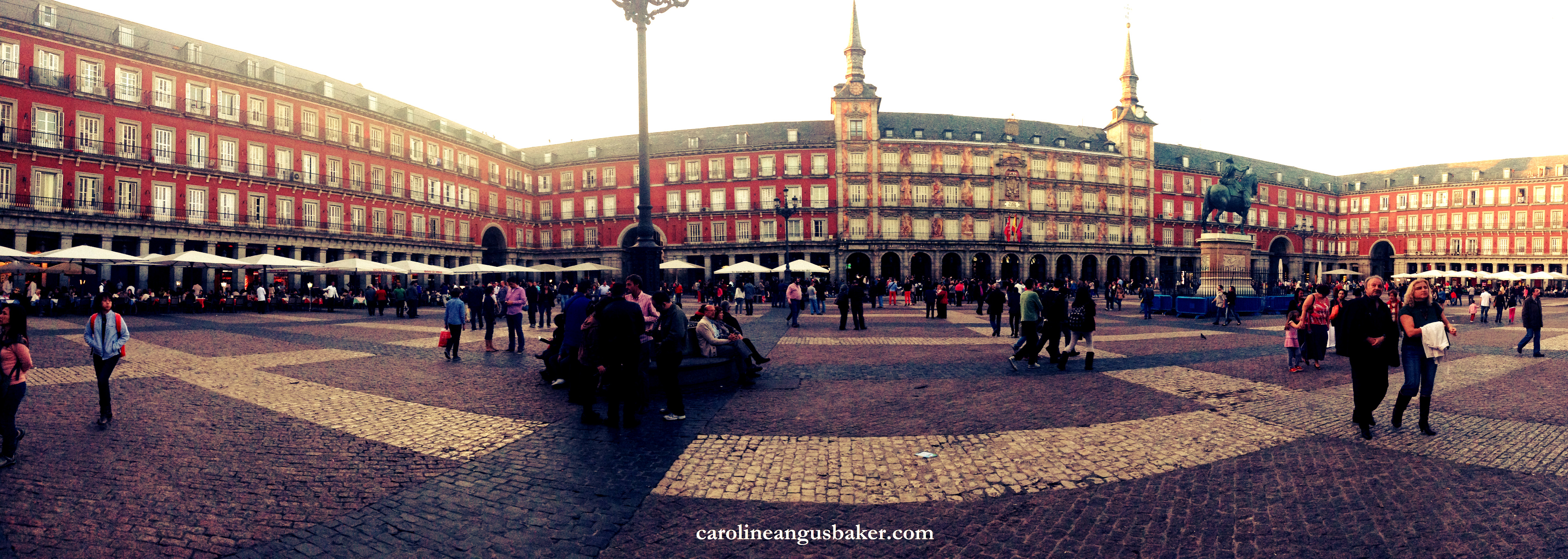
As the sun began to set, we headed back up Calle de los Cuchilleros and through the archway into Plaza Mayor. I must admit I had never been there, as I’m no fan of crowds of tourists. However, as the sun set the place was rather quiet. We wandered and talked about the Spanish Inquisition and various other activities to have taken place in the square, before heading out in search of better restaurants than the ones on offer in the plaza.

mayor

Plaza Mayor

sunset

Wandering Madrid during sunset

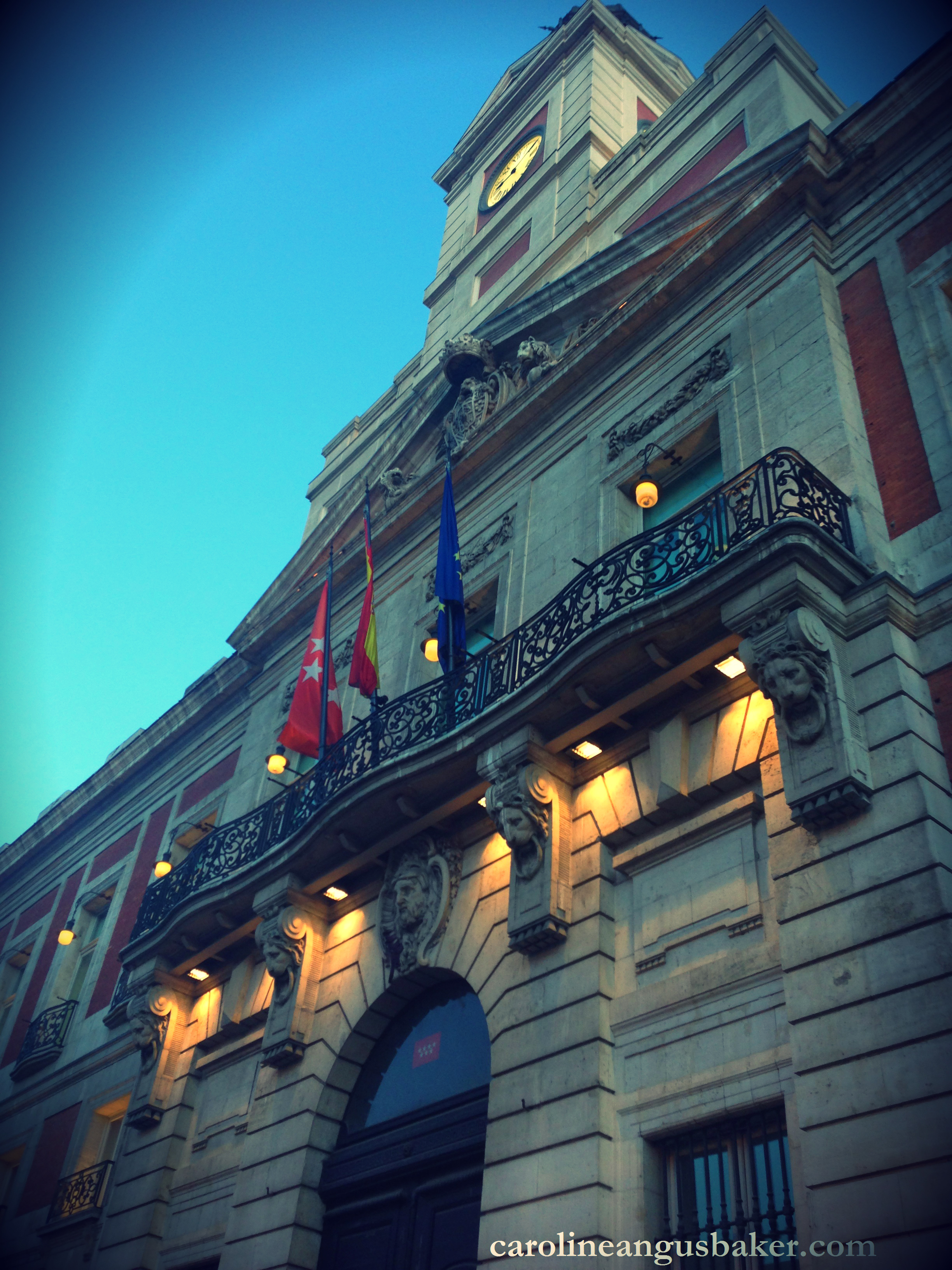
We stopped in Puerta del Sol, to discuss the more of Madrid’s history for those new the place, before we carried on to somewhere the nerd inside of me was excited to visit. (By this time, everyone knew I was a Spanish history nerd, no need to hide it.)

sol

All quiet in Puerta del Sol

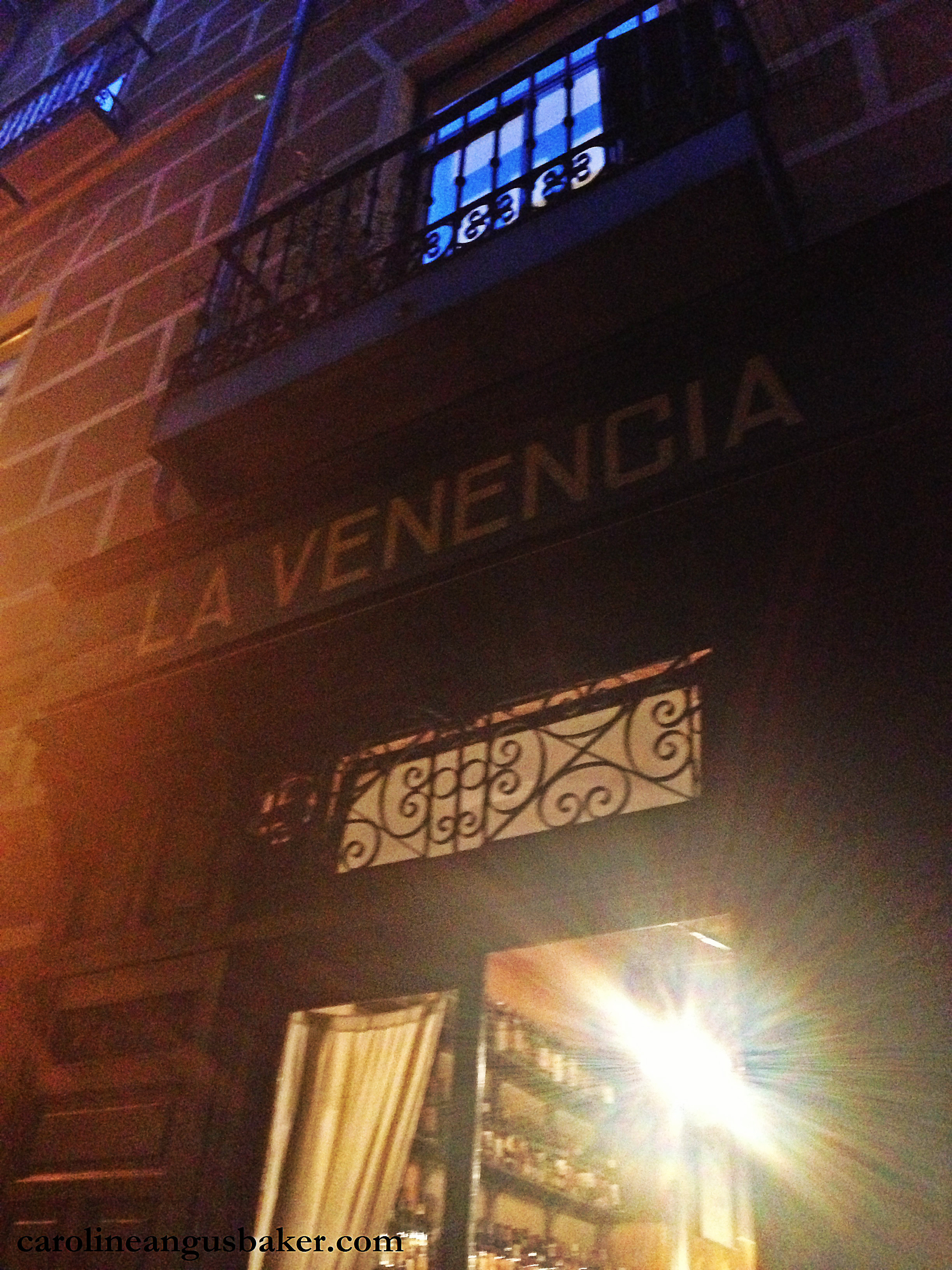
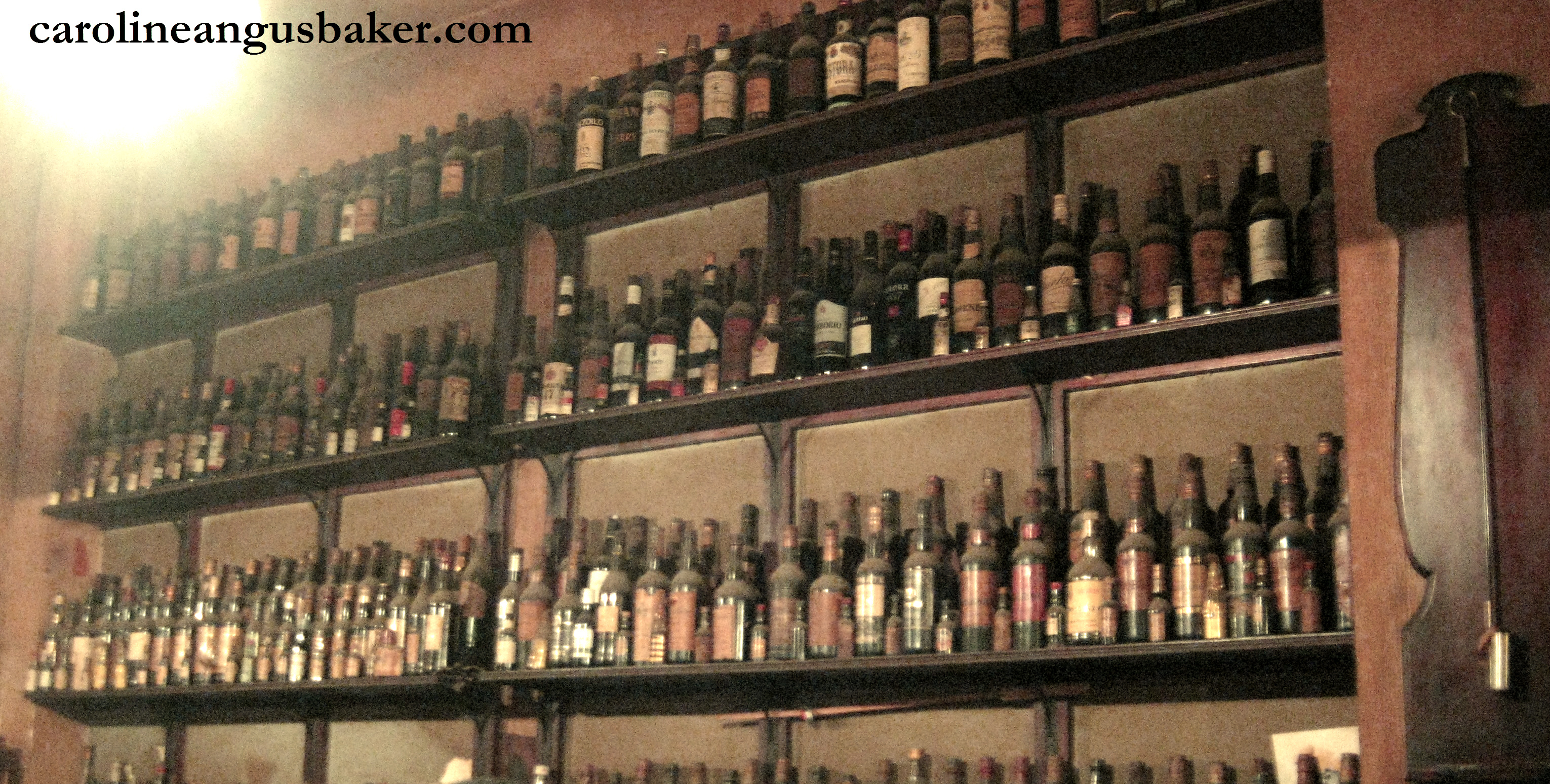
We took in sherries at La Venencia, which I can only assume is named after the tool you use to take a sample of wine from the barrel. It is none other than the sherry haunt of Ernest Hemingway, a man who was still fresh in my mind after re-reading most of his work in the lead-up to my re-visit to Spain. The place looks like it stepped out of the 20’s, and rightfully so. James pointed out that it’s not cool to take photos inside the bar, but I may have accidentally slipped with my iphone and taken one of the dusty sherry bottles (don’t worry, the barman saw me and gave the nod of acceptance).

venencia

sherry

Hanging out at La Venencia

The sherries James selected on our behalf were great and very different to each other, as was the conversation between our spirited bunch. It was well and truly dark by the time were spilled back out on the street in search of another restaurant close by.

IMG_3800

ME Madrid Reina Victoria hotel

The final spot of our evening delivered us more delicious fare and more too-easy-to-drink red wine. By now, a combination of alcohol and jetlag allowed for fun and informative conversation, even if the  nearby guests looked at me strange every time I said ‘Franco’. Hey, I was hating on the guy, no big deal! The opportunity to sit in a restaurant in Madrid, early into the morning and talk about Spain, its history, its culture, its economic collapse was exactly what I had come to Spain for.

lorca 2

Hanging with Federico García Lorca in Plaza Santa Ana

By the time we had wandered back in the direction of Puerta del Sol, the streets had started to empty out and I was more lost than I have ever been in my life! James was kind enough to walk this afraid-of-the-dark woman back to her hotel, and along the way gave out plenty of helpful tips for my solo stay in Madrid.

IMG_1596

Cape shopping, anyone?

Without a doubt, the Tapas and History Tour of Madrid with James Blick is a 10/10 must-see activity. I know my fair share about Spain, but I wasn’t left feeling like I was hearing basic info for first-time visitors. Our group of was a mix of Spain aficionados and newbies, and everyone came away feeling happy and fulfilled.

IMG_1603

I came to Madrid for the bullfights, so I had to get this snapped

I spent a few more nights in Madrid, dominated by friends and beverages before heading on to my more familiar locations around Spain. However, my final two nights were based back in Madrid to take in some bullfighting at Las Ventas.  so I decided catch up with James again for another tour.

I met James in central old-town Madrid and set off on an all different tour of the city. San Isidro was in full swing throughout Madrid, and was the reason I chose Spain in May (and not for the weather, because Madrid, you were FREEEEEEZING that night!). We stopped and took in a view of Casa del Campo as the sun began to set. I wasn’t able to visit the place where two New Zealanders died during the battle of Madrid in 1936, but at least the opportunity to talk about the history of the place with people who were genuinely interested almost made up for it.

vermouth

Vermouth dominated the beverages

The streets were full with locals out despite the cold, and after a visit to a church and a helpful San Isidro lesson, in true Spanish style the bar still wasn’t open, even though we were running late. We settled in another bar for a pre-dinner drink- drink (that’s a thing!) to discuss the civil war. (James is well aware of my nerdiness and chatted accordingly. I appreciate his patience.)

Once we couldn’t cope with the cold any longer, we went into Bar Sanlúcar, a small and fantastic place in La Latina. Between the wine, vermouth, bullfighting memorabilia, Andalusian music and salmorejo,  it is a perfect place to visit. It was full of locals enjoying a drink, and we talked about the food, the bar, and the ambiance of the area.

tickets

Bullfighting tickets… why not?

On the three of us went in the cold, discussing Spain’s current economic situation, before we stopped at a great Basque bar. I say great, because it was standing room only, and even then, it was standing against each other kind of popular. We had the chance to partake in Txakoli (chacolí in Spanish), which is poured at a great height, enough to let the white wine fizz nicely. As a white wine lover (no apologies!) I really enjoyed it. The pintxo to accompany the drinks was rabo de toro – oxtail sandwich – which was a weird flashback moment for me. I was fed a lot of that as a child in New Zealand, and didn’t expect that familiar flavour to come rushing back in Basque bar in Madrid. I digress. Whilst you can’t exactly feel the salty air of the Atlantic blowing on you in Madrid, you can  understand why so many people flock to the Basque country for the food and wine. If you haven’t… why not?

oxtail

Oxtail sandwiches, baby

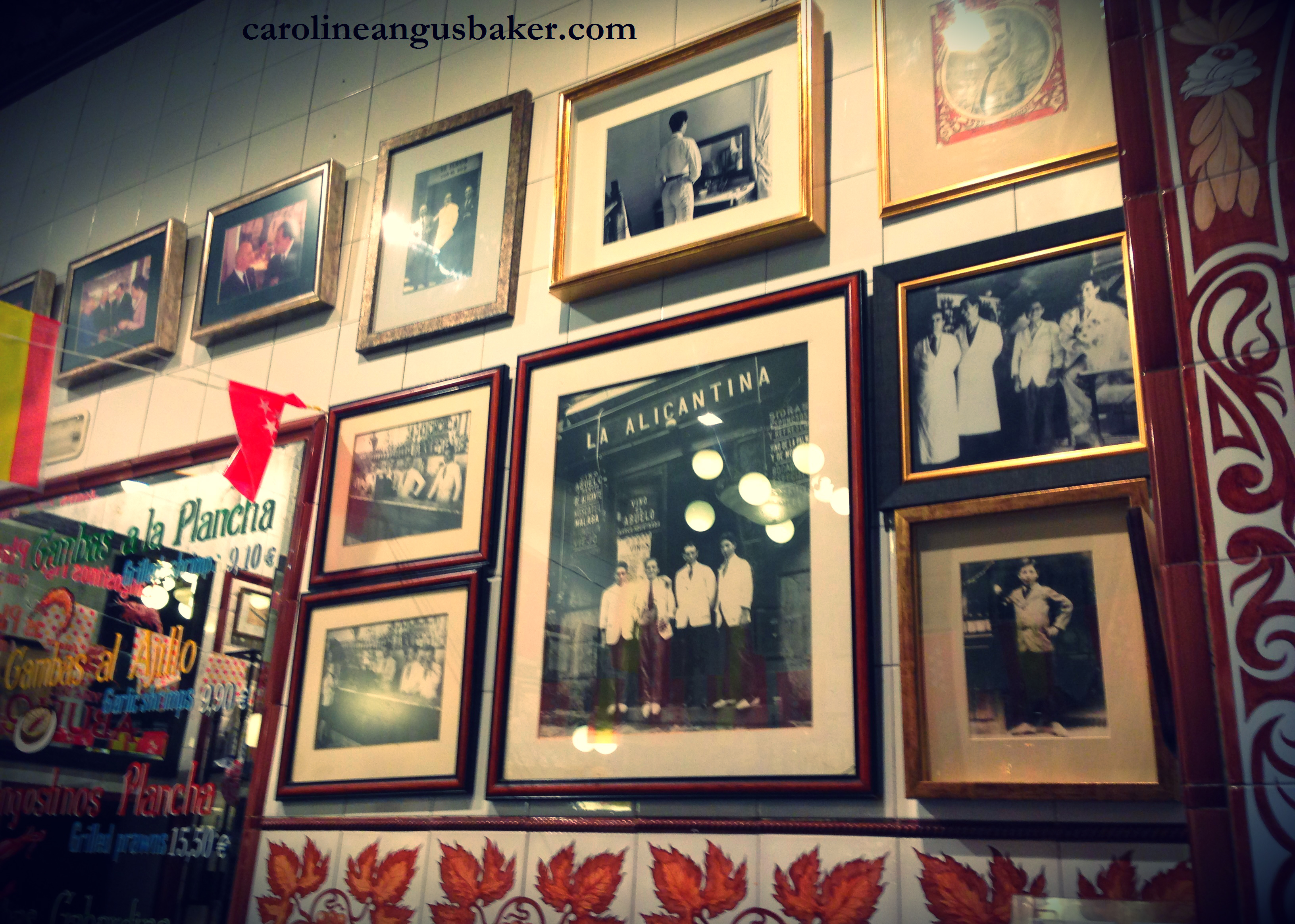
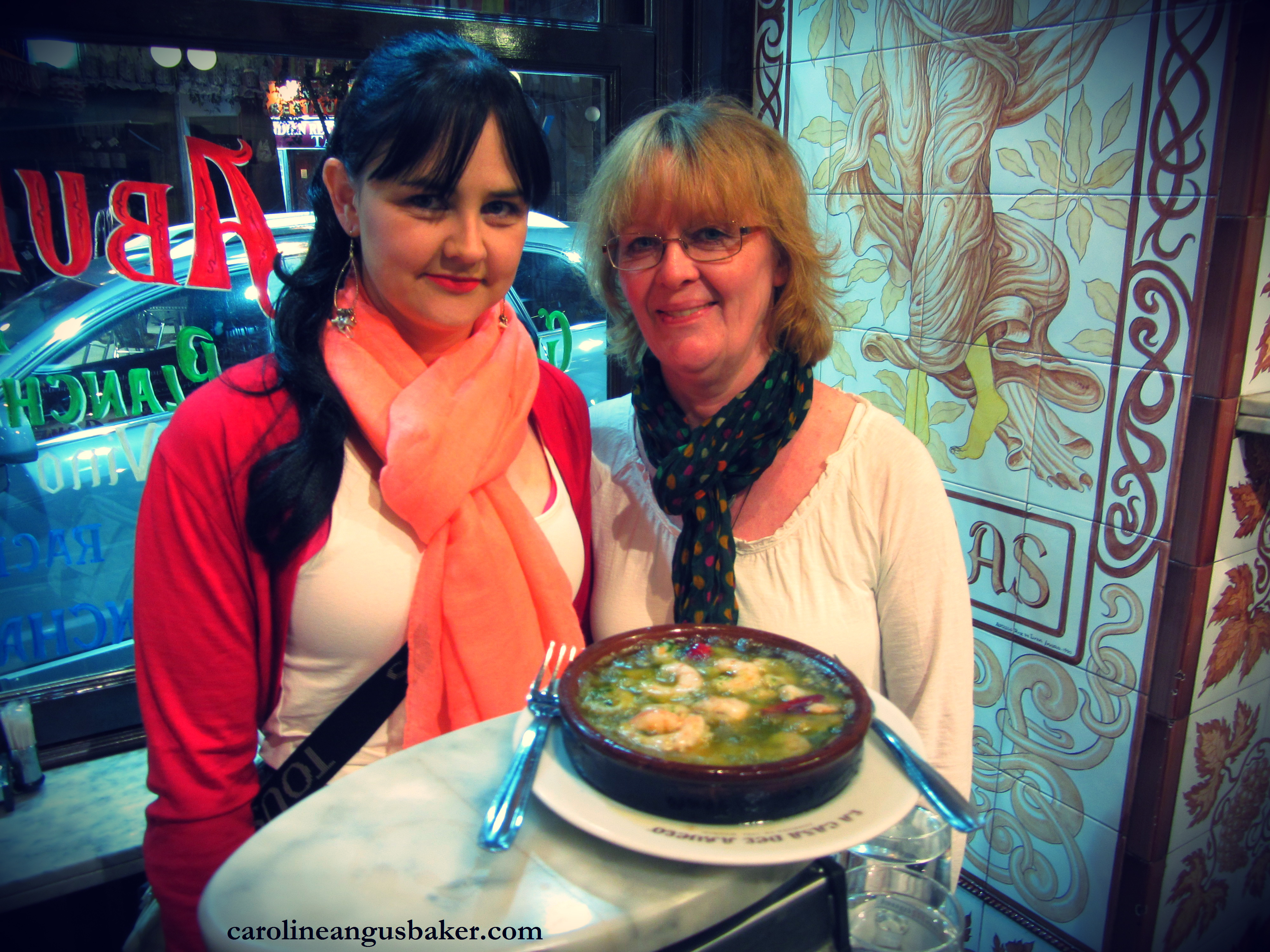
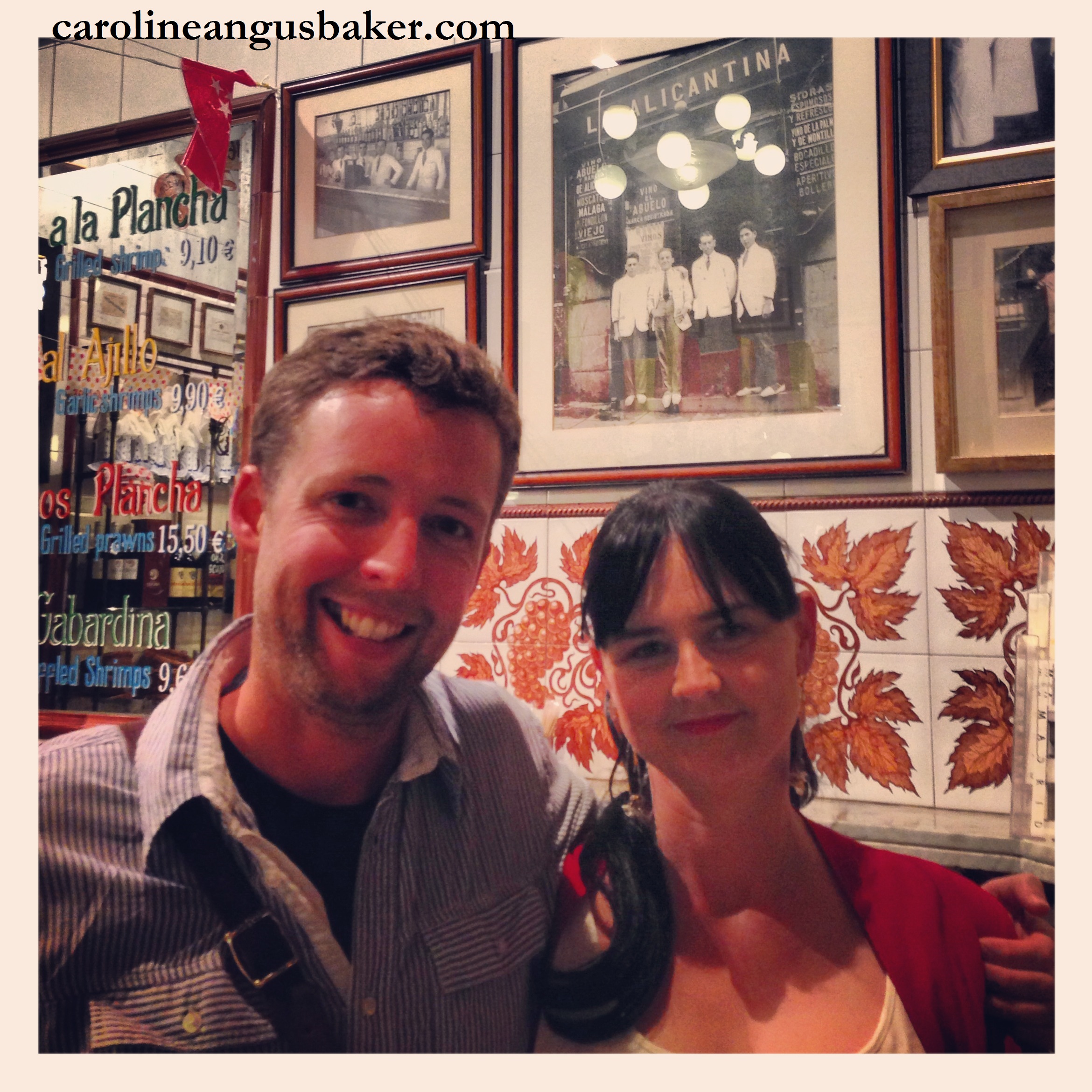
On we marched, discussing tips to get the best from El Rastro (I won’t lie, I’ve been once – not my thing) before we stopped at the 100-year-old shrimp institution La Casa del Abuelo on Calle Victoria. It was already late by the time we jumped in from the cold and the floor was littered with napkins and shrimp bits – a Madrileño homage to the greatness of the place. (As a kiwi, throwing my rubbish on the floor in appreciation is something I still feel weird about, even now.) You don’t need to be crazy for shrimp or prawn to eat here, everything is cooked on the plancha (flat grill, for lack of better translation term) and served in garlic deliciousness.

wall1

I didn’t just take the decor pic to snap Manolete’s butt (top centre), I promise

abuelo

Me (left) with great shrimps

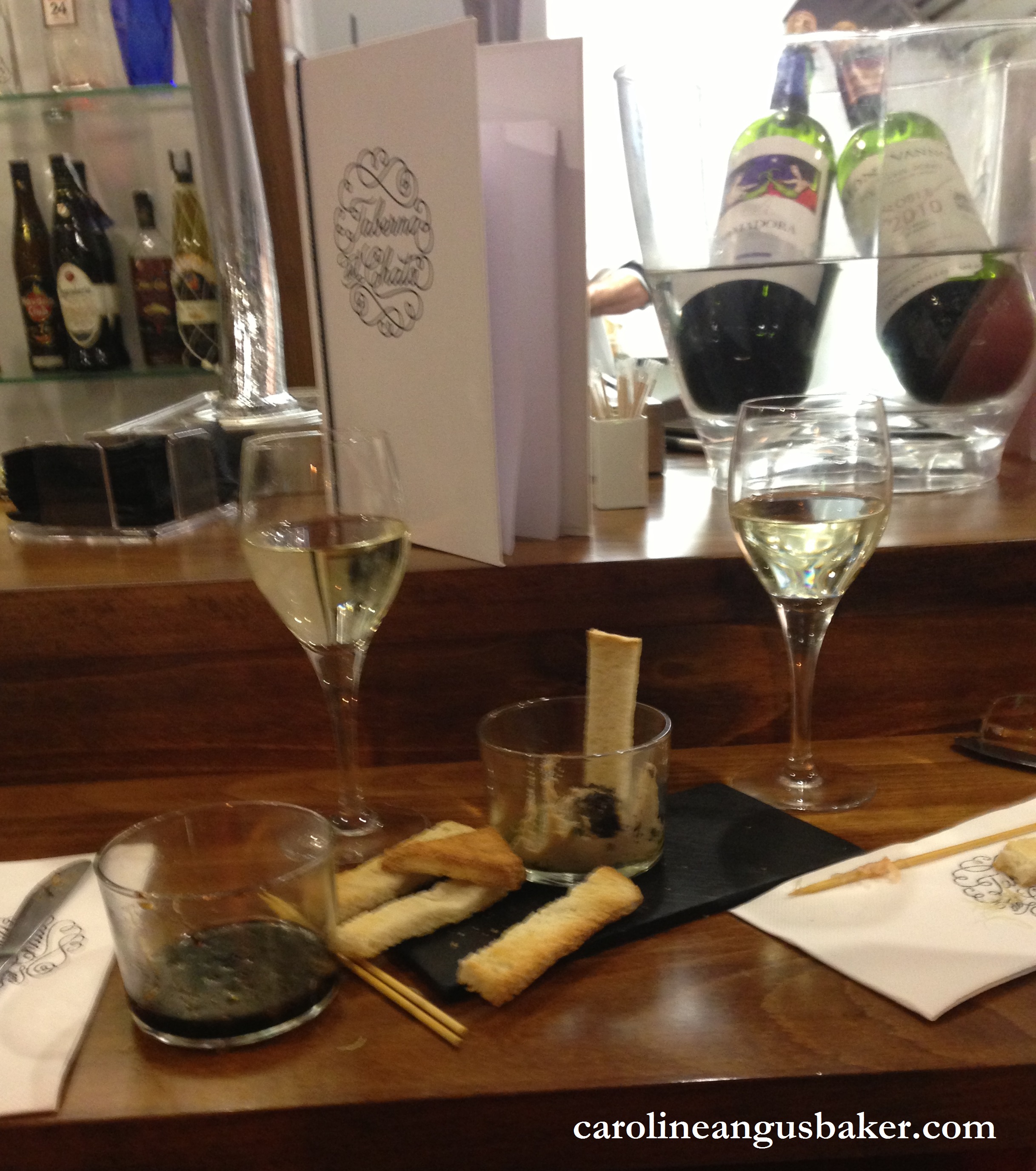
Our last stop was a more modern style of restaurant, Taberna del Chato. With more white wine and a chat with the guy behind the bar, I can barely recall what we had on the toast. If James could fill in me, that would be great!  The restaurant was a complete contrast to the very traditional shrimp place before; James gave us an excellent mix of what is available in Madrid.

IMG_3449

White wine and… something

Despite it only being about 1am, we stopped at Chocolateria San Ginés, the place where everyone knows their churros. More suited to those stumbling out of bars at 5am for the past 120 years, the place was quiet as we laughed, chatted and looked at the photos of celebs who have needed churros to soak up alcohol for them over the years.

sangines

Churros. It had to be eaten

It was 2am before we were finished and Madrid was cold enough even to chase two kiwis indoors.

Sure, you could probably find these bars and restaurants on your own, and stumble your way through the menus, but you wouldn’t get an experience half as good without James Blick on board. The Tapas and History Tour constantly gets rave reviews and it’s easy to see why. Whether you already know Spain or are brand new, James’ unique, committed and sincere passion for Madrid provides a tasty, eye-opening night out. Whilst daytime Madrid left me wanting, night-time Madrid is a great place to get lost, as long as you have James Blick to navigate your taste buds. Of course, some people couldn’t think of anything more boring than discussing the Spanish civil war all night, but the beauty is that the night can take whatever path you like. Your tour, private or as a group, is tailored to what you enjoy.

drink

To book a tour with James Blick, or one of the other tours available – Madrid Food Tour

To read reviews about James, Lauren, Alejandro and Kay and their Madrid Food Tours – Madrid Food Tour – Trip Advisor (currently ranked #1 activity in Madrid!)

Like food blogs? – Madrid Food Tour Blog

James Blick’s Blog – Madrid Chow

Lauren Aloise’s Blog – Spanish Sabores

Up next… Part 6 – Bullfighting: Madrid vs Valencia

Click here for the Spain 2013 in Review series – Spain 2013 in Review

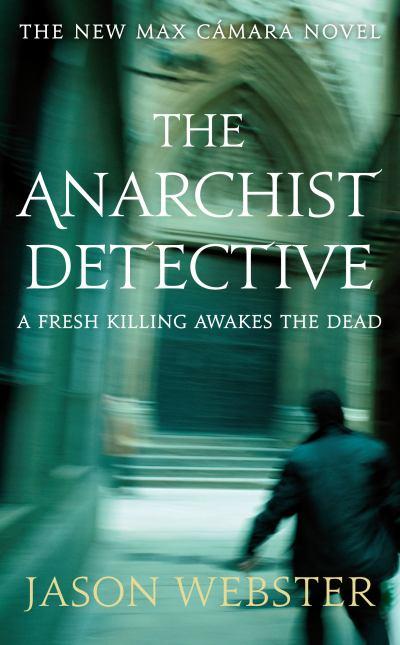
SPAIN BOOK REVIEW: ‘The Anarchist Detective’ by Jason Webster

the-anarchist-detective

Sent on leave after his last, brutal, case, Max Cámara returns to his home town in La Mancha, famous for producing the finest saffron in the world.  

There, the past keeps pulling at him. The town is exhuming a mass grave from the Civil War, but why is his grandfather behaving so strangely? His old friend Yago is investigating a particularly nasty murder which sets off memories Max has been trying to bury for years. And then there are Yago’s whisperings about a saffron mafia…  

Max finds himself plunged into the thick of a complex and intensely personal case that will put him in severe danger and have him questioning his past – and his future in the police.

~~~

Max Cámara, the cynical, persistent, pragmatic, intelligent, likeable Spanish detective is back and better than ever. Valencia’s most dogged detective is on leave, and in self-imposed exile in Madrid, to cook, read and have sex with the lovely Alicia. But is that enough for a man like Max?

Max is pulled back to his hometown of Albacete, a place he has sought to run from his entire life. The author expertly describes the mood of this provincial Spanish area; the stark landscape that surrounds the barely-enjoyable place is evident throughout. It’s dirty, it’s stuck in the past, it’s a place where any man would want to leave his memories behind.

The character of Hilario, Max’s grandfather, once again steals the show with this witty lines, stubborn attitudes and bold behaviour. Hilario is a link to the past that Max cannot escape, and as more details of the man’s past, and the past of his relatives, come to life in Hilario’s unremarkable apartment, the reader can learn more about Max than ever before. With the last two novels, Or the Bull Kills You, and A Death in Valencia, hints of Max’s life have delighted and teased, but now so much of Max’s troubled past bursts from the page, serving to illuminate the character and make him even more complex and yet more relatable.

Pressing issues in today’s Spain dominate the storyline; when a young girl is murdered, Max finds himself on the trail of murderers and also corrupt leaders, their hands yellow with the stain of saffron smuggling. Max juggles this modern-day issue, along with ghosts of the past; the local cemetery is digging up Civil War and Franco victims, and the two events are more interlinked than Max could imagine. The conversation surrounding the idealisms of pre-war Spain are explained in such a way that those with little knowledge can easily understand, along with the fear imposed on the population in the post-war 1940’s. Sentimentality is spared as the facts are told through the eyes of a person who has had to deal with the reality of living in such times.

Webster brings the book and its themes to life through comfortable and believable relationships between the characters. Max and Hilario’s family connection is convincing and authentic, and his relationship with journalist Alicia is refreshingly realistic. Any person who has suffered a difficult childhood and wished to leave their early life behind can feel Max’s desire to run and never look back.

The whole novel, dominated by the stuffy atmosphere of Albacete, holds Max in a kind of purgatory in which he needs to escape. Is the future back in Valencia? Perhaps Madrid? Max may be able fight crime and lay ghosts to rest, but can he stop himself from sabotaging his own future?

The book reaches a satisfying and poignant end, and leaves plenty of scope for yet another Cámara installment. The scenes in the hospital can feel very close to home. Readers may never put saffron in their cooking again without thinking twice. Even Max is looking at his paella sideways…

The Anarchist Detective is the best Max Cámara yet. Webster’s talent with this character strengthens with every installment. Spain’s past and present weave together to produce an eloquent and emotional novel that can be read in a single sitting.

The Anarchist Detective – 5 stars! Superb must-read

Available in hardback and on Kindle – The Anarchist Detective by Jason Webster

A LITTLE JAUNT TO SPAIN – REVIEW PART 3: Barcelona and the civil war history tour with Nick Lloyd

Barcelona. The locals are fanatical about their hometown, and tourists flock there like teenage boys to a wet t-shirt competition. I spent three hours on a high-speed train from Madrid, screaming through the Aragon region at 300km/h, imagining what the Spanish civil war fronts in the area would have looked like. The landscape between Spain’s capital and its Catalonian equal changes remarkably, and from each hill, mountain range and abandoned farmhouse, I sat with my face glued to the window (and not the Twilight movie playing inside the cabin….. why, Renfe, why?)

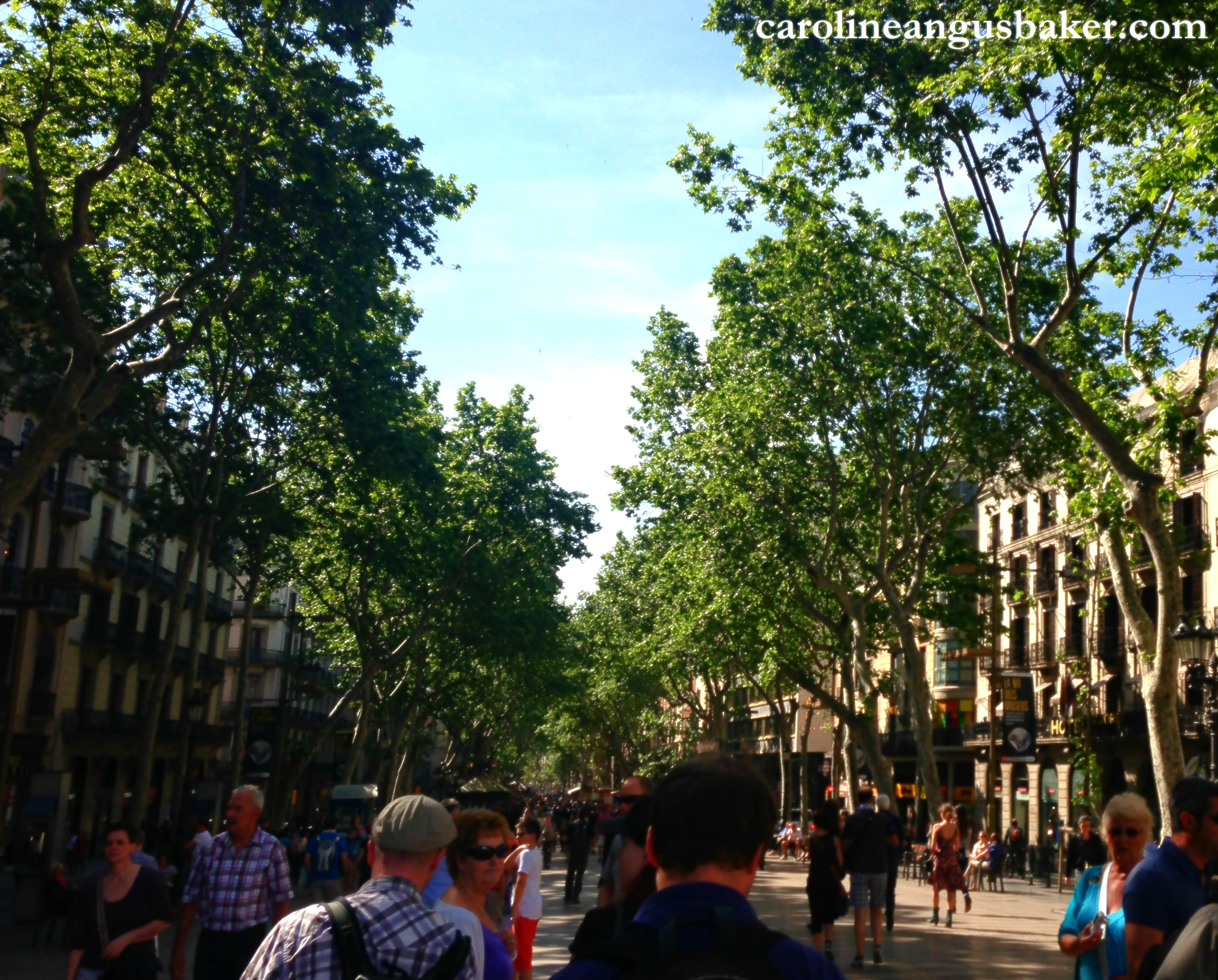
I got to Barcelona and experienced warmth! Yay! Madrid and the other locales of my trip had been mild at best. I got one of those taxi drivers who assumes you are a guiri who doesn’t know they are being taken the long way around to La Rambla. My hotel, Hotel Montecarlo, which is situated metres from a scene written by George Orwell made me feel better. My cheap single room was massive and offered a spa bath that I would never have time to use.

I read George Orwell’s Homage to Catalonia eons ago, when my knowledge of Spain was next to nil. I re-read the book a week before I landed on the Iberian peninsular, to re-acquaint myself with the man and the Barcelona he knew. Orwell’s frustration, and the overwhelming feeling that the Republican factions were all doomed to fail in the war, rang in my ears as I set off around the city on my own.

gotic

Carrer de Bisbe in the Barri Gótic

My goal for the afternoon was to visit Montjuïc Castle and do the self-guided Shadow of The Wind walk. Montjuïc Castle has amazing views of the sea and the city, second to none, and the cable car was good fun. There was an exhibition on Manuel Carrasco i Formiguera in one of the old prison cells. I was pleased to take a look through and the Catalan language didn’t get the better of me. In the middle of a pleasant afternoon, I was the only soul in there. That was the thing that struck me about Montjuïc – the level of tourists put me off. I was tourist too, so I couldn’t point the finger, but as I wandered the courtyard where famous figures of Catalonia and the civil war were imprisoned and killed, it was filled with people visiting the built-in cafes and gift shops. I got the impression that the soul of the place has been wiped. However, if you’re looking for a nice place to visit, by all means, see Montjuïc Castle and the sight-laden Montjuïc area, as some of it is excellent. But I didn’t find what I was looking for.

montjuic

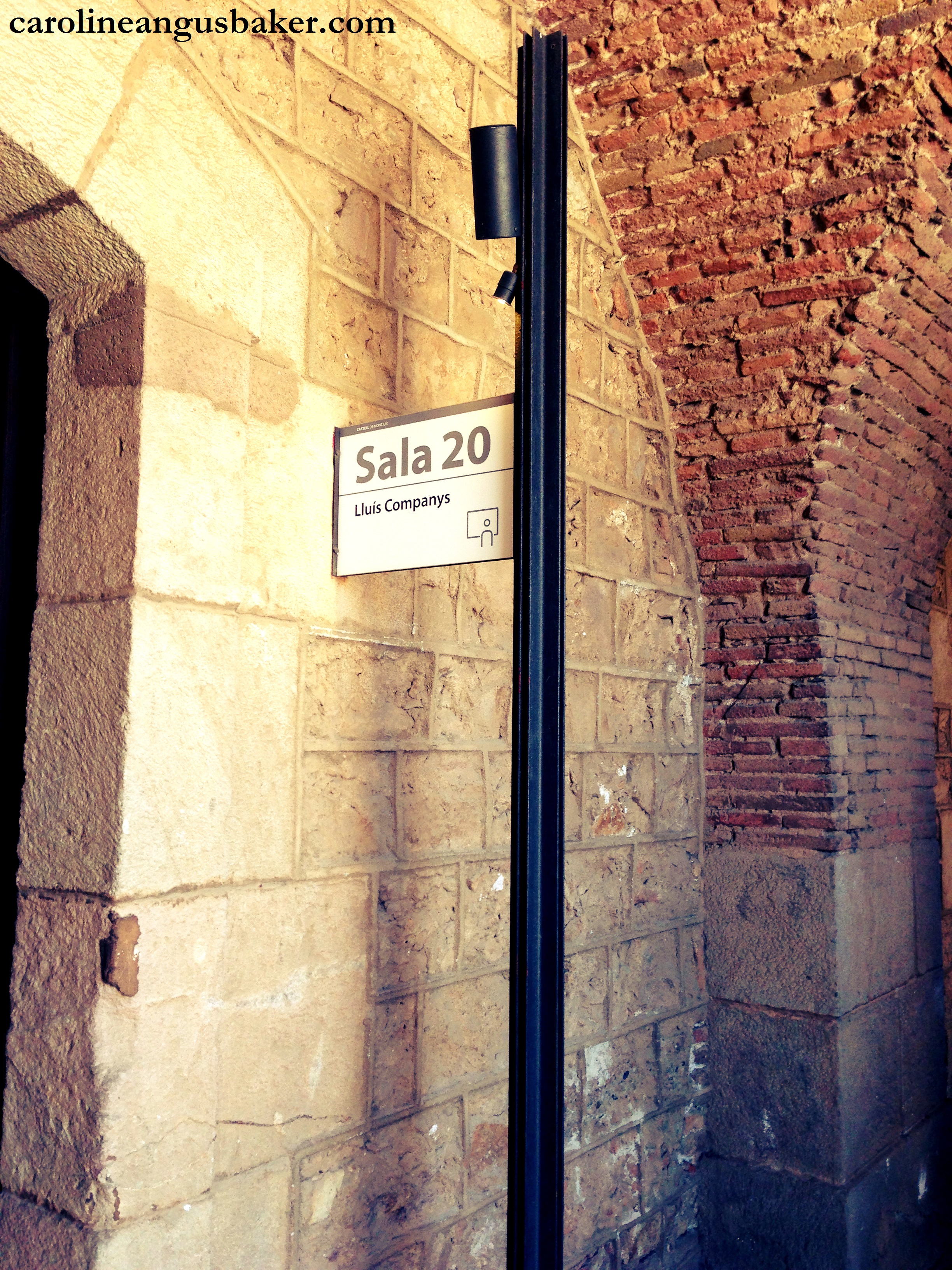
The former cell of Lluís Companys, once-leader of Catalonia, before he was taken out and shot, probably near where you can now buy a ‘I ❤ Barcelona’ shirt

I wandered the Barri Gòtic quarter, my Shadow of the Wind tour map etched into my memory. I wasn’t keen to take many photos (I have ‘done’ Barcelona before), but the swathes of people once again put me off. An evening out with a group for dinner and drinks was fun (great fun with The Barcelona Taste), but I still hadn’t found the Barcelona I was looking for.

anna

The approximate fictional location of the Sempere & Sons bookstore and upstairs apartment in Shadow of the Wind

The next morning, I waited inside Café Zurich in Plaça Catalunya and watched holiday-makers using hand gestures to order breakfast. It was only 10am, yet the city heaved with tourists, many lined up to take the generic bus tour of the city (it could be an easy way of getting around the city if you needed to go to multiple places, however the commentary and delays could be annoying, I would imagine). But I knew my luck was about to change. Enter Nick Lloyd, who arrived right on time. Besides myself, another ten people, couples from all over the world, emerged from the crowds in search of a different Barcelona. A handful of years ago, I didn’t know the first thing about anarchism. It doesn’t sound pretty. However, I now subscribe to their way of thinking and, it seems, so do many others. We didn’t have to wait long before we could have our eyes opened to a whole different Barcelona.

Nick Lloyd is no foreigner in Spain. He may be English but has lived in Spain well over 20 years and you wouldn’t be able to find someone as well-versed on the history of Barcelona, and I am confident there isn’t another person as enthusiastic about its colourful past, either. A quick introduction to one another, and then we stood on the corner of Plaça Catalunya in the shade of the Catalunya a Francesc Macià monument. Despite the frenetic location, Barcelona was allowed to come to life. The nerd in me jumped right in; Nick pointed out a few landmarks which had me happily squealing ‘I know all this’ in my mind (it was too early for me to go showing my nerdiness to the public). As Nick described the hot summer day of 18 July 1936, we could feel it, despite it being an unusually cool May day. Nick’s commentary allows you to feel the excitement that would have buzzed in the Catalonian air as 30,000 CNT works stormed the barracks in search of weapons, ready to rise and defend their city against 12,000 rebel soldiers. However, Barcelona has a civil war history unlike other Spanish locations. They didn’t simply rise up to fight the coup and onslaught of Franco’s rebel army, but they also decided to rise up and fight among themselves – rich versus poor, ideal versus ideal. A great class divide existed in the city and the poor were done with the inequality. With the front line of the war so far from Barcelona throughout the majority of the war, there was still plenty to fight for.

There was no problem imagining the once Hotel Colon (now the Banco Espanol de Credito) occupied and covered in Communist  propaganda and posters of Marx and Stalin, or the people sleeping in the square, some being part of the 6,000 athletes in the city to participate in the Popular Olympics. With the Olympics in Hitler Germany, many athletes boycotted and chose instead to go to Barcelona. But with a war bearing down just one day before the start of the event, instead many foreigners (around 300) became the first International soldiers to take part in the Spanish Civil War. By the looks of the other group members, this is a largely unknown fact, regardless of the nation that my group companions hailed from.

We moved down La Rambla, which as usual heaved with tourists and souvenir stands. We paused outside Hotel Continental, a pivotal spot for George Orwell. With Homage to Catalonia very fresh in my mind, I was able to stand and listen to Nick (who can recite Orwell by heart and with great fervour) recount the tale of Orwell, returning to see his wife and having to be rushed out, as the police were ready to arrest him for being a POUMPartit Obrer d’Unificació Marxista, member (he fought for them but was not Trotskyist, he wanted to be an International Brigader). It was easy to imagine the Barcelona that Orwell saw while sleeping on the street. Out came Nick’s iPad, which is a gold mine of civil war history. With a popular Republican chant playing for us, he asked us to look to the throngs of tourists and instead see the hopeful look of the workers, weapons in hand, walking up La Rambla, with the confidence that their time had come. That change was upon them. At last they would be equals. At last they would have the freedoms they wished to enjoy. We all know that come 29 January, 1939, those ideals were long crushed and the fight was over, among each other and against Franco, but for that brief moment, you could feel the faith and loyalty that came over the people of Barcelona.

la rambla

The one quiet spot on La Rambla

hotel c

Orwell’s Hotel Continental

We wandered the narrow streets of the Barri Gòtic and as the tourists began to fall away, and I had the chance to talk with Nick, mostly about the CNT (Confederación Nacional del Trabajo) for my Barcelona based-novel due next year. If anyone could help me out, it is Nick, and he was gracious and informative. Coming to Barcelona had suddenly become worth the trip. We stopped outside the church of Santa Maria del Pi, which has one of the world’s largest rose windows, and it is truly awe-inspiring. If you do a quick Google search, Wikipedia will tell you that the church was damaged in a fire in 1936. If the internet was ever wrong, this is the moment. Nick spares no details of what went on here in 1936. Nick explained how, during the war only 20% of the population were Catholic and the church had become a target as it was a symbol of oppression. My knowledge on this subject was already fairly substantial, but watching the others in the group become familiar with the facts was interesting. In the quiet plaza, it become easy to imagine the church, with its smashed rose window, interior gutted by fire. However, Nick’s trusty iPad provided the shocking photographs (even to me, though I have seen it all before) of bodies of clergy members, dug up and put on display, their dessicated bodies now simply bones, and stood up to show the masses outside churches to spread a message – “look, they are just the same as us. They are not special in any way”. Regardless of your political leanings, I doubt anyone today would approve of such behaviour, but it graphically shows the difference between modern Spain and the chaos of civil war.

A quick wander around into Placeta del Pi, and we got to see a real little gem. During the war, the plaza was renamed Plaça del Milicià DesconegutSquare of the Unknown Militiaman, to honour those who downed tools and took up arms during the uprising.  However, when Franco’s troops came into town in 1939, they slapped a board over the name and it went back to Placeta del Pi. In 2009, while doing restorative work on the church, they plucked the board off, and there it was, still as intact as the day an anonymous painter climbed up with his brush. There is now a memorial plaque also attached inside the plaza to recognise the occasion.

placa

On we went, weaving through the Barri Gòtic and free of the tourists. The quiet alleyways led us to Plaça Sant Felip Neri. Here lies the church of the same name, which has the scars of the war on show for all to see. The pock-marked facade, remnants of a bomb, has become something of a icon. Francoists spread the rumour that the holes in the stone were made by bullets, when Republicans lined up priests and murdered them. Not so, and Nick knows all for those who wish to learn more. On 30 January 1938, a bomb was dropped, one of many in Barcelona’s aerial bombing nightmare during the war. Landing in Plaça Sant Felip Neri, it killed 42 people, many children who had run for the church in search of safety. On our visit to the church, there were a group of children kicking a football around, right in front of the church. 75 years earlier, children were killed on that spot while they looked for comfort and security. Again, Nick’s commentary spares no detail, no gruesome reality, of what Barcelona had become by that time. The war had moved on, and so had the attitudes; disenchantment had set in as lives were repeatedly taken and destroyed. The shiny facade of the city that gets rolled out for the tourist each day didn’t exist on those streets as we wandered and spoke. It seemed easy to understand the desperation that plagued the city.

People had questions as we walked; Nick had all the answers. From significant events to daily life, Nick can give all the details. We popped into the silent Església de Sant Jaume, for a little-known piece of history. This church was burned during the war (as they all were), but Nick had found detailed stonework depicting the events of 1936. I didn’t take photos (I got a weird vibe from the place, and I don’t ‘do’ religion), and I will leave the details so you can learn all about it in Nick’s upcoming guidebook.

We headed up La Rambla, while Nick took the time to stress the most important facts of the CNT to me for my novel. We wandered past my hotel and Cafe Moka, which featured in Orwell’s book. If you want to look hard, you can spot tiny marks, bullet holes long forgotten. The soul is gone from Cafe Moka, it is now refurbished to cater to tourists, who pay a high price for getting an English or French menu. (Honestly, Spanish to English menu translations do my head in. I always say I want a Spanish one if my guiri status gets noticed. It’s a much easier read)

We stop just past Hotel Rivoli next door. The spot was a pivotal location in Homage to Catalonia, as Orwell’s apparent disillusion takes hold. I felt lucky to have all my previous knowledge, because the “May Events” in 1937 are a complex and desperate scenario. Gone are the revolutionary tunes of 1936, and the Rambla is still, a sight hard to imagine in the 2013 craziness. The hotel is the former POUM headquarters and Cafe Moka was barricaded, with the Stalinist police members inside. Orwell is on the roof across the street and shots went back and forward for three days between the groups. His wife was up the road and he couldn’t get to her. Nick can help you understand the disarray the city had fallen into.  Over three days, hundred of anarchists and their cohorts were killed by Stalinists. While the war had two years to run, it marked a real turning point. To the side of the now-hotel, stands a plague in dedication of Andreu Nin, a friend of Orwell, who was arrested in June 1937. Orwell never heard from his friend again and hoped he had escaped. He, and the rest of us, knew a happy ending was unlikely. Nin was tortured and murdered outside Madrid a short time later.

Nin8.5.13

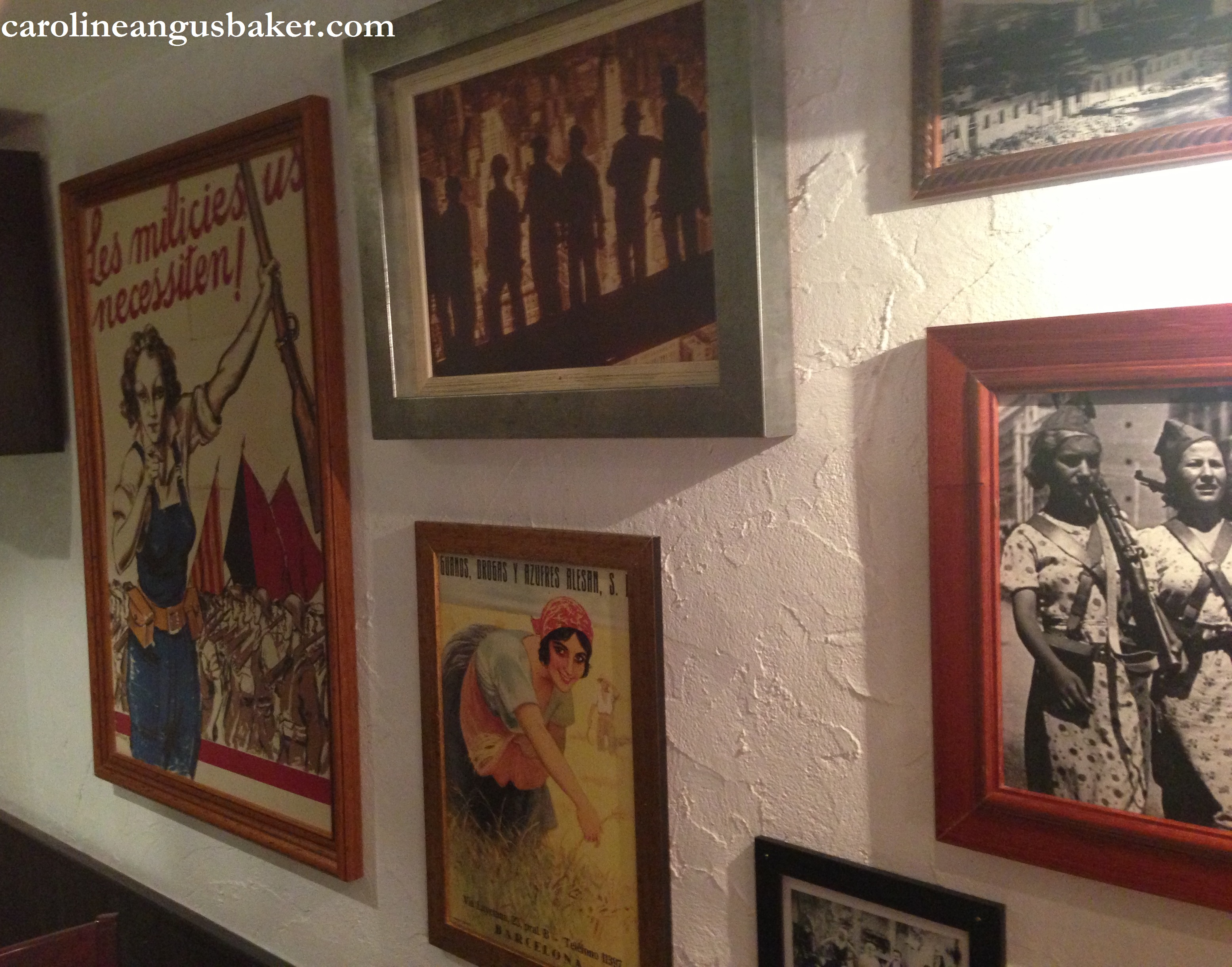
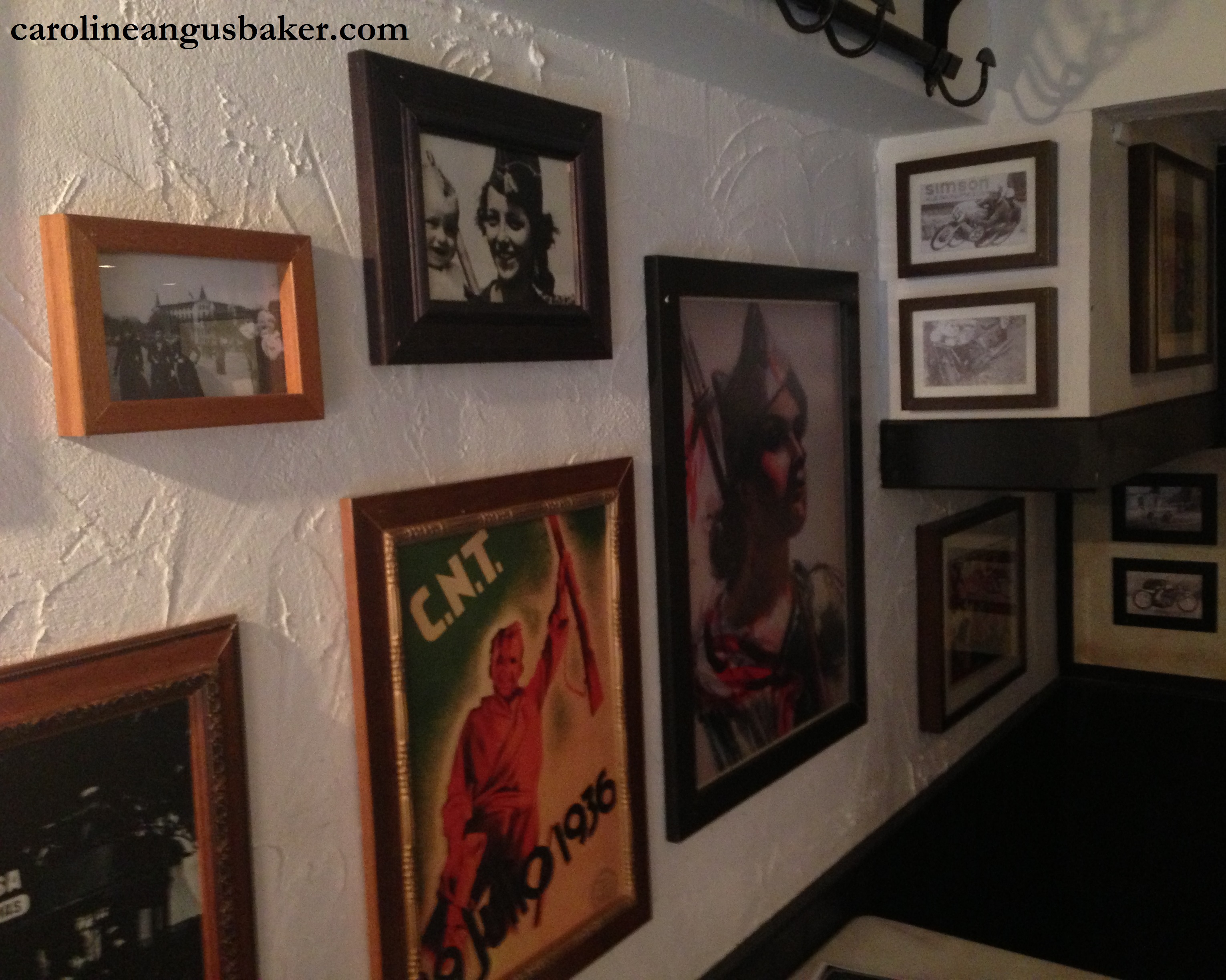
We crossed La Rambla and headed in the El Raval quarter. I don’t know why, but I felt happier and safer in this area, despite being told otherwise prior to the trip. It has more personality than Barri Gótic. It’s noisy, a bit dirty, but has good food, a diverse population and is making no claims about itself. We went into La Llibertària, a CNT co-op bar, and sat down to a twelve-way conversation about all we had seen, surrounded by war propaganda posters. A perfect end. Nick was kind enough to take time for all the questions that the group had, and as a Spanish civil war nerd, I felt really happy to be in the company of people who were genuinely interested in the history and the cause of the people. It seemed perfectly logical that our truly international group would rave about Nick and his tour when he departed.

IMG_2176a

IMG_2182a

I left La Llibertària and wandered El Raval on my own with a smile. I grew up in a working class mining town, so the actions and ideals that the area held during the war were no mystery to understand. A few flags for Catalonian independence hung on balconies. The libertarian anarchism spirit may well still exist in Barcelona, with current political situation with inequality and unemployment.

raval

Carrer dels Tallers in Raval

Before jumping on an eagerly-anticipated train to Valencia, I stopped by Plaça de George Orwell in the Barri Gótic. It’s an unremarkable place, but in an almost-ode to Orwell’s classic novel 1984, it is home to Barcelona’s first CCTV camera. That is worth a smile on its own.

I won’t lie, I felt relieved to get out of the behemoth that is Barcelona. If you want to visit for your first or tenth visit, all power to you. Climb the Sagrada Familia and the Gaudí buildings. Walk La Rambla, buy overpriced fridge magnets and walk the beach. Get crammed into the cathedral and watch for pickpockets (I saved one guy from having his wallet stolen and witnessed another lose his bag, luckily he got it back). I don’t want to accidentally to stop anyone from trying what millions have done before them. I am not a fan of tours of any kind but this trip is one-of-a-kind. You could visit these locations on your own, but without Nick they would just be sites, like the myriad on offer. For three hours and €20, Nick Lloyd can give you a visit that leaves a mark on your soul.

You can read about and book Nick Lloyd’s tour here – Spanish Civil War Tour in Barcelona

You can read over 130 5-star reviews about Nick Lloyd here – Trip Advisor – Nick Lloyd

Up next…. (a fun one) On the road with ‘Blood in the Valencian Soil’

Click here for the other parts of this series – Spain 2013 in Review

 
*in the absence of my notebook I have written this from memory, so please correct me if any war detail is incorrect!
 

A LITTLE JAUNT TO SPAIN – REVIEW PART 2: The top ten things I rediscovered about Valencia

VALENCIA

If any city deserved to be announced in capitals, it’s Valencia. I lived in Valencia for roughly three years and I had a whirlwind of a time. I moved away in 2007, on the premise that I would return in three months. However, court cases, immigration and several cases of terminal cancer got in the way and my life once again took shape in New Zealand. Valencia has remained the place I love the most, and I joked that I left my heart there when I moved, so I would need to return. After a long absence, it was time to put that to the test.

valencia 1

Time to get my Valencia on

I arrived in Valencia by train. The trip from Barcelona felt days long. Despite a successful trip to the Catalonian capital, I wasn’t in a great mood. The three-hour trip was punctuated with stops in forgettable locations, and the rigours of the night before threatened my resolve to stay positive. I arrived my apartment on Calle San Vicente Martir, and met a lovely woman named Inés, whose English was much appreciated, I felt keen to be on holiday again.

When I joked and said I left my heart in Valencia, perhaps I wasn’t joking. I dumped my bags and set off along the streets of the city’s old town, and realised that I absolutely belong in this city. That began six nights and days of enjoying as much Valencia as possible. Who needs sleep? Not me, a few hours after I arrived in V-Town, I found myself in a club deep in the El Carmen district, lost and loving it.

Rather than bore you with a diary of my events, here are the top ten things I rediscovered about Valencia. I knew all of these things, but they stood out to me again on this trip.

In no particular order, and without photos of the same spots as every other site –

1 – PDA’s (Public Displays of Affection) are everywhere

When I started writing the modern day storyline of Blood in the Valencian Soil (BITVS), I set out to write in little details of life in Valencia city. Now, I have seen this in many Spanish cities and towns, but in Valencia it seems to stand out to me. Everywhere, but particularly in the Turia park, they are people kissing. Not just kissing, attempting to suck each other’s faces off. To their credit, the Spanish don’t look like two virgins at their church wedding when they kiss, they have largely sorted the art of good kissing. I have a love/hate relationship with this level of public affection. I love the fact that people feel free enough to sit around kissing (very unlike where I live), and I hate it because I’m not the one doing the kissing! I remember on a number of occasions, when living in Valencia, when asked what I would like to do on an evening out, I replied, “Let’s go and make out in the park. That’s what all the kids are doing these days”. If you have a companion while in Valencia, or happen upon one, I recommend kissing in the park. The other week, I saw a couple farewelling one another. I was lying in the grass, listening to some Pablo Alborán, when I heard a bang nearby. This couple, in their lust for one another, had both dropped their bikes in a heap while he swept her into his arms for a very long smooch. I screwed my face up – with jealousy. I think kissing is highly underrated, but Valencia’s Turia celebrates this somewhat lost art.

valencia 11

Anyone fancy a kiss near my favourite part of the park?

2 – It’s so easy to get around the city

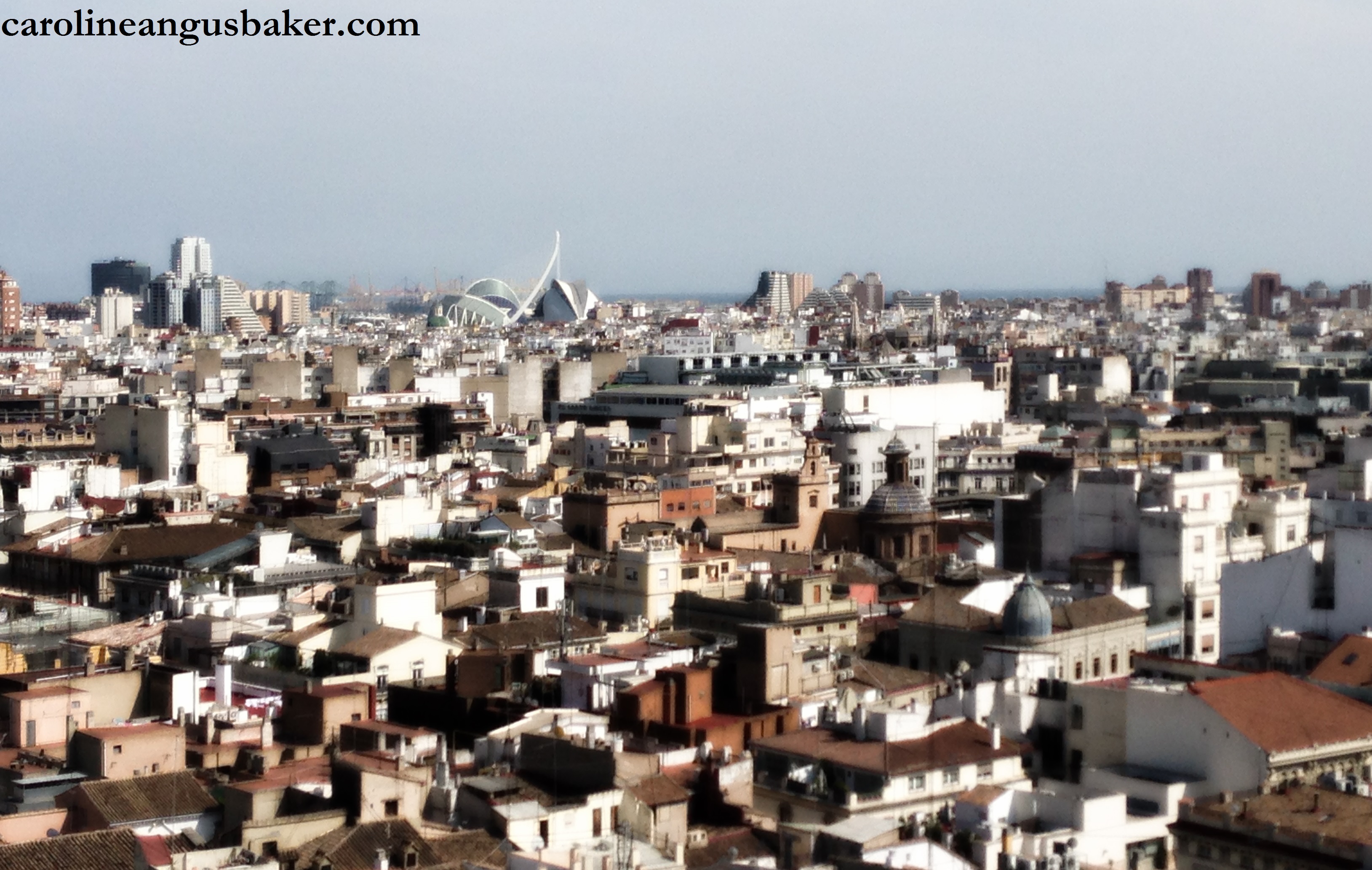
Pull out your map of Valencia. You feel mind-blown by the amount of things to do. There’s the old town, the El Carmen, Ruzafa, the Turia (which has the Bioparc zoo and the Arts and Sciences at opposite ends of each other!), and you can’t miss a chance to go to Malvarrosa. Sure, if you want to explore Plaza de la Virgen and Plaza de la Reina, they are nearby each other, but you may feel like you are going to have to miss out the further flung attractions.

Oh, no you don’t! The beauty of Valencia is that everything is within walking distance, and you don’t have to enjoy marathons to sight-see on foot. Even if you don’t want to walk, there is the excellent bus and Metro services. Valencia is beautifully packed. Want to try the markets ofMercado Central, Mercado Colón and Mercado Ruzafa in the same day? Of course you can! Want to eat paella at the beach, but also visit the Arts and Sciences complex? Do both! Want to wander all the historical sights of the old town? You can do all of that in a day, and enjoy plenty of meals, beverages and ambiance. It’s nigh impossible to get lost in Valencia, despite it’s narrow intricate streets of the inner area. If all else fails, you will eventually pop out on what got nicknamed ‘the ring road’, the road that winds along the edge of the park, and around Carrer Guillem de Castro/Xativa/Colón. This circle of roads encompasses the oldest part of the city, and what could be considered the most complicated area to navigate, but also home to the largest concentration of sights. No matter where you get lost, you’ll pop out on the main road and can dive back in somewhere for more fun. In six days, I did every sight in the whole city, plus day trips outside the city, and multiple afternoons of mucking around relaxing. You will never want to leave Valencia, but if you are time-poor, you can still be attraction-rich.

valencia 15

There is a lot to see, so get out there!

3 – Valencia has its very own vibe

“It’s the vibe of the thing”. Classic line from an excellent Australian film. It’s relevant here in Valencia. The city definitely has its own vibe. Valencia is like Spain’s youngest child. Madrid has the feeling of being the oldest child – there is a reserved obligation, a feeling of needing to be in charge, needing to set an example. Barcelona is the middle-child, too flamboyant to be forgotten, but feels the need to show off for attention. Valencia is the baby of the family, and while the other cities came of age, Valencia was still running between the adults in search of fun. Now, Valencia doesn’t need guidance, or to try to measure up to its counterparts. It may be Spain’s third largest city, but there is no conformity in its way of life. Valencia is alive with its own traditions, language, food and attitude. Valencia feels like its inhabitants are on regular alert for a good time. The city, like the nation, may be in times of hardship, however, the joy of life remains.

valencia 7

You would never know an anti-austerity protest in directly beneath me, would you?

4 – You don’t need to know Valencia’s history – you’re living in it

When Valencia sighs, it doesn’t just let out the stress of the day. It heaves with the weight of all that has gone on. This is a great thing! Granted, most who visit the city don’t know the great detail of this spirited city. For a history nerd like me, I jump up and down with excitement. The interesting thing about Spain is (and I spent many an evening talking about this over drinks) that the country is how it is for a number of reasons. The people are the way they are for specific reasons. This all relates to Spain recent (ie. 20th century) past. Spain is a deeply complex country, and history’s events have plunged in a knife into each city and town differently. For example, the horrors many cities suffered in the civil war are very different. Valencia was never at the front line of the war (aerial bombings aside), but when the city fell at the end of the war, the last point to be captured by Franco’s rebel troops, it fell hard. (BITVS can give you a easy-to-digest concept of this if you are interested. My fiction doesn’t get to stuck on little details, so as not to weigh down the narrative. Good if you don’t want to be a history buff) Also, for me, the disastrous story of Valencia’s 1957 flood still has hints around the city. While researching the subject for my next novel, the locations in the book are largely the same as they are today. I can walk around corners, my hand on the stone buildings, and be able to visualise the flood water level, which is marked in some locations. Valencia has a soul, and if you wander off the cruise-ship tourist trail, you can hear it speak.

valencia 3

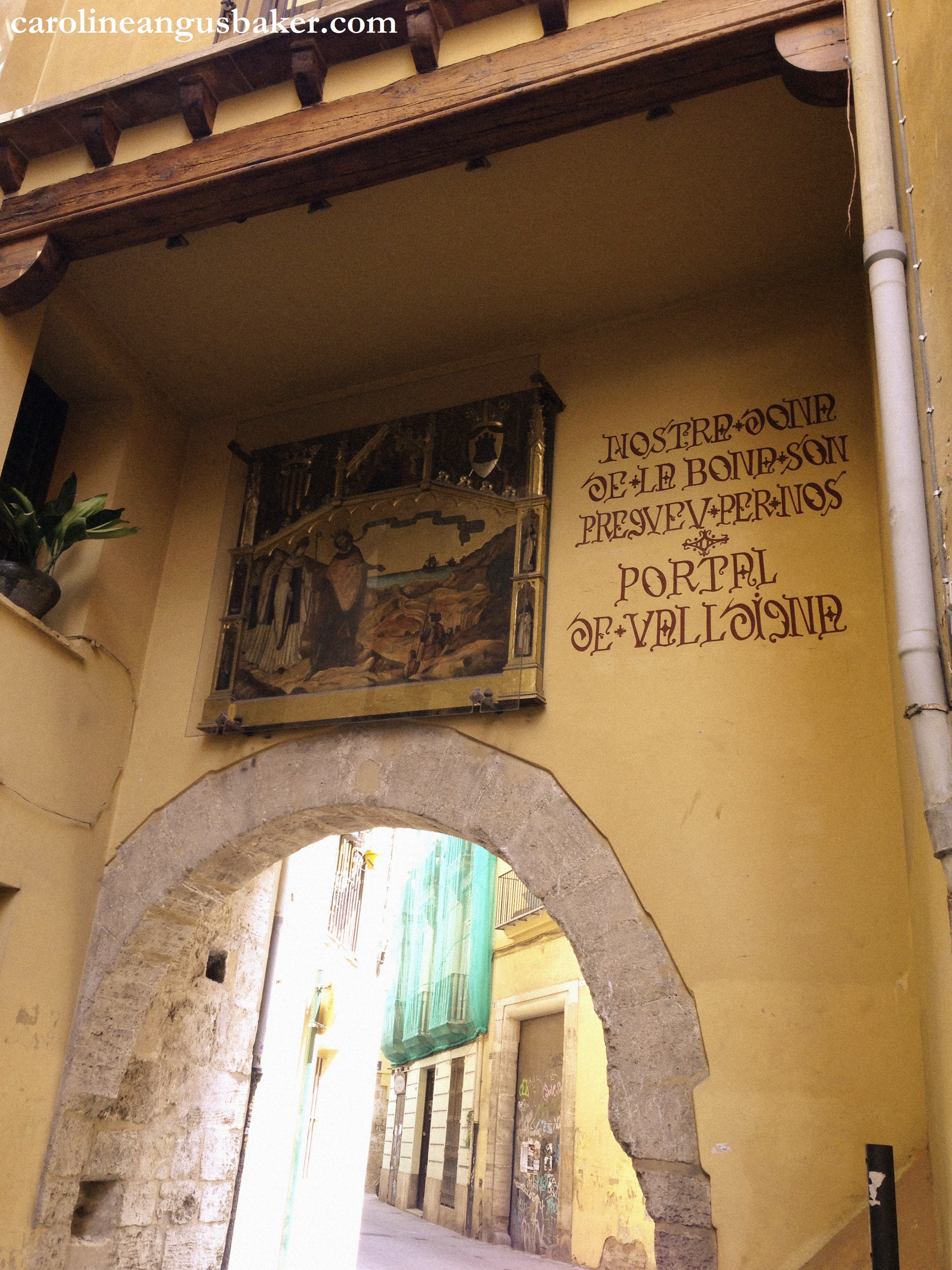
The Portal de Valldigna, the old entrance to the Arab quarter of the city in 1400. My next novel, Vengeance in the Valencian Water, has a scene here. Standing there with the place to myself, gave me a chance to finalise details for a gruesome scene.

5 – The city knows who it is, but the future is still wide open

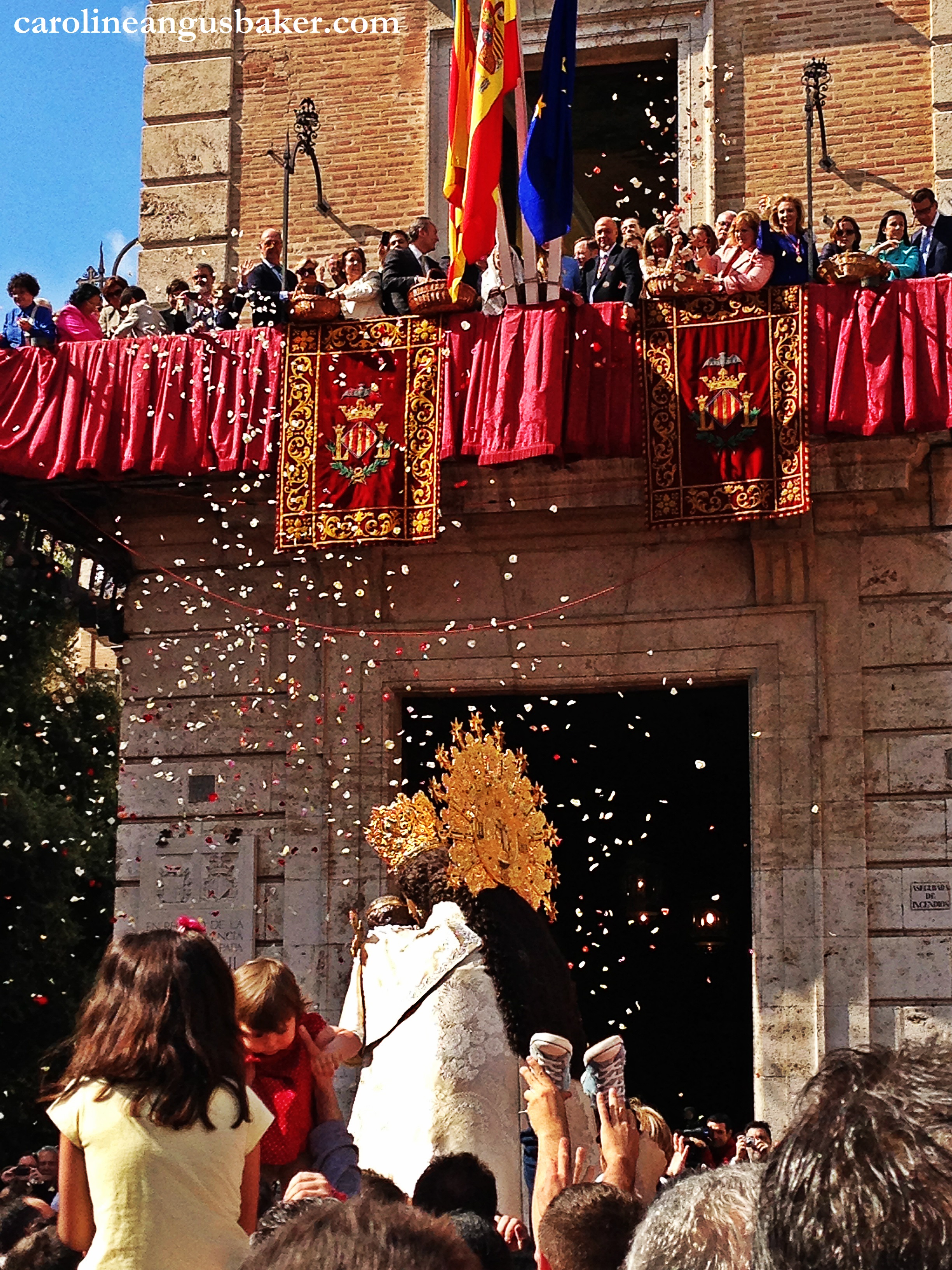
In my eagerness to celebrate San Isidro in Madrid, I forgot to check the fiesta timetable for Valencia. What do you know? Second Sunday of May is the procession Virgen de los Desamparados. The Virgin of the helpless/forsaken, who is much-loved in V-Town, is pulled out of the Basilica, where she lives, and carried to the city’s cathedral. It’s around 200 metres. Piece of cake. Not. The original statue dates from around the 15th century, so she stays at home, and a replica is paraded through the thousands of people who want to see her. Touching the statue is a big deal, you get a year of grace if you touch her. People hurl their babies at this thing, who cry in panic. I stood in attendance and watched with amusement as people cheered “Long live the mother of God” (Correct me if I’m wrong there).  Was this the end? Lord no. The night before had been full of processions and prayer, and the rest of the day followed suit. Valencia has many such days in its calendar, and they are regularly attended, despite being hundreds of years old, and surely enlightenment has opened people’s minds to the world. No matter, from rugby-throwing your baby at a replica statue, to burning down the city at Fallas, and everything else the year holds, Valencia loves its traditions.

In saying that, Valencia, like its Spanish counterparts elsewhere, has suffered upheaval. Apart from anti-austerity, Valencia’s current main beef with the scum-filled right-wing government is the cuts to education. Indeed, what becomes of the generation of children in school right now? Those a decade older than them are suffering at the beginning of their lives. Everyone is hurting. Valencia has a difficult future ahead. I realise this is irrelevant information for your average tourist, but not to me.

valencia 4

Valencia’s ghastly mayor, Rita Barberá, throws petals at the Virgen while people toss forth their kids. It’s all smiles on the balcony for the rich, not so much for people on the ground

6 – It’s all about the people

Yes – Valencia has it all – the abundant good weather, the first-class food, the luxury of the Turia, history, language, shopping, sexy policemen in tight pants (note – may be limited to the guy I saw in Plaza de la Reina), but the people make the city. I feel this way about any place. Something can be beautiful, but if the people are assholes, the trip is ruined. There are a few assholes in V-Town, like anywhere, but for me, the moments where I met with people in the city, old friends and new, they were the best parts of the trip. Who would have thought I would have watched a group of ex-pats try to lay out a portable cricket pitch in the baseball diamond in the Turia? It’s the more out-of-the-way things that make a trip for me. You can only take so much sightseeing and tapas. People make the difference.

valencia 9

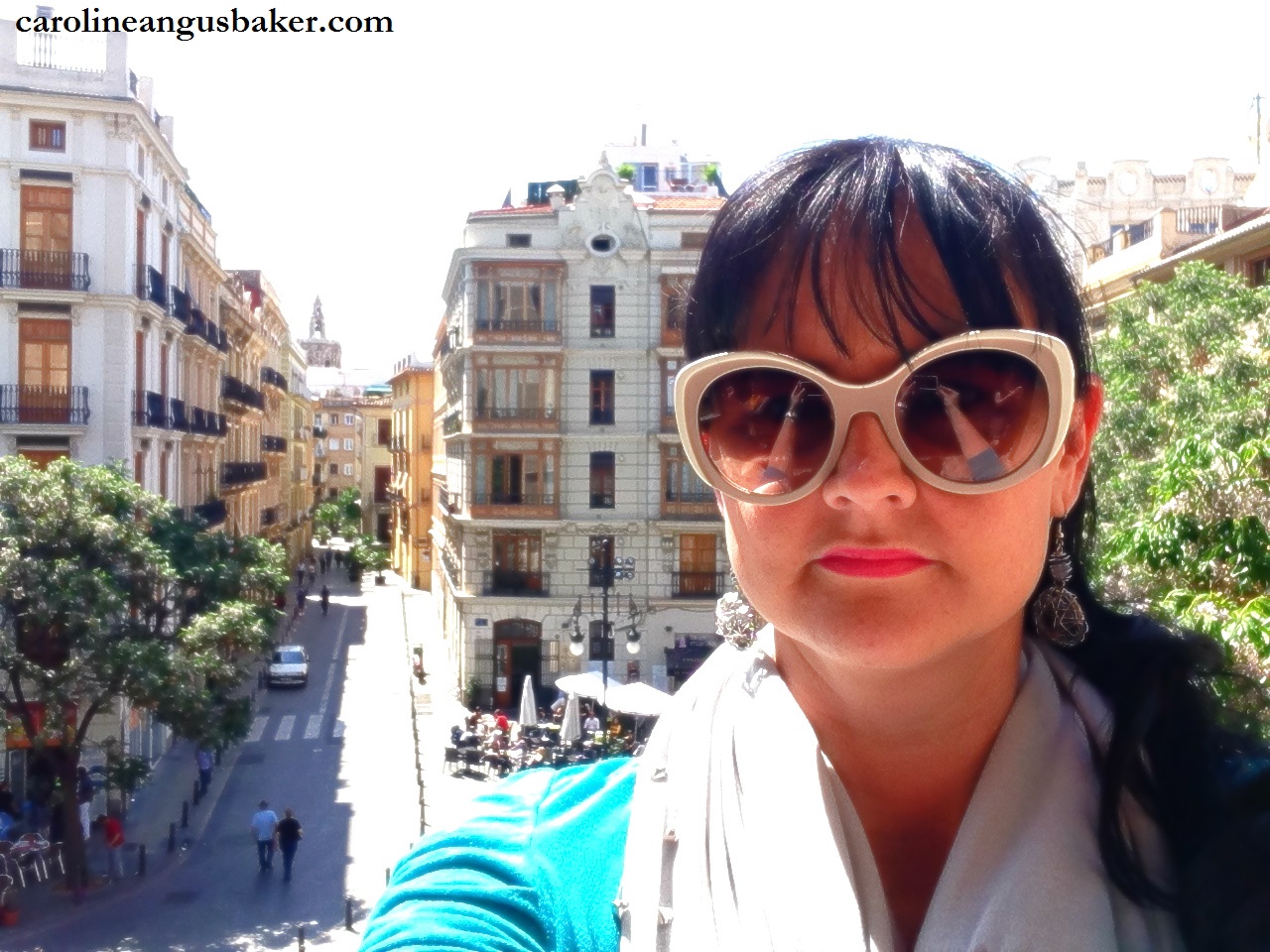
Graham Hunt and myself pose for a shameless selfie to post on the WABAS FB page. Nicest guy in Valencia, no question. 

7 – It’s possible to be a local and a tourist at the same time

How? I will tell you. Shoes. You can tell a tourist by their shoes. They are wearing comfortable walking shoes. Please, go and buy something pretty and inappropriate, and you will blend in.

I’m kidding. The number of tourists has remarkably increased since I last visited Valencia. It’s a double-edged sword; the city needs to survive and cruise-ships pouring in mostly middle-aged punters, or hordes of Japanese tourists boosts the economy. They follow marked routes through Valencia’s main points, and in theory, spend their money. This is new to me, and I wondered what the city will look like in another five years. Perhaps like Barcelona, who seems to have sold itself to tourism? I hope not. The risk is there in Valencia right now. You can follow the main sights of the city, and they should be seen. They are popular for a reason.

However, wander a few streets away and you can feel the buzz of Valencia life again. Tourism hasn’t swallowed up Valencia’s spirit. You can sit and eat like a local, talk like a local (or at least try) and get a feel for the place. Cast off the oversized lens, the guidebook and the comfortable shoes, and get to know the place. You will be glad you did. My happiest moments were found in total solitude, just living life, and not sightseeing in Valencia.

valencia 21

Valencia bullring. As a woman aged 32, with no male companion, it was impossible to blend in. I needed to be male, over 60 and smoke a stinking great cigar to fit in. The guy next to me kept calling me Nueva Zelanda and every time a bull got stabbed/killed, he would remark “Nueva Zelanda sigue siendo tranquila. New Zealand remains calm.” He seemed rather surprised. Dude, I know my shit.

8 – You don’t suffer cathedral fatigue

Cathedral fatigue – I suffer it. I have long lost count of the number of Spanish cathedrals/churches/basilicas I have visited. I am not religious, so the places don’t hold significance (though the one I entered with Nick Lloyd in Barcelona was amazing – another post). I have seen some big churches – Valencia, Madrid, Barcelona, Segovia, Cuenca, Toledo, Seville, Granada, Cordoba, Xativa, Avila, Burgos to name a few locations. Valencia Cathedral is still the best of them all. Not for anything in particular, though it houses THE Holy Grail and the views from the bell tower are eye-watering. I guess it’s just the Valencia vibe that makes it special. Between the cathedral and the Basilica (home to the above Virgin statue), you will be left feeling like you’ve seen a great sight, not trudged through another church that reeks of the church’s former power over the population.

There are plenty of old-world attractions that aren’t churches, like the La Lonja, the Torres de Serranos and Torres de Quart, the streets of the El Carmen area, the town hall and the post office in Plaza Ayuntamiento, and the train station and bullring. Valencia has unique sights to see.

valencia 2

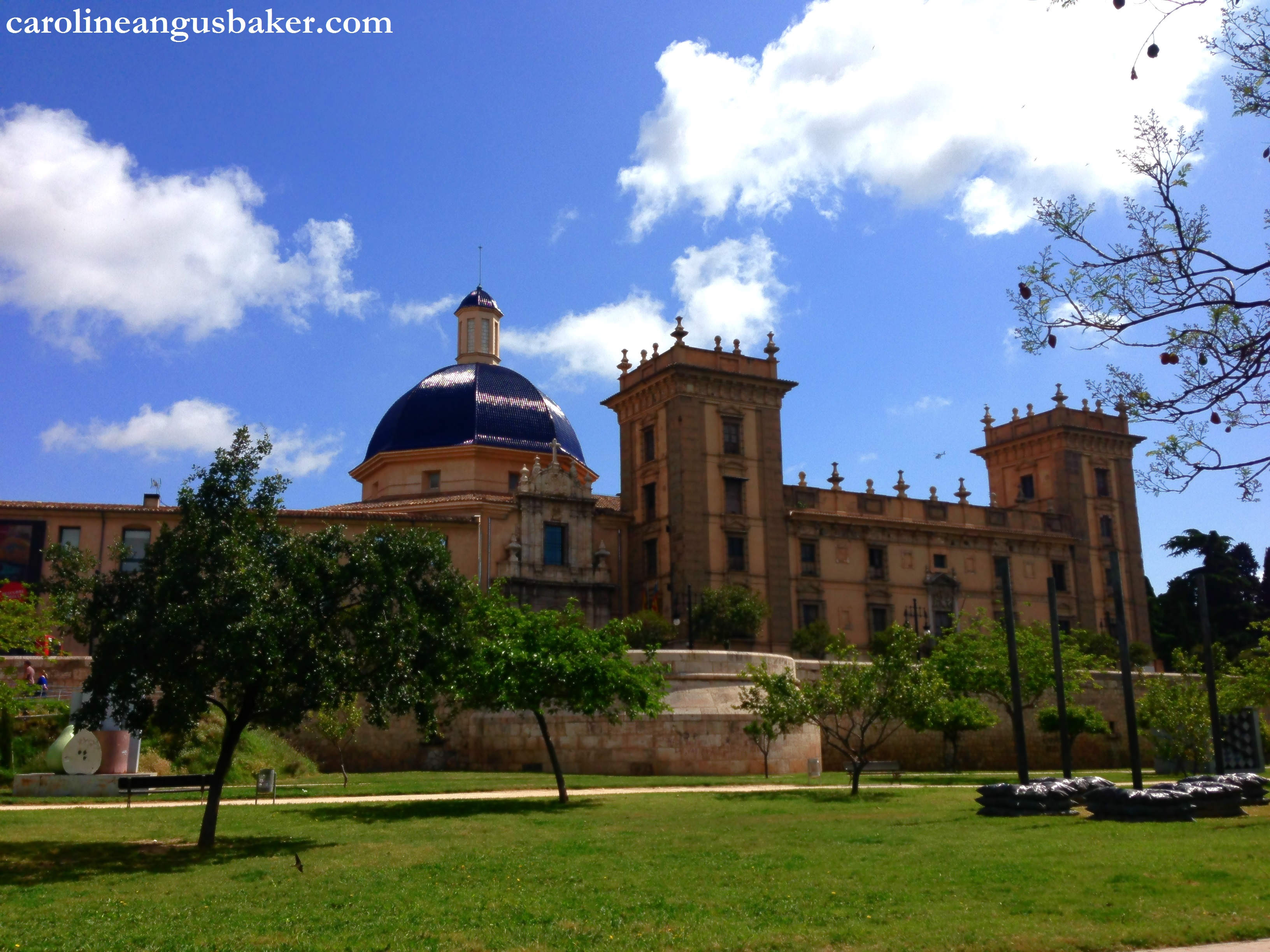
Museo de Bellas Artes de Valencia, the Valencia Art Museum just over the Pont de la Trinitat, is a great spot to visit, and gorgeous. Go for the art, but stay for the beauty.

9 – Something new is always available to try

Whether it’s a tall glass of Horchata, a taller glass of Agua de Valencia, or a pincho (whose ingredients you can’t quite decipher, but it tastes good, so roll with it), the menus in Valencia will always have something for a new visitor, or someone who has been to the city before. Warning, they are plenty of bad paellas around, as with anything, but there are many fine ones as well. There is no need to find some upmarket place, because you need to make your way to many places in order to decide for yourself what is best.

I have been pretty much everywhere in Valencia (I have a propensity to wander), however fun sights can crop up anywhere. The streets of Valencia still have sights to behold, whether you are new to them or not. When in Valencia, whether it’s food, sights or ambiance, you can make your own fun. There isn’t a set list in order to find enjoyment. The city allows freedom to enjoy Spain.

IMG_2884

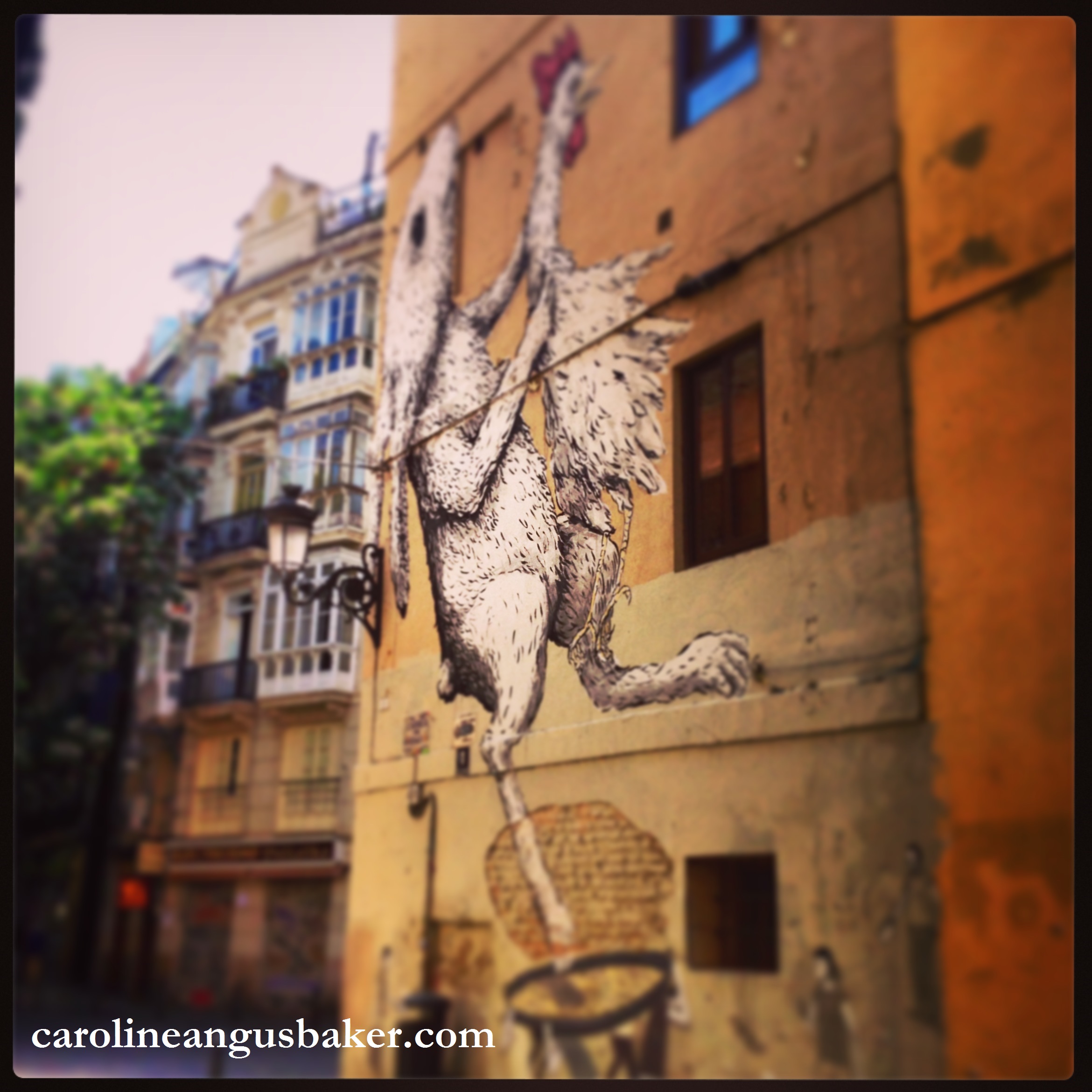
The rabbit catches the chicken… now get in that paella. I’ve seen photos of this particular random street art, but never in the flesh. I found it by accident. Just one of the fun things about wandering Valencia

10 – It’s a great place to stage a novel trilogy about Spain’s past

Valencia is a terrific backdrop for novels about Spain. I’m certainly not the first to use the city as the central location, but you will find far more books based in bigger cities, or in the south of the country. In terms of novels, Valencia is like an untapped resource. I get many readers who know absolutely nothing about the city, but that’s okay, it’s an easy city to bring to life. It has enough unique features to quickly distinguish it from other locations.

Everything I have written already seems accurate with what I saw on my trip, and all the locations used in the next novel look/feel as I have already conjured up. Just as the city felt desperate in BITVS, it can lend itself being a place of fear in 1957 with a mixture of natural disasters and human greed.

valencia 8

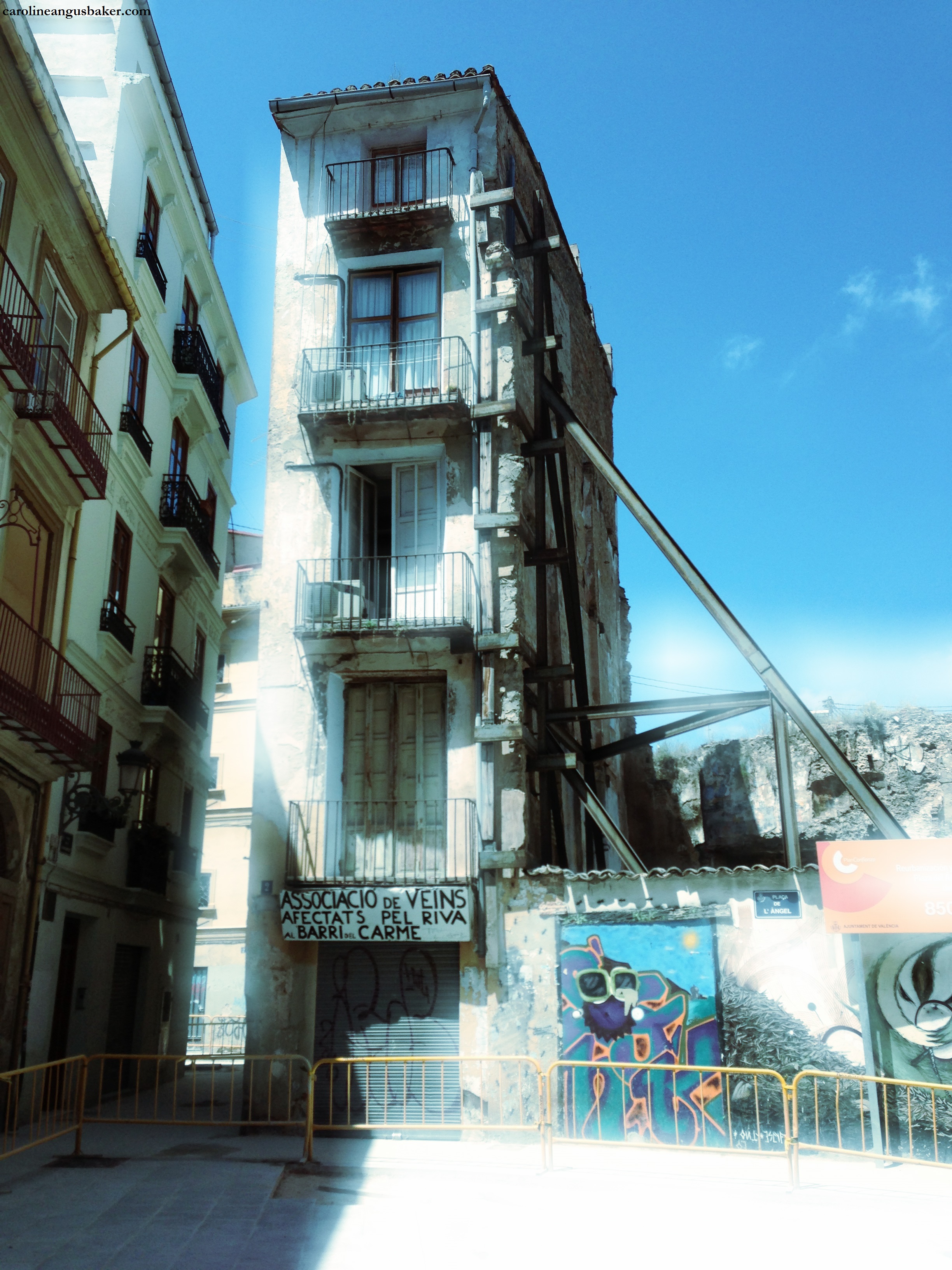
Placa de L’Angel 1 is a location in both 1939 and 2009 in BITVS. I was pleased walk down the little plaza to find they are trying to save this building!

Did I learn anything new in Valencia?

Absolutely. I moved to Valencia with a one-year-old and a newborn. They have fire-red hair, and never could blend in as a local. I learned the city as a mother, as a family. The city is great for families, so much so that I had two more children. However, this trip was solo, and I saw the city differently. I could go out for longer, stay out later, climb more stairs, take more time to read, reflect and absorb. The city is great for the single traveler, but I will always want to enjoy it as a family. The choice is yours.

Up next… Part 3 – The civil war history of Barcelona with Nick Lloyd

Click here for the other parts of this series – Spain 2013 in Review