SPAIN BOOK REVIEW: ‘Unlikely Warriors’ by Richard Baxell

When a Nationalist military uprising was launched in Spain in July 1936, the Spanish Republic’s desperate pleas for assistance from the leaders of Britain and France fell on deaf ears. Appalled at the prospect of another European democracy succumbing to fascism, volunteers from across the Continent and beyond flocked to Spain’s aid, many to join the International Brigades.

More than 2,500 of these men and women came from Britain, Ireland and the Commonwealth, and contrary to popular myth theirs was not an army of adventurers, poets and public school idealists. Overwhelmingly they hailed from modest working class backgrounds, leaving behind their livelihoods and their families to fight in a brutal civil war on foreign soil. Some 500 of them never returned home. 

In this inspiring and moving oral history, Richard Baxell weaves together a diverse array of testimony to tell the remarkable story of the Britons who took up arms against General Franco. Drawing on his own extensive interviews with survivors, research in archives across Britain, Spain and Russia, as well as first-hand accounts by writers both famous and unknown, Unlikely Warriors presents a startling new interpretation of the Spanish Civil War and follows a band of ordinary men and women who made an extraordinary choice.

~~

This book caught my eye while I waited in the entry queue at the Museo Nacional Centro de Arte Reina Sofia in Madrid last year. Off to see the Dali exhibit, along with a trip to see Guernica and the civil war exhibition for a second time, I spotted this book in the gift shop as I shivered in the cold. Me – war book – sold.

Talk about finding a gem. Unlikely Warriors is a remarkable accomplishment, with solid five-star reviews for excellent reason. Baxell has taken research to a new level, and used archives and interviews in the UK and the Abraham Lincoln files in New York, and material not yet published. Interviews from the Imperial War Museum in London have been accessed to give a rich account of those who went to Spain to fight the righteous fight. The International Brigades have been fleshed out like never before, along with those who went to fight for various other factions, including those who went to serve Franco’s side.

The book starts off with the realities of life in the UK for those who heard the calling to Spain. While the stereotypes stated that volunteers were ‘radical romantics or middle-class Marxists’, the reality was far different. A large majority were working class, and no doubt imagined they understood the battle that Spaniards faced. However, the upper class, intellectuals and writers were littered among the brave men, from a great range of lifestyles across the class divide. What the International Brigades had was working class men fighting alongside those highly educated, for a common cause, and Baxell has written about these people in a fluid and enjoyable down-to-earth style. The men, the majority Communists, fought under the premise that if Franco won in Spain, Hitler would then go on to victory with his own endeavours. While Britain and France sat idly by, individuals were able to see past self-interest and faced a brutal reality for the common good.

The reality put volunteers at a disadvantage from the start, with many without military training, and provided with exceptionally little. With the International Brigades, just one part of many groups fighting together in an uneasy alliance for the Republican cause, leadership was haphazard, as was any type of planning, along with weapons and gear given. While many volunteers were Communists, those in power among the forces also had to battle against other leaders from other groups. It meant that those on the ground never genuinely formed a coherent group, unlike the united forces under Franco. The massive battles undertaken by British forces, such as Madrid, Ebro, Brunete and Jarama, were bloody affairs littered with an enormous death toll. Just the struggle alone within the medical divisions was horrific as they fought to save the lives of young men, whose cause became increasingly hard to identity. Fighting fascism is a broad notion, to be romanticised as men, gun in hand, throw themselves at the enemy, but Baxell does not subscribe to this notion. The author gives a more realistic and honest account of war, where individuals are convinced of one thing at home, and struggle when faced with the gruesome battles in Spain. Some volunteers were hopelessly inadequate for the war in Spain, due to age or experience, and some were there for the wrong reasons.

Unlikely Warriors doesn’t just cover what happened in Spain. The book explains how these volunteers suffered, and many were lost, but those who survived considered their fight to be one of the greatest moments in their lives. Many went home with little or no regrets. The May Day battles in Barcelona are well covered in the book, explaining how the communist sympathisers fought enemies on all sides. When international volunteers were all ordered out of Spain in late 1938, dreams of these men being able to live in Spain as citizens were not realised until long after Franco’s death. Tales of men held prisoner are told with clarity, showing what many volunteers endured through their time on the peninsula. While British men went home once their battalions got disbanded, they struggled to enlist to serve in WWII and some nationalities were either imprisoned or stripped of their home country citizenship. Their battles did not win the war, just as Europe fell into a state which allowed evil to flourish.

Baxell has created a book where those new to the subject can learn and understand, but at the same time, give more knowledgeable readers a more personal and vulnerable perspective to the battles. Many books on the war can read as stiff or academic, but Baxell has created a marvellous account which humanises but does not romanticise the role of international volunteers in a complex war. The book breaks down the struggles in Spain, to give a realistic account of what life was like for those who sacrificed for a cause which did not succeed in victory. Unlikely Warriors is a must-read for anyone interested in Spain and its recent history.

Richard Baxell is a research associate at the London School of Economics and a trustee of the International Brigade Memorial Trust. Learn more about the author on his website – Richard Baxell

Purchase Unlikely Warriors on Amazon

On Wednesday 30 April, Richard Baxell will be appearing at Offside Librería bookstore in Madrid, giving a presentation on his work from 8pm.

Book covers and blurb via Amazon
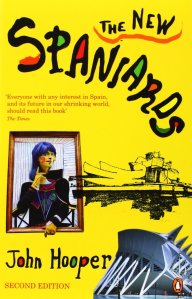
SPAIN BOOK REVIEW: ‘The New Spaniards’ by John Hooper

71treumJ37L._SL1355_

Modern-day Spain is a country changing at bewildering speed. In less than half a century, a predominantly rural society has been transformed into a mainly urban one. A dictatorship has become a democracy. A once-repressed society is being spoken of as a future ‘Sweden of the Mediterranean.’ John Hooper’s outstanding portrayal of the new Spanish society explores the causes behind these changes, from crime to education, gambling to changing sexual mores. This new, up-to-date edition is the essential guide to understanding twenty-first-century Spain: a land of paradox, progress, and social change.

~~~

The New Spaniards is a book which has sat on my to-read shelf for far too long. The second edition of this book got released in 2006, so by the time I pulled it from my shelf, I wondered if its information would be little irrelevant, given the changes to Spain in the past eight years. I could not have been more wrong.

So often mentioned in the same breath as Ghosts of Spain by Giles Tremlett, the book which pulled me from my slumber about Spanish history, The New Spaniards is a must read. The author brings together over 400 pages, creating a solid, credible and easy to read review of Franco and modern life. One chapter in, what immediately becomes clear is the efficient and clean writing style Hopper has; while other books on the subject can feel academic and stiff, the prose is fresh and makes the reader comfortable among a detailed and insightful presentation.

The book starts with a section of the Franco reign, from the years of hunger, the economic boom, the mass migration of Spaniards both abroad and within their own nation, and effects of the reforms made during the dictatorship. The 1970′s, once Franco had gone and democracy set in, is covered with excellent detail, without any confusion on what was undoubtably a dizzying time of change in so many ways. Then-young king Juan Carlos and Prime Minister Adolfo Suárez are well discussed, along with the placement of the young and the old to form a peaceful democracy. The changes made by the Socialist government in the 1980′s are well touched upon, their effect on the economy and the high unemployment rate (easy to identify with today), along with the stark changes in the 1990′s by successive governments.

Chapter 7 – Legacies, Memories and Phantoms – is an engrossing read, whether a reader understands Spain’s 20th century history or not. It explains how Francoism has not survived the passing of years, but a legacy has become ingrained in Spanish life. The pact of forgetting, which did not allow anyone to forgive or heal, is touched upon with honesty, as is Valle de los Caídos outside Madrid. Hooper’s accurate argument is that the omission of the civil war (and its mass graves) in school textbooks, because it is not old enough to be considered history, is an excuse wearing thin.

Part two sweeps in with a section on the churches’ role in Spain, along with the curious and absurd prudery of Franco and the changes to modern time, such with gay marriages. It makes an enlightening read for those less acquainted with subjects such as prostitution, abortion, contraception and gay rights in Spain. Another absorbing chapter is the death of machismo in Spain as women gain rights after being so deeply and cruelly oppressed under Franco. The fact Spanish women are still suffering sexism, like all nations, is also explained, with the all the relevant details to back up the claims. The role of family in Spanish life is given a thorough and honest portrayal, as are the changes in domestic violence and divorce laws which have changed the precious Spanish family for the better.

Part four sheds light on the autonomous regions of Spain, something not well understood by those not living in the country. The Basques, the Catalans and the Galicians are all opened up as Hooper shares their desire for self-governance, with all the information on the remarkably different laws and goals for their regions. (I wanted to wave the flag for the region of Valencia at this point, which has been trapped under their corrupt PP mayor for over 20 years). The book covers the how’s and why’s of the 17 autonomous regions of Spain, their individual paths to freedom, and what lies ahead for these proud places. I learned more about this process, despite having studied it in the past, a testament to the author’s respect for detail.

 This book covers so many subjects that it can dizzying when looking back over all that is covered – from Spanish gypsies, to the welfare system, to the ups and down of the education system, housing and the booms and busts suffered, to the legal system, the media, the arts, but Hooper guides readers through every subject with a smooth yet meticulous manner, opening up each of these fundamental subjects. For me, one of the final sections on changing traditions was especially fascinating. Bullfighting is covered in-depth with an unbiased yet accurate voice. I have read much about bullfighting, but it can be hard to find anything written that does not either lean heavily in favour or against the art form. Regardless of your opinions on the subject, any reader can gain from the information shared by the author.

While much as happened politically, socially and economically to Spain since this book was written, it still serves to provide a clean, realistic picture of Spain and why the nation sits in its current form. The book shows how the past has shaped the present, and can also show that what Spain is currently suffering is not unique. Each generation of Spaniard has seen suffering, but also moments of hope in the time since Franco died. If anyone wanted to learn from the past mistakes, the tips to succeed could well lie in the words of John Hooper.

This book got first published in 1986, rewritten in 1995 and revised in 2006, and could be easily overwhelming if it was not so well planned and laid out. I have yet to find a book that captures Spain’s identity as well as The New Spaniards. It should be handed out to each person who arrives in Spain and plans to make a life there.

My only gripe is that my paperback copy has a tiny font! While this has nothing to do with the quality of the author’s work, I had a headache the entire time. I can understand a publisher’s desire to make the text small, with so much to give to a reader, but it was difficult to read. Going to a Kindle version and sizing up the text is needed for everyone with delicate eyes.

SPAIN BOOK REVIEW: ‘Adventures of a Doctor’ by E. Martínez Alonso

Martínez

Adventures of a Doctor by Eduardo Martínez Alonso seems to be so rare, I can’t find any cover art or a blurb about this book. I managed to purchase a damaged copy from the New Zealand parliamentary library, and when they tossed this book to me for a mere $6 (about €3.60), they obviously didn’t know what a treasure they had. Eduardo Martínez is quite an extraordinary man with a story that seems to have been largely lost. With the market flooded with 1001 Spanish civil war books, it comes as a great surprise that this book doesn’t get more recognition.

The story starts with the author born in Vigo, Galicia in 1903. His father was from Uruguay, and was the consul in Vigo. As a young boy, Martínez travelled to his father’s homeland, along with his family (he was one of eleven children, and talks of his mother constantly having to nurse his siblings). The story tells of life in northern Spain in the era, and exploits with his brothers and attending a boarding school with mixed success. In 1912, Martínez’s father received a post to Glasgow, and the whole family moved north for a new life. Martínez dreamed of working in hotels or on ships, able to meet people and travel far and wide. He became bilingual at a young age, seeing the benefit of speaking Spanish, English, French and more. But it was his father who said he would be a doctor, not a sailor. As each of the eight boys grew and carved out professions (sisters, of course, were to be wives and caregivers), the prophecy of the hard-working consul came true. The family and Martínez recalls the first world war, his school years and an eventual trip back to Uruguay.

As a trained doctor, Martinez moved to Madrid with his grandmother, and speaks of seeing Anna Pavlova dance at Teatro Real, with the King and Queen in attendance.  He quickly took up a post at Red Cross Hospital, and met Queen Ena, British wife of King Alfonso XIII, and the Duchess of Lecera, who were delighted to have an English-speaking doctor. News travelled of an English-speaking doctor in favour with the queen, and Martínez was in hot demand. Just eighteen months later, Martinez graduated from San Carlos Medical Facility and while meeting the King and Queen socially and professionally, was appointed the medical adviser to the royal family. This proved to be an amazing and dangerous post.

When the Second Spanish Republic was founded in 1931, Martínez was in the palace in Madrid with the royal family as they were deposed. He tells of sitting casually with Queen and princesses as the monarchy fell. As the family were forced into exile and as Spain underwent revolution, Martínez’s position as a monarchist him an easy target. As civil war came five years later, things changed dramatically. Martínez got his family out of Spain in July 1936, or off to the safety of Vigo, and knew he would be in danger as a former royal family aide. Through his work for the Red Cross, he was ordered by a Communist faction to work as a doctor for the Republican side of the war.

On Saturday morning the shooting started. We sat in a bar and heard the crackling of machine guns, the burst of hand grenades, and I saw smoke arising from many quarters of Madrid. By Monday morning a general strike had been called. Everything was paralysed except murder, arson, and rape. The Spanish civil war had commenced – Pg 70

Martínez talks of watching a church burning as priceless works of art were set alight along with the riches of the churches of Madrid. He saw a priest thrown on the flames but was unable to save his life when he pulled the screaming body from the blaze. Most priests were taken out to Casa del Campo to be shot. Men were burning priests but trying to revive pigeons which fell from bell towers, overcome by smoke. Martínez had an apartment in Madrid, and he hid as many people  as he could throughout the war. Nuns and priest were hidden, and forced to serve meals to men who sat and spoke of vicious murders they had committed against the clergy.

Martínez was posted to a town outside Badajoz, Cabeza del Buey,  in the south-west, working for the Communists. While running the hospital, a young nurse, Guadalupe, suggested they flee and work for Franco’s troops instead, but Martínez seemed convinced that he would be killed at some stage, regardless of where he was posted, and claimed no political alliances. In Cabeza del Buey, he was forced to attend mass executions of seemingly innocent men, and despair at violent speeches about revolution and vengeance. He performed many surgeries and saved lives in the  most atrocious conditions. But with no warning, Martínez was shipped off, with Guadalupe, and sent to Ocaña, just outside Aranjuez, to work in the prison there, and be a prisoner himself. As he had in Cabeza del Buey, Martinez managed to get some nuns freed from prison to work as nurses, and treated patients while living in a cell himself. Between dire conditions and deadly activities, a patient told Martínez that his turn to be executed was near. An in understated manner, Martínez talked of his prison escape to Valencia in March 1937, were he managed to procure a fake passport and get aboard the Maine, a ship bound for Marseilles. 

Martínez quickly got himself back in Spain, despite the dangers. He chose to cross the lines and work for the ‘white’ side of Spain, Franco’s rebel army. Red Spain (the Republicans), he felt, thought nothing of him, his work, and long suspected their cause would lose the war, one they never had a chance to win. Posted to Burgos, Valladolid and then San Sebastien, Martínez  then found himself working on the front lines as Franco’s army continued to advance into enemy territory. Towns fell one by one as Martínez fought to save lives, but writes in such a  humble, unassuming manner. Once in Zaragoza, Martínez worked hard to care for patients at the hospitals, and pioneered the use of closed casts on wounds, a procedure first tried with less success twenty years earlier. Despite the smell offending wealthy female volunteers, Martínez’s experiment helped the lives of many patients otherwise in agony as they recovered. He was then moved on to his own mobile surgical unit in Teruel in 1938.

Martínez was there on the ground when troops stopped in Sarrión, 100kms north-west of Valencia, as the war finally came to its brutal end. On April 1st, 1939, the war was over and declared won by Franco in this small town, and after helping a man and his son to Valencia, Martínez sought out all those who had helped him during the war, and moved back to Madrid. No sooner than Martínez had helped his friends and former nurses, and begged for clemency for some condemned to death by the new regime, the second world war broke out. With some family in Vigo and some Britain, travelling on multiple passports, danger was again faced. As Hitler plowed through Europe, Madrid suffered greatly after the civil war and Martínez went to work at Miranda de Ebro, near Burgos, to help war refugees from all nations. With such a humble attitude, he glossed over his feat to aid refugees out of Spain, saving their lives, until in 1942, when his ferrying of innocents was discovered and he was forced to flee Spain. His time working with British Naval Attaché, Captain Alan Hillgarth is barely touched upon, but should surely serve as an incredible tale of a man saving lives at great risk to his own. This two-year period alone could serve as a story all of its own. Just his dramatic escape would serve as its own story, but the author covers it in a few sentences, and neglects to mention he fled with a new wife. He also failed to mention his first marriage which produced two children, but was annulled after Franco took power in 1939 (His wife was a British woman who went home without him). I only found about either marriage after studying the doctor further myself. There are no clues to whom these women are at any point in the book. His personal life is never touched upon.

Again, Martínez talks little of his involvement with the rest of the world war, after being detained when first arriving in Britain (no idea if his Spanish wife was also detained), but worked as a spy for Britain throughout and barely talks about it. He worked at Queen Mary Hospital after the war and oversaw great new procedural advances, meeting some of Europe’s finest surgeons, but then returned home to Madrid. Life was hard in the beleaguered nation, and he again went to work at Red Cross Hospital, specialising in chest surgery. He then moved on to working as the doctor for the Castellana Hilton, newly opened in 1953. He recounts stories of wealthy Americans, and famous movies stars (unnamed) alike, who came to Madrid for all sorts of reasons. He spoke with frustration at his patients demanding penicillin shots, not wanting to discuss why they need this medication. Many guests, male and female, had a penchant for sleeping around and wanting medicine to atone their sins, either before or just after the liaisons which bore infections. One guest talks of being raped and demanding penicillin, though the story is far from convincing to the doctor. Sexual liberation had come to the foreign guests at the Hilton, and expected Martínez’s penicillin to cover it up. He makes his disdain clear for these patients and the abuse of this groundbreaking medication, and of the myriad of alcoholics he was forced to attend to, when little could really be done for them.

The book is written in the manner of a doctor – no-nonsense, no fussing with detail, just the raw facts given out without prejudice. Martínez is a man with the story worthy of a Hollywood blockbuster, but it wouldn’t be his style. This book was written in 1961, and Martinez lived until 1972. It shows what really stood out to the doctor in his life, because details are excluded, and there are many secret operations he simply never wanted to discuss. He is free and easy with dates – because I know the civil war, I could piece together the timelines of the book, but needed to look up world war details and the opening of the Madrid Hilton, just to give myself an idea of how much time passed between chapters.

Martinez’s daughter, Patricia Martínez De Vicente, has written several books in Spanish about her father, notably La Clave Embassy: La Increíble Historia De Un Médico Español Que Salvó a Miles De Perseguidos Por El Nazismo. The stories not told by her father in his memoir are a whole other side to this man who worked tirelessly for others, and had a strong ability to do good, without any need to be recognised.  To read his book is a gift, and I will be also reading his daughter’s books.

*above photo taken just prior to release from the Spanish army, 1939. Photo supplied in the book (page 112)

SPAIN BOOK REVIEW: ‘Franco’s Crypt: Spanish Culture and Memory Since 1936’ by Jeremy Treglown

bandicam 2013-12-05 16-29-18-214

source

An open-minded and clear-eyed reexamination of the cultural artifacts of Franco’s Spain –True, false, or both

Spain’s 1939–75 dictator, Francisco Franco, was a pioneer of water conservation and sustainable energy. Pedro Almodóvar is only the most recent in a line of great antiestablishment film directors who have worked continuously in Spain since the 1930s. As early as 1943, former Republicans and Nationalists were collaborating in Spain to promote the visual arts, irrespective of the artists’ political views.

Censorship can benefit literature. Memory is not the same thing as history.

Inside Spain as well as outside, many believe—wrongly—that under Franco’s dictatorship, nothing truthful or imaginatively worthwhile could be said or written or shown. In his groundbreaking new book, Franco’s Crypt: Spanish Culture and Memory Since 1936, Jeremy Treglown argues that oversimplifications like these of a complicated, ambiguous actuality have contributed to a separate falsehood: that there was and continues to be a national pact to forget the evils for which Franco’s side (and, according to this version, his side alone) was responsible.

The myth that truthfulness was impossible inside Franco’s Spain may explain why foreign narratives (For Whom the Bell Tolls, Homage to Catalonia) have seemed more credible than Spanish ones. Yet La Guerra de España was, as its Spanish name asserts, Spain’s own war, and in recent years the country has begun to make a more public attempt to “reclaim” its modern history. How it is doing so, and the role played in the process by notions of historical memory, are among the subjects of this wide-ranging and challenging book.

Franco’s Crypt reveals that despite state censorship, events of the time were vividly recorded. Treglown looks at what’s actually there—monuments, paintings, public works, novels, movies, video games—and considers, in a captivating narrative, the totality of what it shows. The result is a much-needed reexamination of a history we only thought we knew.

~~~

‘Franco’s Crypt: Spanish Culture and Memory Since 1936’

When opening this book, a reader could easily expect to sit down an examine Franco’s effect on Spanish art during his dictatorship. Instead, this book extends far further, into many aspects of the Franco period, so much so that art ends up being only a fraction of the story.

The first part of Franco’s crypt gives a clear introduction to the Franco period. The book titles refers to Valle de los Caídos, where Franco is buried outside Madrid, and his behemoth is discussed, along with other monuments to the time period. The book talks about Spain’s left and how the crypt is a symbol for all things horrid, while also managing to be a figure for the Spanish right, their religion and their vast power under Franco. The opening of the book delves into the subject of bodies buried in unmarked mass graves throughout Spain, and goes through the reality of digging up such a grave. The section is laced with a feeling of resignation; that after  all this time, whose bodies are they and the reasoning behind digging is uncertain. It is a subject that deserves far more opinions and time placed upon it. 

The author gives a feeling that ‘memory’ is not such a simple beast; rather that the name encompasses many things. This could be certainly true, as memories and history are merely a recollection of the winners in a heated battle. With Spain being divided, by being its own enemy, all ideas, social and cultural norms, politics and attitudes are up for debate.

One chapter is dedicated to dam building in Spain under Franco. The voice of the book pulls back and forward between talking of the need to progress and the results of such ambitious, and sometimes failed, projects as well as the reality of what it did to the poorer people, who saw no benefit of the projects. This back-and-forward feeling in opinions distinguishes itself throughout the book.

What this book does do is lay out all the various elements of life under Franco, and how it is perceived in modern times. There can be no one element which accurately portrays Francoism and its effects, rather embracing that all walks of life, levels of wealth and social standing, and everyday opinion shape what is called ‘history.’ Treglown takes a (well-needed) swipe at the Spanish Biographic Dictionary, done by the Royal Academy of History in 2011. The glaring pieces of detail left out, and the additions and exclusions in this so-called encyclopaedia of Spain’s history is the perfect analogy for how Spain is viewed today.

This book does tell much of arts during Franco’s reign. To say Franco suppressed the arts could be an unfair comment. The book talks of great artists such as Joan Miró, Antoni Tàpies and Antonio Saura. It talks of Spanish art making its way around the world, to be seen by overseas audiences more so than ever before. Writer Camilo José Cela won the Nobel Prize for literature. Filmmakers Pedro Almodóvar and Luis Buñuel were able to produce their films in Spain (though Buñuel, fresh from exile, had his work again banned). The book makes little mention of artists whose arts were not selected for greatness, and why, and a recurring theme throughout the book is that women barely managed to scrape their way into the history books. While Spain had its own share of female painters and writers, it seems fair to say women were not able to make much headway in the art houses of Spain. Treglown touches on the fact a feudal system still persisted among artists; not many artists were working class, no doubt out of the need to earn a living as best they could. While notable exceptions to this class divide are celebrated, all it does is highlight the inequality of the age.

Franco’s Crypt, page 102 – ‘Besides, while in the nineteenth century all the talent painters had to emigrate, in the Franco period they were once again living on the Peninsula. Did the unexpected development occur because of or despite the regime?’

Treglown answers that the regime did neither or both. Franco allowed Spanish artists to speak and their word spread worldwide, thus creating an image of Spain. Whether Franco liked it or not, we will never truly know. The book does not dwell much on drama or performance art, or on poetry, which is a shame.

One area of considerable divided option is the author’s chapters on the transition to democracy in the 1970’s. Opinion (or propaganda) tends to say that the left were hushed up during this period, and that the voices of the people went unheard during this period. Treglown gives examples of media accounts, historical studies and publications and documentaries which spoke out in this period against Franco, and of past crimes. He attempts to show that opinions of leftist Spain did have a voice. However,  the so-called ‘pact of forgetting’ does remain in place, and those guilty were never tried for crimes, so to what effect these limited voices had is questionable. A roll-call of those in power after the transition says a lot of the effect of leftist ideas for change.

The reality of the era is that Franco modernised his country. After war in the 30’s, the violence of the 40’s and the struggling 50’s, Spain did begin to prosper in the 60’s, by becoming a US ally, with all important tourism and through economic growth. Little mention of the early 70’s, with inflation, high increases in the cost of living, and Spaniards returning home in search of work, isn’t touched upon. The book tries to sit on the fence in the opinions of Franco and his regime, in an effort to tell truths otherwise hidden. However, it shows without doubt that Spain lacked any decent authority figures for a long period. Some argue the Catholic right-wingers lost much of their hold on Spain towards the end of Franco’s reign, but a quick look who has influenced Spain since Franco, and at the laws being created in Spain in 2013 by the PP government, suggests an evil seed has been allowed to flourish. Liberalism have have got hold for some time, but the future remains murky for Spain.

Treglown should be praised for putting together a book so laden with information. This is no summer-sun read, but if you want to learn about Spain, understand the country you have moved to, or wish to make sense of a divided nation, be aware that this book is written with a biased prose. I can’t be certain it shows that Franco wasn’t the oppressor he was made out to be, but it shows that despite the regime, creativity and the human spirit continued to fight. I am a unashamed leftie and won’t praise anything Franco achieved, and this book didn’t sit well with me for the entire length.

Buy Franco’s Crypt here

SPAIN BOOK REVIEW: ‘For Whom The Bell Tolls’ by Ernest Hemingway

First edition cover 1940

Synopsis –

In 1937 Ernest Hemingway traveled to Spain to cover the civil war there for the North American Newspaper Alliance. Three years later he completed the greatest novel to emerge from “the good fight,” For Whom the Bell Tolls. The story of Robert Jordan, a young American in the International Brigades attached to an antifascist guerilla unit in the mountains of Spain, it tells of loyalty and courage, love and defeat, and the tragic death of an ideal. In his portrayal of Jordan’s love for the beautiful Maria and his superb account of El Sordo’s last stand, in his brilliant travesty of La Pasionaria and his unwillingness to believe in blind faith, Hemingway surpasses his achievement in The Sun Also Rises and A Farewell to Arms to create a work at once rare and beautiful, strong and brutal, compassionate, moving and wise. “If the function of a writer is to reveal reality,” Maxwell Perkins wrote to Hemingway after reading the manuscript, “no one ever so completely performed it.” Greater in power, broader in scope, and more intensely emotional than any of the author’s previous works, it stands as one of the best war novels of all time.

“There are many who do not know they are fascists but will find it out when the time comes.”
― Ernest Hemingway, For Whom the Bell Tolls

Many foreign writers went to Spain to cover the civil war in the 30’s, and fine selection of them told the situation in different ways, all coming together to tell a truthful account of war. Among these writers was Ernest Hemingway, who went on to write one of the greatest novels of all time, For Whom The Bell Tolls. There are only a tiny amount of tales written that capture the bitterness, the desperation, and the tragic outpouring of war. Hemingway succeeded in captivating readers and opening up the reality of Spain’s front lines, through real life situations and experiences that cannot be imagined.

The book tells the story of Robert Jordan, a journalist who travels to Spain as part of the volunteer International Brigade. Jordan, who is experienced with dynamite, is ordered to destroy a bridge outside the town of Segovia, just north-west of Madrid. Jordan and a group of Republican fighters, including Pablo and his wife Pilar, and a young woman named Maria, are all aware that their mission will almost certainly kill them. As the group go ahead with their operation, Jordan finds himself falling in love with Maria, who has suffered the worst atrocities of the Falange (fascist group following Franco’s rebel forces), which only complicates Jordan’s quarrel with death. When a fellow Republican group is caught by the rebels, Jordan’s team falls into disarray and betrayal as the reality of being against a far-stronger enemy begins to become clear. While the band all have honest intentions, fear and misery overcome the group. In a final stand, Jordan is forced to ambush the enemy, just as the world around the idealism of the Republican causes hits the darkness.

One thing readers need to come to grips with is Hemingway’s use of thou/thee, which is a translation of the Spanish tu, meaning you. Once readers have got the hang of using the old adage, it becomes enjoyable to read. The novel is written in the  third person limited omniscient narrative, in my opinion the best of its kind for this book. By giving the protagonist an all-knowing all-seeing narrative, as well as thoughts of other characters, the whole picture become more realistic and heartfelt.

Many themes are considered in the book, the main being death. Each character needs to come to terms with the fact escape while under enemy attack is unlikely. Suicide is also on the minds of each character, as it is their only alternative to an evil death in enemy hands. True to form with the civil war, politics is explored, and the ideal that men and women are equal (touted by the Republicans, hated by the Fascists) is given a real chance through the character of Pilar, who threatens to be the star of the entire story.

Due to Hemingway’s real experiences in the field during the civil war, the opportunity to have scenes well described has been used superbly. Readers have no need to have a good knowledge of Spain or the civil war because Hemingway brings it to life for all. The author had been trying to use internal dialogue correctly for years, and this is the book that cracked it with aplomb. The book was also the birth of the famous line “Did you feel the earth move? (or in Hemingway’s case, Did thee feel the earth move?). With the use of fictional characters, those based on real life figures Hemingway met, and also famous figures of the war, the book comes to life with a richly uplifting and painful novel that is a must-read for everyone.

No need to be a Spain or civil war lover, because you haven’t read until you have finished For Whom The Bell Tolls. The book should be rated 15/10. Life and death, ideology versus reality, Robert Jordan is a character that comes along once in a generation. Even if you have read it before, read it again, because books change as people change. This novel just gets better and better.

Next week – The Sun Also Rises