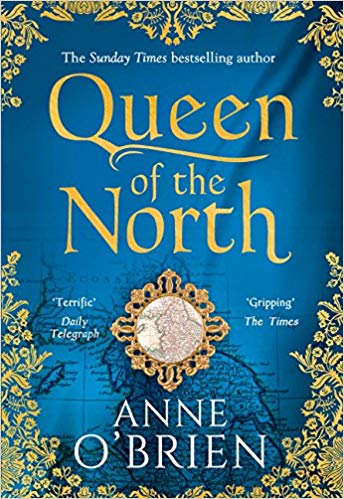
1399: England’s crown is under threat. King Richard II holds onto his power by an ever-weakening thread, with exiled Henry of Lancaster back to reclaim his place on the throne.
For Elizabeth Mortimer, there is only one rightful King – her eight-year-old nephew, Edmund. Only he can guarantee her fortunes, and protect her family’s rule over the precious Northern lands bordering Scotland.
But many, including Elizabeth’s husband, do not want another child-King. Elizabeth must hide her true ambitions in Court, and go against her husband’s wishes to help build a rebel army.
To question her loyalty to the King places Elizabeth in the shadow of the axe.
To concede would curdle her Plantagenet blood.
This is one woman’s quest to turn history on its head.
It’s 1399 and King Edward III’s descendant Elizabeth Mortimer is married to Henry Hotspur Percy, heir of the Earl of Northumberland. Richard II is king, and deposed by Henry Bolingbroke under dubious circumstances. Richard II had no heirs, but he did have someone ready to replace him until Henry IV takes his crown. That is where Elizabeth comes in.
Elizabeth expected her nephew Edmund Mortimer to take the throne, also a descendant of Edward III, a boy born of royal Plantagenet blood. Elizabeth’s family has just as good a claim to the throne as the new Lancaster king. Whenever there are multiple claims to a throne, blood is certain to follow.
Elizabeth is not a man who can go into battle for the Mortimer claimant. She is not a beautiful young princess to be traded by families and launched into power. Elizabeth is a smart noble woman, who knows her family has a valid claim, who has given her husband the children he needs, and, to history, should be left on the sidelines. But Elizabeth is not a woman who should be cast aside in the battles of men and the throne, for she has the knowledge, skill and education to make a difference in the Mortimer claim to the crown.
All sides the early battles had legitimate claims to the throne, and we have a viewpoint in Elizabeth which is valid yet undemanding, unlike the men who surround her. Real life Elizabeth is not a well-known figure of history, so the author has had to use historical detail of others, and weave Elizabeth into the story, which gives new life to an old tale. Percy takes the Lancaster’s side of the war and Elizabeth is rich in the blood of the Mortimers, and nobler than her husband. But what can a wife do in such challenges? Elizabeth is the wife of Percy, who holds the north. Whether it is from London or the Scots, the Percys have plenty of battles to face and Elizabeth is the northerners queen.
No sooner than choices are made, Elizabeth and Percy find they should be on the side of the Mortimer. Politics, treason and ambition are going to explode, and I am desperately trying not to write spoilers, but all I can say is you really need to read this book! Everyone knows what happened to Hotspur Percy at the Battle of Shrewsbury, part of a plot to overthrow Henry IV, but Elizabeth and her family’s claim carries on. The Bolingbrokes and the Mortimers are going to need to be friends if civil wars for the throne are to end, and greed is as powerful as blood. This book has historical accuracy combined with beautiful storytelling. I adored this novel.
As she helps to nurse the dying Queen Elizabeth, Frances Gorges longs for the fields and ancient woods of her parents’ Hampshire estate, where she has learned to use the flowers and herbs to become a much-loved healer.
Frances is happy to stay in her beloved countryside when the new King arrives from Scotland, bringing change, fear and suspicion. His court may be shockingly decadent, but James’s religion is Puritan, intolerant of all the old ways; he has already put to death many men for treason and women for witchcraft.
So when her ambitious uncle forcibly brings Frances to court, she is trapped in a claustrophobic world of intrigue and betrayal – and a ready target for the twisted scheming of Lord Cecil, the King’s first minister. Surrounded by mortal dangers, Frances finds happiness only with the precocious young Princess Elizabeth, and Tom Wintour, the one courtier she can trust.
I am a very big Tracy Borman fan. I did not angle for a review copy, instead I went to a store and purchased her first novel myself. The new release stand was full on release day, here on the other side of the world, a rare occasion for the books I tend to review.
The King’s Witch opens with poor old Elizabeth I, in her dying moments. The book follows Frances Gorges, an expert in healing and herbs. King James is now on the throne, a dramatic change for England. Women healing and using herbs and their developed skills, rather than that of a male doctor, are seen as evil, as devil’s work. King James is terrified of witches and witchcraft, so to be a woman with knowledge makes young Frances right in the firing line against puritanical opinions and fears. Frances does have allies, Tom, a courtier, and the Princess Elizabeth. Whether she can trust her own friends is never truly clear to Frances.
This novel starts slowly, showing Frances’ life, indeed lives for ‘normal’ people in this awkward time period in England. What I did see early on was that there would be a twist coming, which keeps you turning the page. Frances grows as their reader gets to know her, from a scared girl into a woman who gets to see behind the lavish exteriors of a royal court for what really lies in individuals.
When reading Borman, you know you are getting historical accuracy with your fiction (I swear some people only read to point out inaccuracies in fiction; you lot will be disappointed with this). It is nice to hear from a new voice, rather than through the eyes of characters done so often before. Being cast as a witch was simple in the 17th century, all a woman had to do was piss off the closest man and she would be accused. So being a woman with knowledge naturally scares the pants off men. While the king is determined to cast out all remaining Catholics in England, religion remains ingrained in all decisions made.
Frances’ biggest issue is that her friend Tom is Tom Wintour, one of the men in the gunpowder plot with Guy Fawkes (shout-out to all of us born on November 5!). Tom is ready to blow up parliament and the attention to the how’s and why’s rather than simply the actions taken in 1603 is beautifully told. The gunpowder plot men are generally thought of as crazies, when they actually had quite an elaborate plan and motive. While we all know what happened to the gunpowder plot, seeing it through the eyes of someone close to these men makes it painful to read through, knowing the conclusion.
I really enjoyed reading this book; I went in with high expectations and was not disappointed. Love, torture, witchcraft, what a combination to write about and get to muse over, knowing that the early 1600’s really was one hell of a cauldron of superstition. Frances’ uncle, the Earl of Northampton, makes an appearance as a sometimes friend, sometimes overly creepy uncle everyone doesn’t want visiting, and don’t forget Lord Cecil, a grump at the best of times, aiding the king’s paranoia for gain but harming Frances’ safety even more.
Some are witches being killed, others are being tortured and executed for trying to change the monarchy. You know it’s all going to end in tears but you can’t stop reading anyway. Thank you to Tracy Borman for humanising those in an often misunderstood piece of history.
July 1938 has all eyes on Valencia, Catalonia and Aragon, and yet in the south-west, the Mérida pocket is also suffering new battles. Extremadura, the most western area of Spain, was quickly taken by the Nationalists when the war broke out, but the Mérida pocket is the sole area held by Republicans, an area west of Mérida in the La Serena region in Badajoz province. Franco wants the Mérida pocket in his control to settle the entire region. If Republicans could take Mérida, then they could cut the Nationalist zone in Extremadura in half. While the Nationalists had quietly secured the frontline along the Zújar River in June, Franco implements a plan to circle all remaining Republican men and execute the whole lot, whose numbers could be as high as 10,000.
The Battle of the Ebro preparation is well underway. The Republican Ebro Army was formed on May 15 by the Republicans, in response to massive gains made by the Nationalists as they murder their way through the Valencia region. Lieutenant Colonel Juan Modesto took control of both the 5th and 15th Army Corps, which combined the 35th International Division (made of the XI, XIII and XV International Brigades), the 3rd Division (made of the 31st, 33rd and 60th mixed brigades) the 42nd Division (made of the 226th, 227th and 59th brigades), the 15th Army Corps (with the 16th Popular Republican Army Division of the 12th Army Corps) and the 3rd Cavalry Regiment. By mid-July many anti-aircraft weapons arrive along with 11th Division (made of the 1st, 9th and 100th mixed brigades), the 46th Division (made of the 10th, 60th and 101st mixed brigades) and the 45th Division International Division (made with the 12th”Garibaldi”, 14th “Marsellesa” and 139th mixed brigades).
July 13
The Republicans add more to their numbers with the 12th Army Corps, now led by Lieutenant Colonel Etelvino Vega. The 12th Army Corps was then made up of the 16th Division (including the 23rd and 24th mixed brigades) and the 44th Division (including the 140th, 144th and 145th mixed brigades). The 18th Army Corps bring Lieutenant Colonel José del Barrio to lead the 27th Division (including the 122nd “la Bruixa”, the 123rd and 124th mixed brigades), the 60th Division (with the 95th, 84th and 224th mixed brigades) and 43th Division (with the 72nd, 102nd and 130th mixed brigades). At its height, the Republican troops will number 80,000 men.
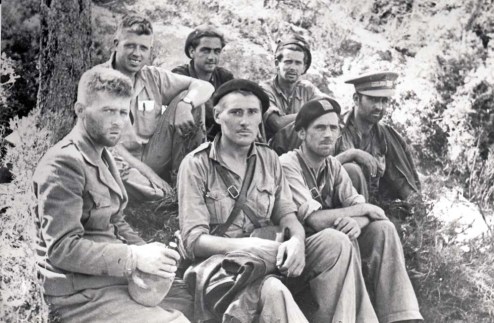
Republican soldiers at the Ebro, July 1938
July 15
The Nationalist army has been storming regions around the Ebro for months and have many huge battalions in the area. The Army of the North, controlled by General Fidel Davila, a powerful and successful group, are flanked by the 40th, 50th and 105th Divisions of the Moroccan Army Corps under vicious General Yague. Included in the Moroccan Corps are the Legionarios, Regulares, the Carlists and Falaganists and African mercenaries, all groups well-known over the past two years for wild slaughter, torture and rape of troops and civilians. General Rafael García Valiño’s Maestrazgo Army Corps, made of the 1st Navarra Division and the 74th, 84th and 13th Divisions are also very close by, having controlled the northwest Valencia region. The numbers the Nationalists have/can access is 90,000 experienced men.
Legionnaires on the Ebro, July, 1938
July 18
Today marks two years of civil war in Spain. The death tolls is already into the hundreds of thousands, with no spot in the country unaffected. Madrid continues to be held by the Republicans while surrounded by Nationalists, who still cannot get through the front-lines. Catalonia’s uprising with the rights of workers has long dimmed as the war nears their own streets, and the Aragonese anarchist lifestyle has been destroyed. Concentration camps have been set up to take Republicans, if they are not first executed. All major cities, except for capital Valencia, Madrid and Barcelona, rest in Nationalist hands. Europe is looking nervously at Hitler, yet not helping the people of Spain, already suffering Hitler’s power as Franco looks to join Hitler and Mussolini as Europe’s great fascist leaders. Precious few believe in the Republican cause now, which is the one card they have to play in the Battle of the Ebro, as they have the element of surprise on the Nationalist troops.
July 20
South in Extremadura, the Mérida Pocket is going to be closed by the Nationalists. General Saliquet, based in the northern area of the Badajoz region, marches his men south into La Serena, where the Republican front-line is strong. At the same time, General Queipo de Llano has been marching his men northwest towards La Serena. This makes the Republicans embattled at both their major front-lines, and are routinely pounded by gunfire for four days.
La Serena
24 July
The Republican divisions, the VII Army Corps with the 36th and 36th Divisions from Algodar to Zújar, and the VIII Army Corps with the 38th, 63rd and 51st divisions from Zújar to Guadalmellato, are completely overtaken by Nationalist troops. The battle ends with the massive slaughter of troops throughout the Don Benito and Villanueva de la Serena areas, murdering the whole Extramaduran Republican Army. This short battle is the largest slaughter of troops in the region (as civilian slaughter and imprisonment has been wholesale here since the outbreak of war). Nationalist men continue their march through the Mérida pocket of La Serena, eastwards into Toledo province, where the Republican 91st and 109th mixed brigades are trapped on every side. These remaining men are rounded up to be placed in the Castuera concentration camp 45 kilometres south, though most will be executed in the camp. Colonel Ricardo Burillo, leader of the Extremadura Army Corps, survives, and is dismissed after the bloody defeat of around 10,000, while the Nationalists have lost almost no one.
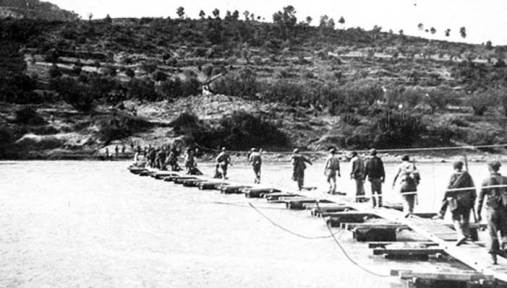
Republicans cross the Ebro
July 25
After a week of planning, the commanders of the 14th Republican Army Corps cross the Ebro river, to watch the Nationalists, taking their positions while other troops prepare river crossings. The Nationalists soon see what is happening, reporting to Franco that the Republicans and their International Brigades are on the bank of the river with rafts and pontoons. Franco is not concerned, aware of how weakened the Republicans have been in the area.
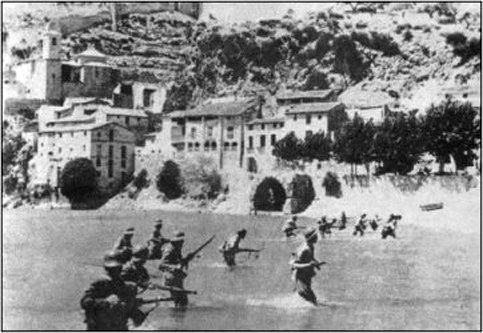
The early hours of July 25 are completely dark with no moon. Between Fayon and Benifallet, a 45 kilometre bend in the river, the commanders again cross the river and kill 50th Division Nationalist guards posted in the area. After fastening assault boats, the first of 90 boats cross, ten men in each boat, under darkness. All following troops then cross on pontoon bridges at daybreak. The Nationalists are totally unprepared for this wide attack, overcome in surprise. The International Brigade attack 40 kilometres south of Benifallet at Amposta, but are overpowered within the first 18 hours of combat, with the few survivors retreating back over the Ebro.
Around 4,000 Nationalist men of the 50th division are imprisoned, while some manage to desert. The Republican 15th Army Corps carry on, and advance three miles north, while the 5th Army Corps manage a huge 21 kilometres east.
July 26
The Republicans have marched 30 kilometres south to Gandesa, and now occupy 800 square kilometres, but cannot hold Gandesa, as the Nationalists’ 13th division have the town fortified. Franco frantically deploys more troops to counter the attacks, with an extra eight divisions, 140 bombers and 100 fighters sent to the Ebro. The Nationalists hold the dams at Tremp and Camarasa, which are opened, flooding the Republican pontoons, which take two days to repair. At the same time the German Condor Legion and Italian Aviazione Legionaria bomb the pontoon bridges, which can only be repaired at night. Due to the planes and the flooding, the Republicans have only got 22 tanks and minimal artillery over the bridges, leaving men exposed and without water and food.
International Brigades cross at Minveret
July 27
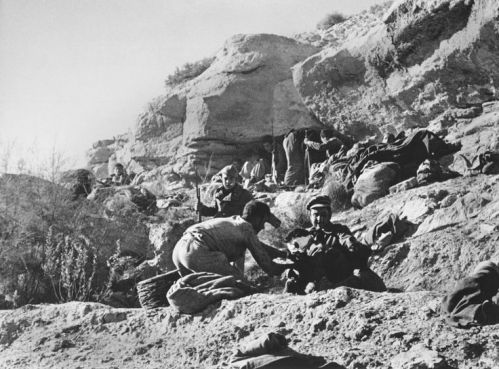
The town of Gandesa is a key target for the Republicans, which is 25 kilometres west of their first river crossing point. Gandesa is surrounded by hilly limestone terrain in the Caballs, Pandols and Fatarella ranges. The limestone hills have little shelter, leaving the men at the mercy of overhead bombers. But they push on, spread out over a 35 kilometre line, eager to take Gandesa, a pivotal town into Catalonia, so men and tanks are forced over the limestone hillsides.
Republicans in the hard terrrain
July 31
The leading Nationalist commanders want to hold their ground at Grandesa, keeping the town in their hands and stopping the Republicans, while also planning to attack them from the north. But Franco is unwilling to listen to this, as he is pleased to have the strength of the Republican army trapped within a 35 kilometre stretch. Regardless of the loss of life, Franco wants the Nationalists to regain all the ground they have lost, rather than holding Republicans in place. Franco wants them back over the Ebro and killed.
The International Brigades, who have been mixed with 15th Army Corps, have regrouped after their failed crossing at Amposta, and plan an attempt to take Hill 481, right outside the town of Gandesa. It will be a risky attack, with no cover from the air bombers. The battle still has four months to run.
British troops at Hill 481
~~
This is not a detailed analysis, just a highlight (lowlight?) of the month’s events. Things get lost in translation – Feel free to suggest an addition/clarification/correction below. The more the world remembers, the better. All photos and captions are auto-linked to source for credit, and to provide further information.
From the author of the international best-selling Tudor Trilogy, the true story of the Tudor dynasty continues with the daughter of King Henry VII, sister to King Henry VIII. Mary Tudor watches her elder brother become King of England and wonders what the future holds for her.
Born into great privilege, Mary has beauty and intelligence beyond her years and is the most marriageable princess in Europe. Henry plans to use her marriage to build a powerful alliance against his enemies. Will she dare risk his anger by marrying for love?
Meticulously researched and based on actual events, this ‘sequel’ follows Mary’s story from book three of the Tudor Trilogy and is set during the reign of King Henry VIII.
~~
I have read Owen, Jasper and Henry, and also Warwick, by this author, so having a woman as a title character is an exciting addition! But it is not about Mary I, but Princess Mary Tudor, Henry VIII’s sister. That’s when I really jumped for the book, as I love both Mary and Margaret, forever eclipsed by their king brother.
The book starts in 1509, and Princess Mary is but 13 years old. Her brother Henry is only five years older but has just been crowned King of England. Henry knows who he shall marry – Katherine of Aragon, widow of Arthur, and now Mary is going to be an equally powerful princess – powerful in that selling her to the highest bidder will help increase Henry’s power.
Mary has, in the past, been written as a fool, a simple girl interested in princes and gowns, no head for politics. What a silly notion, because Mary is the daughter of Henry VII and Elizabeth of York, her sister is Queen of Scots, Arthur was to be king, before Henry took poor Arthur’s place. How could Mary possibly be dim? Here, Mary is educated, confident and a brave young woman at the heart of a very serious political match for her country. Yes, she may break down in private, but her public face is one of total poise, the way only a royal upbringing could provide.
Mary considers Katherine of Aragon a sister when she marries Henry (Mary was very young when Katherine married Arthur). Henry and Mary are close, even though Henry is never an easy man to love, and is often heartless to Katherine. Mary has lost both her parents, and Henry breaks her betrothal to the Holy Roman Emperor Charles, also just a child, and instead gives Mary in marriage to King Louis of France.
Mary may be a queen, but is also Europe’s most beautiful princess of 18 years when she marries the frail 52-year-old Louis. Mary does as she is bid (and has a child Anne Boleyn in her household, just a little side bonus) and marries the old Frenchman. But first Mary told her brother – I shall marry Louis if can choose my second husband.
That is where Mary is so grand. Louis kicks the bucket three months in, and kings and dukes are clamouring for Mary less than a week into widowhood. But Mary has her suitor all ready, Charles Brandon, Henry’s best friend and (while the Duke of Suffolk) not at all good enough for her. Secretly married, Mary defies her brother and King, and is banished from court and from his kindness.
Never mind all these details; Mary is written as a woman, a wife, a mother, a sister. She becomes a queen of France (who killed her old husband with too much sex, so they gossiped, eww), then a woman who married for love, then a wife who had to endure infidelity, the births and deaths of children, the heartache she felt for Queen Katherine and the fortunes of all around her. Mary also suffered with her health for her whole life.
Mary was an important princess in the royal history of the time, and is not prone to being frivolous, and so is written as an educated woman. While the Tudor world is filled with politics, law, religion, it is also filled with love, friendship, parties and jousts, colour and excitement, and the book weaves all together.
Did Brandon love Mary back? The book gives hints about such as Mary’s life is followed. Mary’s death is beautiful and tragic, and the process starts over, as Brandon marries a child as a firm alliance just a few months later (he was a lucky man to capture both Princess Mary and Catherine Willoughby!). Mary’s granddaughter Jane would become queen for nine days many years later, and must have had the blood of THIS type of Princess Mary in Jane’s veins.
Thank you, Tony, for a wonderful novel!
~~
About the Author Tony Riches is a full-time author of best-selling historical fiction. He lives in Pembrokeshire, West Wales and is a specialist in the fifteenth century, with a particular interest in the Wars of the Roses and the lives of the early Tudors. For more information about Tony’s other books please visit his website tonyriches.com and his popular blog, The Writing Desk and find him on Goodreads as well as Facebook and Twitter @tonyriches
Refugees heading into France with Republican soldiers
Refugees heading into France with Republican soldiers
Refugees heading into France with Republican soldiers
Refugees heading into France with Republican soldiers
May was considered a quiet month in terms of gains in the war, it was certainly not quiet. After the heavy battle of the Aragon offensive, the Levante Offensive was proving to be slow-going for troops on either side due to weather and terrain. Madrid was being bombed constantly, as those defending the city were cold and suffering from lack of food and ammunition. Franco accepted he could not just take the city, but continued to bomb slowly, restricting the Madrid defenders piece by piece. Barcelona was still reeling from bombings earlier in the year, and plagued by constant infighting between Republican factions. Northern Spain was completely dominated by the 1937 invasion by the Nationalists. Seville had been captured on day one of the war and was locked down in fascist hell, as was nearby Granada. Salamanca further north suffered a similar fate, while across in Valencia and Alicante, they were far from the frontlines but their ports were subject to attack by air. Almeria was filled with refugees from southern Spain who had nowhere to turn. People in the cities were suffering from lack of food, safe shelter and medical care, while rural homes and small villages had the additional struggles with weather, poor crops, lack of supplies and trade and constant skirmishes of fighting.
May 1 – Bielsa Pocket Offensive
By the end of April, the Nationalists had reached the Mediterranean coast, breaking through at Vinaros, the most northern town of the coastal Valencia region. The Aragon Offensive had stretched through the entire Aragon region, leaving just one pocket, the town of Bielsa, under Republican control. The tiny town on the border with France is home to around 4,000 people living in the Pineta valley by the Alto Cinca river. The 43rd division, led by Antonio “El Esquinazado (The Dodger)” Beltran, a group of 7,000 men, have only four guns and no chance of any reinforcements or air cover. Meanwhile, the Nationalists in the surrounding area have double the men, with plenty of weapons and enormous air support.
The one thing which saves the Bielsa pocket is the difficult terrain, which surrounds the valley which leads directly into the Pyrenees. The Republicans, with almost no ammunition, manage to hold off the Nationalists in outbreaks of attack, backed up by bad weather. The Bielsa pocket managed to stay unharmed through April in snow and fog, but the weather begins to clear in May, so the Republicans start evacuating the 4,000 residents of the valley over the Pyrenees and safely into France. The troops manage to hold the Nationalists back as the civilians make the trek into France, but the Republicans do not flee and continue to fight to hold the Bielsa pocket, as it represents a huge morale boost for Republicans everywhere. Despite the overwhelming odds, the Republicans would hold the Bielsa pocket well into June. Some of the soldiers and nurses choose to return to the Nationalist regions after aiding refugees, but almost 6,000 remain to fight.
The Pineta Valley north of Bielsa, where the refugees trekked to safety in FranceThe Republican 43rd division
May 11 – Levante Offensive
The Levante Offensive, which started on April 25, is continuing in difficult terrain. Due to the bad weather of April, all attacks were halted, giving the Republicans time to receive their new artillery, shipped over the French border courtesy of the Russians. They were fitted out with Soviet Supermosca (I-16 Type 10) fighters with four machine-guns, 40 Grumman FF fighters and anti-aircraft guns. The Nationalists wish to make it south to Castellon, some 80 kilometres south from their first break into the region.
Nationalist faction tracking south through the Levante through three different divisions
The Nationalist Galician troops start heading south along the coast, the Castile troops head east from Teruel and the Maestrazgo troops headed southeast through the mountains in the centre. The Republicans, with their new equipment, are able to slow the inevitable march of the troops south, with none of the groups reaching Castellon by the end of May. Individual skirmishes break out through the month but casualty numbers are not recorded, though it is estimated that in May, around 10,000 Nationalist men are killed, with only around 2,500 Republican casualties.
May 22 – Balaguer Offensive
The battle of Balaguer had been continuing since its first outbreak in early April. Francoist men had held the Segre river and the bridgehead into the town, when the Republicans were forced to remain in retreat on the east side of the river. On May 22, the Republicans again try to launch an offensive to take the Balaguer bridgehead, resulting in fighting going for a full seven days, but the Nationalist men are better trained, equipped and prepared.
Frontline through from Bielsa in the Aragon far north, down through the Levante – May 1938
Some of the Republican soldiers are only in their mid-teens and have received no training. By the end of the week of fighting, the Republicans have to withdraw and leave their casualties behind. Numbers of casualties during the constant outbreaks around Balaguer are not recorded, instead considered part of the overall push towards defeating Catalonia. The Republicans at Balaguer have successfully held the Nationalists as they slowly head into Catalonia, fearful of angering nearby France. The Balaguer Offensive will not end until January 1939.
The website on the Balaguer offensive of very thorough and has many photos and details of the battles and how it looks today. Click on the photos to access the site.
May 25 – Alicante bombing
After the Aragon Offensive, Franco changes tactics to destroy the Republican maritime trade and along with it, their morale. The Italian Aviazione Legionaria and the German Condor Legion plan to undertake bombings of the remaining Republican-held cities. Valencia, Gandia, Barcelona, Murcia, Alicante, Granollers and other Spanish towns are made targets.
Aerial attack on Alicante
Nine Italian Aviazione Legionaria bombers attack Alicante. Alicante has been far safer than any other Spanish city and has no working air-raid alarm and the anti-aircraft artillery is unusable. Ninety bombs are dropped, many into the market and central city area. The deaths of civilians range between 275 and 393, some 100 of them unable to be unidentified due to damage. The Italians have no problems bombing purely civilian targets, just as the Germans have done.
Italy had already accepted to withdraw from Spain at the end of the war and to allow the Mediterranean to be safe and back to normal. But while saying this, they then sent another 3,000 men to Spain to fight and started bombing Mediterranean ports.
May 31 – Granollers bombing
Five Italian Aviazione Legionaria bombers attack Granollers. The town is only 30 kilometres north of Barcelona and has no military targets and is not a port town. One hundred kilograms of bombs, around 40 individual bombs, land in the city. As the bombing lands in the city centre, most of the dead are women and children at the market. The death toll is estimated at between 100 and 224, as not everyone missing was found after the attack.
Granollers after the bombing May 31, 1938
Only now does the rest of Europe stop to pause over the bombings of civilian targets, after more than a year of specific bombings. The British government sends two officers to carry out enquiry, who report that the bombings are being planned and carried out only to install terror. The British government pairs with the Vatican, who appeal to Burgos (Franco’s Spanish capital), plus Rome and Berlin. Rome blames Burgos for ordering the attack, despite Alicante and Granollers being Italian attacks. Italy’s Foreign Affairs Minister, Mussolini’s son-in-law Gian Galeazzo Ciano promises to look into the bombings, and calls Berlin to report – “actually, we have, of course, done nothing, and have no intention of doing anything either.”
List of cities to be targeted by the Italians, as found in an Italian notebook dated January – September 1938
~~
This is not a detailed analysis, just a highlight (lowlight?) of the month’s events. Things get lost in translation – Feel free to suggest an addition/clarification/correction below. The more the world remembers, the better. All photos and captions are auto-linked to source for credit, and to provide further information.






 CAROLINE ANGUS