Beautiful Drone Footage of Valencia, Spain

The Spanish powers-that-be hate drones. Why? Maybe because they are awesome. But here are some beautiful short drone videos over some of Valencia’s best landmarks. They are made by Aerial Valencia with a Phantom drone, giving people a chance to see Valencia’s well-known sights from a new perspective.

This video is done by Aerofilm HD, which drone around other Spanish locales, and this very special location 🙂

`

Aerial Valencia is on Twitter – @aerialvlc and on youtube – Aerial – VLC

SPAIN BOOK REVIEW: ‘Franco: Biography of the Myth’ by Antonio Cazorla Sánchez

Antonio Cazorla Sanchez

General Francisco Franco, also called the Caudillo, was the dictator of Spain from 1939 until his death in 1975. His life has been examined in many previous biographies. However, most of these have been traditional, linear biographies that focus on Franco’s military and political careers, neglecting the significance of who exactly Franco was for the millions of Spaniards over whom he ruled for almost forty years.

In this new biography Antonio Cazorla Sánchez looks at Franco from a fresh perspective, emphasizing the cultural and social over the political. Cazorla Sánchez’s Franco uses previously unknown archival sources to analyse how the dictator was portrayed by the propaganda machine, how the opposition tried to undermine his prestige, and what kind of opinions, rumours and myths people formed of him, and how all these changed over time. The author argues that the collective construction of Franco’s image emerged from a context of material needs, the political traumas caused by the Spanish Civil War (1936-1939), the complex cultural workings of a society in distress, political manipulation, and the lack of any meaningful public debate. Cazorla Sánchez’s Franco is a study of Franco’s life as experienced and understood by ordinary people; by those who loved or admired him, by those who hated or disliked him, and more generally, by those who had no option but to accommodate their existence to his rule.

The book has a significance that goes well beyond Spain, as Cazorla Sánchez explores the all-too-common experience of what it is like to live under the deep shadow cast by an always officially praised, ever-present, and long-lasting dictator.

Cover art and blurb from amazon

~~

I saw Franco: Biography of a Myth on the shelf and grabbed it while collecting other Franco books. Reading the little blurb on the back cover which states the book is part of a series of ‘engaging, readable and academically credible biographies’, I thought it would be worth a read. Then I read the chapters headings – Military Hero, Saviour of Spain, Man of Peace, Moderate Ruler, Bestower of Prosperity…. and I wondered what I had stumble onto. No one, other than those, let’s say, fanatical about Franco would use any of the terms to describe a man who killed and controlled with enjoyment. It was going to be hard to give a decent review after reading just the contents pages.

Biography of a Myth starts off with a an introduction, an overview of the man himself, and facts and perceptions of his rule. An excerpt from the book of Luis Bolin, Spain’s once-tourism minister, shows how opinion of Franco was perceived by those who believed in him – His ambition was to serve. All thoughts were for the people. He wished to improve the lot of the working man and the position of the middle classes, both of which had so many times been deceived by Republican promises…. This about a man who condoned the swift punishment of said people in the south of Spain, in an example detailed just one page earlier. This is a book written not from simply the facts, but the facts as they were handed down to the people.

The first chapter tells of Franco’s time in the army, not just as a man good at what he did, but as a man of opportunistic timing. The chapter talks of right up until the day civil war began, with Franco’s ‘crude opportunism’ and through a series of accidents, how his name would quickly become feared, when it could have easily been another man leading the charge in war. The second chapter tells of the civil war from the Nationalists point to view as Franco swept through the country, and how the propaganda machine was already at work. Franco’s name was kept out of stories where possible, instead focusing on others, or local heroes in publications. Once he was proclaimed Head of the Spanish State and Commander and Chief of the Army did the news stories change, to anoint him the illustrious Caudillo General Franco. People could only believe what they heard and all that was carefully planned. Each story on his victories was selected and mistakes neatly erased. History was already being written by those who decided what the future would believe. The book also touches on the sanitised versions of events printed in international news.

The book goes on to talk of the delicate peace created after the civil war. With starvation of the traumatised public, and corruption and ineptitude, these things didn’t hurt Franco, as underlings took the blame. Publications in ensuing years, including a 1947 article which claimed Franco had too been a victim of the Nazis, helped to preserve Franco’s prestige. The years described in chapter four, through the fifties and sixties, describes Franco as ‘a walking skeleton that refused to go into the closet of European history.’ Franco needed American and European opinion to sway in his favour, and propaganda was written to suit. As a result, through trade and negotiations, Spain was allowed to flourish, all based on what people knew of the man himself. The chapter titled ‘Moderate Ruler’ may ring true if you consider Franco a man with absolute power, and no idea what to do with it.

Chapter five talks of the calmer years under Franco’s reign as the country began to prosper, and his belief he had a successor in the form of Prince Juan Carlos, who would carry on his vision after his death. But with factions starting to speak out in the mid to late sixties, such as ETA, Franco’s grip on the nation, and the opinion of the people, started to wane.  Only with his death in 1975 did opinion change as new stories would emerge, giving a more realistic picture of Franco and his reign, as freedom to discuss the past opened wide. Perceptions are also opened, with details of publications made since his death, of who wrote what and why, and what perceptions are like today, based on propaganda.

When I started reading this book, I thought I was going to get a mouthful of Franco love, but Biography of a Myth is not that straight-forward. It swings between those who loved and hated Franco, though does brush over atrocities at an astounding rate (perhaps because it could be a subject for another book). The information on Franco is not new; anyone who knows anything of Franco’s history will find themselves in common territory. This book does spear off in a new direction, away from the likes of Paul Preston’s magnificent biography, but would make a good read for anyone looking for a different point of view. This book doesn’t talk about Franco from one side or the other, it talks of Franco through perceptions during his reign. In the end, the book tells us something we all know – history is the opinion of the winners.

SPAIN BOOK REVIEW: ‘Moving to Spain with Children’ by Lisa Sadleir

Ilustracion Portada Moving to Spain whith Children

Don’t even think of Moving to Spain with Children without reading this essential self-help manual. Compiled by a successful British working Mum who has experienced the relocation roller-coaster for you, the highs, lows and occasional shrieks of panic, it could save you months of hassle and heartache. Chapters cover: Timing your Move; Choosing the Best Location; Property Purchase; Schooling; Paperwork; Learning Spanish; Healthcare; Bringing Pets to Spain; Starting a Business… …And other considerations crucial to ensuring a smooth transition to your new lifestyle. With information that’s bang up-to-date, Lisa “tells it like it is”. Spiced with the author’s own heart-warming anecdotes, you’ll arrive at the same place her own family is now – but in half the time: Living and loving family life in Spain! If you have ever wished for the gift of hindsight, “Moving to Spain with Children” is just that: a gift of a book!

Cover and blurb from amazon

~~

Moving to Spain with Children is the latest offering from Lisa Sadleir, a long-time successful expat based in Mijas, Malaga, in southern Spain. Sadleir has a hugely popular website familylifeinspain.com, to help people make the move to Spain, which can be a magnificent experience, or epic disaster, dependent on many factors. Sadleir is also an independent relocation adviser and personal property finder at ccbspain.com.

Thanks to Sadleir, this book can solve any problem which may arise when moving your children to Spain. This extremely comprehensive book covers everything, from the essentials, choosing your location and time of year in which to move (a classic error for many), how to cope with the language and cultural barrier, to the most important aspect for parents, the education of their children. The education section alone is stand-out, covering all ages and needs, with real-life experience from parents and children.

Another huge consideration, healthcare, is fully explored, with options to suit the needs and budgets of all families through the country. The NIE process, Número de Identificación de Extranjero (basically a foreigners pass) can be fraught with trouble. The book covers the process for EU members, though many steps are also relevant to non-EU members, provided you have completed your paperwork at the Spanish embassy in your own country first. The process of registering on the Padrón, having yourself registered with the town hall, is included and essential. Dependent on your home nation, your circumstances and even the mood of the staff member you encounter, gaining NIE or residency can be a real mixed bag, so having this information laid out could be a huge help for many. When I first moved to Spain, I managed to gain an NIE through a bit of a backhand deal, simplifying the process, but even then I had to jump through fiery hoops at the embassy. There is no such thing as being over-prepared.

The never-ending trials and tribulations of purchasing a property and starting a business in Spain is fully covered, along with more personal experiences and examples to help you, along with (finger crossed) simpler matters such as money and banking considerations. Another section is extensively devoted to bringing your pet to Spain (something I’ve never even thought about), for those furrier family members. The book finishes with things to consider when leaving home and a reminder not to burn your bridges before you leave. Moving to Spain is an incredible experience, but the move can be difficult. I have seen plenty of people fail at the experiment, right down to a husband at the airport, begging his wife not to leave their new life behind.

This book would appeal to anyone moving to Spain, even if there are no children to consider, with practical and realistic advice. But when moving your children, so many issues need to be well planned, and I wish this book had existed when I first embarked on life in Spain. Finally, solid advice all in one place, from someone who has succeeded at Spanish life. Just take a look at Sadleir’s website and Facebook page to see success on a fantastic level!

To buy the book – 

USA / International – Ebook / Print

UK –  Ebook / Print

Spain  Ebook / Print

Visit Lisa Sadleir’s websites on moving to Spain –

familylifeinspain.com

ccbspain.com

movetomalaga.com

movetomijas.com

SPAIN BOOK REVIEW: ‘Death And The Sun: A Matador’s Season In The Heart Of Spain’ by Edward Lewine

Death-and-the-Sun

An immoral spectacle or a metaphor of life? Bullfighting never fails to provoke a reaction. In this unusual travel memoir, Edward Lewine embarks on an eye-opening journey around Spain to track a typical season for the country’s biggest bullfighter, Francisco Rivera Ordonez. Fighting bulls while fleeing celebrity, Spain’s most infamous matador lives both his public and his private life on the edge. The last in a distinguished bloodline, he is plagued by the legacies of his great-grandfather, the greatest matador of his day and revered by Hemingway, and by his late father, who was gored to death in the arena. With sixty-two fights and a hundred and twenty bulls to confront in the coming season, Francisco must also endure the aggressive attention of the paparazzi who pursue him for news of his colourful private life and breakdown of his marriage to a Spanish duchess. LEWINE witnesses at first hand the thrilling routine of a top bullfighter – the rituals, the risks, the stage fright – and assesses the significance of bullfighting in the context of Spanish identity. This national obsession encapsulates the uniqueness of Spanish culture.

Photo and blurb from Random House

~~

If you are not a fan of bullfighting, read my quick disclaimer or keep your opinions to yourself.

Edward Lewine’s book Death and the Sun is by no means new; published in 2005, I have read it several times, and have just finished reading it again while studying bullfighting. The book follows a make-or-break season for famous bullfighter Francisco Rivera Ordóñez, known as Fran. Fran comes from a famous line of bullfighters; his father was the famous Francisco Rivera Pérez, ‘Paquirri’, who died in the ring when Fran was 10. Along with his brother Cayetano, they would form another piece in a famous bullfighting family; their great-grandfather was Cayetano Ordóñez, who was a muse for Ernest Hemingway in The Sun Also Rises, and his grandfather was Antonio Ordóñez, who featured in Ernest Hemingway’s The Dangerous Summer. It seems Fran was always destined to become a bullfighter, the son of the most famously killed bullfighter, and he and his brother, born to a tabloid queen, are no strangers to being dressed in the traje de luces, the suit of lights.

This book covers Fran and so much more. The author sheds light on bullfighting for anyone not terribly knowledgeable on the event, the history, the traditions, the animals. No detail or aspect is left untouched. Following Fran through a season, shows an eventful eight month period for the bullfighter; Fran has just announced his separation from his wife Eugenia Martínez de Irujo, 12th Duchess of Montoro, with whom he shares a very young daughter. The tabloids are loving the story; his mother, in an ever-pressing need to be heard, shares tales of the relationship, something which only serves to make Fran’s season more difficult.

Fran is at a crossroads; use his skills to become one of the greats or fade into obscurity, like so many before him. The author follows Fran through all stages; the fights, the reactions, the travelling, the entourages and their thoughts. A whole world of glamour, traditions, bright lights and heavy pressures swirls about Fran, the ring leader of the bullfighting circus. Fran is no stranger to anyone interested in fighting. He has been followed by multiple writers, but this is an all-new angle on the man behind the family name.

Rather than being a travel book on Spain, you see the country through bullfighting eyes. There is tradition and drama, formalities and losses, people crying the usual bullfighting clichés and the zest for the melodramatic. The book also touches on bullfighting as a whole – addressing many of the cries from those who hate the entire event. Man against death. The bull will always die, that is not in question – but would death of the man be suitable, a loss, or a disappointment? Of course not.

The sections of the history of bullfighting are excellent in their detail, the stories of the bull-breeding is concise and yet never dull, all details are acknowledged so the reader can feel part of the exclusive world. There can’t be guide in English as well-written or thought-provoking as this. How a bullfighter travels and what his team have to say, earn and like is there, laid out in perfect clarity.

Fran is a difficult person to see in the book. While the characters all attempt to make themselves known, Fran almost seems to be behind a curtain, not quite letting out who he really is. He paints the picture of a man surrounded yet somehow solo, heaving under a huge weight of expectation, and yet finding himself not living up to those expectations, real or perceived. Frustration is evident with bulls which fail to live up to what Fran needs in order to cement his name in the ring.

Fran’s personal life is in total disarray, but Fran barely mentions it. Maybe it was painful, perhaps he wanted to keep it quiet while his ex and his mother continued to talk to anyone who would listen. Maybe he just didn’t care; sometimes divorce is a weight lifted. But no doubt the author covered Fran as who he appeared to be – reticent, strong, quiet and perfect for the role the suit of lights expected from him. Who Fran is in private, perhaps no one will know for sure. This book is perfect for anyone interested in bullfighting, and anyone who wishes to learn needs to look no further than Death and the Sun. I am quick to toss a book that doesn’t catch me early on, yet I’ve read this four times. This is a book about souls who live in a world which divides opinion like nothing else.

The most special day of Francisco Rivera Ordóñez

Francisco Rivera Ordóñez source

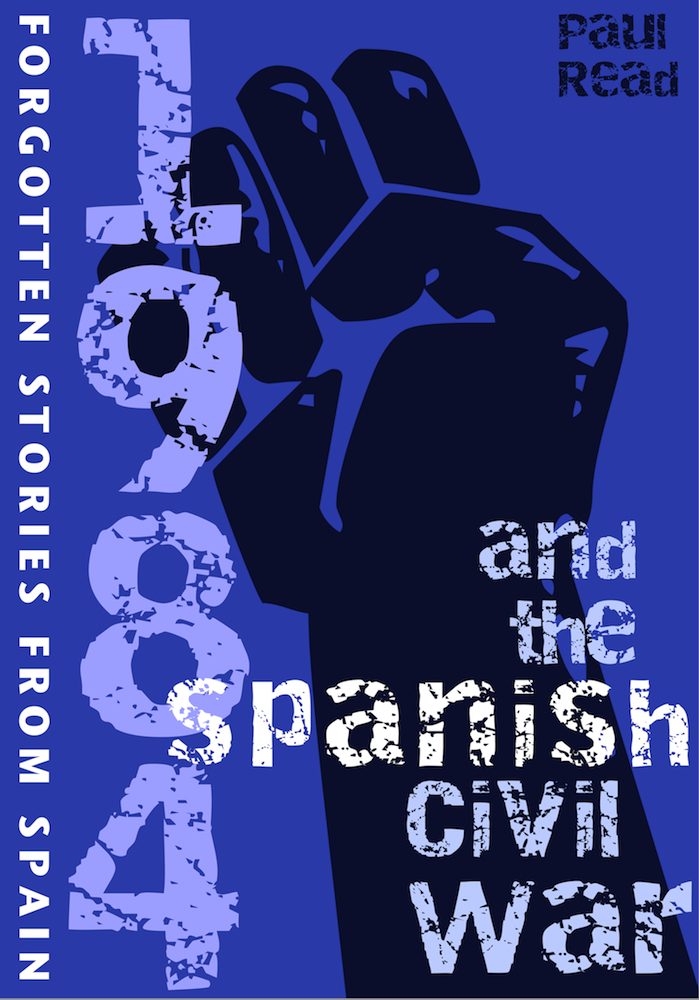
SPAIN BOOK REVIEW: ‘1984 and the Spanish Civil War’ by Paul Read

1984

In 1937, George Orwell spent six months in Catalonia, witnessing the rise and fall of the popular revolution on the streets of Barcelona and Catalonia. Alone amongst his contemporaries, Orwell understood what the success or failure of that Spanish Revolution would mean for the rest of the world. The lessons he learnt, were explained in the three books he wrote upon his return.

1984 And The Spanish Civil War – the 2nd book in the ‘Forgotten Spain Series’ – tells the story of Orwell’s relationship with Spain and the legacy he has left us:

*How far was ‘1984’ and ‘Animal Farm’ the inevitable conclusion to all Orwell had witnessed in those brief months he spent in Spain?
*Why was his work so unanimously rejected by his contemporaries in England?
*Was the revolution Orwell witnessed in Barcelona crushed forever by the end of the war, or did it slide into hibernation, awaiting the present conditions for revival?

If you want to understand Spain today, you need to understand Orwell. If you wish to understand the work of Orwell, you need to understand the history of Spain in 1937.

~~

1984 and the Spanish Civil War is the second book in Paul Read’s Forgotten Stories from Spain series. George Orwell, now synonymous with ‘privacy, procedure and responsibility’ has much to thank from his time in Spain in regards to his greatest works. His theory on the ‘thought police’ , of big brother and their CCTV cameras are part of common culture, and he was the man who gave a face to big corporates and hierarchies that control the populace. While the reclusive Orwell (real name Eric Blair) died aged just 46, his work lives on.

His work, Homage to Catalonia, is the best piece of work that embodies the Spanish Civil War from a personal point of view, by a man who didn’t fall for ideals of either side of the fight, and dared to stand up and question Spain’s situation. With suspicion from the right and criticism from the left, he was able to produce three of his great works – Homage to Catalonia, Animal Farm and 1984.

Between 30-35,000 people joined the civil war as volunteers, the International Brigades, organised mostly by the Communist Party, but Orwell slipped into Spain through a Marxist militia and fought for the POUM, which would eventually be his downfall in Spain. He was able to assess the different sides of the left in the war – Socialists, Anarchists, Communists, Republicans, Basques, Catalonians and the big unions in Barcelona, the UGT and CNT. 1984 and the Spanish Civil War is a great way to understand why Orwell came to the conclusions he did, what he faced in his desire to fight and come to grips with Spain unlike anyone before him. The book also details what Orwell and his wife went through in escaping Spain.

1984 and Spanish Civil War discusses how criticism of Homage to Catalonia led Orwell to use satire in writing both Animal Farm and 1984 to relate his ideals and knowledge. In learning how power can destroy ideals and morals, and seeing the left coalition the civil war collapse under ‘folding lies’, fighting for something to save face rather than believing in the facts, Orwell was able to produce these stunning works.

The book also goes on to talk about how, in many ways, Spain has not changed. In these times of austerity, many of the original ideas that spurred the civil war have come alive again: the left wing and anarchism in its root form – with the indignados, occupation movements, desahucios (evictions and related occupations) and also escrache, calling people to account in public settings (humiliation protests if you will). Orwell may be proud that some of his ideas are alive and in practice today, who knows.

Paul Read has written an excellent book on the subject of Orwell and the effect of the war on the Englishman. 1984 and the Spanish Civil War is insightful, well-researched and written in a smooth, satisfying pace, giving out so many details, and informing the reader on many certitudes that they may not have known. A highly recommended book.

See book one in the series – Forgotten Stories from Spain: The Ambulance Man and the Spanish Civil War

See more from Paul Read on Speaking of Spain