OTD with Thomas Cromwell 4 February 1533: The Act of Restraint of Appeals

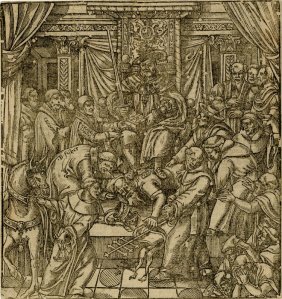
Henry VIII as Supreme Head of the English church (British Museum 1973 U 219)

Welcome back to a new year, and a new series, On This Day with Thomas Cromwell. The series will feature happenings on different dates in Cromwell’s life, as seen through his surviving correspondence. I will be posting on Instagram, Tiktok, Facebook, and Bluesky, and some of the larger posts will also be added here.

Today we start off with a huge event, when Cromwell submitted to the 1533 parliament  The Act of Restraint of Appeals, also known as the Ecclesiastical Appeals Act, Statute in Restraint of Appeals, or ‘An Acte that the Appeles in suche Cases as have ben used to be pursued to the See of Rome shall not be from hensforth had ne used but wythin this Realme’. One 4 February, Cromwell, who by this time was in charge of parliament, placed this act 14th in a list of 16 acts to be passed, all of which reached royal assent on 7 April 1533 (note that the original acts were dated with the Julian calendar, which ended the year 1532 on 31 March, so the acts were all originally labelled as 1532. I only use the Georgian calendar when listing Cromwell’s letters and petitions, as do all legal frameworks).
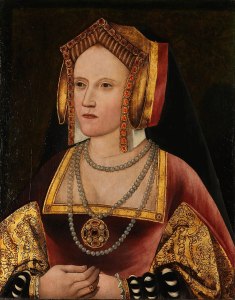
Queen Katharine of Aragon (Lambeth 26)

Who cared about the The Act of Restraint of Appeals? As it turned out, many powerful people, the most powerful of them all being Katharine of Aragon, Queen of England. Queen Katharine had been on the throne since 1509, and there was no need or desire for her to give up that position, except when King Henry claimed to be in love with Anne Boleyn. Four years on from the messy and inconclusive legatine court annulment hearing before Cardinals Wolsey and Campeggio, Katharine had been petitioning Pope Clement to refuse her husband King Henry an annulment so he could remarry. King Henry was all talk when it came to divorce, but hadn’t really made that many petitions for an annulment, more just attacked those around him, and wrote to many abroad in the hopes of support.

But Thomas Cromwell had not been so idle. In 1532, he wrote the The Supplication Of The Commons Against The Ordinaries, which became known as the Submission of the Clergy. That made Henry VIII the ‘Head of the Church in England as far as the law allowed.’ All clergy had to bow to the king, not the authority of the Pope in Rome. Months later, Archbishop of Canterbury William Warham died, and after sending out the necessary papal papers, Thomas Cranmer was found abroad and brought home to be the new archbishop, just as Cromwell and Henry both wanted. Cranmer had recently been radicalised in Europe, and finally had come to see the ‘benefits’ for a reformed church in England (and not just because he had been dallying with a Swiss girl).
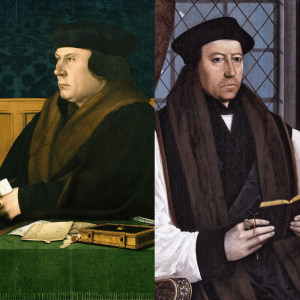
Thomas Cromwell (Frick 1915.1.76) and Thomas Cranmer (NPG 535)

But ultimately, for all the legal paperwork, Pope Clement still existed. The Catholic faith still existed. A law didn’t change people’s opinions or beliefs. A person could, in theory, still go around the new Archbishop Cranmer and write to the Pope and ask for an ecclesiastic ruling. Katharine of Aragon’s petition to save her marriage remained intact. Despite being an ardent supporter of Queen Katharine and her daughter Princess Mary, Thomas Cromwell was the one to do the work, and cut off Katharine’s hopes of saving her marriage and title. It would be treason to go against this law, the penalty being death.

The Act of Restraint of Appeals is the primary legal foundation of the English Reformation. By ensuring no one in England could seek the Pope’s rulings over King Henry, it made the Church of England essentially real, as its own standing faith, overseen by a monarch, who was anointed by God to rule. The petition went to parliament on 4 February 1533, the only major act of the session, neatly squeezed between an act about paving the road from The Strand to Charing Cross in London, and an act against excessively nice clothing (that’s a whole topic on its own). The large roll Cromwell submitted (written in a scribe’s hand) was the first of ten drafts worked on through the session, and included both Cromwell and the king’s handwriting as the statutes were argued, corrected and settled. This meant the king could have the final ruling on subjects like his own divorce, and passed that power to Archbishop Cranmer to formally put it to Convocation and rule the marriage of Henry and Katharine void, clearing the way for pregnant Anne Boleyn to be crowned. The Act of Restraint of Appeals made everything possible for the English Reformation, leaving many dead when they dared to refuse.

The law of only repealed in full by the Statute Law (Repeals) Act 1969, though Northern Ireland was free of the act by 1950.

Here is the text of the completed draft, with modern spelling, punctuation, and italics placed by me, directly from my book of Cromwell’s letters. I have underlined the most important and relevant parts if you would prefer not to slog through this wordy middle-English decree.

THE ACT OF RESTRAINT IN APPEALS, 4 February 1533 (MSS Cleo. E. VI. 185)

‘An Acte that the Appeles in suche Cases as have ben used to be pursued to the See of Rome shall not be from hensforth had ne used but wythin this Realme’

I. An Act that feeds in such cases, as have been used to be pursued to the See of Rome, shall not be from henceforth had nor used but within this realm where, by diverse sundry old authentic histories and chronicles, it is manifestly declared and expressed that this realm of England is an empire, and so has been accepted in the world, governed by one Supreme Head and King having the dignity and royal estate of the imperial Crown of the same, unto whom a body politic, compact of all sorts and degrees of people divided in terms and by names of Spiritualty and Temporality, be bound and owe to bear next to God a natural and humble obedience; he being also instituted and furnished by the goodness and sufferance of Almighty God with plenary, whole, and entire power, pre-eminence, authority, prerogative, and jurisdiction to render and yield justice and final determination to all manner of folk, residents or subjects within this his realm, in all causes, matters, debates, and contentions happening to occur, insurrect, or begin within the limits thereof, without restraint or provocation to any foreign princes or potentates of the world: the body spiritual whereof, having power when any cause of the law divine happened to come in question or of spiritual learning, then it was declared, interpreted, and shown by that part of the said body politic called the Spiritualty, now being usually called the English Church, which always has been reputed and also found of that sort that both for knowledge, integrity, and sufficiency of number, it has been always thought and is also at this hour sufficient and mete for itself, without the intermeddling of any exterior person or persons, to declare and determine all such doubts, and to administer all such offices and duties as to their rooms spiritual does appertain. For the due administration whereof and to keep them from corruption and sinister affection the King’s most noble progenitors, and the ancestors of the nobles of this realm, have sufficiently endowed the said Church both with honour and possessions. And the laws temporal for trial of propriety of lands and goods, and for the conservation of the people of this realm in unity and peace without ravin (plunder) or spoil, was and yet is administered, adjudged, and executed by sundry judges and administers of the other part of the said body politic called the Temporality, and both their authorities and jurisdictions do conjoin together in the due administration of justice the one to help the other. And whereas the King his most noble progenitors, and the Nobility and Commons of this said realm, at diverse and sundry Parliaments as well in the time of King Edward the First, Edward the Third, Richard the Second, Henry the Fourth, and other noble kings of this realm, made sundry ordinances, laws, statutes, and provisions for the entire and sure conservation of the prerogatives, liberties, and preeminence of the said imperial Crown of this realm, and of the jurisdictions spiritual and temporal of the same, to keep it from the annoyance as well of the See of Rome as from the authority of other foreign potentates attempting the diminution or violation thereof as often and from time to time as any such annoyance or attempt might be known or espied. And notwithstanding the said good statutes and ordinances made in the time of the King’s most noble progenitors in preservation of the authority and prerogative of the said imperial Crown as is aforesaid, yet nevertheless since the making of the said good statutes and ordinances diverse and sundry inconveniences and dangers not provided for plainly by the said former acts, statutes, and ordinances have risen and sprung by reason of appeals sued out of this realm to the see of Rome, in causes testamentary causes of matrimony and divorces, right of tithes, oblations and obventions (offerings to God), not only to the great inquietation, vexation, trouble, costs, and charges of the King’s Highness and many of his subjects and residents in this his realm, but also to the great delay, and let to the true and speedy determination of the said causes, for so much as the parties appealing to the said court of Rome most commonly do the same for the delay of justice. And forasmuch as the great distance of way is so far out of this realm, so that the necessary proofs nor the true knowledge of the cause can neither there be so well known nor the witnesses there so well examined as within this realm, so that the parties grieved by means of the said appeals be most times without remedy. In consideration whereof the King’s Highness, his Nobles and Commons, considering the great enormities, dangers, long delays, and hurts that as well to his Highness as to his said nobles, subjects, commons, and residents of this his realm in the said causes testamentary, causes of matrimony and divorces, tithes, oblations, and obventions do daily ensue, does therefore by his royal assent and by the assent of the Lord’s spiritual and temporal and the Commons in this present Parliament assembled and by authority of the same, enact, establish, and ordain that all causes testamentary, causes of matrimony and divorces, rights of tithes, oblations, and obventions, the knowledge whereof by the goodness of princes of this realm and by the laws and customs of the same appertains to the spiritual jurisdiction of this realm already commenced, moved, depending, being, happening, or hereafter coming in contention, debate, or question within this realm or within any the King’s dominions or marches of the same or elsewhere, whether they concern the King our Sovereign Lord, his heirs or successors, or any other subjects or residents within the same of what degree soever they be, shall be from henceforth heard, examined, discussed, clearly finally and definitively adjudged and determined, within the King’s jurisdiction and authority and not elsewhere, in such courts spiritual and temporal of the same as the natures, conditions, and qualities of the causes and matters aforesaid in contention or hereafter happening in contention shall require, without having any respect to any custom, use, or sufferance in hindrance, let, or prejudice of the same or to any other thing used or suffered to the contrary thereof by any other manner person or persons in any manner of ways. Any foreign inhibitions, appeals, sentences, summons, citations, suspensions, interdictions, excommunications, restraints, judgments, or any other process or impediments of what natures, names, qualities, or conditions soever they be, from the See of Rome or any other foreign courts or potentates of the world, or from and out of this realm or any other the King’s dominions or marches of the same to the See of Rome or to any other foreign courts or potentates, to the let or impediment thereof in any wise notwithstanding. And potentates that it shall be lawful to the King our Sovereign Lord and to his heirs and successors, and to all other subjects or residents within this realm or within any the King’s dominions or marches of the same, notwithstanding that hereafter it should happen any excommencement, excommunications, interdictions, citations, or any other censures or foreign process out of any outward parties to be fulminate, provulged (proclaimed), declared, or put in execution within this said realm or in any other place or places for any of the causes before rehearsed, in prejudice, derogation, or contempt of this said Act and the very true meaning and execution thereof, may and shall nevertheless as well pursue, execute, have, and enjoy the meets, profits, benefits, and commodities of all such processes, sentences, judgments,, and determinations, done or hereafter to be done in any of the said courts spiritual or temporal as the cases shall require, within the limits, power, and authority of this the King’s said realm and dominions and marches of the same, and those only and none other to take place and to be firmly observed and obeyed within the same. As also that all spiritual prelates, pastors, ministers, and curates within this realm and the dominions of the same shall and may use, minister, execute, and do, or cause to be used administered, executed, and done, all sacraments, sacramentals, divine services, and all other things within the said realm and dominions unto all the subjects of the same as Catholic and Christian men are owe to do. Any foreign citations, processes, inhibitions, suspensions, interdictions, excommunications, or appeals for or touching any of the causes aforesaid from or to the See of Rome or any other foreign prince or foreign courts to the let or contrary thereof in any ways notwithstanding. And if any of the said spiritual persons, by the occasion of the said fulminations of any of the same interdictions, censures, inhibitions, excommunications, appeals, suspensions, summons, or other foreign citations for the causes before said or for any of them, do at any time hereafter refuse to minister or to cause to be ministered the said sacraments and sacramentals and other divine services in form as is aforesaid, shall for every such time or times that they or any of them do refuse so to do or to cause to be done, have one year’s imprisonment and to make fine and ransom at the King’s pleasure.

II. And it is further enacted that if any person or persons do attempt move, purchase, or procure, from or to the See of Rome or from or to any other foreign court or courts out of this realm, any manner foreign process, inhibitions, appeals, sentences, summons, citations, suspensions, interdictions, excommunications, restraints, or judgments, of what nature, kind, or quality soever they be, or execute any of the same process, or do any act or acts to the let, impediment, hindrance or derogation of any process, sentence, judgment, or determination had, made, done, or hereafter to be had, done, or made in any courts of this realm or the King’s said dominions or marshes of the same for any of the causes aforesaid. . .that then every person or persons so doing, and their fautors (supporters), comforters, abettors, procurers, executors, and counsellors, and every of them being convicted of the same, for every such default shall incur and run in the same pains, penalties, and forfeitures ordained and provided by the statute of provision and praemunire made in the sixteenth year of the reign of King Richard the Second.

III. And furthermore in eschewing the said great enormities, inquietations, delays, charges, and expenses hereafter to be sustained in pursuing of such appeals and foreign process do therefore ordain and enact that in such cases where heretofore any of the King’s subjects or residents have used to pursue, provoke, or procure any appeal to the see of Rome they shall from henceforth take, have, and use their appeals within this realm and not elsewhere, in manner and form as hereafter ensue and not otherwise. That is to say, first from the archdeacon or his official, if the matter or cause be there begun, to the bishop diocesan of the said See, and likewise, if it be commenced before the bishop diocesan or his commissary, from the bishop diocesan or his commissary, within fifteen days next ensuing the judgment or sentence thereof there given, to the archbishop of the province of Canterbury, if it be within his province, and if it be within the province of York then to the archbishop of York; and so likewise to all other archbishops in other the King’s dominions as the case by the order of justice shall require; and there to be definitively and finally ordered, decreed, and adjudged according to justice, without any other appellation or provocation to any other person or persons, court or courts. And if the matter or contention for any of the causes aforesaid be or shall be commenced before the archdeacon of any archbishop or his commissary, then the party grieved shall or may take his appeal, within fifteen days next after judgment or sentence there given, to the Court of the Arches or Audience of the same archbishop or archbishops, and from the said Court of the Arches or Audience, within fifteen days then next ensuing after judgment or sentence there given, to the archbishop of the same province, there to be definitively and finally determined without any other or further process or appeal thereupon to be had or ensued.

IV. And in case any cause, matter, or contention which has, does, shall, or may touch the King, his heirs or successive kings of this realm, that in all and every such case or cases the party grieved shall or may appeal to the spiritual prelates and other abbots and priors of the Upper House assembled and convocated by the King’s writ in the Convocation being or next ensuing within the province or provinces where the same matter of contention is or shall be begun; so that every such appeal be taken by the party grieved within fifteen days next after the judgment or sentence thereupon given or to be given. And this whatsoever be done or shall be done and affirmed, determined, decreed, and adjudged by the foresaid prelates, abbots, and priors of the Upper House of the said Convocation as is aforesaid, appertaining, concerning, or belonging to the King, his heirs or successors, in any of these foresaid causes of appeals, shall stand and be taken for a final decree, sentence, judgment, definition, and determination, and the same matter so determined never after to come in question and debate to be examined in any other court or courts. And if it shall happen any person or persons hereafter to pursue or provoke any appeal contrary to the effect of this Act, or refuse to obey, execute, and observe all things comprised within the same that then every person and persons so doing, refusing, or offending, their procurers, fautors (patrons), advocates, counsellors, and abettors, and every of them, shall incur into the pains, forfeitures, and penalties ordained and provided in the said statute made in the said sixteenth year of King Richard the Second.

HENRY VIII’S CHILDREN: Part 1 – The Royal Lockdown of 1517-18

Ahead of the release of Henry VIII’s Children: Legitimate and Illegitimate Sons and Daughters of the Tudor King on 30 May (Pen & Sword Currently have a 30% off special throughout May) , I am doing a 15-part series on some of the smaller, lesser-known details that are covered in the book. These details played out in the background of the defining moments of the lives of each of Henry’s children.

PART 1: The Royal Lockdown of 1517-18

King Henry, in his typically luxurious manner, hosted a banquet at Greenwich on 7 July 1517, to celebrate England’s new League in Defense of the Church, a three-sided treaty with King Charles of Spain and Holy Roman Emperor Maximilian. This treaty specifically excluded France, but also defended the Catholic faith. The festivities of St Thomas’ Day celebrated the alliance; dinners, banquets, jousts, dancing, music, and a buffet thirty feet long, with meals brought out on elephants, panthers, and lions. But, among the glorious celebratory jousts, the worst possible scenario occurred, a huge outbreak of sweating sickness. The international pageant was not over, but ominous news of sudden deaths arrived at the court. While the disease did periodically spring up in England, it is also possible the hundreds of international visitors may have transported the illness. Two of King Henry’s younger privy chamber men, Thomas Baron Clinton, and Lord Grey of Wilton, died suddenly at Richmond.

Windsor Castle, via wikimedia commons

Henry and Katharine fled immediately to Windsor and did not see their eighteen-month-old daughter Princess Mary for months. The last thing they needed was their precious daughter succumbing to the illness, not unlike the illness that killed Prince Arthur fifteen years earlier. The illness spread through England and then Europe, and deaths quickly ran into the thousands. Cardinal Wolsey fell sick with the illness for the fourth time and vowed to take a pilgrimage to Walsingham if he survived. The illness killed noble and common-born subjects with impunity, and with the king away, the locals of London planned more attacks on foreign merchants.

Farnham Castle drawbridge entrance, via wikimedia commons

Henry and Katharine passed the months in seclusion, but those around them kept dying, and they fled to Farnham Castle to allow Windsor to be cleaned. They only returned to Windsor for New Year, where they could be reunited with Princess Mary. Mary stayed on with her parents at Windsor, celebrating her second birthday, and met Venetian ambassador Sebastian Guistanian on 28 February 1518. The sweating sickness was still out of control, but the ambassador touched Mary’s hand, given more deference and respect than Katharine. It was at this meeting that Henry uttered his well-known boast that Mary never cried, and Mary’s first public word. After the meeting, Henry and Katharine, and likely Mary too, left for Woodstock Palace to continue running from the sweat.

Woodstock Palace, via wikimedia commons

While Henry started his first book in isolation, Assertio Septem Sacramentorum, a collection of claims refuting Martin Luther’s works, the quiet time for the royal couple had a better result; Queen Katharine was finally pregnant, likely conceiving in early March 1518. The queen took a private pilgrimage to St Frideswide’s in Oxford, to give an offering to Christ Church cathedral’s relics. Having multiple children gave Henry and Katharine options; if Katharine had a son, England would have an heir, and Queen Claude of France had just given birth to a son. Mary could marry him and be Queen of France.

This time, thanks to the illness and the resulting isolation, Katharine kept her pregnancy quiet, and Princess Mary was returned home to Ditton to remain safe, as even Henry’s bedchamber servants were dying. Katharine did have a few ladies to keep her company during isolation, one being twenty-year-old Bessie Blount. While still in isolation, Princess Mary’s future marriage to infant Francis, Dauphin of France was agreed upon on 30 June 1518, and at once, this upset King Charles of Spain and Emperor Maximilian, the same rulers Henry had painstakingly entertained one year earlier when the banquet unwittingly released the sweating sickness.

Bisham Manor, once attached to Bisham Priory, via wikimedia commons

Around the time of the marriage treaty, the sweating sickness infiltrated Princess Mary’s household, when one of her servants fell desperately ill. Henry ordered Mary’s household to move to Bisham, eleven miles northwest of her home at Ditton, before travelling to The More in Hertfordshire, where the king remained safe with Katharine. By this time, Katharine would have been visibly pregnant, and news of her pregnancy had spread. After time with her parents and staying well, Princess Mary’s household continued to move through summer homes, stopping at Havering, Hatfield, and Tittenhanger, before heading back to Ditton. This period of dodging the sweating sickness gave Mary one of the longest periods of her life when she could stay with both of her parents.

Havering Palace, via wikimedia commons

By September 1518, it was back to business as usual at the royal court, with a lavish banquet in honour of French delegates in London for Mary’s betrothal treaty on 2 October. England was giving away its heir in marriage; it was a massive gamble and the couple needed a son, so France did not take England’s crown when Mary married. As Queen Katharine was due to give birth to the longed-for royal son, King Henry was paired for dancing at the banquet with Bessie Blount.

Queen Katharine’s last child, a baby girl, was stillborn or died just after birth on 10 November 1518. Bessie would give birth to illegitimate Henry Fitzroy nine months after the banquet.

Up next -Part 2: The Birth of Elizabeth Tailboys

HISTORICAL BOOK REVIEW SERIES: ‘Mary: Tudor Princess’ by Tony Riches

From the author of the international best-selling Tudor Trilogy, the true story of the Tudor dynasty continues with the daughter of King Henry VII, sister to King Henry VIII. Mary Tudor watches her elder brother become King of England and wonders what the future holds for her. 

Born into great privilege, Mary has beauty and intelligence beyond her years and is the most marriageable princess in Europe. Henry plans to use her marriage to build a powerful alliance against his enemies. Will she dare risk his anger by marrying for love?

Meticulously researched and based on actual events, this ‘sequel’ follows Mary’s story from book three of the Tudor Trilogy and is set during the reign of King Henry VIII.

~~

I have read Owen, Jasper and Henry, and also Warwick, by this author, so having a woman as a title character is an exciting addition! But it is not about Mary I, but Princess Mary Tudor, Henry VIII’s sister. That’s when I really jumped for the book, as I love both Mary and Margaret, forever eclipsed by their king brother.

The book starts in 1509, and Princess Mary is but 13 years old. Her brother Henry is only five years older but has just been crowned King of England. Henry knows who he shall marry – Katherine of Aragon, widow of Arthur, and now Mary is going to be an equally powerful princess – powerful in that selling her to the highest bidder will help increase Henry’s power.

Mary has, in the past, been written as a fool, a simple girl interested in princes and gowns, no head for politics. What a silly notion, because Mary is the daughter of Henry VII and Elizabeth of York, her sister is Queen of Scots, Arthur was to be king, before Henry took poor Arthur’s place. How could Mary possibly be dim? Here, Mary is educated, confident and a brave young woman at the heart of a very serious political match for her country. Yes, she may break down in private, but her public face is one of total poise, the way only a royal upbringing could provide.

Mary considers Katherine of Aragon a sister when she marries Henry (Mary was very young when Katherine married Arthur). Henry and Mary are close, even though Henry is never an easy man to love, and is often heartless to Katherine. Mary has lost both her parents, and Henry breaks her betrothal to the  Holy Roman Emperor Charles, also just a child, and instead gives Mary in marriage to King Louis of France.

Mary may be a queen, but is also Europe’s most beautiful princess of 18 years when she marries the frail 52-year-old Louis. Mary does as she is bid (and has a child Anne Boleyn in her household, just a little side bonus) and marries the old Frenchman. But first Mary told her brother – I shall marry Louis if  can choose my second husband.

That is where Mary is so grand. Louis kicks the bucket three months in, and kings and dukes are clamouring for Mary less than a week into widowhood. But Mary has her suitor all ready, Charles Brandon, Henry’s best friend and (while the Duke of Suffolk) not at all good enough for her. Secretly married, Mary defies her brother and King, and is banished from court and from his kindness.

Never mind all these details; Mary is written as a woman, a wife, a mother, a sister. She becomes a queen of France (who killed her old husband with too much sex, so they gossiped, eww), then a woman who married for love, then a wife who had to endure infidelity, the births and deaths of children, the heartache she felt for Queen Katherine and the fortunes of all around her. Mary also suffered with her health for her whole life.

Mary was an important princess in the royal history of the time, and is not prone to being frivolous, and so is written as an educated woman. While the Tudor world is filled with politics, law, religion, it is also filled with love, friendship, parties and jousts, colour and excitement, and the book weaves all together.

Did Brandon love Mary back? The book gives hints about such as Mary’s life is followed. Mary’s death is beautiful and tragic, and the process starts over, as Brandon marries a child as a firm alliance just a few months later (he was a lucky man to capture both Princess Mary and Catherine Willoughby!). Mary’s granddaughter Jane would become queen for nine days many years later, and must have had the blood of THIS type of Princess Mary in Jane’s veins.

Thank you, Tony, for a wonderful novel!

~~

About the Author Tony Riches is a full-time author of best-selling historical fiction. He lives in Pembrokeshire, West Wales and is a specialist in the fifteenth century, with a particular interest in the Wars of the Roses and the lives of the early Tudors. For more information about Tony’s other books please visit his website tonyriches.com and his popular blog, The Writing Desk and find him on Goodreads as well as Facebook and Twitter @tonyriches

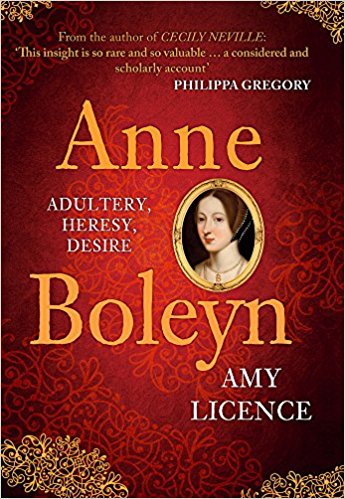
HISTORICAL BOOK REVIEW SERIES: ‘Anne Boleyn: Adultery, Heresy, Desire’ by Amy Licence

Anne Boleyn’s unconventional beauty inspired poets ‒ and she so entranced Henry VIII with her wit, allure and style that he was prepared to set aside his wife of over twenty years and risk his immortal soul. Her sister had already been the king’s mistress, but the other Boleyn girl followed a different path. For years the lovers waited; did they really remain chaste? Did Anne love Henry, or was she a calculating femme fatale?

Eventually replacing the long-suffering Catherine of Aragon, Anne enjoyed a magnificent coronation and gave birth to the future Queen Elizabeth, but her triumph was short-lived. Why did she go from beloved consort to adulteress and traitor within a matter of weeks? What role did Thomas Cromwell and Jane Seymour of Wolf Hall play in Anne’s demise? Was her fall one of the biggest sex scandals of her era, or the result of a political coup?

With her usual eye for the telling detail, Amy Licence explores the nuances of this explosive and ultimately deadly relationship to answer an often neglected question: what choice did Anne really have? When she writes to Henry during their protracted courtship, is she addressing a suitor, or her divinely ordained king? This book follows Anne from cradle to grave and beyond. Anne is vividly brought to life amid the colour, drama and unforgiving politics of the Tudor court.

cover and blurb via amazon

~~~

Are you thinking, oh God, another biography of Anne Boleyn? Is there anything else to know? I can tell you that, yes, there is more to know and you should be thrilled to get this one. Amy Licence has practically handed a perfect account of Anne’s life to readers on a silver plate. Come bask in its glory.

Regardless whether you think Anne stole the throne, was a home-wrecking schemer, or she was the king’s love, this book covers all angles, all details and all possibilities. Licence starts with Anne’s family and background, to see how a woman could be so loathed for her background compared to more noble beginnings, despite the fact Anne had a wonderful education abroad, enough for any noble man. The time period of Anne’s life was one where, as a young girl, the royal family of England was relatively stable; Henry married to Katherine, the odd mistress thrown in for good times (his at least). But when Katherine hit menopause and religious opinion was suddenly flexible, Anne’s life could never be the same.

The realities of the time are not romanticised by the author – being a woman was not all gowns and chilling with your lady friends. These people, with their lives dictated by custom, ceremony and family loyalties, were still real people. They loved, they loathed, they hurt like anyone else. The Boleyn family, while not as noble as others (only Anne’s mother was noble born), had their own plans in this world.

Anne served the archduchess of Austria, and Henry’s sister Mary when she was Queen of France. She also then served mighty Katherine, Queen of England. Anne was no fool, no commoner, yet not quite ever noble enough. Her family wanted better, and could you blame them? But the portrayal as the Boleyns as scheming, as pushing daughters forward as whores under the king’s nose has done Anne no favours, and this book can make Anne lovers feel safe she is not portrayed as some witch.

Women routinely became mistresses, as the social order gave this is an avenue, yet was frowned upon (um, who was sleeping with these girls, gentlemen?), and a route Anne’s sister Mary took with Henry, and we shall never know for sure if Mary really wanted the job. But Anne knew, regardless, that she would not do the same thing. She loved Henry Percy, and wanted to have a real marriage, real love, only to have it dashed away thanks to that same social order.

The book delves into Anne’s rise to power as Henry’s paramour, and discusses whether she played him as part of a strategy or whether she was forced into a ridiculous game with no option but to play along. No woman can say so no to a King; Anne had to be his love, his mistress-without-benefits (or did they share a bed? The book discusses), and Henry’s selfish nature sent him down a path Anne couldn’t have imagined. She wanted to be a man’s wife, not whore. Henry, in turn, got Thomas Cromwell to destroy the social order and religious boundaries. Even the most scheming woman couldn’t have predicted that.

Licence uses excellent sources for her biography, and as a person hungry for minor details on certain periods of Anne’s life, I fell upon these pages with great excitement. Anne was smart, she had morals, she had a temper and a strong will, so much so that king chased her long enough to create divorce from the Catholic Church and make her a queen. No one does that for any mistress.

Anne married Henry, and received a coronation with the crown only meant for ordained kings, and gave Henry the Princess Elizabeth. Anne should have had full control of her life by then, only to find she was more helpless than ever. Having given up her virginity but given Henry no son, she fell from favour, and when Henry asked Cromwell to remove Anne to make way for another virgin with a womb, poor Anne was destroyed in a way everyone knows, never learning what a glorious queen her daughter would become. What people didn’t know was the truth over the whole debacle that brought Anne to the executioner’s sword.

As a woman, a spurned one at that, Anne’s history became sullied with lies and cruelty – that she was a femme-fatale who turned into a whore and witch, that she gave birth to a monster child, that she had disfigurements. History was not ready to tell the truth about a smart, powerful woman. Thank God we live in a time where historians like Amy Licence are able to guide readers through Anne’s real history without forcing conclusions on readers.

HISTORICAL BOOK REVIEW SERIES: ‘Isabella of Castile: Europe’s First Great Queen’ by Giles Tremlett

In 1474, a twenty-three year old woman ascended the throne of Castile, the largest and strongest kingdom in Spain. Ahead of her lay the considerable challenge not only of being a young, female ruler in an overwhelmingly male-dominated world, but also of reforming a major European kingdom that was riddled with crime, corruption, and violent political factionism. Her marriage to Ferdinand of Aragon was crucial to her success, bringing together as it did two kingdoms, but it was a royal partnership in which Isabella more than held her own. Her pivotal reign was long and transformative, uniting Spain and laying the foundations not just of modern Spain, but of the one of the world’s greatest empires.
With authority and flair, acclaimed historian Giles Tremlett relates the story of this legendary, if controversial, first initiate in a small club of great European queens that includes Elizabeth I of England, Russia’s Catherine the Great, and Britain’s Queen Victoria.

cover and blurb via amazon

~~

I love Giles Tremlett’s work so I was greatly looking forward to this book. Isabella of Castile is 600 pages of history, kindly broken up into a timeline of an extraordinary life. Isabella is a well-known figure, and so there are persistent stereotypes of her character, ranging from a vicious religiously-driven invader, to courageous and fierce woman, to powerful and saintly queen.The kingdom of Castile had seen its fair share of powerful queens in its time, with varying results, so when Isabella stepped up to rule, not as a regent wife, but on her own, things were bound to get hectic and history, always written by men, has varied in its narrative.

The book opens with Isabella’s early life in the court of her much older half-brother, Enrique IV. Both Enrique and their father, Juan II, were not great rulers, so Castile was in chaos, and Enrique had ruled the same as his father – weak and easily influenced by others. So, when Enrique died, there was little in the way of support for Isabella, either from royalty, wealthy land-owning grandees or the church to support a female ruler. But Isabella was determined to rule, and rule on her own terms, becoming a fierce leader that would be remembered for all time.

Europe was ready to emerge from the middle ages. Plague was wiping out so many people, so many that the illness was contributing to the feudal system collapsing. Ottoman rulers were conquering and Castile was hoping for Christianity to be their great saviour in a difficult time. The land known as Spain today was filled with Christians, Muslims and Jews, and the notion of a stable mix was a pipe dream.

Even before Isabella was a queen, she was a princess with a plan. There are writings of romance between her and the princely heir of Aragon named Ferdinand, Spain’s other great Christian power. But Isabella married with a pragmatic approach, and relished in the display of her bloodstained bed sheets after the wedding. People hated Enrique and his new rules; Isabella was a traditionalist. While Isabella and Ferdinand were planning their alliance while producing heirs, another Spaniard named Rodrigo Borgia was trying to get onto the papal throne, an ally to Enrique. Spain’s kingdoms were in turmoil on levels often ignored in the story of Isabella’s life.

Isabella politely grieved her awful brother when Enrique died in 1474, and Isabella, in her magnificent walled city of Segovia, was officially made the queen in her own right. It was not long before Ferdinand became king in Aragon. Many thought Ferdinand could not rule his kingdom as well as his wife’s, and she was not capable of doing so alone. Only months after their crownings, war came to the southern areas, which Isabella was able to command on her own. Yet Isabella also found time to bear a son and heir to two kingdoms in 1478. Isabella and Ferdinand had much to control over an enormous area and were making their mark in doing so.

The book delves deep into the southern wars before Isabella and Ferdinand conquered Granada in 1492, exiling the Muslims from Al-Andaluz and creating (approximately) the Spain we know today. Then came the Spanish Inquisition to expel all the Jews, the Muslims who had been forced to convert, and Columbus’ missions to what was the Americas rather than Asia. Isabella gave birth to five children, and suffered the event of the death of her eldest son and heir, Juan, in 1497, meaning Juana (yes, the mad one) was the ruler of Castile, Aragon and Al-Andaluz, now all one nation. Juan’s pregnant wife miscarried the precious child which would have inherited. Isabella had seven children, but one was a stillborn son early on, and another loss of was a twin sister to another daughter who survived. Two of Isabella’s daughters, first Isabella then Maria, married the King of Portugal, and Catherine famously married Arthur Tudor as the century changed. Isabella died of illness in 1504, after enduring a number of years suffering from personal loss.

Isabella was a powerful ruler, understood the limitations of her gender (by their standards), had her name blackened by historians and Italian haters, and was pious yet vicious with her Inquisition. She raged when her husband strayed – frequently – and took no lovers of her own. Isabella’s story is all about power, and she was truly worthy of the opportunity to rule. Thank you to Tremlett for putting all of Isabella’s story together, not just the well-known parts. No part of any book written by this author will disappoint.