The Beginners Guide to the 40th Anniversary of Franco’s Death – ‘History’ Remains Fluid

El Caudillo. The Generalissimo. Supreme patriotic military hero by the Grace of God. Whatever you want to call him, Franco was a short man with a penchant for moustaches and murder. When people think of dictators, they think of Franco’s mate Hitler, or more current dictators such as Mugabe or the North Koreans with bad haircuts. Some would say Franco was a coward in comparison, or more moderate. If you turn from the word dictator and instead to fascism, the dictionary will give you Franco as a definition. Call Franco whatever you like, but November 20 is the day to celebrate his slow and painful death. The day in 1975 when cava and champagne bottles were popping faster than overheated popcorn. That day, Spaniards, at home and in exile, could finally shake off their not-so wonderful leader.

Born in December 1892 in Galicia, Francisco Paulino Hermenegildo Teódulo Franco Bahamonde was one in a long line of relatives in the navy. But instead Franco chose the army in 1907, and worked his way through the ranks through wars in Morocco, and was shot in the stomach in 1916, and lost a testicle (it is rumoured). He continued fighting and winning medals, and by the mid-twenties, he was ranked high enough to be before the King in Madrid. The royal family got run out of the country when the Second Spanish Republic took hold in 1931, but it wasn’t until Franco’s cozy position at the army academy in Zaragoza being extinguished did Franco start getting angry. Posted to the Balearic Islands for a few years, Franco got a taste of killing his own people during the miner’s strike in Asturias in 1934. He crushed innocents defending their rights, and the left and right side of politics only continued to divide as bitterness set into the young Republic. After the 1936 elections, all went to hell, and Franco found himself leading an army from Morocco into Spain to depose the Republican government.

Fast forward through three years of brutal civil war though 1936-1939 (if I explain that in detail, we will be here forever), and Franco’s Nationalist army, backed by fascists, Carlists, monarchists, any right-wing nutball group really, had defeated the Republicans, with the communists, anarchists and general plucky young men and women from Spain and overseas fighting for freedom. After gross atrocities, upwards of 200,000 people were killed. Franco was the leader of Spain, a nation decimated by force and hate. The short, moustached, one-testicled Hitler lover was in control.

Spain was no picnic. So many fled the country, many to France, Mexico, Cuba, Argentina… basically anywhere but Spain. Artists, teachers, bright minds, and those of the left-wing all ran for their lives. Spain skipped the Second World War after basically being in pieces, claiming neutrality, though Franco loved Hitler’s style of hating. While Franco was claiming that Spain had struck gold and all would be well, 200,000 people starved to death in the first half of the 1940’s. The whole decade was spent rounding up people who had supported the Republican side of the civil war, and up to 50,000 were killed, or put in concentration camps, or just ‘disappeared’.

Franco was brutal and bizarre. He could be easily played with wild schemes. But his own plan, being anti-Communist, won him love from the United States. They were allowed to set up military bases, Spain got money and their love for Hitler, Mussolini, etc was swept under the carpet. Spain and its technocrats were keen to move on and make Spain wealthy and prosperous again, though naturally, all spoils only went to the people at the top of the food chain. Spain’s Años de Desarrollo, years of development began through 1961-1973, with Franco promoting tourism, bullfighting, flamenco, everything super-Spanish. Financially, things got much better, but since everyone was doing so poorly, ‘much better’ still wasn’t great. Many Spaniards were still living overseas. Riots broke out at universities, women were still horribly oppressed, with divorce, abortions and birth control illegal. They couldn’t have bank accounts without male oversight, and couldn’t even leave a violent husband, real middle-ages style of living. The church was sticking its evil nose into everything, being gay was illegal, local languages were banned, and nuns loved hitting kids in schools and orphanages.

By 1969, Franco was getting old and handing more power to the lecherous bastards who profited from his reign. It was time to choose an heir. Franco had one daughter (though that has been questioned, given the testicle incident, but never mind), and Franco chose Juan Carlos de Bourbon, grandson to the Spanish King exiled to France in 1931. The young man, dutifully married to a Greek princess, would be modelled and educated in the ways of Francoism – basically being a murderous douche.

Even as Franco was getting super old in the 1970’s, he was still being real bastard, handing down executions just months before his death. Young people were rising up, wanting change in their country, and groups such as ETA wanted their regions’ independence back, as did Catalonia, Galicia, Valencia – basically everyone. In the final months of Franco’s reign, countries were having protests against his execution decisions, Mexico tried to have Spain kicked from the UN, and the Pope wasn’t interested in him anymore, which isn’t cool for a Catholic nation. But on October 1st, Franco have a hate speech from his palace and left in tears. From that moment, his number was up.

Pneumonia, heart attacks and then internal bleeding took hold. Machines kept the old man alive and drugged. Doctors worked day and night for the man who let people be shot by firing squads or starve to death. But after 35 days of pumping life into a frail old man, on November 20, 1975, Franco finally passed away.

The parties started, in Spain and all around the world, where Spaniards had waited for the day. Half a million people went to see his body, just to see the proof for themselves (this figure remains disputed, like all figures during Spain’s 20th century). Spain, which had been lying dormant, could live again. The protege, Juan Carlos, was crowned King, and tossed Francoism aside, opting for democracy. None of that was an easy ride as the road to the Transition began.

The trouble is, those killed during and after the war are still buried in their makeshift graves. Those lecherous wannabes who circled Franco did not lose their place in politics, and among the wealthy and elite. Those who were evil were all given amnesty, to smooth the road for democracy. Justice was never served; Spain’s hard questions remained unanswered for so many. Those who did wrong have grown old, as those who were harmed. The varying levels of independence of Spain’s 17 regions still causes headaches. Does Spain still need to ask questions of its past, or is the future hard enough?

Either way, pop a cork off champagne today, at least to celebrate the freedom Spaniards would have felt on 20 November, 1975.

Read more of what has changed in Spain since Franco’s death, and what is to come – Spaniards aim for a new democracy and end to Franco’s long shadow

Read more about Valle de los Caídos, Franco’s super creepy tomb, where monks will be praying for him today (yes, that’s a thing!)

Read more about Franco’s war, reign, and death in the Secrets of Spain  novel trilogy

Comments on this article are now closed.

Beautiful Drone Footage of Valencia, Spain

The Spanish powers-that-be hate drones. Why? Maybe because they are awesome. But here are some beautiful short drone videos over some of Valencia’s best landmarks. They are made by Aerial Valencia with a Phantom drone, giving people a chance to see Valencia’s well-known sights from a new perspective.

This video is done by Aerofilm HD, which drone around other Spanish locales, and this very special location 🙂

`

Aerial Valencia is on Twitter – @aerialvlc and on youtube – Aerial – VLC

13 September 1974: The Bombing of Cafetería Rolando

2014 is the 40th anniversary of the bombing of Cafetería Rolando in Madrid. The attack was a significant event in the fight against Francoism and a defining moment in the ETA’s struggle for independence. I first learned about Cafetería Rolando several years ago, and it forms part of my upcoming book, Death in Valencian Dust. In posting this, I do not endorse either side of the ETA struggle, merely recognise the struggle Spain suffered in the 1970’s.

In 1974, to say Spain was at a crossroads would be an understatement. In December 1973, Admiral Luis Carrero Blanco, Spain’s Government President was assassinated by ETA (Basque – Euskadi Ta Askatasuna, Spanish – País Vasco y Libertad, English – Basque Homeland and Freedom), the Basque Country separatist group. For years, ETA had been carrying out attacks and killings around Spain, while other groups started to rise up against the government. In 1974, new Government President Carlos Arias Navarro set up new rules during the spirit of 12 February, keeping in line with Franco’s harsh regime of times past, covering everything from stopping freedom of the press, restriction to the judicial systems, harsh penalties for strikers and protesters, and generally restricting the lives of everyone in the country, everyone outside the búnker, the group of extreme right-wing people surrounding Franco.

The state of the nation deteriorated throughout the year – the church increasingly voiced their opposition to Franco and the regime, the execution of anarchist Catalan Salvador Puig Antich brought people to the streets in protest, the economy slumped, the Communist party mobilised in defense of their sympathisers, workers continued to strike, and universities protested the new draconian laws. Franco himself was seriously ill, and Juan Carlos, his protegé, was taking over all tasks on his behalf. The Portuguese dictatorship collapsed, giving Spaniards more ideas of what they could achieve for themselves. On September 11, 1974, Arias Navarro re-endorsed his changes and announced efforts would double to enforce new laws over the rising tide of anger.

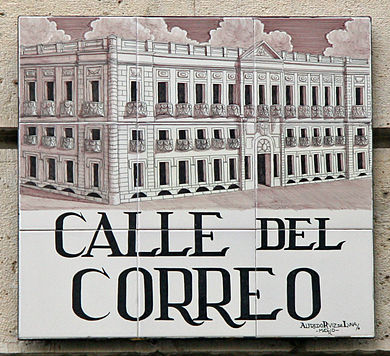
Cafetería Rolando, at 4 Calle del Correos (known as E street), was located in the heart of Madrid, directly off Puerta de Sol. Cafetería Rolando was a large and popular cafe, the local spot for police to visit during their lunch breaks, conveniently located beside the headquarters of the Dirección General de Seguridad (General Directorate of Security) in the famous Real Casa de Correos building. The Dirección General de Seguridad was considered an impenetrable target by ETA and other organisations keen to bring down the regime. Because nearby Cafetería Rolando was so popular with police working nearby, the place became destined for disaster.

 Real Casa de Correos (Cafetería Rolando was to the right of this shot) – Source

On September 13, 1974, at 2.35pm, during a busy lunchtime, a bomb exploded at the entrance to the cafe. The bomb, thirty kilos of dynamite filled with nuts for shrapnel, went off as many enjoyed their lunch, and was large enough to cause serious structural damage to the five-storey building. The ceiling of the café collapsed, resulting in several of the hostel guests upstairs falling into the café. The blast was big enough to shatter the windows of the Real Casa de Correos across the tiny street and several cars were obliterated. Another restaurant, a large place with 300 seated guests next door, was also seriously damaged.

Because of the proximity to the security building, police were on the scene immediately, and the process of saving Cafetería Rolando diners began. An attack of this magnitude, on a place frequented by everyday people, hadn’t been undertaken since the Civil War, catching all by surprise. Seventy-one people were pulled alive from the rubble, several children. Most victims made a full recovery, though several were left with scarring and mutilation. In total, twelve people were killed, aged from 20 to 78 years old, including a just-married couple. Several café workers were killed, including one who was pulled alive from the rubble but died before surgery. While the attack was allegedly against the police, and several wounded were police and from Franco’s elite special forces, the rest killed were all civilians. A thirteenth victim, a police officer, died two years later from the attack, unable to survive the injuries he sustained.

Source

The list of the dead only fueled speculation of the bombing. As no police officers were listed among the dead, a theory sprang up that a division of the extreme right themselves planted the bomb. Police earlier that day had been told to avoid the café, but these rumours were never directly admitted. Franco was keen to catch whomever had committed the act, while others, both for and against the government, took the opportunity to criticise the regime, plus Arias Navarro himself, and the búnker, the powerful political families. Everyone had an agenda for establishing blame. The Communist party became a popular target for criticism, initially blamed for the events.

Soon, blame fell on ETA from the Basque Country. They had been killing policemen and guards sporadically since 1968, one just days before the bombing. ETA denied any knowledge of the Cafetería Rolando attack, though throughout Spain, the denial wasn’t taken seriously. Because of the high number of killed and wounded were merely civilians at lunch, both sides of the political fence wanted to see justice done. The assassination of Carrero Blanco less than a year earlier didn’t raise tempers, but the attack on the café brought ETA’s organisation more into the spotlight than ever before.

Famous Basque activist, writer, women rights campaigner and ETA supporter Eva Forest was arrested along with her husband, though her husband was soon released. Forest refused to co-operate and accused the police of ill-treatment during her detainment. It was alleged two Basques, a man and a woman, planted the bomb in Cafetería Rolando, sticking the bomb to the underside of a table, and set off the timer. The identity of those two Basques were never established. It could have been Forest and her husband, playwright Alfonso Sastre, but there was no proof. While many detained in connection to Cafetería Rolando and the Carrero Blanco assassination were released, Forest was kept in prison until 1977, when all political prisoners accused under the Franco regime were given amnesty, to smooth the way for democracy under the new King Juan Carlos. It was rumoured that Forest suffered terribly being in jail, being tortured for all her acts over the years. While Forest admitted to passing on ETA messages and helping with safe houses, she never admitted her part in the Rolando bombing, despite admissions from others in the plot. 

Because of the 1977 amnesty, no one was ever held accountable for the Cafetería Rolando bombing, and no one can never be convicted of any crime relating to the incident.

Calle del Correo today – Source

Victims of Cafetería Rolando 13 September 1974

Antonio Alonso Palacín, mechanic, and his new wife, María Jesús Arcos Tirado, telephone operator aged 28

Francisca Baeza Alarcón, teacher aged 45

Baldomero Barral Fernández, baker aged 24, and his wife María Josefina Pérez Martínez, mother of two aged 21

Antonio Lobo Aguado, railway worker aged 55

Luis Martínez Marín, businessman aged 78

Concepción Pérez Paino, Dirección General de Seguridad admin worker aged 65

María Ángeles Rey Martínez, student aged 20

Gerardo García Pérez, married father of three

Francisco Gómez Vaquero, Cafetería Rolando chef aged 31 

Manuel Llanos Gancedo, waiter at Cafetería Rolando aged 26

Félix Ayuso Pinel, police inspector aged 46. Pinel didn’t die until 1977.

CalledelCorreo(Madrid)

Source

 Here is a link to the news footage of the bombing in 1974 – Atentado etarra en la calle madrileña del Correo (1974)

PART 3: ‘Luminous Colours of Dusk’ Author Q+A

When I put out the call for questions ahead of my Luminous Colours of Dusk book release, inevitably there would be questions about Spain and my books based there. So, here is a Q&A section dedicated to my Secrets of Spain series.

Why write about books based in Spain?

That is a good question. I’m a New Zealander, a baby country with a small but interesting history. To write the story of my family coming out to this pioneering nation from Scotland and Ireland would make a great tale. But when I moved to Spain, the place spoke to me, as it has spoken to so many foreigners over time. I feel a personal connection to the struggles of the country, and the history and politics speaks to me better than my home country. (Though, since it’s election time in New Zealand, I’m pretty outspoken at the moment). You can find a 1001 books based in Madrid, Barcelona, or anywhere in southern Spain, but Valencia sits outside the spotlight. You only have to visit the city to understand how unique it is, and to me, the perfect setting to write books. The history of the place gives so many exciting possibilities.

Why write about the Spanish civil war?

There is no war like the Spanish civil war. There was no one side versus another, rather factions coming together, struggling against the enemy and one another. Nothing is as vicious as a civil war, yet other nations weighed in, while some stayed on the sidelines with their own agendas. Volunteers came to fight and changed the course of the war. While one side defeated the other, and evil won the war, some believe the outcome was a good one. There were no winners in Spain, and the wounds are not fully healed. The multiple facets are what drives my interest.

Out of your Spanish books, who is your favorite character?

Tough question! Luna Montgomery was the first character I ever created, but she has a great supporting cast in Blood in the Valencian Soil and Vengeance in the Valencian Water. I have always enjoyed writing Paco Beltrán, patriarch of the Beltrán Morales bullfighting family. He played a good role in both books, and has a big space in the third book, Death in the Valencian Dust. As evil as he was, I enjoyed also writing José Morales. His transformation from conflicted young officer to evil Francoist was a joy to undertake. I know a lot of people found him hard to stomach, but some really liked him. Scarlett Montgomery was a great character for me, as she was based on a real life New Zealand nurse who defied her country and went to the civil war.

How much research do you do for your Spain-based books?

I lost count of the hours spent researching years ago. I never stop researching – everyday conversations with Spain lovers help me. Even tiny comments can come in handy for minor details. I can often sit down and need a basic piece of info for a chapter and spend all day reading, long forgetting the original point I needed. One day I sat down at my desk at just after 9am, needed a detail on where a bus stop was in 1957, and then my alarm rang to stop writing at 2.45. Somehow, the whole day had disappeared. I never know where I will find helpful information. Between all the books and websites I use, I can be buried in info, much like my desk is. I can’t actually see my desk under all the stuff I have piled up ahead of my next book on Valencia.

I am lucky to be part of #wabas – Writers and Bloggers about Spain. The members are kind enough to let me be part of their group and I can absorb all kinds of information from them, so thanks!

What will the next Luna Montgomery book be about?

(I’ll try to keep this as spoiler-free as possible for readers still on books one and two)

Death in the Valencian Dust is another double timeline story, split between 1975 and 2014. At the end of the second book, Cayetano Beltrán asks his uncle Jaime about the time he went to prison in Valencia in 1975. It is centred around the time when Franco dies and King Juan Carlos takes over, and the upheaval Jaime goes through thanks to some dodgy dealings in Valencia. The 2014 timeline sees Cayetano at age 45, facing retirement from bullfighting, while Luna’s life is going in a very different direction. Cayetano is struggling with Luna’s rising career and ambitions while the sun sets on all he has ever known. The Beltrán Morales family has undergone a major upheaval since we saw them in 2010 (cant tell yet!), and in the shadow of King Juan Carlos retiring, they reflect on their family and the loss of all the traditional Spanish ideals they have previously enjoyed.

Have you ever had the desire for Luna Montgomery and Darren James to become a couple?

Pro-cyclist Darren James will be in the third book very prominently, and still rubbing Cayetano Beltrán up the wrong way. The men will find common ground with the changes in their lives and careers, but they are an uneasy alliance with Luna endlessly caught in the middle. Have I had the desire to have Luna and Darren as a couple? Yeah, I have thought about it. There is a lot of logic in a pairing like them. The third book isn’t out yet…

How do you feel about reviews of the series? Do you seek out reviews?

I’m not really comfortable with asking for book reviews. I am pretty happy with the reviews I have received, and get nice little messages via twitter regularly from people who are reading. I write a niche subject so it is easy to get lost in the crush of millions of books to read. I am meticulous with my planning of the series, and that satisfies me personally.

Of all the people you have killed in the series, which was the hardest?

SPOILER ALERT – you may want to skip this bit if you are not finished the books

I have always felt bad about killing Alejandro Beltrán. To me, it was an awful way to die and I feel sorry for writing it. Cayetano Ortega was a tough character to kill as well. In fact, everyone from the first book in the 1939 timeline met a sad end.

Do you have a book planned, away from the Secrets of Spain series?

I do, my long suffering novel based in Spanish civil war slowly continues to grow in size. The book starts in Barcelona 1937 and progresses throughout much of the war, based mostly among the fighting of Madrid, Barcelona and Teruel (and surrounding areas). That will be released after Death in the Valencian Dust, with all new characters from me. The characters are fictional, based on real accounts, and set to the real timeline and outcomes of the war itself.

Do you use social media much for book promotion?

It was be impossible to work without social media, though I have placed a ban on using it on my computer, or I never get any work done. I have broken my bad social media habits. In saying that, you can always catch up with me. Twitter is my preferred medium, much more than Facebook. You can find me –

Website: here obviously carolineangusbaker.com

Facebook: Caroline Angus Baker (subscribe, since I make many public posts)

Twitter: Writer_Caroline

Pinterest: WriterCaroline

Tumblr: Duende Lover

Google+ : Caroline Angus Baker

Book Links:

US – Caroline Angus Baker

UK  – Caroline Angus Baker

New Zealand (paperback only) Caroline Angus Baker 

~~

Part 4 is all the questions about writing, and Part 5 is the first chapter of Luminous Colours of Dusk. Also, there will be a free promotion on Night Wants to Forget and Violent Daylight. Details will in Part 4.

Click here for Part 1 – all about Canna Medici – PART 1: ‘Luminous Colours of Dusk’ Author Q+A

Click here for Part 2 – all about me – PART 2: ‘Luminous Colours of Dusk’ Author Q+A

SPAIN BOOK REVIEW: ‘Nada’ by Carmen Laforet

nada

One of the most important literary works of post-Civil War Spain, Nada is the semi-autobiographical story of an orphaned young woman who leaves her small town to attend university in war-ravaged Barcelona. Edith Grossman’s vital new translation captures Carmen Laforet’s feverish energy, powerful imagery, and subtle humor. Nada, which includes an illuminating Introduction by Mario Vargas Llosa, is one of the great novels of twentieth-century Europe

~~

Nada is one of those books which sat in my to-read pile for far too long. Classics sit waiting while newer releases get sent to me for reviewing. Now, after reading this book in one day, I feel the need to facepalm for sidelining such a novel for so long. I find it difficult to connect with fiction (yes, I know…) but this book is an instant hit.

Nada is the story of 18-year-old Andrea, an orphan who moves to Barcelona from the country, to live with maternal relatives while starting university. Andrea had visited her grandparents’ home before the civil war as a very young child, and was filled with loving memories of city life. But life on Calle de Aribau has become a nightmare.

Gone is the lavish apartment of her family; now they in one half of the house, a dark, scary place filled with odd objects like a grand piano, huge mirrors, big heavy unused furniture and a candelabra, a hint of the former life of the family. As time passes, each of these expensive once-loved items gets sold off to pay for food and hope of survival. The opening chapter where Andrea meets her family is dark enough – they are like skeletons, ghosts in the night, in a home where a cold shower is relief from company, but the damp stains on the wall look like evil clutching hands. Andrea’s grandmother is a starving, frail old woman, surrounded by her adult children – Román, a vile man with hidden depths, tortured by the Republicans for being a Francoist spy. His brother, Juan, an artist who hates his life, beats his wife without remorse, with a demeanor of a broken man who has deeply suffered during the war. Gloria, Juan’s wife, a beautiful but simple-minded woman, who feeds everyone by leaving her baby son at home and winning card games in Barrio Chino. Andrea’s grandfather has died, like her own parents, and are unexplained, by it’s easy to imagine what may have happened to them.

The creepiest character lies in Angustias, the aunt from hell. She is a religious fanatic, who, in standing with her high and mighty attitude, sees Andrea as her charge, who needs to be broken and obedient. Angustias is hell-bent on making sure Andrea has no life, sees nothing, hears nothing, experiences nothing. As Angustias fails and hates Andrea, who has done nothing wrong, she tells her that she should have been beaten to death as a child. Angustias has been hiding a hypocritical lifestyle for so long that she has become almost insane. Even the crazy maid, Antonia, is a horrid and bewildering.

Andrea is a saint for coping with these vicious and hateful people in a dark, freezing cobwebbed environment. While the past hurts and torments her family, Andrea tries to break out – she makes friends, hangs out with artists, meets boys she doesn’t really like much, but reality  is still in the way. Andrea’s close friend Ena is wealthy, which puts a gap between the pair. Ena has the attitude of a child who has wanted for nothing, and has the luxury of wanting and experimenting. Andrea is starving, resorting to drinking water the family’s vegetables have been boiled in. Old pieces are bread are treats.

The book shows the pain of Barcelona post-war in human terms. With its will crushed by Francoism, some have flourished and the losers have been ground down to nothing. Being sniffed out by police for being a ‘red’ is still a threat. Work is hard to find, and money is only for some. The cathedral, in its religious beauty, shines like a beacon while people starve in the alleys nearby. There is little hope for people like Andrea. As the stories of all the characters come together, the haves and have-nots have history that provides both a big twist, and ultimately, a vicious death.

While the Barcelona that Andrea lives in no longer exists, the book gives a perfect feeling to post-war reality. The book was autobiographical, written after Carmen Laforet went to study in Barcelona, before moving on to Madrid. This book will leave you wondering about the long-term fates of all the characters (and their real-life counterparts), if indeed they had one at all.

Nada was published in 1945, the first of LaForet’s novels. If you prefer English, it was excellently translated by Edith Grossman in 2007. Don’t wait to read another week to read Nada.