The making of Ernest Hemingway’s The Sun Also Rises, the outsize personalities who inspired it, and the vast changes it wrought on the literary world
In the summer of 1925, Ernest Hemingway and a clique of raucous companions traveled to Pamplona, Spain, for the town’s infamous running of the bulls. Then, over the next six weeks, he channeled that trip’s maelstrom of drunken brawls, sexual rivalry, midnight betrayals, and midday hangovers into his groundbreaking novel The Sun Also Rises. This revolutionary work redefined modern literature as much as it did his peers, who would forever after be called the Lost Generation. But the full story of Hemingway’s legendary rise has remained untold until now.
Lesley Blume resurrects the explosive, restless landscape of 1920s Paris and Spain and reveals how Hemingway helped create his own legend. He made himself into a death-courting, bull-fighting aficionado; a hard-drinking, short-fused literary genius; and an expatriate bon vivant. Blume’s vivid account reveals the inner circle of the Lost Generation as we have never seen it before, and shows how it still influences what we read and how we think about youth, sex, love, and excess.
Cover and blurb via amazon
~~
This month, Spain Book Review goes a tad off-road, with Everybody Behaves Badly. Not strictly about Spain or written in Spain, but since it’s about Ernest Hemingway getting his Spain on, I figured it works just fine. The book covers both Spain and Hemingway’s time in Paris. By 1921, Hemingway was already on his way to literary famousness, but was in need of the great American novel. So when handsome young Ernest headed to Spain with a troupe of friends in 1925, their trip would end in the genius that is The Sun Also Rises.
.
The book starts out with the early years in Paris and how Hemingway felt the desire to add a novel to his career, since he had only published short stories at that point. Hemingway and his new wife Hadley go to Paris, as members of the lost generation, and the author goes into full detail of the lifestyle of a man in need of literary success. The book focuses heavily on details of Hemingway’s early life, telling both a story and writing a biography in one.
.
Everyone knows the story of The Sun Also Rises (this link has my review if you don’t) – a group of friends go to Pamplona, enjoy some bullfighting and a random fishing trip, have affairs, drink waaaay too much and the whole escapade turns to hell. Everybody Behaves Badly is the real life excursion. Hemingway and wife Hadley went to Pamplona in 1923 and 1924, and in 1925, went with a group of friends – Harold Loeb, Duff Twysden, Bill Smith, Pat Guthrie and Donald Ogden Stewart. What unfolds is what Hemingway could later turn into his famous novel. Hemingway, now famous for womanising, was with his wife but was interested in Duff Twysden, as was writer Harold Loeb. And we all know how well romantic rivalry mixes with alcohol and bravado. The back story of the fateful 1925 trip is spelled out in great detail as the members of the lost generation explore sexual freedom and creative processes on what was supposed to be writing trip about bullfighting but ends up with jealousy and fist-fighting.
.
The last portion of the book is dedicated to the editing and publishing of The Sun Also Rises. Hemingway’s life is really taking off, and his wife (and now young son) are not fitting in with his choices. Hemingway nicely starts an affair with Pauline Pfeiffer. Hemingway ruthless cut and edited his book to create a great piece of work, and decides to also edit out his own wife. Hemingway needed to get in with a new publisher, Scribner’s, a challenge in itself, all while working greats of the day, like F. Scott Fitzgerald, to create a book which has been in print for 90 years now.
.
Hemingway’s life has been viewed from every angle, but this, while not all new info, tells the story of the pivotal time of Hemingway’s life. Much is made of his life during the Spanish Civil War, but this gives us a new insight to Hemingway in Paris, his early romantic life and his lifestyle in these early days. My dream Spanish road trip (a game played a few years back) was with Hemingway and Dalí, and reading this book made me even more convinced I made the right choices. My own bullfighting research trips don’t get this wild (thank God), and I’m glad to have read this behind-the-scenes moment in time. Perfect for lovers of Spain, the 1920’s, Hemingway, or like me, all three.
From the acclaimed, best-selling author Adam Hochschild, a sweeping history of the Spanish Civil War, told through a dozen characters, including Ernest Hemingway and George Orwell: a tale of idealism, heartbreaking suffering, and a noble cause that failed .
For three crucial years in the 1930s, the Spanish Civil War dominated headlines in America and around the world, as volunteers flooded to Spain to help its democratic government fight off a fascist uprising led by Francisco Franco and aided by Hitler and Mussolini. Today we’re accustomed to remembering the war through Hemingway’s For Whom the Bell Tolls and Robert Capa’s photographs. But Adam Hochschild has discovered some less familiar yet far more compelling characters who reveal the full tragedy and importance of the war: a fiery nineteen-year-old Kentucky woman who went to wartime Spain on her honeymoon, a Swarthmore College senior who was the first American casualty in the battle for Madrid, a pair of fiercely partisan, rivalrous New York Times reporters who covered the war from opposites sides, and a swashbuckling Texas oilman with Nazi sympathies who sold Franco almost all his oil — at reduced prices, and on credit.
It was in many ways the opening battle of World War II, and we still have much to learn from it. Spain in Our Hearts is Adam Hochschild at his very best.
Adam Hochschild is back with his usual expressive and emotional narrative, this time to take on the Spanish Civil War from an American point-of-view. The Spanish Civil War has been written as two sides of the same nation – one banded together with the workers, the artists, the intellectuals, all bolstered by wide-eyed international volunteers, pitted against the Nationalists; the fascist, the army, the Catholic church and the wicked landowners.
.
So many tales tell of a romantic story, where optimists from many countries shipped to Spain in order to take on the ‘bad guys’. But Hochschild doesn’t take this typical view – rather he focuses on the facts of those who left the United States, and how their opinions and images could do more than the fighters on the ground. The book tells of how blatant lies were made up to oversell the Republicans power, or to tell total lies about Franco. With the United States continuing an embargo due to the war having a big effect on the outcome, Hochschild also then turns to unknown names, who in fact made a big contribution to the war, then lost, despite all their efforts. Stories of individual Americans who fought and died in Spain are brought to life without the romance of being renegades or fighters of fascism, destroying the sometimes outdated notions of fighting in someone else’s battle.
.
With heavyweights such as Hitler, Mussolini and Stalin all weighing in on the war in Spain, the world now knows that the civil war was a prelude for WWII, one that could have been altered with American and British help, and could have changed the world forever. The realities for Americans who went to Spain to fight, those wounded, killed in battle, or tortured and executed as prisoners, tell a more honest account of what it meant to leave the US for Spain.
.
If you don’t know the story of Spanish Civil War, here is a great book which will give you fresh insight, without laying a glossy layer over what it meant to believe in the Republicans. Definitely worth the read. In a war which had so many sides, hastily cast together on the front line, it is individual stories that deserve to shine.
The War That Won’t Die charts the changing nature of cinematic depictions of the Spanish Civil War. In 1936, a significant number of artists, filmmakers and writers – from George Orwell and Pablo Picasso to Joris Ivens and Joan Miró – rallied to support the country’s democratically-elected Republican government. The arts have played an important role in shaping popular understandings of the Spanish Civil War and this book examines the specific role cinema has played in this process. The book’s focus is on fictional feature films produced within Spain and beyond its borders between the 1940s and the early years of the twenty-first century – including Hollywood blockbusters, East European films, the work of the avant garde in Paris and films produced under Franco’s censorial dictatorship.
The book will appeal to scholars and students of Film, Media and Hispanic Studies, but also to historians and, indeed, anyone interested in why the Spanish Civil War remains such a contested political topic.
One could possibly be forgiven for thinking that art and cinema in the 20th century was held back due to the civil war and the Franco regime. That is not close to the truth, and one medium well capable of expressing Spanish culture was cinema. The War That Won’t Die examines how cinema has been used to shape views over the past 80 years. Fiction films can be seen as imagination, but can also hold many truths, and also lies and propaganda, depending on the eye of the lens-holder.
The book starts out with how cinema was used to portray the civil war through foreign eyes, with films from the United States like ‘For Whom It Bell Tolls’, a love story in war-time, and the East German ‘Five Cartridges’ a battle tale between comrades. While foreign films depict drama and action, the Spanish films were held under the thumb of censors, showing a differing view on how the country and the world needed to see the war. Franco won the war, so he also needed to win history. Films shown to the people of Spain and the outside world needed to depict that the ‘right’ side won the war, while foreign nations continued to produce more romantic accounts of war, as is so often the case.
The latter part of The War That Wont Die focuses on post-Franco films, which were able to give broader accounts, or could dwell on more personal accounts, such as La vieja memoria, a movie which set out to find the ‘truth’ behind the war. Countless hundreds of films have been made in Spain since Franco’s demise, and half attest to the civil war period, all trying to tell the ‘real’ story of the war. The author has pulled together so many films and explained each of their roles in how cinema tries to explain the Spanish Civil War period and how it ‘should’ be portrayed. The War That Wont Die is a well-titled book, with a swathe of cinema to select from, opinions on what happened to Spain can live forever. This book can help a viewer to try to pick truth from fiction – if that is possible with such a subject.
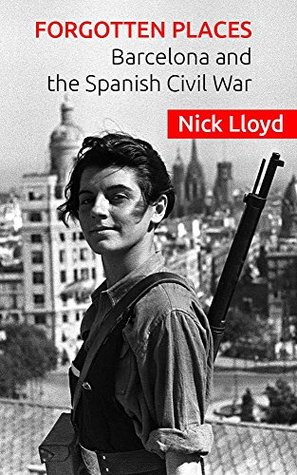
This is a guide to Barcelona in the Spanish Civil War, beginning in the 19th century with the conditions and movements which led to the social revolution of 1936, and ending with the fall of the city on 26 January 1939 when Franco’s tanks drove down the Diagonal and set about destroying everything the Republic and the revolutionaries had built. Stories from the aftermath of the war, the exile and the Franco regime are also included. In addition with dealing with the more obvious issues such as anarchism, the Spanish Republic, Catalonia, George Orwell, the aerial bombing, and the May Days, etc, the book also looks at themes such as the People’s Olympiad, the American Sixth Fleet in the city, Barça, urbanism, Nazis in Barcelona, Robert Capa, the Spanish in the Holocaust, poster art… Intertwined in the text are contemporary quotes and a few personal accounts of people who experienced the war or its aftermath. There are also biographies of figures such as Salvador Seguí, Ramón Mercader, Andreu Nin, Francesc Boix and Lluís Companys. The book is divided into two main sections: a history of the war from the perspective of Barcelona, followed by a guide to related sites which have often been included as an excuse to tell stories or illustrate wider issues. The book ends with an extensive glossary. Nick Lloyd has been running Spanish Civil War tours in Barcelona since 2009.
It’s no secret that I’m a big fan of Nick Lloyd. I first met Nick in 2013 while I was on book research trip and took his amazing civil war tour of Barcelona. At that time, Nick was still putting together his Spanish Civil War book to accompany the tour, which has taken thousands of people through the events that took place in the Catalonian capital in the late 30’s. Every city and town in Spain has its own story to tell, but Barcelona’s journey is truly unique, as a city ready to take on a bold new world, one where everyday people were ready to join forces and change their lives and country forever. Everyone has seen the posters of workers uniting, of children bombed by fascist planes, or nuns’ bodies dug up and put on display. But as people shuffle through the iconic areas of Barcelona, most have no idea what happened in the very places in which they stand.
Nick Lloyd has dedicated years to putting his impressive and exclusive tour together, giving everyone the chance to feel and experience the real history of Barcelona’s war story, with stories from the famous, to the international athletes in the city on the fateful day that war got declared, to the workers and union men and women who dared to take on the oppression. From the ambitious beginnings, to the arrival of optimistic international volunteers, to the infighting and breakdown of alliances, to the aerial bombings and street fights, to the eventual demise of the Republic and following executions, Nick takes the reader through the war, just as he could on his tour. Both the details of this ancient city’s struggles and maps, photo and details can take a reader on the journey the author has made his own.
A reader could use this work to learn more about Barcelona, attempt to follow in its footsteps around Barcelona, or use it as a companion on one of Nick’s tours (book your own tour HERE). Forgotten Places is a culmination of work by a man who has dedicated himself to Barcelona’s civil war history, and is unrivalled in his field. This book belongs on the shelf alongside the greats of the genre.
Award-winning author Javier Marías examines a household living in unhappy the shadow of history, and explores the cruel, tender punishments we exact on those we love
As a young man, Juan de Vere takes a job that will haunt him for the rest of his life. Eduardo Muriel is a famous film director – urbane, discreet, irreproachable – an irresistible idol to a young man. Muriel’s wife Beatriz is a soft, ripe woman who slips through her husband’s home like an unwanted ghost, finding solace in other beds. And on the periphery of all their lives stands Dr Jorge Van Vechten, a shadowy family friend implicated in unsavoury rumours that Muriel cannot bear to pursue himself – rumours he asks Juan to investigate instead. But as Juan draws closer to the truth, he uncovers more questions, ones his employer has not asked and would rather not answer. Why does Muriel hate Beatriz? How did Beatriz meet Van Vechten? And what happened during the war?
As Juan learns more about his employers, he begins to understand the conflicting pulls of desire, power and guilt that govern their lives – and his own. Marias presents a study of the infinitely permeable boundaries between private and public selves, between observer and participant, between the deceptions we suffer from others and those we enact upon ourselves.
As always, it is hard to give a review on the Javier Marías novel, since there is so much to cover. Thus Bad Begins is actually a line from Shakespeare, quite apt since I read it in the spare minutes/seconds I had at the Pop-up Globe. Few authors can tackle the civil war and Franco regime like Marías, his own family victims of the awfulness. The scariest part is that a book doesn’t have to be set too far in the past to show how far the Franco poison spread.
The book tells a story set in 1980 through the eyes of a man named Juan de Vere. Juan is the assistant of a movie director named Eduardo Muriel. Eduardo is married to Beatriz, but the pair are the worst type of couple – one tied to one another, their lives and hearts far apart. Eduardo is sure that the whole damn world and all its issues can be traced back to Francoism, even when it comes to the disaster of his marriage. All of this is told through the eyes of Juan, as if recounting a tale, in the wordy, comma-less style that Marías loves so much. Juan has the not-great position of always being in Eduardo and Beatriz’s home, where he can see how much Eduardo hates his wife, and loves abusing her for an unnamed past crime, a dead child haunting the pair.
Franco has been dead five years and Spain is starting to open up to the world, where people are now free to try new things after years of being trapped in a conservative landscape. Art, culture, drug use, sex, freedom of speech are all going around, but the one thing not quite yet available is divorce, which would eliminate drama from the lives of Juan’s bosses. As part of his rather random assistant job, Eduardo asks Juan to investigate a man named Jorge Van Vechten, a doctor who moves in their social circle. Juan befriends the older Jorge, in an attempt to get him to open up about his shady life under Franco.





 CAROLINE ANGUS