
- Madrid
On 22 August 1936, violence reached the heart of Republican Madrid when armed militiamen entered the Modelo Prison and murdered dozens of political prisoners held inside its walls. Among those killed were some of Spain’s most prominent conservative politicians, senior military officers and leading members of the Falange. Their deaths transformed the prison into one of the most infamous sites of Republican violence during the opening months of the Spanish Civil War.
The massacre occurred at a moment of extraordinary tension. During August 1936, Madrid was living under the constant expectation of attack. News of the Nationalist advance through Extremadura, culminating in the fall of Badajoz only nine days earlier, had sent waves of fear through the capital. Refugees arrived daily with accounts of executions and reprisals, while rumours circulated that Nationalist sympathisers inside Madrid, the so-called fifth column, were preparing to rise in support of the advancing rebel armies. Nationalist aircraft had also begun bombing the city, reinforcing the belief that Madrid was under siege even before the main assault had begun.
Within this atmosphere of fear, suspicion and anger, the Modelo Prison became a symbol of the enemies many believed were waiting to strike from within. The prison housed hundreds of detainees arrested following the military uprising of July 1936, including army officers, monarchists, Falangists, conservative politicians and civilians suspected of supporting the rebellion. Many had not been tried, while others remained imprisoned largely as a precaution against further conspiracies.
When rumours spread on 22 August that prisoners were attempting to communicate with the enemy during an aerial bombardment, or were preparing an uprising of their own, the fragile authority of the Republican government collapsed inside the prison. Armed militias entered the building, overwhelmed the prison administration and carried out summary executions without judicial process. By the end of the day, approximately thirty prisoners had been killed and exposed one of the Republic’s greatest challenges during the summer of 1936, though the government remained the legitimate authority, its ability to control the numerous militia organisations that had defended Madrid against the military uprising was increasingly uncertain. The massacre demonstrated that political violence could erupt even where the institutions of the state still formally existed.
The military uprising of 18–20 July 1936 had failed in Madrid, but victory for the Republic did not restore stability. The collapse of the coup in the city was achieved through the combined efforts of loyal Assault Guards, sections of the Civil Guard, workers’ militias organised by socialist, communist and anarchist organisations, and thousands of armed civilians. Their success prevented Madrid from falling into Nationalist hands, but it also transformed the political landscape. Tens of thousands of weapons had been distributed to civilians, revolutionary committees assumed responsibility for security in many districts, and the authority of the Republican government became increasingly dependent upon organisations it could not fully control. During August, Madrid became a city preparing for siege. Fighting continued in the Sierra de Guadarrama, where Republican forces sought to block Nationalist attempts to reach the capital through the mountain passes. Although the front remained some distance from the city, the sound of war was never far away. Nationalist aircraft began carrying out bombing raids, while newspapers reported the rapid advance of the Army of Africa through Extremadura and Andalucía.
The fall of Mérida on 10 August and the capture of Badajoz on 14 August sent shockwaves through Madrid. Refugees fleeing the Nationalist advance arrived with accounts of executions, disappearances and severe reprisals carried out in recently occupied towns. Whether every report could be independently verified mattered less than the atmosphere they created. Across the capital, many believed that if Madrid fell, similar violence would follow. At the same time, rumours of a fifth column spread relentlessly. It was widely believed that thousands of Nationalist sympathisers remained hidden inside Madrid, waiting to sabotage the Republican war effort or rise in support of the advancing rebel armies. Although genuine conspirators certainly existed, the scale of the supposed underground movement was often exaggerated by fear, speculation and political propaganda. Nevertheless, the rumours fuelled suspicion throughout the city and contributed to an atmosphere in which denunciations, arrests and searches became increasingly common.
This growing climate of insecurity placed enormous pressure on the Republican authorities. While President Manuel Azaña and Prime Minister José Giral remained committed to preserving legal government, many armed militias believed that extraordinary circumstances demanded extraordinary measures. The distinction between lawful detention and revolutionary justice became increasingly blurred, particularly where those imprisoned were suspected of supporting the military rebellion.
Within this atmosphere of fear, vengeance and uncertainty, the Cárcel Modelo de Madrid acquired a significance. Commonly known simply as the Modelo Prison, it stood in the Moncloa district of the Spanish capital. Opened in 1884, it had been designed as one of the most modern prisons in Spain, reflecting nineteenth-century ideas of penal reform that emphasised order, surveillance and the separation of prisoners rather than the overcrowded conditions common in older jails. By 1936, however, the prison was struggling to cope with the extraordinary pressures created by civil war. The Modelo had rapidly filled with prisoners arrested on suspicion of supporting the rebellion. Some had participated directly in the conspiracy, while others were detained because of their political affiliations, military rank or public prominence. The Republican government regarded many of them as potential leaders of a future Nationalist uprising should they remain at liberty. The prison population therefore represented a broad cross-section of conservative Spain. Army officers accused of supporting the coup were held alongside Falangists, monarchists, conservative politicians, landowners, businessmen and civilians suspected of assisting the rebellion. Some prisoners had been formally charged, but many remained in custody under emergency wartime powers while investigations continued. In the atmosphere of August 1936, imprisonment was often viewed as a preventative measure rather than the result of a completed judicial process.
Inside the Modelo, conditions steadily deteriorated as the prison became overcrowded. Guards struggled to maintain discipline, while the constant influx of new prisoners placed increasing strain on food supplies, accommodation and administration. Outside the prison walls, armed militias regularly gathered demanding harsher measures against those they regarded as enemies of the Republic. Every Nationalist military success, every bombing raid and every rumour of a fifth-column conspiracy increased public hostility towards the men confined within the prison. Despite these pressures, the Republican authorities continued to regard the Modelo as a state institution operating under government control. Prison officials attempted to maintain order and legal procedure as far as circumstances allowed, believing that the detainees would eventually face trial through the established judicial system.
During the afternoon of 22 August 1936, reports began circulating that prisoners inside the Modelo were attempting to communicate with the Nationalist aircraft or preparing to stage an uprising in support of bombing the city. Other rumours claimed that shots had been fired from inside the prison or that detainees had seized weapons. None of these reports has ever been conclusively substantiated, and subsequent investigations found little evidence that a coordinated revolt was underway. At around 5:00pm, a fire broke out inside the Model Prison. Crowds quickly gathered outside the prison and many were armed militiamen belonging to socialist, communist and anarchist organisations, joined by civilians already angered by the bombing and by news of Nationalist atrocities elsewhere in Spain. The prisoners held inside the Modelo were widely regarded as men who had supported, or at the very least welcomed, the military uprising that had plunged the country into civil war. For many outside the prison walls, they represented a continuing threat that could no longer be tolerated.

Inside the prison, officials struggled to maintain control. The governor, Vicente Giralt, and his staff attempted to reassure both prisoners and government authorities that order had not broken down. Guards secured the cell blocks and tried to prevent panic among the inmates, many of whom had heard the bombing and the growing commotion outside. Telephone calls were exchanged with government ministries as officials sought instructions and additional security. As the night wore on, the situation deteriorated rapidly. Armed militia groups entered the prison in the evening and early hours of 23 August, overwhelming the authority of the prison administration. Responsibility for security effectively passed from state officials to revolutionary organisations acting independently of government control. Once this occurred, the legal protections that had until then shielded the prisoners from mob violence disappeared.
Prison officials who had attempted to preserve order found themselves powerless as armed men moved through the cell blocks compiling lists of prisoners to be removed. Some detainees were identified by name, while others were selected because of their political prominence or association with the military uprising. The process was neither judicial nor orderly. Decisions were made rapidly amid confusion, anger and the widespread belief that those imprisoned represented an immediate danger to the Republic. Groups of prisoners were escorted from their cells into the prison courtyards. There, they were shot by firing squads composed of militia members. The executions continued throughout the afternoon until approximately thirty prisoners had been killed.
Among the victims were some of the best-known conservative figures in Spain. Melquíades Álvarez, founder of the Reformist Party and former President of the Congress of Deputies, was murdered despite having opposed political extremism throughout much of his career. Julio Ruiz de Alda, the celebrated aviator who had completed the Plus Ultra transatlantic flight and later co-founded the Falange, was also executed. Fernando Primo de Rivera, brother of Falange leader José Antonio Primo de Rivera, was killed alongside General Osvaldo Capaz Montes, the officer who had overseen Spain’s peaceful occupation of Ifni in 1934. Other victims included José Martínez de Velasco, leader of the Agrarian Party, Manuel Rico Avello, a former minister of the Republic, and a number of army officers, public officials and civilians detained following the July uprising.
The diversity of the victims reflected the broad political sweep of the killings. Some had actively supported the military rebellion, while others had been imprisoned because of their political affiliations or their prominence within conservative Spain. Whatever the circumstances of their detention, all had been in government custody and were therefore entitled to legal protection. Their deaths represented the complete collapse of due process within one of the Republic’s principal prisons. For many contemporaries, the massacre represented a profound moral and political shock. Their deaths therefore became one of the clearest examples of the collapse of governmental authority in Madrid during the opening weeks of the Civil War.
News of the killings spread rapidly through Madrid and reached the highest levels of the Republican government within hours. President Manuel Azaña, Prime Minister José Giral, and other senior ministers were appalled that such a massacre had taken place inside a state prison under the authority of the Republic. Beyond the immediate loss of life, they recognised that the killings represented a profound failure of government authority at a time when the Republic was attempting to demonstrate that it remained the legitimate government of Spain. Officials moved quickly to regain control of the Modelo Prison and prevent further violence. Government representatives entered the prison after the executions had ended, while additional security forces were deployed to restore order. Investigations were announced, and Republican leaders publicly condemned the massacre, stressing that prisoners held in state custody were entitled to legal protection regardless of their political beliefs or alleged involvement in the military uprising.
The political consequences were immediate as Nationalist propaganda (already in full swing, well-organised and not afraid to lie) portrayed the massacre as proof that Republican Spain had descended into lawlessness and revolutionary terror. Newspapers in rebel-held territory published the names of prominent victims and accused the Madrid government of either organising the killings or deliberately allowing them to occur. Republican leaders rejected these accusations, arguing that the massacre had been carried out by armed militias acting outside government control. The events at the Modelo seriously damaged the Republic’s international reputation at a time when it was desperately seeking diplomatic and military support from Britain, France and other democratic nations. By late August 1936, foreign journalists, diplomats and governments were already following events in Spain with growing concern, and the murder of political prisoners inside Madrid’s principal prison reinforced fears that the conflict was descending into uncontrolled violence.
International newspapers reported the massacre alongside accounts of the Nationalist advance through Extremadura and the recent killings at Badajoz. For many readers abroad, these reports painted a picture of a country in which political opponents faced death regardless of which side controlled the territory. The executions at the Modelo became one of the first major Republican atrocities to receive extensive international coverage, just as the massacre at Badajoz had become one of the best-known examples of Nationalist repression.
Nationalist propaganda exploited the killings relentlessly. Rebel newspapers and radio broadcasts presented the massacre as proof that the Republican government had surrendered authority to revolutionary mobs and was incapable of maintaining law and order. The deaths of well-known figures such as Melquíades Álvarez and Julio Ruiz de Alda were used to portray the Republic as a regime governed by political vengeance rather than justice. The Nationalist regime was orchestrating mass killings all over the country, and yet continued to expect the Republicans, the liberals, to play by the rules.
The Republican government attempted to counter this narrative by condemning the massacre and stressing that it had not authorised the executions. Officials argued that the killings resulted from the breakdown of public order during an exceptionally dangerous moment, not from government policy. But this distinction proved difficult to communicate abroad. Many foreign observers judged the Republic not only by its official statements but also by its ability to control events within the territory it governed. Diplomatic representatives in Madrid reported the massacre to their governments, adding it to a growing body of evidence that the Spanish Civil War was becoming increasingly brutal. For Britain, France and other European powers already debating whether to intervene, the killings reinforced concerns that the conflict was no longer a conventional civil war but a revolutionary struggle in which violence against prisoners and civilians was becoming commonplace.
- Toledo, New Castile
At approximately 05:00 on Saturday, 22 August, lookouts inside the Alcázar reported another aircraft approaching Toledo. This one came from the south-west, the direction in which Nationalist forces were advancing through Extremadura rather than from Madrid, where Republican aircraft normally appeared. The aircraft circled above the fortress before departing, prompting what the Alcázar operations diary described as considerable discussion among the defenders. The aircraft disappeared as unexpectedly as it had arrived, and there was no immediate indication that it had left anything behind. If it had been a Nationalist aircraft, it had come and gone without firing a shot.
Early the following morning, 23 August, a search of the eastern esplanade revealed a weighted message container that had been dropped during the previous day’s flight. Other contemporary and later accounts state that the aircraft had also released four food parcels, three landing within the Alcázar and a fourth on the eastern esplanade. Though the surviving accounts differ over the number and location of the parcels, they agree that the defenders recovered food, a signalling code for communicating with Nationalist aircraft, and two letters signed by General Francisco Franco, both dated 22 August 1936. The letters carried a simple message. Franco informed Colonel José Moscardó that the Nationalist command knew the Alcázar still resisted, that relief forces were advancing towards Toledo, and that the defenders were to continue holding the fortress until they arrived. The package also contained food, variously described as including sardines, mortadella, preserved fruit, condensed milk and supplies intended for children and the sick.
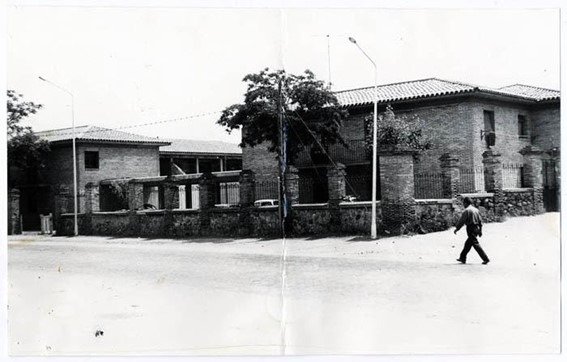
That afternoon, events took a far darker turn, where the Provincial Prison of Toledo on Calle del Calvario had become increasingly overcrowded during the first month of the war. Suspected Nationalist sympathisers, military officers, Falangists, clergy and political opponents had been arrested following the failure of the uprising in the city. As the number of prisoners increased, additional detainees were housed in other buildings, including the San José flour factory, which was also being used as a detention centre.
Later on 23 August, an angry crowd of militia and civilians forced its way into the Provincial Prison. The precise sequence that triggered the violence has been described differently in surviving accounts. Most agree that it followed aerial attacks over Toledo and the heightened emotions surrounding the continuing siege. Once inside, approximately 60 prisoners were removed from their cells, taken towards the Puerta del Cambrón, and shot. Among those killed was Luis Moscardó, the son of Colonel José Moscardó, who had already been rumoured to have died a month earlier. His death became one of the most symbolic moments associated with the siege because it corrected a story that had already entered wartime legend. During the famous telephone conversation of 23 July, Republican commander Cándido Cabello had threatened to execute Luis unless his father surrendered the Alcázar. Later Nationalist propaganda often created the impression that the threat had been carried out immediately after Moscardó refused. Luis instead remained alive for another month before being executed with the other prisoners on 23 August. Click here for the Toledo siege update


You must be logged in to post a comment.