
All three books in the Thomas Cromwell Queenmaker Series are available for free to download from Amazon onto any device, just in time for the holiday season. The deal is available on all Amazon sites… More
All three books in the Thomas Cromwell Queenmaker Series are available for free to download from Amazon onto any device, just in time for the holiday season. The deal is available on all Amazon sites… More
Cromwell wrote to King Henry as the king was away from London, to tell him of the progress with sending his warrants to Queen Katharine as Cromwell was preparing to put his Queen Katharine Act… More
Cromwell informed Gardiner and Howard that Queen Jane had died, and that already they need to seek Princess Margaret of France (aged only 14), and Mary de Guise as possible new brides. Cromwell then rants… More
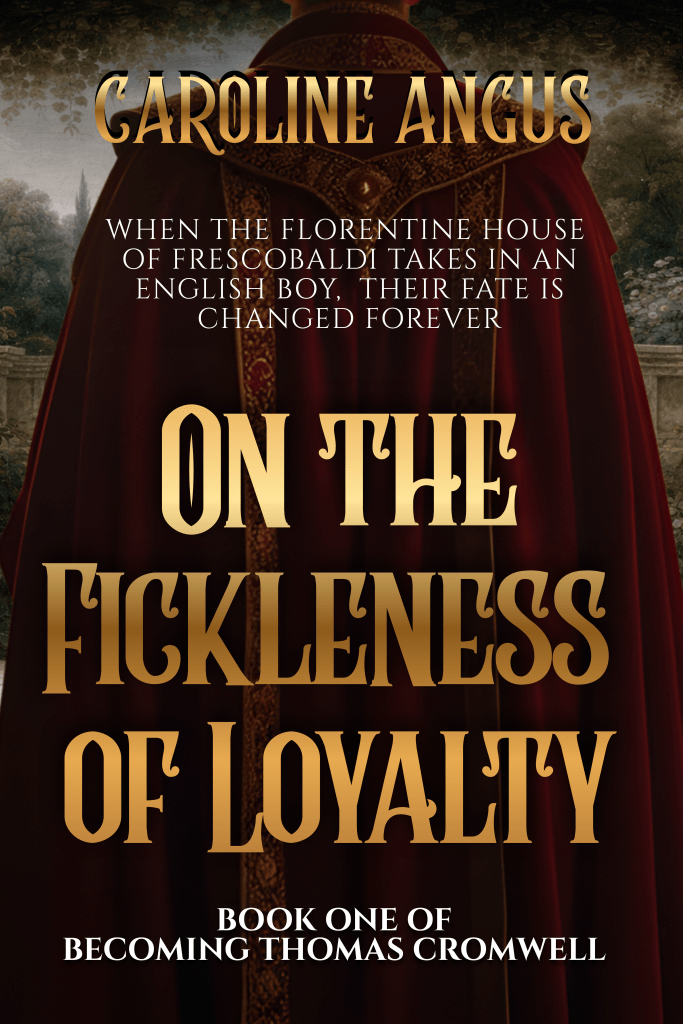
Before Thomas Cromwell could rule Henry VIII’s England, he first had to survive Machiavelli’s Florence.
—
Thomas Cromwell is eighteen when he arrives in Florence, carrying little but the memory of war and the instinct to survive.
Taken into the household of the powerful Frescobaldi, he finds himself in a city balanced between republic and ruin, where Piero Soderini governs in the uneasy absence of the Medici, and where influence is measured not in titles alone, but in gold, information, and silence.
Under the watch of Francesco Frescobaldi, and in the orbit of Niccolò Machiavelli, he begins to understand that power is rarely declared, but quietly constructed through alliances, through deception, and through trade. For Florence’s wealth does not rest in its streets, but in its reach. From Rome to the Low Countries, from the Papal monopoly of alum to the court of King Henry VII of England, commerce binds the city to forces far beyond its walls. And where such wealth moves unseen, so too does danger.
Yet not all risks are counted in coin. As Cromwell is drawn deeper into the lives of those around him, loyalty begins to blur, and the cost of belonging reveals itself in ways he cannot easily control.
As the Italian Wars redraw the balance of Europe, Cromwell is pulled ever further into a network of ambition and secrecy, where survival demands more than obedience, and where every choice leaves its mark.
In Florence, nothing is ever simply bought or sold. And every debt must be paid in full.

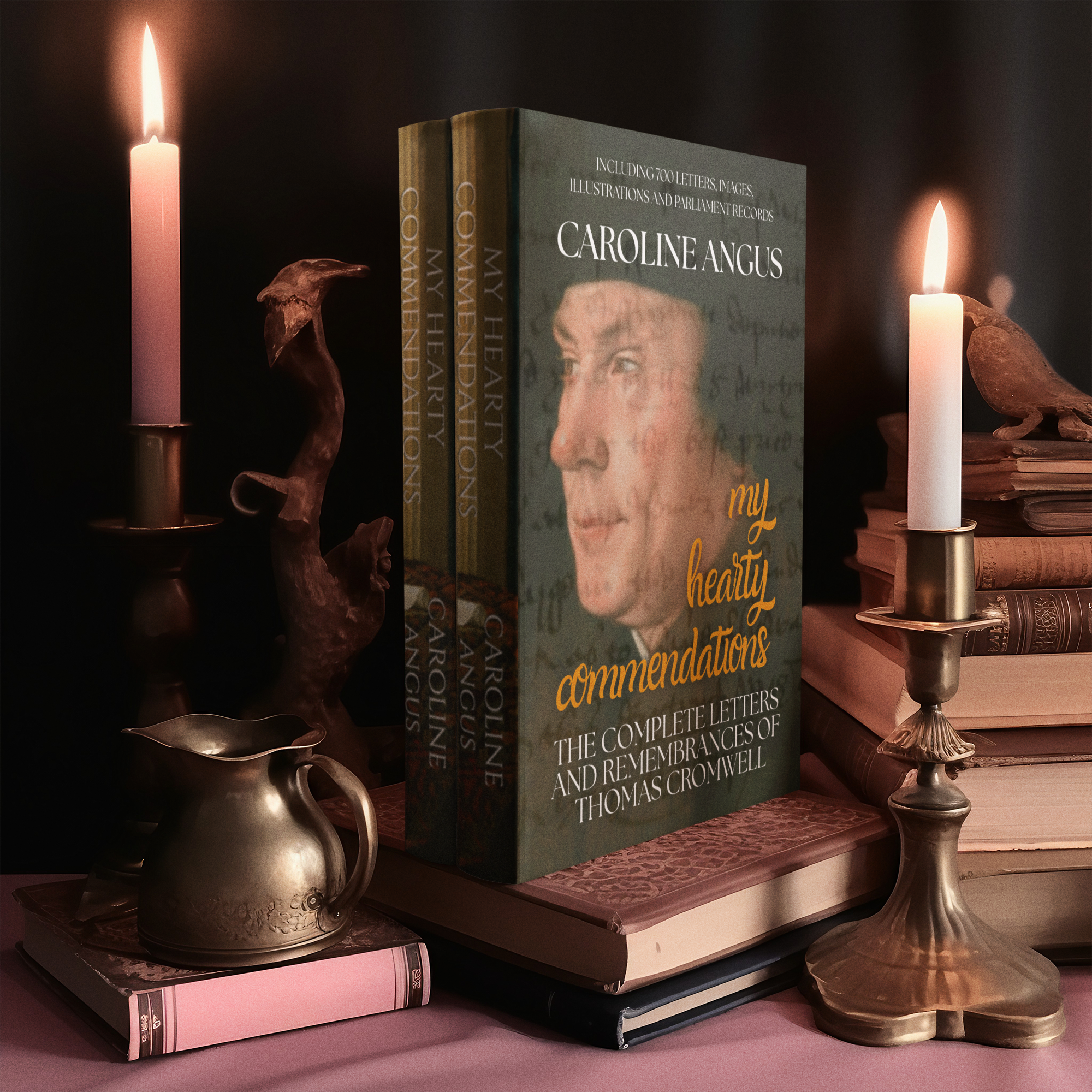
THE TRANSCRIBED LETTERS AND REMEMBRANCES OF THOMAS CROMWELL
Four hundred years passed between Thomas Cromwell’s death in 1540 and the recognition that this faithful servant was more than another agent of Henry VIII. Born a common man with no recorded education, Cromwell became a wealthy lawyer, politician, minister, and peer of the realm, and created the modern style of government in England. An extraordinary man of wisdom, charm, strategic cunning, and boasting an incredible memory, Cromwell redefined bureaucracy, broke a nation from Rome, reformed parliament, created royal supremacy and developed the revolutionary administrative procedures still in place today.
But after his execution, Thomas Cromwell became an intellectual genius lost to history, only now again known for his brilliance, finally appearing out from the shadows of the king he served. Cromwell laid the foundations for the success of Britain throughout the centuries, emerging from archives through the past seventy years of fine academic research, and now historical fiction brings the great man into public view once again.
Many know of Thomas Cromwell’s life through the words of others, their letters, tales, and opinions passed down through the years, with much of Cromwell’s vast correspondence lost to time and destruction. For the first time, Cromwell’s surviving letters are together in a single volume, alongside his personal remembrance lists, transcribed from original primary sources. Here are Thomas Cromwell’s letters on an array of subjects, without opinions from others, without the legal definitions of his legislation, the chance to read Cromwell’s own words.
AVAILABLE WORLDWIDE IN HARDBACK, PAPERBACK AND ON KINDLE

The same morning as the birth of Prince Edward at Hampton Court Palace, Cromwell’s hastily wrote to Wyatt to tell him of the good news, addressing the letter in French. Cromwell would have been thrilled with the news; a son and heir was finally secure for the king and his realm, and it would make his own son Gregory an uncle to the future king of England.
LORD CROMWELL TO SIR THOMAS WYATT, 12 October 1537 (Harl. MSS. 282, f. 211)
A mon tresbon et asseure amy Monsieur Wyat onseille et ambassade du Roye Dangleterre esidet en La Court Lemper.
To my very good and assured friend, Monsieur Wyatt, advisor and ambassador of the King of England, resident in the court of the Emperor. After my right hearty commendations, this shall be to advertise you that since the departure of Rougecroix, who was dispatched to you in post on Wednesday last here, be no news occurring but very good news which for surety I have received this morning, that it has pleased almighty God of his goodness to send to the Queen’s Grace deliverance of a goodly prince to the great comfort, rejoice and consolation of the King’s Majesty and of all us his most humble loving and obedient subjects. Whereof, we have very great cause to thank our most benign and gracious creator, who after so long expectation has exalted our prayers and desires. I have written this letter having the opportunity of this present courier to the intent that you shall advertise the Emperor thereof. I think that with convenient diligence the King’s highness will write to him and to other prince of the same to make them participant of his great, joy and comfort. Whereof, I shall move him tomorrow at my next being with his Grace. Thus, fare you heartily well From Saint James beside Westminster this 12th of October the 28th of his most prosperous reign.
Your loving assured friend
THOMAS CRUMWELL

Cromwell wrote to Thomas Wolsey for the last time, with Wolsey only two weeks away from his next arrest. If Cromwell wrote to Wolsey again before Wolsey’s death on 29 November, or if Wolsey wrote back, nothing has survived. This letter itself has barely survived, a mutilated partial letter, which shows no sign of concern. Cromwell writes ‘if anything shall fall,’ suggesting that something may soon go well for the cardinal, and Cromwell talks of several people he wishes the cardinal to favour should he prove successful, including the’ Cambridge scholars’ Gregory Cromwell, Christopher Wellyfed and Nicholas Sadler. After the last few letters, with Cromwell’s suggestions to Wolsey to be humble to avoid King Henry’s wrath, this letter is far calmer. If this was the last correspondence between these two friends, it is benign after all they have been through. After Wolsey’s popularity in the North, along with his arrogant behaviour, and writing to the Pope and Queen Katharine, neither Cromwell nor anyone could save the cardinal from King Henry. But these surviving notes show that Cromwell had no part in Wolsey’s eventual treasonous behaviour, rather, that he urged Wolsey to stop his actions to reclaim his titles and money. That could be why these letters remain in the archive, as a letter dated December 1530 by Eustace Chapuys describes Cromwell becoming an official councillor to the King, and Cromwell would have needed to clear his name.[1] These surviving letters would have proved Cromwell’s innocence.
CROMWELL TO THOMAS WOLSEY, 21 October 1530 (Jesus Coll. in Bibl. Bodl. Oxon. c.74, pp. 262 ff)
. . . . even three months in Chancery, howbeit your Grace shall be so provided for that you shall be out of all doubts, for all the King’s officers in the main season…
… I most humbly beseech your Grace to be a good lord to my poor kinsman Doctor Carbott and let him have some little office under your Grace. I doubt not he be somewhat simple in appearance, yet he shall discharge himself if you put him in a place of trust and a little authority. I beseech your Grace also to be a good lord to your servant Nicholas Gifford when anything shall happen to fall which may do him good, remember him for my sake. Your Grace shall find him, in my opinion, though he be young and somewhat wild youth, disposed both to truth honest and hardiness, and he is one that will love you with all his heart…
…If anything falls, I beseech your Grace to remember my scholars in Cambridge and both they and I shall pray to our lord Jesus Christ to preserve you in long life good health with increase of honour…
…The Emperor will be at Cologne in the Feast of… without fail…
…the Parliament is prorogued until the 6th day of January. The prelates shall not appear in the premunire. There is another way devised in place thereof as your grace shall further know.
The Princes of Germany will not agree with the Emperor…
…I beseech the Holy Trinity preserve your Grace . . . in quietness and contention. I beseech your . . . for this letter . . . Written for lack of . . . haste, the xxi of October
[1] Spanish Calendar 5 i no.228
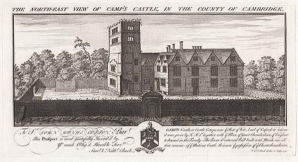
Cromwell wrote to Anne Howard, Dowager Countess of Oxford (sister to the Duke of Norfolk) about her property at Castle Camps. Unlucky Anne Howard married the heavy-drinking John de Vere, Earl of Oxford, when she was 11, he 12, as her father owned his wardship, though the pair were not a couple as such until 1520. The marriage was a nightmare, and safeguards were put in place to control the ‘incompetent wastrel’ John had become, though luckily he died in 1526. Lady Anne had no children, but still had a claim Castle Camps, the Oxford estate granted by William the Conqueror, but as soon as her husband was dead, the new Earl of Oxford and his men were constantly breaking in, stealing, killing her deer, and generally being an endless, entitled pain. Cromwell had helped out Lade Anne a number of times, including letting her stay at Austin Friars. In this letter, Lady Anne had removed Mr Tirrell from his role of bailiff around Castle Camps and its parks, which he was resisting, and Cromwell wrote to Lady Anne, telling her she had to obey the King and restore Mr Tirrell. Lady Anne persevered, and lived until 1559 without a husband to bother her.
SECRETARY CROMWELL TO THE COUNTESS OF OXFORD, 30 SEPTEMBER 1535 (LP ix no 485i)
To the right honourable and my good lady my Lady Anne Countess of Oxford by this given.
In my most hearty manner, I commend me to your good ladyship. And whereas there has of long time depended between you and this bearer Master Tirrell certain controversies, as well concerning his claim to the park and Bailiwick of Camps, as a certain copy hold, which he bought in the same town, from all the which you have expulsed him, I shall most heartily desire and pray you at the especial contemplation hereof, to restore him again to the same. Which request I make not only to you because I think you have, upon displeasures conceived against him, perchance in some part by the misgivings of himself towards you, done to him, in his expulsion from the same park, Bailiwick and copy hold and your detinue (detention) thereof all together wrong and injury. But because it should be dishonourable to you, to have the same in open Court of Audience tried against you, and likewise displeasant to be, that way disappointed of your will and pleasure, which as I now friendly and frankly write to you, because that I would be glad, you should without constraint do as shall appertains to your honour, and justice. So, I am enforced to advertise to you, as your poor friend, that the king’s highness, like a prince of honour, is minded to have justice proceed without respect in that cause. Eftsoones (again) therefore, requiring your good ladyship, the rather for my sake, without any extremity to be good lady to him, who I dare affirm will be glad to do to you during his life that service and pleasure that shall lie in his little power. As knows God, who sends your good ladyship long life and fare you well. From Winchester the last day of September.
Your ladyshyppis assuryd
THOMAS CRUMWELL
 CAROLINE ANGUS