Wolf Hall 2: The Mirror and the Light – Thomas Cromwell Quick Q+A

BBC/Nick Briggs

Welcome to part 4 of Wolf Hall 2: The Mirror and the Light facts about moments seen in Thomas Cromwell’s life at court. Today is a quick round-up of questions asked that don’t require a whole post of explanation on their own. So let’s start –

Wolf Hall is Jane Seymour’s home. What is The Mirror and the Light?

On 28 November 1538, Cromwell wrote a letter to Sir Thomas Wyatt (Harl. MSS. 282, f. 217), who was King Henry’s ambassador to Holy Roman Emperor Charles V, and travelling Europe with the Emperor’s court. Wyatt was not a good ambassador, and relations between the countries were started to deteriorate. Cromwell updated Wyatt on Henry Courtenay, Marquess of Exeter and Henry Pole, Lord Montagu, the Catholics traitors,  and asked Wyatt to get the Emperor  to intervene on several subjects were making trouble for London merchants. In the letter, Cromwell wrote of King Henry exercising his right as the supreme head of the church by burning Sacramentarian John Lambert a week earlier:

‘…undoubtedly [Emperor Charles] should have much marvelled at [King Henry’s] most high wisdom and judgement, and reputed him none otherwise, after the same, than in manner of the mirror and light of all other kings and princes in Christendom.’

King Henry is the mirror, and everyone and everything should reflect his brilliance. Henry is the shining light of princely splendour all should look up to. Being out of Henry’s light/favour is like being in the darkness. The letter is extremely flattering of Henry, since it would be read and repeated at the Emperor’s court, and could reveal nothing of reality, only a glowing picture of praise and perfection.

Was Thomas Cromwell the Lord Chancellor of England?

NO. Thomas Cromwell was never the Lord Chancellor. Thomas Wolsey was Lord Chancellor, followed by Thomas More, and then Thomas Audley. Cromwell assumed the role without title between more’s resignation in May 1532, and Audley’s appointment in January 1533, and was not always in a good mood about the position or workload. Audley was a puppet; he would do anything the king wanted, and he was easily intimidated, so Cromwell could yell at Audley whenever he made an error  and Audley would beg and grovel for forgiveness (Audley complained a lot, especially about his yearly salary of 800l or £350,000 today, plus bonuses. Cromwell always told him to shut it because it annoyed the king). Audley and his protégé Richard Rich really ran with Henry’s plan to dissolve monasteries when Cromwell didn’t want to move forward, but other than that, Cromwell had total control and authority over all matters. Audley never intervened in Cromwell’s business, despite technically being higher ranked until 1536. (Lord Chancellor was ranked second in the realm after the archbishops. In 1536, Cromwell became the Vicegerent of England, the new number one in order of precedence, putting Lord Chancellor down to third).

Thomas Cromwell was, in 1539, Lord Cromwell, Baron of Wimbledon the Vicegerent of England, Lord Privy Seal, Vicar-general of England, Knight of the Most Noble Order of the Garter, Principal Secretary, Chancellor of the Exchequer, the first-ever layman Dean of Wells, and Commissioner for the Peace in seven counties, Chancellor and High Steward of Cambridge University, Master of the Jewel House, Clerk of the Hanaper, and Steward of the Duchy of Lancaster, Essex, Hertfordshire and Middlesex, the Receiver of Petitions in the House of Lords, highest ranked man in the House of Lords, Warden and Chief Justice in Eyre, Prebendary of Salisbury, Steward of Westminster Abbey and Savoy Manor, Constable of Hertford Castle, Berkeley Castle and Gloucestershire Castle, Recorder of Bristol, Commissioner for the Subsidy to print the Bible, Lordship of Edmonton, Sainsbury, Hovering and Writtle, and  master of every single powerful man in the country of Ireland. By 1540, Cromwell was also the Earl of Essex and Lord Great Chamberlain. At that point that was basically nothing left for Cromwell to control, other than being the Lord Treasurer, but Norfolk held that role and seemed to live forever.

Sometimes people write Cromwell as Lord Chancellor because it is easier to understand in modern terms. Cromwell was the only person to ever be England’s Vicegerent, and no one person will ever receive that much power again.

Did Cromwell feel guilt over Anne Boleyn?

Certainly not that he ever mentioned where it would be recorded. It would have been insanity to have expressed guilt or sympathy. Archbishop Cranmer wrote to King Henry to make sure he didn’t go down with her, and so the Reformation would be safe without Anne on the throne. Cranmer was frozen out by the king for a while for this, and had his prime lands and manors confiscated, and given to Cromwell after Anne’s death. Mortlake Manor was the traditional home of the Archbishop of Canterbury since its construction 500 years earlier, and Crowmell relatives had worked there as servants. Cromwell then owned the property and made it grander than ever.

Cromwell did say to Ambassador Eustace Chapuys that Anne Boleyn handled herself well through her trial. Everyone knew she was innocent, but no one was stupid enough to say anything. I cover the whole period about Anne’s death in my book on the subject.

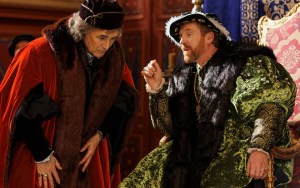
Did King Henry actually say he could make Cromwell the king after himself if he wanted at the Privy Council meeting?

No, that was just an imagined scene of the king flexing his power over all the nobles. Likewise, Cromwell and Fitzwilliam never came to blows like that at a meeting. It is another piece of fiction laid out to be reflected in later episodes. I will do a separate post about Cromwell and Fitzwilliam, as their relationship was very interesting.

BBC/Playground Entertainment/Nick Briggs

Did Cromwell spend time with Dorothea Wolsey?

There is no evidence of this; ‘Dorothea’ is a just a plot-point for Cromwell’s guilt. There are letters between Cardinal Wolsey’s three children and Cromwell. Most of the letters come from Thomas Wynter, Wolsey’s eldest son, born 1510 to Joan Larke, was always travelling in Europe, and always looking for money. Cromwell was one of Wynter’s financial babysitters, and felt sorry for Wynter after his father’s death. There are extensive papers showing Wolsey’s favour towards Wynter, and Cromwell got him set up in a comfortable life in the North in the 1530s, and he later became the Dean of Wells.

Dorothy was born in 1513, her mother also Joan Larke. Her surname was Clancey, the name of her adoptive family in Dorset. She was placed in Shaftesbury Abbey for her education and upbringing where many nobles sent their daughters, and just fell under Cromwell’s ban of no one being allowed to take holy orders from age 24 or younger in 1535. Cromwell soon changed the laws, so no one under 20 could enter the church, and Dorothy could technically  become a nun. The rich and well-appointed Shaftesbury Abbey was closed in 1539, and Dorothy Clancey was given a pension. She was never heard from again, and she certainly never met Thomas Cromwell.

Wolsey’s third child was Thomas Minterne (though his mother is uncertain), born in about 1516. Minterne grew up in Sherborne, ten miles from his sister Dorothy. Wolsey sent Minterne to New Oxford College and Cromwell ensured he was made a fellow at only 17 years old in 1533. Cromwell then sent Minterne to study in Europe in 1538, and when he returned to England broke in 1542, King Henry gave Minterne a cozy job at Salisbury Cathedral, which he kept for the next 20 years or so.

(Joan Larke married George Legh and had another four children, and then married Sir George Paulet in 1530, but died giving birth two years later, though her son William survived. Joan must have been quite young when having Wolsey’s children, maximum no more than 20 years old. Joan’s baby William Paulet was cousin of John Paulet, 2nd Marquess of Winchester, who married Elizabeth Cromwell, widow of Gregory Cromwell. These people really never moved around much).

All sources come from The Private Life of Thomas Cromwell and The Letters and Remembrances of Thomas Cromwell. My publisher might come for you if you plagiarise.
Wolf Hall 2: The Mirror and the Light – Did Thomas Cromwell have feelings for Jane Seymour?

Screenshot from The Mirror and Light episode 4

Welcome to part 3 of Wolf Hall 2: The Mirror and the Light recap of the facts around Thomas Cromwell and the events in season 2, where Jane has given birth to Prince Edward.

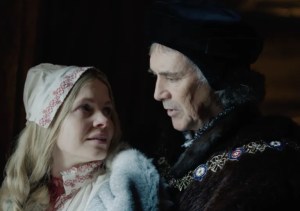
Did Thomas Cromwell have feelings for Jane Seymour? This is a question that is impossible to answer. There is absolutely no evidence of any link between Thomas Cromwell and Jane Seymour, and (in my opinion) is a delightful fictional addition to Cromwell’s life story to add drama to a book/show. Those of us who work in Cromwell fiction need to add romantic details, because simply, Cromwell had none in his own life. I’m working on another Cromwell fiction myself at the moment, and there is again zero source evidence to work with. Nothing in Italy, nothing in the Low Countries, and then a marriage to Elizabeth Wyckes which was simply a convenience when she became a widow and they met through Morgan Williams (Richard Cromwell’s father). By all accounts, Cromwell and his wife were happy enough, but after she died, (apart from the quick grief rebound he had with ‘Elizabeth Gregory’), Cromwell never looked to any woman again. He was not a man into women at all.

At no stage was Cromwell ever rumoured to be in negotiations for a wife at any stage, and there were never any mistresses whispered about either. The lies about him being interested in Princess Mary and Margaret Douglas (I will do a sperate post on those rumours) bore no evidence, and if Cromwell ever muttered anything about Jane Seymour or anyone else, we simply don’t know. It does make for convenient fiction, though.

As for Jane Seymour, she was very limited in her options as well. Only one mention of a match comes up in Cromwell’s records, as a possible match for her, when Cromwell wrote (italics mine), ‘To speak with the King for Mr. Seymour’s daughter (Jane?) for (Sir Richard?) Elderton’ on 16 November 1532. Sir Richard Elrington, (often misspelled Elderton, and sometimes listed as Ralph) was the brother Edward Elrington, who had married one of the distant Seymour cousins, Grace (surname unknown), the illegitimate wealthy heiress of London Lord Mayor Thomas Seymour. Sir Richard/Ralph was twenty years older than Jane Seymour, which tracks with the astonishingly bad marriage made for Jane’s sister Elizabeth. Luckily for Jane, the marriage was never mentioned again.

Rumours of a marriage negotiations between Jane and Sir William Dormer came up in 1534, which the Dormer family quickly quashed. Sir William Dormer worked for Cromwell and went on work in royal service and parliament, and was married to Lady Mary Sidney in 1534, putting an end to overtures made by the Seymour family. Sir William’s sister Lady Jane Dormer recounted the negotiations in her autobiography that the Dormers did not wish to be linked to a scandalous family like the Seymours (meaning the scandal of Edward Seymour’s first wife cuckolding her husband twice with sons of unknown parentage).

Jane came to King Henry’s attention in late 1535 after the death of her father, who Henry had visited only months earlier on progress to Wolf Hall (his death is mistakenly listed as 1536). Edward Seymour was in the royal privy chambers by this stage, and the single Seymour sister was suddenly thrust into the royal marriage spotlight when Anne Boleyn lost her third child in January 1536.

Much like Thomas Cromwell, Jane Seymour’s romantic interests, or lack thereof, were never recorded. Marriages were rarely made in the interests of attraction to one another, making the king rare in his rash choices of some of his wives. Any kind of romantic overtures, those from men towards certain women were mentioned in letters from time to time, but women’s feelings generally go unnoticed. The people of the Tudor court were human, they would have had feelings of romance, lust, romance, affection like everyone else. But many didn’t have the financial security of being able to act on their feelings, and women’s feelings, to the men of court, didn’t seem to exist or matter at all.

As for whether Jane Seymour discussed having to handle sex with King Henry with Cromwell is entirely conjecture (but Cromwell did have an uncomfortable conversation with Anne of Cleves, so it’s not impossible). Jane’s sex life was unfortunately a public topic, as an heir meant everything to the court. Jane didn’t get pregnant until January 1537, a long time to wait with a king who was desperate for a son but no good in bed. Poor Jane indeed.

Cromwell was writing to discuss new brides for King Henry on 27 October, three days after her death. For all Henry’s kind words for Jane, and admiration for Prince Edward, there were mere days between Jane’s death and handling the security of the realm. By Christmas 1537, Cromwell had a suitable lists of brides from French princess to Dutch and German duchesses, and ready to discuss negotiations. King Henry did not need to be cajoled into these negotiations, he initiated them at every stage.

All sources from The Private life of Thomas Cromwell, The Letters and Remembrances of Thomas Cromwell, and Planning the Murder of Anne Boleyn

Wolf Hall 2: The Mirror and the Light – Did Thomas Cromwell really have an illegitimate daughter?

BBC/Playground Entertainment/Nick Briggs

Welcome to part 2 on The Mirror and the Light, checking out the details behind some of the major plot points in Wolf Hall’s second installment. Today is Jane Cromwell, Thomas Cromwell surviving daughter. In the book trilogy and the tv series, Thomas Cromwell is confronted with Janneke, an adult daughter born in Antwerp, to a woman Cromwell once loved and left behind to return to England. But the truth about the real Jane Cromwell is significantly different.

Cromwell had made (at least) one slip-up in his otherwise reserved, virtuous, and quiet private life, as his daughter Jane was born in late 1530. Some scholars have suggested Jane was born before Gregory, a way of suggesting Cromwell never cheated on his wife, but this is unlikely. Cromwell did not cheat on his wife, at least, no suggestion ever came of this, and Jane was likely conceived after Elizabeth Cromwell’s death in October 1528.

But in 1530, Mistress Jane was born into a household of a man about to be propelled into a position of power no commoner, or layman, could ever expect to achieve in England. An illegitimate child was usually paid for and squirrelled away, but Cromwell took in his daughter, suggesting she was a soothing presence after years of distress, as Anne and Grace Cromwell had died in September 1529. Another other theory for Jane’s parentage is that she was the illegitimate daughter of twenty-year-old Richard Cromwell, and she was taken into the Cromwell household, as Richard had no household of his own. But Jane believed herself Thomas Cromwell’s daughter (and her judgemental father-in-law later believed the same). Had Jane been a daughter of a Cromwell relative, she would have been recorded as such, but perhaps the lack of detail on her birth was beneficial for all involved.

Mistress Jane Cromwell took her father’s surname, suggesting her mother never featured in her life, or because her mother wanted the girl to bear her father’s name as proof. In Cromwell’s will appears a most curious name; an Elizabeth Gregory listed as ‘sometime my servant’. Elizabeth’s role is undefined, is not connected to any family member or other servant. She bore the first name of Cromwell’s wife, and her surname is the name of Cromwell’s son, which, if a coincidence, is remarkable. Elizabeth was listed  at the bottom of the list of relatives given something in the will, just above the list of friends and servants. Elizabeth Gregory’s inheritance higher was than all other Austin Friars servants, with 20l (£about 10,000) and a household’s worth of items. Given that  Cromwell’s illegitimate daughter Jane was born around 1530, Elizabeth Gregory is perhaps Jane’s mother, who officially remains unknown to this day. Sadly, Elizabeth Gregory’s entire paragraph is crossed out, meaning she died after the 1529 will but before the new draft was created in 1532.

Jane lived in the Cromwell household during her early life, most likely in the care of Joan and John Williamson, who ran Austin Friars for their brother-in-law. When Gregory Cromwell married Elizabeth Seymour in 1537, Jane was approximately seven, old enough to leave home and start life in a new household, but stayed with Ralph and Ellen Sadler for a time. Ralph and Ellen Sadler needed all the help they could get. By 1539, they had three sons, Thomas, Edward and Henry, and a newborn daughter, Anne, all barely surviving a measles outbreak in Hackney. Jane left with Gregory in May 1539, moving to Leeds Castle when Gregory and Elizabeth reconciled in time for the birth of their second son, Edward. Gregory and Elizabeth Seymour has been estranged for a time in 1538 after the birth of their son Henry  after Gregory’s punishment for sexual crimes. Cromwell sent his daughter to Leeds with a new wardrobe worth 12l 14s 6d (almost £5,500 today), and soon after, Prioress Vernon, who had helped care for Gregory when he was still very young, wrote to Cromwell saying, ‘I hear there is a little gentlewoman with Master Sadler which I would very fain have the governance and bringing up, as it were to my comfort now in mine age.’ Having Prioress Vernon as a carer likely would have been the same care Anne and Grace Cromwell would have received had they survived their illnesses.

Jane Cromwell’s life after her father’s death remained quiet, not showing up in records until her marriage. She could stayed in the multiple homes of Gregory and Elizabeth, or with the Sadlers throughout the 1540s.  Jane Cromwell married William Hough, son of Richard Hough, a gentleman from Cheshire, and a lacklustre servant to Cromwell. Richard Hough was most upset his son had married the bastard child of Cromwell without his knowledge or blessing, and while Jane is listed as the ‘base daughter of Thomas Cromwell, Earl of Essex,’ Hough tried to deny any association with Cromwell, which was impossible given that he had worked for Cromwell for years. William Hough had been to Oxford University, and studied under Nicholas Sander, who is now known as the man who tried his very best to blacken the name of any reformer, including all sorts of extra-fingered lies about Anne Boleyn. William Hough became a Catholic at Oxford, lived in Oxfordshire with his wife Jane, who also became a staunch Catholic, putting her at odds with the Cromwell/Sadler families.

William and Jane had a daughter, Alice in 1559. As late as 1574, Richard Hough was still mad at his son and daughter-in-law and their Catholic beliefs under Queen Elizabeth. In September 1578, Jane and William Hough, who had been threatened with excommunication from the church, were given absolution by the Archbishop of York in Neston, Chester, stating ‘It is ordered and decreed that the said Mr William Hough and his wife shall resort, once a month, to Mr Goodman or Mr Lane, preachers of the word for the better resolution in matters of religion (wherewith they are entangled), and if they be not, before Easter next, resolved in conscience by the travail, persuasion, and conference to be abided, such further order as shall be thought good to the Lord Archbishop of York and his associates.’ People who refused the Church of England and continued to be Catholic could be excommunicated, and suffer punishment from simple fines through to the death penalty under Queen Elizabeth, though Jane and William clearly saw no issue with flouting the law.

Jane died on 3 November 1580, and was buried at Neston, just months after being listed in the Hough family tree, as the uncontested daughter of Thomas Cromwell, the only document that confirms Jane’s parentage. William Hough died in 1585 after being called to be punished for his Catholic beliefs multiple times after Jane died, with his will showing that he and Jane had long left their Catholic Oxfordshire home to live permanently in Cheshire ten years earlier, living at Thorton Hough manor.

Their sole child Alice Hough was the heiress to Thorton manor and Leighton, with extensive lands and fisheries in 11 townships. Her date of birth was listed as 1550, rather than 1559 in the will. Alice married William Whitmore in 1585 and they soon had ten children – three sons, William (surviving son and heir), Richard, John (died young), and seven daughters, Jane, Elizabeth (died young), Christen, Katherine (died young), Eleanor (died young), Katherine, and Mary (died young).

Alice’s death is not recorded, though was in approximately 1600, and her husband died in 1620. Alice, like her mother Jane Cromwell, was a recusant, refusing the Church of England and continued to be Catholic despite the laws of Elizabethan England until her death. Ironic for the daughter of the man who created the English church in the first place.

All sources come from The Private Life of Thomas CromwellMy publisher might come for you if you plagiarise.
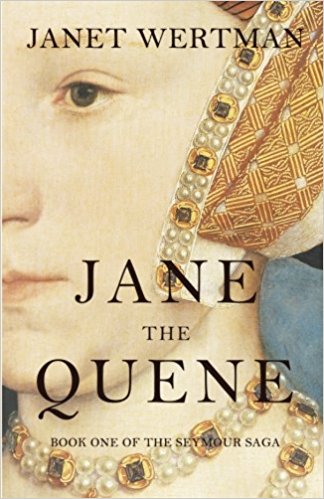
HISTORICAL BOOK REVIEW SERIES: ‘Jane the Quene’ by Janet Wertman

All Jane Seymour wants is a husband; but when she catches the eye of a volatile king, she is pulled deep into the Tudor court’s realm of plot and intrigue….

England. 1535. Jane Seymour is 27 years old and increasingly desperate for the marriage that will provide her a real place in the world. She gets the perfect opportunity to shine when the court visits Wolf Hall, the Seymour ancestral manor. With new poise born from this event, it seems certain that her efficiency and diligence will shine through and finally attract a suitor.

Meanwhile, King Henry VIII is 45 and increasingly desperate for a son to secure his legacy. He left his first wife, a princess of Spain, changing his country’s religion in the process, to marry Anne Boleyn — but she too has failed to deliver the promised heir. As Henry begins to fear he is cursed, Jane Seymour’s honesty and innocence conjure redemption. Thomas Cromwell, an ambitious clerk who has built a career on strategically satisfying the King’s desires, sees in Jane the perfect vehicle to calm the political unrest that threatens the country: he engineers the plot that ends with Jane becoming the King’s third wife.Jane believes herself virtuous and her actions justified, but early miscarriages shake her confidence and hopes.

How can a woman who has done nothing wrong herself deal with the guilt of how she unseated her predecessor?

~~

Jane’s story begins in 1525, where at age 18 is still unmarried and becomes a maid of honour for mighty Katherine of Aragon. Jane is a quiet girl, keen to be part of the court instead of being a lowly spinster at home. But Jane’s tuition at court is placed in the hands of two other maids to the queen – Anne and Mary Boleyn. They are distant cousins to Jane, but quiet Jane finds the pair to be disingenuous – Mary is already the king’s mistress, and rumours swirl of Anne’s virtue also. Jane, who sees herself as fair and perfect, considers her cousins to be intimidating and foolish, and they care not for the company of boring Jane. Years pass and Jane works in the court, slowly rising in favour until poor Katherine is ousted.
 .
 But then Jane’s cousin Anne Boleyn is finally elevated from mistress to Henry’s side as queen. Jane is still unwed, a seemingly boring woman in the company of Queen Anne, who sees nothing in her lady. But trouble soon comes when Anne gives birth to a daughter for Henry.
 .
Jane isn’t the only Seymour at court; her young sister Elizabeth found a husband quickly and the Seymours decide to swap out Jane for another sister, Dorothy. Quiet Jane needs a plan; she goes home to Wolf Hall, where the king plans to stay on summer progress, to host the royal party, and in return her brother will find her a decent husband.
 But while everyone thinks they know Jane Seymour, quiet Jane is a totally new woman. Only she can interest Henry; not brash like Anne Boleyn, but no weakling as her family assumes. Jane has a plan all of her own. Jane goes into training; she will be no whore, and she will be no Anne Boleyn either. Jane wants better for herself and she is no pawn any longer. Jane is ready to stand up, and play her part at court, all to claim what she wants – the crown itself.
 .
Jane is always written as the boring queen and I enjoyed reading a book where she was anything but. Jane plays the games at court well, ready to scheme her way onto the throne, rather than being shoved on by her brother. Her brother Edward is a likable man, a product of his time, and young brother Thomas is a cad, as history suggests. Everyone knows of Edward’s second wife Anne, the bitchy sidekick of her husband. This time, Anne is a kinder woman, while my book-husband Thomas Cromwell is a man who can work with anyone, always ready to come out on top. Cromwell’s POV is used a little too, which was a bonus for me.
 .
 It was fun to read Jane’s perspective, who is sometimes seen as appearing from nowhere to take a king, when she was instead in the background, understanding court politics. And this book is the first in a series, so make room on your shelf!

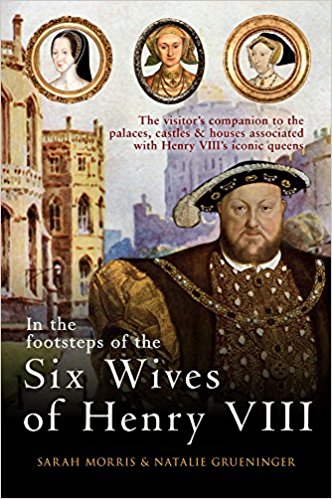
HISTORICAL BOOK REVIEW SERIES: ‘In the Footsteps of the Six Wives of Henry VIII’ by Sarah Morris and Natalie Grueninger

This book provides a fresh perspective on the lives of Henry VIII’s six wives by embarking on a journey through the manors, castles and palaces in which their lives were played out. This journey traces their steps to the Alhambra in Spain, childhood home of Katherine of Aragon; to the very room at Acton Court where Anne Boleyn and Henry VIII publicly dined; through the cobbled grounds of Hampton Court Palace, which bore witness to both triumph and tragedy for Jane Seymour; into the streets of Düsseldorf in Germany, birthplace of Anne of Cleves; among the ruins and picturesque gardens of St Mary’s Abbey in York where Catherine Howard and Henry VIII rested at the pinnacle of the 1541 progress; and to Gainsborough Old Hall in Lincolnshire, where Katherine Parr lived as daughter-in-law of the irascible Sir Thomas Brough.

Each location is described in a fascinating narrative that unearths the queens’ lives in documents and artefacts, as well as providing practical visitor information based on the authors’ first-hand knowledge of each site. Accompanied by an extensive range of images including timelines, maps, photographs and sketches, this book brings us closer than ever to the women behind the legends, providing a personal and illuminating journey in the footsteps of the six wives of Henry VIII.

cover and blurb via amazon

~~

For everything Henry VIII did, all anyone remembers is the fact he married six times. To be fair, he isn’t all that different to many guys – gets to middle-age and freaks out and wants to date younger women, usually blondes. And like most of these scenarios, who the women are doesn’t matter so much, but to those of us who do know these women, they are far more fascinating than the man they married.

Whether or not you know your Annes from your Katherines from your Jane, this book is a different take on the six queens of England. Morris and Grueninger, rather than writing the history of these women, have instead mapped out their lives, detailing the places where they lived their extraordinary lives, a tour of their time as queens.

Katherine no.1 was England’s queen, but she began her life in Spain, and the authors have included this history in the detail of her life, such as the details of the Alcazar in Seville and in the incredible Alcazar in Cordoba, and naturally, the Alhambra. On the other side of her life, Katherine’s time pushed aside as a forgotten wife is even detailed, something I found invaluable.

Anne Boleyn’s life gets a vivid recreation at Hever Castle, before she headed to Flanders and France. Of course, her time in the Tower before execution is all laid out (in fact, there is a whole extra book!). Jane Seymour led a more simple life, but the now well-known Wolf Hall is there, along with Mercer’s Hall and Chester Place in London.

Next came Anne no.2, one of my personal favourites, and what a varied life Anne of Cleves lived. She grew up by the Rhine in Düsseldorf; she and her sister were painted by Holbein himself at Schloss Hambach. Anne travelled through Antwerp, staying at England House, and onto Bruges, Calais, before she passed through Deal and Dover Castles in Kent. Anne lived in many beautiful places before being given The King’s Manor, a 100-room palace in Dartford. Oh, to see what Anne of Cleves saw in her time!

Katherine no.2, little Katherine Howard, started her life at Norfolk House in London and Horsham, where many of her problems began. Katherine’s young eyes take readers to Oatlands Palace, Grimsthorpe Castle in Lincolnshire, north into York and more before she ended her days in the Tower. Katherine no.3, the intelligent Katherine Parr, had been married and widowed twice before the king all-but forced her into marriage. She started life at Rye House in Hertfordshire, before moving between castles in Lincolnshire, Cumbia and North Yorkshire. As queen, Katherine lived in Woking Place in Surrey, including when she ruled as regent in Henry’s absence while fighting in France. The now-mythical Nonsuch Palace in Surrey also makes an entry.

I can’t tell you how many places are meticulously detailed in this book. The level of  information and attention is unquestionable in this beautiful book and there is absolutely no book which can give readers insight such as this one. I cannot thank the authors enough for this book, I originally got a copy at the library but went and ordered a copy for myself straight away.