HISTORICAL BOOK REVIEW SERIES: ‘Game of Queens’ by Sarah Gristwood

Sixteenth-century Europe saw an explosion of female rule. From Isabella of Castile, and her granddaughter Mary Tudor, to Catherine de Medici, Anne Boleyn, and Elizabeth Tudor, these women wielded enormous power over their territories, shaping the course of European history for over a century. Across boundaries and generations, these royal women were mothers and daughters, mentors and protégées, allies and enemies. For the first time, Europe saw a sisterhood of queens who would not be equaled until modern times.

A fascinating group biography and a thrilling political epic, Game of Queens explores the lives of some of the most beloved (and reviled) queens in history.

cover and blurb via amazon

~~

Sarah Gristwood has written a superb book detailing the lives of incredible queens from England, Spain. France, The Netherlands and Hungary, starting with Isabella of Spain through to Elizabeth I. Without sounding like I am hero-worshipping, this biography is perfection.

Isabella of Spain was unlike any queen before her. She had inherited Castile in her own right, married the king of Aragon and became the warrior leader needed to invade southern Spain and conquer it for the Christians. The example as a female leader set a standard for her daughters, including Katherine, who would go on to be queen of England.

The beauty continues as the book does not solely tell the tales of English queens (though Queen Katherine crushing of the Scots is brilliant, as is Margret Tudor on the Scots side with all her turmoil), other countries and their female leaders are given much page-time. Marguerite of Navarre is detailed, describing the intriguing relationship with her brother Francis I and her own mother, Louise of Savoy. Her diplomatic skills are recognised, along with her role in the Protestant Reformation. Marguerite also tutored Anne Boleyn, noting how Anne’s birth was her downfall, as she knew when to push forward but not when to hold back, not born into a royal role.

Mary of Hungary is a great addition to the book. With her strong noble family, she was a queen in Hungary as well as governor of the Netherlands in her own right. Mary of Guise is displayed as astute in Scotland, and Catherine de Medici’s long life ruling over France is beautifully written. A bastard daughter risen to be a wife of a second son instead became the French queen and was able to steer own family in ruling the nation.

Queenship is regularly overshadowed by kingly pursuits, when history can lavish us with wise, educated women. Religion plays out over every tale, where it could help steer these queens, guide or justify their behaviour and aid them in keeping their kingdoms alive. While the fate of women was always in the hands of male family members, these women took the hand they were dealt and ruled, an example to everyone.

Gristwood’s book is flawless and I would recommend it to absolutely everyone.
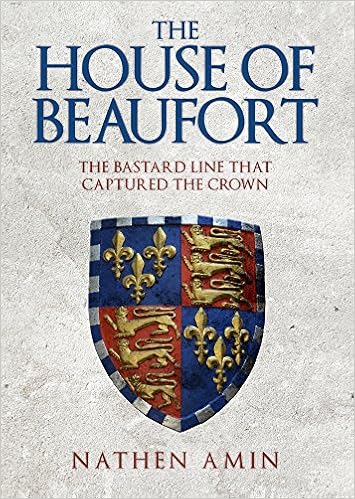
HISTORICAL BOOK REVIEW SERIES: ‘The House of Beaufort’ by Nathen Amin

The Wars of the Roses were a tumultous period in English history, with family fighting family for the greatest prize in the kingdom – the throne of England. But what gave the eventual victor, Henry Tudor, the right to claim the throne? What made his mother the great heiress of medieval England? And how could an illegitimate line come to challenge the English monarchy? Whilst the Houses of York and Lancaster battled directly for the crown, other noble families of England also played integral roles in the war; grand and prestigious names like the Howards, Nevilles and Percys were intimately involved in the conflict but arguably none symbolised the volatile nature of the period quite like the House of Beaufort. The story of the Beauforts, with their rise, fall and rise again, is the story of England during the period, a dramatic century of war, intrigue and scandal. Many books have been written about individual members of the dynasty but never has the whole family been explored as one. This book will uncover the rise of the Beauforts from bastard stock of John of Gaunt, Duke of Lancaster, to respected companions of their cousin Henry V, celebrated victor of Agincourt. The Beauforts fell with the House of Lancaster during the 1460s and 1470s, and their hopes and fortunes came to rest upon the shoulders of a teenage widow named Margaret and her young son, Henry. From her would rise the House of Tudor, the most famous of all England’s royal houses and a dynasty who owed their crown to their forebears, the House of Beaufort. From bastards to princes, the Beauforts are medieval England’s most intriguing family.

cover and blurb via nathenamin.com

~~

One family which doesn’t get enough love are the Beauforts. Nathen Amin has done everyone a favour and produced this wonderful and descriptive book to shed more light on this remarkable line. The story of the Beauforts is one that can last forever. Many families such as the Lancasters, Yorks, Warwicks are often mentioned, when the Beauforts are most important and relevant from the late 1300’s right down to today’s noble families.

Joan Beaufort was the daughter of John of Gaunt, Duke of Lancaster, and his then-mistress Katherine Swynford, remarkable people in their own right.  Joan was the only girl born to this first generation of Beauforts, named illegitimate offspring. Joan married very young and had two daughters, but by her mid-teens, her parents gained a legitimate marriage recognised by the Pope, and Joan herself was already a widow. Joan went on to marry into the Neville family, and produced 14 Beaufort-Neville babies to go with her previous two, and her husband’s eight from his first marriage. Eek!

Nathen Amin has drawn on a countless amount of resources in order to produce such an interesting level of detail, and I found I took so many notes that the whole book was in my notebook. Had the Beauforts not gone on to do so much more, the information on Joan Beaufort could be enough for a book on its own.

Joan’s children went to create the families which ruled England and fueled both sides of the War of the Roses. There was the famous Neville line, including a queen of England and multiple earldoms, including the powerful Warwick family. Joan’s blood flowed through the families of the Dukes of Westmoreland, Somerset and Exeter. Thanks to Joan’s eldest daughter they joined the Mowbray family; another daughter married into the powerful Percy lineage, another into the dynasty of the Staffords, the Dukes of Buckingham. More sons became barons, the family boasted archbishops, and the baby of the family was Cecily, married to the Duke of York, creating two kings, Edward IV and Richard III. That’s just a selection of their greatness!

But nothing destroys families like the quest for power. The 1400’s saw much wealth and success, but also death. By the time Margaret Beaufort (great niece of Joan), who married into the Tudor family, saw her son Henry defeat Richard III for the crown, the Beauforts’ power had spread out like a spiderweb of noble houses.

I am not new to the history of the Beauforts, nor their struggles to take the throne, but I found plenty to enjoy in Amin’s book. If you are new to the subject, this is the number one place to begin. The author has written a book without bias, simply presenting facts written to be entertaining, instead of heavy and academic.

Truth always beats fiction, and while I read this in ebook style, once my hardcover arrives, this book will now sit on my top shelf, where I keep all the books I go back to and reference while I work. History is filled with incredible tales, and Amin’s book brings together so many people that you too could be an expert in no time.